
Environmental Pollution and Cardiovascular Disease: Mechanisms,
Risk Factors, and Policy Recommendations
Yuncheng Huang
Fudan University, Shanghai, China
Keywords: Environmental Pollution, Cardiovascular Disease, Public Health Policy.
Abstract: Cardiovascular disease (CVD) results from a combination of genetic and environmental factors. Growing
evidence shows that environmental pollution—such as air pollutants (PM2.5, NO2, O3), waterborne toxins
(heavy metals, organic pollutants), and soil contaminants (phthalates, bisphenol A)—contributes significantly
to CVD. These exposures can increase oxidative stress, activate immune cells, disrupt circadian rhythms, and
trigger stress reactions. They also promote traditional cardio-vascular risk factors like obesity, diabetes, and
hypertension. This review summarizes recent findings on the link between environmental contaminants and
CVD. It proposes strategies for mitigation, including stricter emission standards, expanded monitoring, public
health campaigns, and incorporating environmental exposure assessments into cardiovascular risk screening.
These interventions are essential to reduce pollution-related cardiovascular morbidity and mortality.
1 INTRODUCTION
Cardiovascular disease (CVD) is the leading cause of
mortality worldwide, with its prevalence rising most
sharply in low‑ and middle‑income countries. From
1990 to 2019, the number of cardiovascular disease
cases nearly doubled, the prevalence of
cardiovascular disease increased from 271 million to
523 million worldwide, and the number of
cardiovascular deaths increased from 12.1 million to
18.6 million, according to the Global Burden of
Cardiovascular Disease report (Roth et al., 2020).
Heart and vascular diseases, such as hypertension,
coronary heart disease, cerebrovascular disease,
peripheral vascular disease, heart failure, rheumatic
heart disease, congenital heart disease, and
cardiomyopathy, are collectively referred to as
cardiovascular disease (CVD) by the World Health
Organization (WHO). The escalating human and
economic costs of CVD have made its prevention and
management a critical public health priority (Liu et
al., 2024).
Numerous risk factors are involved in the higher
incidence and mortality of cardiovascular disease.
These include individual habits like drinking and
smoking, family dynamics like marital status, and
environmental influences. The development of
cardiovascular disorders, including hypertension,
coronary heart disease, and stroke, has been
demonstrated to be directly linked to environmental
pollution, particularly contamination of the air, water,
and soil. By altering vascular endothelial function and
hastening atherosclerosis, for example, fine
particulate matter (PM
2.5
) in the atmosphere has been
shown to trigger an inflammatory response, increase
oxidative stress, and contribute to the development of
cardiovascular disease. Furthermore, the
cardiovascular system can be negatively impacted by
toxic compounds found in soil and water pollution
through alterations in hormone levels, immunological
reactions, and other mechanisms. Pollutants can
impact the cardiovascular system via a number of
biological mechanisms, such as thrombosis, oxidative
stress, inflammatory response, changed expression of
genes encoding antioxidants, and extracellular vesicle
release. The formation and progression of CVD are
facilitated by the interactions and connections among
these pathways (Thomas et al., 2025; Omar et al.,
2024). As shown in Figure 1, these mechanisms
elevate cardiovascular risk and contribute to adverse
outcomes such as myocardial infarction, stroke, heart
failure, and arrhythmias.
This review synthesizes recent experimental and
epidemiological data on the links between
environmental pollution and CVD, outlines key
mechanistic insights across air, water, and soil
contaminants, and proposes concise, evidence‑based
interventions to reduce exposure and cardiovascular
risk.
420
Huang, Y.
Environmental Pollution and Cardiovascular Disease: Mechanisms, Risk Factors, and Policy Recommendations.
DOI: 10.5220/0014494400004933
Paper published under CC license (CC BY-NC-ND 4.0)
In Proceedings of the 1st International Conference on Biomedical Engineering and Food Science (BEFS 2025), pages 420-425
ISBN: 978-989-758-789-4
Proceedings Copyright © 2026 by SCITEPRESS – Science and Technology Publications, Lda.
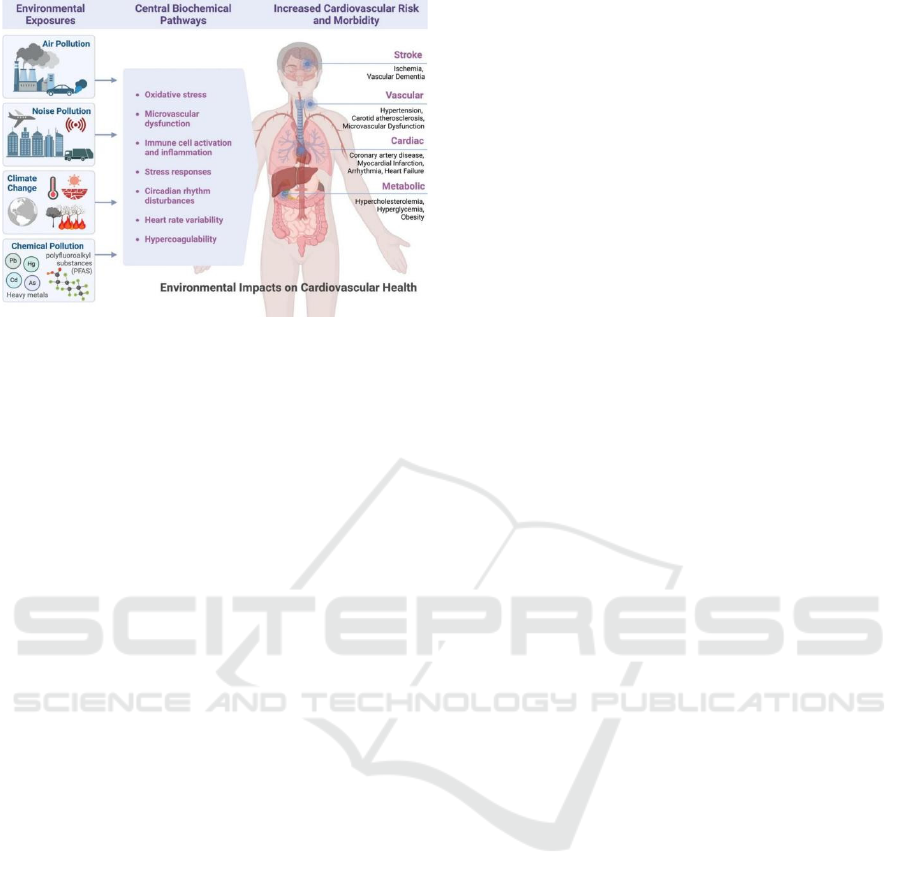
Figure 1. Environmental exposures and cardiovascular
health (Jacob et al., 2024). Numerous harmful exposures
have adverse effects on cardiovascular risk factors and
outcomes via multiple overlapping pathways.
2 AIR POLLUTION
Based on their composition, outdoor air pollutants
can be divided into two categories: particle pollutants
and gaseous pollutants. Based on particle size,
particulate matter (PM) can be categorized as fine
particulate matter (PM
2.5
), ultrafine particles (UFPs),
inhalable particulate matter (PM
10
), and others.
Carbon monoxide (CO), sulfur dioxide (SO
2
),
nitrogen dioxide (NO
2
), ozone (O
3
), and other gases
are examples of gaseous pollution. Air pollutants can
be produced and enter the human body from a variety
of sources, including car exhaust, industrial
emissions, forest fires, and other sources, due to the
world's fast industrialization and urbanization (Yue et
al., 2024). Hypertension is a significant risk factor for
cardiovascular conditions such coronary heart
disease, stroke, heart failure, atrial fibrillation,
valvular heart disease, and aortic syndrome,
according to large cohort studies. The risk of various
conditions, including ischemic heart disease,
cerebrovascular disorders, heart failure, and
arrhythmias, may rise with either short-term or long-
term exposure to PM
2.5
. The damaging elements of
PM, such as exposure to lead, cadmium, and arsenic,
are particularly dangerous for the heart and vascular
system and are linked to a higher risk of
cardiovascular disorders. An elevated risk of stroke,
atrial fibrillation, and atrial flutter is linked to
prolonged exposure to NO
2
. An elevated risk of
cardiovascular death, mostly from ischemic heart
disease, can result from prolonged exposure to O
3
.
Hospitalization for ischemic stroke can be
considerably increased by short-term exposure to
environmental SO
2
, which is linked to cardiogenic
embolism.
2.1 PM
Tiny solid or liquid particles that are suspended in the
atmosphere are referred to as particulate matter (PM).
Particles with a diameter of 10 micrometers or less
are referred to as PM
10
, while particles with a
diameter of 2.5 micrometers or less are referred to as
PM
2.5
. PM
2.5
and UFPs can penetrate deeper into the
respiratory tract and reach the alveoli because of their
smaller size. This can impact gas exchange and
perhaps have harmful effects on distant organs like
the heart, brain, and placenta. According to research,
exposure to PM
2.5
can raise oxidative stress levels and
produce too many reactive oxygen species (ROS),
which can cause cell damage and serious
inflammatory reactions. These factors can then
accelerate the development and progression of
cardiovascular diseases (CVD). In particular, by
increasing oxidative stress, PM
2.5
can activate cardiac
ryanodine receptor 2 (Ryr2), resulting in intracellular
calcium excess and cardiomyocyte death (Meng et al.,
2022). The development of atherosclerotic plaques
can also be accelerated by PM
2.5
exposure, which can
also cause endoplasmic reticulum stress in
macrophages, encourage Ca
2+
accumulation in
atherosclerotic plaques, raise ROS levels in the
plaques, and increase apoptosis (He et al., 2020).
Intercellular adhesion molecule-1 (ICAM-1) and
vascular cell adhesion molecule-1 (VCAM-1) are
endothelial function adhesion factors that are elevated
in response to short-term exposure to PM
2.5
, causing
endothelial dysfunction. Heart disease or other
cardiovascular problems may eventually arise from
the buildup of arterial plaques brought on by
prolonged exposure to PM
2.5
, which can also cause
vascular inflammation and atherosclerosis.
According to epidemiological research, UFP
exposure quickly lowers HRV, which has an impact
on cardiac autonomic function (Zhang et al., 2022).
Overall, oxidative stress, inflammatory reactions,
endothelial dysfunction, and modulation of the
autonomic nervous system are some of the ways that
PM
2.5
and UFPs negatively impact the cardiovascular
system. The development of cardiovascular disorders
is facilitated by the interaction of these pathways.
2.2 Gaseous Pollutants
The cardiovascular system is largely harmed by
gaseous pollutants through a variety of clinical and
physiologic mechanisms. Atrial fibrillation, atrial
Environmental Pollution and Cardiovascular Disease: Mechanisms, Risk Factors, and Policy Recommendations
421

flutter, and stroke are among the cardiovascular
events that are closely linked to prolonged exposure
to nitrogen dioxide (NO
2
). NO
2
can cause oxidative
stress and systemic inflammation, which affects
endothelial cell function and accelerates the
development of atherosclerotic plaques. Arrhythmia
risk may also be raised by the activation of
inflammatory reactions, which may disrupt the
regular activity of cardiomyocytes. Another prevalent
gaseous pollutant, ozone (O
3
), has a more intricate
mechanism of harm. In addition to interfering with
the metabolism of arachidonic acid, which leads to
the production of thromboxane A2 and 20-hydroxy
arachidonic acid, which activates platelets and causes
oxidative damage, exposure to O
3
also increases the
expression of coagulation biomarkers, including von
Willebrand factor and clotting factors, to exacerbate
blood coagulation tendencies and raise the risk of
cardiovascular events (Taylor-Clark, 2020).
Significantly, the association between exposure to air
pollution and the emergence of cardiopulmonary
disorders is mediated by extracellular vesicles (EVs).
The pathophysiology of cardiovascular illnesses is
significantly influenced by O
3
exposure, which
modifies the release of EVs and the expression of the
miRNAs they carry. Hemoglobin's ability to deliver
oxygen is diminished by carbon monoxide's (CO)
strong affinity binding to it, which causes tissue
hypoxia and exacerbates cardiac hypoxia. In addition
to hastening the development of atherosclerotic
plaques, prolonged low-level CO exposure can cause
acute cardiovascular events including myocardial
infarction. Short‑term exposure to sulfur dioxide
(SO
2
) induces oxidative stress and respiratory
inflammation, which indirectly destabilize
cardiovascular function and increase the risk of
hospitalization for ischemic stroke and cardiogenic
embolism.
3 WATER AND SOIL POLLUTION
The term "soil and water pollution" describes
dangerous materials found in groundwater and water
bodies that could have a negative impact on living
things. Waste disposal, industrial emissions, and
agricultural practices are the primary sources of
contaminants. In addition to damaging aquatic life
and lowering crop production, this pollution has a
major negative impact on human health. The 2019
Global Burden of Disease Study estimates that water
pollution from contaminated water sources killed
about 1.23 million people. Pesticides, plastic debris,
heavy metals, and persistent organic pollutants
(POPs) are examples of common contaminants
(Usman et al.,2024).
3.1 Plastics and Their Additives
Plastics are made of synthetic or organic polymers
and are highly sought after worldwide due to their
excellent qualities, which include flexibility,
durability, and low production costs. Environmental
pollution is caused by common plastic additives
including phthalates, bisphenol A (BPA), and heavy
metals. Phthalates may be linked to cardiovascular
diseases (CVD), especially coronary artery disease
(CAD), according to recent research. Increased
carotid intima-media thickness (CIMT),
atherosclerosis, increased risk of hypertension
(HTN), metabolic syndrome (MetS), oxidative stress,
and insulin resistance have all been linked to elevated
phthalate levels. Polycarbonate plastics and epoxy
resins are two common products made with bisphenol
A (BPA). Numerous epidemiological studies have
demonstrated a strong link between BPA exposure
and an elevated risk of cardiovascular illnesses,
primarily based on data from the National Health and
Nutrition Examination Survey.
3.2 Pesticides and Persistent Organic
Pollutants (POPs)
Because pesticides and persistent organic pollutants
(POPs) are difficult for the environment to break
down, they can linger and find their way into human
bodies through soil and water. Furthermore, it has
been discovered that pesticide exposure raises the
incidence of certain cancers and has a negative impact
on cardiovascular health. Increased oxidative stress,
inflammation, and atherosclerosis could be the cause
of these outcomes. Certain pesticides have the ability
to directly harm cells' mitochondria, increasing
reactive oxygen species (ROS), which in turn causes
oxidative stress and inflammation, endothelial cell
malfunction, and the acceleration of atherosclerosis.
Meanwhile, there is a strong correlation between the
incidence and mortality of cardiovascular illnesses,
particularly with elevated risks of coronary artery
disease (CAD), peripheral artery disease, and CIMT,
and exposure to persistent organic pollutants, such as
perfluoroalkyl compounds. The cardiovascular
system is continuously threatened by prolonged
exposure to pesticides and POPs, with possible
pathogenic pathways including oxidative stress,
inflammatory activation, and endocrine disruption.
BEFS 2025 - International Conference on Biomedical Engineering and Food Science
422
3.3 Heavy Metal Pollution
It has been determined that exposure to heavy metal
pollution increases the incidence of cardiovascular
illnesses (Jacob et al., 2024). Although particulate air
pollution also contains metals, ingestion is the main
way that people are exposed to metals. Among the
most extensively researched environmental
hazardous metals linked to cardiovascular disease
(CVD) are arsenic, cadmium, lead, copper, and
mercury. Numerous studies show that exposure to
metals, even at low levels, can raise the risk of
cardiovascular illnesses and the mortality that goes
along with them. The majority of metal contaminants
cause cardiovascular illnesses by causing oxidative
stress and systemic inflammation, which are
prevalent pathophysiological routes. Atherosclerosis
is facilitated by systemic inflammation, which in turn
stimulates vascular inflammation, endothelial
damage, and coagulation mechanism activation.
Lipid peroxidation, an early indicator of
atherosclerosis, has been discovered to be facilitated
by a variety of hazardous metals. Usually, by
competing with vital metals like calcium, iron, and
zinc in the body, these harmful metals raise the risk of
cardiovascular illnesses. For instance, lead's capacity
to mimic the actions of vital elements like calcium
and iron contributes to its cardiotoxicity. Because of
their similar chemical structures, cadmium and lead
can take the role of zinc in biological processes.
Furthermore, by altering other risk factors, especially
by raising the risk of obesity and hypertension (HTN),
heavy metals may also make cardiovascular disorders
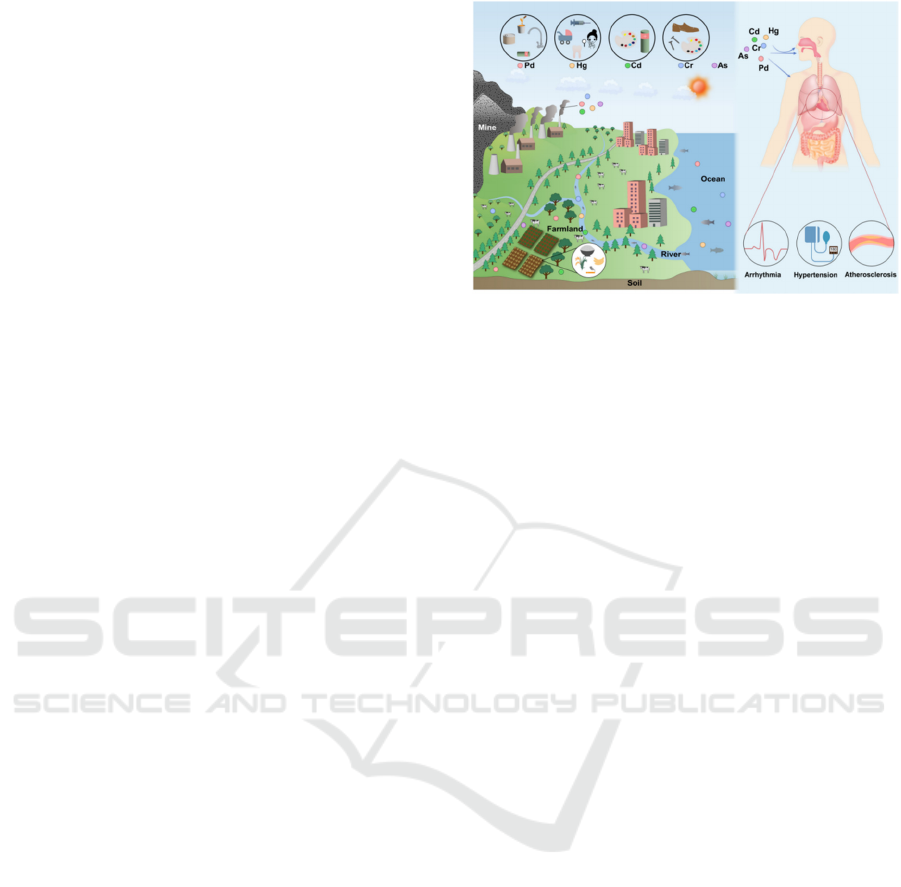
worse (Usman et al.,2024; Jacob et al., 2024) (Figure
2).
4 POLICY RECOMMENDATIONS
AND HEALTH INTERVENTION
MEASURES
4.1 Strengthen Environmental
Protection Policies
Stricter environmental protection laws should be
developed and put into effect by the government to
lessen the negative effects of pollution on
cardiovascular health. Setting stronger emission
limits, encouraging the use of clean energy, and
bolstering the control of pollution in the air, water,
and soil are some specific actions. For instance,
lowering airborne concentrations of nitrogen oxides
and
fine
particulate
matter
(PM
2.5
)
might
lessen
the
Figure 2. Distribution of heavy metals and their effects on
the human cardiovascular system (Pan et al., 2024). The
diagram depicts the distribution of arsenic (As), cadmium
(Cd), lead (Pb), mercury (Hg), and chromium (Cr) in the
environment (rivers, oceans, air, and soil) and the exposure
source (food, drinking water, and industrial products).
When exposure to heavy metals, they enter the body
through inhalation, ingestion and dermal contact,
eventually lead to cardiovascular abnormalities such as
arrhythmia, hypertension and atherosclerosis.
direct damage they do to the cardiovascular system.
At the same time, to guarantee the safety of drinking
water and the health of the food supply chain,
stringent management of soil contamination and
water resources is required, preventing dangerous
compounds from entering the human body through
the food chain. The implementation of these measures
requires coordination and cooperation among
government departments, as well as active public
participation, to achieve continuous improvement in
environmental quality.
4.2 Promote Health Education and
Behavioral Interventions
Preventing cardiovascular illnesses requires
increasing public understanding of environmental
protection and health literacy. The government should
encourage the public to adopt healthy lifestyles that
include balanced diets, regular exercise, quitting
smoking, and consuming alcohol in moderation by
using a variety of channels, including the media,
community events, and online platforms, to spread
information about the link between environmental
pollution and cardiovascular diseases. To lessen the
detrimental effects of environmental pollution, high-
risk groups such as the elderly, children, and people
with cardiovascular problems should receive
personalized health management services. To
improve the future generation's environmental
awareness and health behavior abilities, educational
Environmental Pollution and Cardiovascular Disease: Mechanisms, Risk Factors, and Policy Recommendations
423

institutions should also include environmental health
information in their curricula.
4.3 Enhance Monitoring and Data
Collection
It is crucial to improve data collecting and
environmental pollution indicator monitoring in order
to more accurately evaluate the relationship between
environmental pollution and cardiovascular illnesses.
The government should assist the public in avoiding
high-pollution areas, develop and enhance
environmental monitoring networks, and rapidly
disseminate information about pollution.
Additionally, epidemiological research should be
combined by health departments to continuously
monitor and examine the relationship between
environmental pollution and the incidence of
cardiovascular disease, gathering pertinent data to
support the development of policies. This data's
sharing and public availability will also help research
institutions carry out in-depth analyses to find
successful intervention strategies.
4.4 Enhance Healthcare System
Capacity
Hospitals and other community healthcare facilities
should improve early cardiovascular disease
screening, perform routine cardiovascular health
examinations, promptly identify people who may
have cardiovascular disease, and offer early therapies.
In order to improve medical institutions' capacity to
diagnose and cure cardiovascular diseases brought on
by environmental pollution, the government should
also invest more in equipment and technologies for
cardiovascular disease diagnosis and treatment. To
properly advise patients on their health, healthcare
providers should undergo specific training to increase
their knowledge of how environmental pollution
affects cardiovascular health. In order to guarantee
that more people, particularly those residing in highly
polluted areas, have easy access to cardiovascular
health management services, the government can
simultaneously encourage changes to the health
insurance system.
5 CONCLUSION
Numerous studies have demonstrated the strong
correlation between environmental pollution
(particularly air, water, and soil contamination) and
the onset and progression of cardiovascular disorders.
Through mechanisms like altering vascular
endothelial function and speeding up atherosclerosis,
fine particulate matter (PM
2.5
) in the air can cause
inflammatory reactions, raise oxidative stress, and
encourage the development of cardiovascular
illnesses. Furthermore, the cardiovascular system can
be adversely affected by toxic compounds found in
soil and water pollution through alterations in
hormone levels, immunological reactions, and other
routes. There are several biological ways in which
these pollutants impact the cardiovascular system, but
the main ones are oxidative stress, inflammation,
thrombosis, alterations in the expression of genes that
code for antioxidants, and the release of extracellular
vesicles. These pathways are interrelated and interact
with each other, promoting the onset and
development of cardiovascular diseases.
The government should create and execute
stronger environmental protection policies, such as
raising emission standards, encouraging the use of
clean energy, and bolstering the control of air, water,
and soil pollution, in order to address the threat that
environmental pollution poses to cardiovascular
health. At the same time, it is crucial to promote
healthy lifestyles, raise public knowledge of
environmental protection and health literacy, and
offer high-risk populations individualized health
management services. Important steps to lessen the
detrimental effects of environmental pollution on
cardiovascular health include bolstering the
monitoring of environmental pollution indicators,
gathering pertinent data, and improving the capacity
of the healthcare system to respond. In conclusion, it
is important to consider how environmental
contamination affects cardiovascular health. We can
successfully reduce the detrimental effects of
environmental pollution on cardiovascular health and
raise the general level of cardiovascular health in the
population by putting in place efficient policy
measures, bolstering behavioral and health education
initiatives, and improving the response capabilities of
the healthcare system.
REFERENCES
He L, Lin Y, Wang X, et al. 2020. Associations of ozone
exposure with urinary metabolites of arachidonic acid.
Environ In, 145: 106154.
Jacob R. Blaustein, Matthew J. Quisel, Naomi M.
Hamburg. 2024. Sharine Wittkopp Environmental
Impacts on Cardiovascular Health and Biology: An
Overview, Circulation Research, 134:1048–1060.
BEFS 2025 - International Conference on Biomedical Engineering and Food Science
424

Liu MB, He XY, Yang XH. 2024. National Center for
Cardiovascular Diseases. Annual Report on
Cardiovascular Health and Diseases in China (2023).
Beijing: Peking Union Medical College Press, Chin J
Intervent Cardiol, 32(10):541-550.
Meng M, Jia R, Wei M, et al. 2022. Oxidative stress
activates Ryr2 - Ca
2+
and apoptosis to promote PM
2.5
-
induced heart injury of hyperlipidemia mice[J].
Ecotoxicol Environ Sa, 232:113228.
Omar Hahad, Andreas Daiber, and Thomas Mnzel. 2024.
Breathing danger: linking air pollution to
cardiovascular disease and increased risk of abdominal
aortic aneurysm, European Heart Journa, 45, 1040–
1042.
Pan, Z., Gong, T., & Liang, P. 2024. Heavy Metal Exposure
and Cardiovascular Disease. Circulation research,
134(9), 1160–1178.
Roth GA, Mensah GA, Johnson CO, et al. 2020. Global
burden of cardio-vascular diseases and risk factors,
1990 - 2019: update from the GBD2019 study. Journal
of the American College of Cardiology, 76 (25): 2982-
3021.
Taylor-Clark T. E. 2020. Air Pollution-Induced Autonomic
Modulation. Physiology (Bethesda, Md.), 35(6), 363–
374.
Thomas Mnzel, Omar Hahad, Jos Lelieveld, et al. 2025.
Soil and water pollution and cardiovascular disease,
Nature Reviews Cardiology, 22(2):71-89.
Usman Sagheer, Sadeer Al-Kindi, Shady Abohashem, et al.
2024. Environmental Pollution and Cardiovascular
Disease, JACC: ADVANCES, 100815.
Yue X, Hu Y, Tian C, et al. 2024. Increasing impacts of fire
air pollution on public and ecosystem health.
Innovation (Camb), (53):100609.
Zhang M, Chen J, Jiang Y, et al. 2022. Fine particulate
matter induces heart defects via AHR/ROS-mediated
endoplasmic reticulum stress. Chemosphere, 307(Pt 2):
135962.
Environmental Pollution and Cardiovascular Disease: Mechanisms, Risk Factors, and Policy Recommendations
425
