
CineFinder: A Movie Recommendation System Using Visual and
Textual Deep Features
Mehmet Tuğrul Sarıçiçek
1a
, Rukiye Orman
2b
, Murat Dener
1c
and Harun Kınacı
3d
1
Information Security Engineering Department, Graduate School of Natural and Applied Sciences, Gazi University,
Ankara, Turkey
2
Department of Computer Technologies, Vocational School of Technical Sciences, Ankara Yıldırım Beyazıt University,
Ankara, Turkey
3
Department of Business Administration, Faculty of Economics and Administrative Sciences, Erciyes University,
Kayseri, Turkey
Keywords: Movie Recommendation System, Deep Learning, Hybrid Recommendation, Visual Features, Textual
Features, BERT, RoBERTa, SBert, VGG-16, ImageNet, ResNet, Cosine Similarity, Euclidean Distance,
Manhattan Distance, Cold Start Problem, Machine Learning.
Abstract: In recent years, the increasing popularity of digital content platforms has highlighted the need for personalized
recommendation systems, particularly in the entertainment industry. Traditional recommendation systems
often suffer from limitations such as the "cold start" problem and inadequate personalization due to their
reliance on limited user data. To address these challenges, this study proposes CineFinder. This hybrid feature-
based movie recommendation system integrates both visual and textual deep features using multiple state-of-
the-art pre-trained models. CineFinder extracts visual features from movie posters and backdrops using pre-
trained convolutional neural networks—namely VGG-16, ResNet-50, and MobileNet—and captures textual
features from movie overviews using pre-trained transformer-based models such as BERT, RoBERTa, and
SBERT. These extracted features are fused into a comprehensive hybrid feature vector and utilized for
similarity-based recommendations via Cosine similarity, Euclidean distance, and Manhattan distance. The
system's performance was evaluated on two datasets created by the authors: the TMDB Dataset, which
provides general audience metrics, and the TMDBRatingsMatched Dataset, which incorporates user-specific
rating data from MovieLens 20M. Experimental results demonstrate that the proposed approach generates
accurate and relevant movie recommendations while mitigating the cold start problem. The findings highlight
the effectiveness of integrating multimodal deep learning techniques and leveraging user-driven feedback to
enhance recommendation accuracy.
1 INTRODUCTION
The growing volume of digital content and user
engagement has created a strong demand for more
advanced recommendation systems. The growing
volume of digital content and user engagement has
created a strong demand for more advanced
recommendation systems. While traditional
recommendation techniques have been widely
applied, they often struggle with personalization
a
https://orcid.org/0009-0004-9317-1112
b
https://orcid.org/0000-0003-1385-0939
c
https://orcid.org/0000-0001-5746-6141
d
https://orcid.org/0000-0002-8572-1143
challenges and issues like the cold start problem. To
overcome these limitations, modern approaches
incorporate deep learning techniques and multimodal
data sources, enhancing accuracy and personalization
in recommendation systems.
In this study, a hybrid movie recommendation
system has been developed for cinema enthusiasts,
combining text and visual-based features using deep
learning methods. This system utilizes pre-trained
VGG-16, MobileNet, and ResNet-50 models to
extract visual features from movie posters and
120
Sarıçiçek, M. T., Orman, R., Dener, M. and Kınacı, H.
CineFinder: A Movie Recommendation System Using Visual and Textual Deep Features.
DOI: 10.5220/0014385700004848
Paper published under CC license (CC BY-NC-ND 4.0)
In Proceedings of the 2nd International Conference on Advances in Electrical, Electronics, Energy, and Computer Sciences (ICEEECS 2025), pages 120-131
ISBN: 978-989-758-783-2
Proceedings Copyright © 2026 by SCITEPRESS – Science and Technology Publications, Lda.

backdrops, and BERT, RoBERTa, and SBert models
to extract text features from movie overviews. A
hybrid recommendation mechanism combines feature
extraction models in all possible combinations,
ensuring a comprehensive feature representation. The
recommendation process uses three similarity
functions: Cosine Similarity, Euclidean Distance, and
Manhattan Distance. These similarity functions
evaluate the hybrid feature vectors to determine the
most relevant movies for a favorite movie, providing
a more comprehensive comparison across different
feature extraction models.
The developed model has undergone a
comprehensive testing process using a large-scale
dataset created by the authors via TMDB API and
another dataset by matching this dataset with the
rating data from the MovieLens 20M dataset.
Recommendations generated through these feature
extraction combinations and multiple similarity
functions aim to mitigate the effects of the cold start
problem and enhance user satisfaction.
This study contributes to the literature in the
following ways:
• Hybrid Recommendation Approach: Unlike
traditional methods focusing solely on textual or
visual analysis, this study integrates deep textual and
visual features for movie recommendation, providing
a more holistic approach.
• Diverse Similarity Metrics: The effectiveness of
different feature combinations is evaluated using
three distinct similarity metrics: Cosine Similarity,
Euclidean Distance, and Manhattan Distance,
ensuring a robust comparative analysis.
• New Dataset Contributions: Two new datasets,
TMDB Dataset and TMDBRatingsMatched Dataset,
have been created to facilitate further research in the
field. The TMDB Dataset includes an extensive
collection of movies with various attributes, while the
TMDBRatingsMatched Dataset incorporates user-
specific rating data matched with the MovieLens 20M
dataset. These datasets will be publicly available on
platforms such as Kaggle and Hugging Face
following the publication of this paper, contributing
to future research in recommendation systems.
• Cold Start Problem Mitigation: The proposed
system effectively solves the cold start problem in
movie recommendation by leveraging deep learning-
based feature extraction and a hybrid
recommendation mechanism.
• Comprehensive Evaluation Framework: The
proposed system systematically compares multiple
feature extraction models and similarity metrics,
demonstrating the impact of different model
combinations on recommendation accuracy.
These contributions establish a strong foundation
for advancing hybrid recommendation models by
integrating multimodal deep learning techniques with
similarity-based recommendation methods.
The rest of this paper is organized as follows:
Section 2 provides an overview of related work in
recommendation systems. Section 3 describes the
implementation details of the proposed hybrid
recommendation system, including data
preprocessing, feature extraction, and similarity
measurement methods. Section 4 presents the
experimental results and performance evaluation of
the system. Finally, Section 5 concludes the study and
discusses potential future research directions.
2 LITERATURE REVIEW
Recommendation systems have emerged as an
essential tool for providing users personalized content
in various domains, including e-commerce,
entertainment, and healthcare. Traditional
recommendation approaches, such as collaborative
and content-based filtering, have demonstrated
effectiveness but also suffer from inherent
limitations, including the cold start problem, data
sparsity, and scalability challenges. Recent
advancements in deep learning and hybrid
recommendation methods have significantly
enhanced the accuracy and adaptability of these
systems by incorporating multimodal data sources,
such as textual and visual features. This section
reviews contemporary research efforts to improve
recommendation performance through deep learning
models, feature extraction techniques, and hybrid
recommendation strategies.
Numerous studies have focused on applying
recommendation systems in various fields and
improving their success. Kumar and Kumar [1] aimed
to develop a system tested on music and hotel datasets
that could provide recommendations even to users
logging in for the first time (Kumar & Kumar, 2022).
Iwendi et. Al aimed to develop a product
recommendation system that combines item-to-item
collaborative filtering with machine learning to
provide more accurate recommendations (Iwendi et
al., 2021). Ullah et. al aimed to develop a product
recommendation system that suggests similar
products based on a user's product image (Ullah et al.,
2020). Yoon and Choi aimed to develop a
recommendation system that suggests customized
tourist destinations tailored to specific types of
tourists by considering real-time changing factors
such as external conditions and distance information
CineFinder: A Movie Recommendation System Using Visual and Textual Deep Features
121

(Yoon & Choi, 2023). Aktas and Ciloglugil aimed to
analyze student interactions in an educational
recommender system by examining navigation
patterns and evaluating the effectiveness of
personalized learning material suggestions (Aktas &
Ciloglugil, 2024). Abbas et. al aimed to develop a
drug recommendation and supply chain management
system that includes a drug recommendation module
by extracting features from drug reviews (Abbas et
al., 2020). Choi et. al aimed to develop a service part
recommendation system for service engineers by
combining clustering and machine learning methods
(Choi et al., 2022). Iwendi et. al aimed to develop an
IoMT (Internet of Medical Things)-based patient diet
recommendation system (Iwendi et al., 2020). From
these works, we can see that recommendation
systems can be utilized in many different fields.
Huang et. al aimed to develop a more accurate and
efficient recommendation system by combining deep
learning and machine learning methods in a hybrid
manner. Their study developed a model called DMFL
(Deep Metric Factorization Learning), which
combines factorization machine and metric learning.
The model consists of two parts: feature learning and
recommendation generation. The feature learning
part of the model developed in the study consists of
two parallel deep neural networks that extract static
item latent feature vectors and dynamic user latent
feature vectors. On the other hand, the
recommendation generation part comprises
sublayers, including a factorization machine, a deep
neural network, and metric learning. According to the
paper of the authors, the developed model was trained
and tested on open source MovieLens 20M,
MovieLens 1M, and BookCrossing datasets and
showed higher Recall and AUC (Area Under The
Curve) scores than other traditional methods (Huang
et al., 2019).
Chen et. al aimed to improve recommendation
accuracy for movie recommendation systems by
utilizing visual content. Their study focuses on how
movie frames and poster visuals can significantly
address data sparsity and cold start problems. The
authors developed a movie recommendation system
called UVMF (Unified Visual Contents Matrix
Factorization), which integrates CNN (Convolutional
Neural Network) and PMF (Probabilistic Matrix
Factorization) for feature extraction, and VGG-16
was used for learning visual features. MovieLens
2011 and IMDB datasets, which include movie
metadata, user data, posters, and movie frames, were
used to train and test the model. The authors separated
the datasets into 70% train and 30% test. RMSE (Root
Mean Square Error), precision, and recall metrics
were adopted to evaluate the model's performance,
and it was stated that the developed model achieved
over 70% success (Chen et al., 2018).
Harshvardhan et. al develop a movie
recommendation system called UBMTR
(Unsupervised Boltzmann Machine-based Time-
aware Recommendation System) which combines
movie rating data with time information to consider
users' past preferences and the time factor. The study
investigates the impact of the time information on
user preferences and the feasibility of integrating this
information into recommendation systems using
RBM. Their study created a 3D tensor data structure
by combining users' movie rating data with time
information. The model was tested on the
MovieLens100K dataset, and its performance was
measured as 88% based on the RMSE metric and 76%
based on the MSE (Mean Squared Error) metric
(Harshvardhan et al., 2022).
Wei et. al aimed to develop a hybrid movie
recommendation system by combining tags and
ratings elements from SMN (Social Movie
Networks). The study emphasized that movie
recommendation systems should consider social
elements such as users, media items, tags, ratings, and
tag assignments. It also examined how SMNs
incorporate these aspects into their recommendations.
The model developed in the study operates based on
the tripartite relationships between users, movies,
tags, and ratings. Users' interaction with movies is
addressed through ratings and tags integrated to
model user preferences accurately. The authors
developed a model based on SVD (Singular Value
Decomposition) and matrix factorization techniques.
Multidimensional vectors for users and movies were
created based on the social influences of users and
tags to model latent factors in users' preferences. By
learning these multidimensional vectors, the
developed model generates predictions based on
users' past interactions, including ratings and tagging
behaviors. The developed model was trained and
tested with the MovieLens dataset. The model's
performance was evaluated using precision and recall
metrics on datasets containing different numbers of
movies. It was noted that the model's performance
improved as the dataset size increased (Wei et al.,
2016).
Zhang et. al aimed to develop a real-time
personalized movie recommendation system. In their
study, the authors used the K-Means algorithm to
measure user similarities and grouped them into
clusters. For each cluster, they created a virtual
opinion leader representing the users in that cluster,
thereby reducing the size of the user-movie matrix.
ICEEECS 2025 - International Conference on Advances in Electrical, Electronics, Energy, and Computer Sciences
122
The fundamental principle of the developed model is
to cluster users based on their profile features, create
a virtual user for each cluster, and then predict ratings
between each virtual user and the movies. The authors
developed an algorithm named Weighted KM-Slope-
VU One to make recommendations. They compared
their algorithm with KM-Slope-VU, SVD, and
SVD++ by testing it on the MovieLens dataset. In the
comparison based on the RMSE metric, the
developed model achieved higher accuracy than SVD
and SVD++ but fell short of KM-Slope-VU (Zhang
et al., 2020).
While previous studies have explored various
recommendation system techniques, they often focus
on either textual analysis (e.g., collaborative filtering,
SVD), visual analysis (e.g., CNN-based approaches),
or user interaction-based methods (e.g., clustering,
latent factor models). Unlike these approaches, our
study systematically integrates textual and visual
deep features to enhance movie recommendation
accuracy. Specifically, we employ multiple state-of-
the-art pre-trained models—VGG-16, ResNet-50,
and MobileNet for visual features, and BERT,
RoBERTa, and SBERT for textual features—creating
a more robust and diverse hybrid feature
representation. Furthermore, unlike many prior works
that rely solely on traditional collaborative filtering or
matrix factorization, our approach incorporates
multiple similarity metrics, including Cosine
Similarity, Euclidean Distance, and Manhattan
Distance, to provide a more comprehensive
evaluation of movie similarities. Additionally, we
introduce two new datasets, TMDB Dataset and
TMDBRatingsMatched Dataset, specifically created
to facilitate multimodal recommendation evaluation,
addressing the limitations of existing datasets that
often lack rich visual and textual data integration. By
combining deep feature extraction with diverse
similarity functions and novel dataset contributions,
our work offers a more holistic solution to movie
recommendation challenges, particularly in
mitigating the cold start problem.
3 IMPLEMENTATION OF
RECOMMENDATION SYSTEM
This paper uses visual, thematic, and content-based
evaluations to develop a recommendation system for
movie enthusiasts based on their favorite movies. The
developed recommendation system suggests the top 3
similar movies based on the poster, backdrop, and
overview features of users' favorite movie.
3.1 Dataset Preparation
The dataset in this study was created by the authors,
who developed a Python application and TMDB API
(TMDB, 2025). This created dataset, TMDB Dataset,
contains 15 features for 48,138 movies. It consists of
movies in the TMDB (The Movie Database) released
between 1960 and 2024. During dataset construction,
movies with missing visual (poster and backdrop) or
textual (overview) content were removed, ensuring a
more complete dataset. The features included in the
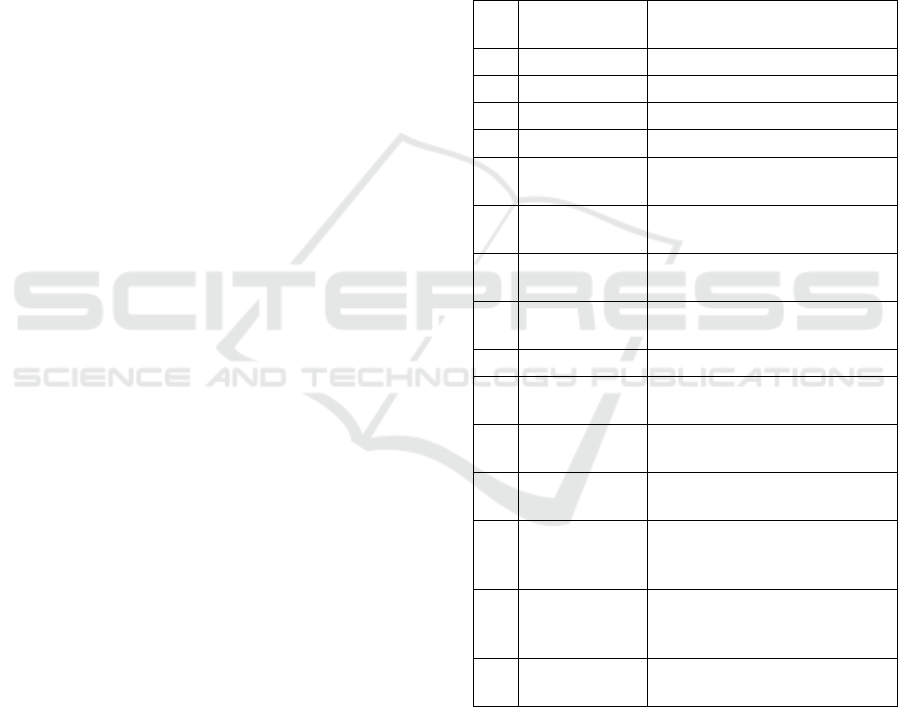
created data set are explained in Table 1.
Table 1: Explanation of the features of the TMDB Dataset.
S1.
No
Feature Name Feature Description
1 ID The release date of the movie
2 Release Date The release date of the movie
3 Overview A summar
y
of the movie's
p
lot
4 Genres The movie's categories or types
5 Production
Countries
The countries where the movie
was produce
d
6 Original
Lan
g
ua
g
e
The primary language of the
movie
7 Runtime The total duration of the movie
in minutes
8 Poster File The image file path of the
movie's
p
oste
r
9 Release Yea
r
The release year of the movie
10 Original Title The movie's title in its original
language
11 Popularity A numerical value indicating
the movie's overall popularit
y
12 Vote Count The total number of votes the
movie has receive
d
13 Vote Average The average rating the movie
has received based on user
votes
14 IMDB ID The unique ID assigned to the
movie on IMDB (Internet
Movie Database)
15 Backdrop File The image file path of the
movie's backdrop
The TMDBRatingsMatched Dataset was created
by matching the TMDB Dataset with the MovieLens
20M dataset using the TMDB ID field, which is
common in both datasets (GroupLens). The movies
matching TMDB IDs were retained, and a new field,
MovieLens_ID, was added to the dataset to establish
this correspondence. This enriched dataset was
merged with the ratings data from MovieLens 20M
CineFinder: A Movie Recommendation System Using Visual and Textual Deep Features
123
using MovieLens_ID as the foreign key, enabling
user-specific rating information to be incorporated.
As a result, the TMDBRatingsMatched Dataset
allows recommendation evaluation based on general
audience metrics (popularity, average rating) and
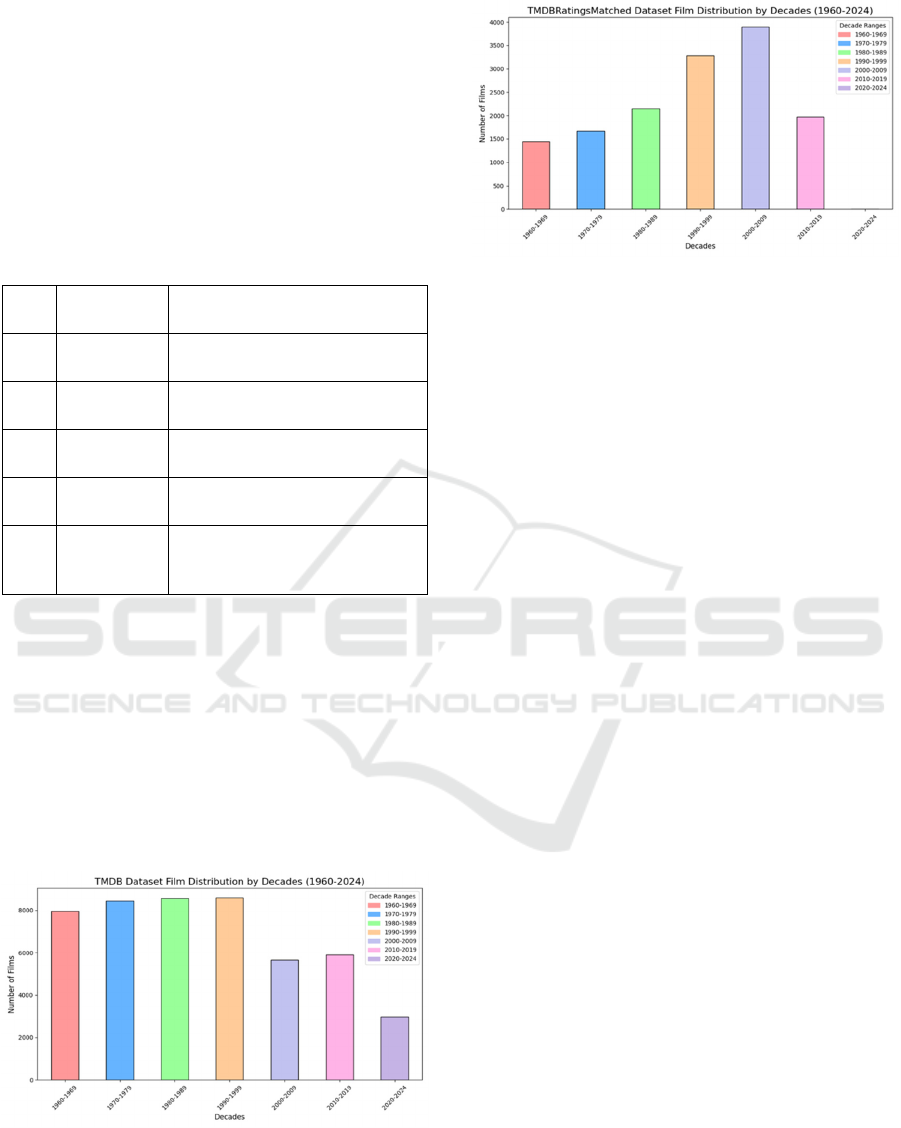
personalized user ratings. In addition to the features
in the TMDB dataset, the features in the new
TMDBRatingsMatched Dataset are explained in
Table 2.
Table 2: Explanation of the additional features of the
TMDBRatingsMatched Dataset.
S1.
No
Feature
Name
Feature Description
1 MovieLens
ID
The unique ID assigned to the
movie on the MovieLens
2 User ID The unique ID assigned to the
user for ratings
3 Movie ID The foreign key ID referenced
the MovieLens ID on the ratings
4 Rating The score given by a user to a
movie
5 Timestamp The Unix timestamp
representing the exact time
when the rating was given
The authors created two datasets to measure the
performance of the developed system. The TMDB
dataset is used to assess success based on general
audience evaluations, such as average vote similarity,
and the TMDBRatingsMatched dataset is used to
measure success based on the similarity of ratings
from users who have watched both favorite and
recommended movies. Figure 1 shows the
distribution of movies in the TMDB Dataset, and
Figure 2 shows the distribution of movies in the
TMDBRatingsMatched Dataset over 10-year periods.
Figure 1: Distribution of Movies in the TMDB Dataset over
10-year periods.
Figure 2: Distribution of Movies in the
TMDBRatingsMatched Dataset over 10-year periods
3.2 Feature Extraction and Hybrid
Feature Vector Creation
In this developed movie recommendation system, the
features of poster and backdrop images, representing
the aesthetic and thematic content of the movies,
along with the overview features, representing their
semantic context, were extracted. These three
features were combined to create a comprehensive
hybrid feature vector for the movies.
The VGG-16 pre-trained model, consisting of 16
layers and trained on the ImageNet dataset, was
chosen to extract visual features from movie posters
and backdrop images because it has demonstrated
success in visual feature extraction (Baby et al., 2021;
Kawaguchi et al., 2019). The VGG-16 model is a
CNN with 16 layers trained on the ImageNet Dataset
(Suganeshwari et al., 2023). In this study, only the
feature map of posters and backdrops was required;
therefore, the final layers were removed, and only 13
layers were utilized for visual feature extraction.
Before input into the model, images were resized to
224×224 pixels and normalized using the VGG-16
preprocessing function to ensure compatibility with
the pre-trained model.
The ResNet-50 (Residual Network-50) is a
convolutional neural network model that was also
trained on the ImageNet dataset, and was
incorporated to enhance feature extraction by
mitigating the vanishing gradient problem through
skip connections. ResNet-50 consists of 50 layers,
including convolutional layers organized in residual
block connections (Kumar et al., 2021; Zhou et al.,
2024). In this study, only the convolutional layers
were retained, and the fully connected layers were
removed to focus on feature extraction. The extracted
feature maps were processed using Global Average
Pooling (GAP) to generate compact feature
representations. Before feature extraction, input
images were resized to 224×224 pixels and
ICEEECS 2025 - International Conference on Advances in Electrical, Electronics, Energy, and Computer Sciences
124

normalized using the ResNet-specific preprocessing
function to maintain consistency across visual data.
The MobileNet model is a convolutional neural
network designed for mobile and resource-
constrained devices (Abbass & Ban, 2024; Chawla et
al., 2024). It utilizes depthwise separable
convolutions to reduce computational complexity
while maintaining accuracy. MobileNet is trained on
the ImageNet dataset and employs depthwise and
point-wise convolutions to optimize efficiency. In
this study, only the convolutional layers were
retained, and the fully connected layers were removed
to focus on feature extraction. The extracted feature
maps were processed using Global Average Pooling
(GAP) to generate compact feature representations.
The input images were resized to 224×224 pixels and
normalized using the MobileNet preprocessing
function before being passed through the model.
BERT (Bidirectional Encoder Representations
from Transformers) is a transformer-based pre-
trained deep learning model used for NLP (Natural
Language Processing) tasks (Subakti et al., 2022).
Instead of analyzing the words sequentially, BERT
can analyze the entire text and extract semantic
feature representations (Li et al., 2019; Subakti et al.,
2022; Yang & Cui, 2021). This study used the BERT
model to extract semantically enriched feature
vectors from movie overviews. A single feature
vector was obtained for each movie overview by
averaging the final layer. Before input into the model,
each movie overview was first tokenized using the
BERT tokenizer, applying padding and truncation to
standardize sequence length. The tokenized text was
then passed through the model to extract
contextualized word embeddings, which were
processed using mean pooling to generate a fixed-
length feature vector.
The RoBERTa (Robustly Optimized BERT
Pretraining Approach) model is an improved version
of BERT, designed to enhance training efficiency
through dynamic masking, longer training durations,
and larger datasets (Fan et al., 2025; Li et al., 2024).
Unlike BERT, RoBERTa removes the Next Sentence
Prediction (NSP) task and optimizes pretraining
strategies, improving performance in various NLP
tasks. It employs self-attention mechanisms for
efficient sequential data handling. It has been pre-
trained on extensive corpora, including BookCorpus
and English Wikipedia, with a masked language
modeling (MLM) objective (Lak et al., 2024). The
RoBERTa-base variant was used in this study, and the
final hidden layer representation was averaged to
generate a single fixed-length feature vector. Like
BERT, the input text was tokenized using the
RoBERTa tokenizer, with appropriate padding and
truncation applied. The processed tokens were then
passed through the model to extract deep semantic
representations, which were averaged to produce the
final feature vector.
The SBERT (Sentence-BERT) model is an
optimized transformer model designed for sentence-
level semantic similarity tasks, improving efficiency
over traditional BERT-based models by leveraging a
Siamese network structure (Chi & Jang, 2024;
Ortakci, 2024). SBERT fine-tunes BERT for sentence
similarity by employing a pooling operation to
generate fixed-size sentence embeddings, making it
highly effective for clustering and similarity
comparisons (Chi & Jang, 2024; Ortakci, 2024). The
model utilizes cosine similarity to measure sentence
relationships in a high-dimensional space, reducing
computational cost while maintaining performance
(Chi & Jang, 2024). The overview text was first
tokenized using the SBERT tokenizer, and the
resulting tokenized representation was fed into the
model. The model's output embeddings were pooled
using mean pooling to create a dense, fixed-size
vector for each movie overview. In this study, the all-
MiniLM-L6-v2 variant was used, which balances
computational efficiency and representation quality,
and the sentence embeddings were directly extracted
to represent movie overviews as dense vectors.
The overview feature vector obtained using
BERT, RoBERTa, and SBERT, poster and backdrop
feature vectors obtained using VGG-16, ResNet-50,
and MobileNet, were concatenated horizontally to
form a hybrid vector that encompasses the aesthetic,
thematic, and contextual features of the movies. The
extracted features from all possible combinations of
textual (BERT, RoBERTa, SBERT) and visual
(VGG-16, ResNet-50, MobileNet) models were
concatenated to create hybrid feature vectors. These
hybrid representations were then used to generate
movie recommendations based on three different
similarity functions: Cosine Similarity, Euclidean
Distance, and Manhattan Distance. As a result,
recommendations were generated for nine different
model combinations for each movie. Since three
different similarity measures were applied to each
combination, 27 recommendation results were
obtained for a single movie. The steps for extracting
movie features and creating the hybrid feature vector
are explained in Table 3.
CineFinder: A Movie Recommendation System Using Visual and Textual Deep Features
125
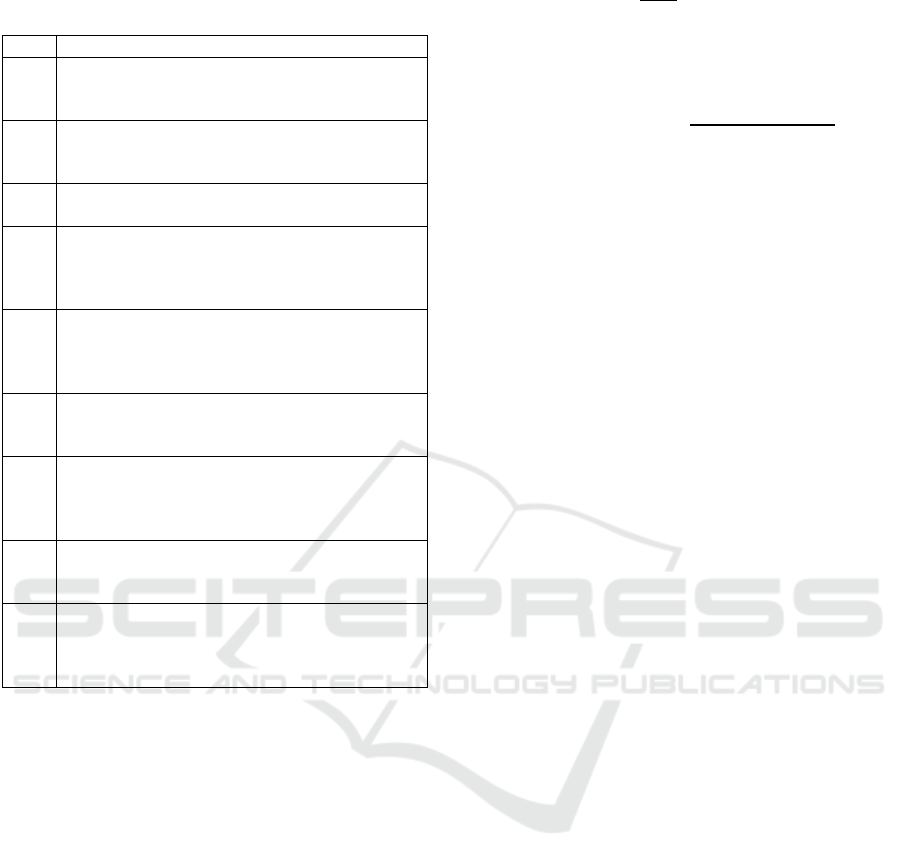
Table 3: Steps For Extracting Movies' Features and
Creating the Hybrid Feature Vector.
Step Description
1 Load the pre-trained transformer-based models
(BERT, RoBERTa, and SBERT) and their
respective tokenizers for text feature extraction.
2 Tokenize the movie overview using each
model's tokenizer with appropriate padding and
truncation.
3 Pass the tokenized text into each transformer
model to obtain the final hidden states.
4 Apply mean (or appropriate) pooling on the
hidden states along the token dimension to
generate a fixed-length feature vector for each
movie overview
p
er model.
5 Load the pre-trained convolutional neural
network models (VGG-16, ResNet-50, and
MobileNet) with ImageNet weights, configured
to exclude their full
y
connected la
y
ers.
6 Resize and preprocess the movie poster and
backdrop images to the required input size (e.g.,
224x224
p
ixels
)
.
7 Pass the preprocessed images through each
visual model and apply Global Average Pooling
on the convolutional feature maps to obtain
flattened feature vectors for each ima
g
e.
8 Normalize all extracted feature vectors (both
textual and visual) using a StandardScaler or
e
q
uivalent to ensure consistent scalin
g
.
9 Concatenate the normalized feature vectors
from the multiple textual and visual models to
form a comprehensive hybrid feature vector for
each movie.
3.3 Recommendation Method
The movie recommendation system leverages
multiple similarity functions to identify and suggest
movies similar to a given input favorite movie. Three
different distance functions are used to evaluate
movie similarities: Cosine Similarity, Euclidean
Distance, and Manhattan Distance. These metrics
allow for a more comprehensive comparison of high-
dimensional data, such as the combined feature
vectors of movies. Each movie is represented by a
combined feature vector, created by concatenating:
1) Textual features from the movie
overview, extracted using a pre-trained BERT model
with mean pooling.
2) Visual features from poster and backdrop
images, obtained using a pre-trained VGG16 model
with global average pooling.
Equation (1) shows how cosine similarity is
computed between the input movie's feature vector
and all other movies in the dataset.
Cosine Similarity =
𝑨⋅𝑩
|𝑨||𝑩|
(1)
Similarly, Equations (2) and (3) give the
Euclidean Distance and Manhattan Distance
formulas.
Euclidean Distance=
\sum
(2)
Manhattan Distance=
∑
|
|
(3)
The similarity scores are calculated using all three
metrics for each input favorite movie, and movies are
ranked accordingly. Based on the computed similarity
scores, the top 5 most similar movies are selected as
recommendations.
3.4 Evaluation Metric
In this study, the success of the developed system was
evaluated using RMSE, MSE, and precision metrics
for the TMDB Dataset and TMDBRatingsMatched
Dataset, which the authors created. However, the
metrics were calculated using different methods for
each dataset.
Since the TMDB Dataset does not contain user-
based rating data for the first and larger dataset, the
system's performance was measured by comparing
the average rating of the recommended movies with
that of the favorite movie. This evaluation was
conducted using RMSE, MSE, and precision metrics.
For the second and smaller dataset, the
TMDBRatingsMatched Dataset, which includes user-
based rating data, the system's performance was
evaluated using RMSE, MSE, and precision metrics
by comparing the ratings given by ordinary users who
have watched both the favorite movie and the
recommended movies.
4 EXPERIMENTAL RESULTS
Experiments were performed on a system equipped
with an 11th-generation Intel Core i5 processor,
16GB RAM, and an NVIDIA RTX 3050 Ti GPU with
4GB GDDR6 VRAM running on Windows 11.
Three favorite movies were randomly selected
from the TMDBRatingsMatched Dataset to test the
developed system, and recommendations were
generated for these movies. The testing was
conducted on the entire TMDB Dataset and the entire
TMDBRatingsMatched Dataset. For each selected
movie, recommendations were made using all
ICEEECS 2025 - International Conference on Advances in Electrical, Electronics, Energy, and Computer Sciences
126
possible feature extraction model combinations,
which include:
1) Visual feature extraction models: VGG-16,
ResNet-50, and MobileNet.
2) Textual feature extraction models: BERT,
RoBERTa, and SBERT.
Each visual and textual model was systematically
combined to generate different hybrid feature
representations (e.g., VGG-16 + BERT, ResNet-50 +
RoBERTa, MobileNet + SBERT, etc.). These feature
representations were then used to compute similarity
scores using three functions: Cosine Similarity,
Euclidean Distance, and Manhattan Distance. For
each selected movie, three movie recommendations
were generated using the similarity functions,
ensuring a comprehensive evaluation of the system.
The testing was conducted on the entire TMDB
Dataset and the entire TMDBRatingsMatched
Dataset.
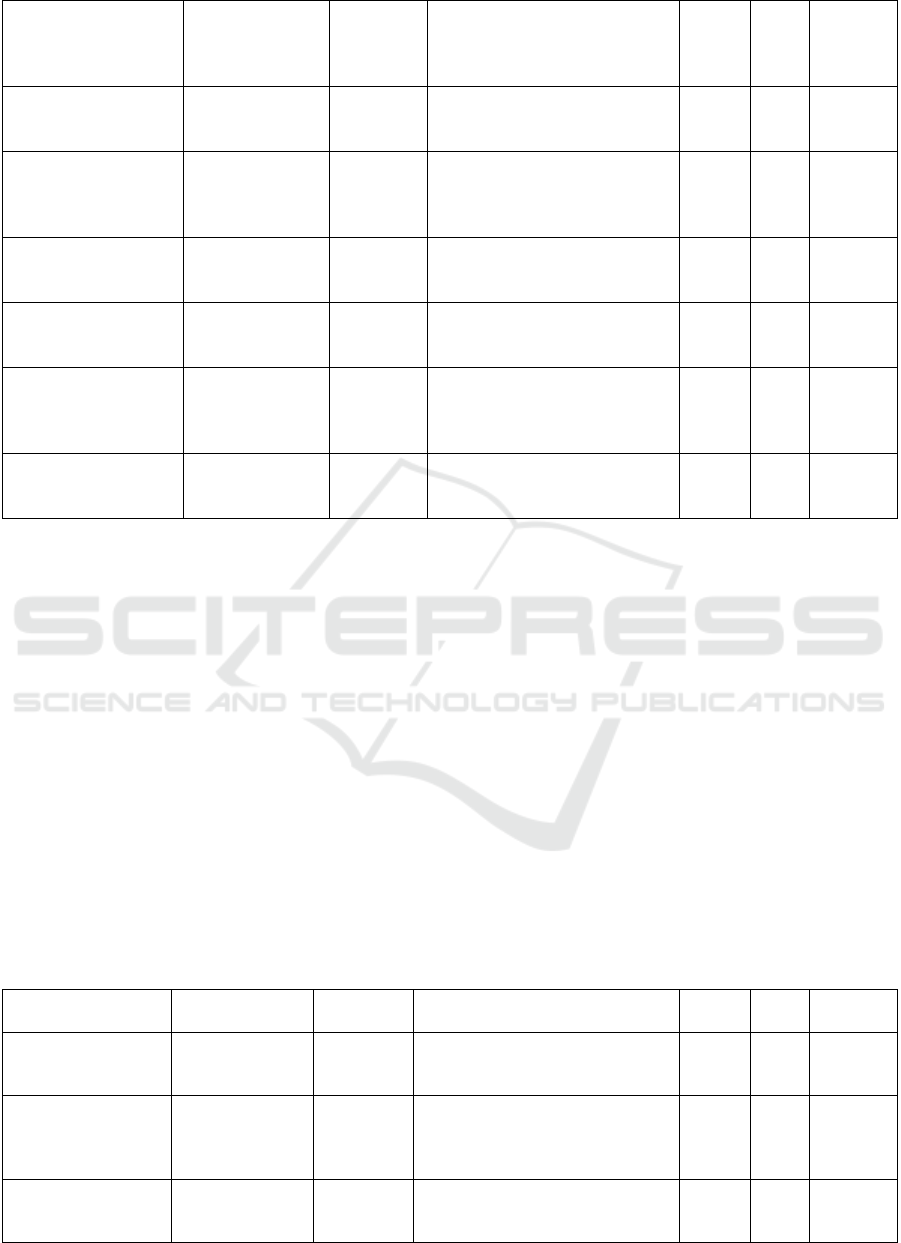
When the developed system was tested on the
TMDBRatingsMatched Dataset, the randomly
selected favorite movies were Patrik, Age 1.5, Kung
Fu Panda: Secrets of the Furious Five, and Get the
Gringo.
1) For Patrik, Age 1.5, the top five
recommendation results were achieved using the
combinations BERT + ResNet + Euclidean, SBERT
+ MobileNet + Cosine, SBERT + MobileNet +
Euclidean, SBERT + MobileNet + Manhattan, and
BERT + MobileNet + Euclidean, with the best cases
yielding RMSE: 0.00, MSE: 0.00, and Precision:
100.00%.
2) For Kung Fu Panda: Secrets of the
Furious Five, the highest-performing combinations
were RoBERTa + MobileNet + Cosine, BERT +
MobileNet + Euclidean, BERT + ResNet + Cosine,
BERT + MobileNet + Cosine, and SBERT + VGG-
16 + Cosine, with the best result achieved using
RoBERTa + MobileNet + Cosine (RMSE: 0.58,
MSE: 0.34, Precision: 96.40%).
3) For Get the Gringo, the top five
combinations were SBERT + VGG-16 + Euclidean,
BERT + VGG-16 + Manhattan, SBERT + MobileNet
+ Cosine, BERT + MobileNet + Cosine, and
RoBERTa + ResNet + Cosine, with the best
performance obtained using SBERT + VGG-16 +
Euclidean (RMSE: 0.99, MSE: 0.98, Precision:
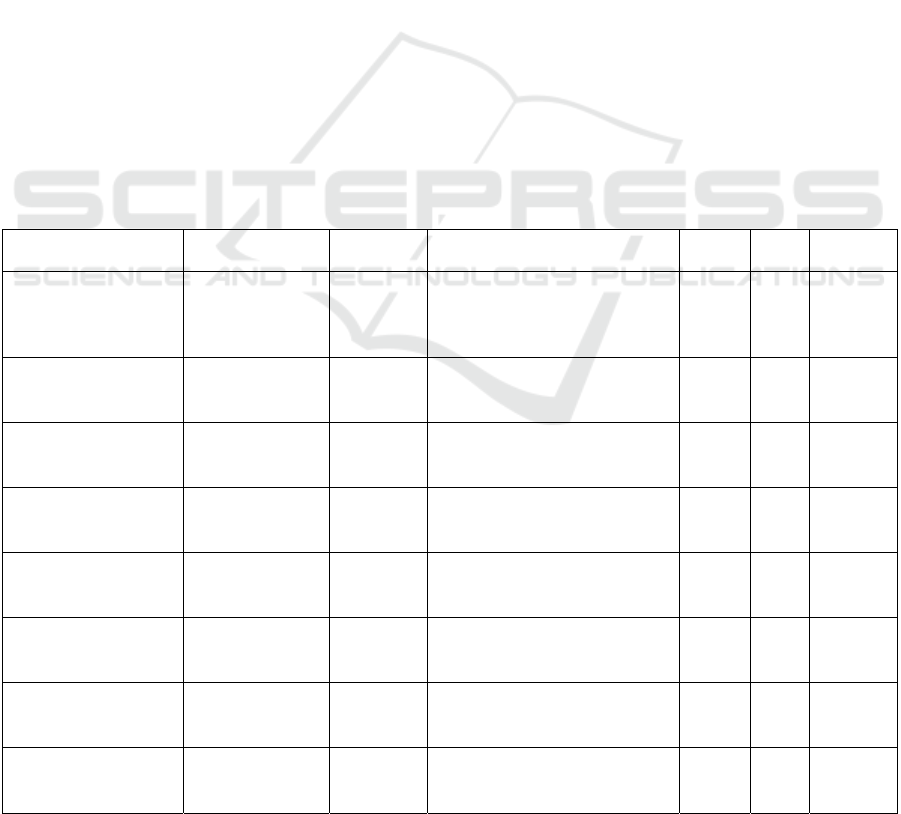
92.00%). The detailed results of the test conducted on
the TMDBRatingsMatched Dataset, including the top
5 performing model combinations for each movie, are
presented in Table 4.
Table 4: Top 5 Model Combinations per Movie on the TMDBRatingsMatched Dataset.
Favorite Movie Model
Combination
Distance
Function
Recommended Movies RMSE MSE Precision
Patrik, Age 1.5 BERT + ResNet Euclidean A Night in the Life of Jimmy
Reardon
(
1988
)
0.0 0.0 100%
Tristana
(
1970
)
Blind Dating (2006)
Patrik, Age 1.5 SBERT +
MobileNet
Cosine The Longest Week (2014) 0.0 0.0 100%
The Substance of Fire
(
1996
)
Hemin
g
wa
y
& Gellhorn
(
2012
)
Patrik, Age 1.5 SBERT +
MobileNet
Euclidean Persuasion
(
2007
)
0.0 0.0 100%
The Substance of Fire (1996)
Tristana (1970)
Patrik, Age 1.5 SBERT +
MobileNet
Manhattan Persuasion (2007) 0.0 0.0 100%
Tristana
(
1970
)
The Substance of Fire
(
1996
)
Patrik, Age 1.5 BERT +
MobileNet
Euclidean Saraband
(
2003
)
0.35 0.12 100%
The Rebound (2009)
The Opportunists (2000)
Kung Fu Panda:
Secrets of the Furious
Five
RoBERTa +
MobileNet
Cosine Kun
g
Fu Panda 2
(
2011
)
0.58 0.34 96.40%
Kun
g
Fu Panda
(
2008
)
The Lion Kin
g
1½
(
2004
)
Kung Fu Panda:
Secrets of the Furious
Five
BERT +
MobileNet
Euclidean Kung Fu Panda 2 (2011) 0.59 0.35 95.95%
Kung Fu Panda (2008)
Blackbeard's Ghost (1968)
Kung Fu Panda:
Secrets of the Furious
Five
BERT + ResNet Cosine Kun
g
Fu Panda 2
(
2011
)
0.59 0.35 99.95%
Kun
g
Fu Panda
(
2008
)
Kun
g
Fu Panda Holida
y
(
2010
)
CineFinder: A Movie Recommendation System Using Visual and Textual Deep Features
127
Kung Fu Panda:
Secrets of the Furious
Five
BERT +
MobileNet
Cosine Kun
g
Fu Panda 2
(
2011
)
0.59 0.35 95.95%
Kung Fu Panda (2008)
Legend of the BoneKnapper
Dra
g
on
(
2010
)
Kung Fu Panda:
Secrets of the Furious
Five
SBERT + VGG-
16
Cosine Kung Fu Panda 2 (2011) 0.59 0.35 95.95
Open Season 3 (2010)
Kung Fu Panda (2008)
Get the Gringo SBERT + VGG-
16
Euclidean Murder in the First
(
1995
)
0.99 0.98 92.00%
Chained
(
2012
)
Murder on a Sunday Morning
(2001)
Get the Gringo BERT + VGG-
16
Manhattan Birdman of Alcatraz
(
1962
)
0.92 0.84 90.31%
Chained
(
2012
)
Murder in the First (1995)
Get the Gringo SBERT +
MobileNet
Cosine Mud (2013) 0.93 0.86 86.92%
Training Day (2001)
The Criminal
(
1960
)
Get the Gringo BERT +
MobileNet
Cosine Mud
(
2013
)
0.99 0.98 86.08%
The Castawa
y
Cowbo
y
(
1974
)
It's Kind of a Funny Story
(
2010
)
Get the Gringo RoBERTa +
ResNet
Cosine Coach Carter
(
2005
)
0.98 0.96 82.05%
Firestorm
(
1998
)
I Am David (2003)
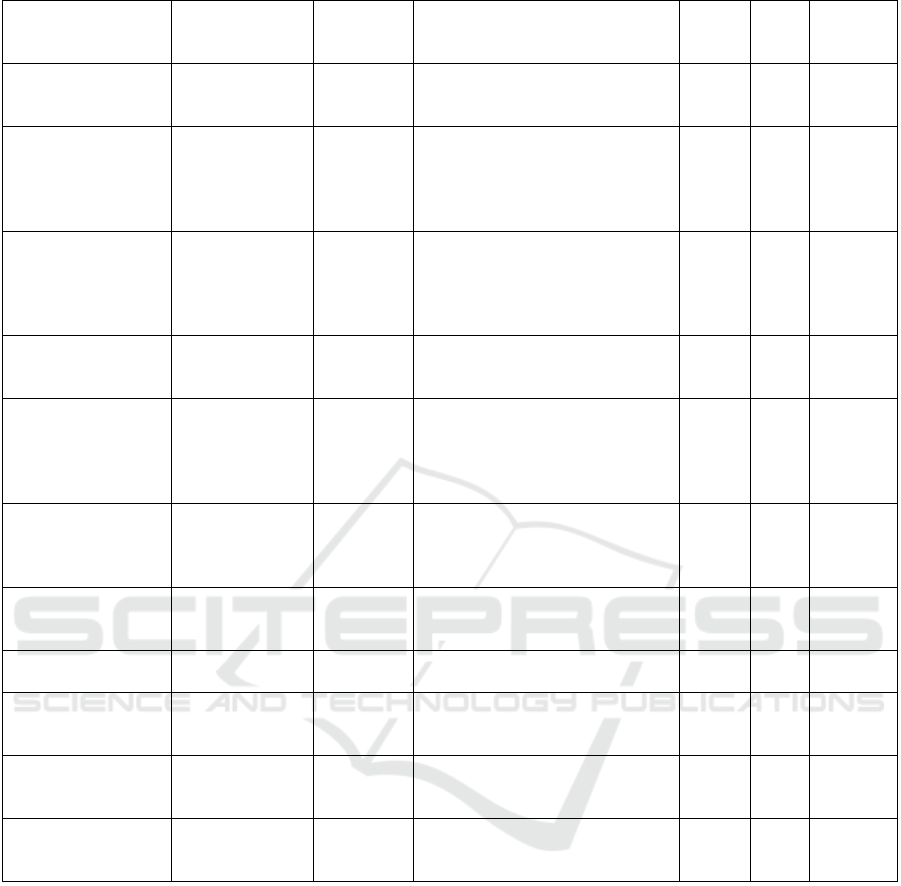
When the developed system was tested on the
TMDB Dataset using the same randomly selected
favorite movies as in the TMDBRatingsMatched
Dataset (Patrik, Age 1.5, Kung Fu Panda: Secrets of
the Furious Five, and Get the Gringo), the following
results were obtained:
1) For Patrik, Age 1.5, the top five
recommendation results were achieved using the
combinations SBERT + VGG-16 + Manhattan,
SBERT + MobileNet + Manhattan, SBERT +
MobileNet + Euclidean, BERT + MobileNet +
Manhattan, and BERT + MobileNet + Euclidean,
with the best result achieved using SBERT + VGG-
16 + Manhattan (RMSE: 0.26, MSE: 0.07, Precision:
100.0)
2) For Kung Fu Panda: Secrets of the
Furious Five, the highest-performing combinations
were BERT + ResNet + Manhattan, BERT +
MobileNet + Cosine, RoBERTa + MobileNet +
Cosine, RoBERTa + ResNet + Euclidean, and BERT
+ ResNet + Cosine, with the best result achieved
using BERT + ResNet + Manhattan (RMSE: 0.18,
MSE: 0.03, Precision: 100.00%).
3) For Get the Gringo, the top five
combinations were BERT + MobileNet + Cosine,
SBERT + MobileNet + Cosine, SBERT + ResNet +
Manhattan, RoBERTa + VGG-16 + Cosine, and
RoBERTa + MobileNet + Cosine, with the best
performance obtained using BERT + MobileNet +
Cosine (RMSE: 0.42, MSE: 0.17, Precision:
100.00%). The detailed results of the test conducted
on the TMDB Dataset, including the top 5 performing
model combinations for each movie, are presented in
Table 5.
Table 5: Top 5 Model Combinations per Movie on the TMDB Dataset.
Favorite Movie Model
Combination
Distance
Function
Recommended Movies RMSE MSE Precision
Patrik, Age 1.5 SBERT + VGG-
16
Manhattan Tristana (1970)
A Little Game (1971)
An
y
Da
y
Now
(
2012
)
0.26 0.07 100.0
Patrik, Age 1.5 SBERT +
MobileNet
Manhattan Persuasion (2007)
Tristana (1970)
Through My Window 3: Looking
at You (2024)
0.29 0.08 100.0
Patrik, Age 1.5 SBERT +
MobileNet
Euclidean Switched at Birth (1991),
Persuasion (2007)
The Little Gan
g
ster
(
1990
)
0.5 0.25 100.0
ICEEECS 2025 - International Conference on Advances in Electrical, Electronics, Energy, and Computer Sciences
128
Patrik, Age 1.5 BERT +
MobileNet
Manhattan Switched at Birth (1991)
The Elder Son (1975)
The Rebound (2009)
0.5 0.25 100.0
Patrik, Age 1.5 BERT +
MobileNet
Euclidean Switched at Birth (1991)
The Elder Son (1975)
Saraband (2003)
0.55 0.3 100.0
Kung Fu Panda:
Secrets of the
Furious Five
BERT + ResNet Manhattan Lupin the Third: Dragon of
Doom (1994)
Kung Fu Panda 2 (2011)
Animal Crossing: The Movie
(2006)
0.18 0.03 100.0
Kung Fu Panda:
Secrets of the
Furious Five
BERT +
MobileNet
Cosine Kung Fu Panda 2 (2011)
Kung Fu Panda: Secrets of the
Masters (2011)
Kung Fu Panda: Secrets of the
Scroll
(
2016
)
0.27 0.07 100.0
Kung Fu Panda:
Secrets of the
Furious Five
RoBERTa +
MobileNet
Cosine Kung Fu Panda 2 (2011)
The Big Trip (2019)
Kun
g
Fu Panda
(
2008
)
0.38 0.14 100.0
Kung Fu Panda:
Secrets of the
Furious Five
RoBERTa +
ResNet
Euclidean Animal Crossing: The Movie
(2006)
Boniface's Holiday (1965)
Tenchi the Movie 2:
The Daughter of Darkness (1997)
0.4 0.16 100.0
Kung Fu Panda:
Secrets of the
Furious Five
BERT + ResNet Cosine Kung Fu Panda 2 (2011)
Kung Fu Panda (2008)
Kung Fu Panda: Secrets of the
Masters
(
2011
)
0.41 0.17 100.0
Get the Gringo BERT +
MobileNet
Cosine Tailcoat for an Idler (1979)
Mud (2013)
The System (2022)
0.42 0.17 100.0
Get the Gringo SBERT +
MobileNet
Cosine Mud (2013), One Ranger (2023),
Trainin
g
Da
y
(
2001
)
0.62 0.38 100.0
Get the Gringo SBERT +
ResNet
Manhattan Legend (2015)
The Boondock Saints (1999)
The Price We Pay (2023)
0.63 0.39 100.0
Get the Gringo ReBERTa +
VGG-16
Cosine Paradise (1991)
Tailcoat for an Idler (1979)
The Warning (2018)
0.77 0.6 66.67
Get the Gringo ReBERTa +
MobileNet
Cosine Tailcoat for an Idler (1979)
The Diary of Anne Frank (1980)
The Warning (2018)
0.79 0.63 66.67
The experimental results presented in Tables 4
and 5 indicate that the CineFinder recommendation
system achieves higher accuracy when evaluated on
the TMDBRatingsMatched dataset, which
incorporates user-specific rating data, compared to
the TMDB dataset, which relies on general audience
evaluations. For instance, in the case of Patrik, Age
1.5, multiple model combinations achieved near-zero
error rates (RMSE and MSE) and 100% precision in
the TMDBRatingsMatched dataset. In contrast, the
error rates were slightly higher when evaluated on the
TMDB dataset. A similar pattern was observed for
Kung Fu Panda: Secrets of the Furious Five and Get
the Gringo, where the system demonstrated
significantly lower error rates in the user-based
dataset. These results highlight the importance of
leveraging user-driven feedback to enhance
recommendation accuracy, as user-specific ratings
provide a more reliable foundation for evaluating the
relevance of suggested movies compared to general
audience metrics such as average vote scores.
Moreover, comparing the best-performing model
combinations in the two datasets reveals some key
differences. In the TMDBRatingsMatched dataset,
the highest accuracy was achieved for Patrik, Age 1.5,
using the SBERT + MobileNet combination with all
three similarity measures, all yielding RMSE: 0.00,
MSE: 0.00, and Precision: 100.00%. However, in the
TMDB dataset, the best result for Patrik, Age 1.5, was
obtained using SBERT + VGG-16 with Manhattan
CineFinder: A Movie Recommendation System Using Visual and Textual Deep Features
129

distance, achieving an RMSE of 0.26, MSE of 0.07,
and 100.00% precision. Similarly, for Kung Fu
Panda: Secrets of the Furious Five, the RoBERTa +
MobileNet combination with Cosine similarity
performed best in the TMDBRatingsMatched dataset
(RMSE: 0.58, Precision: 96.40%), while in the
TMDB dataset, the BERT + ResNet combination
with Manhattan distance achieved the highest
accuracy (RMSE: 0.18, Precision: 100.00%). In the
case of Get the Gringo, the SBERT + VGG-16
combination with Euclidean distance yielded the best
performance in the TMDBRatingsMatched dataset
(RMSE: 0.99, Precision: 92.00%), whereas in the
TMDB dataset, the BERT + MobileNet combination
with Cosine similarity achieved the highest accuracy
(RMSE: 0.42, Precision: 100.00%). These results
indicate that while certain model combinations
consistently performed well, the optimal feature
extraction models varied between the datasets. This
suggests that user-driven ratings influence which
feature extraction approaches yield the most accurate
recommendations, emphasizing the need for adaptive
model selection strategies based on the data source.
5 CONCLUSION AND FUTURE
WORK
This study developed CineFinder—a hybrid movie
recommendation system—by integrating visual and
textual deep features extracted via multiple state-of-
the-art pre-trained models. The system was evaluated
using two datasets: the TMDB Dataset, representing
general audience metrics, and the
TMDBRatingsMatched Dataset, which includes user-
specific ratings. The experimental results
demonstrate that the system achieves notably higher
precision when evaluated with user-based rating data;
in many cases, several feature combinations achieved
a precision of 100% for the selected favorite movies.
This outcome strongly suggests that leveraging user-
driven feedback provides a more reliable basis for
assessing recommendation accuracy than traditional
popularity or average vote metrics.
Despite these promising results, several avenues
for future work remain. First, further enhancement of
CineFinder could be achieved by incorporating real-
time interaction data—such as watch history, implicit
feedback, and session-based activities—to adapt to
evolving user preferences dynamically. Second,
exploring more advanced similarity measures beyond
standard cosine similarity, Euclidean distance, and
Manhattan distance (for example, neural
collaborative filtering or contrastive learning
approaches) may further refine the recommendation
process. Finally, extending the system into a scalable,
web-based, or streaming platform deployment will
facilitate real-world testing and validation, ensuring
the system can effectively handle large-scale and
diverse user interactions.
Overall, while CineFinder successfully
demonstrates the benefits of integrating multimodal
deep learning techniques for movie recommendation,
the insights gained from the current study pave the
way for future, more adaptive, robust, and user-
centric recommendation systems.
REFERENCES
Abbas, K., Afaq, M., Khan, T. A., & Song, W. C. (2020).
A Blockchain and Machine Learning-Based Drug
Supply Chain Management and Recommendation
System for Smart Pharmaceutical Industry.
ELECTRONICS, 9(5).
https://doi.org/10.3390/electronics9050852
Abbass, M. A. B., & Ban, Y. S. (2024). MobileNet-Based
Architecture for Distracted Human Driver Detection of
Autonomous Cars. ELECTRONICS, 13(2).
https://doi.org/10.3390/electronics13020365
Aktas, C., & Ciloglugil, B. (2024). Exploring the
Navigation Patterns of Learners on an Educational
Recommender System
Baby, D., Devaraj, S. J., & Raj M. M, A. (2021). Leukocyte
Classification based on Transfer Learning of VGG16
Features by K-Nearest Neighbor Classifier 2021 3rd
International Conference on Signal Processing and
Communication (ICPSC),
Chawla, T., Mittal, S., & Azad, H. K. (2024). MobileNet-
GRU fusion is used to optimize the diagnosis of yellow
vein mosaic virus. Ecological Informatics, 81.
https://doi.org/10.1016/j.ecoinf.2024.102548
Chen, X. J., Zhao, P. P., Xu, J. J., Li, Z. X., Zhao, L., Liu,
Y. C., Sheng, V. S., & Cui, Z. M. (2018). Exploiting
Visual Contents in Posters and Still Frames for Movie
Recommendation. IEEE ACCESS, 6, 68874-68881.
https://doi.org/10.1109/Access.2018.2879971
Chi, T. Y., & Jang, J. S. R. (2024). WC-SBERT: Zero-Shot
Topic Classification Using SBERT and Light Self-
Training on Wikipedia Categories. Acm Transactions
on Intelligent Systems and Technology, 15(5), 1-18.
https://doi.org/10.1145/3678183
Choi, Y.-H., Lee, J., & Yang, J. (2022). Development of a
service parts recommendation system using clustering
and classification of machine learning. EXPERT
SYSTEMS WITH APPLICATIONS, 188.
https://doi.org/10.1016/j.eswa.2021.116084
Fan, M., Kong, M., Wang, X., Hao, F., & Zhang, C. (2025).
FITE-GAT: Enhancing aspect-level sentiment
classification with FT-RoBERTa induced trees and
graph attention network. EXPERT SYSTEMS WITH
ICEEECS 2025 - International Conference on Advances in Electrical, Electronics, Energy, and Computer Sciences
130

APPLICATIONS, 264.
https://doi.org/10.1016/j.eswa.2024.125890
GroupLens. MovieLens 20M Dataset.
https://grouplens.org/datasets/movielens/20m/
Harshvardhan, G. M., Gourisaria, M. K., Rautaray, S. S., &
Pandey, M. (2022). UBMTR: Unsupervised Boltzmann
machine-based time-aware recommendation system.
Journal of King Saud University Computer and
Information Sciences, 34(8), 6400-6413.
https://doi.org/10.1016/j.jksuci.2021.01.017
Huang, Z. H., Yu, C., Ni, J., Liu, H., Zeng, C., & Tang, Y.
(2019). An Efficient Hybrid Recommendation Model
With Deep Neural Networks. IEEE ACCESS, 7,
137900-137912.
https://doi.org/10.1109/Access.2019.2929789
Iwendi, C., Ibeke, E., Eggoni, H., Velagala, S., &
Srivastava, G. (2021). Pointer-Based Item-to-Item
Collaborative Filtering Recommendation System Using
a Machine Learning Model. International Journal of
Information Technology & Decision Making, 21(01),
463-484. https://doi.org/10.1142/s0219622021500619
Iwendi, C., Khan, S., Anajemba, J. H., Bashir, A. K., &
Noor, F. (2020). Realizing an Efficient IoMT-Assisted
Patient Diet Recommendation System Through
Machine Learning Model. IEEE ACCESS, 8, 28462-
28474. https://doi.org/10.1109/Access.2020.2968537
Kawaguchi, K., Nishimura, H., Wang, Z., Tanaka, H., &
Ohta, E. (2019). Basic investigation of sign language
motion classification by feature extraction using pre-
trained network models 2019 IEEE Pacific Rim
Conference on Communications, Computers and Signal
Processing (PACRIM),
Kumar, C., & Kumar, M. (2022). User session interaction-
based recommendation system using various machine
learning techniques. MULTIMEDIA TOOLS AND
APPLICATIONS, 82(14), 21279-21309.
https://doi.org/10.1007/s11042-022-13993-8
Kumar, R. L., Kakarla, J., Isunuri, B. V., & Singh, M.
(2021). Multi-class brain tumor classification using
residual network and global average pooling.
MULTIMEDIA TOOLS AND APPLICATIONS, 80(9),
13429-13438. https://doi.org/10.1007/s11042-020-
10335-4
Lak, A. J., Boostani, R., Alenizi, F. A., Mohammed, A. S.,
& Fakhrahmad, S. M. (2024). RoBERTa, ResNeXt and
BiLSTM with self-attention: The ultimate trio for
customer sentiment analysis. Applied Soft Computing,
164. https://doi.org/10.1016/j.asoc.2024.112018
Li, J., Zhang, C., & Jiang, L. L. (2024). Innovative Telecom
Fraud Detection: A New Dataset and an Advanced
Model with RoBERTa and Dual Loss Functions.
APPLIED SCIENCES-BASEL, 14(24).
https://doi.org/ARTN 11628
10.3390/app142411628
Li, W., Gao, S., Zhou, H., Huang, Z., Zhang, K., & Li, W.
(2019). The Automatic Text Classification Method
Based on BERT and Feature Union 2019 IEEE 25th
International Conference on Parallel and Distributed
Systems (ICPADS),
Ortakci, Y. (2024). Revolutionary text clustering:
Investigating transfer learning capacity of SBERT
models through pooling techniques. Engineering
Science and Technology-an International Journal-
Jestech, 55. https://doi.org/ARTN 101730
10.1016/j.jestch.2024.101730
Subakti, A., Murfi, H., & Hariadi, N. (2022). The
performance of BERT as data representation of text
clustering. J Big Data, 9(1), 15.
https://doi.org/10.1186/s40537-022-00564-9
Suganeshwari, G., Balakumar, R., Karuppanan, K.,
Prathiba, S. B., Anbalagan, S., & Raja, G. (2023).
DTBV: A Deep Transfer-Based Bone Cancer
Diagnosis System Using VGG16 Feature Extraction.
Diagnostics (Basel), 13(4).
https://doi.org/10.3390/diagnostics13040757
TMDB. (2025). API Reference.
https://developer.themoviedb.org/reference/intro/gettin
g-started
Ullah, F., Zhang, B. F., & Khan, R. U. (2020). Image-Based
Service Recommendation System: A JPEG-Coefficient
RFs Approach. IEEE ACCESS, 8, 3308-3318.
https://doi.org/10.1109/Access.2019.2962315
Wei, S. X., Zheng, X. L., Chen, D. R., & Chen, C. C.
(2016). A hybrid approach for movie recommendation
via tags and ratings. Electronic Commerce Research
and Applications, 18, 83-94.
https://doi.org/10.1016/j.elerap.2016.01.003
Yang, Y., & Cui, X. (2021). Bert-Enhanced Text Graph
Neural Network for Classification. Entropy (Basel),
23(11). https://doi.org/10.3390/e23111536
Yoon, J., & Choi, C. (2023). Real-Time Context-Aware
Recommendation System for Tourism. Sensors (Basel),
23(7). https://doi.org/10.3390/s23073679
Zhang, J., Wang, Y. F., Yuan, Z. Y., & Jin, Q. (2020).
Personalized Real-Time Movie Recommendation
System: Practical Prototype and Evaluation.
TSINGHUA SCIENCE AND TECHNOLOGY, 25(2),
180-191. https://doi.org/10.26599/Tst.2018.9010118
Zhou, Y., Wang, Z. Q., Zheng, S. R., Zhou, L., Dai, L., Luo,
H., Zhang, Z. C., & Sui, M. X. (2024). Optimization of
automated garbage recognition model based on
ResNet-50 and weakly supervised CNN for sustainable
urban development. Alexandria Engineering Journal,
108, 415-427.
https://doi.org/10.1016/j.aej.2024.07.066
CineFinder: A Movie Recommendation System Using Visual and Textual Deep Features
131
