
EEG-Driven Dynamic Immersion Design for XR Gaming Experiences
Yunbing Han
a
College of Arts, Media and Design, Northeastern University, Boston, Massachusetts, U.S.A.
Keywords: Extended Reality, EEG Signals, Immersion Recognition, Dynamic Regulation, Adaptive Game Design.
Abstract: This study explores the dynamic identification and design method of Extended Reality game immersion based
on electroencephalography (EEG) signals. By using the EEG dataset from the Kaggle platform, the original
emotion labels (Positive, Neutral, Negative) were first remapped to the corresponding immersion levels (High,
Medium, Low) to construct an immersion recognition dataset suitable for classification models. The Orange
platform was used for visual modelling and training, and finally achieved a very high accuracy (98.5%) and
AUC value (0.999) under the Random Forest algorithm, which verified the feasibility and effectiveness of
predicting the user immersion state through EEG data. Based on these results, this paper proposes the
importance of real-time feedback for immersion based on physiological signals in game development and
design. The process of user EEG state acquisition, immersion recognition, and content adjustment enhances
the continuity and interactive depth of user experience. With the miniaturization and popularization of EEG
devices, real-time feedback for immersion based on physiological signals such as EEG is expected to become
a key infrastructure for designing next-generation immersive experiences.
1 INTRODUCTION
XR is often used as an abbreviation for Extended
Reality (Alcañiz et al., 2019), or X as a placeholder
for a variety of digital reality formats (Rauschnabel et
al., 2022), including Virtual Reality (VR), Extended
Reality (XR), Mixed Reality (MR), etc. Research
using electroencephalography (EEG) combined with
XR equipment has gradually increased and become
more widespread in recent years, with the number of
experiments and studies rising rapidly since 2017
(Nwagu et al., 2023). Whether the XR experience is
for entertainment purposes or for simulation training,
Presence and Immersion are important indicators of a
good user experience (Skarbez et al., 2017).
Therefore, helping XR programs with design
development and testing through physiological
signals can give more direct feedback. Early studies
utilized auditory evoked EEG data to assess VR
presence differences. Such methods demonstrated
that EEG could be used to objectively monitor
immersion/presence without interrupting the
experience (Savalle et al., 2024). Studies
demonstrated that a number of EEG features can be
used as objective biomarkers of immersion
a
https://orcid.org/0009-0001-9921-7685
(Tadayyoni et al., 2024), as well as providing a
machine learning approach to objectively measure
VR presence (Saha et al., 2024).
In recent years, there have been a number of
studies in this area on the design and application of
dynamic immersion via EEG. Chiossi et al. adjusted
the complexity of distracting elements in virtual
environments in real time by monitoring user EEG
metrics. The results showed that dynamic adjustment
based on alpha/theta waves can optimize the
environment to keep users engaged without
overloading them (Chiossi et al., 2024). Woźniak et
al. detected the player's level of concentration and
relaxation in real time via EEG as an input to control
the game organ. It demonstrated that this method
significantly enhanced player immersion and
engagement without adding additional cognitive load
(Woźniak et al., 2021). Iwane et al.'s approach is to
automatically optimize the control strategy when a
user's dissatisfaction or "wrong" reaction to an avatar
action is detected. This dynamic correction
mechanism, which uses EEG error signals as
feedback, demonstrates a cutting-edge approach to
improving interactive immersion (Iwane et al., 2024).
Han, Y.
EEG-Driven Dynamic Immersion Design for XR Gaming Experiences.
DOI: 10.5220/0014362100004718
Paper published under CC license (CC BY-NC-ND 4.0)
In Proceedings of the 2nd International Conference on Engineering Management, Information Technology and Intelligence (EMITI 2025), pages 517-521
ISBN: 978-989-758-792-4
Proceedings Copyright © 2025 by SCITEPRESS – Science and Technology Publications, Lda.
517

The aim of this study is to employ EEG data and
correlate it with immersion and presence during XR
experience, using the data for model training as well
as the positive impact of EEG data on XR game
design and development.
2 DATA & METHODOLOGY
The EEG data used in this study is from the publicly
available dataset EEG Brainwave Dataset: Feeling
Emotions on the Kaggle platform, which contains
EEG signals recorded by multiple subjects in
different experimental tasks. The dataset has a high
sampling frequency and contains multiple channels,
which can effectively reflect the EEG changes of the
subjects in different mental states, and is suitable to
be used as the basic data for immersion recognition
(Bird et al., 2018; Bird et al., 2019).
2.1 Immersion Label Construction
In immersive experience research, how to
scientifically label "immersion" is a key prerequisite
for supervised learning tasks. Since immersion is a
subjective psychological feeling, it is difficult to be
directly observed and measured, and usually needs to
be estimated with the help of indirect indicators.
The dataset used in this study is from Kaggle, and
the original labels are POSITIVE, NEUTRAL, and
NEGATIVE emotional states. These labels are
divided based on the EEG responses generated by
subjects during viewing or experiencing different
types of stimulus content (e.g., images, videos).A key
finding regarding electroencephalography (EEG)
during virtual reality experiences is the relationship
between specific brainwave patterns and immersion
levels. The study demonstrated that a number of EEG
features can be used as objective "biomarkers" of
immersion, which can be used to recognize the user's
level of immersion in real time and to dynamically
adjust the difficulty of VR tasks to maintain
engagement. Reece et al. found that although
subjective stress measures did not differ significantly
between flat screens and anxiety-analogous reality
presentations, EEG results showed an increase in
cortical activity associated with higher levels of
virtual reality immersion, which coincided with
enhanced descriptions of realism and sense of
presence (Tadayyoni et al., 2024) . Rebecca Reece et
al. emphasized the use of electroencephalography
(EEG) to measure event-related potentials as an
indicator of immersion state, demonstrating neural
responses that vary according to the immersion
context (Reece et al., 2022). Users are more likely to
be in an immersive state when they are in a positive
mood and have higher cognitive engagement, while
immersion is weaker or even interrupted when they
are in a neutral or negative mood. Therefore, this
study establishes the following correspondence
between emotional labels and immersion states:
POSITIVE corresponds to High immersion, in
which subjects show high emotional activity, positive
reaction and concentration. Combined with the
characteristics of XR game scenarios, this state often
corresponds to the user's deep involvement in the
task, with a strong sense of immersion in the
environment, resulting in an "oblivious" experience,
while NEUTRAL corresponds to Medium
immersion, where the user may still be in the middle
of the task in a neutral emotional state but lacks a
strong emotional drive. The experience is between
immersion and non-immersion, with a certain degree
of volatility, which is characterized by phases of
concentration and occasional emotional reactions.
NEGATIVE corresponds to Low immersion; in a
negative emotional state, the user is more likely to
experience distraction, fatigue, anxiety, or boredom.
This type of state may lead to interruption of
experience or difficulty in achieving game goals in
XR interactions, and is therefore regarded as the
context with the lowest level of immersion.
In order to ensure the rationality of labeling, this
study compared and referred to the relationship
models between emotion and immersion, such as the
Russell Emotion Circle and the Immersion
Experience Model, and adjusted the meanings of the
labels by taking into account the actual task intensity
of the XR usage scenario, user feedback and other
auxiliary factors. Finally, this study reassigned each
record in the dataset as "High immersion", "Medium
immersion" or "Low immersion" according to its
original emotion label. immersion", "Medium
immersion" or "Low immersion", and constructed a
three-classification dataset suitable for the immersion
recognition task. This label mapping not only ensures
the interpretability of the training data, but also
provides theoretical support and practical basis for the
subsequent application of immersion prediction
models in XR games.
2.2 Modeling Tools
In this study, EEG data are modeled and classified
using the Orange data mining platform, a visual
machine learning tool that can complete the process
of data import, feature selection, model training and
EMITI 2025 - International Conference on Engineering Management, Information Technology and Intelligence
518

performance evaluation through drag-and-drop
modules.
In the modeling process, this study followed the
following procedure in the Orange platform: first,
import the data and adjust the labels. After importing
the data in CSV format into Orange, the original
emotion labels (POSITIVE, NEUTRAL,
NEGATIVE) were renamed and mapped, and unified
into three categories of labels: "High immersion",
"Medium immersion", and "Low immersion", which
were used for modeling. immersion", "Medium
immersion", and "Low immersion" for the
subsequent triple classification task. Then, the
classifier selection is carried out. In this study,
Random Forest is chosen as the main classification
model, which is an integrated learning method with
good robustness and can effectively deal with
nonlinear features and multi-category tasks. In
Orange, the modeling is carried out through the
"Random Forest" module, which is suitable for
exploratory experiments because it does not need to
adjust the parameters manually. Then, the model is
evaluated. To ensure the robustness of the results, this
study uses 5-fold cross-validation for performance
evaluation. The "Test & Score" module is used in
Orange to comprehensively analyze the model's
Accuracy, AUC value, F1 score and other indicators
to ensure that the model has a good generalization
ability.
3 EXPERIMENT & RESULTS
3.1 Model Performance Indicators
The actual test results (Table 1) show that the
Random Forest model performs well in the three
classification tasks in this study: the AUC value is as
high as 0.999, which reflects that the model has a very
high discriminative ability in distinguishing different
immersion levels; the overall accuracy is 98.5%,
which reflects that the majority of the samples have
been correctly categorized; the F1 score, precision
and recall are all 0.985, which indicates that the
model performs very balancedly in identifying
various types of immersion states; the MCC value is
0.977, which further verifies the stability and
reliability of the model. The F1 score, precision rate
and recall rate are all 0.985, indicating that the model
has a well-balanced performance in recognizing
various immersive states.
These results show that immersion recognition
based on EEG signals has significant feasibility in
experimental data, especially with high classification
performance under the random forest model.
Table 1: Random forest training result data
Model Random Forest
AUC 0.999
CA 0.985
F1 0.985
Prec 0.985
Recall 0.985
MCC 0.977
3.2 Confusion Matrix Analysis
To further analyze the model's categorization
performance on various immersion labels, this paper
generates a confusion matrix using the Orange
platform, as shown in Figure 1. The horizontal axis
represents the categories predicted by the model, and
the vertical axis is the true labels. The number in each
cell indicates the number of samples in that category
that were categorized into different categories. The
results show that for the samples with the real label of
High immersion, the model correctly classified 689
of them, 18 were misclassified as Low, and only 1
was misclassified as Medium; for the samples with
Low immersion, 700 were correctly classified, and
only 8 were misclassified as High; and for the
samples with Medium immersion, the model
recognizes them most accurately, and correctly
classified 710 of them, and only 6 were misclassified
as High; and for the samples with Medium
immersion, the model identifies them most
accurately. For samples with Medium immersion, the
model recognizes them most accurately, with 710
correctly classified, only 6 misclassified as High, and
the rest not misclassified.
Overall, the three immersion states showed high
distinguishability in the classification model. There
were fewer misclassifications between High and Low
immersions, indicating that they are significantly
different at the level of EEG features; while Medium
category was slightly confused with High category,
probably due to its transitional nature in terms of
emotional and cognitive states. The results further
verify the validity of the model developed in this
study, and indicate that the application of EEG signals
in the identification of the three types of immersive
states is highly feasible.
EEG-Driven Dynamic Immersion Design for XR Gaming Experiences
519
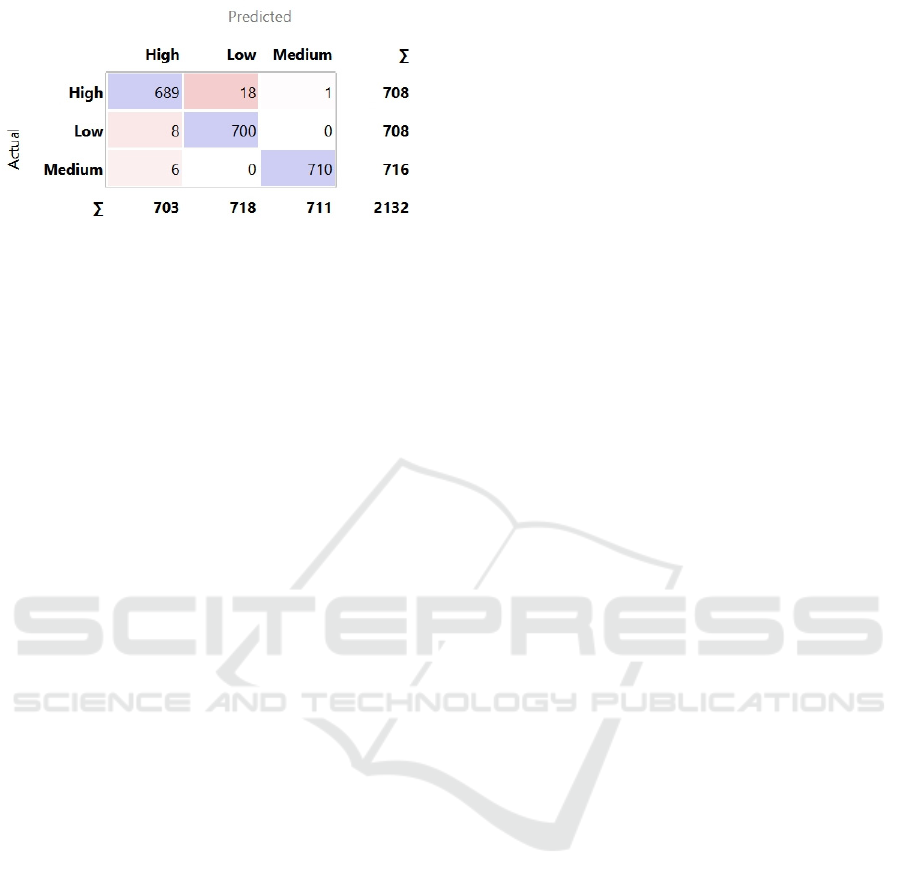
Figure 1: Confusion Matrix (Picture credit: Original)
4 APPLICATION OUTLOOK:
DYNAMIC IMMERSION
DESIGN IN XR GAMES
This study not only verifies the feasibility of using
EEG to predict immersion, but also proposes a vision
of its application in the optimization of XR game
experience, i.e., an EEG feedback-based immersion
adjustment system.
In traditional XR games, the content presentation
usually relies on a fixed rhythm and scene logic, and
lacks real-time perception and response to the user's
psychological state, which can easily lead to
problems such as fragmentation of experience, loss of
attention, or excessive fatigue. The immersion level
of users at different stages often fluctuates
significantly, while the game content cannot be
adjusted in time to match their psychological state,
limiting the continuity and personalization of the
immersion experience. At the same time, designers
often face a key dilemma: the lack of ability to
perceive the real-time immersion state of the user
during the game. Although certain feedback can be
obtained through user tests or subjective
questionnaires, these approaches are delayed,
subjective, and have limited coverage, making it
impossible to accurately determine the level of
immersion experience of a player in a specific
interaction node or plot segment.
However, using EEG to capture and predict user
immersion during game development and giving
timely feedback is strongly conducive to iterative
game development. The introduction of this
mechanism enables XR game content to "read the
user" and provide more targeted immersion
optimization strategies while ensuring the
consistency of the overall process. Its core value lies
in the shift from "content-driven" to "user-state-
driven", providing a technical foundation for
personalized immersion experiences.
It is foreseeable that this model will bring a new
paradigm for XR game design in the future, providing
a technical path and application scenario for
immersion-driven design.
5 CONCLUSIONS
This paper collects the existing EEG data, which are
processed and labeled to classify them, so that they
correspond to the sense of immersion during the XR
game. After random forest model training, it is
concluded that the system is able to accurately
calculate and predict the user's immersion during
gameplay, and classify the user's state as "High
immersion", "Medium immersion", or "Low
immersion", through real-time acquisition of user
EEG signals by the EEG headset device, and
capturing the user's cognitive and emotional states
during the interaction process. The system can
accurately calculate and predict the user's immersion
during the game and categorize the user's state as
"High immersion", "Medium immersion" or "Low
immersion". This kind of physiological signal
feedback is very helpful for XR games in the early
stage of development and design. The development
team can make timely adjustments to the game
content or difficulty based on the physiological signal
evaluation to ensure that users maintain an idealized
immersion during the game process, thus enhancing
the user experience. This plays an important role in
grasping the totality of XR content. In the future,
when intelligent hardware can provide XR devices
with convenient and fast EEG detection functions, the
model will not only stay in the testing stage, but also
become a key system for intelligent and automated
XR games. User experience and feedback will
become part of the game production and process,
opening up new feedback mechanisms and
interaction modes for XR games.
REFERENCES
Alcañiz, M., Bigné, E., & Guixeres, J. (2019). Virtual
reality in marketing: A framework, review, and
research agenda. Frontiers in Psychology, 10, 1530.
Bird, J. J., Ekart, A., Buckingham, C. D., & Faria, D. R.
(2019). Mental emotional sentiment classification with
an EEG-based brain-machine interface. In The
International Conference on Digital Image and Signal
Processing (DISP’19). Springer.
Bird, J. J., Manso, L. J., Ribiero, E. P., Ekart, A., & Faria,
D. R. (2018). A study on mental state classification
EMITI 2025 - International Conference on Engineering Management, Information Technology and Intelligence
520

using EEG-based brain-machine interface. In 9th
International Conference on Intelligent Systems. IEEE.
Chiossi, F., Ou, C., Gerhardt, C., Putze, F., & Mayer, S.
(2024). Designing and evaluating an adaptive virtual
reality system using EEG frequencies to balance
internal and external attention states. International
Journal of Human-Computer Studies, 103433.
Iwane, F., et al. (2024). Customizing the human-avatar
mapping based on EEG error related potentials during
avatar-based interaction. Journal of Neural
Engineering, 21(2), 026016.
https://doi.org/10.1088/1741-2552/ad2c02
Nwagu, C., AlSlaity, A., & Orji, R. (2023). EEG-based
brain-computer interactions in immersive virtual and
augmented reality: A systematic review. Proceedings of
the ACM on Human-Computer Interaction, 7(EICS),
1–33.
Rauschnabel, P. A., Felix, R., Hinsch, C., Shahab, H., &
Alt, F. (2022). What is XR? Towards a framework for
augmented and virtual reality. Computers in Human
Behavior, 133, 107289.
Reece, R., Bornioli, A., Bray, I., Newbutt, N., Satenstein,
D., & Alford, C. (2022). Exposure to green, blue and
historic environments and mental well-being: A
comparison between virtual reality head-mounted
display and flat screen exposure. International Journal
of Environmental Research and Public Health, 19(15),
9457.
Saha, S., Dobbins, C., Gupta, A., & Dey, A. (2024).
Machine learning based classification of presence
utilizing psychophysiological signals in immersive
virtual environments. Scientific Reports, 14(1).
Savalle, E., Pillette, L., Won, K., Argelaguet, F., Lécuyer,
A., & Macé, M. J. (2024). Towards
electrophysiological measurement of presence in
virtual reality through auditory oddball stimuli. Journal
of Neural Engineering, 21(4), 046015.
Skarbez, R., Brooks, F. P., Jr., & Whitton, M. C. (2017). A
survey of presence and related concepts. ACM
Computing Surveys, 50(6), 1–39.
Tadayyoni, H., Campos, M. S. R., Quevedo, A. J. U., &
Murphy, B. A. (2024). Biomarkers of immersion in
virtual reality based on features extracted from the EEG
signals: A machine learning approach. Brain Sciences,
14(5), 470.
Tadayyoni, H., Campos, M. S. R., Quevedo, A. J. U., &
Murphy, B. A. (2024). Biomarkers of immersion in
virtual reality based on features extracted from the EEG
signals: A machine learning approach. Brain Sciences,
14(5), 470.
Woźniak, M. P., et al. (2021). Enhancing in-game
immersion using BCI-controlled mechanics.
Proceedings of the 2021 International Conference on
Interactive Media Experiences, 1–6.
EEG-Driven Dynamic Immersion Design for XR Gaming Experiences
521
