
Globalization and Corporate Financial Decision-Making: A Multi
Dimension of Industry, Market and Institutional Influence
Zhixuan Sun
Shanghai International Studies University, Songjiang District, Shanghai, China
Keywords: Globalization, Corporate Financial Decision-Making, Reciprocal Tariff Policies, Manufacturing, Retailing,
Service Industries.
Abstract: This study investigates how industries in China, Japan, and the United States respond to the U.S. reciprocal
tariff policies, focusing on manufacturing, retailing, and services. Using a comparative case study method, it
explores financial decision-making through the lenses of Pecking Order Theory, Trade-Off Theory, Net
Present Value (NPV) Method, and Real Options Theory. The findings show that Chinese manufacturers are
shifting operations abroad and adopting flexible investments, while retailers emphasize internal financing and
national branding. In services, firms like Aliyun balance debt to maintain financial stability amid geopolitical
risks. Japan, though less directly impacted, is relocating production, diversifying supply chains, and
leveraging third-country trade agreements to maintain U.S. market access. The U.S. aims to restore industrial
strength but faces inflation and retaliation. Government responses, including subsidies and regional trade
negotiations, play vital roles. The study concludes that financial strategy under globalization is deeply shaped
by industry characteristics and national policy and offers theoretical insights for managing uncertainty. Future
research is encouraged to explore firm-level case studies for greater depth.
1 INTRODUCTION
Eric C.E. et al. (2025) report that in 2025, global trade
entered a new period of tension and realignment as
the United States issued aggressive tariff measures
under the “reciprocal tariff” policy proposed by
President Donald Trump (Accountancy, 2025). In this
policy shift, the U.S. imposed a flat 10% tariff on all
imported goods and significantly higher rates,
ranging from 25% to 125%, on imports from
countries that, according to U.S. trade officials, did
not offer reciprocal market access or fair-trade
practices. This marked a sharp turn away from
decades of liberalized trade policies that had
underpinned globalization.
China, as the U.S.’s largest trading rival, faced a
steep 125% tariff on its exports to the U.S., prompting
Beijing to retaliate with up to 34% tariff on American
goods such as agricultural products and consumer
goods and impose export restrictions on vital
materials like rare earth elements. These actions have
disrupted global supply chains and intensified
tensions between the two largest economies.
Meanwhile, Japan, subjected to a 24% tariff, was
seeking exemptions through diplomatic channels.
Prime Minister Shigeru Ishiba advocated for the
removal of tariffs, especially the 25% levy on auto
imports, which is a core pillar of Japan’s export
economy, during the talk with President Trump.
Despite these efforts, the Japanese government
allocated a sum of ¥980 billion (approx. $6.3 billion)
as assistance funds to support the affected industries
and small businesses. (Christopher, 2025) Besides,
Japan has intensified negotiation with regional
partners to stabilize its trade outlook.
In response to escalating trade barriers, China,
Japan, and South Korea have agreed to resume
negotiations for a trilateral free trade agreement,
aiming to strengthen regional economic cooperation
and defused the impact of U.S. protectionist policies.
These developments highlight a shift towards
regional alliances and a revaluation of global trade
strategies, as nations navigate the complexities
introduced by the U.S.’s reciprocal tariff policy.
The broader implications of these changes are
significant. First, Eiteman et al. (2016) suggest that
multinational corporations are reassessing their
production and sourcing strategies, increasingly
looking to Southeast Asia, Mexico, and Eastern
Europe to hedge against geopolitical risks (Moffett et
al., 2021). Second, the rise in tariffs and trade barriers
is contributing to inflationary pressures worldwide,
Sun, Z.
Globalization and Corporate Financial Decision-Making: A Multi Dimension of Industry, Market and Institutional Influence.
DOI: 10.5220/0014353600004718
Paper published under CC license (CC BY-NC-ND 4.0)
In Proceedings of the 2nd International Conference on Engineering Management, Information Technology and Intelligence (EMITI 2025), pages 321-327
ISBN: 978-989-758-792-4
Proceedings Copyright © 2025 by SCITEPRESS – Science and Technology Publications, Lda.
321

with consumers in all three countries—especially in
the U.S.—facing higher prices for imported goods.
Therefore, this study will focus on identifying the
characteristics of the manufacturing, retailing and
service in China, Japan, and the United States. And
analysing what strategies these three industries took
to cope with the reciprocal tariff policies issued by the
United States. In the study, a comparative case study
approach will be applied to analyse financial data
from manufacturing, retailing, and service companies
in China, Japan, and America to validate the
theoretical frameworks.
2 RESEARCH QUESTIONS
What are the characteristics of manufacturing,
retailing and service in China, Japan and America and
what strategies do they adopt in response to the
reciprocal tariffs imposed by the USA.
3 THEORETICAL BASIS
To better illustrate the characteristics of
manufacturing, retailing and service in China, Japan
and America and to analysis their response
respectively to the tariffs imposed by USA, some
relevant theories will be introduced below.
3.1 Financing Decision Theories
3.1.1 Pecking Order Theory
The Pecking Order Theory explains how companies
prioritize financing options, which may affect their
strategies in response to tariffs. For instance, during
the U.S.-China trade war, many Chinese
manufacturers prioritized internal financing to avoid
the signalling risk associated with external equity
financing. (Brealey et al., 2022) Proposed by Stewart
Myers and Nicolas Majluf in 1984, it elucidates that
when financing new projects, the company will
prioritize using internal profits, which is equal to net
profit plus depreciation minus dividends, because
internal financing does not require signing contracts
with investors or paying various fees, which means
fewer restrictions. When stock prices are overvalued,
managers will issue new shares based on internal
information, making investors discover the
information asymmetry, resulting in investors
lowering the valuation of existing and newly issued
stocks, which leads to a decrease in stock prices and
the market value. But if issuing bonds unrelated to
asymmetric information, the value of the company
will not decrease. Therefore, bond financing is
preferred over equity financing.
3.1.2 Trade-Off Theory
The Trade-Off Theory explains how companies
balance debt and equity to maximize firm value. It is
crucial for understanding how companies manage
financial risks under tariff pressures (Ross et al.,
2021). When industries, specially manufacturing and
retailing, are facing high tariffs, the cost of imported
inputs will increase, resulting in lower revenue or
profit margins. Managers need to use this theory to
pull off the appropriate balance in capital weights to
maximize their firm value and create positive
shareholder value. When the debt-to-equity ratio is
low, the tax shield benefits of debt enhance the
company's value. Until the debt ratio reaches a certain
extent, the tax shield benefits of debt begin to be
offset by the cost of financial distress. When the
marginal tax shield benefits are exactly equal to the
marginal financial distress costs, the company's value
is maximized, and the debt ratio range that time is the
optimal capital structure of the company.
Together, the Pecking Order Theory and the
Trade-Off Theory provide a comprehensive
framework for understanding how companies balance
financing options and manage financial risks, which
is crucial for formulating strategies in response to
tariffs. By understanding the principles of these two
theories, companies can optimize their financing
decisions and minimize financial risks, thereby
enhancing their resilience to tariff changes under
globalization.
3.2 Investment Decision Theories
3.2.1 NPV Method
Net Present Value refers to the shortfall between the
present value of future cash inflows and the present
value of future cash outflows.
NPV=
∑
()
()
−𝐼
*
(1
)
The NPV Method is used to evaluate investment
projects by comparing the present value of future cash
inflows and outflows. It helps managers decide
whether to proceed with projects under current tariff
rates (Damodaran, 2012). It converts the net cash
flows of an investment over its entire life into the sum
of equivalent present values based on a predetermined
EMITI 2025 - International Conference on Engineering Management, Information Technology and Intelligence
322

target rate of return. Assuming that the expected cash
inflow can be realized at the end of the year, and
considering the initial investment as borrowed at a
predetermined discount rate, when the net present
value is positive, the project still has spare income
after repaying the principal and interest. When the net
present value is zero, there is no profit left. When the
net present value is negative, the project's income is
insufficient to repay the principal and interest. For
example, when a transnational company needs to
evaluate an investment project, it needs to estimate
cash flows in local currency first, and then, convert
projected local cash flows into the parent company’s
currency. Thirdly, it uses the cost of capital, adjusted
for country risk premium, exchange rate risk and
inflation differences to determine the discount rate,
which will be applied calculating the present values.
Adjustments for transfer pricing, tariffs, and capital
controls that affect repatriation should be put into
consideration. Finally, it subtracts the initial
investment from the total present value of future cash
flows and decides whether the project is feasible.
*NFC (t) refers to the net cash flow in year t; K refers to the
discount rate; I refers to the initial investment amount; n
refers to the expected service life of the project
3.2.2 Real Options Theory
Real Options Theory provides a framework for
making flexible investment decisions under
uncertainty. This theory helps companies adapt to
changing tariff environments by allowing them to
delay or modify investment decisions(Trigeorgis,
1996) (Copeland & Antikarov, 2001). In theory, a real
option is an economically valuable right (without an
obligation) to gain real assets whose expected future
cash flows are linked to the development of a new
product through R&D investments, patent
exploitation, expansion of production scale and so on.
Under globalization, companies can use real options
to delay investment decisions until more information
is available about tariff changes, thereby minimizing
potential losses. It helps firms reframe reciprocal
tariffs not just as threats, but as triggers for strategic
flexibility. Instead of locking into rigid plans,
companies can design adaptive strategies that treat
investment decisions as options—waiting, switching,
abandoning, or expanding—as conditions evolve.
This dynamic approach enhances competitiveness in
an uncertain and protectionist global trade
environment.
In short, the NPV method helps managers decide
whether a project is profitable or not under the current
tariff rates while The Real Option Theory values the
flexibility to adapt decisions over time in uncertain
environments, which helps companies to respond
dynamically to changing tariffs. However, NPV
method may have some limitations when tariffs keep
changing because it assumes fixed conditions.
4 CROSS-INDUSTRY ANALYSIS:
TAKE CHINA AS AN
EXAMPLE
The reciprocal tariff policy has sent ripples across
China’s economic landscape, particularly affecting its
key industries: manufacturing, retailing and services.
Each sector has experienced distinct challenges while
also adopting innovative strategies to adapt and
remain competitive in a changing global trade
environment.
In Cross-industry analysis, the study is going to
introduce the characteristics of manufacturing,
retailing and service industries in China and analyse
what strategies do they adopt in response to the
reciprocal tariffs imposed by the USA.
4.1 Manufacturing
The manufacturing industry in China is characterized
by high output volume and cost efficiency. It has
become the global leader in manufacturing through its
extensive industrial infrastructure, low labour costs,
and government support for export-driven growth.
The industry focuses on electronics, textiles,
machinery, and more recently, electric vehicles and
green energy technologies. Recently, it was
showcasing China's national strength to the world
with its remarkable rapid development.
When it comes to problems, however, the sector
has borne the brunt of U.S. tariffs. Key exports, such
as electronics, machinery, automotive components
and consumer goods, are facing increased costs and
reduced competitiveness in the U.S. market due to
high import duties. The 125% tariff on critical
businesses like electric vehicles and solar panels has
sharply curtailed Chinese manufacturers’ access to
one of their largest export markets (Hong Zhu et al.,
2025). This has led to decreased factory orders,
margin compression, and concerns about
overcapacity in domestic production.
To alleviate the economic losses caused by tariff
pressure, many manufacturers are seeking alternative
solutions. By calculating the net present value of
continuing versus shifting operations, managers make
decisions on whether to retain the US market or not.
Globalization and Corporate Financial Decision-Making: A Multi Dimension of Industry, Market and Institutional Influence
323
With declining NPV of U.S (Moffett et al., 2021).
market-oriented production due to tariffs, firms are
instead investing in South Asia, Mexico, and Africa
where markets contain a higher future cash flow
potential and lower trade barriers. Besides, firms are
adopting “option-based” flexibility. For example,
keeping idle capacity in China while building
modular plants in Vietnam or India creates
operational flexibility, allowing them to observe the
change of trade climate. Since this approach treats
international expansion as a series of real options,
which minimizes risk in uncertain global conditions.
4.2 Retailing
As one of the most dynamic and tech-driven sectors
in the world, the retailing industry in China is
prosperously developing. There’s an obvious
characteristic of the industry in China, which is called
“E-Commerce Dominance”. Many platforms like
Alibaba, JD.com and Pinduoduo dominate retail, with
online sales making up a large portion of total retail
revenue. These sales are promoted by the emergence
of a new promotion mean called real-time livestream
selling.
While not directly subject to tariffs, Chinese
retailers are facing downstream effects from higher
input costs and disrupted supply chains for imported
goods. Additionally, reduced household confidence
because of macroeconomic uncertainty affects
consumption.
Continuously meeting consumer demands while
maintaining industry stability have become the top
priorities for Chinese retailers. Firstly, they are trying
to leverage national pride and consumers’
nationalism, strategically promoting local brands.
This sentiment-driven strategy, while not grounded in
traditional finance theory, complements real options
logic: it provides a low-risk, high-upside branding
shift without major capital expenditure. Secondly,
large retailers are prioritizing retained earnings and
internal cash flows to finance supply chain
optimizations, smart inventory systems and AI-based
customer analytics. Here’s a classic case: JD.com.
Rather than relying heavily on external equity
markets, especially during periods of macroeconomic
instability and investor scepticism. Moffett et al.
(2021) highlight that rather than relying heavily on
external equity markets, JD has prioritized internal
cash flows and retained earnings to fund its supply
chain restructuring and AI-driven retail technology
(Brealey et al., 2022). For instance, JD reinvested a
significant portion of its net income into expanding
its proprietary warehousing and logistics
infrastructure, rather than issuing new equity. This
aligns with the logic of the Pecking Order Theory:
Firms prefer internal financing to minimize
information asymmetry and avoid signalling risk to
the market.
4.3 Service
Since China is the second most populous country
in the world, its service sector is highly developed,
and it is still growing. The industry has provided 331
million people with job opportunities. What’s more,
it now accounts for over 50% of China’s GDP, which
signals a shift from manufacturing-led growth. The
integration of the service industry with emerging
technologies has also brought new vitality to this
sector. For example, digital services like fintech,
online entertainment, education platforms and cloud
computing are expanding rapidly, too. However, they
are undergoing significantly indirect consequences
due to slowing trade, rising operational costs and
weakened investor confidence. Meanwhile, cross-
border financial services and logistics firms have
experienced reduced volumes and higher geopolitical
risk premiums.
The study will take Aliyun as an example to
explain how a cloud computing company responds to
reciprocal tariffs and how it copes with the risks.
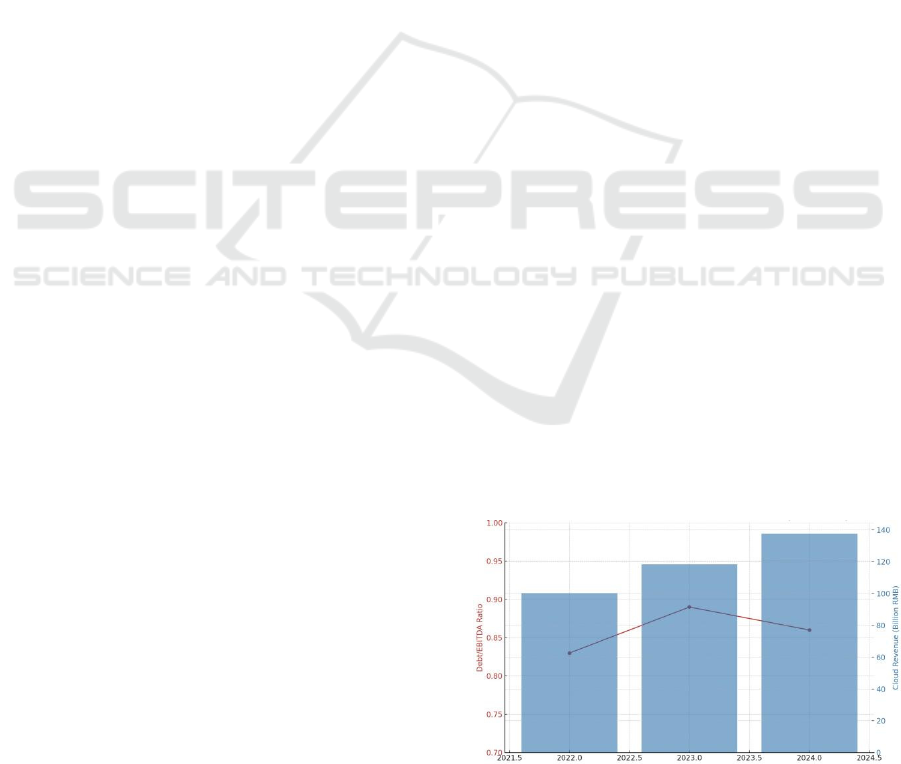
According to the FY 2022 Annual Report and the FY
2024 Annual Report of Alibaba Groups Investor
Relations website, the total debt of the firm rose from
154.5 billion RMB to 180.8 billion RMB, while its
EBITDA increased from 186.2 to 210.3 billion RMB.
This resulted in a stable Debt/EBITDA ratio hovering
around 0.86, well within safe limits. During the same
period, Aliyun ’ s revenue surged from 100.2 to
137.6 billion RMB, reflecting successful capital
deployment into high-growth digital infrastructure
(Alibaba Group, 2022; Alibaba Group, 2023; Alibaba
Group, 2025). Data mentioned above can be seen in
figure 1.
Figure 1: Alibaba Cloud: Debt/EBITDA Ratio vs Cloud
Revenue (2022-2024). Picture credit: Original
EMITI 2025 - International Conference on Engineering Management, Information Technology and Intelligence
324
This financing decision exemplifies a balanced
risk-return approach. By maintaining moderate
leverage, Alibaba maximizes tax benefits and avoids
the dilution of control associated with equity
financing, especially critical in a volatile geopolitical
landscape. It can be concluded that a firm should
borrow just enough to fund growth efficiently, while
safeguarding its financial stability. As U.S. reciprocal
tariffs continue to strike global markets, such theory-
based decision-making offers a blueprint for resilient
corporate finance in China ’ s evolving service
sector.
4.4 Government Response
In all three sectors, China’s governments have played
a practice role. For examples, a large amount of
subsidies and tax relief have been provided as support
to export-heavy manufacturers and logistics
providers. Besides, billions have been allocated to AI,
green energy and industrial automation to help
industries move up the value chain. In the field of
diplomacy, China is actively engaging in regional and
global trade forums to open alternative markets and
reduce dependency on the U.S.
5 CROSS-MARKET ANALYSES:
TAKE JAPAN AS AN
EXAMPLE
While China has been the primary target of the United
States’s reciprocal tariff policy, Japan’s deeply
export-oriented economy has not been immune to the
indirect effects.
In cross-market analysis, the study aims to explore
how Japan’s labour market, merchandise market and
financial market are responding to an evolving under
these new global trade conditions.
5.1 Labor Market
Japan’s labour market has shown notable resilience
largely due to its diversified export portfolio and
stable domestic service industry. Although it was not
directly targeted by the tariffs, industries linked to
U.S.-China supply chains, such as automobiles,
semiconductors and precision machinery, have seen
slower growth. Among the huge market, Toyota is a
good example illustrating automotive sector
adjustment amid global shocks.
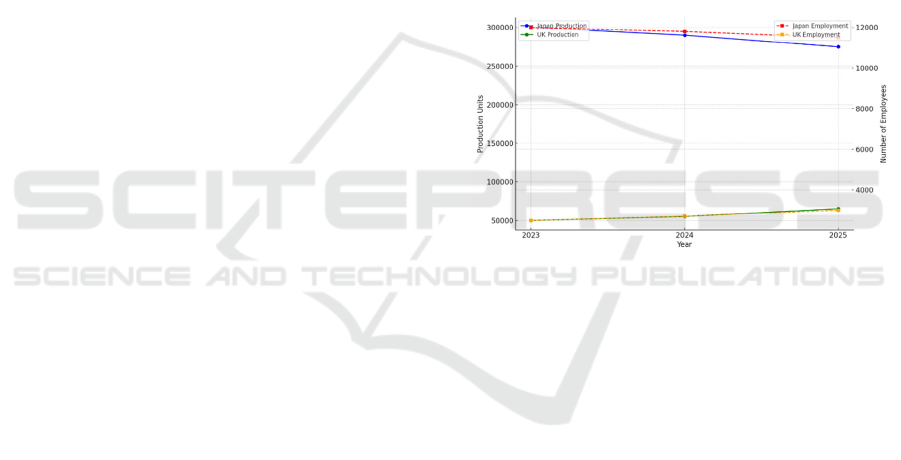
In a strategic move, it announced plans to relocate
a portion of its GR Corolla production from Japan to
its Burnaston plant in Derbyshire, UK. This decision
is influenced by a recent UK-U.S. trade agreement
that reduces tariffs on UK-manufactured vehicles
exported to the U.S. from 25% to 10% for up to
100,000 vehicles annually. (Karim C., 2025)
The Burnaston facility, currently operating below
capacity, will receive an investment of approximately
¥8 billion to establish a new assembly line capable of
producing 10,000 units annually, primarily for the
North American market.
To facilitate the production transition, it plans to
dispatch Japanese engineers to the UK to assist in
setting up the new assembly line. This temporary
redeployment underscores the need for workforce
flexibility and may influence future training and
development programs within Japan to support
internationalization operations. Data mentioned
above can be seen in figure 2.
Figure2: Toyota Global Production and Employment
Impact (2023-2035) Picture credit: Original.
5.2 Merchandise Market
As the U.S. shifts its tariff posture, Japan is facing
dual challenges such as reduced cost-efficiency in
regional supply chains, especially those involving
China, and increased pressure to prove reciprocal
trade fairness.
To save themselves, Japanese importers are
actively diversifying sourcing strategies. Many firms
have increasingly localized workshops in the United
States and Southeast Asia to bypass tariff-related
costs. For example, Panasonic has expanded its
battery production facilities in Nevada, while
companies like Denso are investing in North
American R&D hubs. These moves support U.S.
operations but reduce the volume of finished goods
exported directly from Japan. Data mentioned above
can be seen in figure 3.
Globalization and Corporate Financial Decision-Making: A Multi Dimension of Industry, Market and Institutional Influence
325
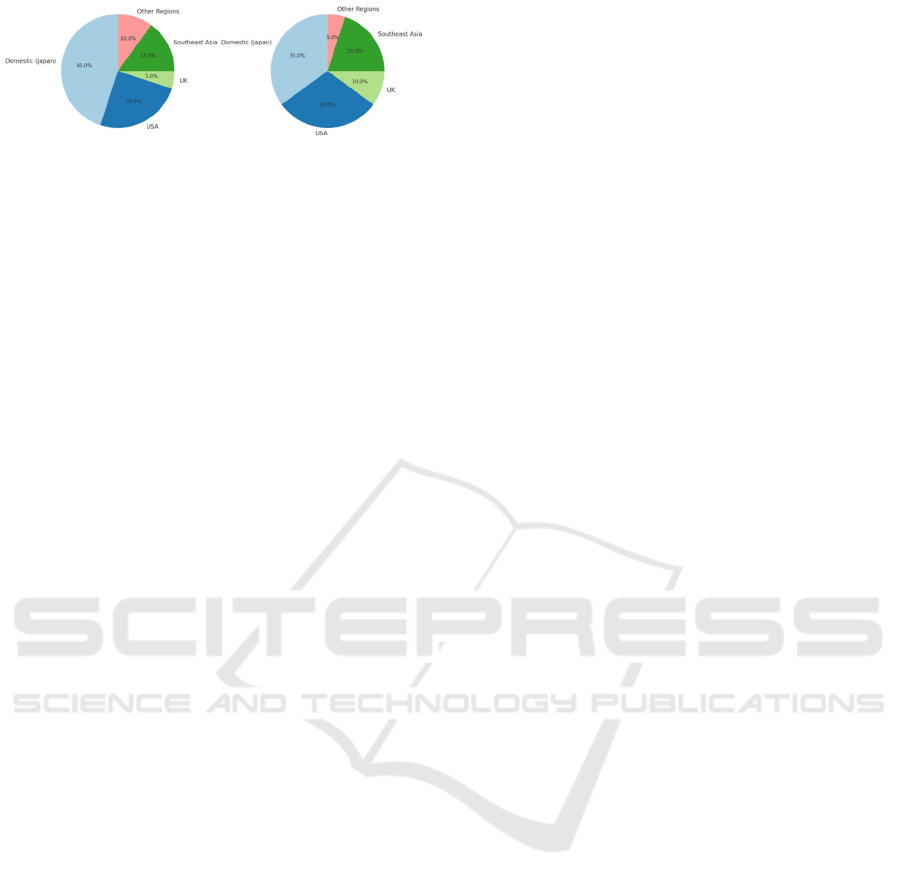
Figure3: Pre&Post-Tariff Production Localization Picture
credit: Original.
With the reciprocal tariffs raising the cost of
Chinese components, Japan is deepening its
economic partnerships with Vietnam, Thailand and
India to build more resilient and cost-effective supply
chains. This strategy not only mitigates immediate
tariff risks but also aligns with Tokyo’s long-term
economic diplomacy goals under its Indo-Pacific
strategy
5.3 Financial Market
Japan’s financial market can be seen as a safe haven
in a volatile landscape. The yen has maintained its
role as a safe-haven currency, appreciating during
periods of global uncertainty driven by tariff
escalations. Although this strengthens investor
confidence, it also poses challenges for exporters by
making Japanese goods more expensive abroad.
The financial market is always inseparable from
equities and dividends. Japanese equity markets have
reflected sectoral divergence. Export-heavy firms in
the automotive and electronics sectors have
experienced volatility in response to tariff
developments, while domestically focused industries,
such as retail, healthcare and financial services, have
remained stable or developed. Institutional investors
and corporate treasuries have responded by
diversifying asset allocations, with increased
investment in non-U.S. markets and local innovation.
At the policy level, the Bank of Japan has
continued its accommodative stance, which provides
liquidity and maintaining low interest rates to support
capital flows and ensure credit stability. Government-
backed agencies have also extended credit and
insurance to exporting SMEs facing demand
uncertainty.
By spreading production risk, investing in new
markets, and preserving employment stability, Japan
offers a blueprint for how advanced economies can
navigate the uncertainties of modern trade while
sustaining long-term growth.
6 CROSS-COUNTRY ANALYSES
The United States’ policy of reciprocal tariffs, where
taxes match or exceed those imposed by trade
partners, has reshaped the dynamics of international
commerce. While originally aimed at correcting long-
term trade imbalances and advocating for more
equitable market access, the ripple effects of these
tariffs have significantly impacted major economies
such as China and Japan. This analysis explores how
each of these three countries, China, Japan and the
United States, has been influenced by and responded
to these reciprocal tariffs across trade, production,
and economic strategy.
6.1 China
China, as the primary target of the United States'
tariffs in this trade war, has undergone a burden over
$300 billion worth of goods, including electronics,
machinery and consumer products, disrupted export
volumes and pressured manufacturers to reassess
their global positioning.
In response, China has pursued a dual strategy.
Firstly, it accelerated the diversification of its export
markets under the Belt and Road Initiative and
deepened trade ties with ASEAN nations, the Middle
East and Africa. Secondly, Chinese firms have
increasingly “decoupled” sensitive supply chains,
especially in the tech sector, by localizing plants or
investing in third countries such as Vietnam and
Indonesia.
Moreover, the government has provided subsidies
and tax relief for affected export enterprises while
promoting domestic consumption to counterbalance
weakening external demand. However, these
strategies haven’t fully offset losses because foreign
investment inflows to China have slowed, and
manufacturers face rising costs due to the need to
“tariff-proof” supply chains.
6.2 Japan
Although not being directly affected, the imposition
of a 25% tariff on Japanese car imports by the U.S. in
2025 marked a turning point, prompting major
manufacturers to adapt. Toyota’s decision to shift
production of the GR Corolla from Japan to the UK
exemplifies how Japanese firms are leveraging third-
country trade agreements to bypass U.S. tariffs. By
exploiting the UK-U.S. trade deal that offers
preferential tariff treatment, Japanese firms are
maintaining U.S. market access without escalating
costs.
EMITI 2025 - International Conference on Engineering Management, Information Technology and Intelligence
326

Japanese companies are also expanding
workshops in North America and Southeast Asia,
thereby isolating themselves from tariff exposure.
Meanwhile, Tokyo has responded diplomatically by
strengthening bilateral and multilateral trade
frameworks, such as the CPTPP and the Japan-EU
Economic Partnership Agreement, to reduce
dependence on any single trade corridor.
Japan’s economic resilience is also supported by
a stable financial market and a robust monetary
policy, although these come at the cost of reduced
export competitiveness. Labor markets remain stable
due to domestic redeployment strategies and the
country’s long-standing tradition of lifetime
employment in major firms.
6.3 The United States
For the United States, the reciprocal tariff policy is a
part of a broader industrial policy aimed at restoring
manufacturing, protecting intellectual property, and
correcting structural trade deficits. While these
measures have achieved some near-term gains, for
example, a rebound in U.S. steel and semiconductor
investments. They have also raised import costs,
contributing to inflationary pressures and supply
chain distortions. The reason why side-effects exist is
that U.S. consumers and businesses have faced higher
prices for imported goods, especially electronics and
textiles. What’s more, retaliation from China and
other trading partners has hurt U.S. agricultural
exports and high-end manufacturing industries like
aerospace.
However, the U.S. has encouraged domestic
investment through legislative tools like the Inflation
Reduction Act and CHIPS Act. These policies aim to
create high-value jobs and rebuild industrial capacity
in strategic sectors. Still, the full economic benefits of
these policies are long-term, while the short-term
disruptions of tariff wars continue to ripple through
the economy.
7 CONCLUSIONS
The study finds that companies in China, Japan, and
the United States adopt different strategies to cope
with reciprocal tariff policies, influenced by industry
characteristics, market conditions, and institutional
factors, which provide valuable insights for
policymakers and business leaders on how to navigate
the complexities of global trade and tariff policies.
However, this study is limited by the availability of
data on specific companies’ financial decisions.
Future research could explore case studies of
individual companies to provide more detailed
insights.
REFERENCES
Accountancy. (2025, April 6). Forecasting the Impact of
Trump ’ s 2025 Reciprocal Tariffs. Auditing
Accounting. Retrieved June 14, 2025, from
https://auditingaccounting.com
Alibaba Group. Fiscal Year 2022 Annual Report, February
20, 2025 [June 14, 2025],
https://www.alibabagroup.com/en-US/ir-financial-
reports-financial-results
Alibaba Group. Fiscal Year 2022 Annual Report, July 21,
2023 [June 14, 2025],
https://www.alibabagroup.com/en-US/ir-financial-
reports-financial-results
Alibaba Group. Fiscal Year 2022 Annual Report, July 26,
2022 [June 14, 2025],
https://www.alibabagroup.com/en-US/ir-financial-
reports-financial-results
Brealey, R. A., Myers, S. C., & Allen, F. (2022). Principles
of Corporate Finance (14th Edition). McGraw-Hill.
Christopher C. (2025, May 26). Japan to spend 6.3 billion
for tariff relief package, Kyodo reports. Reuters.
Retrieved June 14, 2025, from https://www.reuters.com
Copeland, T., & Antikarov, V. (2001)., Real Options: A
Practitioner’s Guide. Texere.
Damodaran, A. (2012). Investment Valuation: Tools and
Techniques for Determining the Value of Any Asset
(3rd Edition). Wiley.
Eiteman, D. K., Stonehill, A. I., & Moffett, M. H. (2016).
Multinational Business Finance (14th Edition). Pearson.
Eric C.E., Kevin G., Zhu Wang, Jeffrey G.W., Christopher
F., Santiago G.C., Meghan P. (2025, April 17).
Important Updates to President Trump’s Reciprocal
Tariffs. Steptoe. Retrieved June 14, 2025, from
https://www.steptoe.com
Hong Zhu, Wenxin Chen, Sheng Tang. (2025, April 22).
Analysis of the Impact of the U.S. “Reciprocal Tariff”
Policy on Global Supply Chains and China’ s Co.
Chambers. Retrieved June 14, 2025, from
https://www.chambers.com
Karim C. (2025, May 29). Wheely Moving World ’ s
Largest Car Maker Hatching Plans to Invest £ 40
million in a New Assembly Line in UK. The Scottish
Sun. Retrieved June 14, 2025, from
https://www.thescottishsun.co.uk
Moffett, M. H., Stonehill, A. I., & Eiteman, D. K. (2021).
Fundamentals of Multinational Finance (6th Edition).
Pearson.
Ross, S. A., Westerfield, R. W., & Jaffe, J. (2021).
Corporate Finance (13th Edition). McGraw-Hill.
Trigeorgis, L. (1996). Real Options: Managerial Flexibility
and Strategy in Resource Allocation. MIT Press.
Globalization and Corporate Financial Decision-Making: A Multi Dimension of Industry, Market and Institutional Influence
327
