
Integrated Analysis of Student Surveys with Machine-Learning
Neli Arabadzhieva-Kalcheva
a
, Maya Todorova
b
, Evgeniya Rakitina-Qureshi
c
, Ivo Rakitin
d
,
Hristo Nenov
e
and Dimitrichka Nikolaeva
f
Faculty of Computing and Automation, Technical University of Varna, Varna, Bulgaria
Keywords: Decision Tree, Gaussian Naïve Bayes, Gradient Boosting, Histogram-Based Gradient Boosting, K-Nearest
Neighbours, Logistic Regression, Machine Learning, Neural Networks, Random Forest, Support Vector
Machine.
Abstract: This paper presents an integrated analysis of student survey data using machine learning methods. The main
objective is to evaluate and compare the effectiveness of different algorithms in multi-class classification
tasks related to student satisfaction. Ten widely used algorithms were applied: Decision Tree, Random Forest,
Gradient Boosting, Histogram-based Gradient Boosting, Logistic Regression, Linear Support Vector Machine,
Support Vector Machine with RBF kernel, k-Nearest Neighbours, Gaussian Naïve Bayes, and Multilayer
Perceptron. The evaluation was conducted using 5-fold cross-validation and four standard performance
metrics: accuracy, precision, recall, and F1-score. Experimental results show that ensemble tree-based
methods, particularly Gradient Boosting, Random Forest, and Histogram-based Gradient Boosting, achieved
the highest performance across all metrics.
1 INTRODUCTION
In modern higher education, student feedback plays a
key role in evaluating and improving the learning
process. Survey studies are not only a means of
measuring satisfaction but also a foundation for
strategic decision-making in education management
(Atanasova, Filipova, Sulova, & Alexandrova, 2019;
Gaftandzhieva, Doneva, & Bandeva, 2019).
With advances in artificial intelligence and
machine learning, new techniques such as correlation
analysis, decision trees, and Random Forest enable
deeper knowledge extraction from survey data
(Ivanov, 2020; Villegas-Ch, Román-Cañizares, &
Palacios-Pacheco, 2020). This, in turn, facilitates the
improvement of the content and organization of the
learning process, personalization of teaching, and
sustainable management of the educational
environment (Nawaz, Sun, Shardlow, &
a
https://orcid.org/0000-0002-9277-2803
b
https://orcid.org/0000-0002-0266-9723
c
https://orcid.org/0000-0002-8612-0876
d
https://orcid.org/0000-0001-7960-1295
e
https://orcid.org/0000-0003-1813-8406
f
https://orcid.org/0000-0002-2980-581X
Kontonatsios, 2022; Katragadda, Ravi, & Kumar,
2020).
Recent research has emphasized the analysis of
both textual and quantitative data from student
surveys using classification, clustering, and sentiment
analysis algorithms (Anderson, Dryden, & Variava,
2018; Kastrati, Dalipi, Imran, Nucci, & Vanni, 2021;
Dervenis, Kanakis, & Fitsilis, 2024). These methods
not only identify key factors but also help in the early
detection of problems, increasing student motivation,
and enhancing communication between instructors
and learners (Abdi, Sedrakyan, Veldkamp, & van
Hillegersberg, 2023).
266
Arabadzhieva-Kalcheva, N., Todorova, M., Rakitina-Qureshi, E., Rakitin, I., Nenov, H. and Nikolaeva, D.
Integrated Analysis of Student Surveys with Machine-Learning.
DOI: 10.5220/0014328300004848
Paper published under CC license (CC BY-NC-ND 4.0)
In Proceedings of the 2nd International Conference on Advances in Electrical, Electronics, Energy, and Computer Sciences (ICEEECS 2025), pages 266-270
ISBN: 978-989-758-783-2
Proceedings Copyright © 2026 by SCITEPRESS – Science and Technology Publications, Lda.

2 INTEGRATED ANALYSIS
2.1 Machine Learning Algorithms
Decision Tree – A non-parametric model that
recursively splits the data into homogeneous leaves;
easy to interpret but prone to overfitting on complex
datasets (Quinlan, 1993).
Random Forest – An ensemble of trees trained on
bootstrap samples with random feature selection at
each split; reduces variance and is generally more
accurate and robust than a single tree (Breiman,
2001).
Gradient Boosting – Builds a sequence of weak
learners where each model corrects the residuals of
the previous one; offers strong predictive power but
requires careful regularization (Friedman, 2001).
Histogram-based Gradient Boosting – A variant
of GB that uses histogram approximation of features,
improving training speed and memory efficiency,
especially for large datasets (Ke, Meng, Finley, et al.,
2017).
Logistic Regression – A linear probabilistic
classifier based on the logistic function; interpretable
and efficient, often used as a strong baseline (Hosmer,
Lemeshow, & Sturdivant, 2013).
Linear Support Vector Machine – A linear SVM
optimized for large-scale and high-dimensional
datasets; performs well when classes are
approximately linearly separable (Cortes & Vapnik,
1995).
Support Vector Machine with RBF kernel – A
nonlinear SVM using the radial basis function kernel;
in many applications, such as text classification, the
RBF kernel outperforms linear and polynomial
kernels (Cortes & Vapnik, 1995; Kalcheva, Karova,
& Penev, 2020).
k-Nearest Neighbours – Classifies samples
according to the majority class among the k closest
neighbors; sensitive to distance metrics and scaling
(Cover & Hart, 1967; Kalcheva, Todorova, & Penev,
2023).
Gaussian Naïve Bayes – A Naïve Bayes classifier
assuming Gaussian distributions for continuous
features; computationally efficient but less accurate
when normality assumptions are violated (Zhang,
2004).
Multilayer Perceptron – A feed-forward neural
network with one or more hidden layers and nonlinear
activations; capable of capturing complex
interactions but computationally demanding and
sensitive to hyperparameter tuning (Haykin, 2009).
2.2 Methodology
The study was conducted using a publicly
available dataset of student satisfaction surveys from
Kaggle (Kaggle, 2025). The dataset contains multiple
attributes describing the demographic profile of
students, their perceptions of teaching quality, the
learning environment, and available academic
resources, together with an overall satisfaction rating.
Prior to analysis, the data underwent
preprocessing, including removal of missing values
and normalization of selected numerical attributes to
ensure comparability across models.
For the comparative analysis, ten machine
learning algorithms were selected: Logistic
Regression (LR), Decision Tree (DT), Random
Forest (RF), Gradient Boosting (GB), Histogram-
based Gradient Boosting (HGB), Linear Support
Vector Machine (SVM_linear), Support Vector
Machine with RBF kernel (SVM_rbf), k-Nearest
Neighbours (KNN), Gaussian Naïve Bayes (GNB),
and Multilayer Perceptron (MLP). The selection was
motivated by their wide application in survey
analysis, their ability to capture both linear and
nonlinear relationships, and their robustness when
handling categorical and numerical data (Petrova &
Bozhikova, 2022).
Model performance was evaluated using 5-fold
cross-validation and four standard metrics: accuracy,
precision, recall, and F1-score. All experiments were
implemented in Python using the scikit-learn library
in a consistent computational environment to ensure
reproducibility and fairness in comparison.
2.3 Analysis of Results
2.3.1 Accuracy
Figure 1 illustrates the accuracy scores obtained by
the evaluated algorithms on the public dataset. The
ensemble-based models achieved the highest results,
with Gradient Boosting (0.978), Random Forest
(0.976), and Histogram-based Gradient Boosting
(0.972) slightly outperforming all other approaches.
This confirms the strong generalization ability of tree-
based ensemble methods. A single Decision Tree
reached 0.941 accuracy, which, although relatively
high, remains significantly lower than its ensemble
counterparts, highlighting the benefit of aggregation
in reducing variance.
Integrated Analysis of Student Surveys with Machine-Learning
267
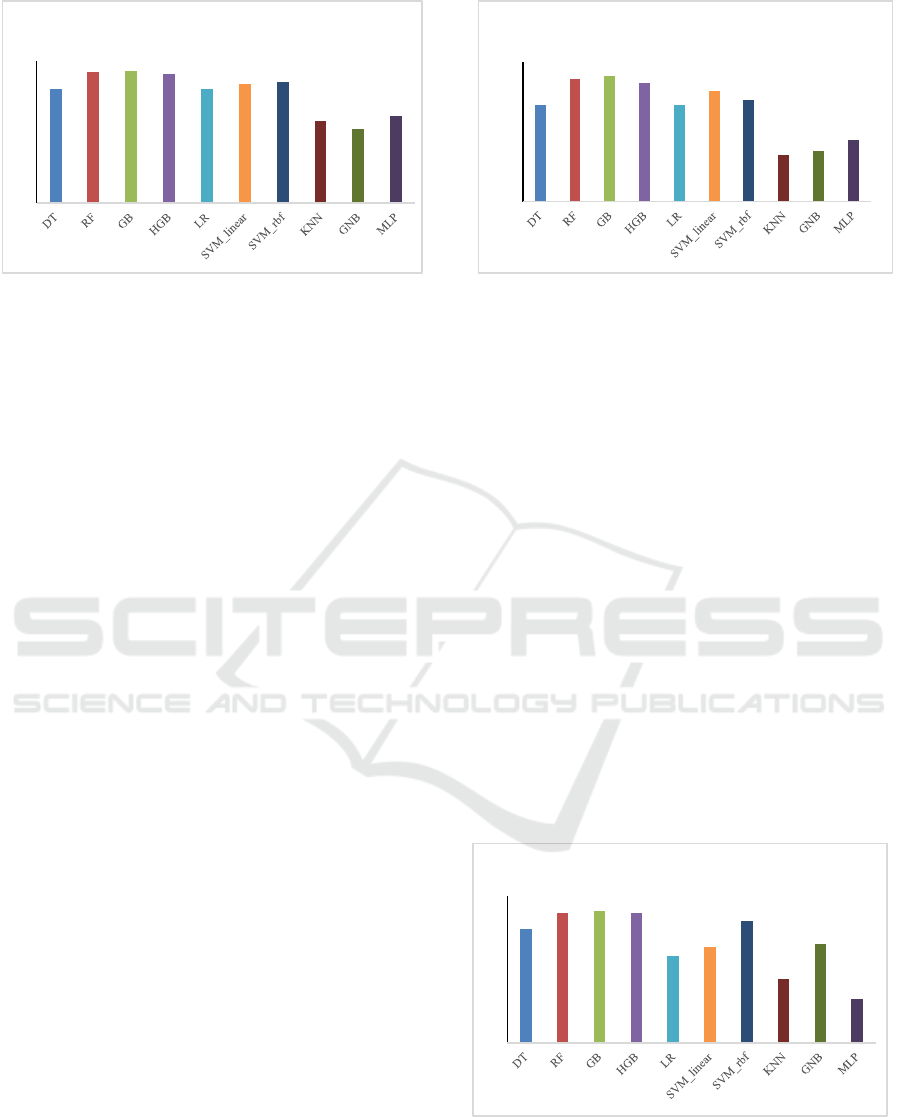
Figure 1: Accuracy of the evaluated algorithms.
Support Vector Machines also performed well,
with Linear Support Vector Machine (0.952) and
Support Vector Machine with RBF kernel (0.955)
exceeding the performance of Logistic Regression
(0.940). These results suggest that margin-based
separation and nonlinear kernels provide more robust
classification boundaries compared to linear
probability-based models.
The lowest accuracies were recorded by Gaussian
Naïve Bayes (0.857), k-Nearest Neighbours (0.874),
and Multilayer Perceptron (0.883), indicating their
limited suitability for this dataset. Their weaker
performance may be attributed to sensitivity to
feature distribution assumptions (GNB),
neighbourhood parameterization (KNN), and
suboptimal hyperparameter tuning (MLP). Overall,
the accuracy analysis confirms the superiority of
ensemble classifiers, with SVMs as strong
alternatives.
2.3.2 Average Precision
Figure 2 presents the average precision values for the
ten evaluated algorithms on the public dataset. The
ensemble-based methods achieved the highest
precision, with Gradient Boosting (0.959), Random
Forest (0.950), and Histogram-based Gradient
Boosting (0.940) outperforming all other approaches.
These results confirm the advantage of variance
reduction and aggregation in tree-based ensembles,
which provide more reliable decision boundaries
compared to a single Decision Tree (0.876).
Among the linear models, Linear Support Vector
Machine (0.916) showed higher precision than
Logistic Regression (0.875), suggesting that margin-
based separation is more effective than probability-
based classification in this case. The Support Vector
Machine with RBF kernel achieved 0.891,
demonstrating the benefits of nonlinear kernels,
although still below the ensemble methods.
Figure 2: Average precision of the evaluated algorithms.
The lowest-performing models were k-Nearest
Neighbours (0.733), Gaussian Naïve Bayes (0.745),
and Multilayer Perceptron (0.776), which appear less
suited for this dataset. Their weaker performance may
be attributed to sensitivity to feature scaling (KNN),
violated distributional assumptions (GNB), and
insufficient hyperparameter optimization (MLP).
Overall, the results highlight the clear superiority of
ensemble classifiers in terms of precision.
2.3.3 Average Recall
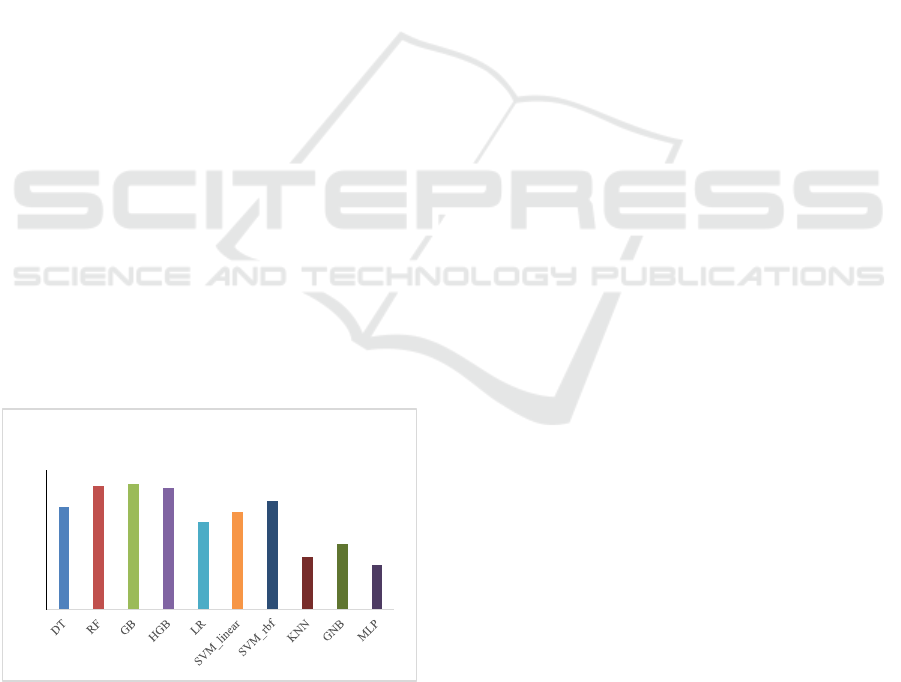
Figure 3 shows the average recall values obtained by
the evaluated algorithms on the public dataset. The
highest recall was achieved by Gradient Boosting
(0.961), Random Forest (0.956), and Histogram-
based Gradient Boosting (0.954), confirming again
the superior ability of ensemble methods to correctly
identify positive cases. The Support Vector Machine
with RBF kernel also reached a competitive score of
0.933, making it a strong alternative where
minimizing false negatives is critical.
Figure 3: Average recall of the evaluated algorithms.
Decision Tree performed reasonably well with
0.911, but it was clearly outperformed by its
ensemble variants. Among linear models, Logistic
0.941
0.976
0.978
0.972
0.94
0.952
0.955
0.874
0.857
0.883
0.7
0.75
0.8
0.85
0.9
0.95
1
Accuracy
0.876
0.95
0.959
0.94
0.875
0.916
0.891
0.733
0.745
0.776
0.6
0.65
0.7
0.75
0.8
0.85
0.9
0.95
1
Average Precision
0.911
0.956
0.961
0.954
0.838
0.863
0.933
0.774
0.869
0.721
0.6
0.65
0.7
0.75
0.8
0.85
0.9
0.95
1
Average Racall
ICEEECS 2025 - International Conference on Advances in Electrical, Electronics, Energy, and Computer Sciences
268
Regression (0.838) and Linear Support Vector
Machine (0.863) showed lower recall, indicating that
they missed a larger proportion of positive instances
compared to more advanced approaches.
The lowest recall values were observed for KNN
(0.774), Gaussian Naïve Bayes (0.869), and MLP
(0.721). These results highlight the limitations of
these methods in handling the dataset, particularly the
sensitivity of k-Nearest Neighbours to
neighbourhood selection, the distributional
assumptions of GNB, and the optimization challenges
of MLP. Overall, the recall analysis demonstrates that
ensemble tree-based classifiers are the most effective
in capturing positive examples, with Support Vector
Machine with RBF kernel serving as a strong
nonlinear alternative.
2.3.4 Average F1-Score
Figure 4 presents the average F1-scores of the
evaluated algorithms on
the public dataset. Gradient
Boosting achieved the highest score (0.960), closely
followed by Random Forest (0.953) and Histogram-
based Gradient Boosting (0.947). These results
confirm that ensemble-based classifiers not only
balance precision and recall effectively but also
deliver the strongest overall performance.
The Support Vector Machine with RBF kernel
reached 0.910, indicating a robust trade-off between
precision and recall, while Linear Support Vector
Machine (0.878) and Logistic Regression (0.849)
performed moderately, reflecting their limitations in
capturing nonlinear decision boundaries. The single
Decision Tree obtained 0.892, which is significantly
lower than its ensemble counterparts, but still
stronger than the weakest models.
Figure 4: Average F1-score of the evaluated algorithms.
The lowest F1-scores were recorded by k-Nearest
Neighbours (0.751), Gaussian Naïve Bayes (0.788),
and Multilayer Perceptron (0.728), emphasizing their
reduced effectiveness on this dataset. These findings
underline that the combination of variance reduction
and nonlinearity in ensemble methods ensures
superior classification performance compared to both
linear and simpler nonlinear approaches.
3 CONCLUSIONS
This study presented a comparative analysis of ten
machine learning algorithms applied to a three-class
student survey dataset. Evaluation was performed
using 5-fold cross-validation and four key metrics:
accuracy, precision, recall, and F1-score. Across all
metrics, ensemble-based classifiers, particularly
Gradient Boosting, Random Forest, and Histogram-
based Gradient Boosting, consistently achieved the
highest performance. These methods demonstrated
strong generalization ability and robustness,
confirming their superiority for this type of
classification task.
Support Vector Machines with RBF also
performed competitively, with the RBF kernel variant
achieving high recall and balanced F1-scores, making
it a strong alternative when minimizing false
negatives is a priority. Linear models such as Logistic
Regression and Linear Support Vector Machine
showed moderate results and can be considered as
stable baselines with lower computational cost.
By contrast, k-Nearest Neighbours, Gaussian
Naïve Bayes, and Multilayer Perceptron recorded the
lowest performance across the evaluation metrics,
highlighting their limited suitability for this dataset
without further preprocessing or hyperparameter
optimization.
In summary, the findings confirm that ensemble
tree-based methods are the most effective for multi-
class classification of survey data, while SVMs offer
a promising nonlinear alternative, depending on
application-specific requirements.
Future research may extend this approach to larger
and multi-institutional datasets or explore hybrid
deep learning methods.
ACKNOWLEDGEMENTS
This paper is supported by the Scientific Project
“Integrated Approach for Analysis of Student
Surveys through Statistics and Machine Learning”,
Technical University - Varna, 2025, financed by the
Ministry of Education and Science.
0.892
0.953
0.96
0.947
0.849
0.878
0.91
0.751
0.788
0.728
0.6
0.65
0.7
0.75
0.8
0.85
0.9
0.95
1
Average F1
Integrated Analysis of Student Surveys with Machine-Learning
269

REFERENCES
Abdi, A., Sedrakyan, G., Veldkamp, B., & van
Hillegersberg, J. (2023). A deep learning and language-
knowledge-based model for analyzing student feedback
in intelligent educational systems. Soft Computing.
Anderson, E., Dryden, K., & Variava, K. (2018). Applying
machine learning to student feedback using clustering
and sentiment analysis. In Proceedings of the Canadian
Engineering Education Association (CEEA). Toronto,
Canada.
Atanasova, Ts., Filipova, N., Sulova, S., & Alexandrova, Y.
(2019). Intelligent data analysis for students.
University of Economics – Varna.
Breiman, L. (2001). Random forests. Machine Learning,
45(1), 5–32.
Cover, T., & Hart, P. (1967). Nearest neighbor pattern
classification. IEEE Transactions on Information
Theory, 13(1), 21–27.
Cortes, C., & Vapnik, V. (1995). Support-vector networks.
Machine Learning, 20(3), 273–297.
Dervenis, K., Kanakis, G., & Fitsilis, P. (2024). Sentiment
analysis of student feedback: A comparative study using
lexicon-based and machine learning techniques.
Information Processing & Management, 61(3).
Friedman, J. H. (2001). Greedy function approximation: A
gradient boosting machine. Annals of Statistics, 29(5),
1189–1232.
Gaftandzhieva, S., Doneva, R., & Bandeva, S. (2019).
Intelligent data analysis for improving learning
outcomes. In Proceedings of ERIS 2019. Plovdiv,
Bulgaria.
Haykin, S. (2009). Neural networks and learning machines
(3rd ed.). Pearson.
Hosmer, D. W., Lemeshow, S., & Sturdivant, R. (2013).
Applied logistic regression (3rd ed.). Wiley.
Ivanov, G. (2020). Modern methods for intelligent data
analysis. New Bulgarian University.
Kaggle. (2025). Engineering student journey. Kaggle
Datasets. Retrieved August 25, 2025, from
https://www.kaggle.com/datasets/prasad22/student-
satisfaction-survey
Kalcheva, N., Karova, M., & Penev, I. (2020). Comparison
of the accuracy of SVM kernel functions in text
classification. In Proceedings of the International
Conference on Big Data, IoT and Artificial Intelligence
(BIA 2020) (pp. 141–145).
Kalcheva, N., Todorova, M., & Penev, I. (2023). Study of
the k-nearest neighbors method with various features
for text classification in machine learning. In
Proceedings of the International Conference on
Artificial Intelligence (ICAI 2023) (pp. 37–40).
Kastrati, Z., Dalipi, F., Imran, A. S., Nucci, K. P., & Vanni,
M. A. (2021). Sentiment analysis of student feedback
using NLP and deep learning: A systematic mapping
study. Applied Sciences, 11(9), 3986.
Ke, G., Meng, Q., Finley, T., et al. (2017). LightGBM: A
highly efficient gradient boosting decision tree. In
Advances in Neural Information Processing Systems
(NeurIPS) (pp. 3146–3154).
Katragadda, S., Ravi, V., & Kumar, P. (2020). Analyzing
student feedback using machine learning algorithms. In
Proceedings of the IEEE International Conference on
Emerging Trends in Information Technology and
Engineering (ic-ETITE). Vellore, India.
Petrova, D., & Bozhikova, V. (2022). Random forest and
recurrent neural network for sentiment analysis on texts
in Bulgarian language. In Proceedings of the
International Conference on Biomedical Innovations
and Applications (BIA 2022) (pp. 66–69). Varna,
Bulgaria.
Quinlan, J. R. (1993). C4.5: Programs for machine
learning. Morgan Kaufmann.
Villegas-Ch, W., Román-Cañizares, M., & Palacios-
Pacheco, X. (2020). Improving online education model
with machine learning and data analytics in LMS.
Applied Sciences, 10(15), 5371.
Zhang, H. (2004). The optimality of naive Bayes. In
Proceedings of the 17th International Florida Artificial
Intelligence Research Society Conference (FLAIRS)
(pp. 562–567).
ICEEECS 2025 - International Conference on Advances in Electrical, Electronics, Energy, and Computer Sciences
270
