
A Comparative Study of Multi-Model Lane Detection Methods Based
on a Unified Evaluation Framework
Shaopu Zou
a
School of Computer and Artificial Intelligence, Beijing Technology and Business University, Beijing, China
Keywords: Lane Detection, SCNN, PINet, LaneATT, CULane.
Abstract: Lane detection, as a crucial task in autonomous driving systems, faces the dual challenges of robustness and
accuracy in complex road environments. This study conducts a comparative analysis of three representative
deep learning models—Spatial Convolutional Neural Network (SCNN), Point Instance Network (PINet), and
LaneATT. The models are reproduced and evaluated under consistent input settings using the unified CUHK
Lane Dataset (CULane) and a standardized evaluation tool. Both quantitative metrics and visualized results
are utilized to assess each model’s detection performance across diverse driving scenarios. Experimental
results demonstrate that LaneATT achieves the best overall performance, particularly exhibiting strong
robustness in challenging conditions such as nighttime and shadowed environments. PINet excels in curved
lane detection, while SCNN maintains stable outputs in standard road settings. This study establishes a unified
evaluation framework for horizontal comparisons of lane detection models, providing a systematic basis for
performance assessment under standardized conditions. The proposed framework contributes to the
advancement of algorithmic benchmarking and offers methodological guidance for subsequent research on
model optimization and real-world deployment.
1 INTRODUCTION
With the rapid development of autonomous driving
technology, lane detection has become a crucial
component of the vehicle perception system and has
attracted increasing attention (Singal et al., 2023).
Accurate lane detection not only helps vehicles
maintain correct trajectories on the road but also plays
a vital role in Lane Keeping Assist Systems (LKAS)
and Advanced Driver Assistance Systems (ADAS)
(Waykole et al., 2021; Tian et al., 2021). However,
complex road environments—such as varying lighting
conditions, occlusions, and curved roads—still pose
significant challenges to reliable lane detection
(Sultana et al., 2023).
Traditional lane detection approaches primarily
rely on image processing techniques such as edge
detection and Hough transforms. While effective
under ideal conditions, these methods are vulnerable
to disturbances in complex environments, often
resulting in reduced detection accuracy (Huang &
Liu, 2021). In recent years, the emergence of deep
a
https://orcid.org/0009-0007-6134-0737
learning has introduced significant breakthroughs in
this field (Zakaria et al., 2023). Models based on
Convolutional Neural Networks (CNNs) can
automatically learn visual features from data, thus
enhancing both robustness and accuracy in lane
detection tasks (Kortli et al., 2022).
Among the various deep learning-based lane
detection methods, the Spatial Convolutional Neural
Network (SCNN) introduces spatial convolution
modules to enable information propagation across
feature maps, thereby improving the structural
modeling of lane lines (Pan et al., 2018). The Point
Instance Network (PINet) treats lane detection as a
keypoint estimation and instance segmentation task,
transforming it into a clustering problem of point
instances, which enhances performance in detecting
complex lane geometries (Ko et al., 2021). The
LaneATT combines anchor-based mechanisms with
attention modules, directly regressing lane
parameters to achieve efficient lane detection
(Tabelini et al., 2021).
Despite the strong performance demonstrated by
these models in their respective studies, differences in
Zou, S.
A Comparative Study of Multi-Model Lane Detection Methods Based on a Unified Evaluation Framework.
DOI: 10.5220/0014322600004718
Paper published under CC license (CC BY-NC-ND 4.0)
In Proceedings of the 2nd International Conference on Engineering Management, Information Technology and Intelligence (EMITI 2025), pages 123-129
ISBN: 978-989-758-792-4
Proceedings Copyright © 2025 by SCITEPRESS – Science and Technology Publications, Lda.
123
experimental settings and evaluation criteria make it
difficult to conduct fair and direct comparisons under
the same conditions. To address this issue, this paper
reproduces and evaluates SCNN, PINet, and
LaneATT within a unified experimental environment.
All models are tested using the same dataset—CUHK
Lane Dataset (CULane) (Pan et al., 2018) — and
assessed through consistent evaluation tools and
metrics to facilitate a systematic comparison of their
detection performance across various driving
scenarios.
The remainder of this paper is organized as
follows:
Chapter 2 provides a detailed introduction to the
dataset used and the technical principles and
architectures of the three lane detection models.
Chapter 3 elaborates on the experimental setup
and evaluation metrics and presents a comparative
performance analysis and visualizations across
different scenarios.
Chapter 4 summarizes the research findings,
discusses the limitations of current methods, and
outlines potential directions for future work.
2 DATASET AND METHODS
2.1 Dataset
This study adopts the CULane dataset, a large-scale
open dataset specifically designed for lane detection
tasks, provided by the Multimedia Laboratory of The
Chinese University of Hong Kong. The CULane
dataset covers a wide range of real-world driving
scenarios, aiming to provide a comprehensive and
challenging evaluation environment for lane
detection models.
The dataset consists of approximately 133,235
images, including around 88,880 images for training,
9,675 for validation, and 34,680 for testing. All
images are extracted from real urban driving videos,
ensuring strong practical relevance for real-world
applications.
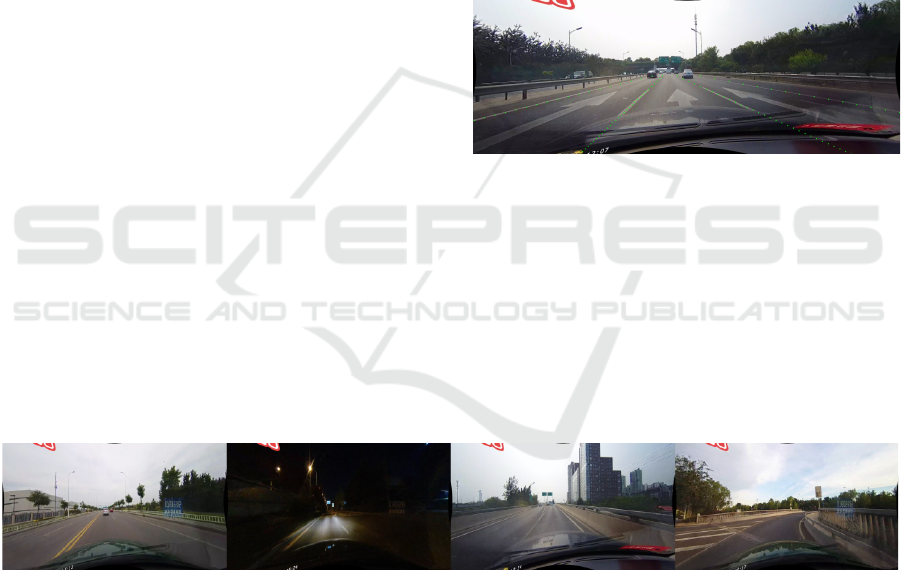
Each image in the dataset is manually annotated
with lane markings using cubic spline curves. Even
when lane lines are occluded or not clearly visible,
annotations are inferred based on contextual
information (as shown in Figure 1). This annotation
method accurately captures the position and shape of
lane lines and supports a variety of downstream tasks
such as regression, detection, and segmentation.
Figure 1. Example of point-wise lane annotation (Picture
credit: Original)
The test set of the CULane dataset is divided into
nine representative scenarios (some of which are
illustrated in Figure 2): normal, crowded, dazzle light,
shadow, no lane, arrow, curve, crossroad, and night.
Each subset targets specific environmental
challenges, allowing for a thorough evaluation of
model generalization under diverse driving
conditions.
Figure 2. Examples of different road scenarios (Picture credit: Original)
Images in the CULane dataset have a resolution of
1640 × 590 pixels, preserving fine-grained visual
details that facilitate accurate recognition of distant or
thin lane markings.
In this study, all models are evaluated using the
official CULane data split, with identical training and
testing configurations. Inference is conducted at a
fixed input resolution, and a unified evaluation tool is
used to assess performance. The focus of this work is
on model inference and evaluation on the standard
test set without any retraining or fine-tuning, ensuring
fairness and reproducibility in the comparison.
Given its large scale, diverse scenarios, and
precise annotations, the CULane dataset serves as an
ideal benchmark for lane detection experiments and
provides a solid foundation for comparing algorithm
performance in complex real-world environments.
EMITI 2025 - International Conference on Engineering Management, Information Technology and Intelligence
124

2.2 Methods
To comprehensively compare the performance of
different lane detection methods in complex road
scenarios, this study selects three representative deep
learning models—SCNN, PINet, and LaneATT—for
experimental evaluation. These models differ in
network architecture and detection strategies,
reflecting the strengths and limitations of current
mainstream approaches from various perspectives.
2.2.1 SCNN Model
The SCNN model introduces spatial convolution
units into a traditional convolutional neural network,
based on an adapted VGG16 backbone, enabling
serialized information propagation along the spatial
dimensions of the feature maps. Specifically, SCNN
propagates features in horizontal and vertical
directions, effectively modeling the elongated and
continuous structure of lane lines.
The overall architecture of SCNN consists of a
backbone network, spatial convolution modules, and
a prediction head. The input image is first processed
through a series of convolutional layers to extract
base features. Then, spatial message passing is
performed iteratively in four directions—up, down,
left, and right—to enhance the representation of lane
continuity in the feature maps. Finally, fully
connected layers predict lane point positions along
each scanline to produce the final detection results.
This approach maintains computational efficiency
while significantly improving detection accuracy in
complex environments, making it particularly
suitable for extracting continuous lanes under
occlusions or road wear.
2.2.2 PINet Model
The PINet model adopts an instance segmentation
approach, transforming lane detection into a point-
wise instance prediction problem. It uses a stacked
hourglass network to extract multi-scale features and
then predicts each pixel’s lane instance affiliation
and its spatial offset.
The architecture consists of three main
components: a feature encoder, an instance
embedding branch, and an offset regression branch.
The encoder, typically a stacked Hourglass network,
extracts hierarchical features from the input image.
The embedding branch generates a low-dimensional
vector for each pixel, allowing pixels belonging to the
same lane to be clustered. The offset branch predicts
each pixel’s displacement relative to the centerline
of its corresponding lane. A clustering algorithm
(e.g., Mean Shift) is then used to group lane points
into complete lane instances.
This method is highly adaptable to varying
numbers and shapes of lane lines, showing strong
robustness in dense or sharply curved road
conditions.
2.2.3 LaneATT Model
The LaneATT model employs an anchor-based
regression strategy combined with attention
mechanisms, discarding traditional pixel-wise
segmentation in favor of directly regressing lane
parameters such as quadratic coefficients and
endpoints. LaneATT typically utilizes ResNet-34 as
its backbone and applies a Transformer encoder to
capture global contextual features. Anchors are
placed at predefined positions for efficient lane
parameter regression.
Its architecture includes a feature extraction
backbone (typically ResNet), a Transformer encoder,
and a lane regression head. The backbone encodes the
input image into intermediate features, which are then
globally modeled by the Transformer module to
capture long-range spatial dependencies. Finally, the
model performs lane regression at anchor locations to
produce fitted lane curves.
LaneATT achieves high detection accuracy while
significantly improving inference speed, making it
well-suited for real-time or large-scale deployment
scenarios.
2.2.4 Unified Experimental Setup
To ensure fairness in model comparisons, all
experiments in this study adopt the official training
and testing splits of the CULane dataset. Input images
are resized to a unified resolution across all models.
Inference is conducted under the same hardware
environment to ensure comparability in speed and
resource consumption. Results are evaluated using
consistent metrics and identical evaluation scripts.
To provide a clear overview of the differences in
model architecture and detection strategy, the key
characteristics of the three models are summarized in
Table 1. This study focuses solely on the inference
performance of the models without any retraining or
modification of the original implementations.
A Comparative Study of Multi-Model Lane Detection Methods Based on a Unified Evaluation Framework
125
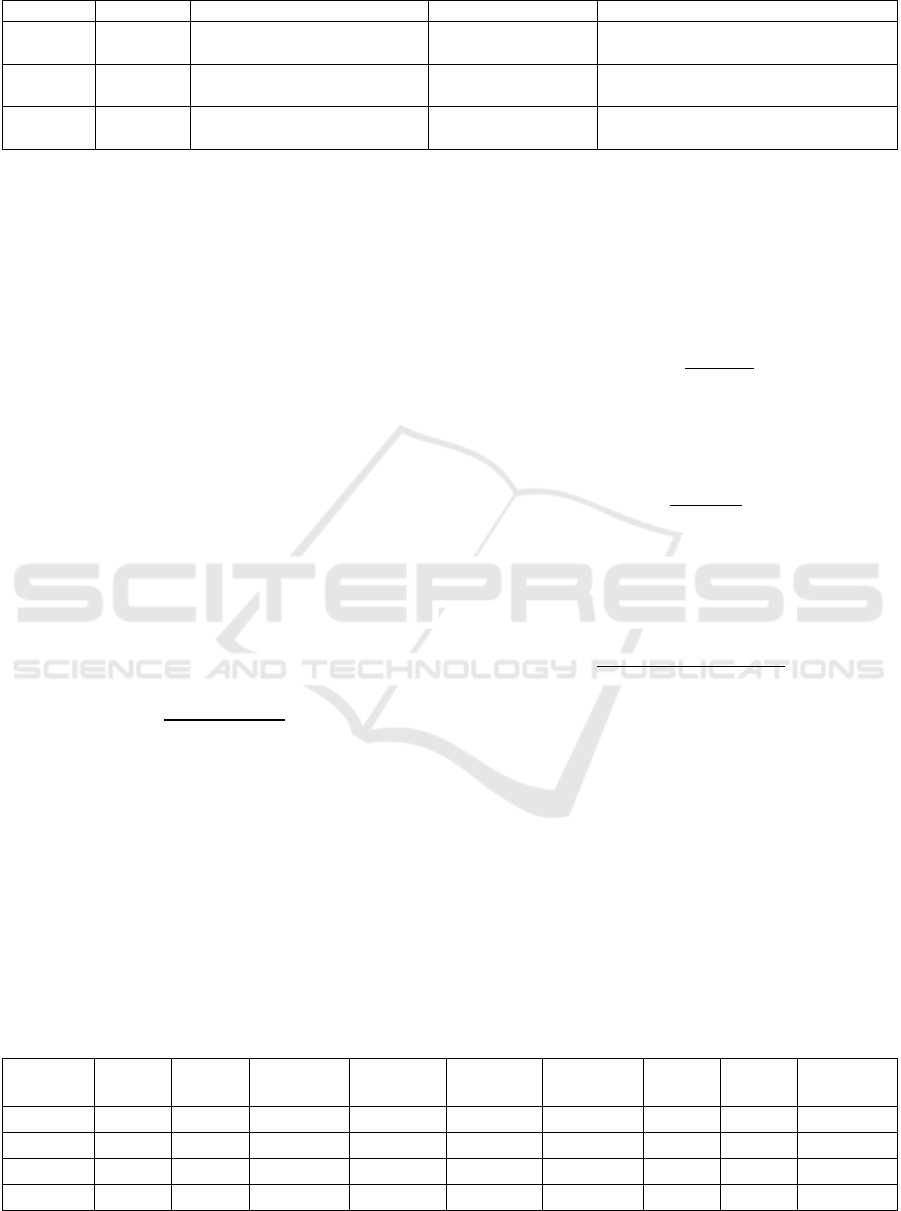
Table 1. Comparison of the architectures of the three lane detection models
Model Backbone Core Module Out
p
ut T
yp
e Characteristics
SCNN VGG16 Spatial convolution unit Scanline-wise point
p
rediction
Strong continuity, suitable for
occluded or worn lane markings
PINet Hourglass Instance embedding + offset
re
g
ression
Clustering of points
into lanes
Flexible in handling variable number
and sha
p
e of lane lines
LaneATT ResNet Transformer encoder +
ancho
r
-
b
ased re
g
ression
Curve parameter
re
g
ression
Fast inference, suitable for real-time
a
pp
lications
3 EXPERIMENTS
3.1 Evaluation Metrics
To comprehensively evaluate the performance of
each lane detection model, this study adopts the
official evaluation metrics provided by the CULane
benchmark. The evaluation tool matches predicted
lane lines with ground truth annotations based on the
spatial overlap and calculate Precision, Recall, and F-
measure as the core performance indicators.
3.1.1 Matching Method
The evaluation tool first fits both predicted and
annotated lane lines using spline interpolation and
renders their respective width masks in the image
space. It then calculates the Intersection over Union
(IoU) between the two lines, as illustrated in Equation
(1).
IoU =
|
Predict ∩ GT
|
|
Predict ∪ GT
|
(1)
A predicted lane line is considered a successful
match if its IoU with a ground truth lane line exceeds
a threshold of 0.5. To ensure optimal matching in
multi-lane scenarios, the tool applies the Hungarian
Algorithm to compute one-to-one pairings based on
the IoU similarity matrix. This process yields global
statistics for True Positives (TP), False Positives (FP),
and False Negatives (FN) across the entire image.
3.1.2 Metric Definitions
Based on the above matching process, the final
evaluation metrics are defined as follows:
Precision: The proportion of correctly predicted
lane lines out of all lane line predictions made by the
model.
Precision =
TP
TP
+
FP
(2)
Recall: The proportion of ground truth lane lines
that are successfully detected by the model.
Recall =
TP
TP
+
FN
(3)
F-measure: The harmonic mean of Precision and
Recall, providing a balanced assessment of both
accuracy and completeness in lane detection.
F1 =
2 × Precision × Recall
Precision
+
Recall
(4)
3.2 Experimental Results and Analysis
To systematically compare the lane detection
performance of SCNN, PINet, and LaneATT under
various driving scenarios, this study evaluates each
model on the nine representative scenes defined in the
CULane dataset. For each scenario, Precision, Recall,
and F1-measure are calculated. Among them, F1-
measure is considered the primary performance
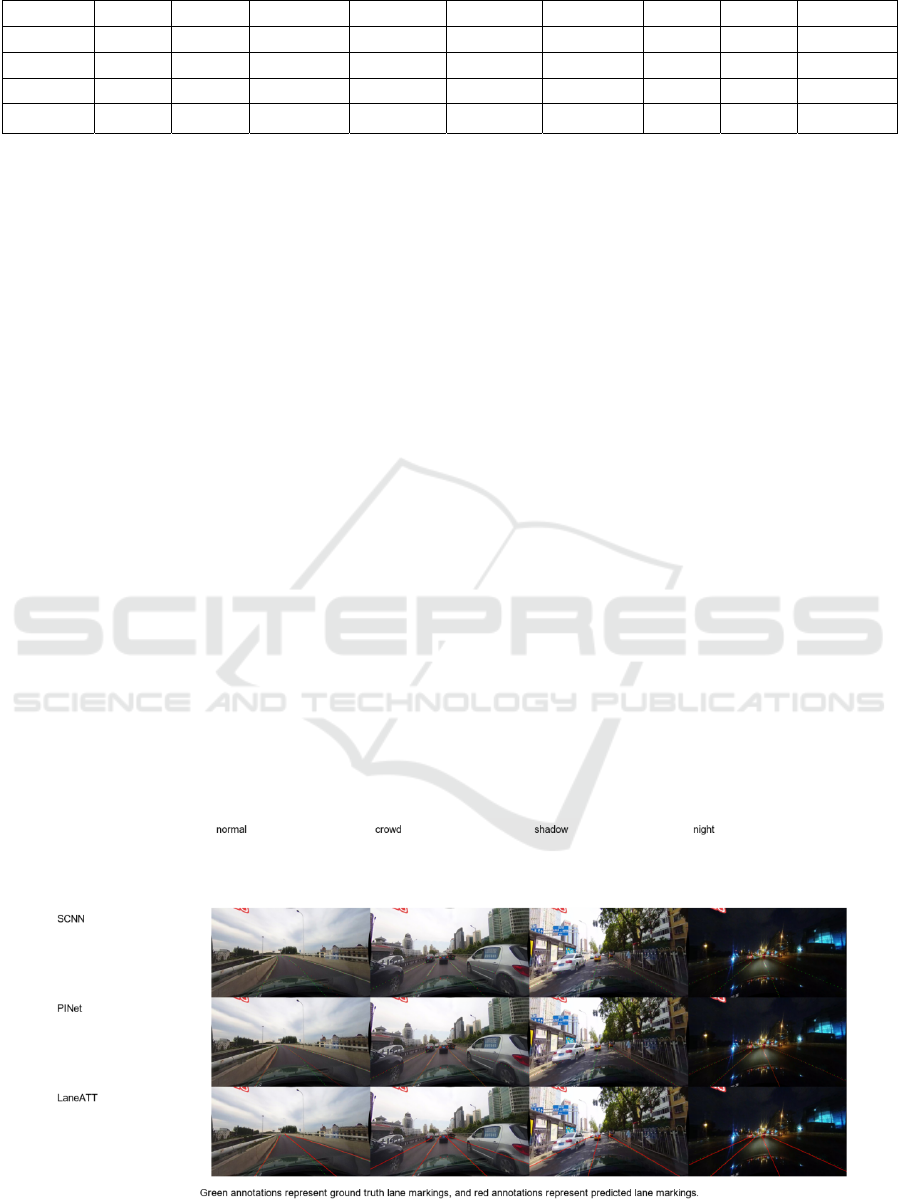
metric in this study. Table 2 presents the comparative
results of the three models across all scenarios.
Table 2. F1-measure, Precision, and Recall comparison of three models across different CULane scenarios
Scenario SCNN
F1
PINet
F1
LaneATT
F1
SCNN
Precision
PINet
Precision
LaneATT
Precision
SCNN
Recall
PINet
Recall
LaneATT
Recall
Normal 0.9049 0.8985 0.9218 0.9070 0.9235 0.9384 0.9029 0.8749 0.9059
Crowd 0.6803 0.7184 0.7500 0.6922 0.8157 0.8100 0.6688 0.6418 0.6983
Hlight 0.6332 0.6458 0.6669 0.6482 0.7767 0.7455 0.6189 0.5527 0.6033
Shadow 0.6352 0.6683 0.7795 0.6340 0.8223 0.8216 0.6364 0.5629 0.7416
EMITI 2025 - International Conference on Engineering Management, Information Technology and Intelligence
126
No line 0.4351 0.4769 0.4936 0.4538 0.7399 0.6611 0.4179 0.3518 0.3939
Arrow 0.8457 0.8350 0.8840 0.8556 0.9069 0.9226 0.8360 0.7738 0.8484
Curve 0.6159 0.6361 0.6767 0.6649 0.7679 0.7950 0.5736 0.5429 0.5890
Cross 0 0 0 0 0 0 -1 -1 -1
Night 0.6559 0.6605 0.7055 0.6590 0.8301 0.7996 0.6528 0.5484 0.6311
As shown in Table 2, the three models exhibit
varying detection performance across different
driving scenarios. Overall, LaneATT consistently
achieves the highest F1-measure across all scenarios,
demonstrating superior robustness, particularly in
challenging conditions such as crowded, shadowed,
and nighttime environments. In the Normal scenario,
all three models perform well, with LaneATT slightly
outperforming SCNN and PINet.
In more complex settings—Crowd, Shadow, and
Night—LaneATT shows a substantial lead in F1 score
compared to the other two models, highlighting its
strong adaptability. While performance drops under
extreme conditions such as Hlight (dazzling light) and
No line (no visible lane markings), LaneATT still
maintains a performance edge.
Notably, in the Curve scenario, both PINet and
LaneATT demonstrate good adaptability, likely due
to their ability to handle non-linear lane structures. In
the Arrow scenario, SCNN and LaneATT achieve
higher detection accuracy, with LaneATT attaining
an F1-measure of 0.884.
It is important to note that although the CULane
dataset includes the Cross (intersection) scenario, this
subset does not provide ground truth lane annotations.
As such, the evaluation tool is only used to test model
robustness in this scene rather than actual detection
performance. Consequently, all models score zero in
this scenario—not due to poor performance, but due to
the lack of ground truth, and this subset is excluded
from the core performance comparison.
In summary, the overall model performance on
the CULane test set can be ranked as: LaneATT >
PINet > SCNN. LaneATT leverages anchor-based
regression and Transformer-driven global modeling
to achieve superior detection accuracy and robustness
across diverse scenarios. PINet, with its point-
instance detection strategy, excels in handling curved
or lane-dense environments. SCNN, while slightly
lower in overall accuracy, demonstrates stable
continuity in lane detection, particularly under
occlusion or degradation.
3.3 Visualization of Experimental
Results
To further compare the performance of the three
models across different scenarios, representative test
image samples were selected, and the prediction
results of SCNN, PINet, and LaneATT were
visualized on the same images. Figure 3 presents a
comparison between the predicted lane lines and the
ground truth, where green lines represent the
annotated lanes and red lines indicate the predicted
outputs from each model.
Figure 3. Visualization comparison of lane detection by the three models in typical scenarios (Picture credit: Original)
A Comparative Study of Multi-Model Lane Detection Methods Based on a Unified Evaluation Framework
127

As illustrated in Figure 3, the performance of
different models varies significantly under complex
scenarios. In the Normal scenario, all three models
are able to accurately detect lane lines, with
predictions closely matching the ground truth.
LaneATT, in particular, demonstrates smoother
fitting at lane curvature points, reflecting superior
detail recovery capabilities. In the Crowd scenario, all
three models successfully detect the primary lane
lines with minimal prediction error, showcasing good
robustness.
In contrast, in the Shadow scenario, where
lighting conditions change drastically, the models
show noticeable differences. SCNN exhibits
significant deviations and broken lines in its
predictions, leading to reduced accuracy. PINet
detects only two lane lines, but they align well with
the ground truth. LaneATT successfully identifies all
lane lines with predictions almost fully overlapping
the annotations, demonstrating the best overall
performance in this setting.
Under the Night scenario, both LaneATT and
PINet maintain high detection accuracy, whereas
SCNN shows missed detections under low-light
conditions, failing to identify the rightmost lane line
and exhibiting a notable performance drop.
In conclusion, the visual results further support
the quantitative findings presented in Section 3.2.
LaneATT demonstrates stronger robustness and
generalization in complex scenarios, with more stable
and accurate predictions. PINet maintains high
localization accuracy in curved or partially occluded
environments. SCNN, while stable in scenarios with
clear lane continuity, exhibits limited performance
under strong environmental interference.
4 CONCLUSIONS
This study focused on the task of lane detection by
selecting three representative deep learning models—
SCNN, PINet, and LaneATT — for systematic
reproduction and performance comparison under a
unified dataset (CULane) and evaluation framework.
By standardizing the input-output settings, evaluation
metrics, and visualization analysis, the aim was to
explore the detection effectiveness of these models
under various driving scenarios and provide an
empirical foundation for future research.
Experimental results reveal significant
differences in overall performance and detailed
behavior among the three models. LaneATT achieved
the highest F1 scores across all scenarios,
demonstrating superior robustness and generalization
capabilities, particularly in complex environments
such as nighttime, crowded traffic, and variable
lighting conditions. PINet performed well in handling
curved roads and lane-dense scenes, making it
suitable for recognizing structurally complex lane
patterns. While SCNN maintained stable detection in
standard scenarios with good lane continuity, its
performance declined under more challenging
conditions. The visual analyses further confirmed
these quantitative findings, showcasing the prediction
differences on specific test images.
Despite the comprehensive comparative analysis
conducted in this study, some limitations remain.
First, the evaluation focused solely on the inference
stage without including the full training process.
Second, only the CULane dataset was used, lacking
cross-dataset generalization analysis. Third, practical
deployment factors such as detection speed and
resource consumption were not addressed.
Future research can be extended in several
directions: further optimizing model architectures to
improve adaptability in complex scenes; expanding
evaluation to include diverse urban environments and
varying weather conditions; incorporating
lightweight network designs to enhance inference
efficiency and promote real-world deployment in
autonomous driving systems; and exploring multi-
task learning approaches to integrate lane detection
with other perception tasks.
This study holds practical relevance and reference
value. On the one hand, reproducing and comparing
typical models within a unified evaluation
framework, clarifies the applicability and strengths of
current mainstream lane detection methods under
different scenarios, providing a basis for industrial
model selection. On the other hand, the standardized
comparison procedure and multi-perspective
visualization analysis proposed in this work serve as
an experimental paradigm and evaluation reference
for future model improvements and academic studies.
REFERENCES
Singal, G., Singhal, H., Kushwaha, R., Veeramsetty, V.,
Badal, T., & Lamba, S. (2023). RoadWay: lane
detection for autonomous driving vehicles via deep
learning. Multimedia Tools and Applications, 82(4),
4965-4978.
Waykole, S., Shiwakoti, N., & Stasinopoulos, P. (2021).
Review on Lane Detection and Tracking Algorithms of
Advanced Driver Assistance
System. Sustainability, 13(20), 11417.
Tian, J., Liu, S., Zhong, X., & Zeng, J. (2021). LSD-based
adaptive lane detection and tracking for ADAS in
EMITI 2025 - International Conference on Engineering Management, Information Technology and Intelligence
128

structured road environment. Soft Computing, 25(7),
5709-5722.
Sultana, S., Ahmed, B., Paul, M., Islam, M. R., & Ahmad,
S. (2023). Vision-based robust lane detection and
tracking in challenging conditions. IEEE Access, 11,
67938-67955.
Huang, Q., & Liu, J. (2021). Practical limitations of lane
detection algorithm based on Hough transform in
challenging scenarios. International Journal of
Advanced Robotic Systems, 18(2).
Zakaria, N. J., Shapiai, M. I., Abd Ghani, R., Yassin, M. N.
M., Ibrahim, M. Z., & Wahid, N. (2023). Lane detection
in autonomous vehicles: A systematic review. IEEE
access, 11, 3729-3765.
Kortli, Y., Gabsi, S., Voon, L. F. L. Y., Jridi, M.,
Merzougui, M., & Atri, M. (2022). Deep embedded
hybrid CNN – LSTM network for lane detection on
NVIDIA Jetson Xavier NX. Knowledge-based systems,
240, 107941.
Pan, X., Shi, J., Luo, P., Wang, X., & Tang, X. (2018).
Spatial as Deep: Spatial CNN for Traffic Scene
Understanding. Proceedings of the AAAI Conference
on Artificial Intelligence, 32(1).
https://doi.org/10.1609/aaai.v32i1.12301
Ko, Y., Lee, Y., Azam, S., Munir, F., Jeon, M., & Pedrycz,
W. (2021). Key points estimation and point instance
segmentation approach for lane detection. IEEE
Transactions on Intelligent Transportation
Systems, 23(7), 8949-8958.
Tabelini, L., Berriel, R., Paixao, T. M., Badue, C., De
Souza, A. F., & Oliveira-Santos, T. (2021). Keep your
eyes on the lane: Real-time attention-guided lane
detection. In Proceedings of the IEEE/CVF conference
on computer vision and pattern recognition (pp. 294-
302).
A Comparative Study of Multi-Model Lane Detection Methods Based on a Unified Evaluation Framework
129
