
Predicting Purchase Frequency in e-Commerce: Hybrid Machine
Learning Approach
Nilay
˙
Is¸eri, Mustafa Keskin and Onur Arda Ras¸tak
Hepsiburada, Turkey
Keywords:
e-Commerce, Purchase Frequency Prediction, Customer Behavior, Machine Learning, Multi Stage Prediction.
Abstract:
This paper addresses the problem of predicting customer purchase frequency. We developed machine learning
models to forecast the number of purchases a user will make next month, categorizing them into three classes.
We compared multiclass classification, regression, and hybrid approaches. Our analysis shows that the most
effective method is a hybrid approach that uses a binary classifier to target the 4+ purchases and a regression
model for the remaining classes. This two-stage model provided a significant performance increase over single
models, proving to be a robust solution for imbalanced, ordinal prediction tasks.
1 INTRODUCTION
The rapid growth of electronic commerce in recent
years has led to a massive increase in online con-
sumer activity. This surge in e-commerce usage has
produced vast amounts of customer behavior data and
intensified competition among online retailers. In this
context, the ability to predict a customer’s future pur-
chasing behavior in particular, the number of pur-
chases they will make in the upcoming month has be-
come increasingly valuable. Accurate monthly pur-
chase frequency prediction can support a range of
business objectives, including personalized marketing
(e.g., targeting high-frequency shoppers with loyalty
rewards), inventory and supply chain optimization
(forecasting product demand at the customer-segment
level), and customer lifetime value (CLV) estimation
(Oblander et al., 2020). Furthermore, effective pre-
diction of individual purchasing frequency enables
firms to proactively identify high-value customers and
deploy retention strategies before those customers
churn, thereby improving profitability (Verbeke et al.,
2014).
Predicting customer purchase frequency at the
individual level poses several challenges. Unlike
subscription services, e-commerce customer relation-
ships are typically non-contractual, meaning cus-
tomers can make purchases at irregular intervals or
stop purchasing at any time without notice. This ir-
regularity leads to highly skewed purchase frequency
distributions many customers make few or no pur-
chases in a given period, while a small segment gen-
erates many orders. Traditional techniques from mar-
keting science, such as RFM (Recency, Frequency,
Monetary) scoring and probabilistic models like the
Pareto/NBD and BG/NBD formulations, provide a
foundation for understanding purchase frequency and
customer value (Fader et al., 2005). However, these
classical models rely on strong statistical assump-
tions (e.g., Poisson purchase timing and exponential
dropout processes) and often struggle to incorporate
the rich features now available (such as detailed on-
line browsing behavior, product category preferences,
and multi-channel marketing touchpoints). Moreover,
in modern e-commerce datasets with millions of cus-
tomers and heterogeneous behaviors, such paramet-
ric models can face scalability and accuracy limi-
tations (Abe, 2009). These limitations have moti-
vated a shift toward data-driven machine learning ap-
proaches, such as gradient boosting models, which
can flexibly learn purchasing patterns from large-
scale behavioral data without relying on predefined
stochastic assumptions (Wang et al., 2023).
In light of the above, this paper focuses on devel-
oping a predictive model for monthly customer pur-
chase frequency using boosting-based machine learn-
ing methods. The motivation for using gradient boost-
ing is twofold: first, their proven accuracy and flex-
ibility in similar classification/regression tasks sug-
gest they can effectively capture the subtle factors
that drive repeat purchases; second, boosting models
provide feature importance metrics and explainabil-
ity tools (e.g., SHAP values) that help interpret which
customer attributes most strongly influence purchase
64
˙
I¸seri, N., Keskin, M. and Ra¸stak, O. A.
Predicting Purchase Frequency in e-Commerce: Hybrid Machine Learning Approach.
DOI: 10.5220/0014305900004848
Paper published under CC license (CC BY-NC-ND 4.0)
In Proceedings of the 2nd International Conference on Advances in Electrical, Electronics, Energy, and Computer Sciences (ICEEECS 2025), pages 64-68
ISBN: 978-989-758-783-2
Proceedings Copyright © 2026 by SCITEPRESS – Science and Technology Publications, Lda.

frequency, offering business insights in addition to
predictions.
2 RELATED WORKS
The availability of large-scale behavioral data and
advances in computational techniques have enabled
machine learning methods such as gradient boost-
ing to model user purchase behavior without relying
on restrictive parametric assumptions (Wang et al.,
2023). Algorithms such as logistic regression, ran-
dom forests, and gradient boosting have been applied
to predict outcomes ranging from repurchase propen-
sity to purchase frequency or spending.
Ensemble methods, particularly gradient boosting
trees, have emerged as the most effective for these
tasks. Song and Liu demonstrated that XGBoost im-
proves purchase prediction in e-commerce by incor-
porating diverse behavioral features (Song and Liu,
2020).Yang et al. extended this direction by combin-
ing Random Forest and LightGBM in a hybrid en-
semble to address class imbalance and enhance re-
purchase prediction (Yang et al., 2021). These stud-
ies show that ensemble approaches can surpass tra-
ditional RFM and probabilistic models by leveraging
richer predictors and nonlinear interactions. Feature
engineering remains central, with extensions of RFM
to include variables such as customer tenure, inter-
purchase intervals, and engagement metrics further
improving predictive power. Overall, machine learn-
ing, especially ensemble learning, has become a cor-
nerstone in purchase frequency prediction.
Wang et al. proposed a user purchase behav-
ior prediction model based on XGBoost, leveraging
multi-dimensional behavioral features such as histor-
ical transaction patterns, account activity metrics, and
user segmentation tags to accurately forecast future
purchasing behavior (Wang et al., 2023). Building
on this direction, Sun et al. applied gradient boost-
ing decision trees (GBDT) and random forests to
predict key components of customer lifetime value
(CLV), particularly purchase frequency, and showed
that these models outperformed classical probabilistic
approaches such as Pareto/NBD and Pareto/GGG on
real-world retail datasets (Sun et al., 2021). In practi-
cal settings, CLV prediction is often decomposed into
sub-tasks, churn probability, expected frequency, and
average value, with boosting applied to each.
Overall, gradient boosting methods stand out for
their accuracy, flexibility, and ability to incorporate
diverse features in frequency prediction. They con-
sistently outperform traditional models, though chal-
lenges remain in interpretability and integration with
newer techniques.
While gradient boosting dominates structured re-
tail data, newer methods are emerging to capture se-
quential dynamics and improve interpretability. Deep
learning models, such as LSTMs and transformers,
have been applied to customer transaction histories,
treating them as sequences of events. For exam-
ple, attention-based LSTMs have been used to pre-
dict high-value customer behavior, while transformer
architectures have shown advantages when long and
complex purchase cycles are involved (Lathwal and
Batra, 2024; Kim et al., 2023).
Hybrid approaches combine machine learning
with probabilistic or domain-specific modeling to bal-
ance flexibility and structure. Examples include two-
stage models where neural networks predict distribu-
tional parameters for purchase counts, later refined
with boosting, or reinforcement learning frameworks
that go beyond prediction to optimize marketing in-
terventions.
In sum, recent work explores deep learning for
sequential behavior, hybrid models to integrate prior
knowledge, and XAI methods for interpretability. Yet
ensemble trees, particularly boosting algorithms, re-
main the strongest baseline for purchase frequency
prediction, balancing accuracy, scalability, and trans-
parency (Grinsztajn et al., 2022). These developments
provide the foundation for our boosting-based frame-
work for next-month purchase frequency prediction.
3 DATA AND PREPROCESSING
3.1 Dataset Description
The dataset was constructed from a one-year trans-
actional history preceding the prediction month. The
target was defined as the purchase frequency in June
2025, categorized into three discrete classes: (i) one
purchase, (ii) two to three purchases, and (iii) four or
more purchases (heavy buyers). The cohort included
only active customers with at least one completed or-
der in the historical period. The final dataset con-
tained several million rows, with class distributions
reflecting the natural skew typically observed in e-
commerce frequency prediction tasks.
3.2 Feature Groups and Selection
Features originated from a customer-level datamart
that aggregates behavioral, transactional, and demo-
graphic signals, accumulating nearly 600 raw at-
tributes per member. For clarity, these features can
be described in the following categories:
Predicting Purchase Frequency in e-Commerce: Hybrid Machine Learning Approach
65

• Historical behavior: long-term purchase fre-
quency, cumulative monetary value, product di-
versity.
• Short-term recency and intensity: recency of
last purchase, recent order counts, temporal trend
flags.
• Monetary indicators: average basket size, cu-
mulative spending, return/refund ratios.
• Demographic and geographic signals: cus-
tomer location identifiers (city, district, postal
code).
• Channel and payment preferences: order ori-
gin (e.g., app vs. web), payment method, issuing
bank.
• Operational and logistic features: address
stability, historical claim activity, fraud-related
markers.
While this comprehensive feature space captured
diverse aspects of customer behavior, it also intro-
duced redundancy and noise. To address this, a multi-
stage feature selection pipeline was applied:
1. Filter methods: removal of constant or low-
variance features and those with excessive miss-
ingness.
2. Correlation analysis: elimination of highly
collinear attributes.
3. Model-based ranking: importance ranking us-
ing tree-based methods (e.g., LightGBM gain and
split metrics).
4. Iterative pruning: evaluation of reduced subsets;
only predictors improving stability were retained.
Through this systematic process, the original
∼600 attributes were reduced to a final set of about
40 highly informative predictors, ensuring both model
efficiency and interpretability.
3.3 Preprocessing
Preprocessing steps included:
• Missing value imputation: mode filling for cate-
gorical features and domain-specific rules for nu-
merics.
• Data type normalization: categorical identifiers
(e.g., district/postal codes) restored from float to
categorical.
• Encoding: categorical features encoded using la-
bel encoding, ensuring consistency and avoiding
leakage.
• Scaling: continuous features standardized to zero
mean and unit variance.
• Chronological split: training/validation sets split
by time, ensuring temporally consistent evalua-
tion.
These procedures ensured a robust, representative
dataset for subsequent modeling.
4 METHODOLOGY
The goal of this study is to predict the number of prod-
ucts a user will purchase in the upcoming month, cat-
egorized into three classes: 1, 2–3, and 4+. We in-
vestigated multiple modeling strategies to address this
problem. Two different modeling strategies were in-
vestigated.
4.1 Direct Classification
Standard supervised classification models were
trained directly on the three classes. Models such
as CatBoost, LightGBM, XGBoost, Extra Trees, and
Logistic Regression were evaluated.
4.2 Regression with Post-Processing
As an alternative, the task was reformulated as a re-
gression problem, where models predict a continu-
ous estimate of the expected order count. The pre-
dicted values were then mapped into the predefined
intervals (1, 2–3, 4+) to obtain class labels. This
approach provides a more natural formulation of the
task, since the number of orders is inherently a count
variable. By treating the problem as regression, the
model captures the magnitude of the outcome and
preserves the ordinal structure of the classes, whereas
direct classification ignores the ordering among cate-
gories. Our results demonstrate that regression-based
models achieve performance comparable to, and in
some cases superior to, classification models in terms
of precision, recall, and F1 score, making regression
a more advantageous approach in this context.
Table 1: Model performance comparison for order predic-
tion task.
Algorithm Accuracy Precision Recall F1
XGBoost Reg 0.590 0.608 0.522 0.539
LightGBM Reg 0.590 0.607 0.522 0.539
CatBoost Reg 0.591 0.607 0.520 0.538
Linear Reg 0.580 0.612 0.512 0.527
CatBoost Clf 0.628 0.569 0.519 0.524
LightGBM Clf 0.628 0.570 0.518 0.523
XGBoost Clf 0.628 0.569 0.517 0.523
ExtraTrees Reg 0.573 0.614 0.500 0.514
ExtraTrees Clf 0.618 0.556 0.492 0.490
Logistic Clf 0.604 0.509 0.482 0.445
ICEEECS 2025 - International Conference on Advances in Electrical, Electronics, Energy, and Computer Sciences
66

Table 2: Class based baseline model performance.
Class Precision Recall
1 (single purchase) 0.70 0.83
2–3 (mid-frequency) 0.46 0.44
4+ (heavy buyers) 0.55 0.29
Table 1 presents the performance comparison of
different regression and classification models for the
order prediction task. Overall, classification mod-
els achieve slightly higher accuracy than regression-
based models, with CatBoost, LightGBM, and XG-
Boost classifiers all reaching an accuracy of 0.628,
compared to around 0.59 for the best regression mod-
els. However, the improvement in accuracy does not
translate into substantial gains in other metrics.
Regression models, particularly Linear Regres-
sion and Extra Trees Regression, demonstrate higher
precision (up to 0.614) compared to classification
models. This indicates that regression tends to pro-
duce fewer false positives when mapping predictions
to classes. On the other hand, classification models
achieve slightly better balance in terms of recall and
F1 score, though none of the models surpass 0.54 in
F1.
Among classifiers, CatBoost, LightGBM, and
XGBoost perform similarly and represent the
strongest baselines. Logistic Regression, while sim-
pler, underperforms especially in F1 score (0.445).
For regression, CatBoost Regression and LightGBM
Regression yield the best overall balance of metrics.
Taken together, the results suggest that while clas-
sification yields marginally higher accuracy, regres-
sion offers better precision and leverages the ordinal
structure of the problem. However, all baseline mod-
els struggled to reliably capture the 4+ class, which
highlighted the need for a targeted binary formula-
tion. As shown in Table 2, even the best-performing
baseline models exhibit limited recall for this seg-
ment. This observation motivated the design of the
proposed hybrid approach, which combines regres-
sion with binary classification to improve robustness
across all classes.
4.3 Binary Classification
Since the initial models struggled to correctly identify
users in the 4+ category, we reformulated the task as
a binary classification problem: predicting whether a
user will place 4+ orders or not.
Table 3 summarizes the performance of binary
classifiers trained to detect whether a user belongs to
the 4+ category. Gradient boosting models (Light-
GBM, XGBoost, and CatBoost) achieve the best over-
all balance, with accuracies of 0.882, AUC values
Table 3: Binary classifier performance for 4+ category pre-
diction.
Model Acc AUC Prec Rec F1
LightGBM Binary 0.882 0.850 0.683 0.342 0.456
XGBoost Binary 0.882 0.850 0.685 0.342 0.456
CatBoost Binary 0.882 0.849 0.689 0.336 0.451
Logistic Binary 0.875 0.803 0.651 0.291 0.403
ExtraTrees Binary 0.868 0.832 0.843 0.106 0.189
around 0.85, and F1 scores near 0.45. Although recall
remains relatively low (≈0.34), these models demon-
strate higher precision, indicating that when they pre-
dict a user as 4+, it is often correct.
Logistic Regression performs slightly worse, with
reduced AUC and F1. Extra Trees yields the highest
precision (0.843) but suffers from extremely low re-
call (0.106), meaning it correctly identifies very few
of the actual 4+ users.
Overall, boosting-based methods provide the most
reliable trade-off, though the results also highlight the
inherent difficulty of predicting the 4+ class due to its
limited representation in the dataset.
4.4 Hybrid Method
To further improve performance, we introduced a hy-
brid methodology that combines binary classification
with regression. In this setup, a binary classifier
(LightGBM
Binary) is first used to predict whether
a user belongs to the 4+ category. If the prediction is
negative, a regression model is applied to estimate the
expected purchase count, which is then mapped into
the 1 or 2–3 categories.
This hybrid framework leverages the strengths of
both approaches: the binary classifier improves de-
tection of the 4+ class, while regression preserves
the ordinal structure of the remaining categories.
Compared to baseline model(XGB Regression), this
method achieved approximately a 2% improvement
across evaluation metrics, which can be seen in Table
4, demonstrating its robustness and practical value.
Furthermore, class-level results in Table 5 confirm
that the hybrid approach substantially increases recall
for the 4+ segment while maintaining balanced per-
formance on the other classes.
Table 4: Performance comparison of hybrid approach
(LightGBM Binary + XGB Regression) against baseline.
Method Accuracy Precision Recall F1
Baseline 0.628 0.570 0.518 0.523
Hybrid 0.641 0.582 0.529 0.534
Figure 1 presents the two-stage framework that we
developed.
Predicting Purchase Frequency in e-Commerce: Hybrid Machine Learning Approach
67
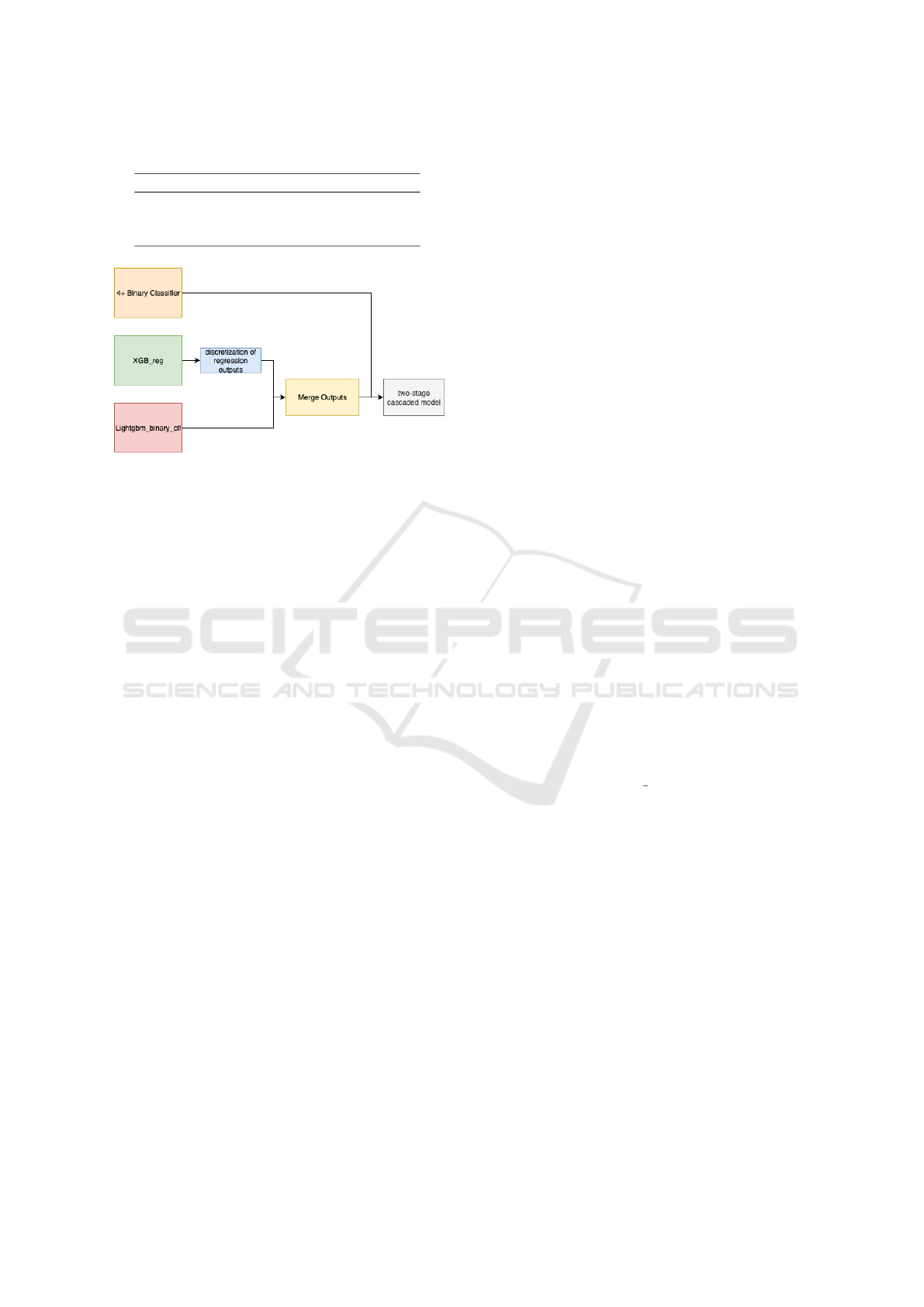
Table 5: Class based hybrid model performance.
Class Precision Recall
1 (single purchase) 0.72 0.80
2–3 (mid-frequency) 0.48 0.46
4+ (heavy buyers) 0.55 0.33
Figure 1: Two Stage Cascade Model.
5 CONCLUSIONS AND FUTURE
WORKS
In this study, we addressed the problem of predict-
ing the number of products a user will purchase in
the upcoming month. We explored multiple modeling
strategies, including direct classification, regression
with interval mapping, and a hybrid approach com-
bining binary classification for the 4+ category with
regression for the remaining classes.
Our results indicate that while classification mod-
els achieve slightly higher overall accuracy, regres-
sion captures the ordinal and count-based nature of
the target variable, resulting in better precision and
more meaningful predictions. The proposed hybrid
methodology successfully balances the strengths of
both approaches, improving detection of the 4+ class
while retaining robust performance across all cate-
gories. This demonstrates the effectiveness of com-
bining regression and binary classification for class-
imbalanced, ordinal prediction tasks in a real-world
e-commerce context.
For future work, we plan to explore modern
attention-based tabular learning algorithms, such as
TabNet, TabTransformer, and FT-Transformer, to fur-
ther improve prediction accuracy and interpretabil-
ity. These models have shown strong performance
on structured data by leveraging self-attention mech-
anisms to capture complex feature interactions. Addi-
tionally, we aim to investigate temporal and sequen-
tial patterns in user purchasing behavior, incorpo-
rating recurrent or transformer-based architectures to
model dynamics over time. Combining these modern
tabular methods with our hybrid framework may fur-
ther enhance predictive performance, especially for
4+ category.
ACKNOWLEDGEMENTS
This project was made possible by the individual con-
tributions of each member of the recommendation
team within Hepsiburada technology group. Also,
this project would not have been possible if the tech-
nology group management of Hepsiburada had not
supported and encouraged the data science team in
innovation.
REFERENCES
Abe, M. (2009). Counting your customers one by one: A
hierarchical bayes extension to the pareto/nbd model.
Marketing Science, 28(3):541–553.
Fader, P. S., Hardie, B. G. S., and Lee, K. L. (2005). Count-
ing your customers the easy way: An alternative to
the pareto/nbd model. Marketing Science, 24(2):275–
284.
Grinsztajn, L., Oyallon, E., and Varoquaux, G. (2022).
Why do tree-based models still outperform deep learn-
ing on tabular data? In Advances in Neural In-
formation Processing Systems (NeurIPS). Available:
https://arxiv.org/abs/2207.08815.
Kim, Y., Lee, S., and Jang, H. (2023). Customer
lifetime value prediction using deep learning: A
transformer-based approach. Applied Artificial Intel-
ligence, 37(2):147–163.
Lathwal, P. and Batra, R. (2024). Attention-based cus-
tomer lifetime value prediction in e-commerce using
ft-transformer architecture. Amity Journal of Data and
Cyber Sciences. Available: https://www.amity.edu/gu
rugram/jccc/pdf/JDCS\ 0205.pdf.
Oblander, E. S., Gupta, S., Mela, C. F., Winer, R. S., and
Lehmann, D. R. (2020). The past, present, and future
of customer management. Marketing Letters, 31(2–
3):125–136.
Song, P. and Liu, Y. (2020). An xgboost algorithm for
predicting purchasing behaviour on e-commerce plat-
forms. Tehni
ˇ
cki vjesnik, 27(5):1467–1471.
Sun, Y., Cheng, D., Bandyopadhyay, S., and Xue, W.
(2021). Profitable retail customer identification based
on a combined prediction strategy of customer life-
time value. Midwest Social Sciences Journal, 24(1).
Verbeke, W., Martens, D., and Baesens, B. (2014). Social
network analysis for customer churn prediction. Ap-
plied Soft Computing, 14:431–446.
Wang, W., Xiong, W., Wang, J., Tao, L., Li, S., Yi, Y., and
Zou, X. (2023). A user purchase behavior prediction
method based on xgboost. Electronics, 12(9):2047.
Yang, L., Niu, X., and Wu, J. (2021). Rf-lightgbm: A prob-
abilistic ensemble way to predict customer repurchase
behaviour in community e-commerce. arXiv preprint
arXiv:2109.00724.
ICEEECS 2025 - International Conference on Advances in Electrical, Electronics, Energy, and Computer Sciences
68
