
Brain‑Computer Interface Signal Decoding Technology Based on
Deep Learning
Ruotian Luo
School of Engineering, Ulster University, Belfast, U.K.
Keywords: Deep Learning, EEG Signal Decoding, Brain‑Computer Interface (BCI).
Abstract: With a special emphasis on the potential of sophisticated classification algorithms to improve overall system
performance, this review article offers a thorough examination of the most recent developments in brain-
computer interface (BCI) systems. The paper examines various methodologies, including adaptive learning,
deep learning, and hybrid models, and evaluate their impact on decoding complex brain signals. Key findings
highlight the superior efficacy of deep learning approaches such as LSTM-FCN and 1D CNN in improving
accuracy and robustness. Transfer learning combined with advanced CSP algorithms also shows significant
improvements in handling limited training data. Furthermore, the integration of deep learning with the
EEG2Code method achieves remarkable information transfer rates. These advancements demonstrate
transformative potential for BCI applications in healthcare, assistive technologies, and human-computer
interaction. However, challenges remain in aligning algorithmic complexity with brain signal characteristics
and ensuring practical deployment for end-users. Future research should focus on optimizing algorithms for
real-time functionality, personalizing BCI systems, and exploring novel decoding modalities to further
advance this transformative field.
1 INTRODUCTION
The emerging field of brain-computer interfaces
(BCIs)aims to establish a direct communication link
between the human brain and external devices. This
innovative technology holds the promise of
transforming human interaction with the
environment, especially for individuals with motor
impairments. BCIs work by decoding the electrical
activity of the brain, often measured through
electroencephalography (EEG), and translating it into
control signals for various applications, such as
assistive devices, gaming, and even complex tasks
like continuous pursuit.
The development of BCI systems follows a multi-
stage process, starting with data acquisition where
raw brain signals are captured. After these signals are
examined, significant features are extracted, and
computers classify these traits to determine the user's
intents. BCI systems' efficacy is dependent upon the
accurate interpretation of brain signals which include
functional near-infrared spectroscopy (fNIRS)
data and electroencephalograms. Current
developments in EEG-based Brain-Computer
Interface technology showed enormous possibilities.
As reviewed by Värbu et al. (Värbu et al., 2022),
EEG-BCI systems interpret brain signals to facilitate
interactions between the brain and external devices.
Initially developed for medical purposes to aid
patients in regaining independence, these systems
have expanded into non-medical domains, enhancing
efficiency and personal development for healthy
individuals. Over the years, the field has seen the
evolution of classification algorithms from traditional
machine learning techniques, such as linear
discriminant analysis (LDA), to more advanced deep
learning models like convolutional neural networks
(CNNs).
The first step in the multi-stage process of
developing BCI systems is data acquisition, which
involves recording unprocessed brain signals. After
these signals are examined, significant features are
extracted, and computers classify these traits to
determine the user's intents. The effectiveness of BCI
systems has to rely upon the accurate interpretation of
cerebral signals like electroencephalograms and
functional near-infrared spectroscopy data.
Classification algorithms have evolved throughout
time in the field, progressing from more traditional
machine learning methods such as linear discriminant
Luo, R.
Brain-Computer Interface Signal Decoding Technology Based on Deep Learning.
DOI: 10.5220/0014300300004933
Paper published under CC license (CC BY-NC-ND 4.0)
In Proceedings of the 1st International Conference on Biomedical Engineering and Food Science (BEFS 2025), pages 27-32
ISBN: 978-989-758-789-4
Proceedings Copyright © 2026 by SCITEPRESS – Science and Technology Publications, Lda.
27

analysis (LDA) to more advanced deep learning
models such as convolutional neural networks
(CNN). CNNs are frequently used because they can
find significant features from raw EEG data,
eliminating the requirement for costly preprocessing
and laborious feature engineering (Hossain et al.,
2023). Performance in a number of BCI applications,
such as driver attention monitoring, emotion
recognition, and motor imagery categorization, has
increased as a result.
2 TWO NEW DEVELOPMENTS
IN BRAIN-COMPUTER
INTERFACE SYSTEMS: AN
EMPHASIS ON MACHINE
LEARNING TECHNIQUES AND
CLASSIFICATION
ALGORITHMS
2.1 Overview of Classification
Algorithms in BCIs
In their thorough evaluation and analysis of brain-
computer interface (BCI) systems, Mansoor et al.
highlight the features and improvements of these
systems utilizing a variety of classification methods
(Mansoor et al., 2020). To improve the preciseness
and dependability of BCI systems, the authors
investigate the application of deep learning, transfer
learning, adaptive classifiers, matrix and tensor
classifiers, and other methods. They offer an
organized summary of recent techniques for feature
extraction, data collection, and categorization.
The study highlights the effectiveness of adaptive
classifiers in acquiring accurate results compared to
static classification techniques. It also emphasizes the
potential of deep learning techniques, particularly in
achieving faster processing speeds and higher
classification accuracy, for real-time BCI
implementation. The authors compare different
classification algorithms, noting the trade-offs
between performance and computational
requirements. For instance, linear discriminant
analysis (LDA) is highlighted for its suitability in
online BCI systems due to its low computational
demand, despite its linearity potentially providing
poor results on com-plex nonlinear EEG data.
The paper concludes that while artificial neural
networks (ANN) offer high accuracy for non-invasive
BCI techniques, their complex architecture may not
always align with the inherent characteristics of brain
signals. The authors suggest that further research is
needed to enhance accuracy for healthcare
applications and propose that future BCI systems
could support multiplatforms and be controlled via
smartphones for fail-safe mechanisms. The study's
conclusions encourage the creation of more precise
and approachable BCI systems, which could
completely transform how people utilize assistive
technology and technology in general.
2.2 Advanced Machine Learning
Approaches
An innovative machine-learning method for brain-
computer interfacing (BCI) was presented by Zhihan
Lv et al. with the goal of increasing the classification
accuracy of electroencephalogram (EEG) signals (Lv
et al., 2021). To create a data categorization model,
the authors integrate an enhanced Common Spatial
Pattern (CSP) method with a transfer learning
approach. A time-domain filter is incorporated into
the enhanced CSP algorithm to better capture the
temporal properties of EEG signals. The transfer
learning algorithm is used to apply knowledge gained
from one task to solve another related task, which is
particularly useful in BCI where data often comes
from different individuals with varying data
distributions.
The effectiveness of the proposed algorithms,
Adaptive Composite Common Spatial Pattern
(ACCSP) and Self Adaptive Common Spatial Pattern
(SACSP), is verified using a public EEG dataset. The
results demonstrate that both actual and imagined
movements show higher classification accuracy when
comparing left and right-hand movements at different
speeds versus same speeds. Traditional algorithms
achieved a baseline accuracy of 76.62%, while the
ACCSP and SACSP algorithms improved this to
83.58%, representing a 6.96% increase. Notably, the
ACCSP method's classification accuracy outperforms
the conventional CSP algorithm when the training
sample size is modest (e.g., 10 samples).
The work demonstrates that integrating transfer
learning with an updated CSP algorithm could
substantially boost the categorizing performance of
BCI systems. This is especially important since it
tackles the issues of lengthy training periods and poor
classification accuracy in BCI, which are crucial for
real-world uses including intelligent perception,
assistive medicine, and human-computer interaction.
The study suggests that future BCI technology may
further improve applications in gesture tracking and
BEFS 2025 - International Conference on Biomedical Engineering and Food Science
28
video gaming by utilizing these cutting-edge
machine-learning approaches, based on the improved
categorization accuracy shown in this study.
2.3 Deep Learning Models for EEG
Signal Classification
Elsayed et al. provides a valuable deep learning
approach for brain-computer interaction (BCI)
systems, specifically focusing on motor execution
(ME) electroencephalogram (EEG) signal
classification (Elsayed et al., 2021). The authors
propose a User-Independent Hybrid Brain-Computer
Interface (UIHBCI) model for identifying data from
fourteen channels of the electroencephalogram
(EEG) which capture the brain reactions of nine
individuals. Three steps make up the model: signal
processing, Deep Belief Network (DBN)
classification, and Independent Component Analysis
with Automatic EEG artifacts Detector method (ICA-
ADJUST) feature extraction.
The study employs two assessment models—
Audio/Video (A/V) and Male/Female (M/F)—to
identify relevant multisensory elements of
multichannel EEG that suggest certain mental
behaviors. When applied independently to these two
models, the DBN outperforms other cutting-edge
algorithms such as Linear Discriminant Analysis
(LDA), Support Vector Machine (SVM) and Hybrid
Steady-State Visual Evoked Potential Rapid Serial
Visual Presentation Brain-computer Inter-face
(Hybrid SSVEP-RSVP BCI). Even applied with
Brain-computer Interface Lower-Limb Motor
Recovery (BCI LLMR), yielding overall
classification rates of 94.44% for the A/V model and
94.44% for the M/F model.
The outcomes demonstrate the efficacy of the
integration of signal processing, feature extraction,
and DBN classification in BCI systems by showing
that the suggested UIHBCI model is successful in
classifying ME EEG signals.
2.4 The Comparative Study of Deep
Learning and Machine Learning
for fNIRS-BCI
Research contrasted deep learning with conventional
machine learning methods for interpreting brain
signals using functional near-infrared spectroscopy
(fNIRS) in the context of brain-computer interfaces
(BCI) (Lu et al., 2020). The purpose of the study is to
ascertain which method processes fNIRS data for
mental arithmetic tasks more effectively. Alongside
the deep learning technique, namely the long short-
term memory-fully convolutional network (LSTM-
FCN), the traditional machine learning techniques,
such as linear discriminant analysis (LDA), decision
trees, support vector machines (SVM), K-Nearest
Neighbor (KNN), and collective techniques, were
assessed.
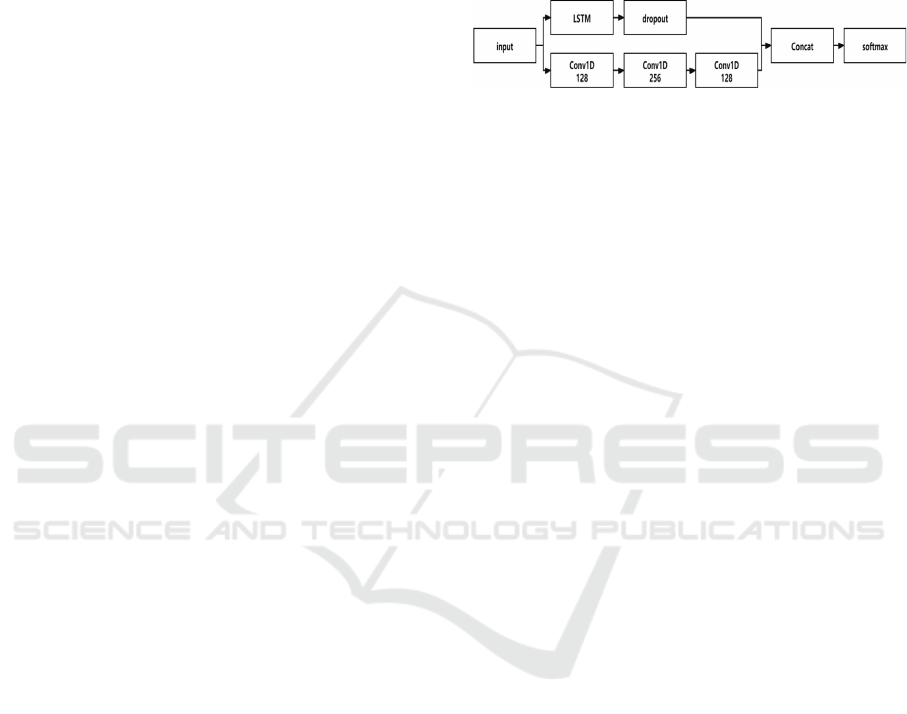
Figure 1: Mechanism of LSTM-FCN for fNIRS-BCI Data
(Lu et al.,2020).
The fNIRS-BCI dataset used in the study was
collected from eight subjects performing mental
arithmetic tasks. Figure 1 depicts the LSTM-FCN
architecture for fNIRS-BCI data. The data first
underwent preprocessing to reduce physiological
noise. Subsequently, feature extraction was
performed to identify relevant channels and time
periods. The classical machine learning methods
required strict feature extraction and screening, while
the LSTM-FCN model was designed to automatically
learn features from the raw data.
According to the results, SVM outperformed the
other conventional approaches, achieving an average
accuracy of 91.0% for tasks related to the subject and
83.0% for tasks unrelated to the subject. However,
with an accuracy of 95.3% for tasks relevant to the
subject and 97.1% for tasks unrelated to the subject,
the deep learning technique LSTM-FCN
considerably surpassed the traditional methods.
Interestingly, LSTM-FCN demonstrated its stability
and efficacy in decoding fNIRS-BCI data by
achieving 100% accuracy for several participants
despite varying network dropout rates.
The study comes to the conclusion that deep
learning—specifically, the LSTM-FCN model—is a
more viable method for analyzing fNIRS-BCI data
than traditional machine learning techniques because
of its higher accuracy and capacity to automatically
learn features. This finding is significant as it
highlights the potential of deep learning to handle
complex and dynamic brain signal data, which is
crucial for advancing BCI applications in areas such
as assistive technologies and cognitive research.
Brain-Computer Interface Signal Decoding Technology Based on Deep Learning
29
2.5 Deep Learning for EEG-Based
Mental State Decoding
In order to decode mental states from
electroencephalogram (EEG) data in non-invasive
brain-computer interfaces (BCI), Dongdong Zhang
and colleagues created a deep learning-based method
(Zhang et al., 2019). The study addresses the
challenge of accurately predicting mental states using
EEG, which has traditionally suffered from limited
accuracy and generalization. The authors suggest a
brand-new 1D convolutional neural network (CNN)
architecture that uses different-length filters to extract
data from various EEG signal frequency bands. The
goal of this strategy is to increase prediction accuracy
and feature extraction.
The researchers looked at a dataset of 25 hours of
EEG recordings from five patients who were
undertaking a low-intensity control task. To maintain
inter-channel correlations, the data were preprocessed
using a bandpass filter and standardized. In order to
enable robust feature extraction, a relatively deep
network was trained for the proposed 1D CNN
employing a Resnet-like structure. The model's
performance was evaluated using fivefold cross-
validation.
The results demonstrate significant improvements
over traditional prediction methods such as KNN and
SVM. The proposed model achieved an accuracy of
96.40% in predicting mental states, outperforming
traditional algorithms and other published deep
learning architectures. In the more challenging
common-subject paradigm, the proposed model
achieved a prediction accuracy of 53.22%, surpassing
the performance of existing methods including EEG
Net, FBCSP Shallow Net, and Deep Conv Net.
The study's findings highlight the effectiveness of
using 1D convolutional neural networks for EEG
feature extraction and mental state prediction. This
technique presents an appealing option to further
develop both the precision and generality within BCI
systems, possibly broadening its applications in
monitoring mental states in a variety of real-world
situations
2.6 Continuous Pursuit Tasks in BCI
The use of deep learning (DL)-based decoders for
continuous pursuit (CP) activities has been examined
in noninvasive brain-computer interfaces (BCI)
which incorporate electroencephalography (EEG)
(Forenzo et al., 2024). Using motor imagery, users
perform CP tasks by tracking a moving target in 2D
space, a process that requires dynamic and continuous
control. The researchers developed a novel labeling
system to enable supervised learning with CP data,
which lacks clear labels for traditional supervised
learning methods. They trained DL-based decoders
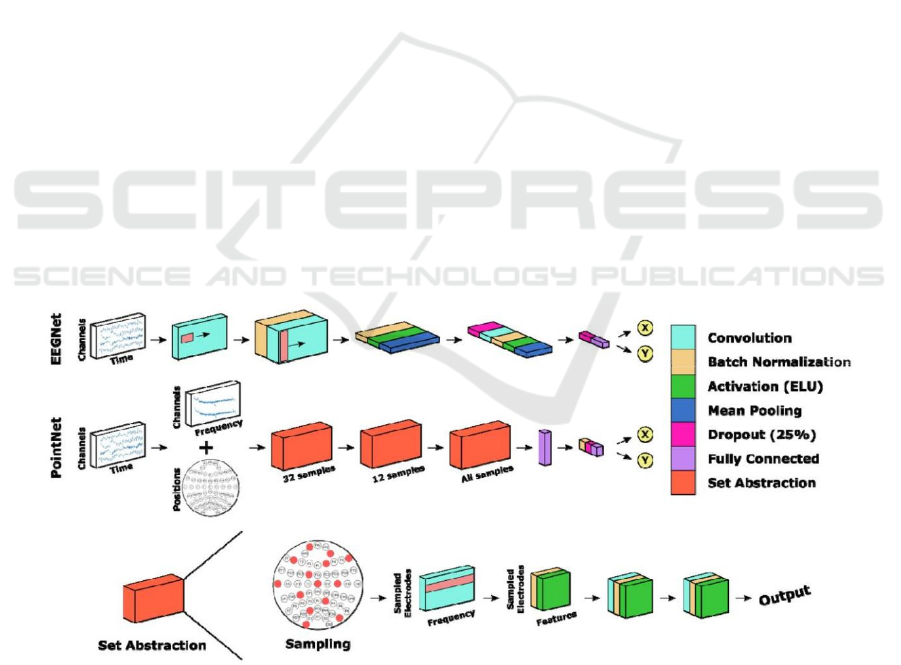
using two architectures: EEGNet and a modified
PointNet, shown as Fig2. The performance of these
DL models was evaluated over multiple online
sessions with 28 human participants.
Figure 2: The Implementing of EEGNet and PointNet Architecture (Forenzo et al., 2024).
The results showed significant improvements in
the performance of DL-based models as more training
data became available. In the very last period, both
DL models surpassed a standard autoregressive
decoder. Specifically, the normalized mean squared
error (NMSE) be-tween the cursor and target dropped
BEFS 2025 - International Conference on Biomedical Engineering and Food Science
30
from an initial value to 0.43 for EEGNet and 0.56 for
PointNet every session. Furthermore, during the
course of sessions, the correlation between the target
and cursor positions grew, with EEGNet reaching a
greater correlation by the last session. The study also
investigated transfer learning and mid-session
recalibration to enhance performance. Although
transfer learning failed to significantly improve early
session performance, mid-session recalibration
demonstrated promising benefits in several cases.
All things considered, the study indicates how well
DL-based decoders perform BCI in hard tasks like
CP, indicating that they may be utilized to expand
BCI applications in practical situations while also
enhancing the quality of life for normal people and
people with motor impairments.
2.7 Deep Learning for High-Speed BCI
Systems
To forecast visual input properties from EEG data,
deep learning and the EEG2Code technique have
been combined (Nagel & Spüler, 2019). The
disclosed BCI system is by far the quickest, since the
authors demonstrate that an individual may use this
method in an online BCI to obtain an information
transfer rate (ITR) of 1237 bits per minute. The top
person can distinguish between 500,000 distinct
stimuli with 100% accuracy utilizing just 2 seconds
of EEG data in a simulated online exercise with
500,000 targets.
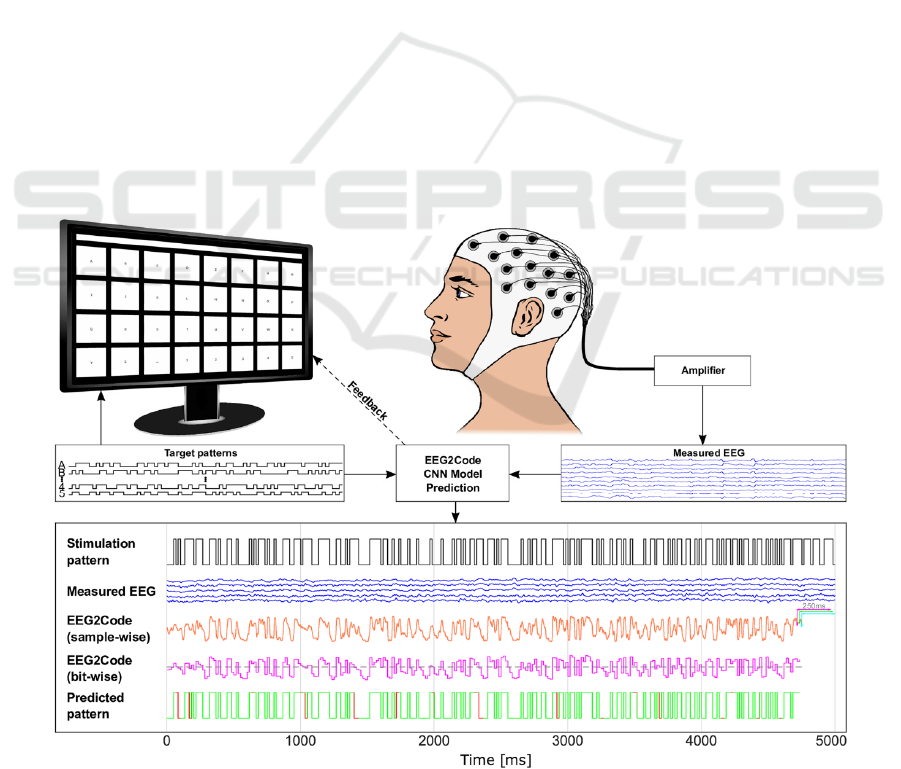
The study uses deep learning, namely a
convolutional neural network (CNN), with the
EEG2Code approach to generate a nonlinear model
that forecasts random stimulation patterns according
to VEP feedbacks. Figure 3 depicts a demonstration
of the EEG2Code CNN model. The authors suggest
that EEG signals include more information than is
commonly supposed. However, they also mention a
ceiling effect, which suggests that, not less than for
BCIs that rely on stimuli that are visual, more
powerful decoding approaches may not necessarily
result in greater BCI control.
The results highlight a significant improvement in
classification accuracy and ITR when using deep
learning compared to the previous ridge regression
model. The technique increased the ITR from 232
bits/min to 701 bits/min, a 202% improvement, while
also improving the pattern prediction accuracy from
64.6% to 74.9%. In a passive BCI environment, the
top subject obtained an online ITR of 1237 bits/min.
The system reached an average utility rate of 175
bits/min for asynchronous self-paced BCI spelling,
Users can create an average of 35 error-free letters
each minute.
Figure 3: Example of the EEG2Code CNN Pattern Prediction (Nagel & Spüler, 2019).
Brain-Computer Interface Signal Decoding Technology Based on Deep Learning
31

The authors come to the conclusion that although
the method they outlined may be able to gather a
significant quantity of data from EEG signals, the
maximum number of targets and the minimum trial
duration are still limitations for genuine BCI control.
They highlight two important points: the need to
make sure BCI systems continue to be feasible for
end-user applications, and the difference between
brain signal decoding performance and actual BCI
control performance.
3 CONCLUSION
This review research focuses on the substantial
breakthroughs in brain-computer interface (BCI)
systems made available through judicious application
of advanced classification algorithms. Among
various advances, deep learning techniques such as
LSTM-FCN and 1D CNN have demonstrated
superior capabilities in decoding intricate brain
signals, offering better accuracy and robustness
compared to traditional methods. The symbiotic
relationship between transfer learning and enhanced
CSP algorithms has also been validated, particularly
in overcoming the challenges of limited training data.
Building upon these advances, the integration of deep
learning with the EEG2Code method has achieved
unprecedented information transfer rates, revealing
the untapped potential of EEG signals in BCI
applications. Despite these advancements, the
alignment of algorithmic complexity with brain
signal characteristics and the practical deployment of
BCI systems for end-users remain ongoing
challenges. As highlighted in the review by Samal
and Hashmi (Samal & Hashmi, 2024), the continuous
advancements in non-invasive and portable sensor
technologies, such as EEG-based BCIs, are expected
to significantly enhance the precision and real-time
capabilities. As BCI technology evolves, it shows
great promise in revolutionizing multiple fields, from
assistive healthcare to human-computer interaction
and neuroscience research, heralding a new era of
more intuitive and effective BCI systems.
REFERENCES
Elsayed, N. E., Tolba, A. S., Rashad, M. Z., Belal, T., &
Sarhan, S. 2021. A deep learning approach for brain
computer interaction-motor execution EEG signal
classification. IEEE Access, 9, 101513-101529.
Forenzo, D., Zhu, H., Shanahan, J., Lim, J., & He, B. 2024.
Continuous tracking using deep learning-based
decoding for noninvasive brain–computer interface.
PNAS Nexus, 3(4), page 145.
Hossain, K. M., Islam, M. A., Hossain, S., Nijholt, A., &
Ahad, M. A. R. 2023. Status of deep learning for EEG-
based brain–computer interface applications. Frontiers
in Computational Neuroscience, 16 (1006763).
Lu, J., Yan, H., Chang, C., Wang, N. 2020. Comparison of
Machine Learning and Deep Learning Approaches for
Decoding Brain Computer Interface: An fNIRS Study.
In Shi, Z., Vadera, S., Chang, E. (eds), Intelligent
Information Processing X. IIP 2020, Cham, October
2020. Cham: Springer.
Lv, Z., Qiao, L., Wang, Q., & Piccialli, F. 2021. Advanced
machine-learning methods for brain-computer
interfacing. IEEE/ACM Transactions on
Computational Biology and Bioinformatics, 18(5),
1688-1698.
Mansoor, A., Usman, M. W., Jamil, N., Naeem, M. A.
2020. Deep learning algorithm for brain-computer
interface. Scientific Programming, 2020, 5762149, 12
pages.
Nagel, S., Spüler, M. 2019. World’s fastest brain-computer
interface: Combining EEG2Code with deep learning.
PLOS ONE, 14(9): e0221909.
Samal, P., Hashmi, M. F. 2024. Role of machine learning
and deep learning techniques in EEG-based BCI
emotion recognition system: a review. Artificial
Intelligence Review, 57(3), 50.
Värbu, K., Muhammad, N., & Muhammad, Y. 2022. Past,
present, and future of EEG-based BCI applications.
Sensors, 22(9), Article 3331.
Zhang, D., Cao, D., & Chen, H. 2019. Deep learning
decoding of mental state in non-invasive brain
computer interface. In Proceedings of the International
Conference on Artificial Intelligence, Information
Processing and Cloud Computing (AIIPCC '19), New
York, NY, USA, October 2019. New York: Association
for Computing Machinery.
BEFS 2025 - International Conference on Biomedical Engineering and Food Science
32
