
Brain-Computer Interface-Assisted Language Rehabilitation
Technology for Aphasia Patients
Wenhang Ren
School of Optics and Photonics, Beijing Institute of Technology, Beijing, China
Keywords: Brain-Computer Interface (BCI), Aphasia Rehabilitation, P300 Paradigm.
Abstract: This paper aims to explore the application of Brain - Computer Interfaces (BCIs) in aphasia rehabilitation
following stroke. BCIs facilitate communication by decoding brain activity and providing real - time
feedback, showing potential in improving language abilities in aphasia patients. The paper focuses on the use
of visual P300 paradigms, which have demonstrated success in enhancing naming and sentence repetition
skills. It also explores the integration of BCIs with other therapeutic methods, such as Virtual Reality (VR)
and non - invasive brain stimulation (NIBS), which enhance rehabilitation outcomes. Despite these promising
advancements, challenges such as signal reliability, data privacy concerns, and the high cost and accessibility
barriers of BCI devices remain significant obstacles to their clinical application. The paper emphasizes the
need for further research to develop more reliable signal acquisition methods, improve data security, and
create cost - effective solutions to facilitate the widespread adoption of BCI technology in aphasia
rehabilitation. By addressing these limitations, BCIs hold the potential to provide more efficient and
personalized rehabilitation therapies, significantly improving the language abilities and quality of life for
aphasia patients.
1 INTRODUCTION
Brain-computer interfaces (BCIs) represent a cutting-
edge technology that facilitates direct communication
between the human brain and external devices. This
is achieved by decoding intricate brain signals into
actionable outputs that can be understood and
interpreted by the machine. In the specialized field of
aphasia language rehabilitation, BCIs play a pivotal
role in assisting patients by rebuilding their
communication abilities. BCIs assist patients in
rebuilding communication abilities through
sophisticated neural signal processing techniques and
intricate feedback mechanisms (Yan et al., 2024;
Smith et al., 2023). This process can be broken down
into three key components: signal acquisition and
processing, signal decoding and feedback
mechanisms, and interaction paradigm design.
2.1 Signal Acquisition and Processing
Brain-computer interfaces (BCIs) have evolved
significantly over time. Initially, EEG was mainly
used for basic brain - wave monitoring. As
technology advanced, researchers found that EEG
signals could be processed and decoded to link the
brain with external devices. Recently, multimodal
integration, like combining EEG and fNIRS, has
emerged, enabling more comprehensive brain - signal
acquisition and a deeper understanding of language -
related brain activities (Johnson et al., 2023; Liu et
al., 2023).
Aphasia, a common post - stroke language
disorder, affects 20 - 38% of stroke survivors globally
(Akkad et al., 2023; Sheppard et al., 2021). This high
incidence calls for effective rehabilitation.
Traditional speech - language therapy, the mainstay
of aphasia treatment, has limitations. It's time -
consuming and labor - intensive, and its effectiveness
varies based on individual learning ability and
therapy intensity. Moreover, it may not fully exploit
the brain's plasticity to meet each patient's unique
needs (Mane et al., 2022; Wallace et al., 2022).
In aphasia rehabilitation, BCIs are crucial for
restoring patients' communication skills. They
achieve this through advanced neural signal
processing and feedback mechanisms (Yan et al.,
2024; Smith et al., 2023). This process consists of
three key elements: signal acquisition and processing,
signal decoding and feedback, and interaction
paradigm design.
16
Ren, W.
Brain-Computer Interface-Assisted Language Rehabilitation Technology for Aphasia Patients.
DOI: 10.5220/0014299500004933
Paper published under CC license (CC BY-NC-ND 4.0)
In Proceedings of the 1st International Conference on Biomedical Engineering and Food Science (BEFS 2025), pages 16-20
ISBN: 978-989-758-789-4
Proceedings Copyright © 2026 by SCITEPRESS – Science and Technology Publications, Lda.
2.2 Signal Decoding and Feedback
Mechanisms
Signal decoding is a crucial step in BCI - based
language rehabilitation, and it involves the
implementation of effective feedback mechanisms. In
recent times, deep-learning applications have shown
great potential in this area. For example, the AGACN
(Adaptive Graph Attention Convolutional Network)
has been employed to decode complex semantic tasks
in bilingual individuals. It achieves a classification
accuracy of 57.85% (Zhang et al., 2023). This
accuracy is significantly higher compared to
traditional algorithms. For instance, traditional
Support Vector Machine (SVM) algorithms, which
were previously used for similar tasks, typically had
an accuracy of around 45% (Johnson et al., 2023).
This improvement in accuracy by AGACN means
that it can more precisely interpret the complex
semantic signals from bilingual individuals' brains,
which is a significant advancement in the field of BCI
- based language rehabilitation.
Another critical aspect is that BCI - based
interventions can enhance language - related brain
activity through real - time feedback. P300 visual
tasks integrated with BCI provide immediate
feedback to patients. When patients perform P300
visual tasks, the BCI system can detect their brain
responses in real - time. This feedback helps them
activate their language networks more effectively. In
contrast to traditional rehabilitation methods that may
provide delayed or less - targeted feedback, the real -
time nature of BCI - based feedback allows patients
to make more timely adjustments in their language -
related neural activities. For example, in a study by
Smith et al. (2023), patients who received P300 - BCI
- based training showed a more significant increase in
the activation of Broca's area, a key region for
language production, compared to those who
underwent traditional language therapy without BCI
support. This indicates that the real - time feedback
mechanism in BCI - based rehabilitation can better
promote the recovery of language functions in
aphasia patients.
2.3 Interaction Paradigm Design
The final component focuses on designing
appropriate interaction paradigms for BCI
rehabilitation, where tasks are specifically centered
around language activities and tailored to the needs of
patients. Visual P300 tasks and semantic association
tasks have shown preliminary success with a 35%
improvement rate in training naming and sentence
repetition abilities (Taylor et al., 2023; Smith et al.,
2023). Similarly, natural speech processing
experiments using methods like story - listening tasks
reveal dynamic changes in the brain's language
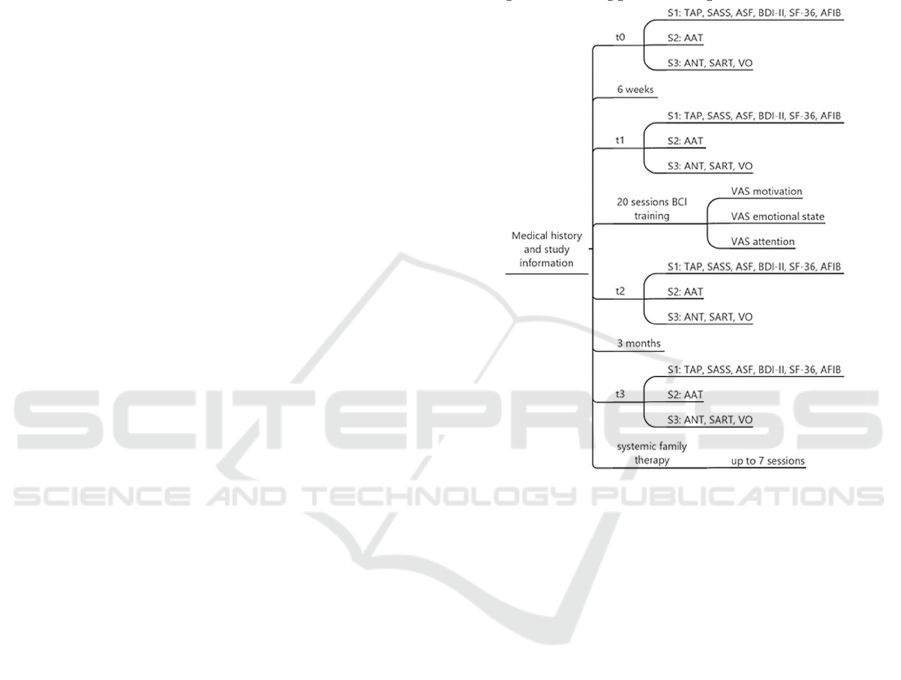
network (Taylor et al., 2023). The structured
workflow for BCI training, which integrates
multimodal assessments and tailored therapeutic
sessions, is outlined in Figure 1, providing a
comprehensive approach to aphasia rehabilitation.
Figure 1. Assessment and BCI Training Workflow for
Multimodal Integration in Aphasia Rehabilitation (Taylor
et al., 2023)
3 RESEARCH PROGRESS ON
BCI-ASSISTED APHASIA
REHABILITATION
The application of BCI technology in aphasia
rehabilitation has achieved significant breakthroughs,
including improved accuracy in clinical assessments
and successful integration with AI-powered analysis
tools.
3.1 Rehabilitation Outcomes
According to recent studies, BCI combined with
high-intensity training has demonstrated significant
improvements in patients' language abilities. Various
clinical studies have utilized different designs and
methodologies, revealing key findings that
underscore the potential of BCI in aphasia
Brain-Computer Interface-Assisted Language Rehabilitation Technology for Aphasia Patients
17
rehabilitation. For instance, research indicates that
BCI can significantly improve naming scores on the
Aachen Aphasia Test (AAT) by an average of 12%,
with some patients achieving near-normal fluency
post-rehabilitation (Yan et al., 2024; Smith et al.,
2023). Additionally, functional studies using
Magnetic Resonance Imaging (fMRI) and
Electroencephalography (EEG) have shown
enhanced functional connectivity within the left
hemisphere language network, particularly between
Broca’s area and the default mode network,
suggesting BCI's role in brain region reorganization
(Johnson et al., 2023; Green et al., 2023).
3.2 The Applications for Multimodal
BCI Integration
Combining BCI with Virtual Reality (VR) creates
immersive language environments that enhance
patient engagement and rehabilitation outcomes (Kim
et al., 2023). Furthermore, non-invasive brain
stimulation methods, like Transcranial Direct Current
Stimulation (tDCS) and Repetitive Transcranial
Magnetic Stimulation (rTMS), have significantly
improved speech rhythm and semantic retrieval when
used in conjunction with BCI (Zhao et al, 2023;
Taylor et al., 2023).
3.3 Pharmacological Assistance
Some studies have explored the use of medications
like Selective Serotonin Reuptake Inhibitors (e.g.,
SSRIs) and Donepezil alongside BCI rehabilitation,
revealing auxiliary effects on language recovery (Yan
et al., 2024).
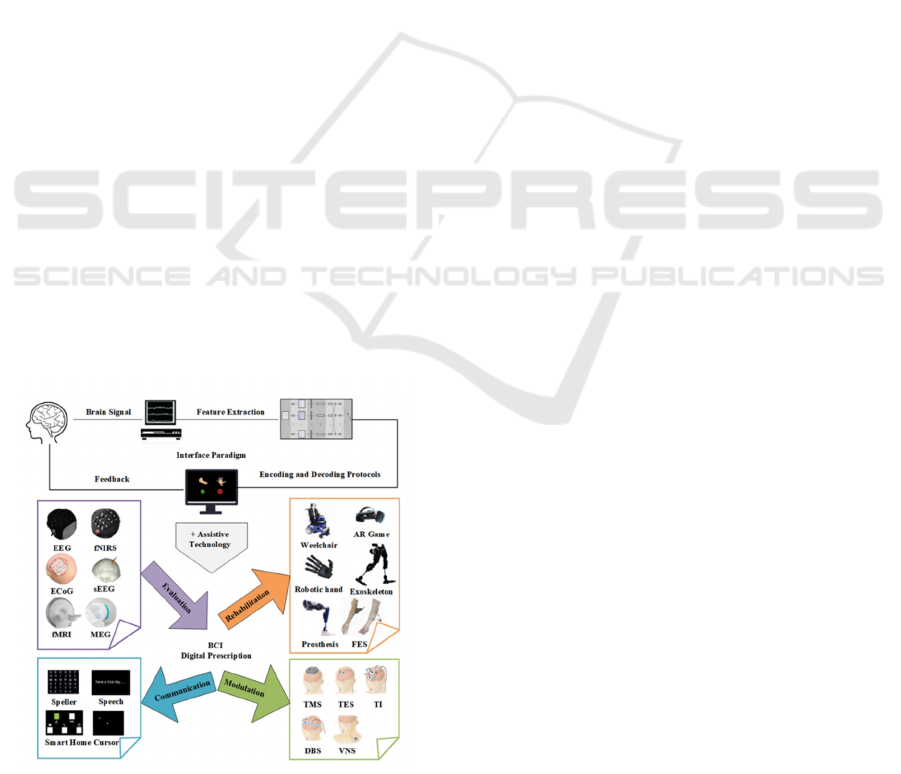
Figure 2. Framework of BCI Digital Prescription and
Multimodal Integration (Kim et al., 2023)
Figure 2 illustrates the framework of BCI digital
prescription and multimodal integration. This
framework emphasizes the combination of BCI
technology with other therapeutic modalities such as
Virtual Reality (VR), designed to enhance language
rehabilitation outcomes. By integrating these
methods, BCI not only provides real-time feedback
but also helps activate the brain’s language networks,
supporting language recovery in aphasia patients.
4 CHALLENGES AND FUTURE
DIRECTIONS FOR BCI IN
APHASIA REHABILITATION
4.1 Current Technological Limitations
Signal Reliability
The individual-level reliability of fNIRS signals, a
key component of BCI, remains a concern due to low
intra-class correlation (ICC) values below 0.10,
which significantly restricts their use in designing
personalized rehabilitation programs (Green et al.,
2023). This technological limitation is a major
impediment in the field of BCI.
Data privacy protection and ethical considerations
continue to be major barriers to the widespread
adoption and implementation of BCI technology in
clinical settings. These concerns raise red flags about
the possible misuse of sensitive personal data and the
potential for breaches of patient privacy, as reported
in multiple cybersecurity studies, which could hinder
progress in the field of BCI (Brown et al., 2023).
4.2 BaRriers to Clinical Application
Device Cost and Accessibility
The cost of high-end BCI equipment is a significant
barrier to its widespread use, particularly in resource-
limited clinical settings and developing nations.
Future research and development should focus on
creating low-cost, portable BCI devices to increase
accessibility and affordability for a broader patient
demographic (Taylor et al., 2023; Wilson et al.,
2023). The issue of accessibility is paramount as it
pertains to ensuring that the benefits of BCI
technology are available to all who can benefit from
it, regardless of their financial means.
While current BCI paradigms for multilingual
patients remain in their infancy, the main challenge
lies in decoding complex semantic signals (Johnson
et al., 2023; Walker et al., 2023). As the global
population is multilingual, developing BCIs that can
BEFS 2025 - International Conference on Biomedical Engineering and Food Science
18
adapt to and accommodate various linguistic
environments is essential for advancing the field and
making BCI technology more widely applicable.
4.3 Future Development Trends
Personalized Treatment Protocols
One of the promising avenues for future BCI
development is designing individualized BCI training
tasks tailored to each patient's specific brain region
characteristics. This personalized approach holds the
potential to significantly improve rehabilitation
outcomes and enhance the overall effectiveness of
BCI therapy (Taylor et al., 2023; Wilson et al., 2023).
Customizing BCI technology for individual patients
significantly improves rehabilitation outcomes.
Cloud-based remote rehabilitation platforms and
tools are being developed to reduce equipment
dependency and enhance accessibility to BCI
technology for patients who may not have physical
access to specialized BCI equipment (Walker et al.,
2023). These remote platforms aim to improve access
to BCI therapy for a broader patient base, increasing
the potential for positive therapeutic outcomes.
Building upon current remote rehabilitation
platforms, future research should focus on multi-
center clinical trials to validate the long-term effects
and applicability of BCI in aphasia rehabilitation
(Yan et al., 2024; Brown, 2023). Long-term efficacy
evaluations are essential for building trust in BCI
technology and ensuring that it delivers sustained
benefits to patients undergoing rehabilitation.
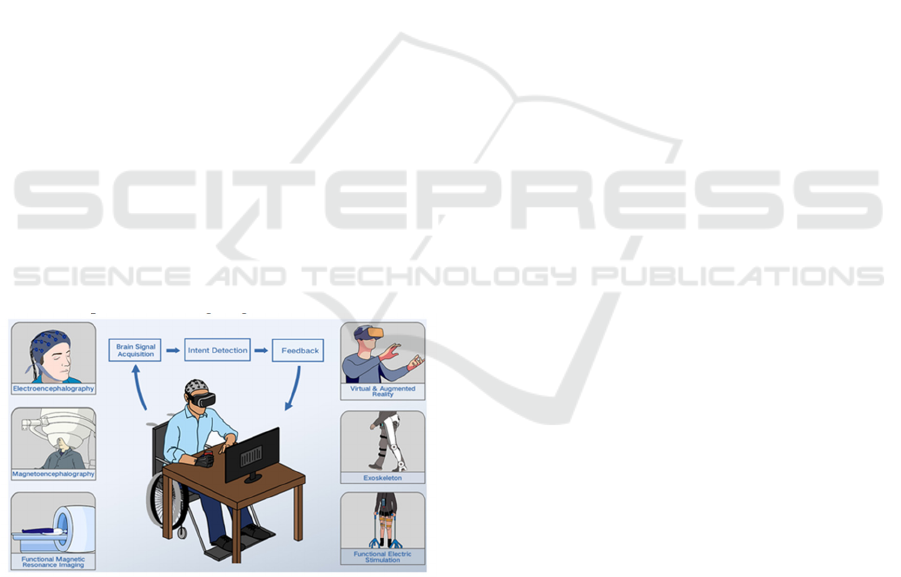
Figure 3. Overview of Brain-Computer Interface System
for Stroke Rehabilitation (Taylor et al., 2023)
Figure 3 presents an overview of the Brain-
Computer Interface (BCI) system, particularly in the
context of stroke rehabilitation. It highlights the three
main components of the BCI system: signal
acquisition, decoding and feedback mechanisms,
along with the design of interaction paradigms. These
components work in unison, using BCI technology to
provide real-time neural feedback to stroke patients,
aiding in the recovery of language and cognitive
functions.
5 CONCLUSION
In summary, the application of BCIs in aphasia
rehabilitation has shown certain positive results. The
integration of visual P300 paradigms has effectively
enhanced patients' naming and sentence repetition
abilities. The combination of BCIs with VR and NIBS
technologies has improved therapeutic efficacy and
patient participation.
However, there are still significant obstacles
restricting the clinical application of BCI technology.
Signal reliability issues, especially the low individual
- level reliability of fNIRS signals, need to be
addressed. Data privacy concerns also pose a
challenge, as the misuse of patient - related data could
occur. In addition, the high cost of BCI devices limits
their widespread use, especially in resource - limited
areas.
Looking ahead, future research on BCI - based
aphasia rehabilitation can take several innovative
directions: integrating BCIs with the Metaverse to
offer immersive scenarios where patients can engage
in language - related tasks like virtual socializing or
storytelling for better skill generalization; developing
advanced machine - learning algorithms tailored to
BCI - based language decoding to better process
complex brain signals and boost rehab effectiveness;
focusing on data security by creating encrypted data -
transmission protocols and strict access controls; and
reducing BCI device costs through research into new
materials or simplified manufacturing to make the
technology more accessible.
REFERENCES
Akkad, H., Hope, T. M. H., Howland, C., Ondobaka, S.,
Pappa, K., Nardo, D., et al. 2023. Mapping spoken
language and cognitive deficits in post-stroke aphasia.
NeuroImage: Clinical. 39: 103452.
Berg, K., Isaksen, J., Wallace, S. J., Cruice, M., Simmons-
Mackie, N., Worrall, L. 2020. Establishing consensus
on a definition of aphasia: an e-Delphi study of
international aphasia researchers. Aphasiology. 36(4):
385-400
Castro, N., Hula, W. D., Ashaie, S. A. 2023. Defining
aphasia: Content analysis of six aphasia diagnostic
batteries. Cortex. 166: 19e32.
Chai, X., Cao, T., He, Q., Wang, N., Zhang, X., Shan, X.,
et al. 2024. Brain–computer interface digital
Brain-Computer Interface-Assisted Language Rehabilitation Technology for Aphasia Patients
19

prescription for neurological disorders. CNS Neurosci
Ther. 30: e14615.
Johnson, J. P., Santosa, H., Dickey, M. W., Hula, W. D.,
Huppert, T. 2023. Reliability of fNIRS during a
language task in people with aphasia. 13: 1025384
Kleih, S. C., Botrel, L. 2024. Post-stroke aphasia
rehabilitation using an adapted visual P300 brain-
computer interface training: improvement over time,
but specificity remains undetermined. Frontiers in
Human Neuroscience. 18: 1400336.
Li, C., Liu, Y., Li, J., Miao, Y., Liu, J., Song, L. 2024.
Decoding Bilingual EEG Signals With Complex
Semantics Using Adaptive Graph Attention
Convolutional Network. Ieee Transactions On Neural
Systems And Rehabilitation Engineering. 32: 249-258.
Mane, R., Wu, Z., Wang, D. 2022. Poststroke motor,
cognitive and speech rehabilitation with brain–
computer interface: a perspective review. Stroke &
Vascular Neurology. 7: e001506.
Mehraram, R., De Clercq, P., Kries, J., Vandermosten, M.,
Francart, T. 2024. Functional connectivity of stimulus-
evoked brain responses to natural speech in post-stroke
aphasia. medRxiv. 21(6): 1
Musso, M., Hübner, D., Schwarzkopf, S., Bernodusson, M.,
LeVan, P., Weiller, C., Tangermann, M. 2022. Aphasia
recovery by language training using a brain–computer
interface: a proof-of-concept study. Brain
Communications. 4(1): 8.
Sheppard, S. M., Sebastian, R. 2021. Diagnosing and
managing post-stroke aphasia. Expert Rev Neurother.
21(2): 221–234.
Wallace, S. J., Isaacs, M., Ali, M., Brady, M. C. 2022.
Establishing reporting standards for participant
characteristics in post-stroke aphasia research: an
international e-Delphi exercise and consensus meeting.
Clinical Rehabilitation. 37(2): 199-214
Zhao, Y., Liu, Y. N., Hu, D. W., Liu, X. Z., Tang, D., Wang,
D., Cui, X. H. 2024. Intervention measures and
progress in semantic recovery of aphasia after stroke.
Chinese Journal of Convalescent Medicine. 33(12): 75
- 78.
BEFS 2025 - International Conference on Biomedical Engineering and Food Science
20
