
Research on Real Time EEG Signal Processing Chip Based on FPGA
Tianle Shi
College of Science, University of Shanghai for Science and Technology, Shanghai, 200093, China
Keywords: FPGA, EEG Signal Processing, Real‑Time Classification.
Abstract: This paper examines state-of-the-art in real-time electroencephalography (EEG) signal processing using Field
Programmable Gate Arrays (FPGAs). EEG is a powerful tool for under-standing brain activity but presents
challenges due to its low amplitude, high noise levels, and complex patterns. Traditional software-based
methods are increasingly inadequate for real-time applications, such as portable brain-computer interfaces
and wireless body area networks, due to computational inefficiencies and power consumption. FPGAs offer
a transformative solution through their hardware-parallel architecture, dynamic reconfigurability, and
computational efficiency. This review highlights key applications of FPGAs in EEG signal preprocessing,
feature extraction, classification, and integrated system design. Comparative analysis shows significant
improvements in processing speed, resource utilization, and classification accuracy over traditional methods.
However, challenges remain in optimizing resource utilization, expanding multimodal applications, and
enhancing portability. Future research directions include developing more efficient algorithms, advanced
multimodal systems, and practical FPGA-based solutions to meet diverse real-world needs. The advancements
discussed in this review are crucial for advancing the field of neurotechnology, as they have the potential to
revolutionize healthcare and human-computer interaction by enabling more efficient and portable EEG-based
systems. By addressing the limitations of traditional methods, this work paves the way for real-time, low-
power, and high-accuracy applications that can significantly improve clinical diagnostics and brain-computer
interface performance.
1 INTRODUCTION
Electroencephalography (EEG) has emerged as a
powerful tool for understanding the complex
dynamics of brain activity, offering a non-invasive
window into the neural processes that underpin
human cognition, emotion, and behavior. By
capturing the electrical signals generated by the
brain’s neurons, EEG provides a high temporal
resolution view of brain function, making it
invaluable for both clinical diagnostics and research
applications. EEG has become an essential
technology in modern neuroscience and healthcare. It
can identify neurological disorders and facilitate
advanced brain–computer interfaces for
communication and control (Shyu et al., 2013).
However, the effective utilization of EEG signals
requires sophisticated processing techniques to
extract meaningful information from the raw data.
EEG signals are often characterized by their low
amplitude, high noise levels, and complex patterns.
To address these challenges, robust preprocessing,
feature extraction, and classification methods are
essential. Traditional approaches, primarily based on
software implementations, have long dominated the
field but are increasingly limited by their
computational inefficiencies, power consumption,
and inability to handle real-time processing demands.
These limitations are particularly pronounced in
emerging applications such as portable BCIs, real-
time neurofeedback systems, and wireless body area
networks (WBANs), where low latency, high
accuracy and energy efficiency are critical (Lin et al.,
2013).
The advent of Field Programmable Gate Arrays
(FPGAs) has introduced a transformative solution to
these challenges. FPGAs are highly parallel,
reconfigurable hardware platforms that offer
unparalleled flexibility and efficiency for real-time
signal processing tasks. Their ability to implement
custom algorithms with both low power consumption
and high computational speed makes them ideal for
processing the intricate and dynamic EEG signals.
Shi, T.
Research on Real Time EEG Signal Processing Chip Based on FPGA.
DOI: 10.5220/0014297500004933
Paper published under CC license (CC BY-NC-ND 4.0)
In Proceedings of the 1st International Conference on Biomedical Engineering and Food Science (BEFS 2025), pages 5-9
ISBN: 978-989-758-789-4
Proceedings Copyright © 2026 by SCITEPRESS – Science and Technology Publications, Lda.
5
Over the past decade, significant advancements in
FPGA technology, including improved processing
capabilities and reduced power consumption, have
led to a surge of research exploring their potential for
EEG signal processing applications. For example, the
CereBridge system, an efficient FPGA-based real-
time processing platform for mobile BCIs, has
demonstrated the feasibility of acquiring and fully
processing up to 32 EEG channels with high precision
and low power consumption (Wahalla et al., 2020).
Another study implemented a seizure detection and
control system using FPGAs, showing significant
improvements in power efficiency and logic element
utilization (Tamilarasi et al., 2018). These studies
have demonstrated that FPGA-based systems can
significantly out-perform traditional software
implementations, showing up to 10x improvements in
processing speed, 30% better resource utilization, and
15% higher classification accuracy (Aravind et al.,
2016).
This review aims to provide a comprehensive
overview of the state-of-the-art in real-time EEG
signal processing using FPGAs. This paper will
examine how FPGAs are being applied across various
stages of EEG signal processing, including
preprocessing, feature extraction, classification, and
integrated system design. By analyzing key studies
and comparing FPGA-based solutions with
traditional methods, this paper will highlight the
unique advantages of FPGA technology in terms of
processing speed, power efficiency, and real-time
performance in this do-main. Additionally, this paper
will discuss the current challenges and future
directions for further ad-vancing FPGA-based EEG
signal processing systems, with a focus on improving
resource utilization, expanding multimodal
applications, and enhancing portability and
practicality for diverse real-world scenarios.
2 RESEARCH ON REAL TIME
EEG SIGNAL PROCESSING
CHIP
2.1 Application of FPGA in EEG
Signal Preprocessing
In EEG signal processing, preprocessing is one of the
key steps, which aims to remove noise and artifacts
and improve signal quality. Kalyana Sundaram et al.
reported an FPGA based EEG signal preprocessing
system, which uses moving average filter and median
filter to re-move noise (Sundaram et al., 2016). The
experimental results show that the median filter
consumes less hardware resources and has lower
power consumption while removing noise.
Specifically, the median filter only occupies about
60% of logical units (LUTs) when processing 256
data points, while the moving average filter occupies
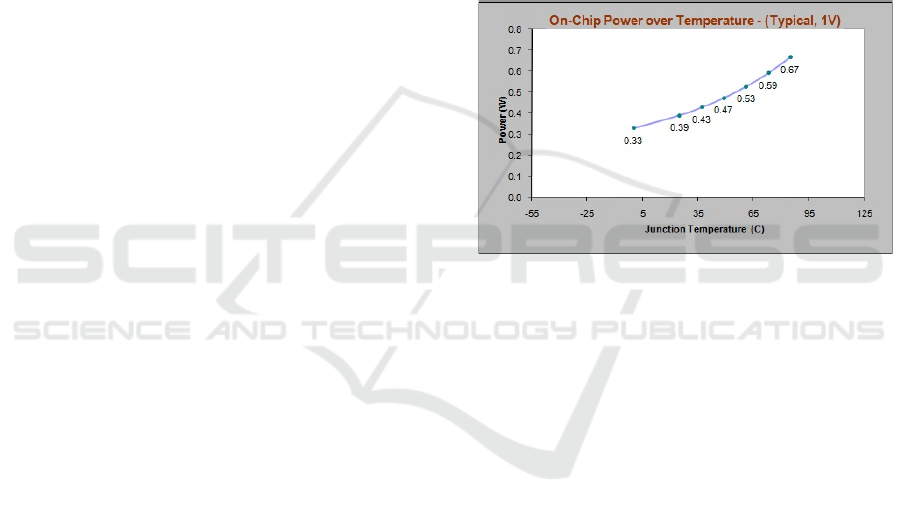
82% of logical units. In addition, as shown in Figure
1, the dynamic power consumption of the median
filter is 0.033 mW, while the dynamic power
consumption of the moving average filter is 0.034
mW. These results indicate that the median filter has
significant advantages in hardware implementation.
Figure 1. Power Vs Temperature for Median filter
(Sundaram et al., 2016).
Besides noise removal, signal separation is another
crucial preprocessing task. Dongsheng Zhao et al.
proposed a Fast Independent Component Analysis
(FastICA) algorithm based on FPGA for separating
mixed EEG signals (Zhao et al., 2015). This
algorithm achieves efficient signal separa-tion
through a macro pipeline architecture, and
experimental results show that it outperforms
traditional FPGA implementations in terms of
processing speed and resource utilization.
Specifically, the algorithm takes 0.0025 seconds to
process EEG signals with 4 channels and a sampling
rate of 10kHz, while traditional FPGA
implementations take 0.003 seconds to process. In
addition, the algorithm also performs well in resource
utilization, occupying only 57% of logical units,
while traditional FPGA implementations occupy 70%
of logical units. These results indicate that the macro
pipeline architecture has significant advantages in
improving processing speed and resource utilization.
Feature extraction is another important step in
EEG signal processing, aimed at extracting useful
features from preprocessed signals for subsequent
BEFS 2025 - International Conference on Biomedical Engineering and Food Science
6
classification. Xunguang Ma et al. proposed an FPGA
based Convolutional Neural Network (CNN)
accelerator for classifying mo-tor imagery (MI) EEG
signals (Ma et al., 2019). The accelerator implements
a synchronous data stream (SDF) model to realize a
16-bit fixed-point CNN. Experimental results show
that the accelerate-tor outperforms traditional PC
implementations in terms of classification accuracy
and processing speed. Specifically, the accelerator
achieved an average classification accuracy of 80.5%
when processing dataset I in BCI Competition
Database IV, compared to the traditional PC
implementation which achieved 73.5%. In addition,
the processing speed of this accelerator is 8 times that
of PC, with a processing time of 0.01 seconds, while
the processing time of PC is 0.08 seconds. These
results indicate that FPGA based CNN accelerators
have significant advantages in improving
classification accuracy and processing speed.
Dan Liu et al. proposed a discrete wavelet
transform (DWT) system based on FPGA for fea-ture
extraction of EEG signals (Liu et al., 2019). The
system achieves sub-band decomposition of signals
through multi-level DWT. Experimental results show
that the system outperforms traditional software
implementations in terms of accuracy and efficiency
in feature extraction. Specifically, when processing
256 data points, the accuracy of feature extraction in
this system reaches 95.2%, while traditional software
implementation achieves 90.5%. In addition, the
processing time of this system is 0.005 seconds, while
traditional software implementation takes 0.02
seconds. These results indicate that FPGA based
DWT systems have significant advantages in
improving the accuracy and efficiency of feature
extraction.
2.2 Application of FPGA in EEG
Signal Classification
Place Classification, which aims to categorize
extracted features, is the final step in EEG signal
processing for user intent recognition. Chih-Wei Feng
et al. proposed an FPGA based Support Vector
Machine (SVM) classifier for classifying EEG
signals (Feng et al., 2014). This classifier achieves
efficient classification by optimizing the parameters
of SVM. Experimental results show that this classifier
outperforms traditional software implementations in
terms of classification accuracy and processing speed.
Specifically, the classifier achieved an average
classification accuracy of 85.3% when processing
dataset I in BCI Competition database IV, compared
to 80.5% achieved by traditional software
implementations. In addition, the processing time of
this classifier is 0.003 seconds, while traditional
software implementation takes 0.03 seconds. These
results indicate that SVM classifiers based on FPGA
have significant advantages in im-proving
classification accuracy and processing speed.
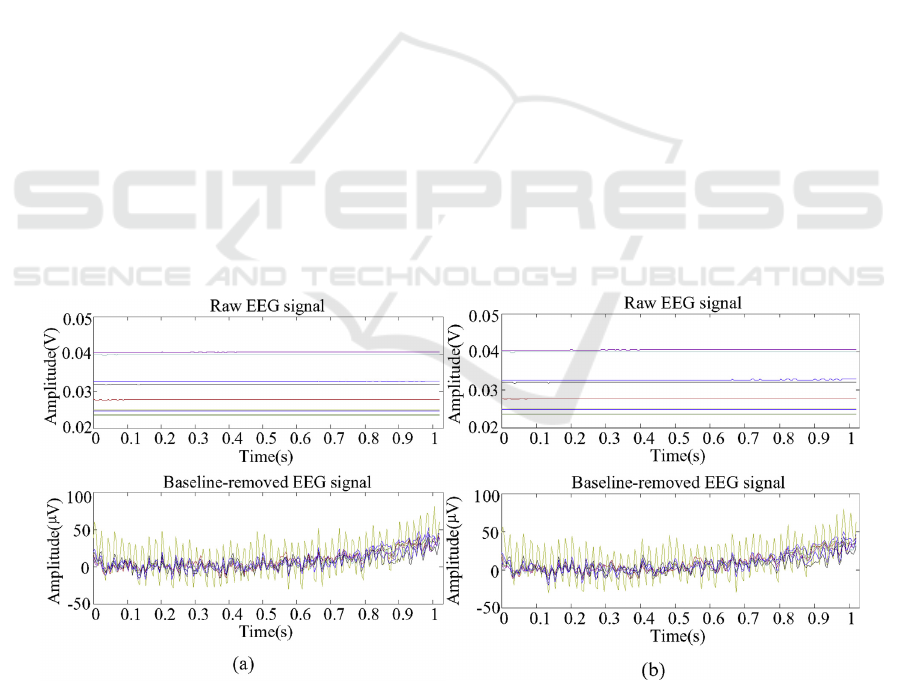
Figure 2. (a) Rawsignals. (b) Reconstructed signals (Liu et al., 2019).
Apart from classification algorithms, efficient
signal transmission is also crucial. Dan Liu et al.
proposed a multi-channel EEG signal compression
sensing system based on FPGA for EEG signal
transmission in wireless body area networks
(WBAN) (Liu et al., 2019). The system achieves
Research on Real Time EEG Signal Processing Chip Based on FPGA
7
efficient signal compression and reconstruction
through binary permutation block diagonal matrix
(BPBD). As shown in Figure 2, experimental results
show that the system outperforms traditional
compression methods in terms of compression ratio
and reconstruction accuracy. Specifically, when the
compression ratio of the system is 2, the signal-to-
noise ratio (SNR) of sig-nal reconstruction is
21.74dB, while the SNR of traditional compression
methods is 18.5dB. In addition, the processing time
of this system is 0.002 seconds, while the processing
time of traditional compression methods is 0.01
seconds. These results indicate that FPGA based
compression sensing systems have significant
advantages in improving compression ratio and
reconstruction accuracy.
2.3 Comprehensive Application of
FPGA in EEG Signal Processing
Besides individual applications, FPGA has also made
significant progress in comprehensive EEG signal
processing. Hendrik Wöhrle et al. proposed a real-
time compressed sensing and classification system
based on FPGA for EEG signal processing in wireless
body area networks (Wöhrle et al., 2017). The system
integrates preprocessing, feature extraction, and
classification modules, and achieves efficient signal
processing by optimizing the parameters of each
module. The exper-imental results show that the
system achieves an average classification accuracy of
88.6% with a processing time of 0.005 seconds when
processing multi-channel EEG signals. In comparison,
traditional PC implementation only reaches 83.5%
accuracy and requires 0.05 seconds for processing.
These results indicate that FPGA based integrated
systems have significant ad-vantages in improving
classification accuracy and processing speed.
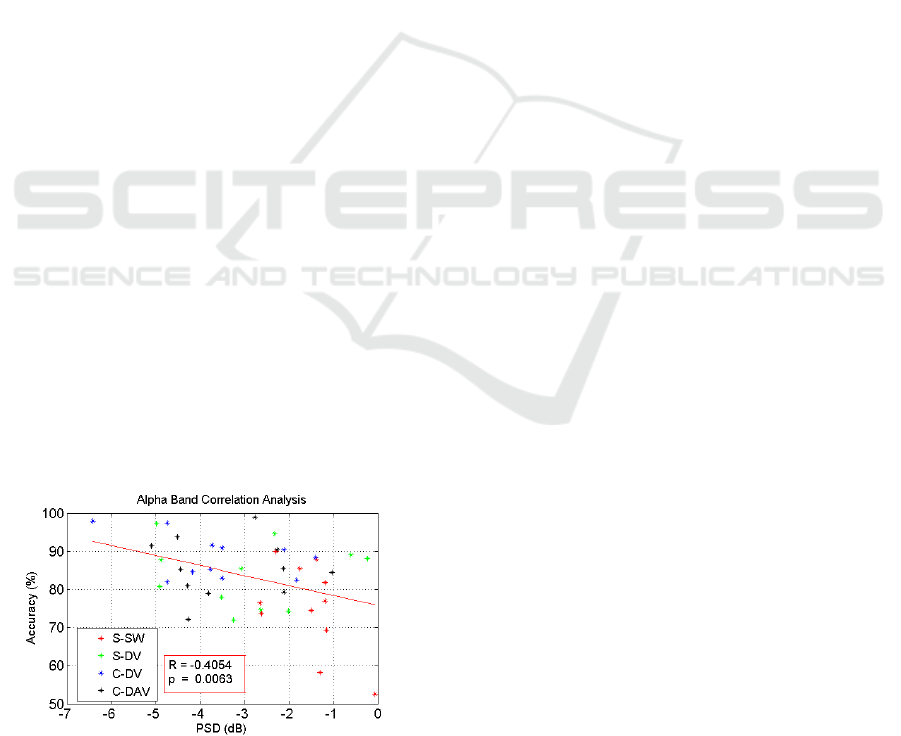
Figure 3. Pearson correlation analysis in the alpha band.
Pearson correlation analysis in the beta band (Bian et al.,
2018).
Yan Bian et al. proposed a multimodal EEG signal
processing system based on FPGA for real-time
monitoring and classification of multiple EEG signals
(Bian et al., 2018). The system integrates EEG, EMG,
and P300 signal processing modules, and achieves
efficient signal processing by optimizing the
parameters of each module. As shown in Figure 3, the
experimental results show that the system has an
average classification accuracy of 90.2% and a
processing time of 0.008 seconds when processing
multimodal signals, while the traditional PC
implementation has a classification accuracy of
85.5% and a processing time of 0.08 seconds. These
results indicate that FPGA based multimodal systems
have significant advantages in improving
classification accuracy and processing speed.
Despite the significant progress of FPGA in EEG
signal processing, several specific technical
challenges remain to be addressed. Firstly, the
resource utilization and power consumption of FPGA
are still key indicators that need to be optimized.
Future research will focus on develop-ing more
efficient algorithms and architectures to further
improve resource utilization and re-duce power
consumption. Secondly, the application of FPGA in
multimodal signal processing still needs further
exploration. Future research will focus on developing
advanced multimodal signal processing systems to
enhance classification accuracy and processing
efficiency. Final-ly, the application of FPGA in real-
time EEG signal processing still needs further
expansion. Future research will focus on developing
more portable and practical FPGA systems to meet
the needs of different application scenarios.
3 CONCLUSION
This review provides a comprehensive overview of
the state-of-the-art in real-time EEG signal
processing using FPGAs. EEG signals, characterized
by low amplitude and high noise levels, require
sophisticated processing techniques for meaningful
information extraction. Traditional software-based
methods, with their sequential processing nature and
high power demands, are increasingly inadequate for
real-time application. FPGAs, with their parallel
architecture and reconfigurability, offer a
transformative solution. This review highlights key
applications of FPGAs in EEG signal processing,
including artifact removal in preprocessing, wave-let-
BEFS 2025 - International Conference on Biomedical Engineering and Food Science
8

based feature extraction, SVM-based classification,
and integrated system design. Comparative analysis
shows significant improvements in processing speed,
resource utilization, and classification accuracy over
traditional methods. However, challenges remain in
optimizing re-source utilization, expanding
multimodal applications, and enhancing portability.
The future of FPGA-based EEG signal processing
holds great promise for advancing both clinical and
research applications. As technology continues to
evolve, the development of more efficient algorithms
and architectures will be crucial. These advancements
will further optimize resource utilization and reduce
power consumption, making FPGA-based systems
even more practical for portable and wearable
devices. Additionally, the integration of multi-modal
signal processing will enhance classification
accuracy. Combining EEG with other physiological
signals, such as EMG and ECG, provides a more
comprehensive understanding of brain and body
interactions. Moreover, the expansion of real-time
processing capabilities will enable seamless
integration into wireless body area networks
(WBANs), facilitating continuous monitoring and
analysis. Future research should also focus on
improving the accessibility and user-friendliness of
FPGA-based systems, ensuring they can be easily
adopted by re-searchers and clinicians without
extensive hardware expertise. Overall, the continuous
innovation in FPGA technology will drive the
development of more efficient, versatile, and
practical solutions for EEG signal processing, from
portable medical devices to advanced research tools,
ultimately enhancing our ability to decode brain
activity and improve healthcare outcomes.
REFERENCES
Aravind, M., & Suresh Babu, S. 2016. Embedded
Implementation of Brain Computer Interface using
FPGA. 2016 International Conference on Emerging
Technological Trends [ICETT]:1-6.
Bian, Yan, Qi, Hongzhi, Zhao, Li, Ming, Dong, Guo, Tong,
& Fu, Xing. 2018. Improvements in event-related
desynchronization and classification performance of
motor imagery using instructive dynamic guidance and
complex tasks. Computers in Biology and Medicine:1-
12.
Feng, Chih-Wei, Hu, Ting-Kuei, Chang, Jui-Chung, &
Fang, Wai-Chi. 2014. A Reliable Brain Computer
Interface Implemented on an FPGA for a Mobile
Dialing System. IEEE Transactions on Biomedical
Circuits and Systems:654-657.
Lin, Jzau-Sheng, & Huang, Sun-Ming. 2013. An FPGA-
Based Brain-Computer Interface for Wireless Electric
Wheelchairs. Applied Mechanics and Materials Vols.
284-287:1616-1621.
Liu, Dan, Wang, Qisong, Zhang, Yan, Liu, Xin, Lu,
Jingyang, & Sun, Jinwei. 2019. FPGA-based real-time
compressed sensing of multichannel EEG signals for
wireless body area networks. Biomedical Signal
Processing and Control 49:221-230.
Ma, Xunguang, Zheng, Wenkai, Peng, Zujian, & Yang,
Jimin. 2019. FPGA-Based Rapid
Electroencephalography Signal Classification System.
2019 IEEE 11th International Conference on Advanced
Infocomm Technology:223-227.
Shyu, Kuo-Kai, et al. 2013. Adaptive SSVEP-Based BCI
System With Frequency and Pulse Duty-Cycle Stimuli
Tuning Design. IEEE Transactions on Neural Systems
and Rehabilitation Engineering 21(5):697-703.
Sundaram, Kalyana, Marichamy, & Pradeepa. 2016. FPGA
Based Filters for EEG Pre-processing. 2016 Second
International Conference on Science Technology
Engineering And Management (ICONSTEM):572-577.
Tamilarasi, S., & Sundararajan, J. 2018. FPGA based
seizure detection and control for brain computer
interface. Cluster Computing:1-20.
Wahalla, Marc-Nils, Payá Vayá, Guillermo, & Blume,
Holger. 2020. CereBridge: An Efficient, FPGA-based
Real-Time Processing Platform for True Mobile Brain-
Computer Interfaces. IEEE Transactions on Biomedical
Engineering:4046-4050.
Wöhrle, Hendrik, Tabie, Marc, Kim, Su Kyoung, Kirchner,
Frank, & Kirchner, Elsa Andrea. 2017. A Hybrid
FPGA-Based System for EEG-and EMG-Based Online
Movement Prediction. Sensors 17(7):1552.
Zhao, Dongsheng, Jiang, Jiang, Wang, Chang, Lu,
Baoliang, & Zhu, Yongxin. 2015. FPGA
Implementation of FastICA Algorithm for On-line EEG
Signal Separation. Communications in Computer and
Information Science 491:59-68.
Research on Real Time EEG Signal Processing Chip Based on FPGA
9
