
Apply Robot Recognize the Motivation of Human to Solve Problems
Encountered by Translation Robots During the Translation Process
Xiaonan Qiao
1,*
and Yihan Zhou
2
1
School of Science and Technology, Hong Kong Metropolitan University,
Kowloon City District, Hong Kong, 999077, China
2
School of Information and Intelligent Engineering, Zhejiang Wanli University, Ningbo, Zhejiang, 315100, China
Keywords: Simultaneous Interpretation, Human-Computer Interaction, Body Language.
Abstract: During the development of science and technology, interacting between different countries become the basis
for development, due to the culture and language difference simultaneous interpretation becomes more and
more popular and AI began to be applied to simultaneous interpretation. However, because the difference
between the culture and rapid iteration of language, there are errors during the process of simultaneous
interpretation including polysemy, emotional misjudgment and new words are incorrect and imperfect. So it
is very important to improve translation accuracy using human-computer interaction. In this essay, the results
of some studies are presented by collecting a large number of languages to expand the richness of language
content, issues with slang and new buzzwords solved. Gathering the voice of dialogue to improve the
flexibility and adaptability of translation, the machine performs advance voice adaptation training instead of
humans to avoid word recognition errors and applying the body language during dialogue to improve the
translation efficiency and translation accuracy be explained in detail.
1 INTRODUCTION
In today's world, the connections between people and
countries are closer than ever, making clear
communication across different languages and
cultures very important. Simultaneous interpretation
is a complex and demanding task that plays a key role
in helping people communicate in international
settings like diplomatic meetings, global business
negotiations, and conferences. It is very important
that reflecting on how social workers play multiple
roles and explain in the context of language
interpretation (Doering-White et al., 2019). These
multiple roles can facilitate communication, However,
despite advances in technology and teaching methods,
achieving high accuracy in simultaneous
interpretation still has some distance to achieve.
Although the way of interacting is direct and
accessible with the robotic platform, human language
is still an important and one of the most natural ways
to communicate because of its expressiveness and
flexibility, the ability of a robot to correctly interpret
users' commands is a key element in human-computer
interaction (Andrea et al., 2022). During develop
simultaneous interpretation human-computer
interaction also be developed, AI is more widely used
in this field, machines assist humans and make them
more efficient.
One major issue is the natural differences in how
people communicate. These differences go beyond
just language and include cultural nuances, regional
accents, and non-verbal cues like gestures and facial
expressions. There are results suggest that language
control may be more complex than previously thought,
because different mechanisms used for different
languages (Babcock & Vallesi, 2015). There is a
research called SIMTXT which is considered that it is
more difficult than SI of improvised speech. It is
helpful for interpreters to have textual content when
interpreting read discourse normally (Seeber et al.,
2020). A study provides a set of systems based on
various existing simultaneous interpretation systems.
It combines frequency modules with other modules
and peripheral circuits to complete systems used in all
kinds of meetings. During speech recognition
technology and the system’s functional module
structure. The results of the experiments show that the
system has great recognition efficiency and accuracy
in the simultaneous interpretation (Liu, 2021). The
difficulty of simultaneous interpretation is further
Qiao, X. and Zhou, Y.
Apply Robot Recognize the Motivation of Human to Solve Problems Encountered by Translation Robots During the Translation Process.
DOI: 10.5220/0014290600004718
Paper published under CC license (CC BY-NC-ND 4.0)
In Proceedings of the 2nd International Conference on Engineering Management, Information Technology and Intelligence (EMITI 2025), pages 5-9
ISBN: 978-989-758-792-4
Proceedings Copyright © 2025 by SCITEPRESS – Science and Technology Publications, Lda.
5
increased because it happens in real time. Interpreters
must listen, understand, and translate spoken words
almost instantly, often with very little delay. This
requires not only strong language skills but also a
deep understanding of the cultural and situational
context of the conversation, meaning sensitivity to
cultural and situational factors. Through expanding
the range of information that machines can collect, the
quality of interpretation services can be improved
significantly. On one hand, this helps improve our
own quality of life. On the other hand, given the
current global situation, it will help promote better
understanding and cooperation in our increasingly
connected world. Even though most of international
leaders are command of English, there are still
existing many ones who fail to immerse in
communicating naturally. In the circumstances, the
status of such a device is enhanced one step further.
In this essay, three methods are collected and
integrated, they are collecting data about what people
talk, collecting data about how is the voice, and
collecting data about how people act. It analyzes how
these three methods can improve efficiency and
accuracy, how to use the robot to make these methods
become faster and more practical. And this essay also
mentions the disadvantages of these methods and give
the way to solve these problems.
2 DATA COLLECTION
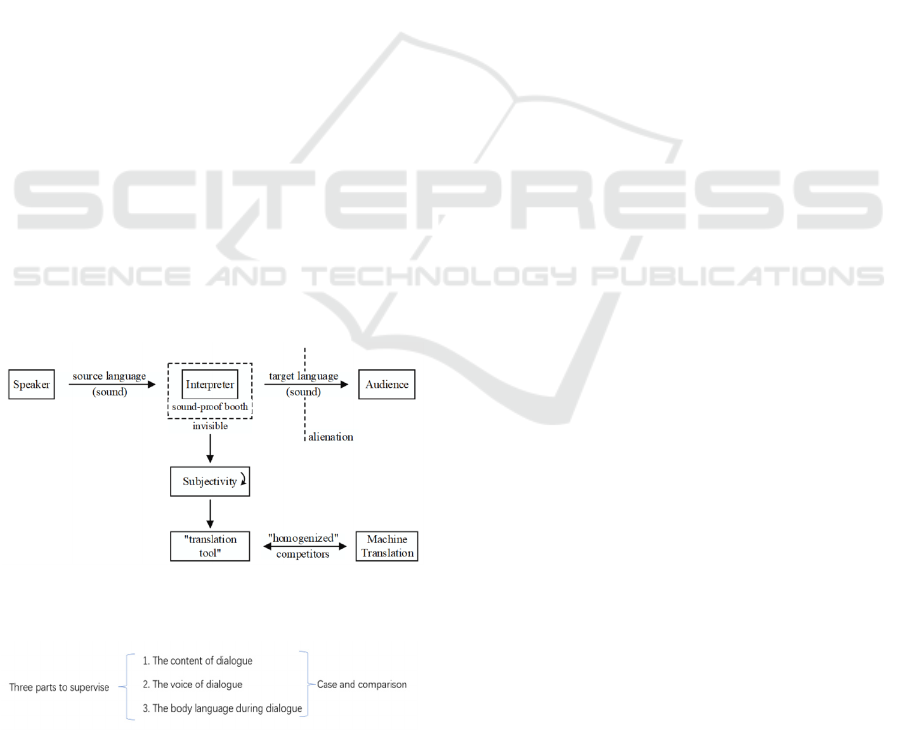
Figure 1 shows how simultaneous interpretation
works (ResearchGate, 2021).
Figure 1: Simultaneous interpretation workflow diagram
(ResearchGate, 2021).
Figure 2: Three types of data stored (Picture credit:
Original).
All the data collect below are stored in the device
in the dotted frame of the flow chat above. And Figure
2 illustrates three kinds of data that ought to be
supervised.
2.1 Collect Data About What People
Talk (The Content of Dialogue)
The diversity of language expression habits poses a
significant challenge in cross-language
communication. Language users from different
countries and regions often have unique ways of
expression, slang, and culturally specific terms. There
are experimental results showing a potential cause
about simultaneous interpreting errors that is misled
which come from the machine (Qin & Wang, 2020).
To build an efficient multilingual speech recognition
system, it is first necessary to comprehensively
collect and analyze these language expression habits.
This includes, but is not limited to, everyday language,
industry terminology, local dialects, and popular
slang. By constructing a large-scale corpus and
applying deep learning algorithms, these linguistic
features can be effectively captured and organized.
Even though using a common language for scholarly
communication offers some advantages, it might limit
research diversity. Although artificial intelligence
techniques have been used by machine translation in
recent years, it still has some shortage If used by non-
professionals, they need to improve their skills to
make translation perfect and accuracy (Bowker,
2021). An accepted approach is to crowdsource
platforms to collect language samples from different
regions, combined with natural language processing
technology for automatic classification and labeling.
At the same time, linguistic experts should be
introduced to manually verify and supplement the
data to ensure its accuracy and comprehensiveness.
Additionally, it is necessary to consider the dynamic
changes in language expression habits and establish a
continuous update mechanism to adapt to the
evolution of language and the emergence of new
vocabulary.
2.2 Collect Data About How Is the
Voice (The Voice of Dialogue)
Accent diversity is another major challenge faced by
speech recognition systems. Speakers from different
regions and educational backgrounds may use the
same vocabulary but with vastly different
pronunciations. Imaging someone is watching an
English movie without subtitles, it might be hard to
catch what characters want to convey. One of the
EMITI 2025 - International Conference on Engineering Management, Information Technology and Intelligence
6

factors could be their personalized speaking styles,
with accents and pronunciations, Traditional speech
recognition systems often struggle to accurately
recognize various accents, leading to a decline in
recognition rates. When people listen to accented
speech, it will be difficult to process fluency in
information processing (Sally & Tombs, 2020). To
address this issue, an innovative accent adaptation
technology can be put into practice. When the
machine hears the first two sentences spoken by a
person, it can record them and then listen to the
subsequent speech of that person according to that
accent, thereby improving accuracy. The core of this
technology is to convert accent features from analog
signals to digital format and store them in the system.
Specifically, it first requires building a large-scale
speech database containing multiple accents. Then,
using deep neural network technology, the feature
vectors of different accents are extracted and encoded
into digital format. These digitized accent features
can be stored in the system for subsequent speech
recognition tasks. In practical applications, when the
system encounters a new speaker, it can quickly
match their accent features with the stored accent
models, thereby adjusting recognition parameters to
improve accuracy. Additionally, the system has self-
learning capabilities, enabling it to continuously
update and expand the accent database to adapt to
more diverse accent features.
2.3 Collect Data About How People Act
(The Body Language During
Dialogue)
In human communication, body language plays an
important role, as it can complement, emphasize, or
even replace verbal information, it helps people in
expressing themselves and understanding and
explaining others (Turaev et al., 2023). Therefore,
combining body language recognition with speech
recognition can significantly enhance the accuracy of
communication understanding. There is an innovative
multimodal recognition method that can elevate
overall recognition effectiveness by simultaneously
analyzing speech and body language information. In
specific implementation, the system needs to be
equipped with visual sensors to capture different body
movements, facial expressions, and gestures. Using
computer vision technology and deep learning
algorithms, the system can recognize and interpret
these non-verbal cues. For example, a nod may
indicate agreement, a frown may indicate confusion,
and specific gestures may emphasize a certain point.
While different impressions of personal traits are
affected by behavior without voice, robots can study
body languages such as regular movements, and
diverse gestures to get them. These human–robot
interactions architectures are starting to be used in
various fields, Human emotions are an important part
of this (Romeo et al., 2021). This information can be
fused with speech recognition results to improve the
accuracy of understanding the speaker's intent.
2.4 Case and Relative Advantages
Interpreters used an AI tool providing real-time
terminology suggestions and context-aware prompts
during sessions. Accuracy increased by 15% for
technical debates (e.g., climate policy), as per 2021
internal evaluation. Errors in numbers and proper
nouns dropped by 22%. That is just one of the great
number of examples. In practical applications, multi-
modal recognition system is particularly suitable for
complex scenarios, such as multi-person meetings or
noisy environments. By integrating speech and body
language information, the system can more accurately
identify the speaker, understand their intent, and even
predict their subsequent actions. This not only
improves the accuracy of speech recognition but also
lays the foundation for more natural human-computer
interaction.
3 DISCUSSION
Although the three practical methods mentioned
earlier show effectiveness, limitations may still
emerge during actual monitoring processes. To
successfully advance the project, continuous attention
to conversational content, tone variations, and
physical gestures remains essential, along with
consistent application of appropriate technological
tools. Essentially, this represents an effort to enhance
existing technical systems through their own
capabilities. In such context, the improvement of real-
time translation quality largely depends on the
maturity of current sensing devices. As a consequence,
before initiating large-scale data collection, the
priority should be refining the accuracy of these
detection instruments. This foundational upgrade will
simultaneously improve both translation efficiency
and result reliability. Based on existing devices, some
senior sensors below can be put into practice to
improve the sensation of the three parts. Initially,
high-directionality microphones are able to focus on
speakers’ voice while suppressing background noise,
relying on beamforming. Secondly, Optical Character
Camera, as an advances visual sensor, can be used to
Apply Robot Recognize the Motivation of Human to Solve Problems Encountered by Translation Robots During the Translation Process
7

scan real time text from slides or speech timestamps.
Finally, Utilizing Multi-Angle HD Cameras or
Thermal/Infrared Sensors to capture gestures, facial
expressions e.g. are beneficial for sensing body
language. All in all, optical sensors track the position
of speakers using infrared signals or changes in
ambient light, activating voice recording devices.
Visual sensors capture lip movements, facial
expressions, and scene dynamics, using deep learning
to analyze non-verbal cues and improve speech
recognition accuracy in noisy environments. Audio
sensors collect voice waveforms, apply noise-
reduction algorithms to extract clear sound, and sync
with optical and visual data. Together, they enhance
performance: optics boost spatial awareness, visuals
add contextual details, and audio provides core voice
signals. Multimodal algorithms can improve real-time
translation and noise resistance, especially in complex
acoustic settings.
4 CONCLUSION
The paper summarizes how the accuracy of
simultaneous interpretation can be improved through
collect data from there parts. They are content, voice
and action. And it reminds us that it is efficient to put
our attention onto the sensors which are essential as
input devices. Therefore, the paper comes to the
discussion about that. The growing sophistication of
artificial intelligence has fundamentally transformed
global communication practices, with powerful
translation technologies playing an increasingly vital
role in bridging linguistic divides. However, the risk
of meaning distortion in automated translation
systems raises serious concerns, especially in such a
politically charged international environment where
diplomatic relations remain fragile. Research
indicates that minor inaccuracies in conveying
cultural context could inadvertently escalate tensions
through misunderstandings in critical diplomatic or
commercial exchanges. This evolving technological
reality requires modern university students to develop
practical integration of hardware design principles
and software development skills. Current studies
highlight promising opportunities in combining
sensor technologies with language processing
systems to advance real-time translation devices. For
instance, developing sensors that detect vocal patterns,
facial expressions, and physiological signals could
significantly improve translation accuracy by better
interpreting situational context. Moving forward,
researchers should focus on creating collaborative
systems between humans and artificial intelligence
that balance advanced algorithms with human
oversight. This strategy not only improves existing
translation technologies but also creates new career
directions for professionals working at the
intersection of language technology and intelligent
hardware development. Interdisciplinary efforts to
refine adaptive different models and enhance sensor
response speeds could help minimize communication
errors while strengthening cross-cultural
understanding in international exchanges.
AUTHORS CONTRIBUTION
All the authors contributed equally and their names
were listed in alphabetical order.
REFERENCES
Andrea, V., Danilo, C., Emanuele, B., et al.: 'Grounded
language interpretation of robotic commands through
structured learning', Artificial Intelligence,
278(103181), 2022
Babcock, L., Vallesi, A.: ' Language control is not a one-
size-fits-all languages process: evidence from
simultaneous interpretation students and the n-2
repetition cost', Frontiers in psychology, 6, 1622, 2015
Bowker, L.: 'Promoting Linguistic Diversity and Inclusion:
Incorporating Machine Translation Literacy into
Information Literacy Instruction for Undergraduate
Students', The International Journal of Information,
Diversity, & Inclusion, 5(3), 127–151, 2021
Doering-White, J., Pinto, R. M., Bramble, R. M., Ibarra-
Frayre, M.: 'Teaching Note—Critical Issues for
Language Interpretation in Social Work Practice',
Journal of Social Work Education, 56(2), 401–408,
2019
Liu, F.: 'Design of Chinese-English Wireless Simultaneous
Interpretation System Based on Speech Recognition
Technology', International Journal of Antennas and
Propagation, 2021
Qin, Y., Wang, C.: 'Can Machine Translation Assist to
Prepare for Simultaneous Interpretation?' International
Journal of Emerging Technologies in Learning
(Online), 15(16), 230-237, 2020
Romeo, M., Hernández García, D., et al.: 'Predicting
apparent personality from body language:
benchmarking deep learning architectures for adaptive
social human–robot interaction', Advanced Robotics,
35(19), 1167–1179, 2021
Sally, R. H., Tombs, A. G.: 'When does service employee’s
accent matter? Examining the moderating effect of
service type, service criticality and accent service
congruence', European Journal of Marketing, 56(7),
1985-2013, 2020
EMITI 2025 - International Conference on Engineering Management, Information Technology and Intelligence
8

Seeber, K. G., Keller, L., Hervais-Adelman, A.: 'When the
ear leads the eye – the use of text during simultaneous
interpretation', Language, Cognition and Neuroscience,
35(10), 1480–1494, 2020
The Influence of Speech Translation Technology on
Interpreter’s Career Prospects in the Era of Artificial
Intelligence - Scientific Figure on ResearchGate.
Available from:
https://www.researchgate.net/figure/The-process-and-
feature-of-simultaneous-
interpretation_fig2_349939923 [accessed 29 Mar 2025]
Turaev, S., et al.: 'Review and Analysis of Patients’ Body
Language from an Artificial Intelligence Perspective',
in IEEE Access, vol. 11, pp. 62140-62173, 2023
Apply Robot Recognize the Motivation of Human to Solve Problems Encountered by Translation Robots During the Translation Process
9
