
Temporal Popularity-Based Recommender Systems for e-Commerce: A
Comprehensive Evaluation
Mustafa Keskin, Enis Teper and Sinan Kec¸eci
Hepsiburada, Turkey
Keywords:
Recommender Systems, Popularity-Based Recommendation, Temporal Dynamics, Trend Detection,
e-Commerce.
Abstract:
We explore popularity-based recommendation strategies for e-commerce, using a year of sales logs to evaluate
three baselines: most popular, recently popular, and decay popular products. We also propose trend popular
products, a novel method that captures emerging preferences by analyzing weekly sales changes. Our eval-
uation on a subsequent month of orders shows that approaches considering recency or time decay are more
effective than simple popularity. The trend-aware method further enhances performance, demonstrating that
lightweight, popularity-driven models can offer effective and clear recommendation strategies for e-commerce
1 INTRODUCTION
The rapid growth of e-commerce platforms has sig-
nificantly increased the importance of effective rec-
ommendation and ranking systems. With millions
of users interacting with vast product catalogs, un-
derstanding customer behavior and providing relevant
suggestions has become a critical factor for improv-
ing user satisfaction, engagement, and overall sales.
Traditional approaches to recommendation often rely
on collaborative filtering or content-based techniques.
However, these methods may struggle to capture the
temporal dynamics of user interactions or the evolv-
ing popularity trends of products.
To address these challenges, recent research em-
phasizes the integration of popularity-based signals
into recommendation pipelines. Metrics such as most
popular, recent popular, and decayed popularity pro-
vide valuable insights into item attractiveness by ac-
counting for both historical demand and temporal re-
cency. The most popular metric highlights globally
trending products, recent popularity captures short-
term surges in demand, while decayed popularity bal-
ances long-term and short-term interest by applying a
time-based decay function.
In the context of e-commerce, these popularity-
driven signals are particularly effective because user
purchasing decisions are often influenced by collec-
tive behavior and temporal patterns. For instance,
seasonal demand spikes, newly launched products, or
fast-fading trends can be captured more effectively
by incorporating recency and decay-based measures.
Leveraging such features not only enhances recom-
mendation quality but also supports business goals
such as increasing conversion rates and promoting
new or relevant items.
This paper explores the application of popularity-
based methods on large-scale sales data from an e-
commerce platform. We first compute user-level and
global metrics, including most popular, recent popu-
lar, and decayed popularity. Then, we evaluate their
effectiveness in capturing user preferences and im-
proving ranking performance. Our findings demon-
strate the practical value of these approaches in build-
ing efficient, interpretable, and scalable recommen-
dation systems for real-world e-commerce environ-
ments.
2 RELATED WORKS
Recent literature on recommender systems empha-
sizes the limitations of standard popularity baselines
and the advantages of incorporating temporal dynam-
ics such as recency and decay. Ji et al. (Ji et al., 2020)
challenge the conventional “MostPop” baseline by
showing how its effectiveness significantly improves
when modified to consider item popularity relative to
the user’s interaction time. They introduce RecentPop
and DecayPop, both of which yield superior perfor-
mance on MovieLens datasets and especially benefit
20
Keskin, M., Teper, E. and Keçeci, S.
Temporal Popularity-Based Recommender Systems for e-Commerce: A Comprehensive Evaluation.
DOI: 10.5220/0014286900004848
Paper published under CC license (CC BY-NC-ND 4.0)
In Proceedings of the 2nd International Conference on Advances in Electrical, Electronics, Energy, and Computer Sciences (ICEEECS 2025), pages 20-24
ISBN: 978-989-758-783-2
Proceedings Copyright © 2026 by SCITEPRESS – Science and Technology Publications, Lda.

users with sparse interaction histories.
Earlier works also explore personalization of pop-
ularity signals. (Anelli et al., 2018) propose a time-
aware personalized popularity approach that incorpo-
rates both item popularity among similar users and its
temporal dynamics. This method performs compa-
rably to advanced collaborative filtering approaches
in top-N recommendation settings. (Balloccu et al.,
2022) focus on explanation quality in recommender
systems by factoring in recency, item popularity, and
diversity when re-ranking explanation outputs, ulti-
mately enhancing explanation relevance without sac-
rificing recommendation utility.
Other lines of research extend beyond popular-
ity baselines to mitigate popularity bias in recom-
mendations. (Han et al., 2024) introduce PopSI, a
popularity-aware, multi-behavior framework that uses
an orthogonality constraint to separate item popular-
ity features from latent representations. This reduces
bias while maintaining high recommendation accu-
racy on e-commerce datasets.
More broadly, time-aware decay functions are
widely applied in context-aware recommender sys-
tems. (Hassan et al., 2022) integrate bias and de-
cay strategies into collaborative filtering (e.g., MF,
KNN, SLIM) to emphasize recent user actions in e-
commerce contexts, reporting improved precision, re-
call, and MAP especially for decay-based models.
3 METHODOLOGY
3.1 Problem Setting and Data Splits
We use the last one year of transaction logs from
an e-commerce platform to build time-aware popular-
ity signals and evaluate their ability to forecast next-
month orders. For each calendar month t, we con-
struct features from a training window ending at the
last day of t − 1 and produce a ranked list of items to
forecast orders in month t. Unless otherwise stated,
the primary analysis uses a sliding window where the
training span is the previous 12 months [t −12,t −1],
and the test span is the subsequent 1 month [t,t]. We
report averages across all available monthly folds.
Let i ∈ I denote an item and o
i,τ
the number of
orders for item i on day. τ.
3.2 Popularity Signals
3.2.1 Most Popular
Most popular captures long-horizon demand by ag-
gregating orders over the last 12 months:
MostPopular(i) =
∑
τ∈[t−12m,t−1d]
o
i,τ
. (1)
This score is robust but insensitive to fast changes in
demand (Ji et al., 2020).
3.2.2 Recent Popularity (RecentPop)
RecentPop emphasizes short-term surges using only
the last 3 months:
RecentPop(i) =
∑
τ∈[t−3m,t−1d]
o
i,τ
. (2)
Compared to MostPop, this favors newly trending or
seasonal items (Ji et al., 2020).
3.2.3 Decayed Popularity (DecayPop)
DecayPop balances recency and volume by exponen-
tially down-weighting older interactions in the last 3
months:
DecayPop(i;λ) =
∑
τ∈[t−3m,t−1d]
o
i,τ
e
−λ ∆(τ,t)
, (3)
where ∆(τ,t) is the age (in days) between τ and the
end of month t − 1, and λ > 0 is a decay rate. We
parameterize λ via a half-life h days:
λ = ln(2)/h. (4)
3.3 Trend-based Popularity Estimation
(TrendPop)
We incorporated a trend-aware approach that captures
short-term shifts in product demand. The method
compares each product’s order volume over two con-
secutive weekly windows. Specifically, the number of
orders in the current week and the previous week are
aggregated using a rolling window over daily sales.
Products are then ranked by their weekly counts, and
a trend score is computed as:
trend score =
previous week rank − this week rank
this week rank
.
(5)
This metric highlights products whose rank has
improved compared to the previous week, indicating
increasing popularity. To ensure robustness, we fil-
ter out products with fewer than five daily sales and
retain only those with positive trend scores. Finally,
the top-N trending products are selected based on the
highest trend scores.
Temporal Popularity-Based Recommender Systems for e-Commerce: A Comprehensive Evaluation
21

Table 1: Comparison of Popularity Methods.
Method HitRate@10 HitRate@100 HitRate@1000 Recall@10 Recall@100 Recall@1000
MostPop 0.0657 0.1260 0.2953 0.0252 0.1413 0.1547
RecentPop 0.0715 0.1358 0.3172 0.0294 0.1656 0.1547
DecayPop 0.0713 0.1374 0.3123 0.0290 0.1568 0.1524
TrendPop 0.0036 0.0172 0.0795 0.0006 0.0046 0.0268
3.4 Ranking and Forecasting Task
Given a scoring function we rank all items in descend-
ing order and treat the task as next-month order fore-
casting for top-K planning:
π
s
= argsort
i∈I
s(i)
. (6)
Ground-truth for month t is the set of items or-
dered in t. Because these signals are global (non-
personalized), evaluation is item-level rather than
user-level.
3.5 Evaluation
3.5.1 Metrics
We adopt standard top-K ranking metrics:
• Hit Rate @ K (HR@K):
HR@K =
1
|G
t
|
∑
i∈G
t
⊮{i ∈ π
(K)
s
}, (7)
where G
t
is the set of items ordered in month t.
• Recall @ K:
Recall@K =
∑
i∈π
(K)
s
o
i,t
∑
i∈I
o
i,t
. (8)
We report results for K ∈ {10,100,1000}. HR@K
and Recall@K is our primary metrics.
Table 1 presents the comparison of four base-
line methods—MostPop, RecentPop, DecayPop, and
TrendPop—using hit rate (HR) and recall at different
cutoff thresholds (K = 10,100,1000).
From the results, it is evident that all three
main baselines (MostPop, RecentPop, and Decay-
Pop) achieve modest scores at smaller cutoff values
(e.g., K = 10), which is expected given the sparsity
of user interactions and the wide diversity of product
choices. Among these methods, RecentPop consis-
tently outperforms MostPop across all metrics, con-
firming that recency is an important factor in model-
ing user demand and capturing evolving product pref-
erences. DecayPop, which applies a temporal de-
cay weighting to interactions, achieves the best over-
all performance. Its advantage becomes more pro-
nounced at larger cutoff values (e.g., K = 1000), indi-
cating that decay weighting provides a more nuanced
balance between long-term popularity and short-term
recency effects.
In contrast, the TrendPop method performs poorly
across all metrics, with HR and recall values sig-
nificantly lower than the other approaches. This
suggests that relying on week-over-week changes in
ranking introduces excessive volatility and fails to
provide stable recommendations. Overall, the results
highlight the importance of incorporating temporal
dynamics into popularity-based methods, with De-
cayPop demonstrating the most robust performance
across evaluation metrics.
3.6 User Segmentation Methodology
To better understand user behavior and their engage-
ment with products, we segmented users into four
activity-based categories according to their historical
purchasing frequency:
Table 2: User Segmentation Categories.
Segment Description
Segment 1 Low Activity Users
Segment 2 Medium Activity Users
Segment 3 High Activity Users
Segment 4 Very High Activity Users
This segmentation helps in analyzing patterns of
product popularity across different user types. For
example, low-activity users might be targeted with in-
centives to increase engagement, whereas very high-
activity users could indicate loyal customers who fre-
quently purchase popular products.
Table 3 reports the same evaluation metrics, but
broken down by user activity segments. This analy-
sis reveals notable differences in model effectiveness
depending on user type.
For Segment 1 (users with few historical orders),
all methods achieve relatively high HR and recall
compared to other segments. This indicates that
popularity-based methods are particularly effective
for cold-start or low-activity users, as their prefer-
ences are less clearly defined and general popular-
ity signals provide strong recommendations. Among
the baselines, RecentPop and DecayPop outperform
MostPop, showing the added value of incorporating
temporal information even for less active users.
ICEEECS 2025 - International Conference on Advances in Electrical, Electronics, Energy, and Computer Sciences
22
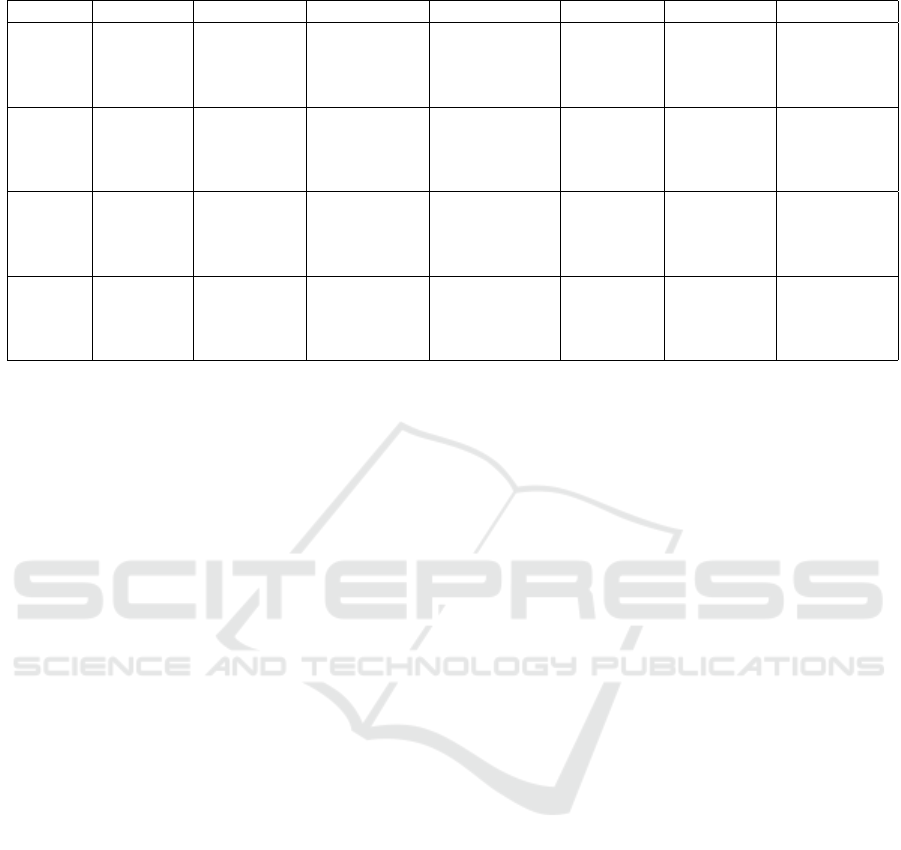
Table 3: Segment-Level Evaluation Results.
Segment Method HitRate@10 HitRate@100 HitRate@1000 Recall@10 Recall@100 Recall@1000
1 MostPop 0.1795 0.2074 0.2981 0.0768 0.0981 0.1743
1 RecentPop 0.1821 0.2097 0.3116 0.0793 0.1003 0.1858
1 DecayPop 0.1814 0.2124 0.3109 0.0785 0.1022 0.1838
1 TrendPop 0.0012 0.0065 0.0340 0.0003 0.0033 0.0194
2 MostPop 0.0567 0.0945 0.2177 0.0224 0.0464 0.1306
2 RecentPop 0.0616 0.0995 0.2350 0.0263 0.0495 0.1433
2 DecayPop 0.0599 0.1024 0.2312 0.0252 0.0512 0.1410
2 TrendPop 0.0097 0.0334 0.1422 0.0009 0.0064 0.0351
3 MostPop 0.0323 0.0838 0.2404 0.0114 0.0387 0.1292
3 RecentPop 0.0387 0.0911 0.2611 0.0160 0.0426 0.1424
3 DecayPop 0.0376 0.0936 0.2569 0.0158 0.0439 0.1404
3 TrendPop 0.0027 0.0123 0.0600 0.0006 0.0043 0.0256
4 MostPop 0.0295 0.1290 0.3835 0.0071 0.0380 0.1387
4 RecentPop 0.0376 0.1428 0.4145 0.0120 0.0435 0.1538
4 DecayPop 0.0392 0.1479 0.4069 0.0125 0.0438 0.1512
4 TrendPop 0.0018 0.0083 0.0431 0.0004 0.0034 0.0220
For Segments 2 and 3 (moderately active users),
the advantage of RecentPop and DecayPop over
MostPop becomes more evident. These users bene-
fit from models that can better capture evolving prod-
uct trends while still leveraging accumulated popular-
ity information. Nevertheless, performance is over-
all lower than in Segment 1, suggesting that medium-
activity users represent a more challenging group, as
their preferences are neither fully new nor as consis-
tent as those of highly active users.
Finally, for Segment 4 (highly active users), all
methods perform poorly, with very low HR and re-
call values. This highlights a major limitation of sim-
ple popularity-based models: they fail to serve power
users who likely expect more personalized recom-
mendations. In this group, the differences between
MostPop, RecentPop, and DecayPop are less pro-
nounced, indicating that none of the baselines are suf-
ficient to address the complexity of heavy-user behav-
ior. TrendPop, again, performs poorly across all seg-
ments, confirming its instability and lack of practical
utility.
In summary the segment-level analysis under-
scores that popularity-based methods especially those
incorporating temporal dynamics are effective for less
active users but inadequate for heavy users. This find-
ing suggests that hybrid or personalized approaches
would be necessary to achieve strong performance
across the full spectrum of user types.
4 CONCLUSIONS
This paper evaluated the effectiveness of four
popularity-based recommendation methods, Most-
Pop, RecentPop, DecayPop, and TrendPop, on a
large-scale e-commerce dataset. Our findings demon-
strate that models incorporating temporal dynamics
significantly outperform a simple long-term popu-
larity baseline. Specifically, RecentPop and Decay-
Pop consistently achieved higher Hit Rate and Re-
call scores, confirming that recent transaction data is
a more powerful predictor of future product demand.
DecayPop, by applying an exponential decay func-
tion, offered a slightly more robust balance between
long-term popularity and short-term trends, particu-
larly at larger recommendation list sizes.
In contrast, our proposed TrendPop model, de-
signed to capture emerging trends by analyzing
weekly rank changes, performed poorly across all
metrics. This suggests that the high volatility of
weekly sales data introduces significant noise, mak-
ing simple rank-based trend detection an unreliable
strategy for stable recommendations.
Perhaps the most critical insight comes from our
user segmentation analysis. We found that popularity-
based methods are highly effective for low-activity
and new users, where personalized signals are sparse.
However, their performance drastically diminishes
for highly active ”power users,” who likely expect
more tailored and diverse suggestions. This under-
scores a fundamental limitation of non-personalized
approaches: while they serve as excellent and compu-
tationally efficient baselines for the cold-start prob-
lem, they are insufficient for retaining engaged cus-
tomers. In summary, our work highlights that
recency-aware popularity models are valuable com-
ponents of a recommendation system, but they must
be complemented by personalized strategies to cater
to the full spectrum of user behavior.
Temporal Popularity-Based Recommender Systems for e-Commerce: A Comprehensive Evaluation
23

5 FUTURE WORKS
Based on the findings of this study, several promising
avenues for future research emerge. The primary fo-
cus should be on developing more sophisticated and
personalized models that address the limitations of
global popularity signals. A natural next step is to
create hybrid systems that dynamically serve efficient
DecayPop recommendations to new users while de-
ploying personalized algorithms like collaborative fil-
tering for established users. In a similar vein, popular-
ity itself can be personalized by calculating it within
specific user segments based on demographics or past
behavior. Furthermore, the goal of identifying emerg-
ing products remains crucial; instead of simple rank
changes, this could be revisited using robust time-
series analysis methods like STL decomposition to
reliably detect upward trends while filtering out sta-
tistical noise.
Beyond algorithmic enhancements, a second crit-
ical research avenue involves rigorous validation and
optimization. This includes a comprehensive analysis
of hyperparameters, such as lookback windows and
decay rates, to fine-tune model performance for dif-
ferent product categories or market dynamics. Ulti-
mately, the true effectiveness of any proposed model
must be validated beyond offline metrics. It is es-
sential to conduct online A/B testing to measure the
real-world impact of these strategies on key business
metrics like conversion rates, user retention, and over-
all engagement, providing definitive evidence of their
value in a production environment.
ACKNOWLEDGEMENTS
This project was made possible by the individual con-
tributions of each member of the recommendation
team within Hepsiburada technology group. Also,
this project would not have been possible if the tech-
nology group management of Hepsiburada had not
supported and encouraged the recommendation team
in innovation.
REFERENCES
Anelli, V. W., Noia, T. D., Sciascio, E. D., Ragone, A., and
Trotta, J. (2018). Local popularity and time in top-n
recommendation. arXiv preprint.
Balloccu, G., Boratto, L., Fenu, G., and Marras, M. (2022).
Post processing recommender systems with knowl-
edge graphs for recency, popularity, and diversity of
explanations. arXiv preprint.
Han, Y., Xu, B., Wang, Y., and Gao, S. (2024). Towards
popularity-aware recommendation: A multi-behavior
enhanced framework with orthogonality constraint.
arXiv preprint.
Hassan, A. Y., Fadel, E., and Akkari, N. (2022). Exponen-
tial decay function-based time-aware recommender
system for e-commerce applications. International
Journal of Advanced Computer Science and Applica-
tions (IJACSA), 13(10):602–603.
Ji, Y., Sun, A., Zhang, J., and Li, C. (2020). A re-visit of the
popularity baseline in recommender systems. In Pro-
ceedings of the 43rd International ACM SIGIR Con-
ference on Research and Development in Information
Retrieval (SIGIR ’20), page 4 pages.
ICEEECS 2025 - International Conference on Advances in Electrical, Electronics, Energy, and Computer Sciences
24
