
The Influence of Short Video Viewing Time on the Undergraduate
and Graduate Students’ Inattention: The Mediating Role of
Self-Control
Yangxi Liu
1,*
, Meiyan Wang
2
and Pengchao Xiao
3
1
Faculty of Education, Monash University, Wellington Rd, Clayton VIC 3800, Australia
2
School of Continuing Education, China West Normal University, Nanchong, 637000, China
3
College of Education, University of Queensland, Brisbane, 4072, Australia
Keywords: Short Video, Students, Inattention, Self-Control.
Abstract: This study adopts self-control as a mediating factor to explore the relations between China's undergraduate
and graduate students' inattention and short video viewing time. SPSS was used to gather and analyze 157
valid responses in total. The findings show a strong positive relationship between inattention and daily short
video viewing time. Both short video viewing time and inattention are shown to be negatively correlated with
self-control. Regression analysis shows that extended short video viewing time considerably accelerates the
attention deficit. These results imply that students' attention is negatively impacted by excessive short video
watching, but that these effects are lessened by stronger self-control. Therefore, the use of short videos in
family and educational contexts is advised to be restricted and self-control training strengthened. Limitations
include small sample size and respondents being students mainly majoring in the arts and social sciences.
This study offers advice for teachers, parents and students to take advantage of short video for education in a
cautious manner.
1 INTRODUCTION
1.1 Research Background
Recently, with the development of internet
technology, short videos have gradually become an
important channel for university students to receive
information and construct connection with the outside
world. Short videos have a profound impact on
university students’ studies, daily lives, entertainment.
While short videos offer a wealth of high-quality
content and resources, their potential drawbacks
cannot be ignored.
1.2 Literature Review
Chinese scholars have provided detailed insights into
the definition, characteristics and the impact of short
videos. Short videos are typically defined as videos
lasting no longer than 5 minutes and are characterized
by fragmentation, interactivity, richness, and
embeddedness. According to surveys, 90% of
*
631501010427@mails.cqjtu.education.cn
respondents watch short videos every day. The
humorous content is the most popular genre. Short
videos brought new methods for supporting youth
development. However, there are also many problems
in short-videos development, especially “three
vulgarities”, rumours and frauds. Additionally, the
consumerism and pan-entertainment tendency are
easy to affect the thoughts of young people. The
importance of supervision and content regulation has
become increasingly prominent to ensure that the
content remains healthy and promotes positive values
(Wang, 2020). The rise of short videos conforms to
the contemporary trends, catering to university
students’ expressive needs and providing new
channels for them to be unconventional or
unorthodox. These platforms satisfy grassroots
expression desires and meet the demand for
personalized presentation. Features like “cross-
temporal” communication and “clustered”
connections fulfill students “social aspirations”.
Meanwhile, Wangxiao also points that the potential
dangers of college students' network survival caused
by the popularity of short videos mainly focus on
746
Liu, Y., Wang, M. and Xiao, P.
The Influence of Short Video Viewing Time on the Undergraduate and Graduate Students’ Inattention: The Mediating Role of Self-Control.
DOI: 10.5220/0014279900004942
Paper published under CC license (CC BY-NC-ND 4.0)
In Proceedings of the 2nd International Conference on Applied Psychology and Marketing Management (APMM 2025), pages 746-753
ISBN: 978-989-758-791-7
Proceedings Copyright © 2026 by SCITEPRESS – Science and Technology Publications, Lda.

"screen addiction" to reveal academic hidden dangers,
for instance, “information cocoon effect” causes
cognitive limitations. "Internet addiction" diminishes
willpower. "Entertainment first" promotes blind
value obedience. It is necessary to set up mainstream
values and adapt to the Internet technology’s
developing trend to promote changes of pedagogy.
Related departments should optimize and integrate
resources to build a network communication pattern
of "primary school platforms secondary institution
sub-platforms+individual student auxiliary
platforms". Additionally, institutional construction
should be improved to strengthen the “safety net” for
the online ecosystem (Wang, 2021). Although
personalized content supply provides short-term
satisfaction for short video users, this cultural barrier
inevitably leads to self-isolation and a convergence of
values. It is doing more harm than good for the
formation of college students’ positive values. Short
videos users who generally show habitual swiping
behavior and are influenced by curiosity, are often
drawn to impactful content. This creates a desire to
seek even more novel and sensational content,
resulting in excessive addiction to short videos
(Huang et al., 2019]. Short video addiction is a new
form of behavioral addiction where individuals
develop a negative psychological dependence on
short videos, leading to excessive and uncontrollable
viewing. This addiction significantly impairs physical,
mental, and social functioning.
Foreign scholars have also conducted abundant
researches and elaborations in this field. Short videos
are based on big data algorithms to accurately push
exciting content to users, allowing them to watch
videos that they’re interested in at any time. When
students watch short videos, it will be easier to
develop an addiction to short videos if they
experience a high level of immersion (a state of
complete engagement and enjoyment), which further
impairs their intrinsic motivation (learning driven by
personal interest and passion) and extrinsic
motivation (learning driven by external rewards).
Addicted students may show lower enthusiasm and
motivation for studying. Short video addiction can
also lead to a decline in learning motivation and
students’ sense of well-being. Learning well-being
refers to students’ overall satisfaction and positive
feelings about their learning experience (Ye et al.,
2022). Users who are addicted to short videos may
find it more difficult to maintain attention, attention
deficit, or impaired ability to concentrate and deal
with interference. As a booming form of
entertainment, short videos are globally popular. Its
fragmentation mode presents dense and attractive
information to users, which may lead to addiction and
adverse effects. Research using eye-tracking
technology during short viewing tasks and the Stroop
test has shown that addicted users show lower interest
and attention, more distracted behaviours, and more
fixations with shorter average fixation time. It
demonstrates that short video addicts have shorter
attention span compared to the normal. With the
increase of short video length, the attention level of
short video addicts decreases and the number of
distractions increases (Chen et al., 2023).
Additionally, self-reported symptoms of ADHD
(attention deficit/hyperactivity disorder self-rating
scale), depression, and hostility are correlated factors
in adolescent Internet addiction. Internet addiction
may be a complex psychological problem entangled
with multiple mental health symptoms. Studies have
also found that gender plays an important role in the
relationship between Internet addiction and mental
symptoms. Hostility is an important feature of male
Internet addiction and may stem from gaming
behaviors or online conflicts. There is a significant
correlation between ADHD symptoms and
depression in female adolescents, but hostility and
social anxiety do not show a significant correlation.
Female Internet addicts are more likely to be
influenced by introverted psychological problems
(such as depression). Internet addicts tend to show
higher levels of attention disorder and behavioral
impulse tendencies. The fast pace and constant
stimulation of the Internet may have intensified these
symptoms. Long-time Internet using may become a
way of escaping real-world issues, further
exacerbating feelings of depression. Internet addicts
may avoid face-to-face social interactions, relying
more on social networking, which causes the
symptoms of social fear to worsen. Male internet
addicts may develop hostility and even show
aggressive behavior due to online competition or
conflict. Yen suggests enhancing mental health
screenings, conducting psychological assessments for
Internet addicts, and paying special attention to the
potential risks of ADHD and depression. Scholars
should guide the healthy use of the Internet and
educate teenagers to arrange Internet surfing time in
a reasonable way to avoid addiction. Aiming at
internet addicts, psychologists are supposed to
consider their mental symptoms comprehensively to
design personalized intervention plans. For males, the
public should focus on hostility management and
emotional guidance, while for females, emotional
support should be provided and social skills
development fostered (Yen et al., 2007). The
phenomenon of overuse of short video applications is
The Influence of Short Video Viewing Time on the Undergraduate and Graduate Students’ Inattention: The Mediating Role of Self-Control
747

common, but it may be different in diverse cultural
contexts. Excessive use of short video applications
may negatively impact on college students ‘social
skills and mental health. Zhang N and others’ study
offers an international perspective on understanding
the excessive use of short video applications and their
impact on university students, emphasizing the need
for further research and intervention in different
cultural settings.
1.3 Research Topics
1.3.1 Research Gaps
Scholars have made detailed studies on the definition,
characteristics, functions, and impacts of short videos,
providing valuable references for explaining their
influence on adolescents. These studies also provide
important foundations for this research. However, the
academic community has yet to explore the impact of
short video viewing duration on the undergraduate
and graduate students’ attention, using self-control as
a mediating variable.
1.3.2 Research Questions
The fragmented nature of short videos fundamentally
conflicts with the high levels of attention and long-
term systematic training required for effective
learning. As adults with a certain degree of self-
control, will the undergraduate and graduate students
(who are, respectively, the junior college students,
university undergraduates, postgraduates and
doctoral students) experience a decrease in attention
when facing a variety of short videos? How does self-
control work in this relationship? In addition, what
strategies can effectively enhance students ‘self-
control and attention? Given that prolonged short
video viewing has become a widespread phenomenon,
this study focuses on the undergraduate and graduate
students. Through the design of a survey and data
collection, which aims to investigate the relationship
between short video viewing duration and the
students’ inattention, with self-control as a mediating
factor. This study analyze the generation and mode of
action of this influence and weighs the advantages
and disadvantages and attempts to identify feasible
solutions and preventive measures. The goal is to
guide students toward adopting positive strategies
when engaging with short videos.
2 RESEARCH METHODOLOGY
2.1 Sample Description and Research
Process
Through stratified sampling, this study distributed
questionnaires to junior college students,
undergraduate students, postgraduate students and
doctoral students of different colleges and
universities in China. It is expected to investigate 120
samples, of which 30 are junior college students, 30
are undergraduates, 30 are master students, and 30
are doctoral students, without limiting the conditions
such as region and family. Two surveys were
conducted in this study, namely pre-survey and a
formal survey, and SPSS software was used to
analyze the frequency, mean value, regression
process, intermediary effect and the influence of
sample difference on attention. During the pre-
survey, 124 sample data were collected to test the
reliability and validity of the scale, and the data
showed that the scale adopted in this study met the
standard. During the formal survey, a total of 180
samples were collected, of which 157 were valid,
including 49 males and 108 females, 20 junior
college students, 55 undergraduates, 36 postgraduate
students, 46 doctoral students, 101 majored in
humanities and social sciences, 1 natural sciences
major, 21 engineering and technology students, 7
medical students, and 25 art students. There is no
significant difference in reliability and validity
between the two surveys, and the analysis results are
consistent, indicating that the research results of this
study are credible.
2.2 Measurements
2.2.1 Self-Control Scale
The Self-control Scale, developed by June P.
Tangney et al., George Mason University, in 2018,
was used to assess adult self-control ability. Self-
Control Scale (SCS) includes multiple dimensions,
including impulse suppression, emotional control,
habit and behavior control, focus and attention
control, decision-making ability, and persistence and
perseverance. The Scale is scored by Likert Scale
and contains 36 items, among which 20 items are
scored in reverse, the higher the score is, the weaker
the self-control ability is; 16 items are scored in
forward, the lower the score is, the stronger the self-
control ability is. This paper uses the Brief Self-
Control measure, with a total of 13 items.9 items are
negatively scored, indicating that the higher the score,
APMM 2025 - International Conference on Applied Psychology and Marketing Management
748

the weaker the self-control.4 items are scored
positively, which means the higher the score, the
stronger the self-control. Cronbachα coefficient of
this scale is high (generally > 0.80) (Tangney et al.,
2018).
2.2.2 Inattention Self-Report Scale
The Inattention Self-report Scale, compiled by
Kessler et al., in 2005, was used to study attention
deficit hyperactivity disorder in adults. This scale
conforms to the DSM-IV diagnostic criteria and
mainly includes the following six core dimensions:
Concentration duration, task organization, attention
to detail, task persistence, ease of distraction, and
forgetting tendency. The Inattention Self-report
Scale uses the Likert Scale and includes 9 questions
such as "How often are you distracted by activities or
noise around you?" The questions are all positively
scored, and the higher the score, the worse
inattention is. Cronbachα coefficient of this scale is
relatively high (generally > 0.80) (Kessler et al.,
2005).
3 RESULTS
3.1 Results of Reliability and Validity
Analysis
This study analyses the reliability of Self-control and
In-attention scales. The Cronbach's alpha for the
Self-control scale was 0.819, while for the
Inattention scale, it was 0.794, both reflecting good
reliability. MO and Bartlett tests were used to verify
the validity of the self-control scale and In-attention
scale. Among them, the KMO value of the self-
control strength table was 0.842, and the KMO value
of the concentration decline scale was 0.848, both
indicating good data validity.
3.2 Descriptive Statistics
This study conducted a statistical analysis on 157
valid samples of short video streaming duration data,
among which, The number of people who watch
short videos for less than 30 minutes every day
accounts for 17.83%, the number of people who
watch short videos for more than 30 minutes and less
than 1 hour accounts for 24.84%, the number of
people who watch short videos for more than 1 hour
and less than 2 hours accounts for 26.75%, the
number of people who watch short videos for more
than 2 hours accounts for 30.57%, and the number of
people who watch short videos for more than 2 hours
accounts for the highest proportion. In terms of
majors in the sample universities, 64.33% of students
and postgraduates majored in humanities and social
sciences, more than half of the total sample.
Engineering and technology accounted for 13.33%,
art accounted for 15.92%, and other majors
accounted for less than 5%. Male samples accounted
for 33.33% and females 66.67%.
3.3 Results of Correlation Analysis
In this study, the Pearson correlation coefficient
between the independent variable (Time spent
watching videos per day) and the dependent variable
(Inattention) is 0.168, and the p-value is 0.035, which
is less than 0.05, indicating a significant positive
correlation between the independent variable and the
dependent variable. In this study, the Pearson
correlation coefficient between the independent
variable (Time spent watching videos per day) and
the intermediary variable (Self-control) was -0.259,
and the p-value was 0.001, which was less than 0.01,
indicating a significant negative correlation between
the independent variable and the dependent variable.
In this study, the Pearson correlation coefficient
between the intermediate variable (Self-control) and
the dependent variable (Inattention) was -0.641, and
the p-value was 0.000, which was less than 0.01,
indicating a significant negative correlation between
the independent variable and the dependent variable.
The study also verified that the major, gender and
grade of the undergraduate and graduate students
were not significantly correlated with the decrease of
time spent watching short videos daily and
inattention.
3.4 Results of Regression Analysis
Linear regression analysis was performed in this
study. As shown in Figure 1 and Table 1 & 2, the
results of regression analysis show that the
independent variable (Time spent watching short
videos per day) has a significant positive impact on
the dependent variable (Inattention).
The Influence of Short Video Viewing Time on the Undergraduate and Graduate Students’ Inattention: The Mediating Role of Self-Control
749
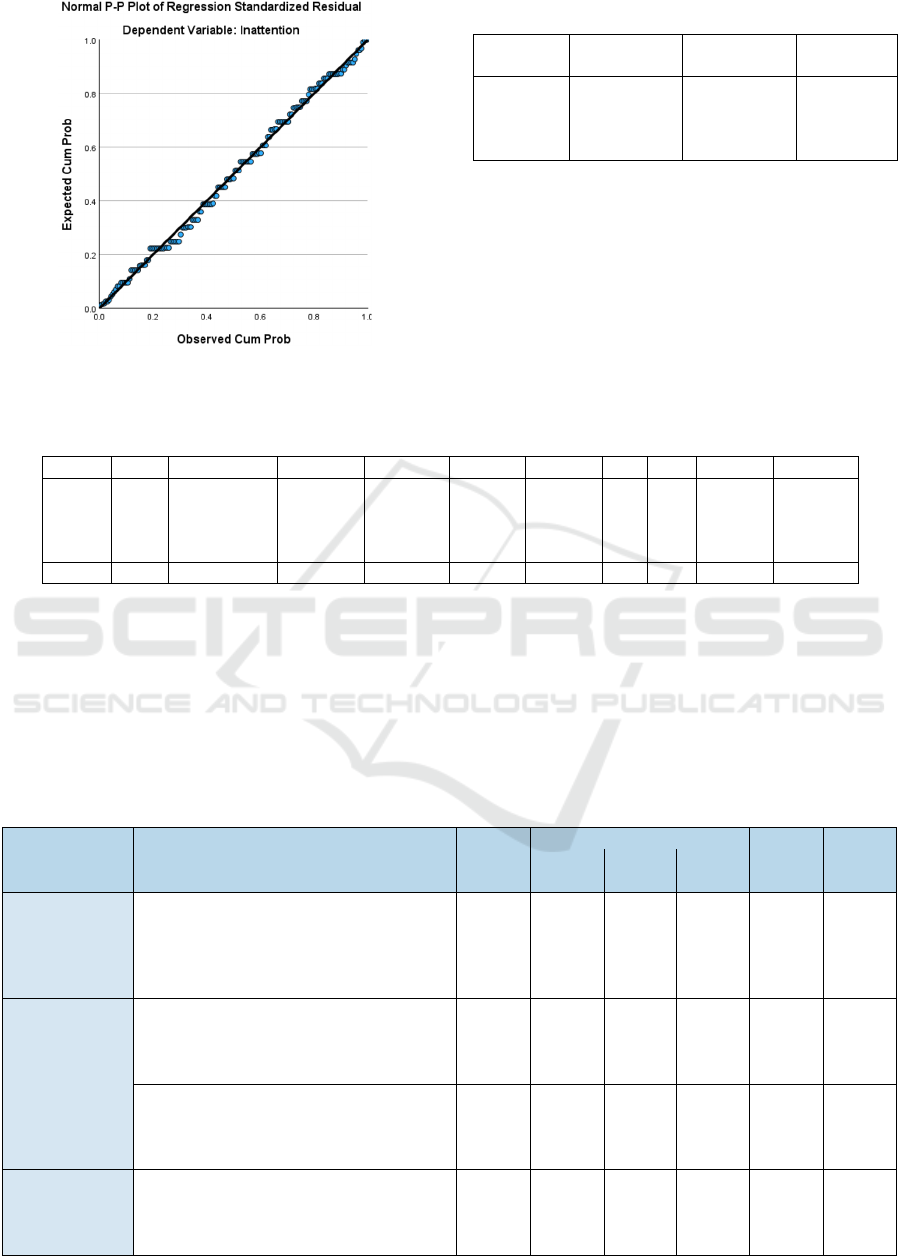
Figure 1. Normal P-P plot of regression standardized
residual (Photo/Picture credit: Original).
Table 1. Variables entered/removeda.
Model Variables
Entere
d
Variables
Remove
d
method
1 Time spent
watching
video per
da
y
b
Enter
a. Dependent Variables: Inattention
b. All requested variables enter
Table 2. Model summary.
Model R R Square Adjusted
R
Square
Std.
Error of
the
Estimate
R
Square
Change
F
Change
df1 df2 Sig. F
Change
Durbin-
Watson
1 168a .028 .022 .46724 .028 4.500 1 155 .035 2.104
a. Predictors: (Constant), Time spent watching videos per day
b. Dependent Variable: Inattention
3.5 Results of Mediating Effect
Analysis
As shown in Table 3 and Table 4, this study
conducted a model test on the mediating variable
(Self-control) between the independent variable and
the dependent variable, and the analysis results show
that this mediating effect does exist.
Table 3. Effect analysis process summary.
Effect Item Effect SE t
p
LLCI ULCI
Direct Effect Time spent watching videos per day –
Dependable Variable
(
Inattention
)
0.001 0.028 0.031 0.975 -0.054 0.055
Process of
Indirect Effect
Time spent watching videos per day—
Mediating Variable (Self- control)
-0.138 0.041 -3.339 0.001 -0.218 -0.057
Mediating Variable(Self-control) --
Inattention
-0.523 0.052 -
10.006
0.000 -0.626 -0.421
Total Effect Time spent watching short video per day-
- Inattention
0.073 0.034 2.121 0.035 0.006 0.140
APMM 2025 - International Conference on Applied Psychology and Marketing Management
750

Table 4. Model testing of mediation effects.
Mediating Variable
(Self-control)
Dependable Variable
(Inattention)
Dependable Variable
(Inattention)
Constant 3.763** 2.352** 4.322**
(31.377) (23.523) (20.408)
Inde
p
endent variable -0.138** 0.073* 0.001
(Time spent
watching video per
da
y)
(-3.339) (2.121) (0.031)
Mediatin
g
variable -0.523**
(Self-control) (-10.006)
Sample Size 157 157 157
R² 0.067 0.028 0.411
Ad
j
usted R² 0.061 0.022 0.403
F Value F(1,155)=11.152,
p
=0.001
F(1,155)=4.500,
p
=0.035
F(2,154)=53.744,
p
=0.000
4 DISCUSSION
4.1 Comparison with Previous Studies
Today, with the rapid development of internet
technology, internet addicts show a higher tendency
of attention disorder and impulsive behaviour, and
addiction to watching short videos (more than 2 hours
a day) is one of the manifestations of internet
addiction (Pan et al., 2024). Long-term use of the
internet can become a way to escape real-world
problems, while aggravating depression. Internet
addicts may tend to avoid face-to-face interpersonal
interactions and rely more on online socializing,
leading to increased social phobia symptoms. Male
internet addicts, on the other hand, may provoke
hostility or even exhibit aggressive behaviour due to
online competition or conflict (Yen et al., 2007). This
paper further explains the harm of internet addiction
by verifying the relationship between the daily
watching time of short videos and the decreased
attention of the students. Therefore, this paper
suggests that students' mental health screening should
be strengthened, and mental health assessment should
be conducted for students with internet addiction,
with particular attention to the potential risks of
ADHD and depression. The healthy usage of short
videos for teaching and entertainment should be
guided to avoid the decline of students' attention.
Previous studies have shown that watching short
videos for a long time is related to students'
personality characteristics, and it is also affected by
parents' neglect of their children. Consistent with
many previous research results, self-control is
significantly negatively correlated with watching
short videos for a long time, that is, the stronger the
self-control, the shorter the watching time (Gong,
2024; Wang et al., 2022). This paper further confirms
that self-control plays a significant mediating role
between short video-watching duration and
inattention. Therefore, this paper suggests that special
attention should be paid to individuals who watch
short videos for a long time during the educational
process and self-control improvement training should
be carried out. The phenomenon of overuse of short
video apps is universal, but it may vary in different
cultural contexts. Overuse of short video applications
may have a negative impact on students' social skills
and mental health (Yen et al., 2007).
4.2 Suggestions for Teaching Practice
The undergraduate and graduate students are
mentally mature and have stronger self-control
compared with students under the age of 18. However,
the conclusion of this study shows that the longer
Chinese undergraduate and graduate students watch
short videos per day, the greater the decline of their
attention, and self-control plays an intermediary role
between them. This not only provides reference value
for the use of short videos as teaching media in the
teaching environment of the undergraduate and
graduate students, for the entertainment methods of
the students after class, but also for the use of
electronic entertainment and educational products in
family and school education of underage students,
especially for the viewing time of short videos. Based
on the research results, this paper suggests that,
whether in family education or school, students
should try to limit the time of watching short videos
every day, otherwise students' concentration will
decrease significantly. Educational methods that can
The Influence of Short Video Viewing Time on the Undergraduate and Graduate Students’ Inattention: The Mediating Role of Self-Control
751

control or reduce the length of short video watching
are recommended. This paper also suggests that
educators and policymakers should pay attention to
the differences in the overuse of short video apps by
student groups in different cultural contexts. In
addition, measures should be taken in school and
home educational settings to develop healthy short
video-viewing habits among students, and further
studies could be conducted on the relationship
between different cultural contexts, students' short
video-watching time, and inattention.
4.3 Limitations and Future Prospects
The limitations of this study include the limited size
of samples (only 157), and most undergraduate and
graduate students are majoring in humanities and
social sciences. It is suggested to expand the size and
diversity of samples in future studies. To further
verify the conclusions of this study, it is suggested to
conduct related research on underage students.
Watching short videos is only one of the electronic
education methods, and other electronic education
methods can be studied in the future to observe the
impact of electronic education on the growth of
students. Students' inattention is one of the factors
that affect learning. In the future, Future research can
also study how electronic education, including
watching short videos, has an impact on students'
learning habits, emotional fluctuations, comfort, and
identity and personality formation. In addition,
methods of intervention to reduce the frequency of
short video usage by students could also be studied.
5 CONCLUSION
The purpose of this study was to explore whether the
independent variable (Chinese undergraduate and
graduate students watching short videos per day) has
a significant negative correlation with the decline of
the dependent variable (Inattention), and whether
self-control plays a mediating role between them.
Quantitative research method was adopted in this
study. 200 questionnaires were sent out to the
undergraduate and graduate students at different
stages, and the total valid sample size was 157. SPSS
software was used for data analysis. The results of
this study are as follows: the Pearson correlation
coefficient of the independent variable and the
dependent variable is 0.168, the p-value is 0.035, and
the linear regression coincidence rate of the two is
95%. In this study, the results of the mediation effect
model test of the intermediary variable (Self-control)
between the independent variable and the dependent
variable are as follows: this intermediary effect path
exists. The results show that there is a significant
positive correlation between the duration of watching
short videos per day and the decline of attention of
Chinese undergraduate and graduate students, and
self-control plays an intermediary role between the
two. The intermediary variable and the independent
variable have a significant negative correlation. In
other words, the longer Chinese undergraduate and
graduate students watch short videos daily, the more
serious the decline in attention; conversely, the
shorter the time spent watching short videos, the
lower the decline in concentration. The stronger the
individual self-control, the shorter the time of
watching short videos, the lower the degree of
attention decline. On the contrary, the worse the
individual self-control, the longer the time to watch
short videos, the higher the degree of attention decline.
In the context of the current popularity of short video
entertainment and the gradual development of
electronic education methods, the results of this study
are intended to provide a reference for the use of
electronic entertainment and education products for
students in family and school educational background,
especially the length of watching time of short videos,
and will also serve as a reminder for teachers and
parents to seek educational methods to improve the
decline of students' attention.
AUTHORS CONTRIBUTION
All the authors contributed equally and their names
were listed in alphabetical order.
REFERENCES
G. Wang, S. Liu, Q. Li, D. Wen, Y. Wu, B. Jiang, & F. Li.
The relationship between parents' neglect and the
overuse of teenagers' short videos: The mediating
mechanism of mindfulness and self-control. Psychol.
Behav. Res., 20(4), 487–493 (2022)
H. Huang, R. Men, & T. Qu. Perspective on the current
situation of college students' values under the influence
of short video culture. Sch. Party Build. Ideol. Educ.,
(18), 86–89 (2019)
H. Wang. Investigation report: Short videos are deeply
integrated into public cultural life. State Gov., (32), 2–
9 (2020)
J. H. Ye, Y. T. Wu, Y. F. Wu, et al. Effects of short video
addiction on the motivation and well-being of Chinese
vocational college students. Front. Public Health, 10,
847672 (2022)
APMM 2025 - International Conference on Applied Psychology and Marketing Management
752

J. P. Tangney, A. L. Boone, & R. F. Baumeister. High self-
control predicts good adjustment, less pathology, better
grades, and interpersonal success. In Self-Regul. Self-
Control (pp. 173–212). Routledge (2018)
J. Pan, X. Zhao, C. Lv, et al. Short video addiction: A new
Internet addiction. J. Hangzhou Norm. Univ. (Nat. Sci.
Ed.), 1–9 (2024)
J. Y. Yen, C. H. Ko, C. F. Yen, et al. The comorbid
psychiatric symptoms of Internet addiction: Attention
deficit and hyperactivity disorder (ADHD), depression,
social phobia, and hostility. J. Adolesc. Health, 41(1),
93–98 (2007)
R. C. Kessler, L. Adler, M. Ames, O. Demler, S. Faraone,
E. Hiripi, ... & E. E. Walters. The World Health
Organization Adult ADHD Self-Report Scale (ASRS):
A short screening scale for use in the general population.
Psychol. Med., 35(2), 245–256 (2005)
X. Wang. Cause analysis, potential risks, and coping
strategies of the short video craze among college
students. Ideol. Theor. Educ., (1), 93–97 (2021)
Y. Chen, M. Li, F. Guo, et al. The effect of short-form video
addiction on users’ attention. Behav. Inf. Technol.,
42(16), 2893–2910 (2023)
Z. Gong. The influence of neurotic personality traits on
excessive short video usage. Int. J. Psychol. Stud., 16(1),
52 (2024)
The Influence of Short Video Viewing Time on the Undergraduate and Graduate Students’ Inattention: The Mediating Role of Self-Control
753
