
Exploring Marketing Strategies in the Idol Industry: The Case of
NCT127 Idol Groups
Yutian Zhang
Department of Web and New Media, Jilin International Studies University, 130117 Jilin, China
Keywords: Marketing Strategy, K-pop, Cultural Economy.
Abstract: With globalisation and the popularity of mobile internet, the Korean idol industry has made remarkable
achievements in the field of global idol industry. However, the competition in the global entertainment market
is fierce and the problem of product homogenisation is emerging. In order to cope with this problem and assist
in the development of China's idol industry, this paper focuses on the management and communication of
cultural industry. Focusing on the intersection of cultural industry management and communication studies,
this paper conducts an in-depth analysis of the fan base of NCT127, a male idol group under the South Korean
company SM, through the research method of interviews, and encodes the content of the interviews to collect
and analyse their views and experiences of NCT127's marketing strategy. Through the effective information
they fed back, the strengths and weaknesses of NCT127's marketing strategy and the areas that can be
improved are countered to provide an indicative contribution to the healthy and long-term development of the
idol industry.
1 INTRODUCTION
With the acceleration of globalisation and the
popularisation of the Internet, the Korean idol
industry has made remarkable achievements within
the scope of the global idol industry. The success of
the Korean idol industry cannot be separated from its
perfect industrial system of content manufacturing
and mature model of fan economic realisation.
The outstanding performance of the entire
industrial chain, from product planning to music
industry to visual design, shows that the Korean idol
industry has already formed a relatively mature and
complete industrial system (Wang, 2017). Multiple
departments work together to provide positioning
services for idol groups; at the same time, through
record sales, audio sales, concerts, DVD sales,
peripheral derivatives and advertising endorsements,
and other forms of marketing in parallel, shaping a
variety of merchandise forms, so that fans can
continue to consume repeatedly over a period of time,
so that the Korean idol industry uninterruptedly
realise the realization of the emotional investment
(Ai, 2021).
However, while learning how the Korean idol
industry designs product marketing through inquiry,
it also faces a series of core challenges.
The marketing strategy of the Korean idol
industry involves a number of aspects, such as brand
positioning, market segmentation, product planning,
publicity and promotion. This determines that the
success of a product is also affected by a variety of
factors such as the market environment, consumer
psychology, and cultural differences (Hu, 2021). As
market competition intensifies, the problem of
product homogeneity in the idol industry is gradually
surfacing (Zhang et al., 2023). How to meet market
changes and fan demands while maintaining
individuality and achieving sustainable development
is also an important challenge for its marketing
design.
In order to study the marketing strategies of the
idol industry, NCT127 was selected as a case study to
be analysed in this paper, and the interview method
was used to conduct interview activities with four
fans of NCT127. The contents of their interviews
were coded and processed to collect and analyse their
perceptions and experiences of NCT127's marketing
strategies. The effective information from their
feedback is used to reflect the strengths and
weaknesses of NCT127's marketing strategy and
what can be improved.
Zhang, Y.
Exploring Marketing Strategies in the Idol Industry: The Case of NCT127 Idol Groups.
DOI: 10.5220/0014137100004942
Paper published under CC license (CC BY-NC-ND 4.0)
In Proceedings of the 2nd International Conference on Applied Psychology and Marketing Management (APMM 2025), pages 501-506
ISBN: 978-989-758-791-7
Proceedings Copyright © 2026 by SCITEPRESS – Science and Technology Publications, Lda.
501
2 LITERATURE REVIEW
At present, regarding the product marketing design of
the Korean idol industry, scholars have already
conducted in-depth studies on the realisation mode of
its fan economy and the business logic and operation
mechanism behind it.
Scholars have conducted in-depth analyses of the
marketing strategies of the Korean idol industry from
various angles, including brand positioning, market
segmentation, product planning, publicity and
promotion. At the same time, some scholars have also
conducted in-depth research on the fan economic
realisation mode of the Korean idol industry,
revealing the business logic and operation mechanism
behind it (Wang, 2022). These research results
provide useful references and lessons for us to further
explore the product marketing design of Korean idol
industry (Mao, 2022).
However, there are some shortcomings in the
existing research. Most of the current research
focuses on overall control at the macro level, such as
qualitative analyses of marketing strategies in the
Korean idol industry (Kim, 2023). Secondly, the
perspective of the studies is relatively homogeneous,
with scholars analysing from the single perspective of
business administration or economics, and lacking a
comprehensive interdisciplinary perspective with
media studies or cultural industry management.
Furthermore, the analyses of the studies remain at the
surface level and do not explore in depth with
personalised examples.
To address the shortcomings of existing research,
this paper will select NCT127 male idol group as a
case for qualitative analysis, and adopt the empirical
research methods of literature review, case study
method, interdisciplinary research, and interviews to
explore the product marketing planning of the Korean
idol industry (Qiu, 2024). It aims to fill in the
shortcomings of existing research and provide useful
theoretical support and practical guidance for the
sustainable and healthy development of the Korean
idol industry (Lee, 2023).
3 RESEARCH METHODOLOGY
In this paper, the research method of interview was
adopted and four NCT127 fans were selected to be
interviewed (Lee & Lee, 2018). It collects and
analyses what kind of views and experiences they
have on NCT127's marketing strategy as an audience
group, and counterparts the NCT127 group's
advantageous points and areas that can be improved
on the marketing strategy through the feedback.
Relevant interview questions were designed
according to the research purpose, and the questions
covered the opportunities and reasons for fans to like
NCT127, the overall features and advantages of
NCT127, the points that attracted fans the most, the
use of social media platforms, consumption, activities
and interactions participated in, and the evaluation
and suggestions on marketing strategies.
We recorded and transcribed the entire interview
process, and by comparing, coding and analysing the
content of the same interview questions, this paper
draws out the successes and areas for improvement of
NCT127's marketing strategy.
3.1 Coding and Analysis of Interview
Content
Firstly, we initially organised the interview content
provided by several interviewees, filtering out
irrelevant content information while retaining content
related to the NCT127 marketing strategy.
Subsequently, we coded the contents of the
interviews that required further analysis and research,
grouped similar or related contents into the same
category, labelled them, and assigned corresponding
coding labels according to the rules. Finally, the
coding labels were organised and categorised to form
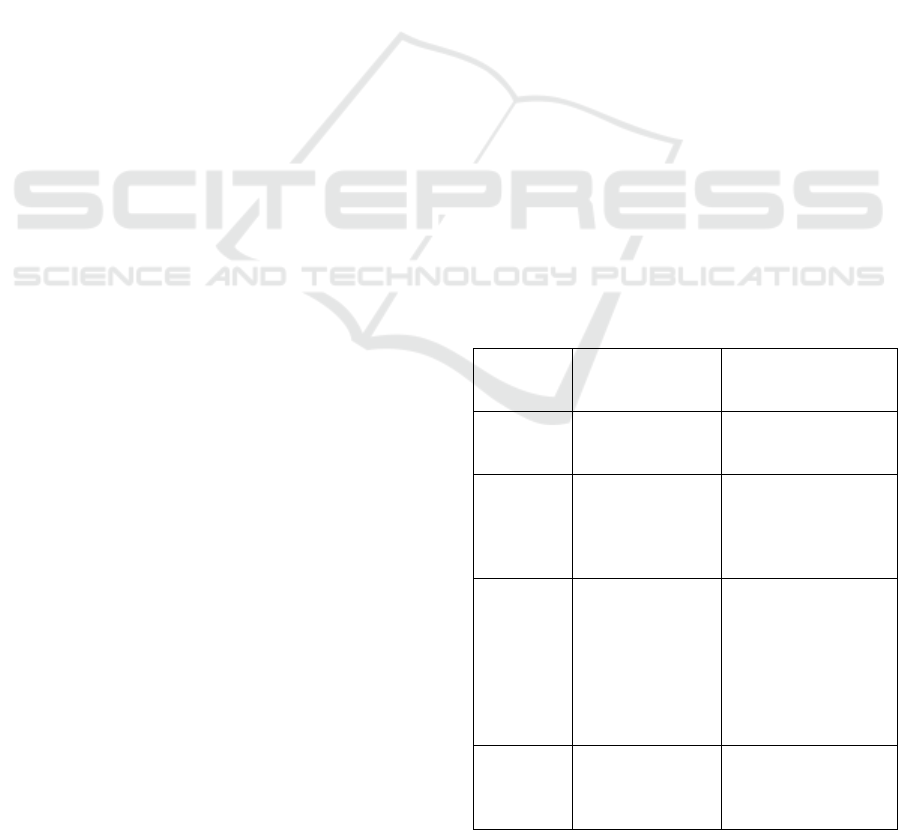
a systematic coding framework. Present the coded
content in tabular form as shown Table 1:
Table 1. Coding framework.
Interview
keyword
numbe
r
Interview
keyword
Content
Interpretation
1 Fan Preference
Opportunities
Opportunities for fan
groups to fall in love
with NCT127.
2 Features and
Benefits of
NCT127
Describe the features
and advantages that
make NCT127 stand
out from other idol
groups.
3 Most Attractive
Points for Fans
Describe what
attracts fans to
NCT127 the most,
such as product
planning, music
output, and visual
design for music
videos and albums.
4 Use of Social
Media Platforms
Describe the social
media platforms
through which fans
follow NCT127 and
APMM 2025 - International Conference on Applied Psychology and Marketing Management
502
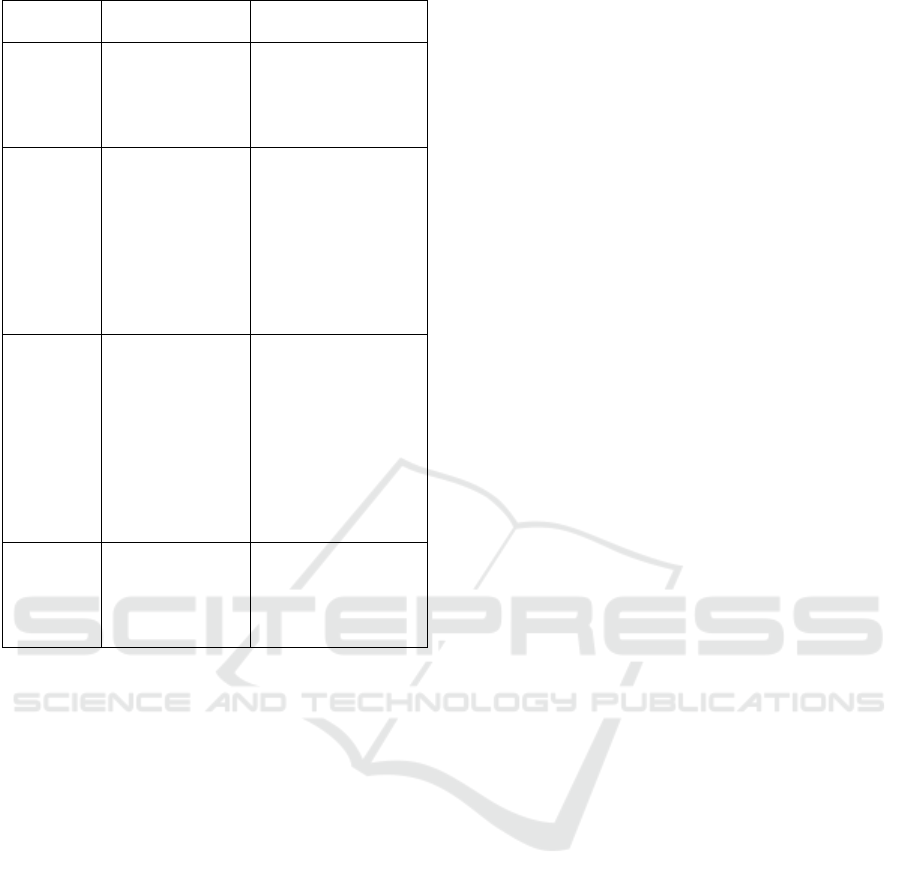
how these platforms
fulfil their needs.
5 Consumption
Describe the items
that fans spend on
NCT127 and their
decision-making
p
rocess.
6 Activities and
Interactions
Describe the
NCT127 events or
interactions that fans
have participated in,
and the emotional
impact of these
events and
interactions on the
fanbase.
7 Marketing
Strategy
Evaluation
Describe fans'
evaluations and
perceptions of the
strengths and
weaknesses of
NCT127's marketing
strategies, including
effective strategies
and areas for
im
p
rovement.
8 Emotional value Describe the
emotional experience
and emotional value
that NCT127 has
b
rought to fans.
3.2 Coding Results and Analysis
3.2.1 Fan Preference Opportunities
During the interviews, several interviewees
mentioned the opportunity of their liking for
NCT127.
Interviewee A fell further in love with the group
because he had the idea of wanting to learn more
about the group to which this member belonged after
interacting with member Lee Taeyong on Lysn, a
specific communication software developed by SM.
Respondent B, on the other hand, became
interested in NCT127 member Kim Jungwoo after
swiping his dance challenge on the TikTok platform
and decided to participate in the offline event after
getting to know the member better over a period of
time. After watching NCT127's offline concert in
Macau, he further deepened his love for the group.
3.2.2 Characteristics and Strengths of
NCT127
During the interview, interviewee A thought that
NCT127's conceptual plan was very "NEO"-style,
with philosophical and literary abstraction. Emphasis
on new concepts such as "dream, water droplet, and
empathy" made the audience interested in the concept
of a worldview that is independent of the current
subgenre but not detached from real life. Such
concepts are not common among Korean idol groups
at the same time, and are even unique, making
NCT127's distinctive team colours leave a deep
impression on the audience.
Respondent C believes that the diversity of
nationalities of the members of NCT127 has enabled
their audience to be more international, and their
audience size is at a high value as a result. Their
music, including samples of Western classical music
and other regional styles, allows fans of all
nationalities to appreciate the artistry of their music.
In addition, NCT127 has demonstrated a unique
and avant-garde style and innovation in dance and
visual design, making it stand out from other idol
groups.
3.2.3 Points of Greatest Appeal to Fans
During the interview, several fans mentioned
NCT127's musical output and choreography as the
points that attracted them the most.
Respondent A described NCT127's music as
diverse and avant-garde and experimental. Both the
title track and the album's title track have different
styles, but the central theme is very clear. The albums
often contain a variety of music, such as Neo Soul,
Tropical House, Synthpop, Contemporary R&B,
Complexxtro, etc. The albums are also very diverse,
as the songs are arranged in such a way as to make
them more accessible. As the arrangements of
NCT127's songs are innovative and highly
researched, there are many arrangers who
professionally evaluate and explain NCT127's
albums, uploading such videos to social media
platforms such as YouTube or bilibili. This, in a way,
also raises the artistic value and level of NCT127.
Respondent D felt that all of their dances had a
high difficulty index and were not homogenised
dance moves and styles from the same period, giving
the fan base an excellent audio-visual experience.
3.2.4 Use of Social Media Platforms
It was learned through the interviews that the specific
social media platforms used by several respondents to
follow NCT127 are similar. The main focus is on
social media platforms such as instagram, Twitter,
and Weibo, which fans can use to follow NCT127's
official account and the personal accounts of their
favourite members. In this way, they can be the first
Exploring Marketing Strategies in the Idol Industry: The Case of NCT127 Idol Groups
503

to get information about NCT127's movements,
pictures, videos, etc. that are posted.
Meanwhile, platform apps like bilibili and
youtube are also widely used by the fanbase and have
become important channels for the fanbase to watch
NCT127's updated materials.
3.2.5 Consumption, Participation and
Interaction
In the interview, fans' spending on NCT127 was
divided into two parts: online and offline.
Online, it mainly includes the purchase of a large
number of albums, peripherals and subscription to
Lysn software, as well as the "casting" and "cutting"
of sound sources during data events; offline, it
includes attending concerts, fanmeeting, pre-recorded
stages, and so on.
In addition, Interviewee B mentioned that they
also incur hidden consumption such as air tickets,
hotels, and clothing in order to watch concerts. These
spending decisions arise mainly from the fans' love
and support for NCT127, as well as the need to collect
their physical products.
Several fans mentioned in the interview that they
have attended NCT127's special concerts and platter
concerts. These events allowed fans to experience the
strength and charisma of the NCT127 members more
intuitively, deepening their love for them.
Also, by participating in offline events such as
concerts, fans are able to experience moments of
warmth and deepen the formation of a powder chain
relationship while interacting with all of NCT127.
3.2.6 Evaluation of Marketing Strategies
Several interviewees felt that they rated NCT127's
marketing strategy highly, but that there were still
some trouble spots that needed to be improved.
They believe that NCT127's marketing strategy is
innovative and differentiated, able to attract fans
through various types of post-production materials
such as lifestyle vlog-type materials, practice room or
studio behind-type materials, etc., and satisfy the
needs of different types of fans; it also interacts and
communicates with fans online in real time through
diversified social media platforms such as Lysn and
Weverse apps; at the same time, it can also help
NCT127 enhance the stickiness of some audiences by
producing music with unique styles and difficult
choreography, as well as avant-garde visual designs
to show the team's style and characteristics. At the
same time, NCT127 can also help to increase the
stickiness of some of its audiences by producing
unique music styles, ornamental and difficult
choreographies, and avant-garde visual designs to
show the team's styles and characteristics.
However, several respondents also suggested
some improvements to NCT127's marketing strategy.
For example, they would like to see the company step
up its promotion of some of its non-hit songs. They
felt that the selection of overly edgy title songs was
not conducive to helping NCT127 expand its fan
audience, while the promotion of equally high-quality
and more poppy secondary title songs could optimise
the structure of the album's song charting rate at a
relatively low cost. At the same time, shortening the
gap in activity and increasing the frequency of album
releases will maintain NCT127's group exposure
while increasing the points of exposure.
Among them, respondent B mentioned that it is
difficult to collect all the albums due to too many
styles, and hoped that SM can simplify the album
versions in consideration of the longevity of the fans
and users. Respondent A hoped that more attention
would be paid to the Chinese market.
4 SUCCESS OF NCT127
MARKETING STRATEGY
4.1 Innovation and Differentiation
NCT127 has demonstrated a high degree of
innovation and differentiation in its marketing
strategies. For example, it has demonstrated the
team's uniqueness and versatility from other groups
through its avant-garde music style and experimental
conceptual design; interaction and communication
with fans through multiple social media platforms and
exclusive software; realisation of the idol economy
through a large number of peripheral designs and co-
branded outputs; as well as multiple types of post-
production material placement.
These innovative and differentiated marketing
plans left a unique impression on the audience that
NCT127 is different from other idol groups.
4.2 Precise Positioning and Market
Segmentation
NCT127 focuses on precise positioning and market
segmentation in its marketing strategy. It has
developed a targeted marketing strategy by gaining a
deep understanding of the needs and preferences of
its target audience.
For example, when launching a global tour,
market surveys will be conducted in advance to adjust
APMM 2025 - International Conference on Applied Psychology and Marketing Management
504

the concert track list according to the preferences of
fans in the region; different versions of albums and
different types of peripheral products will be
launched to meet the diversified preferences of the
audience; and different types of activities and
interactions will be launched to cater for the needs of
different groups of fans, and so on.
These precise positioning and market
segmentation marketing strategies have enabled
NCT127 to better meet the needs of different fan
groups, increasing its market competitiveness and
influence among its peers.
4.3 Emotion Marketing and Fan
Interaction
NCT127 focuses on emotional marketing and fan
interaction in its marketing strategy. It carries out in-
depth communication and interaction with fans
through social media platforms and offline activities
to establish a close emotional bond.
For example, by subscribing to the Lysn software
to communicate and exchange with fans in real time,
the members share their lives through text, pictures,
videos, etc., which greatly brings the distance
between them and the fan base closer; face-to-face
interactions and contacts with fans through concerts,
fanmeeting, and other offline activities, etc., which
deepen the emotional impression and can better
maintain the connection with the fan base.
These emotional marketing and fan interaction
marketing strategies enable NCT127 to create a
stronger powder chain relationship with its fan
audience, enhancing fan loyalty and sense of
belo
nging.
5 NCT127 MARKETING
STRATEGY IMPROVEMENTS
5.1 Enhancement of Non-Hit Song
Announcements
Although NCT127's hit songs are highly recognisable
and influential in the market, they are also not all well
received because of their experimental and avant-
garde style. However, according to critics and fans of
NCT127, the non-hit songs on the album have the
same quality and potential.
However, the company's lack of promotion of
these non-hit songs has resulted in these songs not
receiving sufficient attention. As a result, NCT127
needs to step up its efforts to promote its non-
mainstream songs, weakening its stereotypical label
of experimental and reflecting the artistic diversity of
its work.
5.2 Optimising Album Styles and
Peripheral Product Design
While NCT127's album styles and peripheral product
designs are diverse and attractive, there are some
problems.
For example, an excessive number of album styles
and peripherals leads to aesthetic fatigue and a
decrease in purchasing desire among the fan base.
Audiences find themselves spending for a long period
of time without acquiring any practical products, and
are less likely to want to have additional expenditures.
Therefore, NCT127 needs to optimise its sales
methods, reduce the frequency of selling peripheral
products, and strengthen product quality
enhancement and practicality. Conduct research on
the purchasing supplies of the fan base in advance,
and design products according to the preferences of
the fan base, so as to increase the willingness to buy
and satisfaction.
5.3 Balanced International Markets
and Cross-Cultural Marketing
Although NCT127 has achieved some success in
internationalisation, attention needs to be paid to the
balance of its international markets.
The frequency of activities should be arranged to
address the high and low regional sales during each
event, not only in Korea itself. Launch products and
activities that are more in line with local cultural
characteristics and consumption habits for different
regional fan bases. Strengthen exchanges and
cooperation with other countries, or establish sub-
divisions in other countries to conduct more targeted
regional planning for NCT127.
6 SUGGESTIONS FOR FUTURE
MARKETING STRATEGIES OF
NCT127
6.1 Adherence to Innovation and
Differentiation
After market research, it is easy to find that NCT127's
current fanbase is attracted by their unique conceptual
plans and personal artistic style. For NCT127,
sticking to their own path is an important means of
Exploring Marketing Strategies in the Idol Industry: The Case of NCT127 Idol Groups
505

maintaining their creativity and differentiation. While
maintaining their strengths, they continue to
experiment with new marketing methods and
approaches to stay ahead of the curve and stay
competitive in the current idol market.
At the same time, while diversifying the
marketing, but also to avoid the problem of product
homogenisation, always maintain the group's unique
and distinctive style characteristics.
6.2 Focus on the Chinese Market
Currently NCT127's main audience countries in Asia
are Korea, Japan and China. However, the Chinese
market is not well regarded compared to Japan and
South Korea, and the Chinese fanbase has a large
share of album purchases and offline event support.
NCT127 should increase the frequency of their
overseas activities while maintaining their local
publicity, and diversify their interactive activities in
China. Not only should the number of tours and book
signings be increased, but also activities with more
benefits, such as NCT WISH's "One-Day Cafe
Manager" activity, which is more cost-effective and
interactive. This will enhance the experience of the
fan base and the sense of return, and maintain the
loyalty and sense of belonging of the solid fans.
6.3 Expanding Product Lines and
Diversification
NCT127 should improve the design of its peripheral
products, reduce the number of co-branded products
with other divisions, and instead increase the number
of collaborations with brands that have high visibility
and good civic influence to enhance the originality of
NCT127-related products.
At the same time, more personalised and
customised peripheral products can be launched, and
online questionnaires can be issued before the batch
output to conduct in-depth research on the market
situation in order to meet the fans' personalised and
targeted needs, to improve the fans' purchasing
experience and satisfaction, and to strengthen the
powder chain relationship.
7 CONCLUSION
Through interviews with some of NCT127's fan
groups, this paper finds that NCT127 has shown its
good marketing strategy to its audience with its
unique conceptual planning, avant-garde and
innovative music style and diversified social media
marketing as well as comprehensive online and
offline consumption mode.
These strategies have helped NCT127 to create a
good brand image and attract a large number of fans'
attention and love. However, there are still some
problems with NCT127's marketing strategies, such
as the lack of mass type of marketing approach as well
as the unbalanced development of the international
market.
This study provides a lot of valuable references
for the future development of China's idol industry,
and makes a good demonstration for the future
development of the domestic idol industry in terms of
brand positioning, market segmentation, product
planning, publicity and promotion, etc. Future
research should focus more on how to make the idol
industry products develop healthily in the long run in
the direction of in-depth investigation.
REFERENCES
Y. Wang, Interpretation of the Idol Industry from the
Perspective of Cultural Communication. Modern
Business, 12,176-178 (2017)
F. Ai, A Study on the Issues of the Idol Industry from the
Perspective of Cultural Industry Theory. Audiovisual,
03,17+20+19 (2021)
B. Hu, The Cultural Governance Practices of the Idol
Industry. Journal of Hunan University of Industry
(Social Sciences Edition) 26, 46-51+122 (2021)
Y. Zhang, X. Yu, D. Sun, The Influence and Causes of the
"Fandom Economy" Phenomenon. China Market, 09,
12-14 (2023)
Z. Wang. A Study on the Power Structure of Idol Group
Fan Communities: A Case Study of NCT Fans.
Shanghai Conservatory of Music (10) (2022)
X. Mao. A Study on the Development Characteristics and
Existing Problems of the Chinese Idol Industry from the
Perspective of Media Landscape. Journalism and
Communication 22, 13-15 (2022)
S. Kim. A Multilayered Study on the Unfair Contract
Relations in the Korean Idol Industry. Cultural Industry
Research, 23, 4 (2023)
Z. Qiu. Feminist Endeavors in the Visibility Economy: A
Case Study of the Idol Industry—(G)I-DLE's "Nxde".
Media and Communication Research 5, 1 (2024)
S. Lee. Korean Idols in the Digital Age: The Introduction
of Communication Platforms and the Commodification
of Daily Life. Cultural Industry Research, 23, 4 (2023)
S. Lee, S. Lee. A Study on the Phenomenon of Oligopolies
in the Korean Popular Music Industry and Its
Influence—Focusing on the Oligopoly of the Idol
Industry. Journal of Korea Culture Industry, 18, 51–64
(2018)
APMM 2025 - International Conference on Applied Psychology and Marketing Management
506
