A Study on the Universality and Differences of Privacy Paradox
Behavior from a Gender Perspective
Yihan Wang
1
and Yi Xu
2,*
1
School of Journalism and Communication, Changchun University of Technology, 130012 Jilin, China
2
School of Communication, Nanjing Xiaozhuang College, 211171 Jiangsu, China
Keywords: Social Media Influence, Digitalization and New Media, User Behavior, Privacy Paradox.
Abstract: Users are extremely concerned about privacy disclosure issues in current social media. However, some users
still disclose personal information on social media, and this paradoxical behavior has triggered reflection and
exploration in the academic community. This study will explore the universality and differences of privacy
paradox behavior between male and female gender groups from the perspectives of privacy concerns, privacy
awareness, risk perception, benefit perception, and disclosure behavior. It will use literature review,
questionnaire survey, and data analysis methods to further investigate the potential impact of gender on
privacy paradox behavior in different aspects. Research findings indicate that, in terms of universality, both
men and women are relatively concerned about personal privacy on social media, while also exhibiting
paradoxical behavior in disclosing personal information. In terms of differences, the study shows that women
are more willing to disclose personal information on social media than men. The research findings provide a
theoretical basis for various social media platforms to improve their privacy protection policies to some extent
and promote the development of more personalized privacy protection policies for different gender groups.
1 INTRODUCTION
With the continuous upgrade of the internet and the
rapid development of smart devices, the data
generated by people using various apps is showing a
geometric increase in both quantity and variety,
indicating that the era of big data has arrived (Zhang
& Xie, 2022). According to the 53rd Statistical
Report on China's Internet Development by the China
Internet Network Information Center, as of June
2024, the number of internet users in China is nearly
1.1 billion (1.09967 billion), an increase of 7.42
million from December 2023, with an internet
penetration rate of 78.0%. However, at the same time,
with increasingly advanced technology, the
efficiency of collecting, storing, and analyzing large
amounts of user information has undoubtedly
improved. Social media platforms are increasingly
leveraging the ability to collect and analyze user
information, leading to serious concerns about
potential violations of personal privacy (Norberg et
al., 2007). Research at home and abroad shows that
most social media users are aware of the significant
* Corresponding author
risk of privacy breaches when using internet
platforms, yet they still have the willingness to share
personal privacy information on social media (Zhang
& Li, 2023). This has led to the behavior of the
‘privacy paradox’, where social media users still
disclose information despite being aware of the risks
of leakage.
This study focuses on the privacy paradox
behavior of social media users, which mainly refers
to the constant risk of privacy leakage that everyone
faces, and this has also raised concerns about privacy
security. However, concerns and worries about
privacy rarely affect people's actual behavior, and this
contradictory phenomenon between privacy attitudes
and privacy behaviors is called the ‘privacy paradox’
(Xiao, 2022). For example, people post a lot of
personal information on social media, such as
birthdays and addresses, even though they know that
this increases the risk of personal information
leakage; they still choose to do so due to the need for
social interaction.
The lack of awareness regarding information
protection in the process of online communication on
Wang, Y. and Xu, Y.
A Study on the Universality and Differences of Privacy Paradox Behavior from a Gender Perspective.
DOI: 10.5220/0014113900004942
Paper published under CC license (CC BY-NC-ND 4.0)
In Proceedings of the 2nd International Conference on Applied Psychology and Marketing Management (APMM 2025), pages 357-363
ISBN: 978-989-758-791-7
Proceedings Copyright © 2026 by SCITEPRESS – Science and Technology Publications, Lda.
357

the contemporary internet may lead to the
indiscriminate disclosure of personal privacy, which,
while highlighting individual characteristics, also
triggers a more prominent risk of information
leakage. Although the risk of privacy information
leakage mentioned above has been given some
attention by social media users, the conceptual
awareness cannot truly be converted into actual
action, thereby leading to the problem of the privacy
paradox.
The privacy paradox behavior of social media
users is often influenced by gender differences. This
study focuses on the general and varied expressions
between male and female groups from several
perspectives, including privacy concern, privacy
cognition, risk perception, benefit perception, and
disclosure behavior, which can provide certain
references for internet platforms to more effectively
offer privacy protection services tailored to users of
different genders.
2 LITERATURE REVIEW
As early as 2001, researchers like Spiekermann found
that most users expressed that privacy was important
to them; however, regardless of their specific privacy
concerns, once people went online, they tended to
overlook privacy issues (Spiekemann et al., 2001).
Barner studied in 2006 how teenagers, driven by
social needs, have privacy concerns about online
platforms but still disclose information (Bames,
2006). So far, a series of studies have confirmed that
although social media users are genuinely concerned
about the privacy and security issues brought by the
platform, this concern has little impact on their own
privacy disclosure behaviors. The phenomenon of
this inconsistency between privacy attitudes and
privacy behaviors is known as the privacy paradox
(Liu, 2018). Zhang Dewen and others explain the
causes of privacy paradox behavior by building a
model in their article. The research shows that there
are moderating effects between privacy concerns and
privacy disclosure among social media users under
different genders, sample groups, and cultural
backgrounds (Zhang et al., 2024). This article will
focus on the gender perspective, studying the
commonalities between the two different gender
groups, male and female, in terms of privacy attitudes
and privacy behaviors. It will also investigate,
through surveys and data analysis, the differences in
how gender factors affect males and females,
supplementing the existing academic gap.
3 RESEARCH METHODS
A questionnaire survey will be set up based on
privacy concerns, awareness, risk perception, benefit
perception, disclosure behavior, etc. The
questionnaire will cover a large sample range to
ensure that the final research results are universal. At
the same time, based on the research question, namely
the prevalence and differences of privacy paradox
behaviors from a gender perspective, the expected
results need to be presented in quantitative form.
Furthermore, descriptive statistical analysis is
needed, so the questionnaire method is judged to be
feasible.
3.1 Questionnaire Design
The data for this study comes from a questionnaire
survey using a questionnaire tool called
“Wenjuanxing”. After distributing questionnaires to
217 respondents from different regions and excluding
invalid data, the specific distribution of the
respondents is as follows: There are 217 people in
total, including 108 males, accounting for 49.8%, and
109 females, accounting for 50.2%.
The specific underlying logic of the questionnaire
is to quantify the user's awareness of privacy
protection and the user's actual level of privacy
protection by assigning score values 1-5 to options.
The higher the value, the stronger the awareness of
privacy protection and the more rigorous the privacy
protection measures. The questions mainly involve
two aspects. For different genders, on the one hand,
the questions focus on the awareness of privacy
protection, such as the fifth question "Will you click
on links in social media including but not limited to
comment areas and advertisements?", the seventh
question "What is your attitude towards interacting
with strangers on social media?" and the twelfth
question "When social media asks you to provide
your personal information, what is your choice?".
These three questions approach the issue from three
angles: unknown links such as advertisements, other
users in the media, and the social media platforms
themselves. Based on the respondents' attitudes, the
options are converted into corresponding values, so
that the respondents' attitudes towards their own
privacy protection can be quantified. These three
questions reflect, to a certain extent, the extent to
which social media users’ awareness of protecting
their own information is transformed into actual
actions. The fourth question, "How often do you share
personal information on social media?" will continue
to explore in depth the differences between men and
APMM 2025 - International Conference on Applied Psychology and Marketing Management
358

women and the reasons for leaking information based
on the first two aspects.
3.2 Data Analysis Methods
Mean analysis and variance analysis in descriptive
statistical analysis can present basic information of
the questionnaire, such as gender ratio, age ratio, and
the proportion of people choosing the options for the
questions, including the central trend of the data, data
distribution, etc., and display the data intuitively.
Mean analysis can help you quickly understand the
overall level of the data, and can also make
preliminary predictions for unobserved data based on
the mean. The p-value difference test can determine
whether there is a statistically significant difference
between two data sets, providing a basis for
understanding the practical significance of the
difference.
4 RESEARCH RESULTS
The information obtained from the questionnaire was
organized into the following table, and corresponding
values were assigned to the options. Based on SPSS,
the maximum value, minimum value, mean value,
standard deviation, and median of the sample are
calculated, and the following table is obtained.
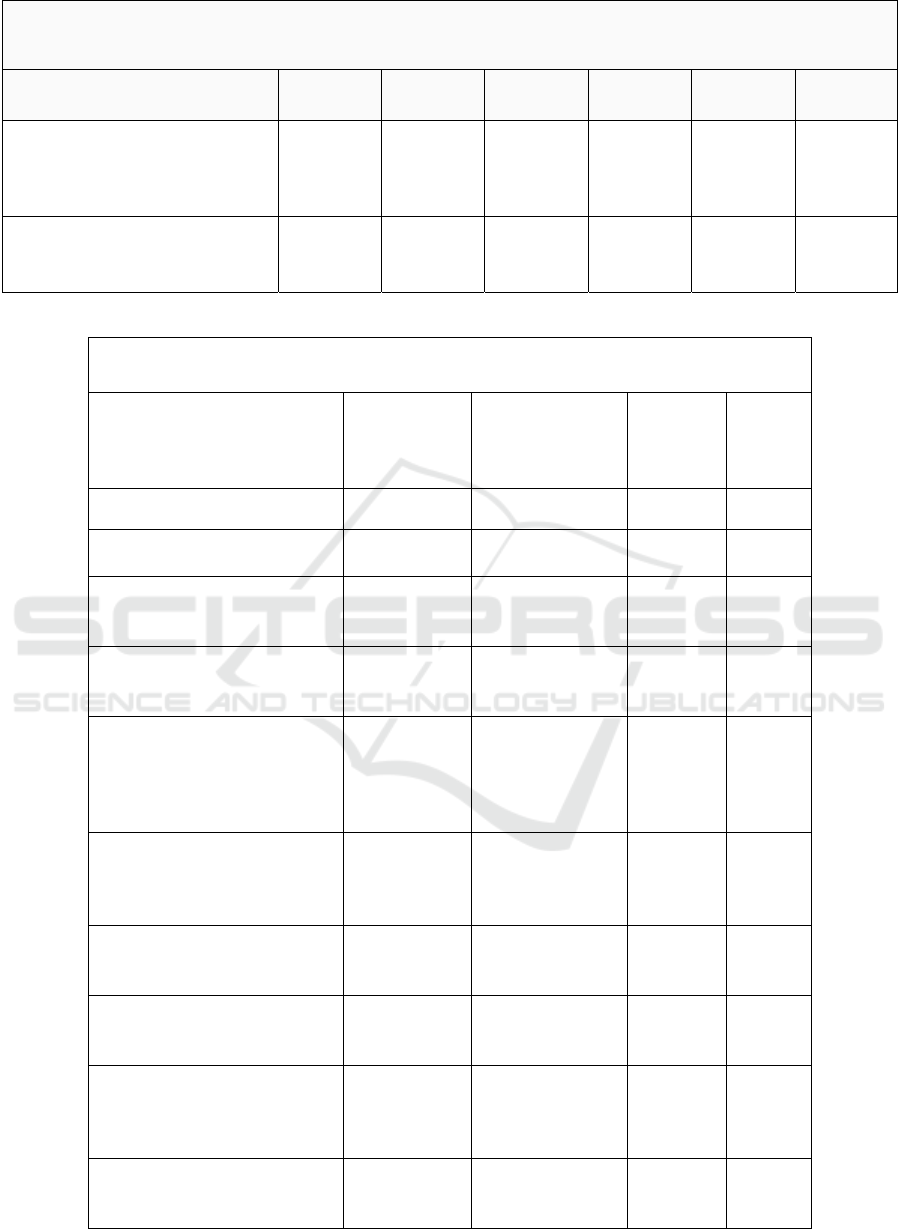
Table 1: Basic indicators of the sample.
fundamental indicators
name ample size minimum maximum average
standard
deviation
median
gender 217 1.000 2.000 1.502 0.501 2.000
2*2. What is your age range? 217 1.000 4.000 1.802 0.904 2.000
3*3. Approximately how
much time do you spend on social
media each da
y
?
217 1.000 5.000 3.074 0.935 3.000
4*4. How often do you share
p
ersonal information on social
media?
217 1.000 5.000 3.539 1.110 4.000
5*5. Will you click on links in
social media that include, but are
not limited to, comment sections,
advertisements?
217 1.000 5.000 3.848 1.221 4.000
6*6. Have you ever been
troubled by the risk of privacy
leaks on a social media platform?
217 1.000 5.000 2.138 1.367 2.000
7*7. What is your attitude
towards interacting with strangers
on social media?
217 1.000 5.000 3.401 1.427 4.000
8*8. Do you post information
with
g
eolocation on social media?
217 1.000 5.000 1.751 1.064 1.000
9*9. Do you really feel that the
p
rivacy policy is protecting your
ri
g
hts and interests?
217 1.000 5.000 2.843 1.056 2.000
10*10. Have you carefully
read the terms of the platform's
p
rivacy protection policy when
using a new social media
software?
217 1.000 5.000 1.991 1.159 2.000
A Study on the Universality and Differences of Privacy Paradox Behavior from a Gender Perspective
359
fundamental indicators
name ample size minimum maximum average
standard
deviation
median
11*11.Have you ever chosen
to hide or change your gender
settings on social media platforms
due to privac
y
concerns?
217 1.000 5.000 1.959 1.055 2.000
12*12. When social media
asks for your personal
information, your choice is?
217 1.000 5.000 3.562 1.318 4.000
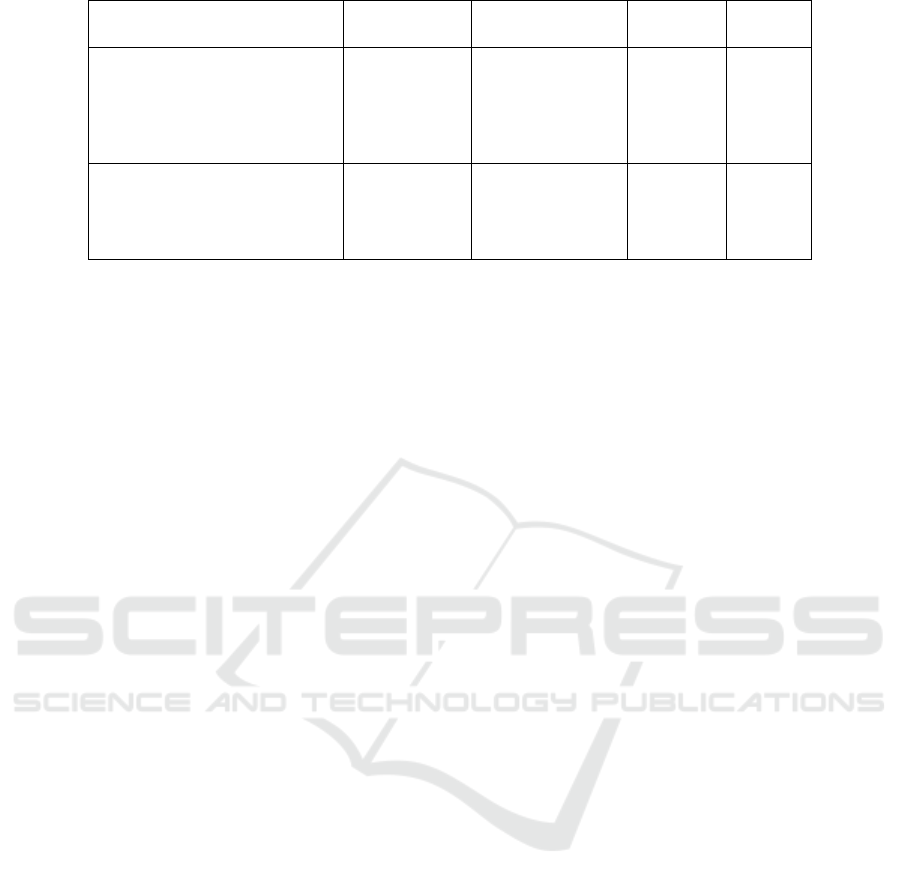
Table 2: Results of sample analysis.
t-test the results of the analysis
Gender
(mean±
standard
deviation)
t
p
1.0(n=108) 2.0(n=109)
2*2. What is your age
ran
g
e?
1.83±0.90 1.77±0.91
0.510 0.611
3*3. Approximately how
much time do you spend on
social media each da
y
?
3.16±0.97 2.99±0.90 1.314 0.190
4*4. How often do you share
personal information on
social media?
3.19±1.20 3.89±0.89 -4.917
0.000*
*
5*5. Will you click on links
in social media that include,
but are not limited to,
comment sections,
advertisements?
3.93±1.17 3.77±1.27 0.937 0.350
6*6. Have you ever been
troubled by the risk of
privacy leaks on a social
media platform?
2.09±1.32 2.18±1.42 -0.489 0.626
7*7. What is your attitude
towards interacting with
stran
g
ers on social media?
3.52±1.40 3.28±1.45 1.209 0.228
8*8. Do you post
information with
g
eolocation on social media?
1.82±1.12 1.68±1.01 1.005 0.316
9*9.Do you really feel that
the privacy policy is
protecting your rights and
interests?
2.81±1.04 2.88±1.08 -0.524 0.601
10*10.Have you carefully
read the terms of the
p
latform's privac
y
protection
2.06±1.16 1.93±1.16
0.819 0.414
APMM 2025 - International Conference on Applied Psychology and Marketing Management
360
policy when using a new
social media software?
11*11.Have you ever chosen
to hide or change your
gender settings on social
media platforms due to
p
rivac
y
concerns?
2.09±1.12 1.83±0.97 1.873 0.062
12*12. When social media
asks for your personal
information, your choice
is?
3.66±1.25 3.47±1.38 1.059 0.291
From the table above, we can see that using the t-
test (full name: independent sample t-test) to study
gender, for questions 2*2 to 12*12 in Table 2. It can
be seen that the above 10 items of samples of different
genders do not show significance (p>0.05), which
means that samples of different genders show
consistency in all the above questions and there is no
difference. In addition, gender samples showed
significant results for 4*4. How often do you share
personal information on social media? (p<0.05),
which means that different gender samples have
differences in 4*4. How often do you share personal
information on social media? Specific analysis shows
that gender shows significant results at the 0.01 level
for 4*4. How often do you share personal information
on social media? (t=-4.917, p=0.000), and the specific
comparison shows that the average value of 1.0 (3.19)
is significantly lower than the average value of 2.0
(3.89).In summary, samples of different genders do
not show significant differences for 10 items in Table
2, including 2*2, 3*3, 5*5, 6*6, 7*7, 8*8, 9*9, 10*10,
11*11, and 12*12. In addition, samples of different
genders show significant differences for 1 item, 4*4.
4.1 Research Analysis
Regarding the topic of studying the universality and
differences of privacy paradox behaviors from a
gender perspective, the results show two aspects:
From the fifth question: 5*5. Will you click on
links in social media, including but not limited to
comments and advertisements? 3.93±1.17 |
3.77±1.27, the seventh question: 7*7. What is your
attitude towards interacting with strangers on social
media? 3.52±1.40 | 3.28±1.45, the twelfth question:
12*12. When social media asks for your personal
information, what is your choice? 3.66±1.25 |
3.47±1.38 average index, we can see that both men
and women have a high level of awareness of the
possible exposure of their own privacy information
and the degree of risk perception. The calculated
average values of 3.93, 3.77, 3.52, 3.28, 3.66, and
3.47 are all greater than the median value of 3.
Therefore, it can be determined that the two groups
generally pay more attention to their privacy security.
But according to the sixth question, 6*6. Have you
ever been troubled by the risk of privacy leakage on a
social media platform? 2.09±1.32|2.18±1.42
Question 8, 8*8. Will you post information with
geographic location on social media?
1.82±1.12|1.68±1.01 Question 10, 10*10. When you
use a new social media software, have you carefully
read the platform's privacy protection policy terms?
2.06±1.16 |1.93±1.16 We know that the average
choices of the respondents for the three questions are
2.09, 2.18, 1.82, 1.68, 2.06, and 1.93, which are all
less than the median value of 3. Therefore, it can be
concluded that when it comes to the actual protection
of privacy and other information, whether male or
female, subjective concerns cannot be fully converted
into actual protection behaviors of users in social
media. Therefore, the privacy paradox behavior of the
two groups in social media behavior is still relatively
common.
The second aspect is to study the relationship
between the two gender groups. Although both
groups have common privacy paradox behaviors due
to the lack of security awareness,But in contrast, for
4*4. How often do you share personal information on
social media? 1 item showed significance (p<0.05),
which means that different gender samples have
differences in 4*4. How often do you share personal
information on social media? and showed 0.01 level
significance (t=-4.917, p=0.000). As can be seen from
the specific comparison, the average value of 1.0
(3.19) is significantly lower than the average value of
2.0 (3.89). Therefore, we can get the gender sample
for 4*4. How often do you share personal information
on social media? A total of 1 item showed significant
differences, which shows that women share personal
information more frequently on social media. It can
be concluded that women may disclose more personal
information on social media, which may lead to more
privacy paradox behaviors among women than men.
A Study on the Universality and Differences of Privacy Paradox Behavior from a Gender Perspective
361

5 DISCUSSION
5.1 The Gap Between Privacy
Concerns and Actual Behavior
In the gap analysis between social media users'
privacy protection awareness and actual privacy
protection behaviors, users may overestimate their
ability to control privacy risks or underestimate the
risk of personal information leakage on social media
platforms. This psychological bias may cause users to
pay attention to privacy, but not have good control
when it comes to actual information leakage. At the
same time, users may feel confused or overwhelmed
when faced with complex privacy settings and a large
number of personal information management options,
and thus choose to simplify the process without
conducting in-depth settings or management, which
ultimately leads to insufficient preventive measures.
Social media platforms, educational institutions, non-
profit organizations, etc. should promptly popularize
privacy protection knowledge, strive to simplify the
privacy setting process, make it more intuitive and
easy to use, reduce the difficulty for users to
understand and operate, thereby improving users'
understanding and ability to use privacy settings.
5.2 Consequences and
Countermeasures of Privacy
Paradox Behavior
For individuals, privacy paradox behavior may lead
to the leakage of personal privacy and other
information, which in turn may cause identity theft,
fraud, online harassment, and other problems, causing
damage to personal property security, reputation and
mental health. For society, large-scale privacy leaks
may undermine social trust and affect social stability
and harmony.
Personal information control plays an important
role in privacy protection, and everyone should
always be vigilant (King, 2008). The government
should formulate and improve privacy protection
laws and regulations, clarify the responsibilities and
obligations of social media platforms and users, and
increase penalties for illegal acts. At the same time,
platforms should promptly update technical means,
enhancing the usability of social media privacy
settings, strengthen functions such as data encryption,
access control, and audit tracking, and ensure the
security of user information (Liu & Lei, 2024).
5.3 Future Research Directions
In-depth research on the gender-based study of
privacy paradox behavior can also focus on studying
the differences in privacy protection performance of
different platforms and the impact of these
differences on users' privacy paradox behavior. There
are also differences in the cognition and behavior of
privacy protection among users of different genders
in different cultural backgrounds, and how these
differences affect the prevalence of privacy paradox
behavior.
In addition, we can also analyze the changes in
privacy paradox behavior over different time periods,
as well as the relationship between such changes and
factors such as mobile commerce, the development of
social media, and the improvement of users’ privacy
awareness (Liu et al., 2018).
Research on different aspects of privacy
paradoxical behavior of social media users will help
to gain a deeper understanding of the nature and
influencing factors of privacy paradoxical behavior
and provide a scientific basis for formulating more
effective privacy protection strategies.
6 CONCLUSION
The results of this study show that both men and
women are more concerned about their privacy
security. However, when it comes to the
implementation of privacy and other information
protection behaviors, their subjective concerns cannot
be fully converted into protection measures in social
media, resulting in a gap between social media users'
privacy security awareness and security measures. As
a result, privacy paradox behaviors in social media
behavior of both groups are still relatively common.
Women should pay more attention to protecting their
privacy as they engage in more frequent social media
activities. This study provides many valuable
references for future research in this direction, mainly
affecting the research on the universality and
differences of the subject of privacy paradox behavior
in terms of gender. Future research should focus more
on the differences in the performance of different
platforms in terms of privacy protection, the
differences in cognition and behavior of privacy
protection among users of different genders in
different cultural backgrounds, and the changes in
privacy paradox behavior in different time periods.
In-depth exploration will provide scientific basis for
a deeper understanding of the nature of privacy
APMM 2025 - International Conference on Applied Psychology and Marketing Management
362

paradox behavior and more effective privacy
protection strategies.
AUTHORS CONTRIBUTION
All the authors contributed equally and their names
were listed in alphabetical order.
REFERENCES
B. Liu, S. Yang, Y. Li, An Empirical Study on the Impact
and Interaction of Privacy Preference Settings and
Privacy Feedback on Mobile Business Users'
Behavioral Intentions. China Manag. Sci. 26 (8), 164–
178 (2018)
B. Liu, X. Lei, J. Dong, Research on the Impact of Privacy
Protection Technology Features on Users' Willingness
to Engage in Privacy Protection Behaviors. J. Inf. Sci.
43 (2), 214–229 (2024)
H. Xiao, Does the Privacy Paradox Exist? A Meta-Analysis
of the Relationship Between Privacy Concerns and
Privacy Behaviors. (School of Public Administration,
University of Electronic Science and Technology,
Chengdu, 611731)
N. J. King, Direct Marketing Mobile Phones, and Consumer
Privacy: Ensuring Adequate Disclosure and Consent
Mechanisms for Emerging Mobile Advertising
Practices. Fed. Commun. Law J. 60 (2), 239–247 (2008)
P. A. Norberg, D. R. Horne, D. A. Horne, The Privacy
Paradox: Personal Information Disclosure Intentions
Versus Behaviors. J. Consum. Aff. 41 (1), 100–126
(2007)
Q. Zhang, W. Xie, The Privacy Disclosure Behavior of
Quantifying Self: Connotation Characteristics,
Theoretical Framework, and Research Outlook. J. Inf.
41 (09), 112–120 (2022)
S. B. Barnes, A Privacy Paradox: Social Networking in the
United States. First Monday (2006)
S. Spiekermann, J. Grossklags, B. Berendt, E-Privacy in
2nd Generation E-Commerce: Privacy Preferences
Versus Actual Behavior. In Proceedings of the 3rd
ACM Conference on Electronic Commerce, 38–47
(2001)
T. Liu, S. Deng, Review of Research on the Paradox of
Privacy Abroad. J. Inf. Res. Manag. 8 (2), 104–112
(2018)
W. Zhang, C. Kong, L. Chen, Research on the Generation
and Coping Strategies of the Paradox of Social Media
Users' Information Privacy. Inf. Explor. (08), 27–33
(2024)
X. Zhang, C. Li, Research on Social Media Users' Privacy
Protection Based on the "Privacy Paradox." New Media
Res. 9 (07), 50–53 (2023)
A Study on the Universality and Differences of Privacy Paradox Behavior from a Gender Perspective
363
