
The Effect of Big Five Personality on College Students’ Learning
Initiative: Self-Regulated Learning as a Mediator
Yingxu Huang
School of Humanities and International Education, Xi’an Peihua University, Xi’an, 710000, China
Keywords: Pedagogy, Educational Psychology, Five Personality Categories, Learning Initiative.
Abstract: In today’s society education is getting more and more attention, and students’ learning initiative is one of the
research hotspots. Some researchers have found that students’ learning initiative (LI) is one of the key factors
of educational effectiveness, and personality traits are considered to be important determinants of individual
behavior and decision-making. Self-regulated learning (SRL) acting as a mediator has not been fully
investigated. Therefore, based on questionnaire survey data from Chinese college students, this paper uses
correlation analysis, regression analysis, and mediation analysis to investigate the impact Five Factor Model
of Personality (FFM) on college students’ LI and the self- regulated learning. It is found that FFM significantly
and positively influences college students’ LI; SRL play a partial mediating role. The enhancement of self-
regulated learning ability can promote students’ LI.
1 INTRODUCTION
The rapid development of information technology
makes it necessary for college students to have good
LI, which can be used to adapt to the ever-changing
demand for knowledge and skills. In Chinese
universities, studies have shown that students do not
spend much time on learning, whether in or out of
class (Lin, 2019), with a low level of commitment to
learning and a poor state of learning. In recent years,
personality types have become more and more
popular, and many people make clearer plans for their
future by measuring personality types. Therefore, by
studying the relationship between Five Factor Model
of Personality (FFM) and learning initiative (LI), it
helps students to improve their LI and teachers to
improve their educational interventions.
This study analyzes the relationship between
FFM and LI and the mediating role of self- regulated
learning (SRL) via a questionnaire. On the basis of
regression analysis, process model four plug-ins in
SPSS were chosen to verify the mediation effect, in
order to verify whether the mediating variable self-
regulation sense plays a mediating effect in it.
2 LITERATURE REVIEW
LI refers to the emotional attitude of autonomy,
motivation and active exploration that learners show
in learning. The self-regulation model proposed by
Zimmerman provides theoretical support for the
understanding of LI (Zimmerman, 2002), which has
multi-dimensional characteristics, including self-
regulation (SR), motivation, goal setting and so on. In
the current educational environment, LI is recognized
as an important factor in influencing learning
outcomes, improving learning outcomes and
promoting lifelong learning. LI and learning
outcomes (academic performance, knowledge
mastery, and learning satisfaction) are proven to be
positively correlated (Lei et al., 2024), and the self-
determination theory proposed also emphasizes
intrinsic motivation’s importance on learning
outcomes, which supports the importance of LI (Deci
& Ryan, 2000). LI plays a role in students’ academic
life that should not be underestimated, and early on,
researchers have already explored various factors
affecting LI, such as personal traits (self-efficacy,
intrinsic motivation), the social environment (teacher
feedback, peer influence), and the learning
environment (the difference between online and
offline). While the FFM is one of the factors affecting
LI among personality traits, everyone can basically be
categorized into the FFM.
Huang, Y.
The Effect of Big Five Personality on College Students’ Learning Initiative: Self-Regulated Learning as a Mediator.
DOI: 10.5220/0014113000004942
Paper published under CC license (CC BY-NC-ND 4.0)
In Proceedings of the 2nd International Conference on Applied Psychology and Marketing Management (APMM 2025), pages 307-312
ISBN: 978-989-758-791-7
Proceedings Copyright © 2026 by SCITEPRESS – Science and Technology Publications, Lda.
307

There is scarce literature on the FFM and LI. One
study accumulated a sample of more than 70, 000
people and reported that academic performance (AP)
was significantly associated with pleasantness,
responsibility and openness personality (Poropat,
2009). Proactive personality and academic
motivation in students’ online learning are positively
associated (Fu et al., 2024). Personality traits have
also been investigated in academic achievement. It
was found that neuroticism was negatively correlated
and the other four dimensions is positively associated
(Chen et al., 2021). Neuroticism is negatively
correlated with all four LS (Komarraju et al., 2011).
Wang obtained the effect of proactive personality on
AP by collecting data from 388 college students and
concluded proactive personality and AP are
correlated (Wei et al., 2016). In previous studies, it
has been found that different personality types do
have different effects on learning (whether it is AP,
academic engagement, academic achievement, or
learning style).
An important component of learning is self-
regulation (Neuman et al., 1999). Zimmerman and
Bandura studied the sense of SR by emphasizing the
individual’s ability to control his or her own behavior
during the learning process (Bidjerano, 2007; Anglim
et al., 2020).
The relationship between FFM traits and SRL has
been a topic of interest in various studies. One study
studied team effectiveness at work and traits from the
FFM factors (Onah et al., 2020). The article
specifically examined the relationship between the
FFM model and SRL strategies (Huang & Yu, 2019).
There have also been studies that delved further into
how learner differences in FFM traits affect the use of
SRL strategies, suggesting that effortful regulation
mediates the effects of responsibility and
pleasantness (Whiteside et al., 2016).
SR involves the ability to control behaviors and
emotions and plays an important role in fostering LI.
Cognitive optimism can promote independent
learning and SR among college students, emphasizing
the relationship between LI and SR (Zimmerman,
2000). One study emphasizes the importance of SR in
the learning process (Bandura, 1977). In addition, one
prior study particularly based on high school students
found a positive correlation between motivational
regulation and SR, suggesting that students who
demonstrate LI engage more in SRL behaviors
(Thompson, 2005). In conclusion, the literature
suggests a strong relationship between academic
initiative and SR, but the extent to which SR is
engaged across personality and academic initiative
has not been fully explored.
However, relation between personality on LI has
not been systematically investigated, and much of
today’s research on personality focuses on
performance, work outcomes, career development,
and leadership (Sirinarin, 1991). Although focusing
primarily on those variables, these studies also
provide a basis for understanding the relationship
between FFM and learning and achievement (Wang
et al., 2011). As well as whether the impact of
research related to the relationship between FFM and
academic initiative will undergo change if there is a
sense of SR mediator intervention.
3 METHOD
3.1 Subjects
300 Chinese university undergraduates were selected
through a stratified sampling method, in which they
were divided into four grades, and the proportion of
men and women was approximately half. 252 valid
questionnaires were recovered and collated, and the
average age is 18 to 24 years old.
3.2 Measurement
3.2.1 Chinese Big Five Personality
Inventory (NEO-FFI)
The Chinese FFM Short Form Inventory (Costa &
McCrae, 1992), first proposed by Costa and McCrae
(Pintrich, 1991), was used in this paper, with a total
of 40 questions, and the scale was based on a Likert
6-point scale(1=strongly disagree;6=strongly agree).
The internal consistency coefficients for each
subscale were good.
3.2.2 SR Learning Scale
This scale is derived from Zimmerman and Schunk’s
theory of SRL and is largely based on the SRL
Questionnaire developed by Pintrich (Huang & Xie,
2013). The scale, which has been revised several times,
aims to assess students’ ability to regulate the learning
process, including goal setting, use of learning
strategies, time management, and self-reflection. The
questionnaire contains 20 questions divided into four
dimensions, including 5 questions on goal setting; 5
questions on learning strategies; 5 questions on time
Management 5 questions; and Self-Reflection 5
questions. The scale was scored on a 5-point Likert
scale (1=strongly disagree;5=strongly agree), with
higher scores representing greater SR. The overall
APMM 2025 - International Conference on Applied Psychology and Marketing Management
308
reliability of the scale was 0. 89, goal setting 0. 85,
learning strategies 0. 87, time management 0. 82, and
self-reflection 0. 84.
3.2.3 LI Scale
The Questionnaire on College Students’ LI was
compiled by Huang Youquan et al. (2002), which was
divided into four dimensions, including learning
affectivity, learning self-control, learning interaction
and learning conscientiousness, with a total of 17
questions. The answers to the questionnaires were set
at four levels, namely, not very much, not much,
basically, and very much, with scores of 1, 2, 3, and
4 respectively, and the lower the score, the lower the
initiative in learning. The questionnaire has high
content validity and reliability
4 RESULTS
4.1 Descriptive and Correlational
Analysis
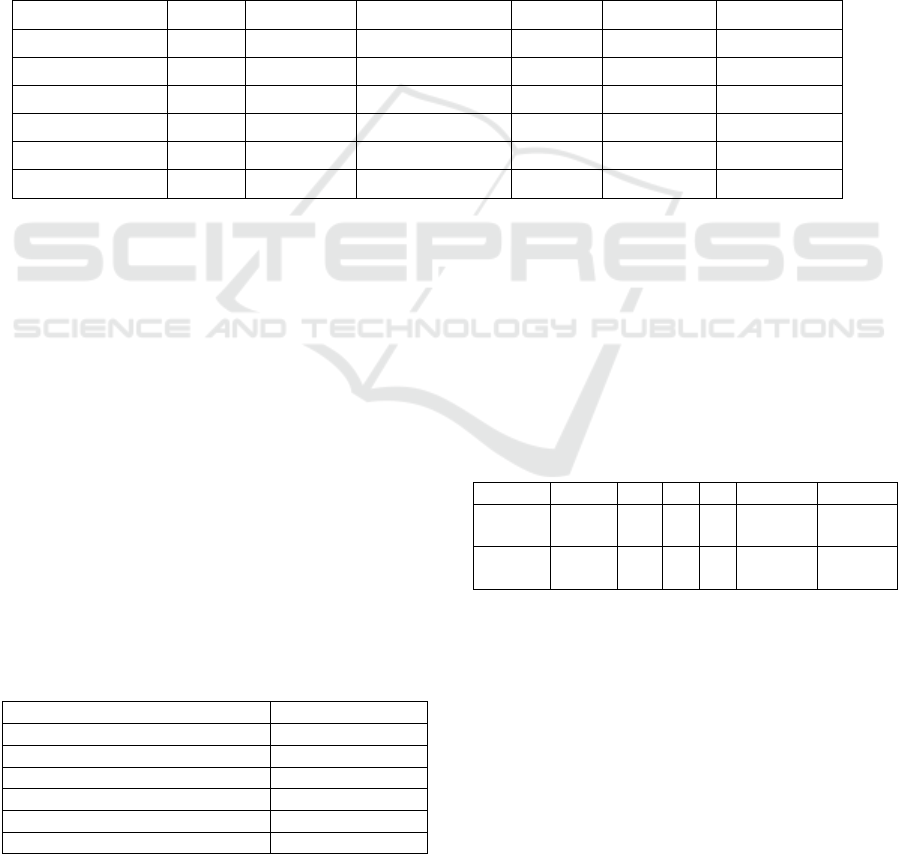
In this paper, the correlation coefficients and mean
squares between the variables were calculated
separately (See Table 1).
Table 1: Correlation between LI and FFM.
LI Neuroticis
m
Conscientiousness Openness Extraversion Agreeableness
LI 1
Neuroticism 0. 646
**
1
Conscientiousness 0. 610
**
0. 509
**
1
Openness 0. 631
**
0. 543
**
0. 583
**
1
Extraversion 0. 700
**
0. 459
**
0. 602
**
0. 543
**
1
Agreeableness 0. 608
**
0. 590
**
0. 450
**
0. 448
**
0. 565
**
1
**. P< 0. 01
4.2 Results of the SR Mediation Model
Analysis
The model’s coefficient of determination, R2, was 0.
6550, indicating that FFM explained about65. 50% of
the variance in self-regulated sense, showing high
model explanatory power. The mean square error
(MSE) was 0. 1232, reflecting a small average error
between the model predictions and the actual
observations. The F-value of the overall regression
model was 474. 6709 with degrees of freedom of 1
and 250 and the model was highly significant (p<0.
001). This indicates a significant effect of FFM type
on SR, support the important role of FFM traits in
explaining the variance in SRL, and provide a solid
foundation for further mediation effect analyses (See
Table 2).
Table 2: Summary of the SRL model.
R 0. 8093
R² 0. 6550
Mean Squared Error (MSE) 0. 1232
F 474. 6709
df1 1. 0000
df2 250. 0000
p
0. 0000
The constant term was not statistically significant.
The results further confirm the significant positive
effect of FFM type on SRL. This result suggests that
for every unit increase in the independent variable
FFM type, SRL increased by an average of 1. 0401
units and that this effect is highly statistically reliable
(See Table 3).
Table 3: Regression coefficients of the mediating variable
(SRL).
Variable Coeff SE t
p
95% LLCI 95% ULCI
(Constant) -0. 2485
0.
1899
-1.
3083
0.
1920
-0. 6225 0. 1256
FFM 1. 0401
0.
0477
21.
7869
0.
0000
0. 9461 1. 1341
In summary, FFM type is a significant and
positive predictor of SR sense of self. The constant
term was not significant, but the strong influence of
the independent variable provided a solid foundation
for the subsequent analysis of the mediating effect.
The model is able to explain about 75. 76% of the
variance in LI, showing high explanatory power. The
mean square error (MSE) was 0. 0333, reflecting a
small average error between the predicted and actual
observed values of the model, indicating a good
model fit. The F-value of the overall regression model
was 389. 1530 with degrees of freedom of 2 and 249
The Effect of Big Five Personality on College Students’ Learning Initiative: Self-Regulated Learning as a Mediator
309

and p-value <0. 001 respectively, indicating that the
model was highly statistically significant. These
results indicate that the selected independent
variables are significant joint predictors of LI and the
overall model fit is excellent and can effectively
explain the variance in LI. This provides a solid
statistical foundation for further exploring the
specific mechanism of the independent variables’
influence on LI (See Table 4).
Table 4: Summary of LI model.
R 0. 8704
R² 0. 7576
Mean Squared Error (MSE) 0. 0333
F 389. 1530
df1 2. 0000
df2 249. 0000
p
0. 0000
The predictive value of the outcome variable LI is
0. 6154 when all the independent variables (FFM
Type and SR) take the value of zero and this
predictive value is significantly different from zero.
The results confirm the significant positive effect
of FFM types on LI. This suggests that for every unit
increase in FFM type, there is an average increase of
0. 2559 units in LI and that this effect is highly
statistically reliable (See Table 5).
Table 5: Regression coefficient of LI.
Variable Coeff SE t p
95%
LLCI
95%
ULCI
Constant 0. 6154
0.
0990
6.
2162
0.
0000
0. 4204 0. 8103
FFM 0. 2559
0.
0422
6.
0609
0.
0000
0. 1727 0. 3391
Self-
Regulate
d
0. 3643
0.
0329
11.
0894
0.
0000
0. 2996 0. 4290
FFM type has a significant positive direct effect
on academic initiative. The statistical significance of
the indirect effect was confirmed. These results
suggest that FFM type not only directly affects LI, but
also indirectly affects LI through sense of SR. Thus,
sense of self- regulation plays a partially mediating
role between FFM type and LI. In summary, the
results support the hypothesis that FFM type
indirectly affects LI through SR, reveal the complex
mechanism of action between the variables, and
provide empirical evidence for further understanding
of their intrinsic relationship (See Table 6).
Table 6: Direct and indirect effects of FFM Traits on LI.
Effect SE t p
95%
LLCI
95%
ULCI
Direct Effect 0. 2559
0.
0422
6.
0609
0.
0000
0. 1727 0. 3391
Indirect
Effect
0. 3789
0.
0479
- - 0. 2810 0. 4634
The stratified 1 model included only the control
variables with a coefficient of determination R2 of 0.
013 and an adjusted R2 of 0. 008, indicating that the
explanatory power of the control variables on the
dependent variable was low, but the model was
significant overall (F (5, 894) =2. 436, p=0. 033) (See
Table 7).
Table 7: Overall model comparison (incremental R² and F-
Value).
R² AdjustedR² ΔR² F df
p
Layer
1
0.
013
0. 008
0.
013
F(5, 894)=2.
436
(5, 894)
0.
033
Layer
2
0.
024
0. 018
0.
011
F(1, 893)=10.
067
(1, 893)
0.
002
△
R
²
denotes the increment in explained variance between
model strata.
F-values and their corresponding p-values were used to
test the overall significance of the model.
All confidence intervals are 95% and were estimated using
5000 self- sampling.
The Stratification 2 model introduced the
independent variable on top of Stratification 1, and
the coefficient of determination R2R was raised to 0.
024, and the adjusted R2R was raised to 0. 018,
showing an increase in the explanatory power of the
model. The incremental R2R of 0. 011, corresponding
to a significant incremental F-value (F (1, 893) =10.
067, p=0. 002), indicates that the introduction of the
independent variable contributes to the model with
statistical significance.
5 DISCUSSION
The results suggest that FFM types not only directly
affect LI, but also indirectly through the mediating
variable SR. Individuals with higher SRL are better
able to plan learning tasks,
monitor learning progress and adopt effective
strategies when encountering difficulties. A positive
correlation is observed between SRL and LI (Pintrich,
2002), which implies that increased SRL ability
contributes to increased LI is also confirmed in this
paper.
APMM 2025 - International Conference on Applied Psychology and Marketing Management
310

The study provides some suggestions for
educational practice activities, where educators can
design more personalized learning programs based on
students’ different personality traits and SRL theories,
so that students can better improve their AP and
learning efficiency, and increase their LI. Focusing on
the development of students’ SRL skills, research has
found that SRL strategies and learning outcomes are
positively correlated (Zimmerman, 2002), and that
improved SRL skills can help improve AP (Hattie et
al., 1997). Therefore, it is essential for educators to
pay attention to learners’ different personality types
as well as SRL abilities.
There are still some limitations. This study used a
questionnaire method, and subjects may have
problems with subjective bias in filling out the
questionnaire, and there is a need to try to expand the
data sources and the sample size in future studies.
Future research can explore the dynamic relationship
between these variables through a longitudinal
research design, and can also consider adding other
factors that may affect LI, such as family background
educational environment to the study.
6 CONCLUSION
In this study, the relationship between the FFM traits
and LI, as well as whether SRL acts as a mediator are
examined. The study adopted a cross-sectional design,
data was collected via questionnaire.
The results of the study showed that FFM traits
were significantly and positively related to LI. In
addition, SRL played a significant mediating role.
Improvement in SRL contributes to enhanced LI, and
the FFM traits can indirectly affect LI by influencing
SRL.
The present study provides a new perspective. The
findings help educators to better develop effective
teaching strategies, understand students’ personality
differences, and have important practical value for
improving students’ learning initiative and self-
regulated learning.
REFERENCES
A. Bandura. Self-Efficacy: The Exercise of Control. (1977)
A.E. Poropat. A meta-analysis of the five-factor model of
personality and academic performance. Psychol Bull,
135(2), 322–338 (2009)
A.L. Whiteside, A.G. Dikkers, S. Lewis. "More Confident
Going into College": Lessons Learned from Multiple
Stakeholders in a New Blended LI. (2016)
B. Zimmerman. Attaining self-regulation: A social
cognitive perspective. (2000)
B. Zimmerman. Becoming a Self-Regulated Learner: An
Overview. Theory Pract, 41, 64-70 (2002)
B.J. Zimmerman. Becoming a Self-Regulated Learner: An
Overview. Theory Pract, 41(2), 64–70 (2002)
C.Y. Lin, C.M. Reigeluth. Scaffolding learner autonomy in
a wiki-supported knowledge building community and
its implications for mindset change. Br J Educ Technol,
50(5), 2667-2684 (2019)
D.F.O. Onah, E.L.L. Pang, J.E. Sinclair. Cognitive
optimism of distinctive initiatives to foster self-directed
and self-regulated learning skills: A comparative
analysis of conventional and blended-learning in
undergraduate studies. Educ Inf Technol, 25, 4365–
4380 (2020)
E.L. Deci, R.M. Ryan. The “What” and “Why” of Goal
Pursuits: Human Needs and the Self-Determination of
Behavior. Psychol Inq, 11(4), 227–268 (2000)
G.A. Neuman, S.H. Wagner, N.D. Christiansen. The
Relationship between Work-Team Personality
Composition and the Job Performance of Teams. Group
Organ Manag, 24, 28-45 (1999)
H. Lei, C. Chen, L. Luo. The examination of the
relationship between learning motivation and learning
effectiveness: a mediation model of learning
engagement. Humanit Soc Sci Commun, 11, 137 (2024)
J. Anglim, S. Horwood, L.D. Smillie, R.J. Marrero, J.K.
Wood. Predicting psychological and subjective well-
being from personality: A meta-analysis. Psychol Bull,
146(4), 279–323 (2020)
J. Hattie, H.W. Marsh, J.T. Neill, G.E. Richards. Adventure
education and Outward Bound: Out-of-class
experiences that make a lasting difference. Rev Educ
Res, 67(1), 43-87 (1997)
J.A. Thompson. Proactive Personality and Job Performance:
A Social Capital Perspective. J Appl Psychol, 90(5),
1011–1017 (2005)
M. Komarraju, S.J. Karau, R.R. Schmeck, A. Avdić. The
Big Five personality traits, learning styles, and
academic achievement. Pers Individ Differ, 51, 472-
477 (2011)
M. Wang, X. Dai, S. Yao. Preliminary development of the
Chinese Big Five Personality Inventory III: Creation of
a short version and reliability and validity testing. Chin
J Clin Psychol, 18(4), 454–459 (2011)
P. Costa, R. McCrae. Four Ways Five Factors are Basic.
Pers Individ Differ, 13, 653–665 (1992)
P. Fu, C. Gao, X. Chen, et al. Proactive personality and its
impact on online learning engagement through positive
emotions and learning motivation. Sci Rep, 14, 28144
(2024)
P.R. Pintrich. A Manual for the Use of the Motivated
Strategies for Learning Questionnaire (MSLQ). (1991)
P.R. Pintrich. The Role of Metacognitive Knowledge in
Learning, Teaching, and Assessing. Theory Pract, 41,
219-225 (2002)
R. Sirinarin. The big five personality dimensions and job
performance: a meta‐analysis. Pers Psychol (1991)
The Effect of Big Five Personality on College Students’ Learning Initiative: Self-Regulated Learning as a Mediator
311

R.-T. Huang, C.-L. Yu. Exploring the impact of self-
management of learning and personal LI on mobile
language learning: A moderated mediation model.
Australas J Educ Technol, 35(3) (2019)
T. Bidjerano, D.Y. Dai. The relationship between the big-
five model of personality and self-regulated learning
strategies. Learn Individ Differ, 17, 69-81 (2007)
W. Wei, L. Li, W. Xingchao. The Relationship of College
Students’ Proactive Personality and Academic
Performance: The Mediating Roles of Academic Self-
efficacy and Academic Adjustment. Psychol Dev Educ,
32(5), 579-586 (2016)
X. Chen, J. He, E. Swanson, Z. Cai, X. Fan. Big Five
Personality Traits and Second Language Learning: a
Meta-analysis of 40 Years’ Research. Educ Psychol
Rev, 34(2), 851-887 (2021)
Y. Huang, M. Xie. Exploration of the factor structure and
current status survey of college students’ LI. High Educ
Sci, 04, 76–81 (2013)
APMM 2025 - International Conference on Applied Psychology and Marketing Management
312
