
Who Regulates Better? Emotional Regulation Across Gender
and School Grades
Mharchelya, Rezki Hariko
a
and Zadrian Ardi
b
Department of Guidance and Counseling, Universitas Negeri Padang, West Sumatera, Padang City, Indonesia
Keywords: Emotional Regulation, Students, Aggression, Guidance and Counselling.
Abstract: Recent research data shows that adolescents often experience poor emotional health. This study aims to
describe the emotional regulation of students at SMAN 10 Padang. This study employs a quantitative
approach with a descriptive comparative method. Two hundred and ninety students at SMAN 10 Padang were
selected using proportional random sampling for the study in the 2022/2023 academic year. Data were
collected using the Student Emotional Regulation Scale, developed based on the Likert scale model. The data
were analyzed descriptively and then subjected to a two-way ANOVA test using JASP (Jeffreys's Amazing
Statistics Program) software. The results indicate that students' emotional regulation at SMAN 10 Padang is
moderate overall. This suggests that students at SMAN 10 Padang require intervention to improve their
emotional regulation. Furthermore, the difference test showed that there were differences in emotional
regulation levels between grades X, XI, and XII; no significant differences were found between males' and
females' emotional regulation overall; and a significant interaction was found between grade and gender on
emotional regulation (p=.027). This suggests that gender's influence on emotional regulation varies by grade
level. The discussion focuses on the overall state of emotional regulation and the diversity of levels among
Grade XI students, as well as the implications for guidance and counseling.
1 INTRODUCTION
According to Santrock, (2007), adolescence begins at
age 12 and ends at age 18 or 22. It is a period of
identity formation characterized by significant
changes. Adolescence is a period of significant
change, involving biological, cognitive, social-
emotional, hormonal, and psychophysiological
developments (Coret et al., 2022; Dumar et al., 2023;
Ellis & Sidebotham, 2023; Parfanovych et al., 2022;
Wardani & Asih, 2022). During this period, one is
actively searching for oneself and experiences
emotional fluctuations (Gregorová et al., 2024;
Schweizer et al., 2020). During the exploration
period, adolescents establish an identity that can be
connected to their cognitive processes (Hurlock,
1991; RD, 2020). This period is characterized by
significant changes in adolescent interactions, which
are driven by a desire to explore and form their
identities.
a
https://orcid.org/0000-0001-7862-7856
b
https://orcid.org/0000-0003-0715-6561
Adolescence is a time when individuals are
vulnerable to emotional problems. According to
World Health Organization, (2024) data from 2024,
around 10-20% of adolescents worldwide experience
mental health issues, including emotional disorders.
According to data from the Centers for Disease
Control and Prevention (CDC), (2021) more than
42% of US adolescents experience significant
emotional problems, such as constant feelings of
sadness or hopelessness, and 29% experience poor
mental health and emotional conditions. Furthermore,
Indonesian adolescents are not too different from
adolescents in other countries. In Indonesia, 9.9% of
adolescents over the age of 15, or 706,689 people,
have emotional disorders (Riskesdas, 2018). Based
on these data, emotional factors appear to play a role
in individuals' mental health conditions. Peterle et al.,
(2022) found that the prevalence of emotional and
behavioral problems was 61.17%. Furthermore, the
study found that emotional symptoms had the highest
prevalence at 52.40%. Adolescents experience
Mharchelya, , Hariko, R. and Ardi, Z.
Who Regulates Better? Emotional Regulation Across Gender and School Grades.
DOI: 10.5220/0014071100004935
Paper published under CC license (CC BY-NC-ND 4.0)
In Proceedings of the 7th International Conference on Early Childhood Education (ICECE 2025) - Meaningful, Mindful, and Joyful Learning in Early Childhood Education, pages 131-140
ISBN: 978-989-758-788-7; ISSN: 3051-7702
Proceedings Copyright © 2025 by SCITEPRESS – Science and Technology Publications, Lda.
131
increased loneliness, anxiety, and sadness. They
distance themselves from friends and have difficulty
socializing. Additionally, Agustin & Oshinta, (2023)
research shows a relationship between emotional
regulation and bullying behavior tendencies in
vocational students. Similarly, Sari et al., (2023)
found that poor emotional regulation skills in
teenagers are also caused by a relationship between
self-control and bullying behavior. Next, Shtiwi,
(2023) research revealed that information identity
style is positively related to emotion regulation in
adolescents. Based on the above explanations,
emotional problems in adolescents are prevalent and
affect mental health and social behavior. Therefore,
emotion regulation is an important aspect to consider
when developing interventions for adolescents.
Adolescents around the world face many
challenges, ranging from social and economic
constraints to health problems and psychological
stress. They also experience challenges at school, at
home, and with peers that can significantly impact
their development, such as psychosocial disorders,
juvenile delinquency, and aggressive behavior (Bhat
et al., 2020; Kweon, 2023). Ideally, adolescents are
able to regulate and control their emotions during this
time. This ability is called emotion regulation (Gross
& Fortd, 2024). Emotion regulation is defined as the
ability to control one's emotions (Kim et al., 2024).
Various factors affecting adolescent emotion
regulation include age, physiology, parenting, and
relationships with peers (Novita, 2022; Widyadari &
Fitriani, 2023). These factors influence the cognitive
understanding of emotional expression rules during
adolescence (Yin, 2024). The ability to regulate
emotions is essential for adolescents to face life's
challenges effectively. It is important not only for
mental health but also for building positive
relationships with others (Ivcevic & Eggers, 2021;
Parry et al., 2021; Waizman et al., 2023). Teenagers
who can regulate their emotions tend to be more
popular and better at interacting with friends. They
also tend to have better academic grades and
emotional intelligence (Gross & Fortd, 2024; R. E.
Susanti, Firman & Daharnis 2021). The ability to
manage, control, and regulate one's emotions is
important for various aspects of life. This allows
individuals to live better, more balanced lives.
Based on the described phenomenon, it can
be concluded that low emotional regulation ability in
adolescents is a crucial factor that can trigger
interpersonal conflicts, hinder social adaptation
processes, and increase the risk of psychological
disorders in everyday life. Therefore, assistance from
an expert is necessary, whether through classical,
individual, group, or collaborative strategies.
Counselors can help students overcome their
problems by implementing guidance and counseling
(GC) services at school. BK is a professional service
organized within educational units that includes
program components, service areas, activities, and
service time allocations. BK services in schools are
used to address learning, personal, social, and career
issues (Firman, Karneli & Hariko, 2018). This study
aims to describe students' emotion regulation and
review comparative differences between males and
females, as well as between grade levels, related to
emotion regulation at SMAN 10 Padang.
2 RESEARCH METHOD
The respondents were 290 students (R age = 15-18
years; female = 168 students) were surveyed from a
population of 1,046 students at SMAN 10 Padang
during the 2022/2023 academic year. The study used
a quantitative approach with a comparative
descriptive method. The sample size was determined
using the Slovin formula (e=5%). Data were collected
using the Student Emotion Regulation Scale which
was prepared based on the Likert scale model. The
data were analyzed descriptively, then continued with
a two-way ANOVA test using Jeffreys's Amazing
Statistics Program (JASP) software to obtain a more
comprehensive and accurate interpretation of the
variables studied.
3 RESULT AND DISCUSSION
3.1 Result
The distribution of respondents' scores based on
emotion regulation research is summarized in Table 1
below.
Table 1: Frequency Distribution of Emotion Regulation
(n=290).
Category
Interval
f % f
Score % Score
Very High 131-155 84 - 100 26 8.97
High 106-130 68 - 83 86 29,66
Medium 81-105 52 - 67 95 32,76
Low 56-80 36 - 51 67 23,10
Very Low 31-55 20 - 35 16 5,52
Amount 290 100
ICECE 2025 - The International Conference on Early Childhood Education
132
Based on Table 1, it can be explained that the
largest percentage of respondents' answer scores is in
the medium category (32.76%). However, there are
respondents' answer scores that are in the low
(23.10%) and very low (5.52%) categories.
Meanwhile, there are respondents' answer scores that
are already in the high (29.66%) and very high
(8.97%) categories. Based on these data, it can be
concluded that the distribution of emotional
regulation data of SMAN 10 Padang students is
dominantly in the moderate category.
In order to draw descriptive conclusions about the
picture of emotional regulation of students of SMAN
10 Padang, in Table 2 below is presented the value of
one of the coefficients of the tendency of data
centering (mean) and data distribution (standard
deviation), both for the variable (overall) and the sub-
variable of emotional regulation.
Table 2: Student’s Emotion Regulation (n=290).
No
Sub
Variabel
Skor
Total Avrg % average Cat.
1 Strate
g
ies 4499 15.51 62.06 Mediu
m
2 Goals 7920 27.31 60.69 Mediu
m
3 Im
p
ulse 8982 30.97 61.94 Mediu
m
4
A
cceptance 6561 22.62 64.64 Mediu
m
Total 27962 96.42 62.21 Medium
According to Table 2, students at SMAN 10 Padang
are in the moderate/medium category (x
̄
= 32.76%).
A review of each of the other emotional regulation
sub-variables is in the moderate category. In
descending order from the lowest value, the
percentages of each sub-variable are as follows: goal
aspect (60.69%), emotional response control
(61.94%), strategy (62.06%), and emotional response
acceptance (64.64%). These results indicate that
students do not yet have good emotional regulation
because they are still in the moderate category. This
condition requires serious attention and optimization
of emotional regulation improvement so that students
can live better lives.
Table 3: Assumption Test Results (Descriptive).
Descriptive Statistics Emotion Re
g
ulation
Vali
d
290
Missing 0
Mean 96.421
Std. Deviation 23.804
Sha
p
iro-Wil
k
0.985
P-value of Shapiro-Wil
k
0.004
Minimu
m
40.000
Maximu
m
145.000
Furthermore, normality and homogeneity tests
were performed on the research assumptions using
JASP 0.18.1.0 software.
The Shapiro-Wilk normality test was conducted
to determine if the obtained data were normally
distributed (Lusiana & Mahmudi, 2021). The
homogeneity test was used to determine if the
obtained research data had the same variance
(Mulyana et al., 2020). After conducting the
normality assumption test using JASP software
version 0.18.1.0, the researcher found that the data
were normally distributed. Since there were more
than one hundred respondents, the Shapiro-Wilk
value of 0.985 can be considered normal (Azwar,
2017).
Figure 1: Descriptive Test Results in Table Form.
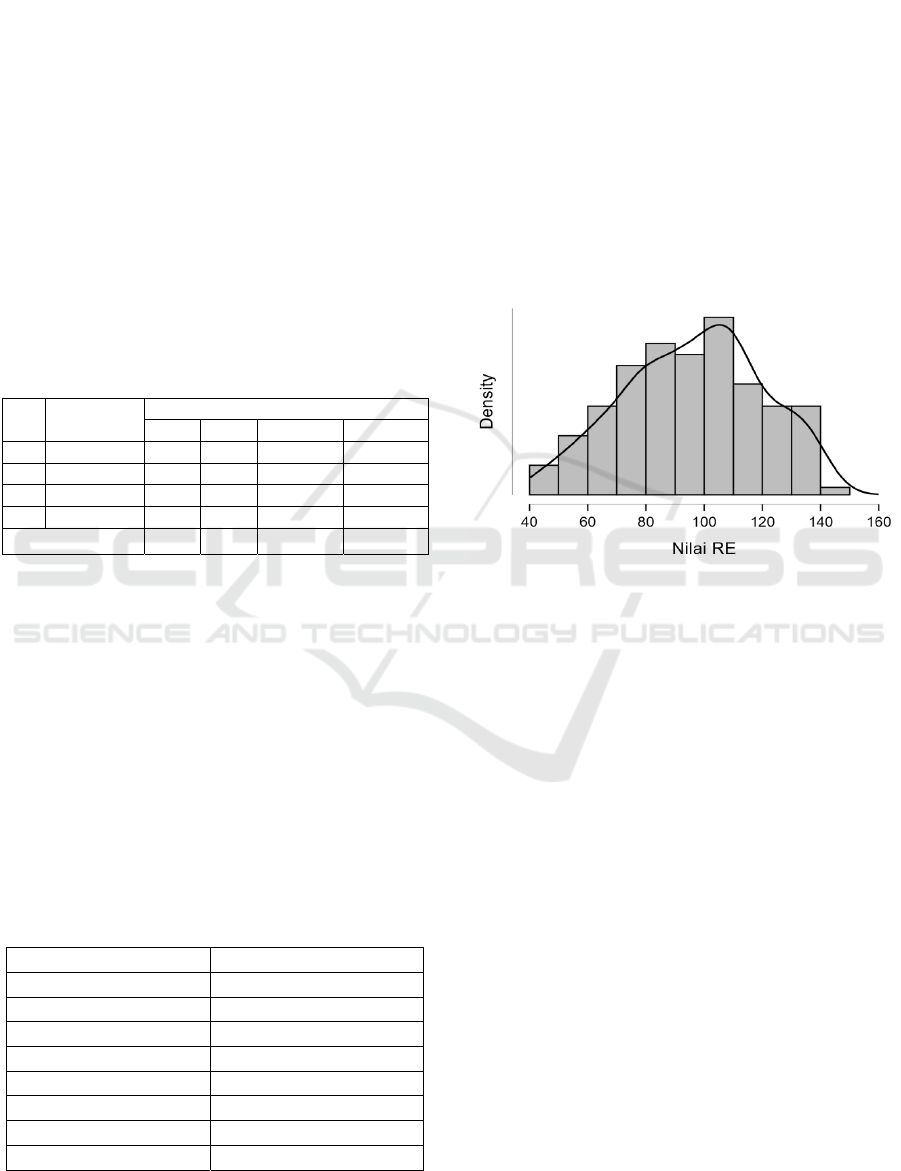
Furthermore, the histogram of emotional regulation
(ER) data for students at SMA N 10 Padang, shown
in the graph above, indicates that the curve is close to
normal distribution. This is indicated by a bell-shaped
curve, which has a peak in the middle and is relatively
symmetrical on the right and left sides. Most values
fall within the range of 80 to 120, suggesting that
most students have moderate to high levels of
emotional regulation. There are no extreme spikes or
significant deviations; therefore, it can be assumed
that the data does not contain outliers that could
interfere with the assumption of normality. Thus,
visually, this ER data meets the assumption of
normality.
In addition to examining the descriptive table, the
researcher analyzed the data using a plot graph.
Figure 2 below shows a more detailed presentation.
As can be seen, most of the data points lie along
the diagonal line, indicating that the residual
distribution is nearly normal. Though there are slight
deviations at the ends (lower and upper tails), the
overall pattern aligns well with the theoretical normal
line. Therefore, the assumption of residual normality
is satisfied.
Who Regulates Better? Emotional Regulation Across Gender and School Grades
133
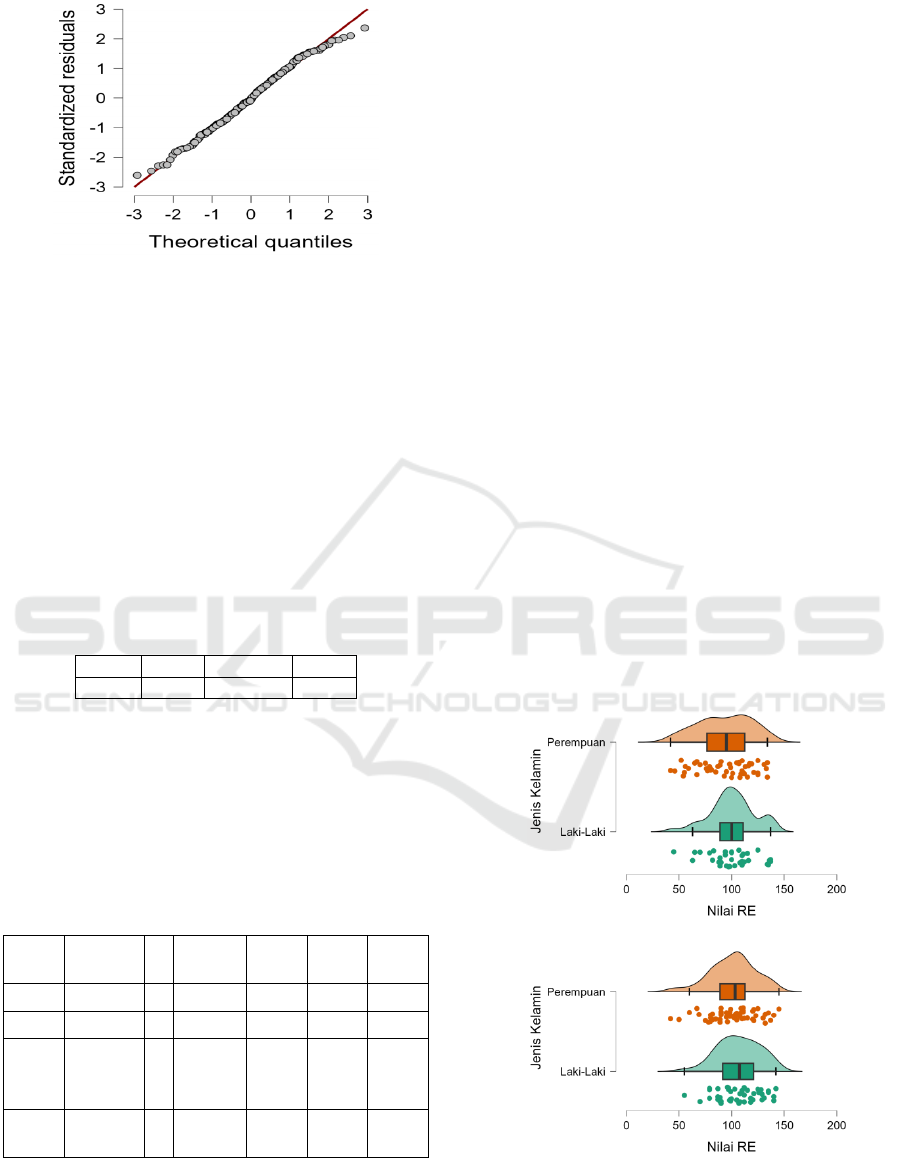
Figure 2: Assumption Test Results (Distribution Plot).
Based on the results of the variance homogeneity test
using Levene's test, an F-value of 1.592 was obtained,
with degrees of freedom of df1 = 5 and df2 = 284 and
a p-value of 0.162. Since p > 0.05, there is no
significant difference in variance between groups.
Therefore, the data in this study meet the assumption
of homogeneity of variance. This indicates that the
variance of emotional regulation is uniform or
equivalent between groups based on gender (male and
female) and grade level (X, XI, and XII). The results
of the homogeneity test are presented in more detail
in Table 4 below.
Table 4: Homogeneity Test.
Test for Equality of Variances (Levene's)
F df1 df2 p
1.592 5.000 284.000 0.162
Next, we tested the hypothesis by performing a two-
way ANOVA analysis to examine differences in
emotional regulation levels among adolescents based
on gender and grade level. We performed the two-
way ANOVA analysis using JASP software, version
0.18.1.0. The results of the test are presented in Table
5 below.
Table 5: Hypothesis Test Two Way Anova.
Cases Sum of
Squares
df Mean
Square
F p ω²ₚ
Class 12431.033 2 6215.516 11.849 < .001 0.070
Gende
r
126.370 1 126.370 0.241 0.624 0.000
Class
✻
Gende
r
3856.124 2 1928.062 3.675 0.027 0.018
Residua
ls
148980.29
7
284 524.579 11.849 <.001 0.070
The results of the two-way ANOVA analysis
showed that the significance value of emotional
regulation in the class range was p < .001, indicating
a difference in emotional regulation levels between
classes X, XI, and XII. Next, the researcher examined
the level of emotional regulation in relation to gender
and found that the demographic factor was not
significant for male and female adolescents (p =
0.624). This means that there is no significant
difference in overall RE values between males and
females. However, the differences in values between
males and females vary by class. The effect of class
(X, XI, and XII) on values varies by gender.
Furthermore, the interaction between gender and
class (p = .027) indicates a significant interaction
between class and gender in regard to emotional
regulation. This suggests that gender's influence on
emotional regulation varies by class. In other words,
the effect of gender on emotional regulation scores
varies by class. Figure 2 presents Raincloud Plots
divided by gender and class level to illustrate these
differences.
Based on the raincloud plots in Figure 2, Class X
shows that most students have moderate levels of
emotional regulation. Class XI shows greater
diversity in students' emotional regulation abilities.
Some students have high emotional regulation
abilities, while others have low abilities. Class XII
shows that most students have low emotional
regulation. This indicates that they have difficulty
managing and expressing their emotions in adaptive
ways.
Grade 10
Grade 11
Grade 12
Figure 2: Raincloud Plots Two-Way ANOVA Test.
ICECE 2025 - The International Conference on Early Childhood Education
134

Of course, this finding is contrary to the research
hypothesis, and the results of the analysis also
contradict previous studies that prove that emotional
regulation differs between male and female
adolescent (Ratnasari & Suleeman, 2017). However,
the researchers' results are in line with those of a
previous study (Maharani Swastika & Prastuti, 2021),
which also showed no differences in levels between
male and female adolescents. This finding is
significant because previous studies have indicated
that demographic variables, such as gender, influence
an individual's ability to regulate emotions
(Hasmarlin & Hirmaningsih, 2019; Mulyana et al.,
2020; Ratnasari & Suleeman, 2017).
3.2 Discussion
Emotional regulation is the ability to manage one's
own emotions (Gross & Fortd, 2024). It refers to how
and when a person controls their emotions (Kim et al.,
2024). Adolescents with good emotional regulation
skills tend to cope better with stress, resolve conflicts
more easily, and improve their overall well-being
(Ivcevic & Eggers, 2021). In other words, effective
emotional regulation is important for maintaining
mental balance, fostering healthy interpersonal
relationships, and developing the ability to face life's
challenges. Adolescents have opportunities to grow
socially, emotionally, and in terms of their
personalities, relationships, and interactions with
peers (Hashmi & Fayyaz, 2022). These experiences
enhance their understanding of emotions, empathy,
and social skills, which are important for adolescent
personal and social development (Tcharkhalashvili,
2023).
The results of the descriptive analysis of
emotional regulation among students at SMAN 10
Padang were generally in the moderate category. This
finding suggests that the majority of students lack the
capacity to effectively regulate their emotions. As
indicated by the findings in the 11th grade, a greater
degree of heterogeneity was observed in the students'
emotional regulation levels. This diversity is
indicative of variations in the levels of emotional
control, self-awareness, and coping strategies among
students (Reynard et al., 2022; Silvers, 2022). The
eleventh grade is distinguished by mounting
academic pressure, intensive exam preparation, and
the transition to a more advanced level of education.
These factors have been shown to exert a substantial
influence on emotional well-being. Furthermore,
students in the eleventh grade encounter augmented
academic obligations. These students often face more
intricate learning demands, including final exam
preparation and participation in the National Science
Olympiad (OSN), which can result in a notable
escalation in academic pressure. This pressure can
trigger stress and difficulties in regulating emotions if
coping strategies are inadequate (Khan & Jameel,
2024).
In addition to academic factors, another
significant cause is psychosocial changes during
adolescence, including feelings of being a "senior"
that trigger a need for validation from peers and
teachers (Khan & Jameel, 2024; McRae & Gross,
2020). The attainment of senior status engenders an
augmentation of social pressure and intricate
academic expectations. As students reach their senior
year of high school, they often experience heightened
feelings of surveillance and expectations. This need
for validation has the potential to disrupt emotional
well-being due to an excessive reliance on external
responses (McRae & Gross, 2020). Research has
demonstrated that fragile self-esteem can precipitate
more profound emotional responses when validation
is not received (Tanjung Mutia & Sukmawati, 2019).
This phenomenon exerts a significant influence on the
selection of regulatory strategies, prompting a choice
between adaptive and maladaptive approaches.
However, students' emotional conditions can also
be supported by protective factors such as social
support from the school environment. This is possible
because one of the factors that supports good
emotional regulation in students is social support
from the school environment, including support from
teachers, peers, and school staff. The social support
provided to students plays an important role in
helping them develop good emotional regulation
(Kartikasari et al., 2022; Nurfarhanah et al., 2022;
Vienlentia, 2021). The social-emotional growth of
adolescents can be observed through parental support
factors, as well as school environment factors in
helping to improve social interaction skills and
emotional regulation abilities in adolescents
(Rachman et al., 2023). This means that during
adolescence, the aspects that develop significantly are
social and emotional development. Enhancing the
ability to regulate positive emotions in adolescents
can lead to improved academic performance,
relationship quality, and overall affective well-being
outcomes (Ivcevic & Eggers, 2021).
The findings presented above, supported by
research results, indicate that factors influencing an
individual's emotional regulation are influenced by
parenting style, emotional support, peers, including
age and gender. These findings are consistent with the
research conducted by (Zheng, 2023) , which states
that parenting style and emotional support influence
Who Regulates Better? Emotional Regulation Across Gender and School Grades
135

emotional regulation ability. Furthermore, the study
by (Nuralfiah et al., 2024) revealed that factors
influencing an individual's emotional regulation
originate from internal factors such as self-control
and external factors such as family predictors and
environmental context. Additionally, (Putri et al.,
2023) demonstrated that social support at school,
including teachers' active involvement in guiding
students, significantly contributes to students'
emotional regulation abilities. This is because a
positive and supportive school environment allows
students to feel safe and emotionally supported,
facilitating their ability to manage emotions. Families
also play an important role in the development of
students' emotional regulation (Syakarofath, 2022).
Positive parenting, where parents provide emotional
attention and support, provides a strong foundation
for students to manage their emotions at school. This
indicates that if someone is surrounded by close
people with positive and supportive support, it will
have an impact on their emotional level. In line with
this, emotional regulation is associated with better
adjustment in psychologically healthy adolescents
(Gross, 2007; Gross & Fortd, 2024). For example,
emotional regulation skills in healthy adolescents are
associated with higher social competence, more
prosocial behavior, better academic achievement, and
higher self-esteem.
In addition, there are still students who do not
have the ability or experience difficulties in
controlling their emotions, so that student emotional
regulation is still found to be in the low or even very
low category. There are several factors contributing
to low emotional regulation in students, including
physiological and psychological changes during
adolescence. Adolescence is a transitional period
marked by significant changes, both physically and
psychologically. The significant hormonal changes
during this period often lead to intense emotional
fluctuations (Batubara, 2016; Hurlock, 1991). As a
result of these changes, adolescents who are unable to
manage or regulate their emotions tend to exhibit
negative behaviors and may engage in aggressive
behaviors (Febriani & Hariko, 2023; M. E. Putri et al.,
2020) Aggressive behavior emerges as a consequence
of impaired emotional regulation in adolescents. A
notable instance of this phenomenon is cyberbullying,
which refers to online harassment of individuals
(Marneta & Sukmawati, 2021; Putryani et al., 2021;
Saputri & Ilyas, 2020).
The ability to regulate emotions proficiently is of
paramount importance for all individuals. Emotional
regulation is a critical factor in adolescents' capacity
to cope with the developmental challenges they
encounter. The capacity to modulate emotions is
indispensable for myriad facets of life, encompassing
academic performance, psychological well-being,
and social interactions (Waizman et al., 2023).
Overall, the ability to manage emotions not only
fosters individual well-being but also enhances
interpersonal relationships in both personal and social
functions (Parry et al., 2021). Consequently, research
(Annisa et al., 2024) has demonstrated a positive
correlation between emotion regulation and self-
efficacy in relation to the academic resilience of
students. Consequently, an elevated capacity for
emotion regulation and self-efficacy among students
is associated with a heightened level of academic
resilience.
In light of the aforementioned conditions, there is
an imperative for comprehensive interventions that
can be implemented by educators in schools,
particularly counselors as providers of guidance and
counseling services. Guidance and counseling
services, when provided to schools, have been shown
to facilitate students' self-understanding and decision-
making processes, enabling them to take ownership
of their choices (Firman, 2009). The provision of
more intensive counseling services and stress
management skills training has been demonstrated to
facilitate the development of more effective
emotional regulation skills in students. A multitude of
counseling services have been identified as potential
mechanisms for enhancing students' emotional
regulation, including individual counseling services
and group counseling services (Latupasjana &
Firman, 2020; Nirwana, 2014; Yunika et al., 2013).
Individual counseling services involve providing
assistance through counseling interviews with an
expert (counselor) to individuals (clients)
experiencing problems, with the aim of resolving
these issues (Prayitno & Amti, 2004). Information
services aim to provide individuals with the
knowledge they need to engage in a particular
activity, set goals or make plans. The purpose of
information services is to provide individuals with
knowledge about themselves and their environment
(Prayitno, 2009; Syukur et al., 2019)
This aligns with research (Nuryono & N
Safinatun, 2023) indicating that individual counseling
is effective in enhancing students' emotional
regulation. It is effective in helping students to
develop better emotional regulation skills by
providing a safe space in which they can openly
discuss their feelings without fear of social
judgement. Those who can control their negative
emotions will be able to live life to the fullest, interact
ICECE 2025 - The International Conference on Early Childhood Education
136

well with their surroundings and manage excessive
feelings that arise from within (Zonya & Sano, 2019).
In addition to individual counseling and
information services, group counseling services are
effective in improving student regulation. Group
counseling is more commonly used to address
academic, personal, social, and career issues, as well
as to activate group dynamics to discuss various
topics beneficial for personal development and/or
problem-solving among individual participants in
group activities (Fatmawati et al., 2022; Hariko et al.,
2021, 2023). Group counseling is more efficient as it
can serve many individuals in a shorter time (Corey
et al., 2018; Neukrug, 2016). Groups are an excellent
choice in counseling services to discuss intrapersonal
and interpersonal issues and facilitate positive student
development to create opportunities for change, often
referred to as self-development groups (Berg et al.,
2018; Corey et al., 2014). Groups in counseling
provide a sense of community that shows individuals
they are not alone and that there is hope for creating
a different life, as well as helping adolescents
overcome feelings of isolation.
4 CONCLUSIONS
The results of the descriptive data analysis indicate
that the overall level of emotional regulation among
students at SMAN 10 Padang falls within the
moderate category. This finding suggests that the
majority of students are still at an intermediate stage
in terms of their ability to manage emotions
effectively. The findings from grade XI students
exhibited a higher degree of variability, indicative of
individual differences in emotional control,
emotional awareness, and coping strategies
employed. A comparative analysis revealed
significant differences in the level of emotional
regulation among students in grades X, XI, and XII (p
< 0.001). These findings suggest that the
development of emotional regulation in adolescents
changes as they progress through different
educational levels. Concurrently, no substantial
disparities were observed between male and female
students in general (p = 0.624), indicating that gender
does not significantly contribute to variations in
students' emotional regulation abilities. However, the
results of the interaction test between grade and
gender showed a significant value (p = 0.027),
meaning that the effect of gender on emotional
regulation is not consistent across all grade levels but
is influenced by the developmental context of each
grade level.
The findings of this study demonstrate that, in
general, adolescents' emotional regulation is more
strongly influenced by their grade level than by their
gender. However, the interaction between these two
factors gives rise to specific dynamics that merit
further examination. These findings are significant
because they provide a foundation for the
development of intervention programs or counseling
services that are tailored to grade level and take
gender characteristics into consideration within the
context of adolescent development.
ACKNOWLEDGEMENTS
The authors would like to express their gratitude to all
parties who participated in this study. Additionally,
we extend our profound gratitude to the Head of the
West Sumatra Provincial Education Office, the
principal of SMAN 10 Padang, the school counselors
of SMAN 10 Padang (Mirdayati, S.Pd., Kons., Zul
Emri, S.Pd., Aghnia Sadida, M.Pd., and Riri
Aplirendy, S.Pd.), and the students of SMAN 10
Padang who selflessly contributed their time and
assistance as research respondents throughout the
study.
REFERENCES
Agustin, S., & Oshinta, A. (2023). Hubungan Regulasi
Emosi dengan Kecenderungan Perilaku Bullying pada
Remaja di Sekolah Menengah Kejuruan Kesehatan
Cianjur Tahun 2023. 22(2), 1–9.
Annisa, R. F., Nurfarhanah, N., Firman, F., & Hariko, R.
(2024). The Relationship between Emotional
Regulation and Self-Efficacy with Students’ Academic
Resilience. Journal of Educational, Health and
Community Psychology, 13(2), 380. https://doi.org/10.
12928/jehcp.v13i2.28491
Azwar. (2017). Metode Penelitian Psikologi. Pustaka
Pelajar.
Batubara, J. R. (2016). Adolescent Development
(Perkembangan Remaja). Sari Pediatri, 12(1), 21.
https://doi.org/10.14238/sp12.1.2010.21-9
Berg, R. C., Landreth, G. L., & Fall, K. A. (2018). Group
counseling: Concepts and procedures. In Group
Counseling: Concepts and Procedures (Sixth Edit).
Routledge. https://doi.org/10.4324/9781315157757
Bhat, S., Kumar, K., & Kumar, A. (2020). Study of
Adolescent Problems and Psychosocial Disorders.
European Journal of Molecular and Clinical Medicine,
7(6), 1361–1368. https://www.embase.com/search/
results?subaction=viewrecord&id=L2010507798&fro
m=export
Who Regulates Better? Emotional Regulation Across Gender and School Grades
137

Centers for Disease Control and Prevention. (2021). Youth
Risk Behavior Survey Data Summary and Trends
Report. In Centers for Disease Control and Prevention.
(vol. 2, Issue 1). https://www.cdc.gov/healthyyouth
/mental-health/index.htm
Coret, A., Newhook, D., & Harrison, M. E. (2022). A
survey-based study of adolescents and their healthcare
providers in a tertiary pediatric hospital. 1–20.
Corey, M. S., Corey, G., & Corey, C. (2014). Groups:
Process and Practive (Ninth Edit).
Corey, M. S., Corey, G., & Corey, C. (2018). Groups
Process And Practice (Tenth Edit). Cengage Learning.
Dumar, B., Windarwati, H. D., & Yuliatun, L. (2023).
Factors Affecting School-Based Mental Health in
Adolescents: Scoping Review. Jurnal Aisyah : Jurnal
Ilmu Kesehatan, 8(1), 541–552. https://doi.org/1
0.30604/jika.v8i1.1534
Ellis, C., & Sidebotham, P. (2023). Adolescence as the
Context for Understanding Young Mothers’
Engagement with Health Promotion: A
Phenomenological Exploration †. Children, 10(5), 1–
15. https://doi.org/10.3390/children10050904
Fatmawati, R., Bhakti, C. P., & Iriastuti, M. E. (2022).
Upaya Meningkatkan Regulasi Emosi Melalui Layanan
Bimbingan Kelompok Teknik Expressive Writing Pada
Peserta Didik Kelas XI Kriya Kreatif Batik dan Tekstil
B di SMK Negeri 1 Kalasan Tahun Ajaran 2021/2022.
Jurnal Pendidikan Dan Konseling, 4(4), 2351–2357.
https://core.ac.uk/download/pdf/322599509.pdf
Febriani, E., & Hariko, R. (2023). Gambaran perilaku
cyberbullying siswa sekolah menengah pertama.
Journal of Counseling, Education and Society, 4(1), 1.
https://doi.org/10.29210/08jces312200
Firman. (2009). Tanggung Jawab Profesi Guru dalam Era
Teknologi Informasi. Jurnal Ilmiah Ilmu Pendidikan,
IX(1), 48–57.
Gregorová, K., Eldar, E., Deserno, L., & Reiter, A. M. F.
(2024). A cognitive-computational account of mood
swings in adolescence. Trends in Cognitive Sciences,
28(4), 290–303. https://doi.org/10.1016/j.tics.2024
.02.006
Gross, J. J. (2007). Handbook of Emotion Regulation. The
Guildford Press. https://doi.org/10.1080/21662630.
2014.953321
Gross, J. J., & Fortd, B. Q. (2024). Handbook of Emotion
Regulation (Third Edition). The Guilford Press.
https://doi.org/10.1080/21662630.2014.953321
Hariko, R., Firman, & Syamal, F. (2023). Group Guidance
E-Book Utilizing Comic Webtoon Using Cognitive
Behavior Therapy Approach in Improvement of Self-
Identity towards Decreasing Adolescent Aggressi-
veness. Journal for ReAttach Therapy and
Developmental Diversities, 6(1), 170–177.
Hariko, R., Nirwana, H., Fadli, R. P., Ifdil, I., Hastiani, H.,
& Febriani, R. D. (2021). Students’ Motivation to
Attend Group Guidance Based on Gender and Ethnic.
International Journal of Research in Counseling and
Education, 5(1), 85. https://doi.org/10.24036/
00412za0002
Hashmi, D. K., & Fayyaz, H. N. (2022). Adolescence and
Academic Well-being: Parents, Teachers and Students’
Perceptions. Journal of Education and Educational
Development, 9(1), 27–47. https://doi.org/10.22555
/joeed.v9i1.475
Hurlock, E. B. (1991). Psikologi Perkembangan: Suatu
Pendekatan Sepanjang Rentang Kehidupan (Edisi 5)
(Erlangga (ed.)).
Ivcevic, Z., & Eggers, C. (2021). Emotion Regulation
Ability : Test Performance and Observer Reports in
Predicting Relationship , Achievement and Well-Being
Outcomes in Adolescents.
Kartikasari, W. A., Marjohan, M., & Hariko, R. (2022).
Hubungan self regulated learning dan dukungan
orangtua terhadap perilaku prokrastinasi akademik.
JRTI (Jurnal Riset Tindakan Indonesia), 7(3), 388.
https://doi.org/10.29210/30031579000
Khan, M., & Jameel, H. T. (2024). Impact of Emotional
Regulation on Academic Achievement of Students at
Secondary School Level. International Journal of
Innovation in Teaching and Learning (IJITL), 4(1),
104–117. https://doi.org/10.59219/jheds.04.01.49
Kim, H., Han, H., & Kim, H. S. (2024). The Structure of
Emotion Regulation Strategies Among Korean Adults.
Personality and Individual Differences, 229(April),
112752. https://doi.org/10.1016/j.paid.2024.112752
Kweon, Y. S. (2023). Enhancing the School Mental Health
Initiative Amid COVID-19. Journal of the Korean
Academy of Child and Adolescent Psychiatry, 34(1), 2–
3. https://doi.org/10.5765/jkacap.220045
Latupasjana, Z., & Firman, F. (2020). Guidelines for
implementing group counseling using a gestalt
counseling approach to reduce student aggressivity
Corresponding Author. JRTI (Jurnal Riset Tindakan
Indonesia), 5(2), 22–27.
Lusiana, E., & Mahmudi, M. (2021). Anova untuk
Penelitian Eksperimen: Teori dan Praktik dengan R.
UB Press.
Maharani Swastika, G., & Prastuti, E. (2021). Perbedaan
Regulasi Emosi Berdasarkan Jenis Kelamin dan
Rentang Usia pada Remaja dengan Orangtua Bercerai.
Psikologika: Jurnal Pemikiran Dan Penelitian
Psikologi, 26(1), 19–34.
https://doi.org/10.20885/psikologika.vol26.iss1.art2
Marneta, A. L., & Sukmawati, I. (2021). The Tendency of
Cyberbullying Behavior in Terms of Gender of
Students. Consilium, 1(1), 1–8.
McRae, K., & Gross, J. J. (2020). Emotion Regulation.
American Psychological Association, 20(1), 1–9.
https://doi.org/10.1002/9781119092254.ch14
Mulyana, O. P., Izzati, U. A., & Budiani, M. S. (2020).
Perbedaan Regulasi Emosi Ditinjau dari Jenis Kelamin
Mahasiswa pada Pandemi Covid-19. November, 238–
250.
Neukrug, E. (2016). The World of the Counselor: An
Introduction to the Counseling Profession - Edward S.
Neukrug - Google Books. In Cengage Learning.
https://bit.ly/2J1y7qt
ICECE 2025 - The International Conference on Early Childhood Education
138

Nirwana, H. (2014). Pelaksanaan Layanan Bimbingan
Kelompok Untuk Menyiapkan Mental Siswa
Menghadapi Ujian Nasional. 3(2).
Novita, R. (2022). Efektifitas Teknik Konseling
Mindfulness Dalam Meningkatkan Regulasi Emosi
Siswa Di Smp Negeri 6 Padang Panjang.
Psikodidaktika: Jurnal Ilmu Pendidikan, Psikologi,
Bimbingan Dan Konseling, 7(1), 283.
https://doi.org/10.32663/psikodidaktika.v7i1.2264
Nuralfiah, Selviana, Maryatmi, A. S., & Sovitriana, R.
(2024). Pengaruh Regulasi Emosi dan Kontrol Diri
Terhadap Kecenderungan Perilaku Cyberbullying
Dengan Konformitas Sebagai Mediator. 8(3), 174–184.
Nurfarhanah, N., Hariko, R., Firman, F., Ersya, Z. L., &
Rachmi, M. M. (2022). Modeling techniques group
setting on increasing adolescent self-regulation in
traffic violation prevention. Jurnal EDUCATIO: Jurnal
Pendidikan Indonesia, 8(1), 74. https://doi.org/10.
29210/1202221486
Nuryono, W., & N Safinatun, R. (2023). Efektivitas
Konseling Individu Menggunakan Latihan Regulasi
Emosi Untuk Mengurangi Adiksi Game Online Peserta
Didik. HELPER : Jurnal Penelitian Dan Pembelajaran,
40(2), 43–54. https://doi.org/10.36456/helper.vol40.
no2.a7493
Parfanovych, I., Kyrychenko, V., Petrochko, Z., Necherda,
V., Koropetska, O., & Lavrentieva, I. (2022).
Peculiarities of Assertiveness Development and Ways
of Socialization of Personality in Adolescence. BRAIN.
Broad Research in Artificial Intelligence and
Neuroscience, 13(4), 163–181.
https://doi.org/10.18662/brain/13.4/381
Parry, G., Joachim, M., & Castello, I. (2021). Emotional
Regulatiom and Institutional Maintanance: Debuking
Fake News With Emotions. 1–35.
Peterle, C. F., Fonseca, C. L., de Freitas, B. H. B. M., Gaíva,
M. A. M., Diogo, P. M. J., & Bortolini, J. (2022).
Emotional and Behavioral Problems in Adolescents in
The Context of COVID-19: A Mixed Method Study.
Revista Latino-Americana de Enfermagem, 30(Special
Issue). https://doi.org/10.1590/1518-8345.6273.3744
Prayitno. (2009). Dasar dan Teori Praksis Pendidikan. UNP
Press.
Prayitno, & Amti, E. (2004). Dasar-dasar Bimbingan dan
Konseling. Rineka Cipta.
Putri, A., Darmayanti, N., & Menanti, A. (2023). Pengaruh
Regulasi Emosi dan Dukungan Sosial Keluarga.
Journal of Behaviour and Mental Health, 4(1), 21–31.
Putri, M. E., Nirwana, H., & Sukmawati, I. (2020).
Hubungan kemampuan mengelola emosi dengan
kecenderungan berperilaku agresif siswa. JRTI (Jurnal
Riset Tindakan Indonesia), 5(1), 14.
https://doi.org/10.29210/3003238000
Putryani, S., Situmorang, N. Z., Bashori, K., & Syuhada,
M. N. (2021). Perilaku Agresif Siswa Dilihat dari
Regulasi Emosi. Jurnal Psikologi: Media Ilmiah
Psikologi, 19(2), 28–33.
Ratnasari, S., & Suleeman, J. (2017). Perbedaan Regulasi
Emosi Perempuan dan Laki-Laki di Perguruan Tinggi.
Jurnal Psikologi Sosial, 15(1), 35–46.
https://doi.org/10.7454/jps.2017.4
Reynard, S., Dias, J., Mitic, M., Schrank, B., & Woodcock,
K. A. (2022). Digital Interventions for Emotion
Regulation in Children and Early Adolescents:
Systematic Review and Meta-analysis. JMIR Serious
Games, 10(3). https://doi.org/10.2196/31456
Riskesdas. (2018). Laporan Nasional Riskesdas. In
Lembaga Penerbit Balitbangkes.
Santrock, J. W. (2007). Remaja (Edisi Kese). Erlangga.
Saputri, D., & Ilyas, A. (2020). The Relationship of Self
Regulation with Academic Procrastination of Students.
Jurnal Neo Konseling, 2(2), XX–XX. https://doi.org/10
.24036/00271kons2020
Sari, A. K., Rohman, U., & Prayogo, P. (2023). Hubungan
antara Regulasi Emosi dan Kontrol Diri dengan
Perilaku Bullying pada Siswa Kelas X Sekolah
Menengah Kejuruan di Kabupaten Lamongan. JIIP -
Jurnal Ilmiah Ilmu Pendidikan, 6(11), 8730–8736.
https://doi.org/10.54371/jiip.v6i11.2676
Schweizer, S., Gotlib, I. H., & Blakemore, S. J. (2020). The
role of affective control in emotion regulation during
adolescence. Emotion (Washington, D.C.), 20(1), 80–
86. https://doi.org/10.1037/emo0000695
Shtiwi, W. F. (2023). Emotional Regulation as a Predictor
of Psychological Identity Styles among Adolescents.
International Journal of Education in Mathematics,
Science and Technology, 11(6), 1566–1581.
https://doi.org/10.46328/ijemst.3816
Silvers, J. A. (2022). Adolescence as a pivotal period for
emotion regulation development for consideration at
current opinion in psychology. Current Opinion in
Psychology, 44, 258–263.
https://doi.org/10.1016/j.copsyc.2021.09.023
Susanti, R. E., Firman, F., & Daharnis, D. (2021).
Contribution of School Well-being and Emotional
Intelligence to Student Engagement in Learning.
International Journal of Applied Counseling and Social
Sciences, 2(1), 48–54. https://doi.org/10.24036/0
05397ijaccs
Susanti, R., Ifroh, R. H., Wulandari, I., Masyarakat, F. K.,
& Mulawarman, U. (2018). Mapping School Bullying
Pada Anak Di Kota Samarinda Dengan Epi Map. JPH
RECODE VOL. 1 NO. 2 (2018), 1(2), 8–14.
Syakarofath, N. A. (2022). Memotret Peran Keberfungsian
Keluarga terhadap Regulasi Emosi Remaja yang
Diasuh oleh Ibu Tunggal Capturing the Role of Family
Functioning on the Regulation of Adolescent Emotions
... Memotret Peran Keberfungsian Keluarga terhadap
Regulasi Emosi Remaja ya. December. https://doi.org/
10.22146/gamajop.68791
Syukur, Y., Neviyarni, & Zahri, T. N. (2019). Bimbingan
dan Konseling di Sekolah. CV IRDH.
Tanjung Mutia, A., & Sukmawati, I. (2019). Relationship
Between Peer Pressure and Self Esteem in Adolescents.
Jurnal Neo Konseling, 1(3), 1–8. https://doi.org/
10.24036/00132kons2019
Tcharkhalashvili, T. (2023). Social-Emotional
Development in Adolescence. The Development of
Who Regulates Better? Emotional Regulation Across Gender and School Grades
139

Aesthetic Experience, 130–134.
https://doi.org/10.1016/b978-0-08-028908-3.50021-x
Vienlentia, R. (2021). Peran Dukungan Sosial Keluarga
Terhadap Regulasi Emosi Anak Dalam Belajar. Satya
Sastraharing: Jurnal Manajemen, 5(2), 35–46.
Waizman, Y. H., Sedykin, A. E., Guassi Moreira, J. F.,
Saragosa-Harris, N. M., Silvers, J. A., & Peris, T. S.
(2023). Emotion Regulation Strategies and Beliefs
About Emotions Predict Psychosocial Outcomes in
Response to Multiple Stressors. Affective Science,
4(2), 275–290. https://doi.org/10.1007/s42761-023-
00187-0
Wardani, E., & Asih, F. (2022). Mewujudkan Reproductive
Health Awareness pada Remaja melalui Edukasi
Kesehatan Reproduksi. Journal of Health Innovation
and Community Service, 1(1), 25–30. https://doi.org/
10.54832/jhics.v1i1.12
Widyadari, R., & Fitriani, Y. (2023). Regulasi Emosi
Ditinjau Berdasarkan Jenis Kelamin pada Siswa SMP.
Journal on Education, 6(1), 7225–7233. https://doi.
org/10.31004/joe.v6i1.2810
World Health Organization. (2024). World Health Statistics
(WHO).
Yin, Y. (2024). Development and Influencing Factors of
Adolescents’ Cognitive Understanding of Emotional
Expression Rules. Journal of Education, Humanities
and Social Sciences, 29, 296–300. https://doi.org/
10.54097/0nafn761
Yunika, R., Alizamar, A., & Sukmawati, I. (2013). Upaya
Guru Bimbingan dan Konseling dalam Mencegah
Perilaku Bullying di SMA Negeri Se Kota Padang.
Konselor, 2(3), 21–25.
https://doi.org/10.24036/02013232163-0-00
Zheng, J. (2023). Analyzing the Developmental Processes
and Influencing Factors of Children’s Emotional
Recognition, Expression, and Regulation Abilities: A
Comprehensive Review. Studies in Psychological
Science, 1(2), 1–16. https://doi.org/10.56397
/sps.2023.09.01
Zonya, O. L., & Sano, A. (2019). Differences in The
Emotional Regulation of Male and Female Students.
Jurnal Neo Konseling, 1(3), XX–XX. https://doi.org/
10.24036/00128kons2019
ICECE 2025 - The International Conference on Early Childhood Education
140
