
The Analysis Contribution Family Guidance Based on Meaning of
Life with Social Support System in Reducing Level Postpartum Rage
Symptoms
Miftahul Fikri
a
, Neviyarni
b
and Afdal
c
Department of Guidance and Counselling, Universitas Negeri Padang, Padang, Indonesia
Keywords: Postpartum Rage, Young Mother, Social Support System, Meaning of Life.
Abstract: This psychological condition is a concern, especially for young mothers, which is called postpartum rage.
Life changes experienced by young mothers will affect their psychological condition to experience the level
of postpartum rage. This study aims to analyse the contribution of meaning-of-life-based family guidance
with a social support system in reducing postpartum rage levels for young mothers. This research is a
longitudinal study using the Postpartum Rage Scale questionnaire. The results showed that family guidance
based on meaning of life with a social support system was effective in reducing the postpartum rage level of
young mothers. Conclusion: There are still some mothers who have a high level of postpartum rage, so that
they become the target of family guidance interventions based on meaning of life with a social support system.
With five treatments using family guidance based on meaning of life with a social support system, there was
a significant decrease in the level of postpartum rage. Family guidance based on meaning of life with a social
support system contributes to preventing high postpartum rage from being low in the experimental group.
1 INTRODUCTION
Childbirth is the most vulnerable time for mothers to
become mentally unwell (Cantwell, 2021; Chauhan &
Potdar, 2022; McKinlay et al., 2022). The most
common disturbances experienced by mothers after
giving birth are mood swings such as emotional states
overflowing due to anticipation of things that have
not yet happened, joy, happiness, satisfaction,
anxiety, frustration, confusion, or sadness/guilt. This
psychological condition is called postpartum rage
(Bränn et al., 2017; Mohammad Redzuan et al., 2020;
Shorey et al., 2018; Vliegen & Luyten, 2008; Watson,
B., Broadbent, J., Skouteris, H., & Fuller-
Tyszkiewicz, 2016; Zaheri, F., Nasab, L. H., Ranaei,
F., & Shahoei, 2017). Evidence from various previous
research findings found that the postpartum period
was found to be consistent in 31%-63% of women
after childbirth, (Cohen et al., 1994). Some of the
symptoms that are often experienced by women who
a
https://orcid.org/0000-0003-0489-6441
b
https://orcid.org/0000-0002-9586-2329
c
https://orcid.org/0000-0003-1968-1865
suffer from postpartum rage are insomnia, mood
swings (quick emotional changes), depression,
loneliness, hopeless thoughts of hurting yourself or
even hurting the baby (Bruno et al., 2018; Higashida
et al., 2022; Kang et al., 2020; Sari, L. P., Salimo, H.,
& Budihastuti, 2017; Śliwerski et al., 2020; Zaheri,
F., Nasab, L. H., Ranaei, F., & Shahoei, 2017). This
condition is also strengthened by research (Agnafors
et al., 2019) stated that young mothers are at higher
risk of experiencing postpartum rage symptoms
which indicate the need for attention in the program
to prevent pre- and post-natal psychological
problems.
Many factors influence postpartum rage in young
individuals, namely past experiences of depression,
misinformation, baby's gender does not match
expectations, breastfeeding difficulties, lack of
support, errors in interpreting life, socioeconomic
status, education, and culture (Nurbaeti et al., 2018;
Slomian et al., 2019; Wulan Rahmadhani SST, 2020).
Given the condition of postpartum rage which is a
Fikri, M., Neviyarni, and Afdal,
The Analysis Contribution Family Guidance Based on Meaning of Life with Social Support System in Reducing Level Postpartum Rage Symptoms.
DOI: 10.5220/0014069900004935
Paper published under CC license (CC BY-NC-ND 4.0)
In Proceedings of the 7th International Conference on Early Childhood Education (ICECE 2025) - Meaningful, Mindful, and Joyful Learning in Early Childhood Education, pages 43-51
ISBN: 978-989-758-788-7; ISSN: 3051-7702
Proceedings Copyright © 2025 by SCITEPRESS – Science and Technology Publications, Lda.
43

symptom that young mothers tend to experience in
the form of various levels or levels, conditions of
various social, financial, educational support and the
ineffectiveness of the handling carried out so far by
various parties involved in dealing with this, it is
necessary there is an approach based on methods,
media that can help young mothers in overcoming
postpartum rage conditions. These findings
emphasize the need for special strategies carried out
by related parties to prevent postpartum rage in
mothers, especially young mothers. One of the related
parties who can help prevent postpartum rage in
young mothers is a counselor. Counselors are
individuals who have special expertise in this field of
family development, especially to help solve
problems that occur in family life. The family
environment is a concern for guidance and counseling
services because the family environment is an
important environment in individual development,
considering that the family environment is the first
social and educational environment that influences
the formation of attitudes, beliefs and individual
personalities, which will affect their lives in the future
(Afdal, 2015). Counselors are responsible for helping
clients solve problems by discovering dysfunctional
relationships through family structures, roles, rules,
boundaries and interventions for change.
One way that counselors can do to prevent
postpartum rage is to develop the meaning of life that
exists in young mothers. Mistakes in interpreting life
(meaning of life) and lack of support are the main
factors that need attention (Scharp & Thomas, 2017)
by counselors through guidance and counseling
services. The meaning of life is a condition or
individual that is considered important and brings
positive changes to life (Papamarkou et al., 2017;
Park & Baumeister, 2017; Rezaei et al., 2016; Tissera
et al., 2020). Having a meaning of life helps parents,
especially young mothers, to cope with stressful,
fearful, and anxious events (Mihandoust, 2021). In
addition to the meaning of life, another factor that is
quite important and can be integrated is the social
support system that exists in the family. Not all
problems that occur become a big problem because of
the social support system (Adejuwon PhD et al.,
2018; Racine et al., 2020). Social support system is
information or feedback from others that shows that
someone is loved, cared for, valued, and respected
and is involved in social groups and there are
reciprocal obligations (King, 2012). Social support is
defined as the presence of families in the hope of
helping each other, or the resources provided by
them, before, during, and after a stressful event
(Apollo & Cahyadi, 2012; Ganster & Victor, 1988).
Social support received during pregnancy has a major
influence on the postpartum rage period. These
findings suggest that psychosocial interventions that
focus on aspects of social support during pregnancy
are effective in preventing postpartum rage (Ohara et
al., 2017). Postpartum rage is strongly influenced by
social support during pregnancy (Ohara, 2018). It is
assumed that when there is social support for young
mothers, it will be easy to prevent postpartum rage
that occurs in young mothers. For this reason, it is
necessary to develop a model of increasing meaning
of life based on a social support system for the
prevention of postpartum rage for young mothers.
The urgency of this study is to see the contribution of
family guidance based on meaning of life with a
social support system to prevent postpartum rage in
young mothers.
2 METHOD
This research is a longitudinal study using the
Postpartum Rage Scale questionnaire. Participants
in this study were young mothers who met the
following inclusion criteria: (a) aged 21-32 years,
(b) had babies who one month to twenty-four
months old, (c) still has a husband, and (d) is
willing to fill out the questionnaire properly. The
research subjects were taken after mapping the
postpartum rage condition experienced by young
mothers in Padang City, it was known that the
distribution of assessments related to the
postpartum rage condition of young mothers. After
measuring 121 young mothers using the
Postpartum Rage Scale in West Sumatra, Padang
City, it was found that more than 59% of young
mothers experienced high postpartum rage
conditions. From the measurement results, five
people were selected to follow the meaning of life-
based family guidance process with a social
support system to reduce postpartum rage.
Measurements to determine the coefficient value of
reliability are carried out through Cronbach's
Alpha calculations (Azwar, 2004). The Cronbach
Alpha value obtained in the instrument test is 0.823
as shown in Table 1. this indicates that the
developed instrument has led to accuracy,
determination and consistency.
ICECE 2025 - The International Conference on Early Childhood Education
44

Table 1: Instrument Reliability Measurement Results.
Estimate Cronbach's α Average Mean SD
Point
estimate
0.823 0.22 53.0 10.6
95% CI
lower bound
0.772 0.16 51.2 9.4
95% CI
upper bound
0.864 0.27 54.9 12
Analysis of research data has the following data
characteristics. (1) in pairs (pretest-posttest), (2)
small subjects assumed not to be normally
distributed, (3) using research or experimental
treatment. Based on the characteristics of the data,
paying attention to the small amount of data (less
than 30) and paying attention to the initial score
(pretest), the data analysis technique used is
nonparametric statistics (Gibbons & Chakraborti,
2014).
3 RESULTS AND DISCUSSION
Based on the results of the study, it is known that in
general postpartum rage experiences moderate to
high levels of postpartum rage, this indicates that
postpartum rage has a significant impact on the
psychological conditions experienced by young
mothers after giving birth, various changes in family
life that occur after giving birth so that it has an
influence to their daily activities. Even so, there were
five young mothers who experienced high levels of
postpartum rage. This condition gives hope that the
implementation of this activity shows that some of the
psychological pressures and burdens that occur
hinder their daily activities, both in self-development
and other activities. The high level of postpartum rage
is also a reference for reducing all elements in the
learning process. The high level of postpartum rage is
also a reference in this study to provide interventions
in the form of family guidance based on meaning of
life with a social support system. By using family
guidance, it will be known which family guidance
based on meaning of life with social support system
is effective in reducing postpartum rage levels so that
the implementation of counseling interventions
becomes more effective and efficient. In the
implementation phase, the model will be tested on
several young mothers to get the effectiveness of the
model. Implementation of the model is carried out by
testing the model on respondents (limited group test)
who are indicated to experience moderate to high
levels of postpartum rage from random/random initial
measurements. The implementation of the model that
has been developed at this time is carried out in family
guidance sessions with individual formats using a
meaning of life-based family guidance model with a
social support system with five target people and
analyzed through visual analysis. To observe and
conduct a thorough analysis, it is necessary to
recapitulate the results of trials on research subjects,
as presented in Table 2.
Table 2: Recapitulation of Postpartum Rage Score
Measurement Results in the Baseline and
Intervention Phases.
Postp
artum
Rage
Baseline (A) Intervention (B)
Pre-Session
Sessio
n 1
Sessio
n 1
Sessi
on 2
Sess
ion 2
Sess
ion 3
Sessi
on 3
Data
Point 1
Data
Point
2
Data
Point 3
Data
Point
1
Data
Point
2
Data
Point
3
Data
Point
4
Data
Point
5
Responde
nt (FA)
3.38 3.13 2.94 2.88 2.6 2.5 2.4 2.3
Responde
nt (PS)
3.44 3.25 3.25 3.06 3.0 2.8 2.8 2.6
Responde
nt (DD)
3.56 3.44 3.56 3.31 3.25 2.94 2.75 2.69
Responde
nt
(
RK
)
3.81 3.44 3.38 3.31 3.25 2.94 2.75 2.69
Responde
nt (RO)
3.19 3.31 3.25 2.94 2.75 2.69 2.13 1.94
Based on the data on the recapitulation of the test
results on the subjects in Table 2. there is a tendency
to decrease the postpartum rage score. This decrease
consistently occurs in the Intervention (B) phase,
especially at data points 3 to 5. The condition of
obtaining this data can be interpreted that the
provision of a meaning of life-based family guidance
model with a social support system has a certain
impact on the postpartum rage level of young
mothers. Data point of the baseline phase. After
tracing in the second session, the increase occurred
because respondents began to realize the various
causes of experiencing postpartum rage and coupled
with the lack of support from the family. However,
the intervention session showed a significant change.
The overall condition of the data implies that there is
a significant impact on postpartum rage after being
given intervention through a family guidance model
based on meaning of life with a social support system.
The existence of a downward trend can implicitly
mean that the model is generally effective in
preventing postpartum rage in young mothers.
The Analysis Contribution Family Guidance Based on Meaning of Life with Social Support System in Reducing Level Postpartum Rage
Symptoms
45
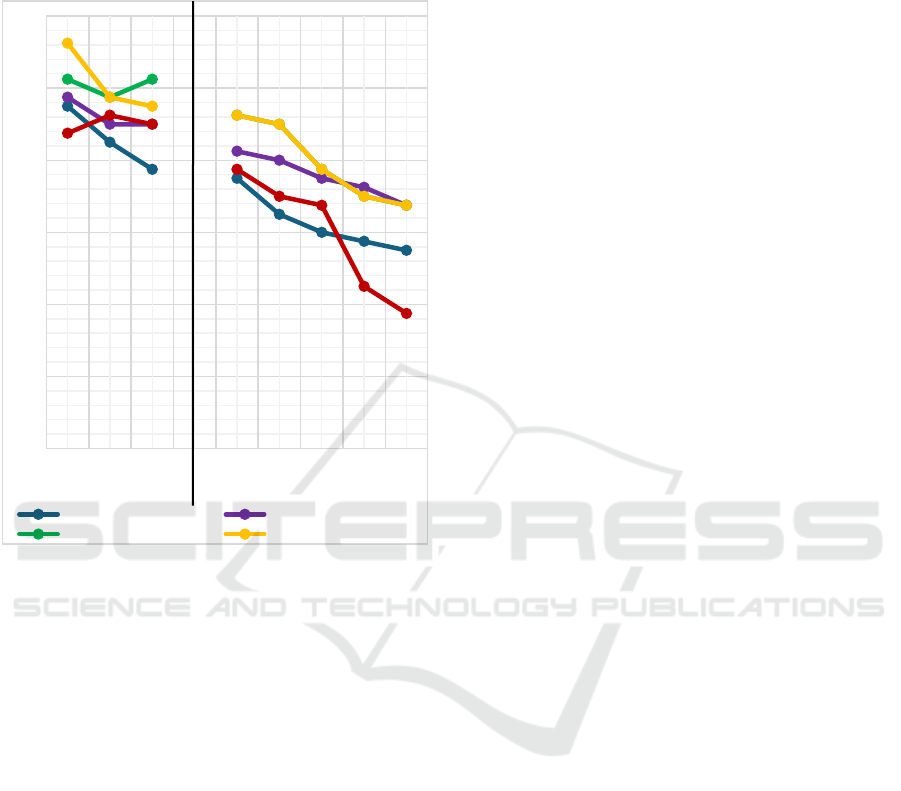
Changes in the postpartum rage level of young
mothers as indicated by the score obtained by the
respondents can also be observed through Figure 1
Figure 1: Recapitulation of Respondents Postpartum Rage
Conditions in Baseline (A) and Intervention (B) Phases.
The postpartum rage condition experienced by young
mothers in the phase before being given treatment
seemed to tend to be stable at a moderate to high level.
Then if a visual analysis is carried out in Figure 1
there are changes that lead to a decrease in the level
of postpartum rage. Although there is one young
mother who experienced an increase in the second
session, the increase occurred because respondents
began to realize the various causes of experiencing
postpartum rage and coupled with the lack of support
from the family. However, the intervention session
showed a significant change. The overall condition of
the data implies that there is a significant impact on
postpartum rage after being given intervention
through a family guidance model based on meaning
of life with a social support system. The existence of
a downward trend can implicitly mean that the model
is generally effective in preventing postpartum rage
in young mothers.
Postpartum rage can be interpreted as a negative
psychological condition or helplessness experienced
by mothers after giving birth with symptoms of
insomnia, depression, delusions, sudden crying,
stress, feeling alone, and unable to control emotions
(Esscher, A., Essen, B., Innala, E., Papadopoulos, F.
C., Skalkidou, A., Sundström-Poromaa, I., &
Högberg, 2016; Mohammad Redzuan et al., 2020;
Stewart et al., 2003; Vliegen & Luyten, 2008).
Various negative emotions that are felt during
depression are of course more intense, so the
symptoms of anger that are shown are different from
those that are usually experienced by mothers.
Postpartum rage affects from 10% to 15% of women
after childbirth and consists of emotional
responsibility (Caparros-Gonzalez et al., 2017; Yim
et al., 2015). Experts agree that postpartum rage
appears after the birth of the baby, generally
occurring six weeks to twelve months after delivery
(Cohen et al., 1994; Kunaszuk & Mossey, 2010;
Varney et al., 2004).
An initial study that was conducted on 122 young
mothers (aged less than 30 years, with 1-2 children)
in Padang City, obtained data from 72 people
(59.02%) young mothers experiencing postpartum
rage with a high category and 31 people (25.41%)
experienced moderate postpartum rage (Fikri et al.,
2023). These results prove that the tendency to
experience postpartum rage in young mothers is very
high which will have negative consequences for
themselves and their children up to 3 years of age
(Slomian et al., 2019). Some impacts arise especially
on the psychological health of the mother, quality of
life, interactions with babies, interactions with
partners to family or relatives. It is assumed that when
there is a social support system for young mothers it
will be easy to prevent postpartum rage that occurs in
young mothers. Social support system is information
or feedback from other people that shows that
someone is loved, cared for, valued and respected and
involved in social groups and there are reciprocal
obligations (King, 2012).
This study shows that those with high postpartum
rage tend to have lower levels of social support
systems compared to those with low postpartum rage.
These results support our hypothesis. Previous
research has reported that young mothers who
experience high levels of postpartum rage tend to
show high levels of self-criticism and hostility
towards themselves and others, such as their partners
(Goleman, 1996; Tobe et al., 2020; Vliegen &
Luyten, 2008). The presence of family makes the
hope to help each other, or as a resource before,
during and after stressful events (Apollo & Cahyadi,
2012; Ganster & Victor, 1988). Social support
system refers to the pleasure that is felt, the
appreciation of caring, or receiving help from others.
1
1,5
2
2,5
3
3,5
4
123 12345
Respondent (FA) Respondent (PS)
Respondent (DD) Respondent (RK)
Baseline (A)
Intervention (B)
ICECE 2025 - The International Conference on Early Childhood Education
46

Social support received during pregnancy has a major
influence on the postpartum rage period.
These findings indicate that psychosocial
interventions that focus on aspects of social support
during pregnancy are effective in preventing
postpartum rage (Ohara et al., 2017). Postpartum rage
is greatly influenced by social support during
pregnancy (Ohara et al., 2018). It is assumed that
when there is a social support system from family
members in young mothers it can be easier to prevent
postpartum rage that occurs. These studies also show
that young mothers who experience high postpartum
rage may have difficulty finding and getting support
from their surroundings. In addition, they may
inappropriately display their hostility and criticism of
informal and social resources in the context of
intimate relationships, which can lead to lower social
support (Cardinali et al., 2019; Leckman et al., 2018;
Leung, V. W. Y., Zhu, Y., Peng & Tsang, 2019;
Ohara et al., 2018; Robakis et al., 2016; Wallenborn
et al., 2019).
Even though the social support system that is felt
has not been widely reported to date, research has
found that young mothers need a social support
system that is felt from family members so that when
going through the pregnancy process, they can avoid
postpartum rage.
Many factors influence postpartum rage in young
individuals, namely past experiences of depression,
misinformation, difficulty breastfeeding, lack of
support, errors in interpreting life, socioeconomic
status, education, and culture (Slomian et al., 2019).
Errors in interpreting life and lack of support are the
main factors that need attention (Scharp & Thomas,
2017) by counselors through guidance and counseling
services. The meaning of life is a condition or
individual that is considered important and brings
positive changes to life (Papamarkou et al., 2017;
Park & Baumeister, 2017; Rezaei et al., 2016; Tissera
et al., 2020). Having a meaning of life helps parents,
especially young mothers, overcome stressful,
fearful, anxious events (Mihandoust, 2021).
Apart from the meaning of life, another factor that
is quite important and can be integrated is the social
support system that exists in the family. not all the
problems that occur become big problems because of
the existence of a social support system (Adejuwon
PhD et al., 2018; Racine et al., 2020). The social
support system is information or feedback from other
people that shows that a person is loved, cared for,
valued and respected and involved in social groups
and there are reciprocal obligations (King, 2012). The
social support system is defined as the presence of the
family with the hope of helping one another, or the
resources provided by them, before, during, and after
a stressful event (Apollo & Cahyadi, 2012; Ganster &
Victor, 1988). The social support system received
during pregnancy has a major influence on the
postpartum rage period. These findings indicate that
psychosocial interventions that focus on aspects of
social support during pregnancy are effective in
preventing postpartum rage (Ohara et al., 2017).
Thus, the development of a meaning-of-life-based
family guidance model with a social support system
can prevent postpartum rage for young mothers.
The test results in order to get an overview of the
effectiveness of the meaning of life-based family
guidance model with a social support system for the
prevention of postpartum rage for young mothers
show that in general there is a decrease in the level of
postpartum rage in the Intervention phase for all
subjects. Even though the test was carried out using a
single-subject design method, visual analysis showed
a tendency for a decreasing trend in the postpartum
rage scores of young mothers up to the last data point.
Several conditions in the trial process can prove
that there is a significant impact of implementing the
model on the condition of postpartum rage in young
mothers. One of the important indicators is the
difference in the postpartum rage score in the baseline
condition with the score in the first intervention
session. The condition of overlapping data and data
point positions based on 2-SD Band analysis is a
finding that also supports changes in the postpartum
rage score after implementing the model on young
mothers.
This is in accordance with the social support
system in finding self-reflection for young mothers to
interpret their lives more positively. the application of
the integration of meaning of life with social support
systems in young mothers with high postpartum rage
conditions can prevent pressure from arising on
family life. With the implementation of this family
guidance model and the findings of positive changes
that occurred in the trial subjects, it can be concluded
that there were confirmed changes in the trial
subjects.
Based on the treatment given to the subject, the
initial findings of the study regarding the triggers for
the emergence of postpartum rage conditions
expressed by the subject are in harmony so that this
condition can be confirmed. This is evidenced by all
subjects providing information that they experienced
pressure in family life because there was no reflection
The Analysis Contribution Family Guidance Based on Meaning of Life with Social Support System in Reducing Level Postpartum Rage
Symptoms
47

of happiness or meaning of life and a lack of social
support system provided by family members. The
social support system carried out by husbands for
pregnant wives will foster an open attitude through
the complaints they experience during pregnancy.
With the husband's support, he makes his wife
comfortable, devotes a lot of attention and maintains
good communication. Real examples of husbands'
support for wives who are pregnant, such as
accompanying midwifery checks on the sidelines of
busy work, continue to foster two-way
communication. The social support system serves to
protect against the development of depressive
symptoms and mediates the relationship between
stress and depressive symptoms in the postpartum
period (Ngai & Chan, 2012). Tracing the condition of
postpartum rage experienced by young mothers as
test subjects also obtained data that there was
excessive worry about the child's condition, fatigue in
taking care of the child coupled with changes in sleep
patterns. This is in accordance with one of the
postpartum rage conditions experienced by young
mothers who have just given birth that in general what
triggers the emergence of postpartum rage is worry
about undergoing life changes and not optimal social
support system provided by family members
(Abdollahpour, 2015; Ruybal & Siegel, 2021).
Another condition that also became one of the
triggers for anger in the subjects tested was the
existence of environmental influences that put
external pressure on young mothers. This condition
dominantly comes from the subject's neighbors,
including demands to be able to always be
independent in carrying out activities with children,
the inability to share time with homework and a home
atmosphere that makes it unable to complete
homework on time. This condition correlates with the
finding that the psychological condition of young
mothers is disrupted because they cannot reflect on
the meaning of life and there is no social support
system provided by family members (Adejuwon PhD
et al., 2018; Mihandoust, 2021; Racine et al., 2020).
This condition will have an impact on the emergence
of feelings of fatigue, wanting to give up, which if it
continues will cause stress (Mihandoust, 2021).
However, based on the results of the
implementation of the family guidance model that
was developed, there was a tendency for positive
changes after being given the intervention. Statistical
analysis and tracking of the final condition of young
mothers proves that the application of a meaning of
life-based family guidance model with a social
support system is effective for the prevention of
postpartum rage for young mothers. This finding is an
alternative solution to create happiness in living
family life for young couples in the future.
4 CONCLUSIONS
In Summary, it is known that in general young
mother’s experience moderate to high levels of
postpartum rage. This shows that young mothers feel
that their mothers can feel happy and confused,
anxious, afraid or sad during the process of family
life to be quite disturbing, although it does not have
a significant effect. in various activities or daily
activities. There are still some mothers who have a
high level of postpartum rage, so that they become
the target of family guidance interventions based on
meaning of life with a social support system. With
five treatments using family guidance based on
meaning of life with a social support system, there
was a significant decrease in the level of postpartum
rage. Family guidance based on meaning of life with
a social support system contributes to preventing
high postpartum rage from being low in the
experimental group
ACKNOWLEDGEMENTS
The authors would like to thank all parties who
participated in this research, including the young
mother respondents and the research team.
REFERENCES
Abdollahpour, S. (2015). Perceived social support among
family in pregnant women. International Journal of
Pediatrics, 3(5), 879–888. https://doi.org/10.22038/
ijp.2015.4703
Adejuwon PhD, G. A., Adekunle MSc, I. F., & Ojeniran,
M. (2018). Social Support and Personality Traits as
Predictors of Psychological Wellbeing of Postpartum
Nursing Mothers in Oyo State, Nigeria. International
Journal of Caring Sciences, 11(2), 704–718. http://
210.48.222.80/proxy.pac/scholarly-journals/social-
support-personality-traits-as-predictors/docview/2148
642296/se-2%0Ahttps://media.proquest.com/media/
hms/PFT/1/V1Cq7?_a=ChgyMDIyMDkxNjEyNTY0
MTY0Mjo2NDgwMjgSBTQ4NDczGgpPTkVfU0VB
UkNIIg8xNzUuMTQxLjE3My4
ICECE 2025 - The International Conference on Early Childhood Education
48

Afdal, A. (2015). Kolaboratif: Kerangka Kerja Konselor
Masa Depan. Jurnal Konseling Dan Pendidikan, 3(2),
1–7. https://doi.org/10.29210/12400
Agnafors, S., Bladh, M., Svedin, C. G., & Sydsjö, G.
(2019). Mental health in young mothers, single mothers
and their children. BMC Psychiatry, 19(1), 1–7.
https://doi.org/10.1186/s12888-019-2082-y
Apollo & Cahyadi, A. (2012). Konflik peran ganda
perempuan menikah yang bekerja ditinjau dari
dukungan sosial keluarga dan penyesuaian diri. Jurnal
Widya Warta, 2, 255–271.
Azwar, S. (2004). Penyusunan Skala Psikologi. Pustaka
Pelajar.
Bränn, E., Papadopoulos, F., Fransson, E., White, R.,
Edvinsson, Å., Hellgren, C., Kamali-Moghaddam, M.,
Boström, A., Schiöth, H. B., Sundström-Poromaa, I., &
Skalkidou, A. (2017). Inflammatory markers in late
pregnancy in association with postpartum depression—
A nested case-control study. Psychoneuroen
docrinology, 79, 146–159. https://doi.org/10.1016/
j.psyneuen.2017.02.029
Bruno, A., Laganà, A. S., Leonardi, V., Greco, D., Merlino,
M., Vitale, S. G., Triolo, O., Zoccali, R. A., &
Muscatello, M. R. A. (2018). Inside–out: The role of
anger experience and expression in the development of
postpartum mood disorders. Journal of Maternal-Fetal
and Neonatal Medicine, 31(22), 3033–3038.
https://doi.org/10.1080/14767058.2017.1362554
Cantwell, R. (2021). Mental disorder in pregnancy and the
early postpartum. Anaesthesia, 76(S4), 76–83.
https://doi.org/10.1111/anae.15424
Caparros-Gonzalez, R. A., Romero-Gonzalez, B., Strivens-
Vilchez, H., Gonzalez-Perez, R., Martinez-Augustin,
O., & Peralta-Ramirez, M. I. (2017). Hair cortisol
levels, psychological stress and psychopathological
symptoms as predictors of postpartum depression.
PLoS ONE, 12(8), 1–17. https://doi.org/10.13
71/journal.pone.0182817
Cardinali, P., Migliorini, L., & Rania, N. (2019). The
caregiving experiences of fathers and mothers of
children with rare diseases in italy: challenges and
social support perceptions. Frontiers in Psychology, 10,
1780. https://doi.org/https://doi.org/10.3389/fpsyg.
2019.01780
Chauhan, A., & Potdar, J. (2022). Maternal Mental Health
During Pregnancy: A Critical Review. Cureus, 14(10).
https://doi.org/10.7759/cureus.30656
Cohen, L. S., Sichel, D. A., Dimmock, J. A., & Rosenbaum,
J. F. (1994). Postpartum course in women with
preexisting panic disorder.
Journal of Clinical
Psychiatry, 55(7), 289–292.
Esscher, A., Essen, B., Innala, E., Papadopoulos, F. C.,
Skalkidou, A., Sundström-Poromaa, I., & Högberg, U.
(2016). Suicides during pregnancy and 1 year
postpartum in Sweden, 1980–2007. The British Journal
of Psychiatry, 208(5), 462–469. https://doi.org/10.
1192/bjp.bp.114.161711
Fikri, M., Neviyarni, N., & Afdal, A. (2023). The
relationship between family support system with
maternal postpartum rage. International Journal of
Public Health Science (IJPHS), 12(1), 339–347.
https://doi.org/10.11591/ijphs.v12i1.22011
Ganster, D. C., & Victor, B. (1988). The impact of social
support on mental and physical health. British Journal
of Medical Psychology, 61(1), 17–36.
https://doi.org/10.1111/j.2044-8341.1988.tb02763.x
Gibbons, J. D., & Chakraborti, S. (2014). Nonparametric
statistical inference: revised and expanded. CRC press.
Goleman, D. (1996). Emotional intelligence. Why it can
matter more than IQ. Learning, 24(6), 49–50.
Higashida, H., Gerasimenko, M., & Yamamoto, Y. (2022).
Receptor for advanced glycation end-products and
child neglect in mice: A possible link to postpartum
depression. Comprehensive Psychoneuroendocri
nology, 11(May), 100146. https://doi.org/10.1016/j.
cpnec.2022.100146
Kang, H. K., John, D., Bisht, B., Kaur, M., Alexis, O., &
Worsley, A. (2020). PROTOCOL: Effectiveness of
interpersonal psychotherapy in comparison to other
psychological and pharmacological interventions for
reducing depressive symptoms in women diagnosed
with postpartum depression in low and middle‐income
countries: A systematic r. Campbell Systematic
Reviews, 16(1), e1074.
King, L. A. (2012). Psikologi umum: Sebuah pandangan
apresiatif (buku 2). Salemba Humanika.
Kunaszuk, R. M., & Mossey, J. (2010). Intimacy, libido,
depressive symptoms and marital satisfaction in
postpartum couples. Journal of Sexual Medicine,
7(May), 125. http://ovidsp.ovid.com/ovidweb.cgi?T=
JS&CSC=Y&NEWS=N&PAGE=fulltext&D=emed9
&AN=70199411%5Cnhttp://nhs5195498.on.worldcat.
org/atoztitles/link?sid=OVID:embase&id=pmid:&id=
doi:10.1111/j.1743-6109.2010.01828-4.x&issn=1743-
6095&isbn=&volume=7&issue=&spage=125&p
Leckman, J. F., Feldman, R., Swain, J. E., & Mayes, L. C.
(2018). Primary parental preoccupation: Revisited. In
Developmental science and psychoanalysis (pp. 89–
115). Routledge. https://doi.org/10.4324/978042
9473654
Leung, V. W. Y., Zhu, Y., Peng, H. Y., & Tsang, A. K. T.
(2019). Chinese immigrant mothers negotiating family
and career: Intersectionality and the role of social
support. The British Journal of Social Work, 49(3),
742–761.
https://doi.org/https://doi.org/10.1093/bjsw/bcy081
McKinlay, A. R., Fancourt, D., & Burton, A. (2022).
Factors affecting the mental health of pregnant women
using UK maternity services during the COVID-19
pandemic: a qualitative interview study. BMC
Pregnancy and Childbirth, 22(1), 313. https://doi.org/
10.1186/s12884-022-04602-5
Mihandoust, S. (2021). Effectiveness of group logotherapy
on meaning in life in mothers of children with autism
spectrum disorder: A randomized clinical trial. Journal
of Advances in Medical and Biomedical Research,
29(132), 54–62. https://doi.org/10.30699/jambs.29.13
2.54
Mohammad Redzuan, S. A., Suntharalingam, P.,
Palaniyappan, T., Ganasan, V., Megat Abu Bakar, P.
The Analysis Contribution Family Guidance Based on Meaning of Life with Social Support System in Reducing Level Postpartum Rage
Symptoms
49

N., Kaur, P., Marmuji, L. Z., Ambigapathy, S.,
Paranthaman, V., & Chew, B. H. (2020). Prevalence
and risk factors of postpartum depression, general
depressive symptoms, anxiety and stress (PODSAS)
among mothers during their 4-week postnatal follow-
up in five public health clinics in Perak: A study
protocol for a cross-sectional study. BMJ Open, 10(6),
e034458. https://doi.org/10.1136/bmjopen-2019-0344
58
Ngai, F.-W., & Chan, S. W.-C. (2012). Learned
Resourcefulness, Social Support, and Perinatal
Depression in Chinese Mothers. Nursing Research,
61(2), 78–85. https://doi.org/doi: 10.1097/NNR.0b0
13e318240dd3f
Nurbaeti, I., Deoisres, W., & Hengudomsub, P. (2018).
Postpartum depression in Indonesian mothers: Its
changes and predicting factors. Pacific Rim
International Journal of Nursing Research, 22(2), 93–
105.
Ohara, M. (2018). Impact of perceived rearing and social
support on bonding failure and depression among
mothers: A longitudinal study of pregnant women.
Journal of Psychiatric Research, 105, 71–77.
https://doi.org/10.1016/j.jpsychires.2018.09.001
Ohara, M., Nakatochi, M., Okada, T., Aleksic, B.,
Nakamura, Y., & Shiino, T. (2018). Impact of perceived
rearing and social support on bonding failure and
depression among mothers: a longitudinal study of
pregnant women. Journal of Psychiatric Research, 105,
71–77. https://doi.org/10.1016/j.jpsychires.2018.09
.001
Ohara, M., Okada, T., Aleksic, B., Morikawa, M., Kubota,
C., Nakamura, Y., Shiino, T., Yamauchi, A., Uno, Y.,
Murase, S., Goto, S., Kanai, A., Masuda, T., Nakatochi,
M., Ando, M., & Ozaki, N. (2017). Social support helps
protect against perinatal bonding failure and depression
among mothers: A prospective cohort study. Scientific
Reports, 7(1), 1–8. https://doi.org/10.1038/s41598-
017-08768-3
Papamarkou, M., Sarafis, P., Kaite, C. P., Malliarou, M.,
Tsounis, A., & Niakas, D. (2017). Investigation of the
association between quality of life and depressive
symptoms during postpartum period: a correlational
study. BMC Women’s Health, 17(1), 115. https://
doi.org/10.1186/s12905-017-0473-0
Park, J., & Baumeister, R. F. (2017). Meaning in life and
adjustment to daily stressors. The Journal of Positive
Psychology, 12(4), 333–341.
Racine, N., Zumwalt, K., McDonald, S., Tough, S., &
Madigan, S. (2020). Perinatal depression: The role of
maternal adverse childhood experiences and social
support. Journal of Affective Disorders, 263(15), 576–
581. https://doi.org/10.1016/j.jad.2019.11.030
Rezaei, N., Azadi, A., Zargousi, R., Sadoughi, Z., Tavalaee,
Z., & Rezayati, M. (2016). Maternal health-related
quality of life and its predicting factors in the
postpartum period in Iran. Scientifica, 2016.
Robakis, T. K., Williams, K. E., Crowe, S., Lin, K. W.,
Gannon, J., & Rasgon, N. L. (2016). Maternal
attachment insecurity is a potent predictor of depressive
symptoms in the early postnatal period. Journal of
Affective Disorders, 190, 623. https://doi.org/10
.1016/j.jad.2015.09.067
Ruybal, A. L., & Siegel, J. T. (2021). Increasing social
support for women with postpartum depression through
attribution theory guided vignettes and video messages:
The understudied role of effort. Journal of
Experimental Social Psychology, 97, 104197.
https://doi.org/10.1016/j.jesp.2021.104197
Sari, L. P., Salimo, H., & Budihastuti, U. R. (2017).
Optimizing the Combination of Oxytocin Massage and
Hypnobreastfeeding for Breast Milk Production among
Post-Partum Mothers. Journal of Maternal and Child
Health, 2(1), 20–29. https://doi.org/10.26911/thejmch.
2017.02.01.03
Scharp, K. M., & Thomas, L. J. (2017). “What would a
loving mom do today?”: Exploring the meaning of
motherhood in stories of prenatal and postpartum
depression. Journal of Family Communication, 17(4),
401–414.
Shorey, S., Chee, C. Y. I., Ng, E. D., Chan, Y. H., San Tam,
W. W., & Chong, Y. S. (2018). Prevalence and
incidence of postpartum depression among healthy
mothers: a systematic review and meta- analysis.
Journal of Psychiatric Research, 104, 235–248.
doi.org/10.1016/j.jpsychires.2018.08.001
Śliwerski, A., Kossakowska, K., Jarecka, K., Świtalska, J.,
& Bielawska-Batorowicz, E. (2020). The effect of
maternal depression on infant attachment: A systematic
review. International Journal of Environmental
Research and Public Health, 17(8). https://doi.org/1
0.3390/ijerph17082675
Slomian, J., Honvo, G., Emonts, P., Reginster, J. Y., &
Bruyère, O. (2019). Consequences of maternal
postpartum depression: A systematic review of
maternal and infant outcomes. Women’s Health, 15, 1–
55. https://doi.org/10.1177/1745506519844044
Stewart, D. E., Robertson, E., Phil, M., Dennis, C., Grace,
S. L., & Wallington, T. (2003). Postpartum Depression:
Literature review of risk factors and interventions.
WHO Publication, October, 289. http://www.who.int/
mental_health/prevention/suicide/lit_review_postpartu
m_depression.pdf
Tissera, H., Auger, E., Séguin, L., Kramer, M. S., & Lydon,
J. E. (2020). Happy prenatal relationships, healthy
postpartum mothers: a prospective study of relationship
satisfaction, postpartum stress, and health. Psychology
& Health, 1–17.
Tobe, H., Kita, S., Hayashi, M., Umeshita, K., &
Kamibeppu, K. (2020). Mediating effect of resilience
during pregnancy on the association between maternal
trait anger and postnatal depression. Comprehensive
Psychiatry, 102, 152190. https://doi.org/10.1016/j
.comppsych.2020.152190
Varney, H., Burst, H. V., Kriebs, J. M., & Gegor, C. L.
(2004). Varney’s midwifery. Jones & Bartlett Learning.
Vliegen, N., & Luyten, P. (2008). The role of Dependency
and Self-Criticism in the relationship between
postpartum depression and anger. Personality and
ICECE 2025 - The International Conference on Early Childhood Education
50

Individual Differences, 45(1), 34–40.
https://doi.org/10.1016/j.paid.2008.02.015
Wallenborn, J. T., Wheeler, D. C., Lu, J., Perera, R. A., &
Masho, S. W. (2019). Importance of familial opinions
on breastfeeding practices: differences between father,
mother, and mother-in-law. Breastfeeding Medicine,
14(8), 560–567. https://doi.org/10.1089/bfm.2019.
0049
Watson, B., Broadbent, J., Skouteris, H., & Fuller-
Tyszkiewicz, M. (2016). A qualitative exploration of
body image experiences of women progressing through
pregnancy. Women and Birth, 29(1), 72–79.
Wulan Rahmadhani SST, M. M. R. (2020). Gender of baby
and postpartum depression among adolescent mothers
in central Java, Indonesia. International Journal of
Child and Adolescent Health, 13(1), 43–49.
Yim, I. S., Stapleton, L. R. T., Guardino, C. M., Hahn-
Holbrook, J., & Schetter, C. D. (2015). Biological and
psychosocial predictors of postpartum depression:
systematic review and call for integration. Annual
Review of Clinical Psychology, 11.
Zaheri, F., Nasab, L. H., Ranaei, F., & Shahoei, R. (2017).
The relationship between quality of life after childbirth
and the childbirth method in nulliparous women
referred to healthcare centers in Iran Sanandaj. Electron
Physician, 9(5985–90). https://doi.org/10.19082/5985
The Analysis Contribution Family Guidance Based on Meaning of Life with Social Support System in Reducing Level Postpartum Rage
Symptoms
51
