
The Utilization of Multimodal Digital Resources in University
Students’ English Cultural Learning: Processes, Strategies, and
Outcomes: A Case Study of Yixue Platform
Yuxing Wang
School of Foreign Languages, Quanzhou Normal University, Quanzhou, Fujian, 362000, China
Keywords: Multimodal, Digital Resources, Cross-Cultural Learning.
Abstract: With the acceleration of globalization, English, as an international lingua franca, has seen the importance of
English cultural learning become increasingly prominent. This paper aims to explore the current status and
effectiveness of college students utilizing multimodal digital resources for English cultural learning. The fo-
cus is on the application scenarios of multimodal learning strategies in English cultural learning. However,
questions remain regarding whether multimodal learning truly enhances college students' English cultural
literacy, as well as the actual processes, strategies, and outcomes of utilizing multimodal digital resources.
Through academic performance analysis and interviews, this study examines whether the use of multimodal
digital resources by college students’ aids in English cultural learning and the specific effectiveness of cross-
cultural business communication learning. Overall, multimodal platforms provide a new approach to English
cultural learning for college students, warranting further exploration.
1 INTRODUCTION
The utilization of multimodal digital resources in
college students’ English learning is becoming
increasingly widespread. As international cultural
exchanges continue to expand, the importance of
college students learning cross-cultural business
communication has become more evident. Firstly, it
fosters trust and integration between different
cultures. Cross-cultural communication enables
different ethnic groups to seek common ground while
respecting differences, enhancing their understanding
of other cultures based on a deeper comprehension of
their own, and promoting mutual tolerance for
cultural disparities. Secondly, it facilitates
interactions among people from diverse cultural
backgrounds, helping to eliminate prejudices and
misunderstandings. Exploring cultural significance is
a key objective in cultivating the cross-cultural
communication skills of the younger generation. In
the current era of promoting the construction of a
community with a shared future for mankind, actively
advancing cross-cultural exchanges holds significant
practical importance. Regarding learning models,
some students embrace traditional teaching methods,
while others utilize multimodal digital platforms for
their studies. Cross-cultural critical thinking skills are
essential competencies for high-quality talent today,
and independent learning is also a key ability that the
nation aims to cultivate in students.
In view of the lack of research on the effectiveness
of the use of multimodal digital resources on specific
platforms, the author will take the Yixue platform as
an example, and observe the effectiveness of the
students’ learning through the analysis of the learning
situation. The author will explore the real process,
strategy and success of using multimodal digital
resources. These issues are very meaningful for
intercultural communication learning.
This study investigates and analyses the
effectiveness of a multimodal digital platform for
learning intercultural communication based on a
multimodal teaching model of university English for
intercultural critical thinking skills development. An
attempt is made to put the multimodal digital
platform, the effectiveness of university English
cultural learning concerns under the test of objective
data.
2 LITERATURE REVIEW
In the context of globalization, people from different
countries have increasingly frequent exchanges, and
Wang, Y.
The Utilization of Multimodal Digital Resources in University Students’ English Cultural Learning: Processes, Strategies, and Outcomes-A Case Study of Yixue Platform.
DOI: 10.5220/0013999700004912
Paper published under CC license (CC BY-NC-ND 4.0)
In Proceedings of the 1st International Conference on Innovative Education and Social Development (IESD 2025), pages 479-484
ISBN: 978-989-758-779-5
Proceedings Copyright © 2025 by SCITEPRESS – Science and Technology Publications, Lda.
479

different cultures collide, communicate and integrate
with each other. Strong intercultural communication
ability is the key to promoting smooth
communication among people of different countries
(Yuan, 2023). Whether it is to meet the challenges
facing human society or to achieve the development
goals of various countries, the “community of human
destiny” formed by countries and people cannot be
separated from cross-cultural communication. Cross-
cultural communication refers to the cultural
exchange and communication between people with
different cultural backgrounds, which is mainly
manifested as the cultural interaction and mutual
learning between the parties involved in the
exchange, and is the dialogue between the parties
involved in cultural exchange. Cross-cultural
communication has strongly promoted the friendly
relations and ethnic integration of various countries in
history, and it plays an important role today (Zhao,
2014).
The high speed of economic and technological
development and the continuous progress of modern
information technology directly determine that
intercultural communication will become a new
normal in the daily life and work of the general
public, and intercultural communication ability will
become a basic ability that every citizen should have
(Yu & Wang, 2022). Cultural differences might lead
to miscommunication, but they might also become a
competitive advantage for global companies (Luo,
2016). The notion of national culture includes many
diversified factors that shape people's behaviour,
lifestyle and attitudes (Lifintsev, Denys & Wellbrock,
Wanja, 2019). One of the key cultural elements in the
way that both individuals and companies operate is
communication. People communicate in varied ways
using different languages and carrying different
values and norms. (Bartosik-Purgat,
and Rakowska, 2025)
Moreover, as carriers of culture, in the process of
learning English knowledge and skills, English
learners will inevitably encounter the problem of how
to deal with the problem of learners’ identity with two
different cultures (Qin, 2024). University English
should actively carry out cross-cultural teaching and
deeply integrate language teaching with the
cultivation of cross-cultural communicative
competence (Yu & Wang, 2022). The cultural
differences between English and Chinese directly
affect the structure and application of the two
languages of English and Chinese, and may even
affect the future course of development (Yu & Wang,
2022). The specific components of intercultural
communicative competence are four parts:
knowledge, ability, attitude and literacy (Zhao, 2014).
The components of intercultural communicative
competence are interrelated, interpenetrating and
complementary (Liu, 2018). The traditional English
classroom learning model is constrained by space and
time, and also has certain limitations in cultivating
cross-cultural competencies (Guo, 2024). As network
technology becomes increasingly integrated into the
field of education, students are encountering new
developmental opportunities for fostering cross-
cultural critical thinking skills in English teaching
through multimodal teaching platforms. The
construction of a multimodal learning environment
serves as a crucial support and vehicle for achieving
the goal of cultivating students' cross-cultural critical
thinking abilities (Zhang, 2024). Moreover, this
composite classroom teaching model can fully
stimulate students' interest in learning, providing an
effective pathway for the cultivation of cross-cultural
critical thinking in English education (Guo, 2024).
After reading the literature, the author clarified the
importance of English cultural learning and the
importance of using multimodal digital platforms in
intercultural communicative learning. Cultivating
students’ intercultural communicative competence
needs to follow the pace of the times and use
multimodal learning knowledge integration to help
students recognise and understand the differences in
how people with different cultural backgrounds face
and deal with affairs (Wang, 2020). However, there is
unknown about how exactly the digital platform is
applied and its effectiveness.
3 RESEARCH METHODOLOGY
3.1 Research Step
This study takes the Yixue platform as an example.
Initially, interviews were conducted with students
before they used the platform. Subsequently, an
analysis of learning conditions was performed based
on the platform’s backend usage data. The data for
this study were derived from the exported backend
data of the Yixue platform, with the survey subjects
being junior students majoring in Business English (a
total of 98 students). Follow-up interviews were
conducted with the same students after they used the
platform to explore changes in their proficiency levels
and perspectives. Finally, the student’s final exam
results were used as a basis to observe the
effectiveness of the platform and the students’
learning outcomes.
IESD 2025 - International Conference on Innovative Education and Social Development
480
3.2 Interview Method
3.2.1 Interviewees
The interview subjects of this study consisted of six
individuals, including one academic representative
and one class officer from the junior year Business
English major, as well as four other students (two
females and two males). All interviewees were
informed and consented to participate.
3.2.2 Interview Content
The content of the interviews was adapted
specifically for this cross-cultural training platform.
Compared to other analytical methods, face-to-face
interviews provide a more in-depth understanding of
the changes observed among the students. The
interview questions primarily focused on the students'
comprehension of cross-cultural communication
knowledge and their perceptions and awareness of
English culture.
The interviews were conducted in two phases: the
first round took place on September 1, 2024, prior to
the use of the platform, and the second round was
conducted on December 5, 2024, after the platform
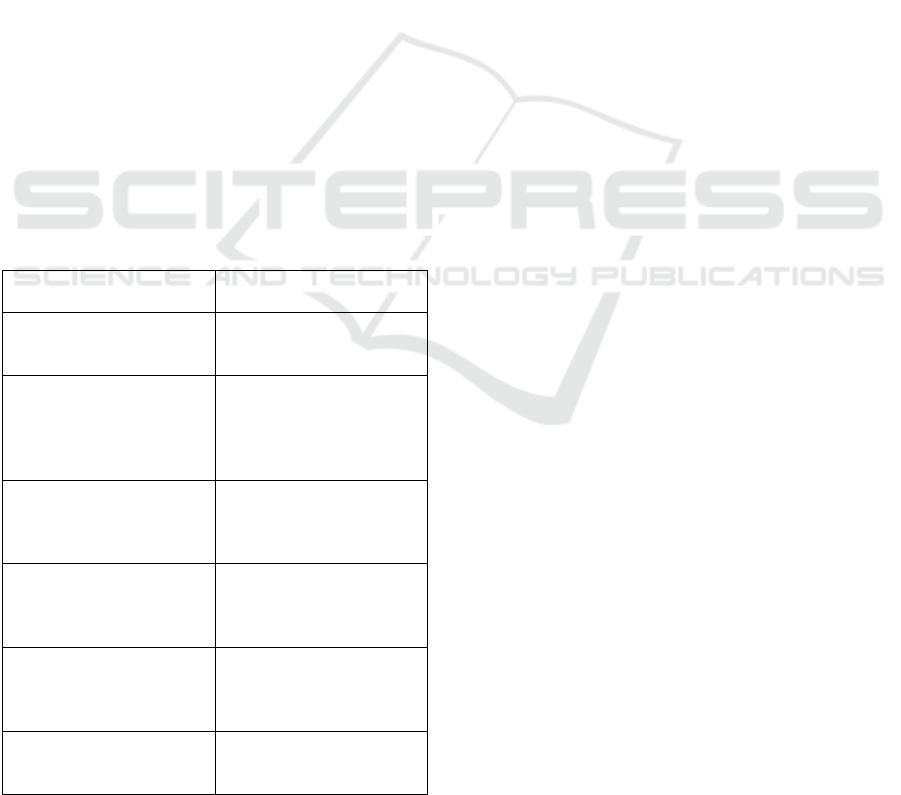
had been utilized. The interview outlines are
presented in Table 1.
Table 1: Interview outline.
Interview outline 1 (before
using the platform)
Interview outline 2 (after
use of the platform)
Do you like English
intercultural communication
learnin
g
? Wh
y
?
1.Do you like the Yixue
platform? (If so, which part
do
y
ou
p
refer?
)
How much do you know
about the cultural
knowledge of China and
other countries through your
p
revious studies?
2.After a semester of study,
how do you now see the
position of culture in
English learning?
How do you usually learn
about the cultures of
different countries?
3.Do you think your
intercultural learning has
changed compared to
b
efore?
Do you know anything
about communication
strategies or communication
skills?
4.How much have you
increased your knowledge
of the cultures of China and
English-speaking countries?
5. Are you willing to
communicate with members
of other cultures?
5. What do you know about
communication strategies or
skills, and can you give
s
p
ecific exam
p
les?
6. Are you willing to
communicate with members
of a different culture?
3.2.3 Interview Process
Interviews were approximately 10-15 minutes in
length and were conducted by the interviewer who
recorded the students’ interview responses directly on
the computer. Interviewee numbers were taken from
the student’s initials to avoid duplication, e.g.,
Student T.
4 RESULT
4.1 Results of The First Interview
(2024-9-1)
Before being introduced to the Yixue platform, 50%
of the respondents did not have a particularly in-depth
understanding or interest in cross-cultural
communication. The main reasons cited were a lack
of exposure or the perception that it was not
particularly helpful in daily life. The other 50% of
respondents, however, expressed an interest in and
attention to cross-cultural communication. Below are
some of the responses from the interviewees.
“I don’t really like it, and I haven't learned much
about it.” (Student L)
“It’s okay, but I feel like it's rarely useful in my
real life.” (Student T)
“I like it, it’s much more interesting than the other
contents.” (Student W)
“I really enjoy learning about cross-cultural
communication in English. As an English major, I
realize that cross-cultural communication skills are
crucial for my future career. It not only improves my
practical use of English but also helps me better
understand and adapt to international environments.”
(Student Z)
Before being introduced to the Yixue platform,
when asked about how students usually learn about or
explore the cultures of different countries, most
respondents cited movies or short video platforms as
their primary sources. Below are some of the
responses from the interviewees.
“Browse-watch videos.” (Student W)
“Watch TV shows, films, documentaries.”
(Student G)
“I don’t pay much attention to it usually. I guess,
maybe I’ll learn a little bit about it on online
platforms.” (Student N)
“I usually learn about different cultures through
English courses, reading English original works,
watching English movies and documentaries, and
participating in cultural exchange activities organized
by the school.” (Student Z)
The Utilization of Multimodal Digital Resources in University Students’ English Cultural Learning: Processes, Strategies, and Outcomes-A
Case Study of Yixue Platform
481
66.7% of the respondents also said they knew less
about communication skills.
4.2 Backend Student Data Statistics of
the Yixue Platform
Table 2: Statistics on platform learning hours of Business
English students.
Statistics of Business English Students’ Platform
Learnin
g
Hours
Statistical time: 2024-11-17 20:19
Learning
Duration
Maximum
Study
Duration
Minimum
Study
Duration
Average
Study
Duration
99: 59: 59 0: 00: 00 9: 51: 37
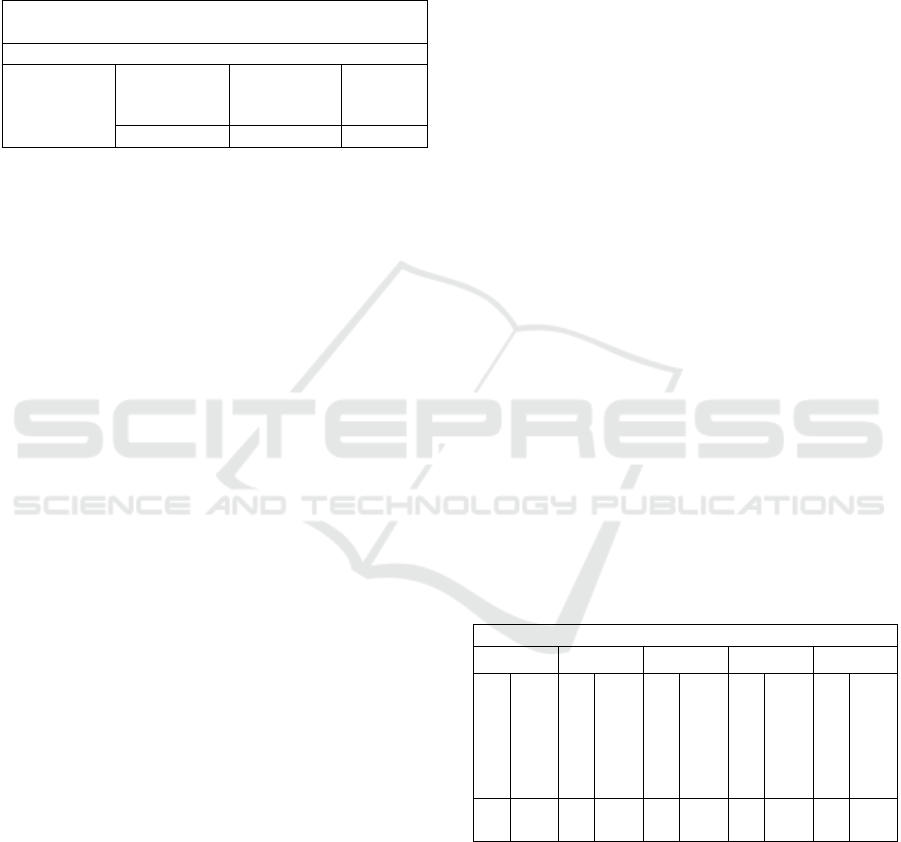
As shown in Table 2, as of November 17, 2024, there
is a significant disparity in the learning durations
among the 98 students majoring in Business English.
In terms of chapter tests, the score distribution for the
section on understanding cultural differences is as
follows: basic concepts (10%), cultural patterns
(40%), verbal communication (25%), and non-verbal
communication (25%). The highest total score is
100.0, the lowest score is 0.0, and the average score
is 56.83. Among these, the mastery of basic concepts
is the best, with an average score of 71.27, while non-
verbal communication is the lowest, with an average
score of 53.00.
4.3 Results of the Second Interview
(2024-12-5)
During the second round of interviews, the students’
perspectives on the platform revealed that the
majority were particularly drawn to the engaging
aspects, with their primary interests lying in the case
analysis and video sections. Some of the
interviewees’ responses are as follows:
“I really like the platform, especially the
interactive learning experience and the rich case
studies it provides, which have greatly enriched my
knowledge of intercultural communication.” (Student
Z)
“It’s okay, more interested in the video part of the
case studies.” (Student L)
“It’s not bad, I like the video part more, I can
understand it intuitively.” (Student N)
In terms of awareness, regarding how students
now perceive the role of culture in English learning,
they have gradually come to recognize the
significance of cross-cultural learning. Partial
responses to this question are as follows:
“After this period of study, I have become more
aware of the importance of culture in English
learning. Culture is not only the carrier of language,
but also the key to understanding the deeper meaning
of language.” (Student Z)
“I think the relationship between culture and the
learning of English is complementary.” (Student L)
“It feels important. Listening, speaking, reading
and writing are the basics, and culture is what is really
important in communicating with other people.”
(Student N)
Moreover, most respondents believe that their
understanding of Chinese and English-speaking
countries’ cultural knowledge has improved. Some
respondents can even provide examples related to
communication strategies or skills.
“Yes, for example, in France, ‘OK’ means zero,
and in Bulgaria, nodding means refusal, while
shaking the head means agreement.” (Student G)
“Yes, I have learned that in Iran, giving a thumbs-
up means ‘screw you,’ which is a negative gesture; in
Australia, it also represents a rude gesture.”(Student T)
The analysis of the respondents’ answers confirms
the effectiveness of using the Yixue platform for
intercultural business communication learning, as
well as the fact that the use of multimodal digital
resources by university students contributes to the
learning of English culture.
4.4 Final Exam Scores for Students in
“Cross-Cultural Business
Communication”
Table 3: Statistics on the distribution of final grades of
business English juniors in the Yixue platform exams.
Statistical time: 2024-12-11
A(90-100) B(80-90) C(70-80) D(60-70) Fail(0-60)
Nu
mb
er
of
peo
p
le
prop
ortio
n(%)
Nu
mb
er
of
peo
p
le
prop
ortio
n(%)
Nu
mb
er
of
peo
p
le
prop
ortio
n(%)
Nu
mb
er
of
peo
p
le
prop
ortio
n(%)
Nu
mb
er
of
peo
p
le
prop
ortio
n(%)
8889.84 4.1 4 4.1 1 1.0 1 1.0
The data indicates that 89.8% of the students achieved
excellent grades (Grade A) in the final exam (Table
3). This demonstrates that the effectiveness of
learning cross-cultural content through the
multimodal Yixue platform is relatively significant.
The objective data confirms the reliability of the
respondents' answers. After a period of learning on
IESD 2025 - International Conference on Innovative Education and Social Development
482

the Yixue platform, the respondents’ understanding
and proficiency in English culture have improved.
5 DISCUSSION
The effectiveness of students using multimodal
platforms for cross-cultural business communication
learning can be attributed to the following reasons:
First, the Yixue platform presents information
through multimodal formats such as audio and video,
engaging multiple senses of the students, thereby
enhancing comprehension and retention. Second, the
platform integrates cultural content from various
English-speaking countries (e.g., the United States,
the United Kingdom, Australia, and 16 others),
including members of the G20, BRICS, and the Asian
Infrastructure Investment Bank. This helps students
understand cultural differences across regions,
broadens their cultural horizons, and strengthens their
cross-cultural communication skills. Third, the
chapter tests on the platform provide instant
feedback, enabling students to correct mistakes
promptly, practice repeatedly, and consolidate their
learning outcomes. Fourth, the platform offers a
wealth of learning resources, such as case studies,
helping students understand cross-cultural business
communication from multiple perspectives. Fifth,
multimodal digital resources can be accessed anytime
and anywhere, offering high flexibility. This learning
approach is particularly suitable for university
students to engage in self-directed learning and
cultural exploration during their spare time. Sixth, the
platform provides a extensive of resources that offer
multifaceted insights into cross-cultural
communication. Seventh, the multimodal learning
platform utilizes data analysis to track students’
learning progress and performance, helping both
students and teachers identify weak areas. This
facilitates the optimization of learning paths and
improves learning outcomes.
6 CONCLUSION
This paper examines students ‘questions about
whether multimodal learning contributes to the
enhancement of college students’ English cultural
literacy, as well as the real processes, strategies and
effectiveness of the use of multimodal digital
resources, by means of interviews combined with the
analysis of objective data and learning situations. The
study found that the effectiveness of intercultural
business communication learning and the use of
multimodal digital resources by university students
contributed to English cultural learning. Students
increased cultural awareness about English. Culture
is an inseparable part of language, and language, as a
carrier of culture, has rich cultural connotations. The
future trend shows that the development trajectory of
cross-cultural business communication is shifting
from merely addressing language barriers to
comprehensively focusing on cultural differences,
and from theoretical research to practical application.
The multimodal digital platform not only enhances
language proficiency, but also helps students to
deeply understand the cultural connotations of
English-speaking countries, enhances cross-cultural
communication skills, and lays a solid foundation for
future academic and professional development.
Therefore, it is suggested that college students can
learn English culture and cross-cultural business
communication by using multimodal digital
resources.
However, this study also possesses certain
limitations, such as an insufficient sample size of
respondents and a strong regional focus, which
preclude the inclusion of all university students
utilizing multimodal digital resources for learning
English culture. It is hoped that future research will
expand the number of interviewees and cover a
broader range of regions. Additionally, aspects such
as the lack of authentic scenario simulation
experiences on the Yixue platform could be
incorporated in the future to facilitate a deeper
understanding of the cultural nuances of English-
speaking countries and enhance practical operational
skills.
REFERENCES
Bartosik-Purgat, M. and Rakowska, W. 2025, Cross-cul-
tural business-to-business communication – the experi-
ences of Polish companies with the Chinese and Amer-
icans, International Journal of Emerging Markets
20(13): 74-95.
Guo MR. 2024. Research on the multimodal teaching mode
of college English based on the cultivation of intercul-
tural discursive ability. Journal of Hubei Open Voca-
tional College (14): 191-192+195.
Lifintsev, Denys & Wellbrock, Wanja. 2019. Cross-cultural
communication in the digital age. Communication Stud-
ies 1. 93-104.
Liu XH. 2018. The application of multimodal discourse the-
ory in intercultural teaching of college English. Journal
of Nanchang College of Education (03), 75-78.
The Utilization of Multimodal Digital Resources in University Students’ English Cultural Learning: Processes, Strategies, and Outcomes-A
Case Study of Yixue Platform
483

Luo, Y. 2016. Toward a reverse adaptation view in cross-
cultural management. Cross Cultural & Strategic Man-
agement, 23(1): 29-41.
Qin Xie. A Study on the Relationship between Chinese and
Western Cultural Identity and English Learning Moti-
vation of Senior High School Students. English Lan-
guage Teaching and Linguistics Studies 6, 2. 2024
Wang JM. 2020. Multimodal analysis and implementation
of intercultural business communication in business
English teaching. English Square (29), 93-97.
Yu XH. & Wang P. 2022. Cultivation of intercultural com-
municative competence in university English teaching
from a multimodal perspective. Journal of Jilin College
of Education (02), 104-107.
Yuan WW. 2023. Research on the construction of ‘perme-
able’ cross-cultural communication competence culti-
vation mode. Journal of Science and Education (08),
134-136.
Zhang, Yulin. 2024. Research on the cultivation of intercul-
tural critical thinking ability in multimodal teaching of
college English. Journal of Hubei Open Vocational
College (20), 193-195.
Zhao F. 2014. Research on the cultivation mode of intercul-
tural communication competence of ‘permeation’
(Doctoral dissertation, Shanghai International Studies
University).
IESD 2025 - International Conference on Innovative Education and Social Development
484
