
Caravaggio and Baglione: The Collision of Humanism and Religion
Qianyi Yang
College of Arts, University of Arts London Camberwell, London, U.K.
Keywords: Humanism, Religion, Caravaggio.
Abstract: The Renaissance has always played an important part in the history of art, and during this period many new
doctrines and ideas were born in Europe. Caravaggio and Baglione, as artists belonging to the same Renais-
sance period, expressed very different symbolic meanings in their creations. This paper will explore the con-
flict between humanism and religion during the Renaissance in the context of the times by presenting the
different ideas expressed by these two artists in their opposing paintings: the Amor Vincit Omnia and the
Sacred Love Profane Love and then demonstrate how this idea was reflected in society through Caravaggio's
St Matthew and the angels, and shows the specificity of humanism and religious culture in the times and
confirms the importance of change in the development of society.
1 INTRODUCTION
"In modern terms, humanism is a value of life. It
stands for the idea that values are embodied around
the centre of the human being, that history and
humanity are created by human beings, and that this
idea says that various religious cultures are formed
not because of some superhuman entity, such as God,
a moral code, but by human beings who determine its
meaning and value."(Tzvetan, 2002) “Behind every
historical conflict is not just a superficial quarrel, but
the product of the collision of elements of thought,
feeling and behaviors in an era born of various
factors. If religiosity was the burden of the
Reformation, freethought is the burden of the
Renaissance, of contemporary society. “(Trinkaus,
1976) Viewed with an objective eye, every period has
its counterpart in humanistic thought corresponding
to the age, and they are the product of the society of
the time and the influence of the various results
obtained.
"For a long time down the line, people were under
the asceticism brought on by religious fanaticism.
They refused to see the beauty of nature and instead
saw it as something evil. “(Rose, 1898) Prior to the
Renaissance, religiosity dominated the ruling class of
power, promoting a range of ideas centered on
Christian theology and emphasizing the importance
of faith and the afterlife. Renaissance humanism, on
the other hand, promoted reason and secularism, with
its emphasis on the importance of rational thought
and reality, as opposed to the religiousism that
continued in the Middle Ages, which emphasized the
value of the present world by focusing on secular life
and humanistic thought. Its ideas have caused far-
reaching influence and reform in later generations.
Here's what Trevor had to say about it, "Like a
succession of rainstorms ending in a magnificent
thunderstorm, it purified the European ethos and
changed the temperature of Europe, beginning at the
end of the fifteenth century and sustaining it until the
Renaissance period of the mid-seventeenth century
represented that change, after which came change and
enlightenment." (Trevor-Roper, 1959). The 17th
century was at the end of the Renaissance movement.
The Renaissance was one of the most influential
intellectual movements in the history of art, and
indeed in Western history, a cultural movement
resulting from class confrontation, in which the birth
of humanism and the conflict between this new
ideology and religion had a huge impact on the
development of art and indeed of the humanities.
During this period, Caravaggio created Amor
Vincit Omnia in 1601 and 1602, and then in 1602, the
artist Giovanni Baglione opposed the ideas expressed
by Caravaggio with his work Sacred Love Profane
Love. That same year, 1602, Caravaggio was hired to
create St Matthew and the Angels, a work against
which the society of the time also maintained a
different voice.
This study begins with the conflict between the
two artists, borrowing a work by the artist Caravaggio
and a work by the artist Baglione, exploring the
collision between religious culture and humanism
Yang, Q.
Caravaggio and Baglione: the Collision of Humanism and Religion.
DOI: 10.5220/0013998500004912
Paper published under CC license (CC BY-NC-ND 4.0)
In Proceedings of the 1st International Conference on Innovative Education and Social Development (IESD 2025), pages 415-418
ISBN: 978-989-758-779-5
Proceedings Copyright © 2025 by SCITEPRESS – Science and Technology Publications, Lda.
415
during the Renaissance in terms of the conflict
between the elements and the symbolism, and then
borrowing Caravaggio's St. Matthew and the Angel to
embody how these conflicts were embodied at the
time in the social level, and at the same time, applying
the literature as well as the relevant Using literature
and the analysis and reading of relevant knowledge,
the change in the symbolic meaning of the picture
shows the change in thinking that occurred under the
influence of different cultures and purposes in society.
2 AMOR VINCIT OMNIA AND
SACRED LOVE PROFANE
LOVE
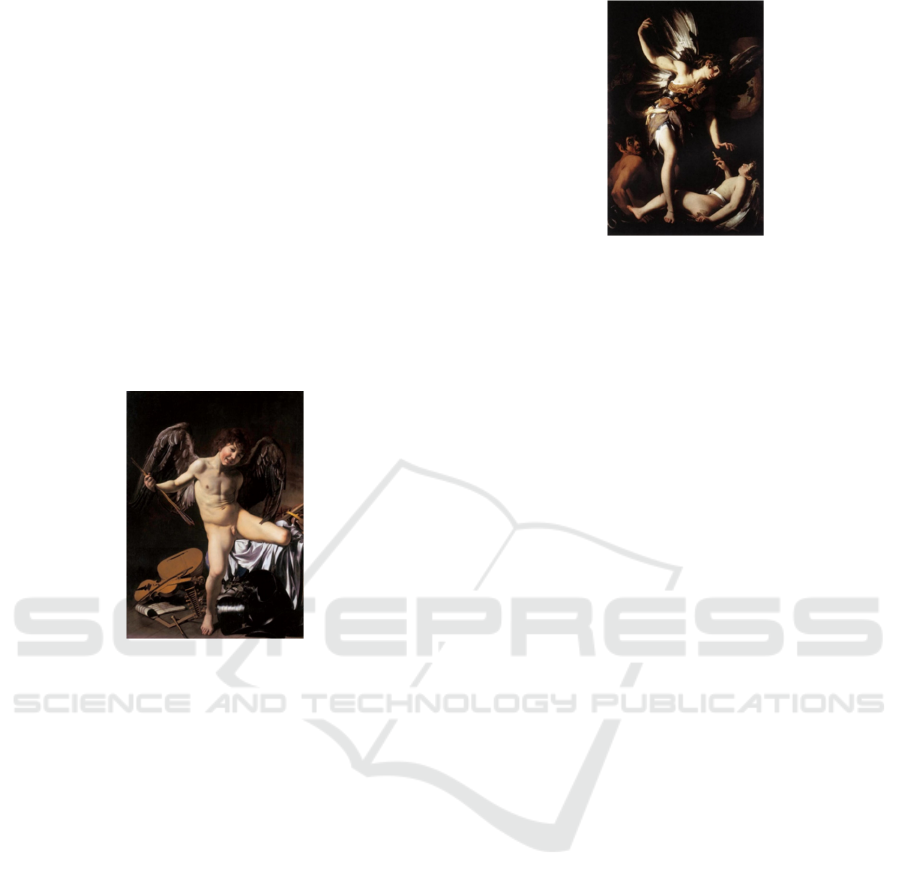
Figure 1: Amor Vincit Omnia, Caravaggio, 1602, oil on
canvas. https://en.wikipedia.org/wiki/Amor_Vincit_Omnia
_(Caravaggio)
As shown in Figure 1, Amor Vincit Omnia is an oil
painting by Caravaggio completed in 1602. The
image shows a naked boy with black wings against a
dark background, smiling and holding several arrows,
which occupy the central of the image. The young
man bends one knee and rests on a pile of
miscellaneous objects, which are stacked in a
triangular slope, from top to bottom you can see the
crown, white cloth, olive branches, armor that looks
like it is broken, musical instruments, sheet music and
other items.
Following Amor Vincit Omnia, Sacred Love
Profane Love in figure 2 is an oil painting by
Giovanni-Baglione from 1603, which is divided into
two parts, the upper part of which shows an angel in
magnificent armour, holding a bow and arrows, and
dividing the lower part of the picture between the two
characters in a graceful gesture. The two characters at
the bottom of the picture are a demon with a close-up
of his face, turning his head, and an angel, who, unlike
the other, is paralysed on the ground, with his right
hand raised and a look of panic on his face.
Figure 2: Sacred Love Profane Love, Giovanni-Baglione,
1603, oil on canvas. https://www.pinterest.com/pin/5939
1288808615020/.
2.1 Definition of the Elements of
Religious Art
Before discussing these two works, what needs to be
understood is the definition of religious art. Howes
Graham, in his study of icons, states that 'the image is
not only a medium for worship purposes, but also an
essential element. For the icon painter, the process of
creation is not a demonstration of one's claims, but
rather an act by which one establishes a sphere in
which power can operate...The image of the icon
shares in the sanctity and glory of its archetype, and
as such is worthy of acceptance and veneration, and
its adoration is transferred to the subject idea of God
behind the symbol." (Howes Graham, 1984).
From this, we can conclude that religious art is full
of religious nature, the core of propaganda is to
convey the teachings and beliefs, and most of the
religious stories, myths and legends and images of the
gods as the content of the creation, in order to achieve
the purpose of religion is sacred and cannot be
offended by the idea of propaganda. Secondly,
religious art is usually full of symbolism, and the
creators will use specific symbols or signs to convey
religious meanings. In other words, the images that
appear in religious art usually have a fixed meaning,
more important than the image and the artist who
created it, is the symbol of the idea behind the image.
It is important to note that although they both use
cupid as a medium for conveying ideas, Caravaggio
and Baglione's two works are not religious art, and
they choose to use mythological figures to create a
contrast and conflict that is more of a contest of
positions than a propaganda of religious doctrines.
This break with tradition is more indicative of the
intensity and conflict of the Renaissance intellectual
revolution.
IESD 2025 - International Conference on Innovative Education and Social Development
416
2.2 Behind the Techniques and
Elements Used
In Caravaggio's Amor Vincit Omnia, Caravaggio
uses chiaroscuro, a realist representation that seeks a
sense of realism and objectivity in the image and
usually avoids the interference of subjective
interpretation. This method of expression focuses on
the true reflection of real life and nature.
Baglione counters not only by using the same
painting technique as Caravaggio's, but he also draws
the face of the Devil in the picture as Caravaggio's
face, satirising Caravaggio through the Devil's evil,
unrighteousness and holiness, and also using the
layout of the picture to show this: in Baglione's
picture, the angel stands triumphantly in front of
Caravaggio's cupid and prevents cupid from
communicating with the Devil (Caravaggio) from
communicating. After analysing the elements, it can
be concluded that: angels and demons, sacred and
secular, the elements in these two works of art are in
opposition to each other, and through the point of
view of which side's love is fuller of power, it shows
the confrontation that was created by the opposing
ideas of the Renaissance, between secularism and
religiosity.
However. The fall of the reign of religiosity is
inevitable, as analysed from the point of view of
behaviors and as evidenced by later society: 'The
work, as the output of the artist, represents a
generated connection between the individual artist
and reality, and what is in it cannot be a pure
experience of reality...A work is real when it
embodies a personal significance and an
understanding of what this particular person
understands to be the truth, it is real." (Dixon & John,
1993). Society is made up of human beings, and how
it is perceived, embodied and expressed is the result
of the influence of objective reality and subjective
will. This also proves that it was impossible for the
ruling class in the Middle European period to try to
use the concept of religion to suppress the reality and
the rise of humanistic thought.
From this it can be concluded that behind the
elements and techniques being employed is actually
the struggle between human. "Human beings are not
subject to anything other than their own kind, not
even to God, and the norms or measure of existence
must come out of the will of the person who has it.
The Renaissance, contrary to much classicism,
believed that the right direction for human life was
the creative use of practicality in shaping one's being,
rather than defining ascent or unity in terms of the
"sacred" represented by religious cultures..."
(William Schweiker, 2009). Baglione's choice of
opposing elements and the same painting technique to
counter Caravaggio can be described as a clash
between the two doctrines on a macro level, however
the choice of method and the act of expressing dissent
is of his own choosing. Although he represents
religious opposition to secularism, his own choice of
behavior is contrary to religious dogma, and his
confrontation with Caravaggio is only driven by the
personal will of the religious religion he believes he
represents. To use the point mentioned by William
Schweiker, Baglione's behavior is a paradoxical
phenomenon. "It is only when society becomes
secular that the hidden problems behind the concept
of the sacred become apparent." (Dupré, Louis.
1975). These subtle differences may represent the
results that will be seen in later reforms, and this may
be sideways evidence that the ruling class of religion
will become a thing of the past in the reforms of
history and the changing minds of mankind.
3 ST MATTHEW AND THE
ANGEL: THE DIFFERENCE
BETWEEN BEFORE AND
AFTER THE REVISION
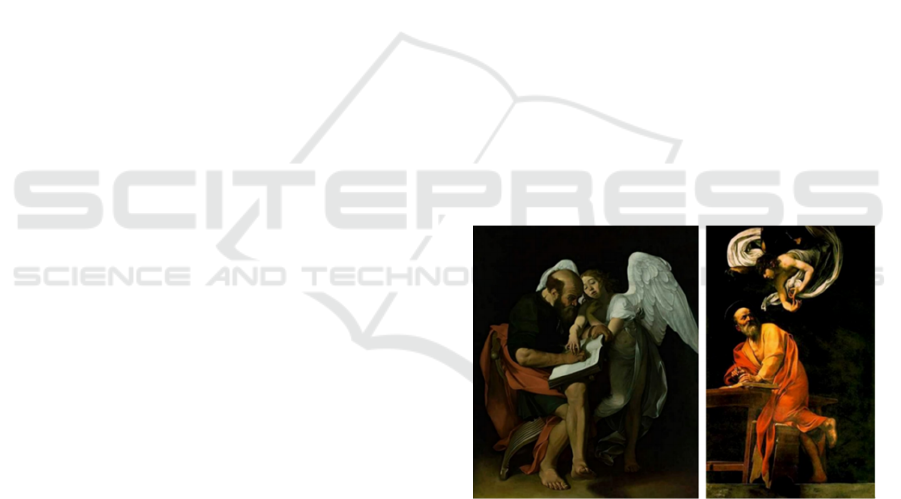
Figure 3: St Matthew and the Angel ver1 and ver2,
Caravaggio, oil on canvas. https://x.com/solas_na_greine/
status/1781393092051943529?mx=2.
The image3 shows the first version of the image of St
Matthew and the Angel. In it, St. Matthew is depicted
by Caravaggio as a bald, barefoot, poor, aged
labourer, frowning, with his clothes dishevelled, and
a wide book clutched tightly in his hand as he records
something. Beside him is an angel, intimately situated
at St Matthew's side in the position of one arm resting
on his palm.
"Caravaggio's religious paintings were not always
approved by the Church, as in the case of the first
Caravaggio and Baglione: the Collision of Humanism and Religion
417

version of the altarpiece of St Matthew and the Angel,
which was destroyed in Berlin in 1945, and he was
forced to paint an entirely new version."(Gash john,
2015). The example is a good demonstration of how
the conflict between humanism and religiosity is
manifested in society as well as among the people.
The picture on the right is the final version of St
Matthew with the angel. The figures and postures of
St Matthew and the angel have been drastically
altered, with St Matthew, in his glorious clerical
robes, looking up at the angel to the right, and the
angel being laid out in a distanced orientation,
looking down on St Matthew at a top-to-bottom
angle. These modifications behind the physique and
layout are very strongly symbolic. The alterations to
the painting, where the original angel is in physical
contact with St Matthew and the two figures are
positioned very close to each other, reflect equality
and intimacy, symbolising religious theology and
mankind being brought closer together. However,
Caravaggio's interpretation was not recognized, and
was considered anathema at the time - the reason for
this was that, combined with the thinking of the time,
most people still retained a religiously orientated
mindset that Christian theology should be sacred and
superior to mankind, and that for the angel,
symbolizing God's messenger, to be close to a human
being was a kind of blasphemy against a sacred
symbol. They believed that God's love should be
divine and that being His believer should be devout
devotion. Thus, in the socially acceptable version of
St Matthew and the angel, the angel and St Matthew
no longer have physical contact but are modified to
appear as coming down from heaven to embody the
Gospel of God's coming to earth.
"In terms of tradition in art history, Caravaggio
may not be as great as Leonardo da Vinci or
Michelangelo, but I think Caravaggio is a more
important presence than any artist. He is not the
greatest artist of the Baroque period, but his art has
become a perception, a logic and tradition of
behaviour and has influenced us implicitly."(Arenas,
2016). Under the influence of the religionist ideology
of the time, which considered the divine right to be
immaculate and superior to human rights, the first
draft of St Matthew and the Angels, with its human
light of equality and gentleness, was undoubtedly a
major shock, and, as Amelia says, Caravaggio's
unique interpretation of religious themes triggered the
thoughts of people from different social classes,
appreciating or rejecting it, and it was a proof of the
shock he caused to society of the time. As Amelia
says, Caravaggio's unique interpretation of religious
themes provoked the thoughts of people from
different social classes. Caravaggio's work forced
society to rethink the relationship between religion
and human nature, and had a profound impact on the
intellectual progress of art history.
4 CONCLUSION
It is because of the conflicts that existed in the history
that the modern man can enjoy the equality of human
rights and freedom of thought, which are more open
than in the Middle Ages. Even if the conflict between
religion and humanism is only a part of the long
history that has helped mankind to evolve, the spirit
of rebellion of those who dared to fight against the
traditions of their time, as Caravaggio did, is
undoubtedly great, because the reforms of the
pioneers have laid the foundations for the generations
that came after them. As Amelia Arenas said,
Caravaggio has become a legacy of ideas, and the
same can be said for art - it is the ideas and needs that
emerge as times change and people's needs change
that slowly liberate the artist's mind from its
framework.
REFERENCES
Arenas, A. 2016. Sex, Violence and Faith: The Art of Ca-
ravaggio. Arion: A Journal of Humanities and the Clas-
sics 23(3): 35–52.
Dixon, J. W. 1993. What Makes Religious Art Religious?
Cross Currents 43(1): 5–25.
Dupré, L. 1975. The Enigma of Religious Art. The Review
of Metaphysics 29(1): 27–44.
Gash, J. 2015. Counter-Reformation Countenances: Catho-
lic Art and Attitude from Caravaggio to Rubens. Stud-
ies: An Irish Quarterly Review 104(416): 373–87.
Howes, G. 1984. Religious Art and Religious Belief. New
Blackfriars 65(769/770): 331–40.
Rose, G. B. 1898. The Art of the Italian Renaissance. The
Sewanee Review 6(2): 129–49.
Schweiker, W. 2009. Humanizing Religion. The Journal of
Religion 89(2): 214–35.
Trevor Roper, H. R. 1959. The General Crisis of the 17th
Century. Past & Present 16: 31–64.
Trinkaus, C. 1976. Humanism, Religion, Society: Concepts
and Motivations of Some Recent Studies. Renaissance
Quarterly 29(4): 676–713.
Todorov, T. 2002. Imperfect Garden: The Legacy of Hu-
manism, trans. C. Cosman. Princeton University Press,
30. Christianity and Humanism. Loyola University
Press.
IESD 2025 - International Conference on Innovative Education and Social Development
418
