
Bouyei Batik Patterns in Correlation to the Oral Culture and
Socio-Historical Context of the Bouyei People: Taking the Sawtooth
Batik Pattern as an Example
Xiaoang Huang
Beijing International Bilingual Academy, Beijing, China
Keywords: Bouyei, Batik, Minority, Ethnicity, Pan Songs.
Abstract: The Bouyei ethnic group is a minority ethnic group residing in mostly Guizhou, China, with a unique oral
culture -where information is passed down through singing and visual art forms instead of writing-
exemplified through Pan songs. This paper will analyze the parallelism and correlation between the Bouyei
Batik dye, an art form significant to the Bouyei people, and the Bouyei pan songs. Specifically, how are the
Bouyei Pan songs and Batik dye correlated to each other: in terms of recurring motifs and symbolisms, mainly
analyzing the “Sawtooth” Batik pattern and Making Grains song, and the animalistic patterns and the Love
song, through a lens of formal elements in visual art and lyrical meaning.
1 INTRODUCTION
The Bouyei ethnic group, referred to as Jui or Yoi in
the Thai (Bouyei) dialect, is one of the 56 recognized
ethnic groups in China. Residing in mostly Guizhou,
China. They’ve developed their distinct culture of art
and expression, even including language diverging
from Chinese, with roots of Buddhism and other
Chinese folk religions, tackling their own way of
survival in a rather enclosed, mountainous terrain.
Despite Bouyei artifactual culture’s uniqueness and
complexity evident in multiple aspects, such as
embroidery, clothing, and folklores, one especially
significant and prevalent would be the Bouyei Batik
patterns.
With an inter-cultural relation with the Miao and
Yi ethnicity residing also in Guizhou, Batik dye,
using wax as a medium of barrier to dye fabric to
create patterns, is a form of natural-dye art prevalent
in rural areas of Guizhou. Due to the ethnicity’s
alienation from other majority ethnic groups in China,
the lack of written scripts prompted the Bouyei
people their distinct way of communication and
passing down of rituals, stories, and scripts through
Batik patterns and the motifs within these patterns,
with another major pathway of an oral education,
differing from the majority Han’s approach of
learning through scripted language. Batik patterns has
long been protected and cherished by the Bouyei
people, dating its origin back to the Song Dynasty, as
in recorded in Songshi, bees wax and Batik fabric is
an indigenous, unique product in Nanning State,
referring to Guizhou Huishui, the prolonged site of
Bouyei people today (Liu & Wei , 2018).
In this paper, Bouyei Batik patterns will be
analyzed under the lens of a sociocultural approach
with its correlation to the oral culture of Bouyei
culture; in terms of why Batik patterns are correlated
to the oral culture of the Bouyei ethnicity, and the
meaning it conveys grounded to a historical and
social context. Specifically, analyzing the shape
grammar, use of materials and color, as well as
allusions to folklores and recurring motifs of Bouyei
Batik patterns.
2 ANALYSIS OF THE ORIGINS
OF THE ORAL CULTURE OF
THE BOUYEI PEOPLE
The Bouyei ethnicity conveys ideas, folklores, and
information through a unique matter of fact because
of living in isolation for centuries due to its
mountainous surroundings. Debatably, the Bouyei
ethnicity’s origin correlates with Xihan Dynasty’s
“Yelang” empire due to it is similarities between
pronunciations of words, specifically, how they both
pronounced the vegetable bamboo shoot “ranz”,
which directly translates to “lang” — having a
Huang, X.
Bouyei Batik Patterns in Correlation to the Oral Culture and Socio- Historical Context of the Bouyei People: Taking the Sawtooth Batik Pattern as An Example.
DOI: 10.5220/0013996500004912
Paper published under CC license (CC BY-NC-ND 4.0)
In Proceedings of the 1st International Conference on Innovative Education and Social Development (IESD 2025), pages 393-397
ISBN: 978-989-758-779-5
Proceedings Copyright © 2025 by SCITEPRESS – Science and Technology Publications, Lda.
393

repeating character in the name as the “Yelang”
Empire; Granted, the Bouyei Ethnicity becoming
more distinctive and alienated from the “Yelang”
Empire, where during the Wei, Jin, Southern and
Northern Dynasties to the Tang Dynasty, the Bouyei
and Zhuang ethnicity were called “vulgar liao”, after
five generations, the Bouyei people were being
distinctively called "Zhongjia”. Later, due to the
long-term separation, they gradually formed the
official Bouyei and Zhuang ethnic groups (Bouyei,
2024).
This complexed history of distinctiveness has
driven the Bouyei people to drift towards an oral
approach of learning. The Bouyei language, being a
member of the Tai-Kadai language family, is tonal
(Snyder, 2018), meaning that the tone or pitch of a
syllable affects its meaning, and has rarely forms of
written scripts; Differing from the tradition textbook
way of learning, such as standardized tests through
calligraphy in ancient China, the Bouyei ethnicity
does not own an official form of standardized written
script. However, there are modern efforts to
standardize the language and create a written form
based on the Latin alphabet(Bouyei Ethnic Minority,
2024), particularly in educational and governmental
contexts.
Therefore, knowledge is passed down through
oral approaches through sang folklores that includes
symbolisms and motifs representing indigenous
wisdom—through incorporating these symbols within
unique forms of art, replacing written scripts,
especially evident in fabric art and patterns interwoven
within Bouyei’s mundane life- the Batik dye.
3 THE PARALLELISM
BETWEEN THE BOUYEI "PAN
SONGS” AND BOUYEI BATIK
PATTERNS
Bouyei Pan songs exemplify the Bouyei oral culture
as it is the main method of the passing-down of
knowledge generation to generation. Pan songs
include numerous aspects, such as labor, government,
rituals, love, life, environment, history and legends. It
has two forms: indoor singing and outdoor singing.
Singing tunes are varied accordingly to love songs,
rituals, wedding songs, funeral songs and other
Bouyei songs involving academical fields such as
politics and economics (Yang, 2022). It vividly
describes the unique psychological characteristics
and emotional tendencies of the Bouyei people, it is
the oral “book” of the Bouyei people.
Figure 1: Bouyei Batik pattern, the “Sawtooth” pattern (Liu
& Wei, 2018).
One specific shape grammar is named the
“Sawtooth pattern (Fig 1),” or in other words, the
“dog teeth pattern”. Its name originates from its
shape: where continuous zig-zag lines and triangular
shapes merge with patches of negative space creating
shapes with round edges on the side and pointy shapes
at the bottom, resembling images of teeth and saw
teeth. This pattern symbolizes dog’s teeth as first
evident in a traditional Bouyei folklore, where a dog
sacrificed its own flesh to save a whole Bouyei village
in now Huishui, Guizhou from a sudden starvation
and disease crisis from a lack of harvest of crops and
unexplained viruses (Liu & Wei, 2018).
On the other hand, in the Bouyei Pan Song, the
Making Grains song, the lyrics sing (translated to
English, “Rich days are good planting fields and
cutting fields, small fields and large fields all needs to
be trimmed and cut…. (Yang, 2022)” saying how
people, on a “rich” and “lucky” day, would cut and
trim the paddy fields and harvest grains and rice using
a sharp tool. This song solely sings about the
complete process of making grains, including how to
sharpen bamboos to pilot the flowing water into the
paddy fields. The character “Cai”, meaning cut or
trim, is repeatedly used in this song, singing how
everywhere needs to be trimmed and cut, until all
paddy fields are harvested. This song documents all
the experiences needed for harvesting paddies,
praising sharp tools that have made their effortful
work more convenient and meaningful. Deducing
from the lyrics, this is how agricultural knowledge is
passed down to generations, in an oral way.. Drawing
a parallel to the “dog teeth (sawtooth)” pattern, dog
teeth not only symbolizes good omens and the
hardships, worth of respect in the survival of the
Bouyei people derived from it is heroic sacrificial role
in the folklore, it is a visualization of the tools used
for harvesting— It’s sharp edges and regular pattern,
spiritualizes the recurring motif of gratefulness
towards these tools for bringing people peace and life
in the village.
IESD 2025 - International Conference on Innovative Education and Social Development
394
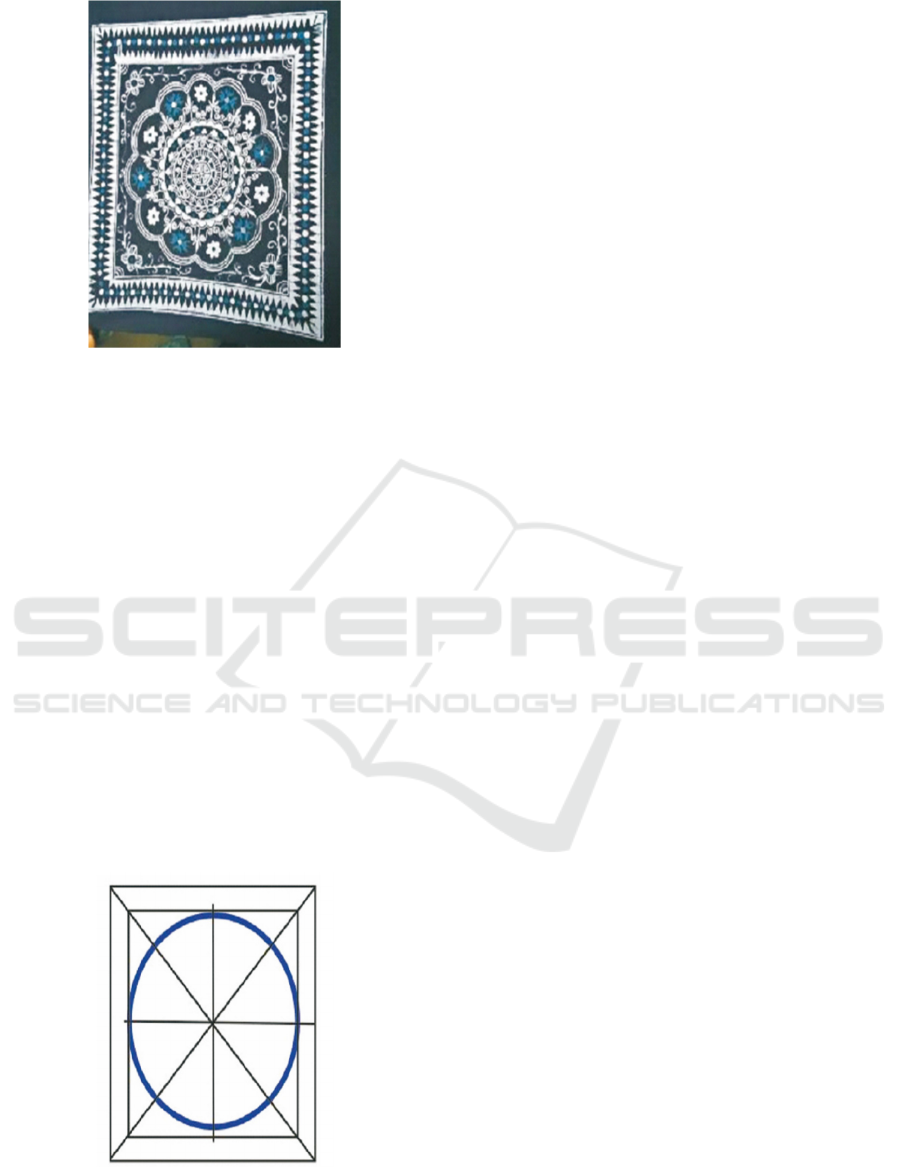
Figure 2: Bouyei Batik Dye of Shitou Village, Huishui, Gui-
zhou. Batik dye on pure cotton fabric (Liu & Wei, 2018).
Furthermore, the dog teeth pattern is just a segment
of a complete Batik design on fabric (Fig 2), which
tells a rather complete story with multiple
symbolisms parallel to the spirituality conveyed in the
Bouyei pan song. In terms of color, it consists of
mainly teal and dark blue colors, which are
conventional colors in Bouyei people’s clothing and
art. In the Bouyei people’s perspective, teal and blue
are essentially the same color with the same
pronunciation of “heiou”. The utilization of the blue
and teal colors is inseparable from the Bouyei
people’s surroundings, where nature provides Bouyei
people with abundant resources of blue grass and East
green trees (Li & Gao, 2023). Using strictly pure
natural dyes, this symbolizes Bouyei’s spirituality of
respecting and worshiping the nature’s gift of tools
and protection; As the natural dye also performs a
protective function of preventing diseases, this draws
a parallel to the sang folklore of the song of harvest.
Figure 3: Composition diagram of the Batik dyed fabric in
Fig 2 (Liu & Wei, 2018).
Composition wise, the dog tooth pattern is a type
of geometrically shaped pattern out of multiple types
of shape grammar of Bouyei Batik patterns, where
simple, geometrical, and regular shapes are layered to
create complexed imagery. Since balance is a
common focus in Batik patterns, it is crucial to
maintain symmetrical forms of regular shapes even
through irregular substances of wax. In this piece of a
complete Batik design (Fig 2) where the dog tooth
pattern is present, the composition (Fig 3) of this
design mainly consists of circles and squares with
clear lines of symmetry, symbolizing, again, Bouyei
people’s respect to the laws existing within nature.
The composition also varies in density through the
placing of simple geometrical shapes established by
variations within negative and positive spaces.
Present in many designs of Batik, just like the dog
tooth pattern, most shape grammars are layered in a
horizontal way— Intertwining, layering, or leaving
out negative spaces. Not only to enhance the balance
within composition, this mimics the mapping of
paddy fields with a sense of movement through
creating a direction by grammatical shapes, passing
knowledge through recurring symbolisms present in
Harvest pan songs that passes a message of
agricultural wisdom.
4 DISCUSSION
Animals are always symbolisms of the sacredness,
the purity and the spirituality of nature, as seen
present in all occasions, including ceremonies and
rituals of funerals, for instance during funerals the
Bouyei people would organize a set up including
cedars and chicken, to create a spiritual environment
that allows a person’s soul to “leave in peace” along
with the blessings of nature during the whole pathway
towards afterlife (Wu, n.d.); Such as dog teeth as a
representation spirituality within harvesting.
In some batik designs, a rather realistic image of
animal and bugs are portrayed, distinctive from the
abstract patterns such as polka dots and the dog teeth
pattern. These patterns are considered recognizable
and obvious in its form and serves an emotion-wise
expressional function rather than illustrating folklores
like the dog teeth pattern does. One specific
combination of the utilization of animalistic motifs is
the combination of birds and butterflies/moths, and
carp fishes (Fig 4).
Bouyei Batik Patterns in Correlation to the Oral Culture and Socio- Historical Context of the Bouyei People: Taking the Sawtooth Batik
Pattern as An Example
395

Figure 4: Bouyei/Miao Batik pattern with the butterfly/
moth, bird, and fish (Dzulkifly, 2021).
In the Bouyei pan songs, birds and
butterflies/moths are always correlated to love due to
its prevalence in love songs, while the carp fish,
especially appearing in doubles, or quadruples, are
symbolisms of birth and the desire for
paternity/maternity. In the Bouyei pan song, Love
song 4, a girl is singing to her “lover boy” in a
feminine perspective, the girl sings “if you are far far
away, I will turn into a bee, call you standing on trees,
and I can change into all sorts of animals that can
fly… I will turn into a swallow, flying under your roof
to call your name.” The girl portrays herself as a little
bird or a little flying bee that would follow her
beloved one wherever he goes. The lyrics utilized a
repetitive structure, even with a sense of humor of
teasing him with intense love, turning into any being
that can fly so she could see him every day. These
animals and bugs mentioned are all living beings in
the Bouyei people’s mundane life, and due to the
extreme love and affection, they desire the ability to
fly and turn into any animals/bugs with a small size
and wings so they could follow their lover all the
time, just like a butterfly or a bird(Yang, 2022).
In this batik design (Fig 4), the composition is a
very significant component of deducing the message
of love outside of animalistic motifs. Although this
batik design having debatable origins from the Miao
and Bouyei (Dzulkifly, 2021), due to the female in the
center having Miao-similar silver wear while using
Bouyei batik styles of utilizing only white and blue,
the batik design has an undebatable message of love.
The girl standing in the center wearing traditional
Guizhou tribal feminine clothing and a female
headpiece, although in the center, is a less dominant
subject in the composition, with all fishes, bugs, and
birds having a larger area than her, flying near her or
beyond her. This represents an imagery of “dazzled in
love”, as portraying her whole thought and mind
sunken deep into this idealized thought of love and
marriage. Moreover, the symmetrical composition
reflects traditions within unity and spirituality within
nature, as well as an idealization of marriage and love.
This portrays an extremely similar image with the
metaphor of the willingness of turning into a “bee” or
“swallow” to chase after the singer’s lover, again,
conveying intense, dazzling emotions of love.
Therefore, this is another recurring motif as
organisms with wings are associated with love and
the pursuance of love in both the love song and batik
design including similar representations.
Moreover, the two carp fish in this batik design
has a more specific meaning rather than a generic
emotion of love. The carp fish is a specific type of
pattern that are gifted and drawn for newly married
couples. It is a symbol of fertility, the desire for more
children, good wishes for paternity and maternity for
passing down of bloodlines, which conveys their
admiration and respect for the primitive way of
breeding; These standards being considered as
idealized lifestyles in the Bouyei people’s tradition
culture is grounded to the Bouyei people’s
surroundings of an enclosed, mountainous area,
having a rather primitive and traditional value of
fertility, family, and birth compared to modern
values. Being one of the most prevalent patterns in
batik designs, carp fishes can be portrayed
realistically or abstractly through simple shapes, and
its prevalence could be explained by rivers and
streams surrounding the Bouyei people with abundant
carp fish due to its strong reproduction ability (Bai,
n.d.).
The meaning behind the carp fish pattern is
supported by fish symbolizing offspring and the “next
generation” in funeral songs. In the Sending Souls
Away song, to alleviate grief and the overall
melancholic atmosphere during funerals, like most
Pan songs, this song metaphorically portrays the
passing of their own parents as if “a fish leaves the
water” (Yang, 2022). Where the offsprings of the
passed parents convey their extreme grief through
portraying themselves as helpless fishes, which the
fish explicitly represents the “bloodline still being
passed on” by the presence of offsprings like
themselves, revealing the traditional fertility value of
the Bouyei people.
In this batik design utilizing carp fish as the main
subject (Fig. 5), the coral like pattern surrounding the
edged of this Batik dye mimics the shapes of waves
and splashing of water. This is a cohesive element
that grounds the elements of fish into their
IESD 2025 - International Conference on Innovative Education and Social Development
396

environment, also emphasizing the fact that fishes
always need water, just as how a children’s primitive
existence needs parents. This piece has a unique
composition where it creates a swirl-like pattern with
organic shapes. It is organized in a radial, circular
composition with the two fish at the center forming
the focal point with multiple visually leading lines.
The balanced and symmetrical arrangement radiates
outward in swirling patterns, creating a sense of
movement and harmony. The outer rectangular
border frames the entire composition, correlating to
the Chinese culture of “all is complete” within the
natural laws. The circular, swirling composition
provides visually leading lines that mimics the natural
swirl of water, while the circle symbolizes unity
within nature and the admiration of nature of Bouyei
people.
Moreover, the difference in density of the object
placement creates a harmonic and complex
composition, giving the main focal point a dominant
position, not only contrasting in size but also detail
and delicacy. The fishes gradually decrease in size as
all the small fish’s direction swims towards the
center, creating a visually dazzling composition that
symbolizes the complexity and desire for fertility.
The two fish in the center lays “head to toe”
mimicking the placement of a fetus, correlating to the
natural balance law of “Ying and Yang” enhancing
the visual focal point.
Figure 5: Carp fish pattern of Bouyei batik design
(Dzulkifly, 2021).
5 CONCLUSION
These are just some of the many examples of
symbolism present in complete Bouyei Batik
patterns, yet countless batik designs and Pan songs
remain undisclosed to the world due to
communication barriers and a lack of awareness for
such minorities like the Bouyei. The Batik patterns
grounds itself to the oral culture of Pan songs unique
to the minority Bouyei people, where the shape
grammar, composition, manipulation of natural
elements for colors, and most importantly, symbols
that are visualizations for oral information,
compliments each other to shape Bouyei’s identity
and voice. Where as simple as dog teeth and carp
fishes, could signify Bouyei people’s wisdom in
agriculture and values of love, representing spirits
and wisdom of often unwritten parallelism.
REFERENCES
Bai, L. Research on the Batik Craft of the Bouyei Ethnic
Group under the Background of Rural Revitalization.
Cultural Vision 37–39.
Bouyei Ethnic Minority. 2024. Chinaculture.org. http://en.
chinaculture.org/library/2008-02/05/content_23879.htm
Buyei, People, Britannica. n.d. Britannica. https://www.bri-
tannica.com/topic/Buyei
Bouyei. 2024. Gov.cn. https://baike.baidu.com/reference/
152623/533aYdO6cr3_z3kATPWLzP7xMyvGP4ir6Le
HUONzzqIP0XOpX5nyFI899pk88LhgAQTauZZlL4
RFx73nCkxa7PQPIrJrBuB82Rn9WjPDz7zj4YF1xw
Dzulkifly, S. 2021, October 1. Batik From Around the
World. Indonesia Design.
Li, R., & Gao, Y. 2023. Research on Batik in Shitou Village
of Bouyei Ethnic Group in Anshun, Guizhou. Beijing
Forestry University.
Liu, W., & Wei, J. 2018. Research on Batik Printing Pat-
terns of Buyi Nationality in Guizhou. College of Pack-
aging Design and Art, Hunan University of Technology.
3(23).
Snyder, W. 2018. Languages of the World 55, 268.
Wu, Q. Lin. n.d. Singing Survival. Ethnic Literature Re-
search, 2, 131–141.
Yang, L. 2022. Preliminary Discussion on the Bouyei Eth-
nic Group's Oral Classics in the Beipanjiang River Ba-
sin: A Case Study of Yangchang Bouyei. Zunyi Normal
University, School of History, Culture and Tourism,
Guizhou 33, 25–28.
Bouyei Batik Patterns in Correlation to the Oral Culture and Socio- Historical Context of the Bouyei People: Taking the Sawtooth Batik
Pattern as An Example
397
