
The Impact of Emotional Labor on Job Satisfaction of Special
Education Teachers: The Mediating Effect of Professional Identity
Fang Zhong
Faculty of Education and Human Development, The Education University of Hong Kong, Hong Kong, 999077, China
Keywords: Special Education Teachers, Emotional Labor, Professional Identity, Job Satisfaction.
Abstract: This research focuses on special education teachers (SETs) and utilizes scales measuring emotional labor,
professional identity and job satisfaction to analyze a group of 221 educators in the field. The primary objec-
tive is to establish a stronger theoretical foundation for improving job satisfaction among these educators by
examining the impact of emotional labor on their overall job satisfaction and the mediating role of professional
identity. The findings reveal that: (1) there is a significant negative correlation between surface acting and job
satisfaction, while deep and natural acting, emotional labor and professional identity all tend to correlate fa-
vorably with job satisfaction; (2) professional identity is crucial in mediating the connection between emo-
tional labor and job satisfaction for SETs. Consequently, it is essential to underscore the significance of pro-
fessional identity in efforts to boost job satisfaction within this group.
1 INTRODUCTION
As stated in the China Disabled Persons' Federation’s
issued report, over 85 million individuals in China are
disabled overall (The China Disabled Persons'
Federation, 2010). For these special groups, special
education can improve their ability to a certain extent,
enable them to better adapt to and integrate into
society, and live in society with more dignity, which
is of great significance to them, their families, and
even the whole society.
In this context, the Chinese Ministry of Education
has issued a series of policies, including the action
plan for advancing and improving special education
during the 14th five-year plan and the protection and
development plan for the disabled over the same
period (The China Disabled Persons' Federation,
2023). These policies aim to create better conditions
for the disabled and to promote the comprehensive
development of special education. In this process of
development, special education teachers (SETs) are
pivotal, yet they are facing great challenges. The
majority of special students have physical and/or
intellectual disabilities. Compared with the non-
disabled peers, they demonstrate more impaired
cognitive abilities and are more prone to various
emotional and behavioral problems. Furthermore, the
speed of special students' acquisition of knowledge
and skills is very slow, which can result in a sense of
teacher accomplishment being elusive. At the same
time, the students of special education are complex,
including children with physical disabilities, children
with intellectual disabilities, children on the autistic
spectrum, and so on. Compared with the students of
general education, they are more vulnerable and
sensitive. Moreover, in the eyes of the public, SETs
are often erroneously considered to be "nannies".
These characteristics require that they need to invest
more care and encouragement than teachers in
general education to support the development of
students' abilities, and they must also dedicate more
effort and emotional labor to cope with pressure and
meet work expectations. Research shows that
emotional labor significantly affects both educators
and students. Effective emotional labor promotes
education, but emotional resource consumption
affects teachers' physical and mental health, and
teachers' negative emotions in turn affect students
(Hong et al., 2022). At present, the emotional health
problems of SETs in China are serious, and the
prevalence of psychological issues reaches 25.63%,
significantly exceeding that of regular primary and
secondary educators (Xu, 2004). This situation
seriously affects the team dynamics of SETs,
underscoring the need for more nuanced attention to
their emotional labor.
Hochschild first put forth the notion of emotional
labor in 1979. It refers to the psychological process in
which individuals show reasonable emotions in
384
Zhong, F.
The Impact of Emotional Labor on Job Satisfaction of Special Education Teachers: the Mediating Effect of Professional Identity.
DOI: 10.5220/0013996200004912
Paper published under CC license (CC BY-NC-ND 4.0)
In Proceedings of the 1st International Conference on Innovative Education and Social Development (IESD 2025), pages 384-392
ISBN: 978-989-758-779-5
Proceedings Copyright © 2025 by SCITEPRESS – Science and Technology Publications, Lda.

accordance with organizational requirements in order
to promote the smooth completion of tasks
(Hochschild, 2019). From different research
perspectives, different scholars have also put forward
different definitions. At present, the academic
community generally believes that emotional labor
includes three dimensions, namely, surface acting,
deep acting and natural acting. Surface acting is
known as the suppression of authentic emotional
reactions to meet organizational expectations. Deep
acting refers to individuals adjusting their emotions
through self-regulation and expressing feelings that
the organization deems appropriate (Hochschild,
2019). Natural acting, on the other hand, is defined as
the authentic expression of personal feelings
(Diefendorff et al., 2005). The present study aligns
with the three-dimensional theory, which categorizes
acting styles as surface, deep, and natural, and divides
the emotional labor of SETs into these three distinct
dimensions.
As is widely acknowledged, the emotions that
individuals experienced inside are not always
consistent with the expectations of organizations. In
the workplace, individuals typically seek to express
positive emotions. However, individual emotions are
inherently variable. When such emotions deviate
from the organizational requirements, people must
adapt their feelings to conform to the organization’s
expectations. The larger gap between a person’s
feelings and their emotional expression, the more
emotional labor the individual needs to pay. As
demonstrated by extant research, surface behavior in
emotional labor has a detrimental impact on
emotional exhaustion and job satisfaction (Zhang &
Zhu, 2008). Xu and Liu, taking teachers as research
objects, showed that emotional labor had an adverse
association with occupational burnout, and was
positively correlated with teaching efficacy.
Emotional labor also played an intermediary role in
teaching efficacy and teacher job burnout (Xu & Liu,
2011). In the investigation into the emotional labor
undertaken by SETs, Zhou observed that these
educators consistently exhibited a substantial degree
of emotional labor (Zhou, 2016). Ger pointed out that
the emotional labor and surface behavior of SETs had
a significant positive predictive value for emotional
exhaustion, natural behavior exhibited a significant
negative predictive value for emotional exhaustion,
and deep behavior demonstrated no significant
impact on emotional exhaustion (Ger, 2022).
The notion of job satisfaction was first proposed
by scholars as early as the 1930s. According to
Hoppock, job satisfaction is the feeling of a certain
degree of satisfaction that employees get from work
and is the subjective response of individuals to the
work situation (Hoppock, 1935). Specifically,
satisfaction at work is of great importance, signifying
a satisfying or favorable emotional condition
experienced by employees in their professional
environment. A high level of job satisfaction
indicates that individuals are more able to obtain
positive emotional experience at work and are more
willing to engage in work, while a low level of job
satisfaction can result in a range of adverse behaviors,
including resignation and early retirement (Madigan
& Kim, 2021). Consequently, enhancing job
satisfaction among SETs is imperative for
maintaining their professional stability. In previous
studies, there are many factors exerting an influence
on job satisfaction, including job return, leadership,
work collaboration, age, gender and other factors. In
addition, extant research has identified emotional
labor as a contributing factor diminishing job
satisfaction (Cheung et al., 2011). Xiong's research
further demonstrated that the emotional labor
performance of SETs, including emotional
weakening and surface acting, had a detrimental
effect on job satisfaction (Xiong, 2019).
Professional identity is defined as the individual's
perspective on the goals, societal values and related
aspects of their chosen profession. Teachers'
professional identity reflects the overall cognition and
attitude of the teaching profession formed in the
process of teaching. For SETs, Chai and Wang
mentioned in their research that compared with
ordinary schoolteachers, the professional identity of
special educators was relatively low (Chai & Wang,
2014). In the study of professional identity, scholars
have indicated that it exerted a notable influence on
job satisfaction. The correlation between professional
identity and job satisfaction is such that a person's
heightened sense of professional identity is positively
associated with increased job satisfaction. Teachers
exhibiting robust professional identity perceive their
profession as valuable and meaningful and derive
satisfaction from it. In contrast, teachers with a
diminished sense of professional identity experience
negative emotional responses in their professional
endeavors, subsequently influencing their overall job
satisfaction (Ostad et al., 2019). Additionally, studies
further demonstrated that professional identity
partially mediated the connection between teachers'
emotional labor (surface acting) and their intention to
resign and as teachers' tenure increased, surface
acting exerted a more pronounced effect on their
professional identity (Hong et al., 2023). In the
research on preschool teachers, Wei et al. also
highlighted that the professional identity of preschool
The Impact of Emotional Labor on Job Satisfaction of Special Education Teachers: the Mediating Effect of Professional Identity
385

teachers would influence the emotional labor
strategies they employ, predominantly natural acting
and deep acting (Wei et al., 2021).
At present, despite the increasing research
conducted by scholars on the subject of emotional
labor, the overall volume of studies in this area
remains modest. Furthermore, the number of studies
focusing on SETs as research participants is limited.
A select group of scholars have conducted relevant
research in this area. However, research examining
the correlation between emotional labor and its
associated variables, along with the intermediate
process mechanism, remains underdeveloped.
Similarly, there is a scarcity of studies specifically
examining emotional labor in SETs and its potential
ramifications on job satisfaction. Furthermore, the
intermediary processes of emotional labor
influencing job satisfaction remain inadequately
investigated. To address these gaps in knowledge, the
current study aims to utilize a sample of SETs as the
research population to explore how emotional labor
influences their job satisfaction and introduce the
notion of professional identity as a potential mediator
to ascertain whether it functions as an intermediary in
the connection between job satisfaction and
emotional labor. This study’s findings are not only
beneficial to the enhancement of the extant research
system in the domain of special education but also
serve as a catalyst for the relevant departments to
accord greater importance to the mental well-being of
SETs, thereby enhancing their satisfaction towards
job and ultimately promoting the advancement of
special education.
In conclusion, this paper proposes the hypothesis
that the emotional labor undertaken by SETs exerts a
notable impact on their satisfaction at work, and
professional identity acts as a mediating factor in the
process of emotional labor affecting job satisfaction.
Figure 1 illustrates the proposed model of this
research.
Figure 1: Mediating role model of professional identity
(assumed).
2 RESEARCH METHODOLOGY
2.1 Research Object
The SETs in public special education schools in
Guangdong Province were selected as the research
objects in this paper. The cluster sampling method
was employed to conduct online and offline
questionnaire surveys. This study distributed a total
of 250 questionnaires, and 232 were retrieved.
Subsequent to excluding the invalid responses (i.e.
those completed in less than 60 seconds or contained
conflicting data, or were repeated), a final count of
221 valid questionnaires were obtained. This resulted
in the recovery rate of 95.3%. The demographic
details of the teaching staff are presented in Table 1.
Table 1: Basic information of survey samples (n=221).
category number percentage
gender male 83 37.6%
female 138 62.4%
head
teacher or
yes 101 45.7%
no 120 54.3%
profession
al title
no professional title 38 17.2%
junior professional
title
70 31.7%
intermediate
p
rofessional title
90 40.7%
senior professional
title
23 10.4%
age 20-30 years 66 29.9%
31-40 years 93 42.1%
41-50 years 53 24.0%
over 50 years 9 4.1%
education
backgrou
nd
college degree or
b
elow
15 6.8%
undergraduate 174 78.7%
master’s degree or
above
32 14.5%
specialty special education 141 63.8%
nonspecial education 80 36.2%
seniority less than 5 years 72 32.6%
5-10 years 51 23.1%
10-15 years 29 13.1%
over 15 years 69 31.2%
state
system
in 174 78.7%
out 47 21.3%
monthly
income
below 5000 yuan 27 12.2%
5000-8000 yuan 82 37.1%
8000-10000 yuan 75 33.9%
above 10000 yuan 37 16.7%
IESD 2025 - International Conference on Innovative Education and Social Development
386

2.2 Research Tools
2.2.1 Emotional Labor Scale
J.M. diefendorff's emotional labor questionnaire was
used for measurement (Diefendorff et al., 2005). The
questionnaire comprises three dimensions: natural,
deep and surface acting, with 3, 4, 7 items
respectively. The Likert scale was employed in this
study to award scores from 1 to 5, where 1 signifies
"completely unqualified" and 5 denotes "fully
qualified". The confirmatory factor analysis results
indicated that the fit indices were acceptable
(x2/DF=3.74, RMSEA=0.048, P<0.05, CFI=0.92, IFI
= 0.92). In this paper, the Cronbach's α values for the
three components were 0.921, 0.886, and 0.848, and
the α coefficient of the whole scale was 0.774. In the
three sub-scales, it was demonstrated that the higher
the score of a sub-scale, the more subjects adopted the
strategy.
2.2.2 Teacher Professional Identity Scale
The teacher professional identity scale employed in
this study was compiled by Wei Shuhua (Wei et al.,
2013). The scale comprises 18 items, which are
divided into four dimensions: role values, behavioral
propensities, job values and sense of belonging. The
alpha coefficient of each factor ranges from 0.72 to
0.86. The correlation between each factor is low and
medium (0.20-0.55), and the correlation with the total
scale is high (0.58-0.81). All correlations reach
statistically significant levels. The scale employs a
Likert 5-point scoring system, ranging from
'completely unqualified' to 'fully qualified', with
points allocation of 1-5 (1=completely unqualified,
5=fully qualified). Scores that are higher on the scale
are indicative of elevated levels of professional
identity. The Cronbach's α for this study’s scale is
0.916, suggesting a high degree of reliability.
2.2.3 Teacher Job Satisfaction Scale
The teacher job satisfaction scale was developed by
Zhu Linghui (Zhu, 2011). A 5-point Likert scale was
used for scoring, where 'extremely dissatisfied'
received a score of 1 and 'extremely satisfied'
received a score of 5. The overall scale consists of 10
items of four factors: cognition of work itself,
cognition of work welfare security, cognition of job
promotion prospect and cognition of work
interpersonal environment. The α coefficient of each
factor ranges from 0.68 to 0.80, with the total scale
demonstrating an α coefficient of 0.901, which
indicates that the scale demonstrates good reliability.
2.3 Data Statistics and Analysis
Descriptive statistical analysis and variable
relationship assessment of the questionnaire were
performed using SPSS27.0 software. Initially, the
descriptive statistical analysis was employed to
examine the respondents' demographic composition,
including gender ratio, age ratio, etc. Secondly, this
study used mean analysis to statistically analyze the
average level of teachers' emotional labor,
professional identity and job satisfaction variables. In
addition, this study also studied whether there is a
significant link between emotional labor and
professional identity. The regression analysis was
used to verify whether teachers' emotional labor had
an important impact on job satisfaction. Finally, the
study utilized stepwise regression to analyze the
mediating effect of teachers' professional identity.
3 RESULTS
3.1 Common Method Deviation
Inspection
The Harman single factor method was employed to
determine the existence of any potential serious
common method bias. The analytical results indicate
that nine factors possess eigenvalues exceeding 1,
with the first factor representing 29.195% of the
variation. This ratio is below the essential standard of
40%, signifying minimal common methodological
bias within this research (Podsakoff et al., 2003).
3.2 Descriptive Statistics and
Correlation Analysis of Variables
In this paper, the mean, standard deviation, and inter-
variable correlations were analyzed through
statistical assessments. The outcomes are presented in
Table 2. Among the three sub-dimensions of
emotional labor (surface, deep and natural acting), a
notable negative correlation has been observed
between surface behavior in emotional labor and
teachers’ job satisfaction (r=-0.211, p<0.01). In
contrast, deep and natural acting exhibit a substantial
positive correlation with teachers' satisfaction
towards job (r=0.338, p<0.01; r=0.257, p<0.01). In
addition, the correlation coefficients of emotional
labor, teachers' professional identity and job
satisfaction are 0.233 and 0.605, respectively,
indicating strong positive correlations. In the
demographic variables, gender, education background
The Impact of Emotional Labor on Job Satisfaction of Special Education Teachers: the Mediating Effect of Professional Identity
387

Table 2: Statistical descriptions and correlation assessments of the variables (n=221).
gende
r
age education
background
speci
alty
senio
rity
state
system
professio
nal title
surface
acting
deep
acting
natural
acting
emotional
labor
professi
onal
identity
job
satisfa
ction
gender 1
age
-
0.10
2
1
education
background
.152
*
-
.159
*
1
specialty
0.00
1
0.05
8
-0.003 1
seniority
0.08
8
.797
**
-.156* -
0.034
1
state
system
-
0.03
1
-
.239
**
-.210** 0.092 -
.271*
*
1
professiona
l title
-
0.03
3
.670
**
-0.028 -
0.089
.738*
*
-
.258**
1
surface
acting
-
0.03
8
-
.419
**
.137* -
0.039
-
.357*
*
0.028 -.311** 1
deep acting
0.01
2
-
0.09
1
-0.069 0.02 -
0.067
-0.064 0.095 .172* 1
natural
acting
.264
**
0.1 0.075 0.092 0.082 -0.051 0.087 -.512** 0.089 1
emotional
labor
0.12
5
-
.271
**
0.079 0.038 -
.225*
*
-0.053 -0.084 .470** .831** .270** 1
professiona
l identit
y
0.06
3
0.12
4
-0.057 0.107 .133* -0.098 .253** -.259** .347** .508** .342** 1
job
satisfaction
-
.243
**
0.06
1
-.208** -
0.023
-
0.043
-0.038 .161** -.211** .338** .257** .233** .605*
*
1
M
1.62
2.02 2.08 1.36 2.43 1.21 2.44 2.27 3.04 3.76 3.02 3.92 3.32
SD
0.48
5
0.83
9
0.456 0.482 1.236 0.41 0.896 1.056 1.14 0.895 0.562 0.641 0.781
Note: * signifies significance at p<0.05 (two-tailed); ** signifies significance at p<0.01 (two-tailed).
and professional title have demonstrated statistically
significant correlations with the dependent variables.
Consequently, these variables will serve as control
variables in the subsequent analysis of mediation
effects.
3.3 Mediation Analysis
To test the mediation model, this study employed the
SPSS27.0 process plug-in to analyze the variables.
Taking gender, education background and
professional title as control variables, this study has
examined how professional identity acts as a mediator
in the connection between emotional labor and job
satisfaction. The findings indicate that emotional
labor has the potential to predict one's professional
identity (β = 0.419, SE = 0.074, p < .000) and
professional identity is a predictor of job satisfaction
(β = 0.739, SE = 0.066, p < .000). However,
emotional labor does not predict job satisfaction. This
model is a complete mediation model (see Table 3).
The direct effect value is 0.107, accounting for
26.35% of the variance, and the intermediate effect
value is 0.300, accounting for 73.65% (see Table 4).
The relationship model for each variable is illustrated
in Figure 2.
IESD 2025 - International Conference on Innovative Education and Social Development
388
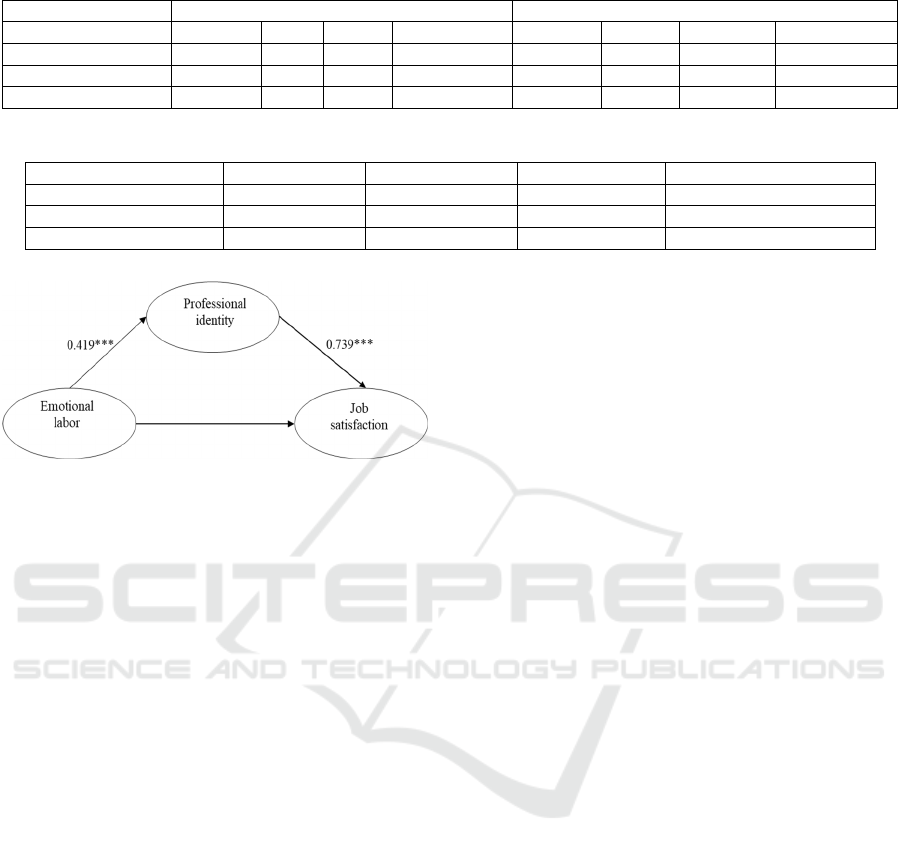
Table 3: Regression analysis of emotional labor, professional identity and job satisfaction.
p
rofessional identit
y
j
ob satisfaction
β
se
p
95%CI
β
se
p
95%CI
emotional labo
r
0.419*** 0.074 0.000 [.317,.608] 0.072 0.078 0.358 [-.081,.224]
p
rofessional identit
y
——
——
——
——
0.739*** 0.066 0.000 [.609,.869]
job satisfaction
——
——
——
——
——
——
——
——
Table 4: Breakdown of the direct effect, the intermediary effect and the total effect.
effect name effect value standard erro
r
95%CI effect
p
ro
p
ortion
(
%
)
direct effect 0.107 0.075 [-.042,.256] 26.35
mediation effect 0.300 0.056 [.191,.409] 73.65
total effect 0.406 0.086 [.238,.576] 100
Note: *** at the 0.001level (two-tailed), the correlation is significant.
Figure 2: Mediating role model of professional identity.
4 DISCUSSION
4.1 The Overall Situation of Emotional
Labor, Professional Identity and
Job Satisfaction of SETs
This study found that the emotional labor,
professional identity and job satisfaction of SETs
were at the upper middle level (emotional labor:
M=3.025, professional identity: M=3.918, job
satisfaction: M=3.317). In comparison with regular
schoolteachers, SETs are required to invest more
emotional labor in their daily education due to the
unique needs of children with special educational
needs. Despite the challenges posed by children's
reluctance to acquire knowledge and skills, and their
emotional behavioral problems, teachers are expected
to demonstrate understanding and acceptance, and to
take appropriate measures to intervene. In addition,
the study revealed that the professional identity and
job satisfaction of SETs were also at the upper middle
level. Firstly, the state has increased its support for
the special education industry, leading to the
development and diversification of the welfare
system and the optimization of industry subsidies.
These developments have further improved the
working conditions in the special education industry,
satisfied the employment aspirations of SETs to a
certain extent, and enhanced their recognition of their
work. This, in turn, has contributed to enhancing job
satisfaction. Secondly, SETs do not need to face the
pressure of students' academic performance
assessment and promotion in their work. What’s
more, the relatively small class size also has a positive
effect on their workload and stress levels, thereby
promoting the development of professional identity
and job satisfaction. Finally, the majority of SETs
have backgrounds in special education, psychology
and pedagogy, which is an advantage in this field.
This equips them with a comprehensive
understanding of their professional values and a firm
grasp of the relevant professional knowledge prior to
commencing their duties, which in turn fosters a deep
sense of professional satisfaction and a stronger
professional identity in their professional practice.
4.2 The Correlation Analysis of
Emotional Labor, Professional
Identity and Job Satisfaction
The research revealed that, within the context of
emotional labor, surface acting exhibited a
statistically significant adverse correlation with both
professional identity and teachers' job satisfaction
(r=-0.259, p<0.01; r=-0.211, p<0.01). Conversely,
deep acting and natural acting demonstrated positive
correlations with professional identity (r=0.347,
p<0.01; r=0.508, p<0.01). Furthermore, the findings
underscored a positive correlation among deep acting,
natural acting, professional identity and teachers' job
satisfaction (r=0.338, p<0.01; r=0.257, p<0.01;
r=0.605, p<0.01). These findings are consonant with
those reported in prior research (Zhang & Zhu, 2008;
Cheung et al., 2011; Ostad et al., 2019). Surface
acting needs to suppress their own authentic
emotional responses and express the anticipated
unrealistic emotions of the organization. Deep acting
is a conscious strategy that adjusts themselves when
The Impact of Emotional Labor on Job Satisfaction of Special Education Teachers: the Mediating Effect of Professional Identity
389

expressing the emotions expected by the working
environment. Natural acting, on the other hand, is an
expression of authentic feelings. When individuals
use the surface acting strategy, they often find
themselves suppressing negative emotional behavior
and falsely expressing positive emotional behavior.
This false emotional expression is inconsistent with
the real emotions experienced, which can lead to
emotional disorder, anxiety and tension and then has
a detrimental effect on the sense of identity for work
and reduce job satisfaction (Zapf, 2002). Conversely,
when SETs adopt the deep acting strategy, they will
change their cognition, so that the inner emotions are
consistent with the external emotional expression.
When using the natural acting strategy, the individual
expresses the authentic feelings. Internal and external
consistency will not make individuals perceive
imbalance, which, in turn, is conducive to improving
professional identity and job satisfaction (Goldberg &
Grandey, 2007). Professional identity, in this context,
is defined as teachers' views and opinions on their
chosen occupation. A high sense of professional
identity is indicative of teachers who perceive their
occupation as meaningful, valuable, and enjoyable.
For SETs, a high sense of professional identity is
characterized by a positive attitude towards the cause
of special education, the capacity to respond
proactively to professional challenges, and a greater
ability to derive enjoyment and value from one's
work. This, in turn, leads to higher levels of
satisfaction at work.
4.3 The Intermediary Function of
Professional Identity in the
Relationship Between Emotional
Labor and Job Satisfaction
Current research identified a significant mediating
function of professional identity in the association
between emotional labor and job satisfaction among
special educators. Specifically, emotional labor can
positively predict professional identity, and
professional identity is positively linked with job
satisfaction, but emotional labor cannot exhibit a
direct predictive effect on job satisfaction. These
findings show the pivotal intermediary function of
professional identity in the impact of emotional labor
on job satisfaction. One potential explanation for this
phenomenon is that emotional labor can be
understood as a complex construct, consisting of
three unique dimensions: surface, deep and natural
acting. Previous studies have demonstrated that in
emotional labor, surface acting exerts a detrimental
influence on job satisfaction (Li et al., 2022). Deep
acting requires high emotional regulation ability,
while natural acting is to directly reveal genuine
emotions. For special educators, due to the unique
nature of the education object, the work difficulty and
complexity are much higher than those of ordinary
schoolteachers, and they need to often control
negative emotions and behaviors, which will lead
them to use more surface acting and less deep acting
to regulate external emotional performance.
Concurrently, the requisites of the educational
profession and societal expectations necessitate that
teachers consistently serve as role models for their
students. They rarely employ natural acting in their
work, which will weaken the impact of deep acting
and natural acting on job satisfaction to a certain
extent. Emotional labor, as the aggregate of the three
dimensions, may not directly predict job satisfaction
when influenced by other variables.
Current research indicates a direct relationship
between the extent of emotional labor and the
subsequent consumption of psychological resources.
When individuals experience greater consumption of
psychological resources than they obtain, more
negative emotions will be generated at work, which
will weaken the recognition of work (Liu et al., 2024).
Concurrently, emotional labor has been demonstrated
to precipitate job burnout. The degree of job burnout
in teachers has been found to be positively correlated
with the extent to which they derive enjoyment from
their work and negatively correlated with their sense
of professional identity (Kariou et al., 2021).
Professional identity is defined as the manifestation
of a person's positive attitude and degree of
engagement in their occupation, reflecting the
individual's recognition of the intrinsic value of their
occupation and emotional preference (Blau, 1985).
Teachers' professional identity is an intrinsic
motivating force and prerequisite for their love and
dedication to education, which can affect their
conscious participation in education (Wang, 2020).
The promotion of professional identity and self-worth
cognition in SETs has been shown to have a positive
effect on their professional practice, reducing
negative emotions and enhancing positive emotions.
This process has been shown to have a positive
impact on job satisfaction (Lu et al., 2022). It can be
posited that career identity functions as a significant
intermediary factor between emotional labor and job
satisfaction. A strong professional identity fosters a
constant internal drive that propels individuals to
engage in their work in a proactive manner.
Regarding the requirements of emotional labor,
individuals possess the capacity to proactively adapt
and adjust their cognitive processes in a timely
IESD 2025 - International Conference on Innovative Education and Social Development
390

manner, thereby more effectively confronting
challenges in their professional environment and
attaining heightened job satisfaction.
4.4 Research Limitations and Prospects
This paper has some deficiencies. The first is the
limitation of the scale. The emotional labor
measurement utilized in this paper is derived from the
seminal work of scholars from other countries outside
China in the field. In future research, consideration
should be given to the utilization of a scale developed
by Chinese scholars and its subsequent discussion in
the context of the actual work of SETs. Secondly, the
research sample is limited. Due to the limitations of
subjective and objective conditions, the research
objects of this study are mainly SETs in Guangdong
Province, and most of the respondents are female
teachers, which may make the research results biased.
In future research, a broader region should be
targeted, and the sample distribution should be as
uniform as possible. Furthermore, the influence
mechanism of emotional labor on job satisfaction
requires further refinement. The impact path of
emotional labor on job satisfaction is complex. It is
possible that other mediating variables exist. The
relationship between the two is also significantly
impacted by some demographic variables. In future
research, scholars may wish to consider conducting
longitudinal studies or exploring the role of other
potential mediators.
5 CONCLUSION
Firstly, it is apparent that SETs exhibit relatively high
levels of emotional labor, professional identity, and
job satisfaction. Secondly, in emotional labor, surface
acting demonstrates a significantly unfavorable
correlation with teachers' job satisfaction.
Conversely, deep and natural acting, emotional labor,
professional identity and job satisfaction exhibit a
markedly favorable correlation. Finally, professional
identity serves a pivotal intermediary function
between emotional labor and job satisfaction for
special educators.
REFERENCES
Blau, G. J. 1985. The measurement and prediction of career
commitment. Journal of Occupational Psychology,
58:4, 277-288.
Cheung, F., Tang, C. S. K., & Tang, S. 2011. Psychological
capital as a moderator between emotional labor, burn-
out, and job satisfaction among schoolteachers in
China. International Journal of Stress Management,
18:4, 348.
Chai, J., & Wang, J. 2014. A survey of professional identity
and job satisfaction of SETs. Special Education in
China, 11:8-14.
Diefendorff, J. M., Croyle, M. H., & Gosserand, R. H. 2005.
The dimensionality and antecedents of emotional labor
strategies. Journal of Vocational Behavior, 66:2, 339-
357.
Diefendorff, J. M., Croyle, M. H., & Gosserand, R. H. 2005.
The dimensionality and antecedents of emotional labor
strategies. Journal of Vocational Behavior, 66:2, 339-
357.
Ger, B. 2022. A study on the impact of emotional labor on
professional commitment of SETs: a moderated media-
tion model. Master's thesis, Nanchang University.
Goldberg, L. S., & Grandey, A. A. 2007. Display rules versus
display autonomy: emotion regulation, emotional ex-
haustion, and task performance in a call center simula-
tion. Journal of Occupational Health Psychology, 12:3,
301.
Hochschild, A. R. 2019. The Managed Heart: Commercial-
ization of Human Feeling. University of California
Press.
Hong, J., Zhao, J. M., & Pan, R. Y. 2023. Effects of emo-
tional labor on the turnover intention of kindergarten
teachers: A moderated mediation model. Social Behavior
and Personality: An International Journal,51:10,1-11.
Hong, Y., Huang, J. H., & Zhang, J. 2022. Relationship be-
tween emotional labor and mental health in preschool
teachers: mediation of psychological capital. Frontiers in
Psychology, 13, 707961.
Hoppock, R. 1935. Job Satisfaction. NY: John Wiley & Sons.
Kariou, A., Koutsimani, P., Montgomery, A., & Lainidi, O.
2021. Emotional labor and burnout among teachers: A
systematic review. International Journal of Environ-
mental Research and Public Health, 18:23, 12760.
Li, P., Zhang, Z. C., Yang, Y., Yang, J. Q., & Li, H. Y.
2022. The effect of job stress on primary and secondary
school teachers' job burnout: the chain mediating effect
of emotional labor and job satisfaction. Psychology and
Behavior Research, 03, 412-418.
Liu, Y. M., You, M., & Liu, X. M. 2024. SETs' sense of
organizational support and professional well-being: the
mediating role of professional identity and job exuber-
ance. Special Education in China, 06, 90-96.
Lu, N. N., Lan, J. J., Deng, X., Chai, L., & Shu, Y. 2022.
The relationship between professional mission and pro-
fessional well-being of SETs: the mediating role of job
burnout. Modern Special Education, 08, 42-48.
Madigan, D. J., & Kim, L. E. 2021. Towards an understand-
ing of teacher attrition: A meta-analysis of burnout, job
satisfaction, and teachers’ intentions to quit. Teaching
and Teacher Education, 105, 103425.
Ostad, S. A., Ghanizadeh, A., & Ghanizadeh, M. 2019. The
dynamism of EFL teachers’ professional identity with
The Impact of Emotional Labor on Job Satisfaction of Special Education Teachers: the Mediating Effect of Professional Identity
391

respect to their teaching commitment and job satisfac-
tion. Cogent Education, 6:1, 1685353.
Podsakoff, P. M., MacKenzie, S. B., Lee, J. Y., & Pod-
sakoff, N. P. 2003. Common method biases in behav-
ioral research: a critical review of the literature and rec-
ommended remedies. Journal of Applied Psychology,
88:5, 879.
The China Disabled Persons' Federation. 2021. The aggre-
gate number of disabled individuals in China, and the
number of individuals afflicted with diverse forms of
disability at varying degrees at the end of 2010. 2021-
02-20 [2024-12-24].
https://www.cdpf.org.cn/zwgk/zccx/cjrgk/15e9ac67d7124f
3fb4a23b7e2ac739aa.htm.
The China Disabled Persons' Federation. 2024. The statis-
tical bulletin on the development of the cause of the dis-
abled in 2023. 2024-04-18 [2024-12-24].
https://www.cdpf.org.cn/zwgk/zccx/tjgb/03df9528fdcd4bc
4a8deee35d0e85551.htm.
Wei, S. D., Guan, J. F., Wang, S. M., & Liang, J. Q. 2021.
The relationship among preschool teachers' profes-
sional identity, emotional labor, and professional well-
being. Chinese Journal of Health Psychology, 09, 1367-
1371.
Wei, S. H., Song, G. W., & Zhang, D. J. 2013. The structure
and scale of primary and secondary school teachers'
professional identity in China. Research on Teacher Ed-
ucation, 01, 55-60+75.
Xiong, Z. Y. 2019. Research on the impact of emotional la-
bor on job satisfaction of SETs. Master's thesis, East
China Normal University.
Xu, M. Z. 2004. A survey of the mental health of SETs.
Special Education in China, 2, 64-67.
Xu, Y. X., Liu Q. Z. 2011. The relationship between teach-
ing efficacy and teachers' job burnout: mediated by
emotional labor strategy. Journal of Hubei Normal Uni-
versity: Natural Science Edition, 31:4, 30-34.
Zhang, Q., & Zhu, W. 2008. Exploring emotion in teaching:
Emotional labor, burnout, and satisfaction in Chinese
higher education. Communication Education, 57:1,
105-122.
Zhou, H. Y. 2016. Research on emotional labor strategies
of SETs from the perspective of positive psychology.
Research on Teacher Education, 28:1, 61-66.
Zhu, L. H. 2011. Research on the relationship between job
orientation and job satisfaction of SETs. Master's thesis,
Liaoning Normal University.
Zapf, D. 2002. Emotion work and psychological well-be-
ing: A review of the literature and some conceptual con-
siderations. Human Resource Management Review,
12:2, 237-268.
Zhang, J. 1935. Job Satisfaction. NY: John Wiley & Sons.
IESD 2025 - International Conference on Innovative Education and Social Development
392
