
Analysis and Prospect of Financial Fund Planning for Higher
Vocational Education from the Perspective of Industry Education
Integration: A Case Study of Tianjin
Mengjie Li
1
and Shenyi Yang
2
1
School of Economics, Capital University of Economics and Business, Beijing, China
2
School of Culture and Communication, Beijing International Studies University, Beijing, China
Keywords: Financial Investment, Public-Private Partnership, Tianjin.
Abstract: As an important way to cultivate highly skilled talents, higher vocational education has received widespread
attention for its financial planning, but there are still shortcomings in existing research and practice. This
article takes Tianjin as an example to analyze the current situation, problems, and impact of financial fund
planning for higher vocational education under the background of industry education integration on the allo-
cation of educational resources and the quality of talent cultivation. Research has found that Tianjin has
achieved significant results in the planning of financial funds for higher vocational education, but there are
still some problems with the specific implementation. Based on this, this article proposes that the government
should increase investment in the construction of a policy system for the integration of industry and education,
develop specific and feasible policy texts, and establish a sound mechanism for evaluating effectiveness.
1 INTRODUCTION
With the gradual shortage of labor and the continuous
increase in wages, the "Lewis turning point" has
emerged in China, where the aging population is
deepening, and the demographic dividend is
gradually disappearing. In the era of rapid upgrading
of industrial structure and rapid technological
innovation, education has also been given higher
requirements (Wang, 2024). Vocational education
should not only adapt to the needs of the social
economy but also play a leading role in technological
innovation and industrial transformation. Through the
cooperation between schools and enterprises, it will
cultivate high-quality, innovative, and effective
technical talents, and promote the transformation
from the quantitative advantage of the labor force to
the advantage of labor quality. Because higher
vocational education is an important way to cultivate
highly skilled talents, strengthening research and
optimization of its financial planning is particularly
crucial. Shen believes that in terms of investment
status, existing literature on relevant topics in China
mainly focuses on the sources of funding for higher
vocational education, as well as regional differences
and improvements in investment systems (Shen,
2020). As Zhou and Yue have said, the history of
vocational education development is a history of
continuous innovation in the concepts and practices
of industry education integration and school-
enterprise cooperation (Zhou & Yue, 2017). These
issues also significantly exist in the financial
investment of industry education integration.
Internationally, the practice of industry-education
integration started early and has developed into
mature models, such as the dual system in Germany
and the cooperative education model in the United
States (Hu, 2024). Compared with the mature
development of the integration of industry and
education in the world, the development of related
fields in China is relatively slow, and there is still
room for improvement. Jia raised the issue of China's
domestic education integration financial mechanism,
firstly, the insufficient matching between vocational
education financial mechanism and enterprise
demand (Jia, 2019). Secondly, the fiscal mechanism
has not been aligned with the interest mechanisms of
all parties involved in the integration of industry and
education. Finally, the incomplete integration system
of industry and education has resulted in the inability
to reflect the role of fiscal funds (Jia, 2019).
Tianjin is the first "National Vocational Education
Reform and Innovation Pilot Zone" in China.
Vocational education started early, but there are still
Li, M. and Yang, S.
Analysis and Prospect of Financial Fund Planning for Higher Vocational Education from the Perspective of Industry Education Integration: A Case Study of Tianjin.
DOI: 10.5220/0013977800004912
Paper published under CC license (CC BY-NC-ND 4.0)
In Proceedings of the 1st International Conference on Innovative Education and Social Development (IESD 2025), pages 239-244
ISBN: 978-989-758-779-5
Proceedings Copyright © 2025 by SCITEPRESS – Science and Technology Publications, Lda.
239

problems such as an imbalanced funding structure
and inadequate investment mechanism guarantee
(Gao, 2023). In 2019, Tianjin was recognized as a
pilot city for the integration of industry and education,
fully reflecting the high importance that Tianjin
attaches to this aspect. However, the issue of related
special funds not only limits the scale of vocational
education in Tianjin but also hinders the further
deepening of cooperation between industries and
schools. Therefore, based on policy analysis of
national policies, this article combines data and case
analysis of Tianjin and specific schools in Tianjin to
explore a planning model suitable for the special
financial funds for the integration of industry and
education in higher vocational education in Tianjin
based on actual implementation effect research and
provide reference experience for other regions. This
study also helps to explore the positive interaction
mechanism between industry education integration
and fiscal funding planning, providing theoretical
support for promoting the deep integration of
vocational education and industrial development.
Finally, by analyzing the existing problems and
deficiencies in the planning of financial funds related
to the integration of industry and education in Tianjin,
targeted suggestions are provided on how to optimize
fund allocation and improve utilization efficiency.
2 TOP-LEVEL POLICY
ANALYSIS OF THE SPECIAL
FUND FOR INDUSTRY
EDUCATION INTEGRATION
In the process of promoting close integration between
schools and industries, special funding policies at the
national level have played an indispensable and
important role. The implementation of these policies
not only promotes deep collaboration between
schools and industries but also lays a solid foundation
for regional economic development and the
construction of an innovative society, demonstrating
the country's strategic vision and policy wisdom in
promoting the linkage between education and
industry.
2.1 Precise Advertising Strategy
In terms of funding allocation, policy documents at
the national level also demonstrate precision. For
example, relevant policies indicate that central budget
investment will support pilot cities to independently
plan and construct industry education integration
training bases and prioritize the layout and
construction of industry education integration
innovation platforms. At the same time, dynamic
rewards will be given to provinces and pilot cities
with significant construction achievements. This
policy not only ensures that funds can flow to the
most needed and critical areas but also creates a
positive competitive atmosphere through the
establishment of reward mechanisms, promoting
continuous exploration and innovation in the
integration of industry and education in various
regions.
2.2 Priority Support for Key Areas
In terms of guiding the direction of training base
construction, national-level policy documents also
reflect clarity. The relevant policies stipulate that
when arranging specific investment projects, the
construction of training bases in the fields of
advanced manufacturing, artificial intelligence,
elderly care, and housekeeping will be put in the first
place. This policy not only clarifies the direction of
fiscal investment but also helps to concentrate
resources to promote the in-depth development of
industry education integration in key areas and
improve the efficiency of fund utilization.
2.3 Diversified Incentive Measures
Regarding enterprise incentive measures, national-
level policy documents are increasingly improving,
gradually achieving diversification and targeted
incentive methods. From proposing the direction of
enterprise incentives for the first time to building a
combined incentive mechanism of
"finance+finance+land+credit", and then refining
specific policies from four aspects, the country has
gradually improved the incentive system for the
projects through three important policy documents.
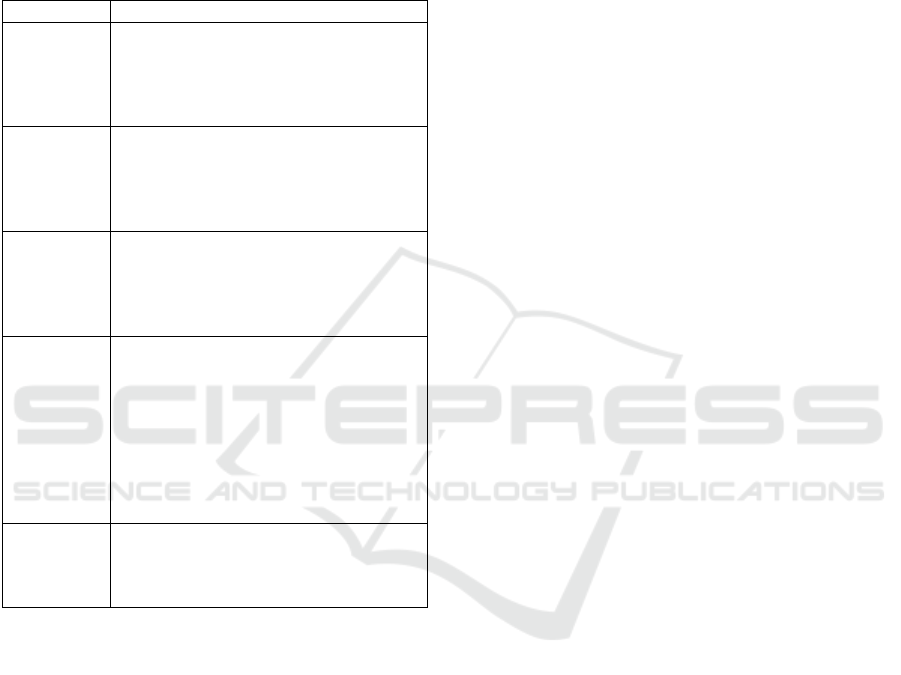
The final specific policies are shown in Table 1.
These policies are guided by systematization and
precision, taking into account the actual needs of
enterprises and reflecting the strategic layout of
government support for the integration of industry
and education. At the same time, the gradual
promotion and refinement of these policies have
created a favorable environment for deep cooperation
between enterprises and educational institutions.
However, Yang Guangjun's research found that some
problems have gradually emerged in the
implementation process of relevant incentive policies
for enterprises, such as the tax credit incentive policy
emphasizing "hard" over "soft" in recognizing
IESD 2025 - International Conference on Innovative Education and Social Development
240
enterprise investment, emphasizing enterprise
resource investment over school output effect in
incentive orientation, and the difficulty in forming a
joint force of relevant policies. The incentive effect
on enterprises still needs to be strengthened (Yang,
2022).
Table 1: Final specific policies of "finance+finance+
land+credit".
Policy points Policy initiatives
Financial
Policy
The government has increased its efforts
to recommend vocational education
industry education integration medium -
and long-term loan projects to financial
institutions.
Investment
Policy
The central government will invest in the
construction of qualified training bases.
Eligible projects will be included in the
scope of local government special bond
su
pp
ort.
Financial
and Tax
Policy
Enterprises that invest according to
regulations can deduct 30% of the
investment amount from the education
surcharge and local education surcharge
that should be paid in the current year.
Land Policy The construction land for enterprises to
invest in or cooperate with the
government in the construction of
Vocational Colleges and universities shall
be managed according to the land for
education. Explore the way of a long-term
lease, a combination of lease and
concession, and flexible term transfer for
land supply.
Credit Policy Strengthen the collection of credit
information of enterprises integrating
production and education, and carry out
industry credit evaluation.
3 LOCAL LEVEL ANALYSIS OF
TIANJIN CITY
3.1 Specific Implementation
3.1.1 Policy Implementation
The "Tianjin Vocational Education Regulations" and
the "Tianjin Vocational Education Industry
Education Integration Promotion Regulations" will
be implemented from 2024 onwards, making Tianjin
a national modern vocational education reform and
innovation demonstration zone and one of the first
batch of national pilot cities for the integration of
industry and education. In the "Tianjin Vocational
Education Promotion of the Integration of Industry
and Education", the use of key special funds of the
relevant financial departments is classified. At the
same time, it is required to diversify fundraising
methods and give priority to supporting special funds
related to government and enterprises. At the level of
supervision and management, the regulations clearly
state that it is necessary to jointly formulate measures
for the management of special funds and strengthen
the supervision of the use of funds. At the same time,
in terms of policy incentives, the Tianjin Municipal
Development and Reform Commission took the lead
in compiling the "Implementation Plan for the
Construction of Tianjin Pilot Cities for the Integration
of Industry and Education", and put forward a policy
combining 22 incentive policies of "finance + tax +
land + talent".
Macro-fiscal policy provides a guiding
framework for local governments, and Tianjin's
regulations are the concrete implementation and
refinement of this. This top-down policy linkage and
complementarity reflects the positive interaction
between the state and the local government and the
joint efforts to achieve the same goal.
3.1.2 Financial Investment
In 2020, the financial budget for higher vocational
education in Tianjin reached 534453725.84 yuan,
laying a solid foundation for the development of
vocational education. In 2021, the expenditure on
vocational education in Tianjin has significantly
increased, especially in higher vocational education.
The preliminary budget is 55706800.00 yuan, and the
actual settlement expenditure is 601426161.00 yuan,
accounting for 107.96% of the preliminary budget.
The main reason for exceeding the budget is that the
government has increased special funds for student
aid and "double high" construction, which reflects the
government's emphasis on improving the quality of
vocational education and student welfare. In 2022,
Tianjin's financial investment in higher vocational
education continued to increase, with a budget of
618.727 million yuan at the beginning of the year and
an expenditure of 708719869.60 yuan at the end of
the year, completing 114.54% of the budget at the
beginning of the year. Similar to 2021, the reason for
the final budget is higher than the budgeted amount is
also due to an increase in student aid and dedicated
funds for "double high". This indicates that in
promoting the high-quality development of higher
vocational education, Tianjin not only pays attention
to the reasonable arrangement of the budget but also
flexibly adjusts according to the actual situation to
ensure sufficient investment of funds. In 2023,
Analysis and Prospect of Financial Fund Planning for Higher Vocational Education from the Perspective of Industry Education Integration:
A Case Study of Tianjin
241

Tianjin's financial investment in higher vocational
education reached a new level. The budget at the
beginning of the year was 93938800.00 yuan, and the
expenditure settlement reached 1042426731.08 yuan,
completing 110.97% of the budget at the beginning of
the year. This growth trend once again confirms
Tianjin's firm support and continuous investment in
the development of higher vocational education, and
further reflects the government's strategic vision and
practical measures for developing vocational
education.
The financial budget for higher vocational
education in Tianjin has been increasing year by year.
Especially since 2021, the growth rate of funds has
significantly accelerated, reflecting Tianjin's
determination and strength to promote high-quality
development of vocational education. At the same
time, the fact that the final accounts are generally
higher than the budget also indicates the flexibility
and practicality of government fund management,
which can increase funds promptly according to
actual needs to ensure the smooth implementation of
various tasks.
3.2 Existing Problems
3.2.1 Inconsistent Proportion of
Government and Social Investment
Although the task of cultivating skilled talents
requires vocational colleges and industry enterprises
to jointly undertake it, it has increasingly become a
consensus among vocational colleges, enterprises,
and various sectors of society (He, 2013). But for
quite some time, the lack of integration between
industry and education, and the insufficient depth and
practicality of school-enterprise cooperation have
been pain points and obstacles., the insufficient depth
and practicality of school-enterprise cooperation have
been pain points and obstacles. There is a current
situation of "hot school and cold enterprise" in the
integration of production and education in vocational
colleges. Some scholars have pointed out that with the
formation of the new normal, the original
development model based on rapid growth in fiscal
investment is difficult to sustain. If it want to continue
the good trend of vocational education development,
it will be an unavoidable issue of the times to shift
from external development relying on incremental
resources to internal development relying on
improving the efficiency of utilizing existing
resources (Duan, 2023).
Z School closely follows policy developments in
the field of industry education integration. Starting in
2022, it has implemented the New Energy Vehicle
and Rail Transit Industry Education Integration
Training Base Project, responding to the national
strategic task of "building 100 high-level, specialized,
and open industry education integration training
bases". The preliminary design estimate for the
project has a total investment of 1600.563 million
yuan, and the actual total expenditure is 172 million
yuan. The funding source is from applying for central
budget funds and local government special bonds,
and the shortfall is self-raised by the school.
There is a deviation in the annual budget
execution of central subsidy funds. Specifically, the
school's budget for central subsidies in 2023 is 80
million yuan, but the actual implementation amount
is only 54.137 million yuan, with an implementation
rate of only 68%. This deviation indicates that the
school has certain deficiencies in the use of funds and
budget execution, and has not fully allocated and used
funds according to the budget plan. Secondly,
according to the performance table, some projects
require final payment after passing the acceptance
inspection, but the school has not completed the
acceptance work of all projects by the end of 2023, so
the full final payment has not been paid. This
situation was resolved in early 2024, and the school
completed the final payment. This also reflects that
there is a certain lag in project management and fund
payment in schools, and it is necessary to further
strengthen the monitoring of project progress and the
timeliness of fund payment. At the same time, the
school has invested a large amount of special bond
funds in infrastructure construction and teaching
equipment procurement. In 2022, the school received
40 million yuan in special bond funds for
infrastructure construction and the purchase of
teaching equipment. In 2023, the school added 20
million yuan of special bond funds for the expansion
of the training base and the promotion of related
projects. This investment indicates the high
importance that the school attaches to infrastructure
construction and the purchase of teaching equipment,
and also reflects the school's determination to
improve teaching quality and practical training
conditions. From another perspective, this also
reflects the need for schools to plan more
scientifically and reasonably in terms of fund
allocation and utilization. The use of central subsidy
funds and special bond funds should be coordinated
and complementary to each other to ensure the
smooth implementation of various school work.
Therefore, schools need to further strengthen the
scientific and effective management of funds,
IESD 2025 - International Conference on Innovative Education and Social Development
242

optimize the structure of fund allocation, and improve
the efficiency of fund utilization.
In summary, statistics show that, based on the
existing known data, the government's fiscal funds
account for a significant proportion of investment in
this special project. However, the financial support
provided by enterprises to the base is relatively
limited, and the government still needs to stimulate
the investment enthusiasm of enterprises.
3.2.2 Inadequate Fund Performance
Evaluation System
Although the use of government financial funds in
this project at Z school has shown significant results,
there are still issues with transparency and inadequate
supervision mechanisms in fund management.
Firstly, the special funds are not reflected in the
annual departmental final accounts and can only be
queried from the special performance table.
Secondly, the evaluation indicators for benefits in the
self-evaluation performance table are too general and
cannot truly reflect the actual implementation effect.
In the future, efforts should be made to strengthen the
transparency and auditing of fund utilization, while
further optimizing the principles and structure of fund
allocation to ensure the long-term sustainability of
resource utilization.
4 IMPROVEMENT
SUGGESTIONS
4.1 Enhancing Corporate Investment
The PPP model, also known as the "public-private
partnership model," is a model in which the
government collaborates with social capital to
construct, and operate public infrastructure, or
provide public services. Through the PPP model, the
government and social capital clarify the rights and
obligations of both parties in the form of a contract,
jointly invest, construct, operate, and share benefits
and risks (Ling, 2024). To address the issue of
optimizing diversified investment, it can explore the
application of the PPP model in the process of
integrating industry and education in vocational
colleges, that is, introducing social capital into the
field of integrating industry and education in
vocational colleges (Guo, 2012).
Firstly, introducing the PPP model can broaden
the funding channels for vocational colleges,
introduce social capital into the education sector, and
alleviate local financial pressure. And ensure a win-
win situation among enterprises, schools, and
governments through a mechanism of benefit sharing.
Secondly, the PPP model can reduce the cost of
school-enterprise cooperation and form a risk-sharing
mechanism, making enterprises more motivated to
participate in the integration of industry and
education. For example, the government can reduce
the risk perception of enterprises in the initial
investment by introducing government guarantee
mechanisms. On this basis, optimizing the investment
methods of enterprises can lower the threshold for
participation by replacing direct capital investment
with equipment, technology, and other forms.
Schools and enterprises can jointly establish an
"Industry Education Integration Special Fund" to
support long-term cooperation projects. Finally,
when applying the PPP model, the government
should also pay attention to policy support, clarify the
rights and interests of all parties, ensure that
enterprises receive reasonable returns in the
participation process, and thereby enhance their long-
term investment motivation (Duan, 2023).
4.2 Optimize the Management and
Allocation of Funds
For the issue of fund allocation and management, the
country can learn from the results-oriented fiscal
formula allocation method of OECD countries,
allocate funds through signing performance contracts,
and allocate funds according to different output
results (graduation rate, employment rate) standards.
Shift the focus of educational institutions from
enrollment to the labor market, meet the needs of
enterprises, and address various labor shortages.
Track student situations through data systems,
connect education and labor market achievements,
enhance vocational education flexibility, strengthen
long-term coordination relationships between
schools, students, and employers, and promote
industry education integration (Jia, 2019). Drawing
on this method not only provides a more reasonable
financial allocation plan for the integration of
industry and education but also establishes scientific
and specific performance indicators, ensuring the
efficient and sustainable use of funds and providing
strong support for the deepening development of
industry education integration.
5 CONCLUSION
This article takes Tianjin as an example to analyze the
impact of financial planning for higher vocational
Analysis and Prospect of Financial Fund Planning for Higher Vocational Education from the Perspective of Industry Education Integration:
A Case Study of Tianjin
243

education on the allocation of educational resources
and the quality of talent cultivation under the
background of industry education integration. Tianjin
has achieved great success in this regard but also
faces challenges.
The Tianjin Municipal Government attaches great
importance to higher vocational education and
provides institutional guarantees for it through the
release and implementation of policy documents. In
terms of fiscal funding planning, Tianjin is exploring
diversified funding mechanisms, optimizing the
structure of education expenditure, increasing
funding investment, and providing stable and
sufficient support for higher vocational education.
The government should provide certain preferential
subsidy policies, invest in vocational education
enterprises, and form a good interactive capital chain.
These measures have promoted the rapid
development of higher vocational education in
Tianjin, improved service capabilities and levels,
extensively utilized funds, achieved high coverage
and produced significant radiation effects.
However, when supporting vocational education,
the government needs to focus on the comprehensive
cultivation and development of the industry education
integration system, starting from the policy goal of
integrating social and economic benefits, ensuring
that the allocation of educational resources meets
social needs and enables long-term development. In
Tianjin, there is a lack of specific rules for matters
beyond hardware equipment in related fields, such as
standardized implementation paths and operational
rules. In addition, there is a lack of a scientific and
reasonable evaluation standard system for project
completion, which makes it difficult to accurately
measure and provide feedback on actual effects and
values and affects policy adjustments and
optimizations. Therefore, based on the common
problems mentioned above, this article believes that
the government should formulate specific and
feasible policy texts, clarify goals, tasks, and
measures, and guarantee conditions. Further, improve
relevant regulations to provide legal protection for
multi-party deep participation in the integration of
industry and education. Combining the above
improvement methods, guides and promotes the
integration of industry and education towards higher
quality and deeper levels, and achieves precise
docking and deep integration of educational resources
and socio-economic needs.
AUTHORS CONTRIBUTION
All the authors contributed equally and their names
were listed in alphabetical order.
REFERENCES
Duan, X. 2023. A new exploration of the path of industry
education integration in vocational colleges: applica-
tion of PPP model. Vocational and Technical Educa-
tion (05): 12-16.
Gao, Y. 2023. Analysis of countermeasures for the devel-
opment of higher vocational education: a case study of
Tianjin City. Journal of Shandong Open University
(04): 36-40.
Guo, G., Xiang, C., Pang, Q. 2012. Research on the con-
struction of a financial funding guarantee mechanism
for vocational education. China Vocational and Tech-
nical Education 12: 5-11.
He, Z. 2013. Analysis of problems and promoting policies
in vocational education school-enterprise cooperation.
China Higher Education Research (01): 90-93.
Jia, J. 2019. International reference research on fiscal poli-
cies for the integration of industry and education in vo-
cational education. Vocational and Technical Educa-
tion (27): 27-31.
Ling, L. 2024. Research on the path of integration of indus-
try and education in vocational education from the per-
spective of "Symbiosis" Theory. Frontiers in Educa-
tional Research (8).
Hu, S. 2024. Exploration of talent training pathways
through industry-education integration for future tech-
nological demands. International Journal of New De-
velopments in Education (7).
Shen, Y. 2020. Review and prospect of research on voca-
tional education funding in China. Vocational Educa-
tion Forum (10): 20-27.
Wang, J. 2024. Exploration and practice of talent cultiva-
tion model for construction majors in secondary voca-
tional schools under the background of industry-educa-
tion integration. International Education Forum (6):
190-197.
Yang, G. 2022. Optimization and promotion path of incen-
tive policies for industry education integration enter-
prises. China Vocational and Technical Education (12):
91-96.
Zhou, J., & Yue, J. 2017. Report on deepening industry ed-
ucation integration and school-enterprise cooperation in
modern vocational education with Chinese characteris-
tics since the 18th National Congress. Vocational and
Technical Education (24): 45-52.
IESD 2025 - International Conference on Innovative Education and Social Development
244
