
Research on the Optimization Strategy of Financial Investment in
Adult Higher Education from the Comparative Perspective
of Tianjin City and Qinghai Province
Hanyu Wang
School of Liberal Arts, Minnan Normal University, Zhangzhou, Fujian, China
Keywords: Adult Higher Education, Financial Investment, Optimization Strategy, Tianjin City, Qinghai Province.
Abstract: Lifelong learning has become a national strategy, and the importance of adult higher education has become
increasingly prominent. However, there are differences in the impact of economic development levels on
education investment in different regions. This is particularly evident in the financial investment in adult
higher education in Tianjin and Qinghai provinces. This study compared and analyzed the development of
adult higher education in two regions through data analysis and case studies, explored the complex
relationship between economic growth and education investment, and proposed optimization strategies. The
research results indicate that reasonable financial investment is crucial for promoting the sustainable
development of adult higher education. Based on this, this article suggests that policymakers should consider
the level of regional economic growth and develop differentiated fiscal investment strategies to achieve
educational modernization and build a lifelong learning system.
1 INTRODUCTION
Against the backdrop of rapid economic development
and social transformation in China, changes in
population structure have put forward new
requirements for educational financial investment.
Especially with the aging population and changes in
the labor market, the importance of adult higher
education as a keyway to enhance individual
vocational abilities and comprehensive qualities is
becoming increasingly prominent. The release of
relevant documents further emphasizes the
importance of lifelong learning and proposes the goal
of building a modern education system that serves
lifelong learning for all (Central People's Government
of the People's Republic of China, 2019).
As an important guarantee for the development of
education in the country, the rationality and
efficiency of financial investment in education
directly affect the improvement of education quality
and the realization of educational equity. In recent
years, domestic and foreign scholars have gradually
deepened their research on financial investment in
adult higher education. Guan and Blair found through
interviews that Chinese adult higher education
students' pursuit of degrees is influenced by diplomas,
which to some extent limits their employment
competitiveness (Guan and Blair, 2022). Robertson,
D. L. emphasized the importance of providing
flexible learning options and support services for
adult students (Robertson, 2020). Tianjin and Qinghai
provinces, as representatives of economically
developed eastern regions and developing western
regions, provide rich comparative research cases on
the development of adult higher education. Tianjin
has increased its financial investment in adult higher
education by leveraging its economic advantages,
forming a multi-level and multi-form educational
system. Despite relatively lagging economic
development, Qinghai Province, with the support of
national policies, has achieved significant results in
the field of adult higher education by optimizing the
allocation of educational resources and improving the
quality of education. Domestic researchers such as
Gao Chuan and Wang Tong have proposed
suggestions for the development of self-study in
Tianjin, while Sun Yuting compared the income
effects of adult higher education and general higher
education, pointing out that adult education has a
disadvantage in terms of income (Sun, 2019). Men
Hailong and Li Jing analyzed the uneven regional
development of adult higher education in China and
proposed insights for the development of adult higher
education in different regions. Their research points
out that one of the main reasons for the relatively
backward development of adult higher education in
70
Wang, H.
Research on the Optimization Strategy of Financial Investment in Adult Higher Education from the Comparative Perspective of Tianjin City and Qinghai Province.
DOI: 10.5220/0013965100004912
Paper published under CC license (CC BY-NC-ND 4.0)
In Proceedings of the 1st International Conference on Innovative Education and Social Development (IESD 2025), pages 70-75
ISBN: 978-989-758-779-5
Proceedings Copyright © 2025 by SCITEPRESS – Science and Technology Publications, Lda.

regions with good economic development is the
relatively low government investment in higher
education (Men and Li, 2020). Wang Bing took adult
education in Tianjin as an example and proposed a
strategy for the coordinated development of
continuing education carriers. The strategy includes
carrying out the construction of "Double First Class"
with its characteristics, achieving resource
complementarity and sharing; Establishing a credit
bank alliance to achieve mutual recognition of
credits; Strengthen the construction of an adult school
education system to meet the constantly developing
demand for continuing education (Wang, 2019).
The existing domestic and foreign literature on
financial investment in adult higher education has
problems such as insufficient timeliness, lack of
pertinence, insufficient evaluation and quantitative
analysis of effectiveness, and weak operability.
Specific research on Tianjin and Qinghai is also
relatively lacking. This article compares and analyzes
the financial investment in adult higher education
between Tianjin and Qinghai provinces, explores the
differences, and proposes targeted optimization
strategies based on actual situations, providing new
perspectives and references for other regions.
In summary, this study will guide the formulation
of adult higher education policies in Tianjin and
Qinghai provinces, while also offering valuable
experiences for other regions. This study aims to
provide new perspectives and strategies for
optimizing financial investment in adult higher
education to adapt to the constantly changing social
demands and educational goals.
2 CASE STUDY
This article reveals the advantages and disadvantages
of financial management in adult higher education
between Tianjin and Qinghai provinces through a
detailed comparison of their financial investment.
2.1 Tianjin: Stability of Expenditure
and Fiscal Synergy
Tianjin has shown significant stability in education
expenditure. The coefficient of variation is a
statistical measure of relative dispersion, which
represents the ratio of standard deviation to mean and
is used to compare the volatility of different datasets.
The data shows that from 2018 to 2022, the
coefficient of variation (coefficient of
variation=standard deviation/mean) of education
expenditure in Tianjin was 0.054, which is lower than
the national level of 0.059. This stability means that
Tianjin has significant advantages in budget planning
and utilization, which can effectively ensure the
stable development of educational and teaching
activities. For example, Tianjin can invest in teacher
training and talent introduction at a certain proportion
every year based on stable funding, ensuring the
continuous improvement of teachers' professional
competence. This stable balance of income and
expenditure provides a solid guarantee for the stable
development of educational and teaching activities
and helps to continuously improve the overall quality
of adult higher education.
In the field of adult higher education, the synergy
between financial subsidies and the growth of
education funding income is of crucial importance for
the stable development of education. In terms of the
synergy between financial subsidies and the growth
of education revenue, Tianjin has performed well.
Based on the relevant data of the National Bureau of
Statistics, this paper calculates and analyzes the
growth rate of financial subsidies and the growth rate
of education revenue of Tianjin adult colleges and
universities from 2019 to 2023, and finds that the two
are highly consistent, as shown in Figure 1. This
shows that Tianjin can reasonably control the
reduction of financial subsidies when the income of
education funds decreases and increase investment in
time when it increases. In terms of financial
management, it has obvious advantages, and can
accurately regulate the financial subsidies according
to the dynamic changes of education funds income, to
ensure the rational allocation of education resources.
2.2 Qinghai Province: Stability and
Accurate Investment of Fund
Revenue
Qinghai Province has shown high stability in terms of
education funding income. The data shows that from
2018 to 2022, the coefficient variation of education
funding income in Qinghai Province was 0.062,
which is lower than the national level of 0.077. This
indicates that Qinghai Province has stronger stability
in education funding income and can provide solid
financial support for the sustainable development of
schools. For example, adult colleges in Qinghai
Province can systematically purchase or develop new
online teaching course resources every year, without
interrupting or reducing such projects due to
significant fluctuations in funding income, which is
more conducive to their long-term and orderly
development.
Research on the Optimization Strategy of Financial Investment in Adult Higher Education from the Comparative Perspective of Tianjin City
and Qinghai Province
71
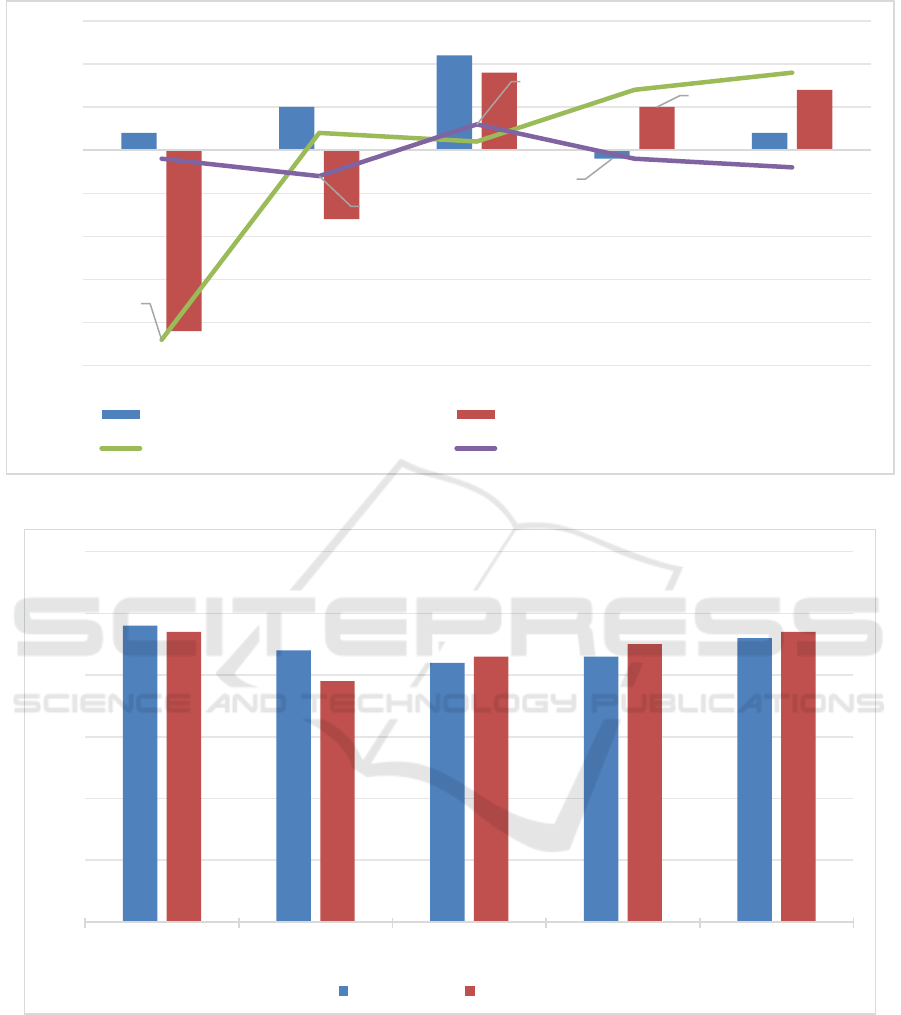
Figure 1: Financial subsidies and education revenue in China and Tianjin.
Figure 2: Proportion of education utility and capital expenditures of the public finance budget to education expenditures.
In terms of precise investment and effective
utilization of funds, Qinghai Province has shown
advantages. Based on the relevant data from the
National Bureau of Statistics, this paper calculates the
proportion of education expenses and capital
expenditure in the public budget of adult colleges and
universities in Qinghai Province from 2019 to 2023, as
shown in Figure 2. The data show that from 2019 to
2023, the adult colleges and universities in Qinghai
Province invested a lot in education and capital
expenditure, which was relatively stable. This shows
that Qinghai Province can make full use of the limited
financial resources and accurately invest the education
expenditure into the construction of schools, ensuring
the effective development of basic teaching activities
of adult higher education. Although the total
2%
5%
11%
-1%
2%
-21%
-8%
9%
5%
7%
-22%
2%
1%
7%
9%
-1%
-3%
3%
-1%
-2%
-25%
-20%
-15%
-10%
-5%
0%
5%
10%
15%
2019 2020 2021 2022 2023
Revenue from education funding National Revenue from education expenses Tianjin
Expenditure on financial subsidies Tianjin Expenditure on financial grants National
48%
44%
42%
43%
46%
47%
39%
43%
45%
47%
0%
10%
20%
30%
40%
50%
60%
2019 2020 2021 2022 2023
nationwide Qinghai
IESD 2025 - International Conference on Innovative Education and Social Development
72

expenditure on education in Qinghai Province is
relatively low, its efforts in ensuring the education cost
and school capital construction enable it to maintain a
stable teaching order in the field of adult higher
education and ensure that the basic teaching needs
such as teacher's salaries, teaching materials
procurement, and curriculum development are met,
thus laying a solid foundation for improving the
quality of education.
2.3 Summary
Through comparative analysis, Tianjin has shown
outstanding performance in the stability of education
expenditure and fiscal coordination, which provides a
guarantee for the sustained motivation of its
educational activities and the efficient use of fiscal
subsidies. Qinghai Province has shown advantages in
the stability and precise investment of education
funding income, which helps it develop education
according to local conditions under limited resources.
The successful experience of the two regions in the
financial management of adult higher education
provides a valuable reference for other areas, which
helps to promote the improvement of the national adult
higher education financial management system and the
balanced development of the education industry.
3 PROBLEMS EXIST
When comparing the financial investment in adult
higher education between Tianjin and Qinghai
provinces, it can be found that there are some common
problems in the implementation of financial policies
and the operation of specific institutions in both places.
These problems not only affect the quality of education
but also constrain the further development of the
education industry.
3.1 Single Financing Channel
Firstly, the financial investment in adult higher
education in both regions shows the problem of a
single financing channel.
The funding for adult higher education in Tianjin
mainly relies on government appropriations, and the
proportion of tuition income is relatively low. This
dependency limits the flexibility and sustainability of
education funding. Although Qinghai Province also
relies on fiscal appropriations in terms of funding
sources, its expenditure structure is unbalanced, with a
high proportion of fiscal appropriations and a low
proportion of tuition and other income, indicating
insufficient fiscal investment and uneven distribution.
This single financing channel not only limits the
flexibility of education funding but also affects the
sustainable development of the education industry.
3.2 Insufficient Policy Support and
Guidance
Secondly, the current development process of adult
higher education in Tianjin is relatively slow, and the
lack of policy support and guidance is an important
factor that cannot be ignored. Although fiscal
investment has shown an increasing trend in quantity
year by year, providing a certain material foundation
for the development of education, there is still room
for improvement in the policy system in multiple key
dimensions.
At the level of development planning, with the
emergence of the intelligent manufacturing industry in
the local area, related digital control, intelligent
operation, and maintenance majors have not been fully
deployed in the adult higher education system
promptly, making it difficult for the supply of skilled
talents to keep up with the pace of industrial
expansion, and the mismatch between talent
cultivation and actual job demands has limited the
timeliness of the education service industry.
In addition, the incentive-supporting policies are
not perfect enough. For educational institutions, the
lack of corresponding funding subsidies and project
incubation support policies when exploring integrated
teaching models such as online and offline, and cross-
enterprise training cooperation projects has suppressed
their educational innovation vitality. If the teacher
group wants to carry out practice-oriented teaching
innovation based on the characteristics of adult
learners, their enthusiasm is difficult to sustain due to
the lack of special rewards for teaching achievements
and incentives related to professional title evaluation.
However, many adult learners who aspire to improve
themselves often hesitate and lose their enthusiasm for
participation when faced with the contradiction
between learning costs and engineering due to the lack
of incentive policies such as tuition installment
discounts and rewards for converting learning
outcomes.
Finally, there are still gaps in regulatory policies.
The supervision of teaching quality lacks refined
standards and long-term tracking mechanisms, and
some courses have insufficient depth of teaching and
loose assessment. The resource allocation rules are not
transparent and reasonable enough, and the flow of
resources such as funds, faculty, and equipment is
uneven. Some emerging universities and characteristic
Research on the Optimization Strategy of Financial Investment in Adult Higher Education from the Comparative Perspective of Tianjin City
and Qinghai Province
73

majors are facing difficulties in development due to
resource shortages, which affects the overall balance
of education.
3.3 Improper Use of Funds
In addition, both places have exposed certain
shortcomings in the standardization of fund utilization.
In the composition of financial investment in adult
higher education in Tianjin, self-raised funds, social
donations, and other diversified channels account for a
relatively large proportion. This kind of funding
structure indirectly reflects the potential lack of
standardization in the overall funding operation
process. Some educational institutions have
experienced improper allocation of funds due to
considerations such as reducing daily management
expenses. This has led to the unreasonable occupation
of the originally planned education project funds,
thereby interfering with the normal teaching activities
and the upgrading of facilities and equipment. The
realization of maximizing the efficiency of financial
investment has been affected, resulting in resource
misallocation and waste, weakening the role that
financial investment should play in improving the
quality of education.
In Qinghai Province, although efforts have been
made to standardize the use of funds and some results
have been achieved, it is unfortunately plagued by the
problem of insufficient total financial investment, and
the allocation of limited funds among universities and
professional projects has not been balanced and
reasonable. The fund is "too much for monks and too
little for porridge". Some emerging majors and
colleges in remote areas in urgent need of resource
support can only get a small share, which makes it
difficult to support the operation of a high-quality
teaching system, and ultimately affects the overall
effect of adult higher education, limiting the depth and
breadth of education services.
H University in Tianjin has received a total social
donation income of only about 500000 yuan in the past
three years, accounting for less than 2% of the total
income. This indicates that some schools taking this
university as an example have insufficient
diversification of funding sources, reflecting its
weakness in absorbing social resources. M University
in Qinghai Province has been hovering around 25% of
its total funding in the past five years, with a high
dependence on government financial appropriations.
These cases further confirm the problems in financial
investment in adult higher education between the two
regions. Despite the school's strong investment in the
construction of ethnic-characteristic teaching
facilities, the lack of a sound operational management
mechanism has resulted in some facilities being idle,
and the efficiency of investment and output needs to
be improved.
4 OPTIMIZATION SUGGESTIONS
In response to the problems in financial investment
in adult higher education between Tianjin and Qinghai
provinces, and based on current domestic and
international research results, the following
optimization suggestions are proposed:
Firstly, to address the issue of a single financing
channel between the two regions, it is recommended
that the governments actively expand diversified
financing channels. The government can increase the
sources of education funding and reduce dependence
on a single fiscal allocation by introducing social
capital, encouraging corporate donations, and
establishing special funds. Liang pointed out that
increasing specialized funding support for adult higher
education and optimizing financial allocation are key
to improving the quality and accessibility of education
(Liang, 2023). In addition, the proposal put forward by
Shen Yubao and Zhao Chaofeng to establish an
effective communication mechanism is also applicable
to the diversification of fiscal investment, by
strengthening communication with various sectors of
society and improving the efficiency and transparency
of fundraising (Shen and Zhao, 2020).
Secondly, to address the issue of insufficient policy
support and guidance, it is recommended that the
governments of both regions strengthen their efforts in
policy formulation and implementation. The
government should analyze the actual needs and
challenges of adult higher education from the
perspective of students, and formulate more precise
and effective policy measures. Guan and Blair
analyzed the duality of adult higher education in China
from a student perspective and pointed out that policy-
making should consider the actual needs of students
(Guan and Blair, 2022). Meanwhile, Sun Yuting's
research also indicates that optimizing the structure
and effectiveness of fiscal investment can ensure that
policy implementation truly enhances the quality and
accessibility of adult higher education (Sun, 2019).
Finally, regarding the issue of non-standard use of
funds, it is recommended that the governments of both
regions strengthen supervision and evaluation of the
use of fiscal funds. The government should establish a
sound regulatory mechanism for the use of fiscal
funds, ensure the rational allocation and efficient use
of funds, and prevent the misappropriation and waste
IESD 2025 - International Conference on Innovative Education and Social Development
74

of funds. Liu J. proposed to enhance the financial
sustainability of adult higher education through
innovative financial management models (Liu, 2024).
In addition, Tian Yanhong emphasized the importance
of ideological and political education in adult higher
education and also reminded us to pay attention to
improving the quality of education with the use of
funds (Tian, 2022).
In summary, measures such as expanding financing
channels, strengthening policy support and guidance,
and standardizing fund use can effectively optimize
the financial investment in adult higher education in
Tianjin and Qinghai provinces, and improve the
quality and effectiveness of education. These
optimization suggestions are also in line with the
research of relevant scholars at home and abroad,
objectively speaking, they are practical and feasible.
5 CONCLUSION
This study reveals the advantages and disadvantages of
financial management in adult higher education
between Tianjin and Qinghai provinces through an in-
depth comparative analysis of their financial
investment. Tianjin has performed well in terms of
stable expenditure and fiscal coordination but faces
problems of insufficient policy support and irregular
use of funds. Qinghai Province has advantages in
terms of stable funding and precise investment, but the
problems of insufficient financial investment and
uneven distribution still exist. In response to these
issues, this article proposes optimization suggestions
for expanding financing channels, strengthening
policy support, and regulating the use of funds.
These findings and suggestions not only have
important guiding significance for Tianjin and Qinghai
provinces but also provide valuable reference for other
provinces across the country. Eastern provinces can
learn from Tianjin's experience in financial
expenditure management and optimize the efficiency
of fund utilization; Western provinces can refer to the
stability strategy of funding income in Qinghai
Province to enhance the precise investment of
financial resources. Through the implementation of
these strategies, various regions can more effectively
optimize financial investment in adult higher
education, promote education modernization, and
build a lifelong learning system.
Looking ahead to the future, with the continuous
advancement of China's education modernization
process, the optimization of financial investment in
adult higher education will become the key to
achieving educational equity and improving
educational quality. Each region should formulate
differentiated financial investment strategies based on
its own economic development level and educational
resource needs, to achieve balanced development of
educational resources and comprehensive
improvement of educational quality. Through
continuous reform and innovation, China's adult
higher education will usher in a brighter future.
REFERENCES
Guan, S., & Blair, E. 2022. Adult higher education as both
an 'opportunity and a 'trap': student perceptions on cre-
dentialism in China. Studies in continuing education
44(3): 362-375.
Liang, W. 2023. Financial sustainability among higher edu-
cation institutions in the United States. Journal of Con-
temporary Educational Research 7(12): 277-281.
Liu, J. 2024. Adapting leadership in American higher educa-
tion: confronting contemporary academic and financial
challenges. International Journal of Frontiers in Sociol-
ogy 6(1).
Men, H., Li, Jing. 2020. Analysis and enlightenment of re-
gional development imbalance in adult higher education
in China. Journal of Radio and Television University
(Philosophy and Social Sciences Edition) (04): 104-109.
Robertson, D. L. 2020. Adult students in US higher educa-
tion: An evidence-based commentary and recommended
best practices. Innovative Higher Education 45(2): 121-
134.
Shen, Y., Zhao, C. 2020. Research on the communication
Mechanism of collaborative development of lifelong ed-
ucation in Beijing Tianjin Hebei. China Distance Educa-
tion (03): 65-72.
Sun, Y. 2019. Comparison of income effects between adult
higher education and general higher education. Open Ed-
ucation Research 25(01): 108-120.
Tian, Y. 2022. Research on strengthening the ideological and
political construction of adult higher education curricu-
lum in the new era. Tianjin Vocational College Joint
Journal 24(07): 108-112.
Wang, B. 2019. Research on the collaborative development
of continuing education carriers under the background of
learning-oriented city construction: taking adult school
education in Tianjin as an example. Vocational Educa-
tion Forum (01): 105-112.
Xinhua News Agency. 2019. The central committee of the
communist party of China and the State Council have is-
sued the "China Education Modernization 2035". Re-
trieved from: https://www.gov.cn/zhengce/2019-
02/23/content_5367987.htm
Research on the Optimization Strategy of Financial Investment in Adult Higher Education from the Comparative Perspective of Tianjin City
and Qinghai Province
75
