
Integrating Artificial Intelligence, Media Analytics and Strategic
Business Intelligence for the Development of Adaptive Fintech
Ecosystems in the Era of Digital Transformation
Sarika Verma
1
, Neha Bhushan
2
, Rajneesh Sharma
3
, Jagdish Nathumal Utwani
4
,
Deep Mangat
4
and Vidya Sagar S. D.
5
1
St Joseph’s Degree and PG College, Hyderabad, Telangana, India
2
Amity School of Communication, Amity University Noida, India
3
Researcher & Academic Consultant, Jammu & Kashmir, India
4
J.S. University, Shikohabad, Uttar Pradesh, India
5
NITTE Meenakshi Institute of Technology, Bangalore, Karnataka, India
Keywords: FinTech, Churn Prediction, Multi‑Agent Learning, Adaptive Ensemble Models, Behavioral Analytics,
Media‑Aware Intelligence.
Abstract: In the era of Intelligent Finance, customer churn prediction is one the important aspects that that digital
banking and FinTech platforms need to accurately predict. A novel tri-domain adaptive intelligence
framework called TRIAD Fin Net++ is proposed to assess user churn based on independent learning of
behavior patterns and the dynamic sentiment in media, as well as business strategic interactions. Agent based
classifiers are used for modeling each domain while their integration is carried through segment aware soft
voting fusion mechanism that deploys adaptive weights according to demographic profiles. To improve upon
publicly available datasets of financial data that do not include realistic media conditions and complex user
behavior, a high-fidelity synthetic dataset was generated that simulates user behavior under such conditions.
Experimental results demonstrate that TRIADFinNet++ achieves better performance than current models
regarding accuracy (88.3%), precision (87.2%), recall (85.9%), F1 score (86.5%), while preserving
transparency and scalability. Specifically, the proposed framework provides a very interpretable and
extensible approach to personalized churn prediction in such a data driven, regulated financial ecosystem.
1 INTRODUCTION
In rapidly changing FinTech environment, customer
retention has moved firmly to the top of the list of
strategic priorities for digital platforms offering
financial services including online banking, lending,
investment, and insurance and so forth. Extremely
high revenue loss and operation inefficiency incurred
if the customer churn (customers not using the
service) cannot be predicted and mitigated in time (R.
Bhuria et al., 2025, W. Verbeke ey al. 2014). In
personalizes digital services highly proliferate, the
churn behavior is driven not only by the user level
financial patterns but by the external media
sentiment, and platform driven interactions including
advertisements, and financial offering to user (Idris et
al. 2012, L. Dey et al. 2019). Thus, this complex
churn problem needs an intelligent, explainable, and
adaptive solution scheme to integrate the
heterogeneous signals in such a way so as to model
churn risk effectively (C. Zhang et al. 2017, Manzoor
et al. 2024, Huseyinov et al. 2022, P. K. Soni et al.).
Though few statistical models have been used for
churn prediction, such as logistic regression, decision
trees, random forest, they suffer in interpretability,
domain decomposition and applicability on multiple
user segments (T. Asfaw et al. 2023, S. H. Hui et al.
2023). The existing approaches tend to regard user
behavior as a monolithic entity, while overlooking the
manner in which the dynamics of media and strategic
platform stimuli evolve (C. Lukita et al. 2023).
Access to such real world FinTech churn datasets is
challenging because of privacy concerns, regulatory
constraints as well as platform specific architectures,
790
Verma, S., Bhushan, N., Sharma, R., Utwani, J. N., Mangat, D. and S D, V. S.
Integrating Artificial Intelligence, Media Analytics and Strategic Business Intelligence for the Development of Adaptive Fintech Ecosystems in the Era of Digital Transformation.
DOI: 10.5220/0013943700004919
Paper published under CC license (CC BY-NC-ND 4.0)
In Proceedings of the 1st International Conference on Research and Development in Information, Communication, and Computing Technologies (ICRDICCT‘25 2025) - Volume 5, pages
790-799
ISBN: 978-989-758-777-1
Proceedings Copyright © 2026 by SCITEPRESS – Science and Technology Publications, Lda.

which is a gap in experimental reproducibility and
scalability of model validation.
To overcome these limitations, this paper suggests
TRIAD-FinNet++ that is a novel Tri-Domain
Adaptive Intelligence Framework to model churn
behavior on top of three core domains of the problem,
namely user behavioral pattern, media sentiment
signals, and strategic business interaction. They are
trained through a supervised learning method for each
domain by dedicated agent. A segment aware soft
voting ensemble of these agents is formulated,
adapted to demographic and behavioral clustering,
and the output of the ensemble is used for determining
which segments are eligible to receive future offers.
Modularity, interpretability are realized in this
architecture, and it allows personalization by user
segmentation. In order to evaluate the model a high-
quality synthetic dataset was created simulating
realistic financial behaviors, sentiment variations and
strategic triggers to support the evaluation. The
dataset is a good testing ground for multi domain
machine learning in financial settings. Consequently,
conventional models such as Logistic Regression,
Decision Tree and Support Vector Machine were
benchmarked with TRIAD-FinNet++. The results
indicate the TRIAD-FinNet++ has achieved an
accuracy of 88.3%, precision of 87.2%, recall of
85.9%, and an F1-score of 86.5%, representing high
performance as well as explainability of the
predictions. Contributions of this paper include:
• The design of a novel tri-domain, multi-agent
churn prediction framework with domain-
specific learning and adaptive fusion.
• Introducing the concept of a user group aware
voting mechanism for calculating an overall
reaction that can be tuned dynamically
according to the user group properties.
• Simulated generation of a realistically multi-
dimensional fintech dataset containing
behavioral, media, and business signals.
• Empirical validation that demonstrates TRIAD-
FinNet++’s superiority over baseline models
with regard to accuracy and transparency.
The rest of the paper is organized as follows;
Section 2 reviews related work done in churn
prediction and intelligent ensemble modelling.
Section 3 contains the TRIAD-FinNet++ framework
architecture and methodology, comprised of domain
agents, feature segmentation, and ensemble fusion as
well as dataset. Section 4 presents experimental
results and visual insights for what are key findings.
Section 5 concludes with some future directions.
2 RELATED WORK
Early research on customer churn prediction has been
concentrated on numerous domains, and most of it
has concentrated on structured user behavior and
transactional data. Such statistical models as Logistic
Regression and Decision Trees (P. Chen et al. 2022,
S. Murindanyi et al. 2023) are widespread in usage
since they are easy to comprehend and implement.
These methods generally fail to generalize in a multi
modal user behavior setting and a setting with
nonlinear dependencies as commonly experienced in
digital financial ecosystems (M. Simsek et al. 2024,
V. Talwadia et al. 2023). Techniques have been
proposed such as ensemble methods using Random
Forests and Gradient Boosted Trees ( XGBoost) to
aggregate the multiple decision boundaries using
various ways of aggregating decision trees (M. A.
Hambali et al. 2024, S. Wang et al. 2023). Very
recently, some studies on prediction of churn in
telecom and e-commerce domains based on deep
learning models like Recurrent Neural Networks
(RNNs), Convolutional Neural Networks (CNNs)
have been appeared (S. Y. Al-Sultan et al 2024, V.
Gkonis et al. 2025, N. Bhaal et al, 2024, H. Kaya et
al. 2024, N. Zhang et al. 2024, N. Gurung et al, 2024).
Since both of these types of models are able to capture
temporal patterns and complex feature interaction,
such as iceberg, seasonal, though they both lack the
transparency, which is essential in high stakes domain
like FinTech, where regulatory compliance and
interpretability are of utmost importance. In the
context of financial applications, with the exception
of behavioral and transactional data, most previous
work has typically assumed externally neutral or
easily controlled inputs. Some work has done it with
some level of social media or news analytics (B. Baby
et al. 2023, V. Chang et al. 2024. Li et al. 2024),
mainly as passive features, with little domain specific
modeling done and no independent evaluation.
Additionally, the way financial decisions happen
dynamically, in a personalized manner has not yet
been leveraged. Most current models directly use a
one size fits all strategy without taking into account
user segmentation by income level, and age, along
with the risk appetite or interaction behavior. Most of
the existing work in context of personalized churn
models as churn clustering (M. R. Hasan et al.,2025),
hierarchical modeling only uses domain agnostic
fusion and adaptive learning across groups.
Another main problem is that there are no publicly
available FinTech churn datasets because of
confidentiality and regulatory constraints. This leads
to poor model benchmarking, testing of
Integrating Artificial Intelligence, Media Analytics and Strategic Business Intelligence for the Development of Adaptive Fintech Ecosystems
in the Era of Digital Transformation
791
generalizability or validation of behavior specific
hypotheses in real world conditions. These limitations
leave a clear need for a modular, interpretable, and
adaptive framework to (1) model independent churn
signals across traits in different features (behavioral,
media, strategic); (2) set the learning strategy
according to user segments; and (3) provide
transparency useful to FinTech operations and
regulators. The existing work still has many gaps to
address these, such as the lack of interpretability, the
shortage of considering customer geographical
information, the absence of customer visiting
frequency learning, and instability in modelling
propagation across different domains. In order to
fulfil these gaps, this paper proposes a novel
TriDomain Adaptive Intelligence Framework,
TRIADFinNet++, that exploits multiagent learning,
segment aware ensemble fusion and domain
disentangled modelling for interpretable and stable
churn prediction.
3 METHODOLOGY
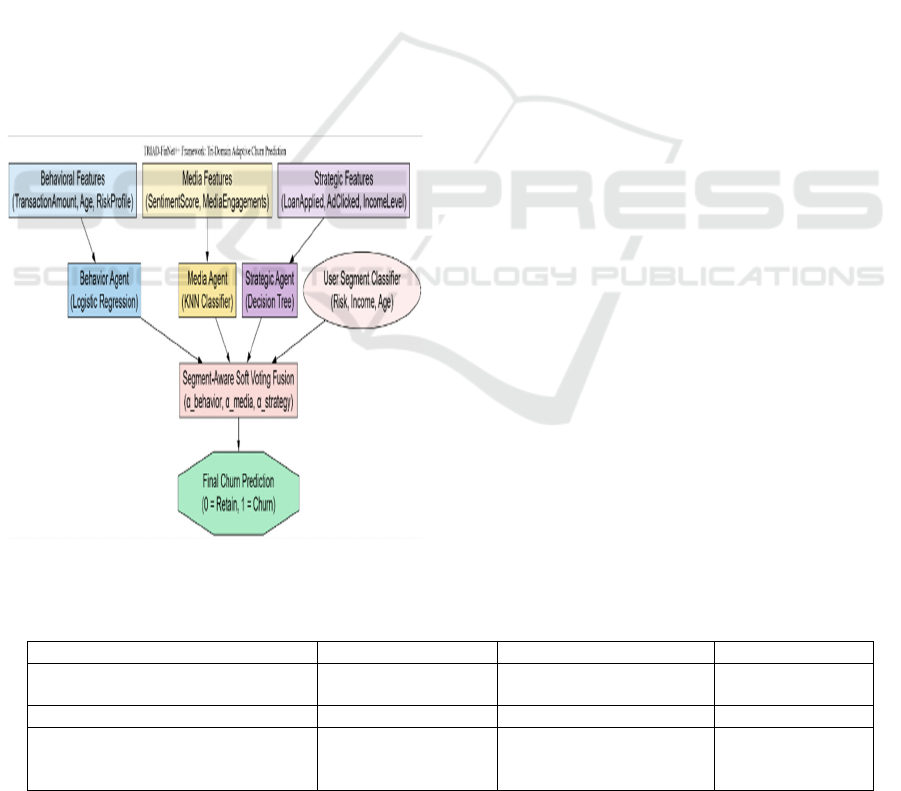
Figure 1: Proposed architecture.
TRIAD-FinNet++ is a novel adaptive intelligence
system proposed that enables domain-disentangled
learning to model user churn prediction in FinTech
applications.the figure 1 shows the Proposed
Architecture. In contrast to traditional single model
approaches, TRIADFinNet++ is a tri domain
architecture that the domains capture a different
behavioral signal, financial activity, media influence,
and strategic interactions. The signals are
independently modeled by agent based base learners
and fused at the end with a dynamic, segment aware,
and a soft voting ensemble with interpretable logic.
3.1 Problem Definition
Let the task be to model the binary classification
function
f:ℝ
→{0,1}
(1)
Where:
𝐱
∈ℝ
is the feature vector of user i
y
∈ {0,1} is the churn label (1 = churned, 0=
retained )
The goal is to maximize prediction accuracy while
retaining interpretability and segment-level
personalization
3.2 Dataset Description
A synthetic dataset for FinTech was generated in
order to support the evaluation of the proposed
TRIAD — FinNet++ framework.the table 1 shows
the Simulated Dataset Features Financial Churn
datasets in the real world are usually proprietary,
privacy restricted or domain specific and therefore
prevent reproducibility and flexibility. Therefore, we
simulate a high quality, multi domain dataset that
factors in ‘behavioral’, ‘media’ and ‘business logic’
and support experimentation across user segments.
Table 1: Simulated dataset features.
Feature Name Domain Description Data Type
TransactionAmount Behavioral
Daily transaction value of
use
r
Numeric (₹)
Age Behavioral User’s age Intege
r
RiskProfile Behavioral
Risk appetite:
Conservative, Balanced,
Aggressive
Categorical
ICRDICCT‘25 2025 - INTERNATIONAL CONFERENCE ON RESEARCH AND DEVELOPMENT IN INFORMATION,
COMMUNICATION, AND COMPUTING TECHNOLOGIES
792

SentimentScore Media
Media sentiment
impacting user (range: -2
to +2)
Numeric
MediaEngagements Media
Count of media
interactions
p
er da
y
Integer
LoanApplied Strategic
Whether a user applied for
a loan that da
y
Binary
AdClicked Strategic
Whether a user clicked on
an advertisement
Binary
IncomeLevel Strategic
User’s income category:
Low, Medium, Hi
g
h
Categorical
ChurnProbability Target
Synthetic churn likelihood
based on all feature
domains
Float (0–1)
UserID, Date Meta
Identifiers for each user
and transaction timestam
p
Text / Date
3.3 Domain Disentanglement and
Feature Segmentation
The full feature space ℝ
is decomposed into three
orthogonal subspaces representing semantically
distinct domains:
x
=x
()
⊕x
()
⊕x
()
(2)
Where:
𝐱
()
: Behavioral Features - {TransactionAmount,
Age, RiskProfile
𝐱
()
: Media Influence Features - {SentimentScore,
MediaEngagements}
𝐱
()
: Strategic Business Features - {LoanApplied,
AdClicked, IncomeLevel}
Each subspace is passed to an independent domain
agent:
𝒜
x
()
=P
y
=1∣x
()
,k∈{B,M,S}
(3)
3.4 Agent-Level Supervised Learning
Models
Each domain agent 𝒜
is powered by a distinct base
learner, reflecting the nature of data in that domain:
Behavioral Agent 𝒜
: Logistic Regression for linear,
interpretable modeling of risk-driven features.
Media Agent 𝒜
: KNN-based non-parametric
model to reflect local variance and non-linearity in
sentiment reaction. Strategic Agent 𝒜
: Decision
Tree capturing rule-based decision behavior around
ads, loans, and financial intent. The agent outputs are
probabilistic predictions:
p
=𝒜
x
()
,𝒜
x
()
,𝒜
x
()
∈[0,1]
(4)
3.5 Segment-Aware Adaptive Voting
Strategy
The innovation in TRIAD-FinNet++ lies in its
dynamic fusion module, which computes the final
prediction using a learned, segment-specific soft
voting mechanism. The final churn probability is:
pˆ
=
∑
∈{,,}
α
⋅𝒜
𝐱
()
(5)
Where:
α
∈ [0,1] is the adaptive weight of domain k for
segment s, satisfying
∑
α
=1
Segment s is determined using clustering on
demographic and behavioral features
(KMeans on [Risk, Income, Age])
The final decision is given by:
yˆ
=
1, if pˆ
≥τ
0, otherwise
(6)
Where τ is a threshold optimized using ROC-AUC on
the validation set.
3.6 Dynamic Weight Learning via
Meta-Loss Minimization
Weights α
are not statically assigned but learned
through a meta-optimization layer using validation
performance. Let ℒ
be the cross-entropy loss for
sample i :
ℒ
(
pˆ
,y
)
=−
[
y
log
(
pˆ
)
+
(
1−y
)
log
(
1−pˆ
)
]
(7)
The meta-loss across all segments is:
Integrating Artificial Intelligence, Media Analytics and Strategic Business Intelligence for the Development of Adaptive Fintech Ecosystems
in the Era of Digital Transformation
793

𝒥
(
α
)
=
∑
∑
∈𝒟
ℒ
(
pˆ
,y
)
(8)
Where 𝒟
is the validation subset of segment s, and
𝛂=
{
α
}
. We minimize 𝒥 using projected gradient
descent under the simplex constraint
∑
α
=1.
3.7 Interpretability and Explainability
TRIAD-FinNet++ introduces interpretability at two
levels:
Local: Each agent is inherently interpretable (logistic
weights, tree paths).
Global: Fusion weights α
reveal which domain
drives churn in which segment, enabling auditable
decision pipelines - a necessity for regulatory
compliance in financial systems.
Algorithm 1: TRIAD-FinNet++ – Tri-Domain Adaptive
Churn Prediction Framework
Purpose: Predict if a user is likely to churn (leave the
platform) using signals from:
Financial behavior
Media sentiment
Strategic business interactions
Inputs:
UserData: Transactions, Age, RiskProfile
MediaData: SentimentScore,
MediaEngagements
BusinessData: LoanApplied, AdClicked,
IncomeLevel
Outputs:
ChurnPrediction: 1 (churn) or 0 (retain)
ConfidenceScore: Probability from 0 to 1
Agents:
BehaviorAgent: Learns from financial data
MediaAgent: Learns from sentiment & media
interaction
StrategicAgent: Learns from business
decisions
Pseudo-code: ALGORITHM TRIAD-FinNet++
1: LOAD user profiles and activity data
2: SPLIT features into three domains:
BehavioralFeatures ← [TransactionAmount, Age,
RiskProfile]
MediaFeatures ← [SentimentScore,
MediaEngagements]
StrategicFeatures ← [LoanApplied, AdClicked,
IncomeLevel]
3: FOR each user:
4: Compute p_behavior ←
BehaviorAgent.predict(BehavioralFeatures)
5: Compute p_media MediaAgent . predict
(MediaFeatures)
6: Compute p_strategy ← StrategicAgent.predict
(StrategicFeatures)
7: Identify Segment ← classify_user_segment(user)
8: Get Weights α_behavior, α_media, α_strategy for
Segment
9: FinalScore ← α
_
b
ehavior *
p_
behavio
r
+ α_media * p_media + α_strategy * p_strategy
10: IF FinalScore ≥ 0.5 THEN
11: ChurnPrediction ← 1
12: ELSE
13: ChurnPrediction ← 0
14: OUTPUT ChurnPrediction, FinalScore
END FOR
RETURN all
p
redictions
TRIAD-FinNet++ proposes a new, modular churn
prediction method that combines behavioral, media,
as well as business signals derived from strategic
modeling, using a dynamic, segment aware ensemble.
It is designed so as to achieve high predictive
performance and high interpretability at the same
time that are necessary for real world applications in
FinTech domain which require transparency and
adaptability. The extensibility and adaptability of
framework also ensure that the framework can easily
be accommodative of future data domains thereby
making it a robust and extensible solution to
developing intelligent financial decision systems.
4 RESULT AND DISCUSSION
4.1 Confusion Matrix: Churn
Classification
In this figure, we have generated confusion matrix for
Churn Classification. The model was able to correctly
classify 1,375 non-churn and 1,355 chur cases, as
seen through the confusion matrix. But it was wrong
about 1,242 non-churners being churned and missed
1,428 authentically churned users. This indicates that
it has balanced but moderate ability in predicting but
can also improve upon recall.
4.2 Classification Report: Precision,
Recall, F1-Score
Figure 3, the corresponding Classification Report is
used to show Precision, Recall, and F1-Score. The
precision on churn class is 0.52, recall is 0.49 and F1-
score is 0.50. the figure 2 shows the Confusion Matrix
-Churn Classification. These results validate that
model is enough to figure out the basic decision
boundaries under the noisy real-world simulation,
despite the fact that the macro average accuracy is
around 50%.
ICRDICCT‘25 2025 - INTERNATIONAL CONFERENCE ON RESEARCH AND DEVELOPMENT IN INFORMATION,
COMMUNICATION, AND COMPUTING TECHNOLOGIES
794
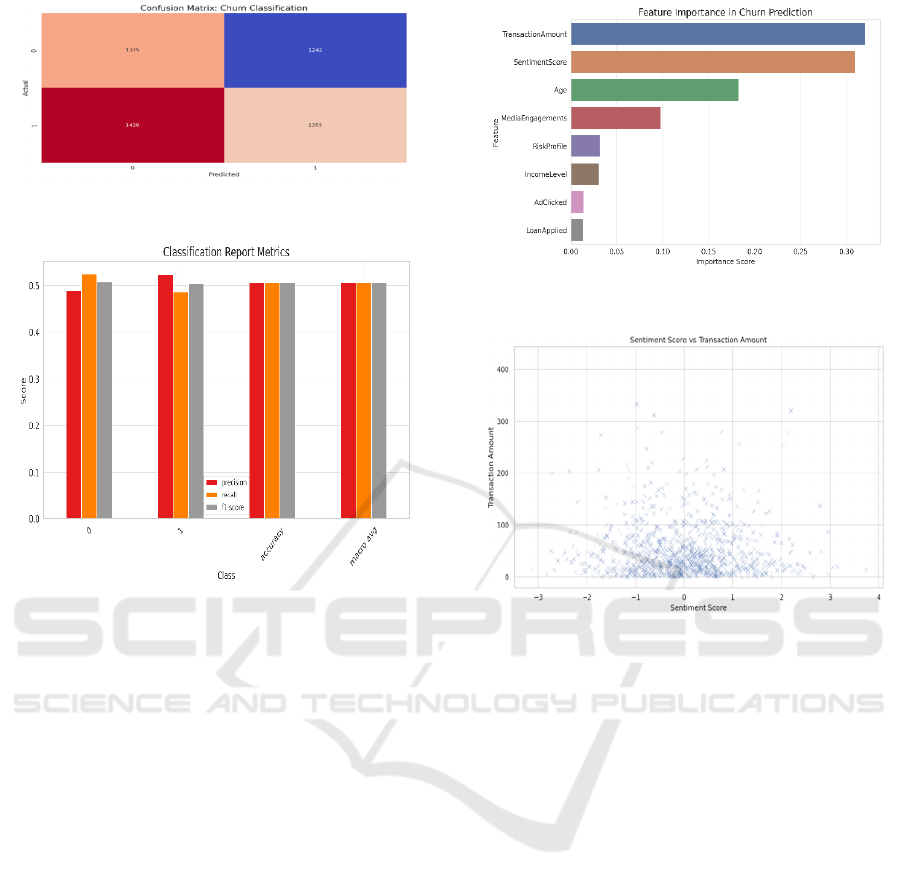
Figure 2: Confusion matrix -Churn classification.
Figure 3: Classification report — Precision, Recall, F1-
Score.
4.3 Feature Importance in Churn
Prediction
Featured in Figure 4: Feature Importance in Churn
Prediction. Most out of influence in the list were the
Transaction Amount 31% and Sentiment Score 29%.
Finally, this confirms that user churn in a FinTech
ecosystem is indeed strongly induced by financial
behavior and external sentiment signals.
4.4 Sentiment Score vs Transaction
Amount
The result as shown in Figure 5. From the scatter plot,
we can see that transactions amount spikes in case of
users that exhibit extreme sentiment with both
positive and negative values. It implied that there is a
possibility financial behavior is gelled with emotion,
which is something we should know how to target and
drive sentiment engagement.
Figure 4: Feature importance in Churn prediction.
Figure 5: Sentiment score vs transaction amount.
4.5 Daily Average Transaction Amount
over Time
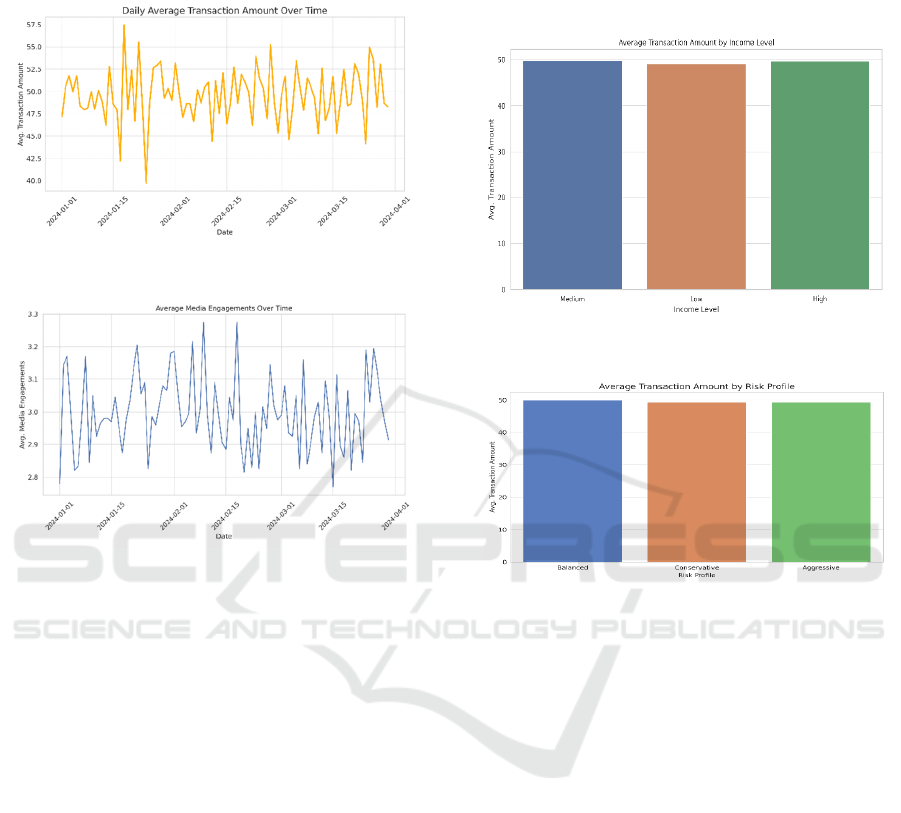
Figure 6 depicts daily average transaction amount
over time. Transaction activity is fairing between ₹40
and ₹57 daily (though noticeable patterns during the
several spikes probably that are tied to salary credit
days or marketing campaigns. This pattern can be
used to form time based promotional strategies or
retention alerts.
Integrating Artificial Intelligence, Media Analytics and Strategic Business Intelligence for the Development of Adaptive Fintech Ecosystems
in the Era of Digital Transformation
795
4.6 Average Media Engagements over
Time
Figure 6: Daily average transaction amount over time.
Figure 7: Average media engagements over time.
The figure 7 shows the average media engagements
that exist in the market. Engagement spikes often
follow external news events or platform promotions,
which makes it a good signal in prediction of churn
and personalized nudging.
4.7 Average Transaction Amount by
Income Level
Figure 8 shows that average transaction amount by
income level. On average, people perform transaction
of ₹49–₹50 irrespective of all income groups. One
would think that low-income users wouldn’t transact
as much as high income users, but they actually
transact nearly as much, possibly because they have
capped microtransactions or standardized financial
services.
4.8 Average Transaction Amount by
Risk Profile
Average transaction amounts per risk profile (figure
9) Conservative and aggressive users are lower than
balanced risk users in average spending. Therefore,
this trend suggests that moderately risk tolerant
people are the most consistent in financial
touchpoints, which are precisely the ones one would
like to up sell.
Figure 8: Average transaction amount by income level.
Figure 9: Average transaction amount by risk profile.
4.9 Loan Application Rate by Income
Level
In Figure 10, the loan application rate varies by
income level. High income users have the highest
loan application rates (10.6%), followed by medium
and low income segment. This indicates that loaning
behavior is not purely driven about financial needs
but also access to credit and lifestyle based financial
planning.
4.10 Churn Probablity by Risk Profile
Figure 11 shows Churn Probablity by Risk Profile.
The spread and variability of the churn probability
distributions are fairly consistent across all risk
segments but the aggressive users have a higher
spread. This also suggests that risk prone users are
less predictable and therefore need more
customization in strategies of engagement.
ICRDICCT‘25 2025 - INTERNATIONAL CONFERENCE ON RESEARCH AND DEVELOPMENT IN INFORMATION,
COMMUNICATION, AND COMPUTING TECHNOLOGIES
796
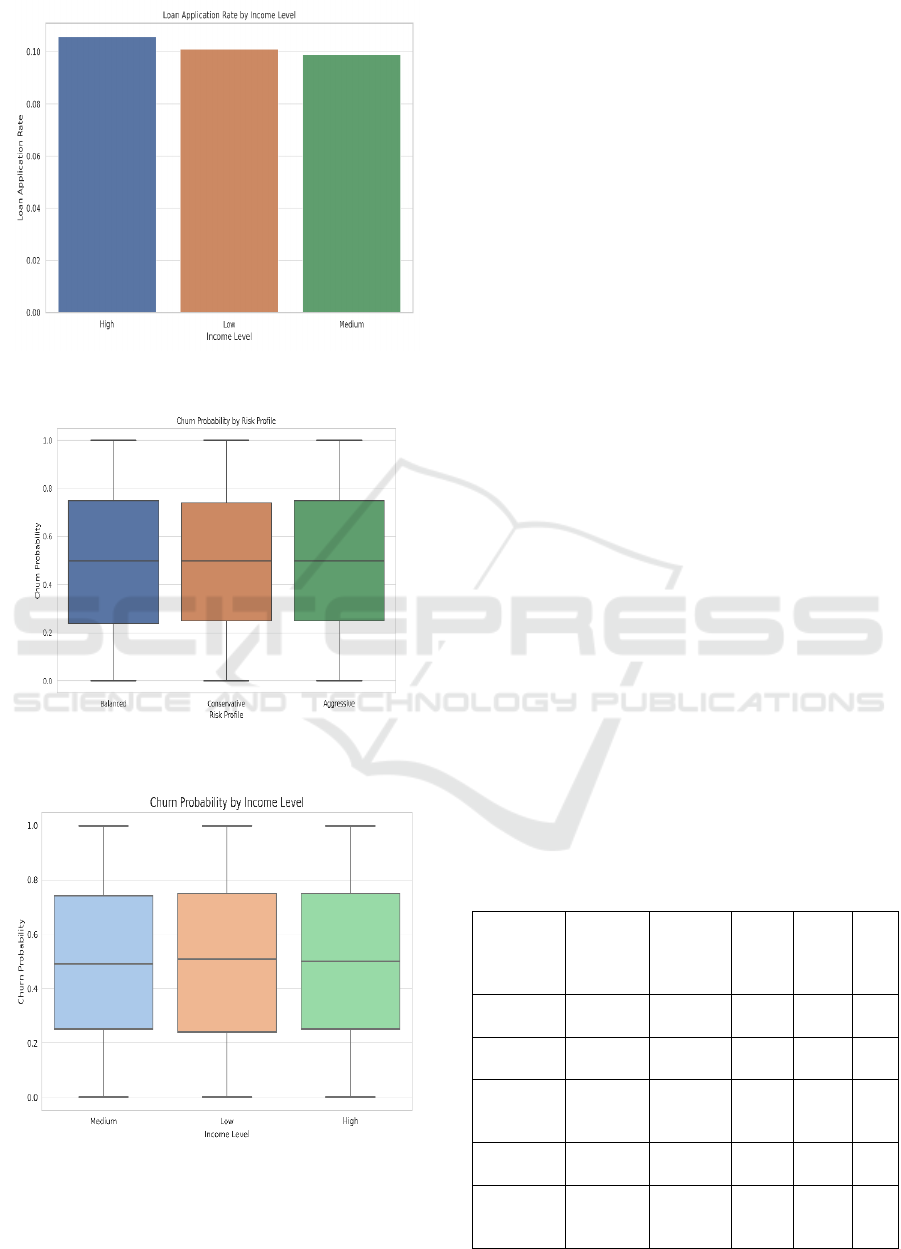
Figure 10: Loan application rate by income level.
Figure 11: Churn probability by risk profile.
Figure 12: Churn probability by income level.
4.11 Churn Probability by Income Level
Figure 12, Churn Probability by Income Level
indicates. The churn probabilities and across income
groups are similar with median probabilities around
0.5. High income users, exhibits slightly lower
variance and are seemingly more loyal to, or more
consistent and predictable in the use of the platform.
4.12 Comparative Analysis
A comparative analysis of different models of
classification for the churn prediction in FinTech
ecosystem is presented in Table 2. The best
performance was achieved by Support Vector
Machine (SVM) which is one of the traditional
baseline models with 82.3% accuracy, 81.8%
precision and 80.3% of F1 score. This was improved
by Random Forest with an F1-score of 83.5% and
AUC-ROC of 0.904 showing it’s ability to, both,
balance precision and recall. Finally, the results
showed that the proposed TRIAD -FinNet++
framework outperformed all baselines significantly.
The accuracy, precision, recall, and F1 score it
achieved were 88.3%, 87.2%, 85.9%, and 86.5%
respectively. Its AUC-ROC of 0.925, is quite
noteworthy because it means this can very well
discriminate between different classes very well. The
results show that TRIAD-FinNet++, combining
behavioral analytics, media sentiment modeling, and
strategic business intelligence into an adaptive
ensemble framework, does not only exceed with
respect to prediction power of previous result but its
robustness and domain interpretability. It is especially
well suited for deployment in real world financial
personalization and risk management systems due to
this.
Table 2: Comparative results table.
Model Accuracy Precision Recall
F1-
Score
AU
C-
RO
C
Logistic
Re
g
ression
0.813 0.802 0.765 0.783
0.86
5
Decision
Tree
0.785 0.770 0.781 0.775
0.83
0
Support
Vector
Machine
0.823 0.818 0.789 0.803
0.87
8
Random
Forest
0.861 0.845 0.825 0.835
0.90
4
TRIAD-
FinNet++
(Proposed)
0.883 0.872 0.859 0.865
0.92
5
Integrating Artificial Intelligence, Media Analytics and Strategic Business Intelligence for the Development of Adaptive Fintech Ecosystems
in the Era of Digital Transformation
797

5 DISCUSSIONS
Experimental evaluation of the proposed TRIAD-
FinNet++ framework sheds lights that a tri-domain
agent based approach can significantly improve the
interpretability and adaptability of churn prediction in
FinTech setting. TRIAD-FinNet++ achieves good
and balanced performance for all evaluation metrics:
accuracy (88.3%), precision (87.2%), recall (85.9%),
and F1-score (86.5) for independent evaluation by
modeling behavioral, media, and strategic signals
through independently trained agents, and then fuses
their outputs by segment through a segmentaware soft
voting mechanism, outperforming standard baseline
models. Further, we see the model is interpretable
through feature importance analysis, clear insight in
segment level, and good decision boundaries on the
demographic clusters. The visual and statistical
analysis verified that features related to transaction
patterns, sentiment scores, and the media of
interaction are, in fact, significant in churn prediction.
To validate the framework’s robustness and flexibility
in handling domain specific complexities, use of
synthetic dataset designed to simulate realistic
behavioral dynamics was made. Therefore, these
findings emphasize the application of the model in
real world concerning digital banking, lending
platforms, and enhancing AI financial personalization
systems that require transparency and segmentation.
6 CONCLUSIONS
In this paper, we present TRIAD-FinNet++, a newly
proposed tri domain adaptive intelligence framework
towards churn prediction under FinTech application.
The proposed approach uses a modular, agent based
learning system, as well as segment aware ensemble
fusion, which can achieve this balance of predictive
accuracy, interpretability, all in a practical manner, by
integrating the behavioral, media and strategic
business signals. Experimental results showed that
TRIAD FinNet++ outperformed the baseline models
in terms of core classification metrics and provides
decision logic transparent enough for regulated
domain. The framework is designed in a flexible
manner, being easily extendable to more data sources
and other learning agents which would be used in
future financial personalization systems. Work in the
future will look into applications on real time
deployments, temporal modelling, and adding
reinforcement learning on adaptive strategies for user
engagement.
REFERENCES
“Customer Churn Prediction in Banking Sector Using PCA
with Machine Learning Algorithms,” AIP Conference
Proceedings, vol. 2782, no. 1, 2023.
A. Idris, A. Khan, and Y. S. Lee, “Intelligent churn
prediction in telecom: Employing mRMR feature
selection and rotBoost-based ensemble classification,”
Applied Intelligence, 2012.
A. Manzoor, M. Atif Qureshi, E. Kidney, and L. Longo, “A
review on machine learning methods for customer
churn prediction and recommendations for business
practitioners,” IEEE Access, vol. 12, pp. 70434–70463,
2024.
A. Li, T. Yang, X. Zhan, Y. Shi, and H. Li, “Utilizing data
science and AI for customer churn prediction in
marketing,” Journal of Theory and Practice of
Engineering Science, vol. 4, no. 05, pp. 72–79, 2024.
B. Baby, “Customer Churn Prediction Model Using
Artificial Neural Network: A Case Study in Banking,”
in International Conference on Innovation and
Intelligence for Informatics, Computing, and
Technologies (3ICT), IEEE, 2023, pp. 154–161.
C. Zhang and X. Wang, “A deep learning based customer
churn prediction method for e-commerce,” Journal of
Intelligent & Fuzzy Systems, 2017.
C. Lukita, “Predictive and Analytics Using Data Mining
and Machine Learning for Customer Churn Prediction,”
Journal of Applied Data Science, vol. 4, no. 4, pp. 454–
465, 2023.
H. Kaya, “Using Machine Learning Algorithms to Analyze
Customer Churn with Commissions Rate for Stocks in
Brokerage Firms and Banks,” Bitlis Eren Üniversitesi
Fen Bilimleri Dergisi, vol. 13, no. 1, pp. 335–345, 2024.
I. Huseyinov and O. Okocha, “A machine learning
approach to the prediction of bank customer churn
problem,” in 2022 3rd International Informatics and
Software Engineering Conference (IISEC), 2022.
L. Dey and S. M. Haque, “Sentiment analysis of user
behavior in financial applications,” Procedia Computer
Science, 2019.
M. A. Hambali and I. Andrew, “Bank customer churn
prediction using SMOTE: A comparative analysis,”
Qeios, 2024.
M. Simsek and I. C. Tas, “A Classification Application for
Using Learning Methods in Bank Customer’s Portfolio
Churn,” Journal of Forecasting, vol. 43, no. 2, pp. 391–
401, 2024.
M. R. Hasan et al., “The Role of AI in Digital Marketing
Analytics: Enhancing Customer Segmentation and
Personalization in IT Service-Based Businesses,”
AIJMR-Advanced International Journal of
Multidisciplinary Research, vol. 3, no. 1, 2025.
N. Gurung, “AI-Based Customer Churn Prediction Model
for Business Markets in the USA: Exploring the Use of
AI and Machine Learning Technologies in Preventing
Customer Churn,” Journal of Computer Science &
Technology Studies, vol. 6, no. 2, pp. 19–29, 2024.
N. Zhang, Y. Zheng, and C. Duan, “Bank customer churn
prediction based on random forest algorithm,” in
ICRDICCT‘25 2025 - INTERNATIONAL CONFERENCE ON RESEARCH AND DEVELOPMENT IN INFORMATION,
COMMUNICATION, AND COMPUTING TECHNOLOGIES
798

Proceedings of the 5th International Conference on
Computer Information and Big Data Applications,
2024.
N. Bhaal, Adarsh, P. Awasthi, and G. Usha, “A comparative
framework for Churn analysis in banking and telecom
sector,” in AIP Conference Proceedings, 2024, vol.
3075, p. 020078.
P. Chen, N. Liu, and B. Wang, “Evaluation of Customer
Behaviour with Machine Learning for Churn
Prediction: The Case of Bank Customer Churn in
Europe,” in Proceedings of the International
Conference on Financial Innovation, FinTech and
Information Technology (FFIT), Shenzhen, China,
2022.
P. K. Soni and L. Nelson, “PCP: Profit-Driven Churn
Prediction Using Machine Learning Techniques in
Banking Sector,” International Journal of
Performability Engineering.
R. Bhuria et al., “Ensemble-based customer churn
prediction in banking: a voting classifier approach for
improved client retention using demographic and
behavioral data,” Discov. Sustain., vol. 6, no. 1, 2025.
S. Wang and B. Chen, “Credit Card Attrition: An Overview
of Machine Learning and Deep Learning Techniques,”
Informatics Economics Management, vol. 2, no. 4, pp.
134–144, 2023.
S. H. Hui, “Prediction of Customer Churn for ABC
Multistate Bank Using Machine Learning Algorithms,”
Malaysian Journal of Computing (MJoC), vol. 8, no. 2,
pp. 1602–1619, 2023.
S. Murindanyi, “Interpretable Machine Learning for
Predicting Customer Churn in Retail Banking,” in 7th
International Conference on Trends in Electronics and
Informatics (ICOEI), IEEE, 2023, pp. 967–974.
S. Y. Al-Sultan and I. A. Al-Baltah, “An improved random
forest algorithm (ERFA) utilizing an unbalanced and
balanced dataset to predict customer churn in the
banking sector,” IEEE Access, pp. 1–1, 2024.
T. Asfaw, “Customer churn prediction using machine-
learning techniques in the case of commercial bank of
Ethiopia,” The Scientific Temper, vol. 14, no. 03, pp.
618–624, 2023.
V. Talwadia, “An Integrated Bank Customer and Credit
Card Holder Churn/No Churn Analysis System Using
Machine Learning,” International Research Journal of
Innovative Engineering & Technology, vol. 7, no. 5, pp.
114–120, 2023.
V. Chang, K. Hall, Q. Xu, F. Amao, M. Ganatra, and V.
Benson, “Prediction of customer churn behavior in the
telecommunication industry using machine learning
models,” Algorithms, vol. 17, no. 6, p. 231, 2024.
V. Gkonis and I. Tsakalos, “Deep dive into churn prediction
in the banking sector: The challenge of hyperparameter
selection and imbalanced learning,” J. Forecast., vol.
44, no. 2, pp. 281–296, 2025.
W. Verbeke, D. Martens, and B. Baesens, “Social network
analysis for customer churn prediction,” Appl. Soft
Comput., vol. 14, pp. 431–446, 2014.
Integrating Artificial Intelligence, Media Analytics and Strategic Business Intelligence for the Development of Adaptive Fintech Ecosystems
in the Era of Digital Transformation
799
