
Financial Analysis of Stocks Using AI Agents
Twinkle Vigneswari V. and Uma Maheswari Km
Department of Computing Technologies, SRM Institute of Science and Technology, Chennai, Tamil Nadu, India
Keywords: Artificial Intelligence, AI Agents, Agentic AI, Agentic Workflow, API, Phi Data, LLM, LLM Judge.
Abstract: This proposed work showcases a minimalistic yet impactful approach to financial analysis using AI agents.
Leveraging Python and open-source libraries, the system demonstrates the ability to autonomously gather,
process, and analyse stock market data. By utilizing tools such as phi data and Yahoo Finance, the work
highlights how AI-driven automation can streamline the analysis process for individual investors and small-
scale analysts.
1 INTRODUCTION
Analysing financial data has historically been
tedious and a laborious process, needing a significant
amount of manual wires in gathering, cleaning,
understanding trends and assessing performance. AI
agents are growing as disruptive forces in finance
powered by the developments made in AI and
machine learning (ML) over the past several years.
The agents use automation, natural language
processing (NLP), as well as deep and reinforcement
learning methods to simplify financial analysis,
reduce human errors, and make more efficient
decisions.
In this paper, we present a cloud-based AI-driven
financial analysis system built with Phi data an
advanced data pipeline automation framework. It
comprises of machine learning models, API-based
data extraction, and predictive analytics to
autonomously collect financial data, analyse stock
trends, and provide actionable insights. Utilizing AI-
based approaches, this fluency describes how
computational agents could change financial
decision-making process. Automated workflows,
scalable integration with the cloud, and AI-enhanced
visualization tools make financial analysis both more
accessible and more efficient.
In doing so, we hope to demonstrate the potential
of AI-powered automation to democratize access to
financial data and analytics, offering sophisticated
analytical insights to individual income earners,
analysts, and small businesses while serving as a
bridge between the worlds of traditional finance and
AI innovation
.
Motivation.
The financial landscape is changing rapidly, thanks to
a number of key trends: increased reliance on data-
driven decision making and machine learning
analytics. But the ability to apply sophisticated
financial analysis tools remains predominantly in the
hands of large institutions and hedge funds, which
can afford top-tier computing infrastructure and
proprietary AI models. Such advanced tools are
typically out of reach for retailer investors, small-
scale analysts and individual traders, negatively
affecting the individual traders and the day traders
decision-making process by depriving them of the
instantaneous market information and AI-enhanced
vision.
Our goal is to make this access gap smaller by
building an intuitive and lightweight financial
analysis system using AI agents and automation
frameworks like phi data. The system enables you to
use the system with no complex setups or high-cost
software as it uses open-source tools, external APIs
(Yahoo Finance API, for example), and pre-trained
AI models. It helps users (with or without tech
background) to easily monitor stock trends and
identify anomalies as well as analyse financial
sentiment from news articles and reports.
This work proposes a cheaper, real-time
alternative to traditional financial analysis systems by
streamlining the deployment steps and cutting down
on the computation expenses. As a mission, we aim
to democratise AI-based financial insights for
individual investors, students, and finance freedom
V., T. V. and K. M., U. M.
Financial Analysis of Stocks Using AI Agents.
DOI: 10.5220/0013941700004919
Paper published under CC license (CC BY-NC-ND 4.0)
In Proceedings of the 1st International Conference on Research and Development in Information, Communication, and Computing Technologies (ICRDICCT‘25 2025) - Volume 5, pages
671-675
ISBN: 978-989-758-777-1
Proceedings Copyright © 2026 by SCITEPRESS – Science and Technology Publications, Lda.
671

lovers to leverage the latest AI technologies without
needing particular expertise and capital.
2 LITERATURE REVIEW
AI in Financial Analysis: According to research, AI
is being increasingly used in sentiment analysis,
market prediction, risk management, and market
segmentation.
• Open-Source Tools: Frameworks like phi data
can simplify AI development, according to
research.
• Automation with AI Agents: The efficiency of
agent-based systems in terms of reducing
manual labour and increasing accuracy in
financial applications is discussed in the papers.
• Challenges in AI Adoption: Problems like data
quality, scalability, and user-friendliness
persist.
3 CHALLENGES IN EXISTING
SYSTEMS
The models like in faced with one of the main
challenges
• Limited Accessibility: Most high-end tools
come at a considerable cost which can prevent
smaller investors from using them.
• Complexity: Most are too sophisticated,
discouraging non-technical users.
• Data Gaps: Other tools may not pull in entire
data sets.
• It is also true that information used has its
stability and reliability depending on quality of
data.
4 OBJECTIVES OF THE WORK
• Build an accessible and straightforward AI agent
for financial data analysis.
• Automate data collection from reliable sources
like Yahoo Finance.
• Deliver clear, actionable insights with minimal
user input.
• Showcase the capabilities of AI agents in
simplifying financial decision-making.
Innovation of the work.
The great innovation is the simplicity and efficiency
of the work. Using Phidata, an AI-powered data
engineering framework, the regulator creates a
cohesive pipeline for extracting, processing, and
analysing data. Phidata streamlines the deployment
and monitoring of monetary knowledge analysing AI
agents. Moreover, this work makes use of Yahoo
Finance API to fetch real-time stock market data,
ensuring continuous access to the latest financial
information.
The system also utilizes machine learning models
to analyse trends and detect anomalies, as well as
NLP (Natural language processing) models for
sentiment analysis of financial reports and news
articles. Additionally, the summary generation
module leverages large language models (LLMs) to
translate raw data on stock performance into
digestible insights and patterns that users can
interpret.
While classical systems require significant
manual labour and computational effort, this work
focuses on simplicity, low-cost and fast turnaround
time. With lightweight and capable AI agents, it
removes the pain of a difficult configuration,
bringing financial analysis to the world of the
individual investor, small-scale analyst, and
educational user. This powerful AI enabled
automation also improves the accuracy of the analysis
work while driving down both the cost of doing the
work and the time it takes to deliver the analysis
thereby making the financial insights accessible to the
greater audience.
Figure 1 show the LLM Agent
System Architecture.
5 PROPOSED SYSTEM
In order to circumvent the limitations noticed in
previous research, our proposed system presented
several improvements to enable more efficient and
intelligent stock market analysis through AI Agents.
Our model empowers business analysis and
democratizes financial interpretation by utilizing
automated data collection, real-time querying, and
AI-driven financial intelligence.
ICRDICCT‘25 2025 - INTERNATIONAL CONFERENCE ON RESEARCH AND DEVELOPMENT IN INFORMATION,
COMMUNICATION, AND COMPUTING TECHNOLOGIES
672
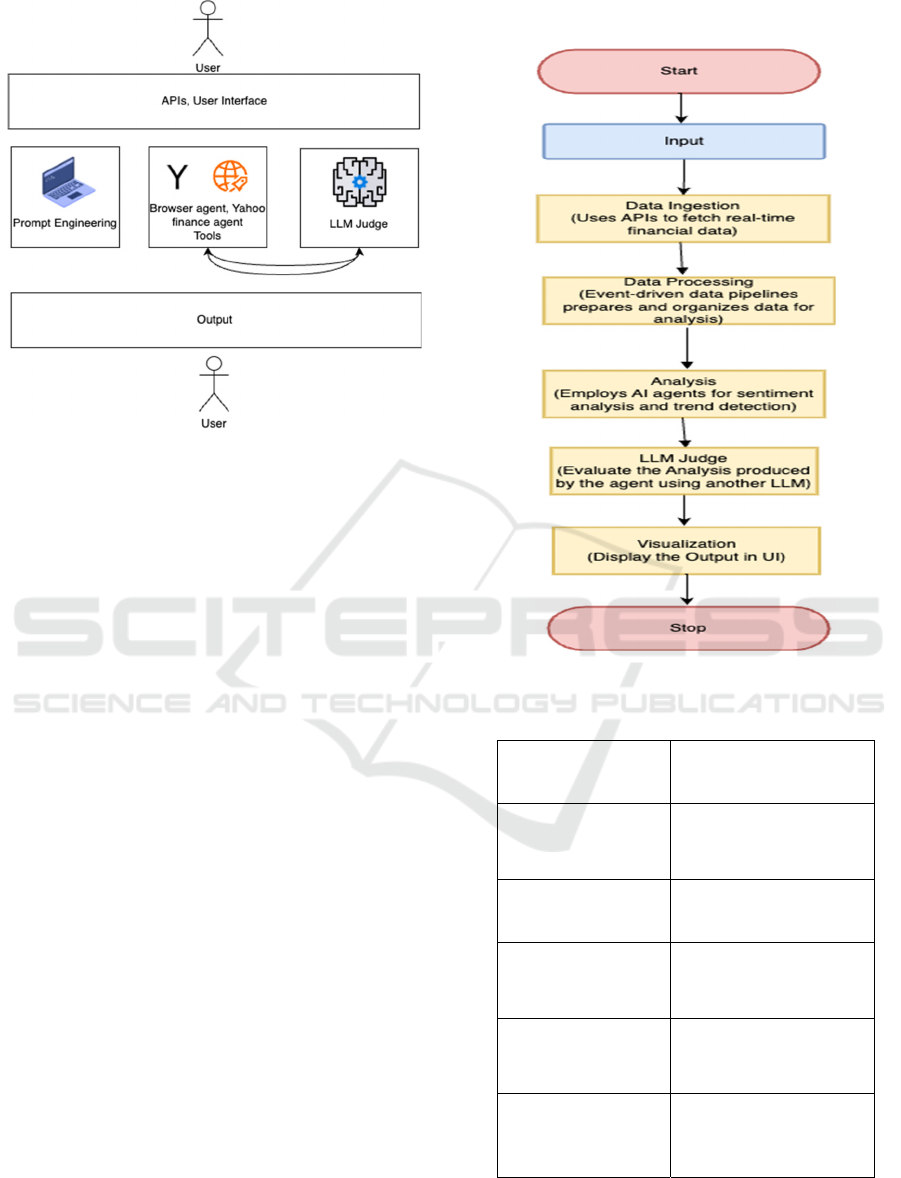
Figure 1: LLM agent system architecture.
5.1 Data Collection and Processing
Most existing financial analysis models depend on
static data, our system dynamically fetches live stock
market data using Yahoo Finance and other financial
APIs. The use of AI agents, where the system pre-
processes, normalizes, and stores this data for fast,
efficient analysis.
5.2 Real-Time Query Interface
Our system allows for ad-hoc, user-defined queries in
real-time a capability missing from many legacies
financial tools. Rather than manually sifting through
massive data, users key in stock symbols, time ranges,
and financial metrics, retrieving relevant insights
within seconds. Dynamic Stock Screening: Enables
user-based stock filtering based on PE ratio, EPS,
market trends and pricing power.
Trend Analysis Queries: to help investors to ask
questions like “show stocks with the growing NPS
score in the last quarter?”
Integration of Mind Trend to Conduct Sentiment
Analysis: Based on news articles, earnings reports,
financial announcements, and so forth to gauge
market sentiment. A second core technology is the
use of Generative AI for summarization in natural
language. Our system does not simply present
numerical data, as traditional models would, but
transposes that data in human-readable financial
insight.
Figure 2 show the LLM-Based Financial
Data Analysis Pipeline.
5.3 Algorithm Description
Figure 2: LLM-based financial data analysis pipeline.
Table 1: Input specifications:.
Input Type Description
Stock Symbol
The ticker symbol of the
stock (e.g., AAPL for
Apple, TSLA for Tesla).
Timeframe
User-specified period for
analysis (e.g., daily,
weekly, monthly).
Financial Reports &
News
Real-time news articles,
reports, and sentiment
data fetched from APIs.
User Query
Inputs related to specific
financial metrics (e.g.,
revenue, P/E ratio).
Market Trends Data
Historical and real-time
stock price data retrieved
using Yahoo Finance
API.
Financial Analysis of Stocks Using AI Agents
673

5.4 Data Collection Module
Utilizes Yahoo Finance API to collect real-time and
historical stock price data, financial reports, and key
performance indicators (KPIs). The Yahoo Finance
API automatically updates stock data at defined
intervals for continuous monitoring. Cleans raw
financial data by handling missing values, anomalies,
and noise. Transforms data into structured formats
(CSV, JSON, Pandas DataFrames) for faster
processing and analysis.
Table 1 show the Input
Specifications:
Phidata’s automation capabilities streamline the
data pipeline, ensuring real-time stock data updates
without manual intervention.
5.5 AI-Based Analysis Module
Utilizes NLP models for sentiment analysis from
financial reports and news articles:
Large Language Models (LLMs) (e.g., GPT-
based models, FinBERT) analyze financial news,
earnings reports, and social media sentiment.
Extracts positive, negative, or neutral sentiment
for stocks and industries.
Identifies market-moving news and predicts investor
sentiment shifts.
Implements machine learning models for trend
forecasting and anomaly detection:
Uses time series forecasting models (LSTMs,
ARIMA, and Transformer-based models) to predict
stock price movements.
Detects unusual price fluctuations and alerts users
about potential risks or investment opportunities.
Phidata facilitates efficient data pipelines, making it
easier to process large volumes of stock market data
quickly.
5.6 Query Interface Module
Accepts user-defined inputs (e.g., stock symbol,
timeframe, financial metric):
Users can enter stock symbols, date ranges, and
financial KPIs (e.g., P/E ratio, market cap, revenue
growth).
Allows for custom queries related to stock trends,
risk factors, and sector-specific performance.
Retrieves relevant stock trends, sentiment
analysis, and predictive insights:
Combines real-time data with AI predictions to
provide actionable investment insights.
Uses Phidata workflows to efficiently process and
return query results in a structured format.
Enables interactive exploration of stock trends
without requiring financial expertise.
5.7 Summary Generation Module
AI-powered engine for generating natural language
summaries based on analysed financial information:
LLM-based report generation from stock data,
sentiment analysis, and forecasts.
General impact of the financial news across stock
price movements of the typical stocks and the future
assessments of risk.
Instead of just stock data gives you intuitive insights:
Instead of showing complicated graphs and
numbers, the system gives plain-text summaries (for
example, “Stock X is seeing a good upward trend in
light of strong quarterly earnings”).
Allows investors lacking coding knowledge to
get a picture of financial trends without advanced
analytics capabilities.
5.8 LLM Judge Evaluation Module
Employs LLMs to review the output produced by the
summary generation module:
Uses reinforcement learning with another Judge
LLM to verify AI generated summaries are factually
accurate and in the right context.
Aims Open source LLMs Llama 3.1 70 b
versatile assume as true financial summaries through
comparing to live inventory piece of evidence.
Minimizes human intervention and evaluates the
accuracy of the output:
Conducts cross-check against the original data
and results of sentiment analysis.
Note: Potential hallucinations or misleading
information detected, providing reliable investment
insights.
Lowers manual verification overhead, enabling
automated, high-accuracy financial reporting.
6 CONCLUSIONS AND FUTURE
WORK
This paper uses AI agents to collect real-time data,
analyse sentiment, and query data based on user
preferences to address major issues in Financial
analysis. The system improves the decision-making
process for investors and analysts by automating
stock analysis and delivering AI-powered financial
insights.
ICRDICCT‘25 2025 - INTERNATIONAL CONFERENCE ON RESEARCH AND DEVELOPMENT IN INFORMATION,
COMMUNICATION, AND COMPUTING TECHNOLOGIES
674

• Enhancing predictive analytics by incorporating
deep learning models for more accurate stock
price forecasting.
• Integrating multi-source financial data such as
earnings transcripts, social media sentiment, and
macroeconomic indicators for a more holistic
analysis.
• Expanding real-time query capabilities by
incorporating advanced NLP models for intuitive,
conversational financial queries.
• Optimizing computational efficiency for large-
scale financial datasets and real-time AI-driven
stock recommendations.
REFERENCES
A Systematic Survey of AI Models in Financial Market
Forecasting for Profitability Analysis," IEEE Access,
vol. 11, pp. 5359- 5378, 2023. doi:10.1109/ACCESS.2
023.3239357.
A Survey of Financial AI: Architectures, Advances and
Open Challenges," arXiv preprint arXiv:2411.12747,
2024. Available: https://arxiv.org/abs/2411.12747.
Artificial Intelligence Applied to Stock Market Trading: A
Review, IEEE Access, vol. 9, pp. 30898-30917, 2021.
doi:10.1109/ACCESS.2021.3058133.
Deep Reinforcement Learning for Quantitative Trading,"
arXiv preprint arXiv:2312.15730, 2023. Available:
https://arxiv.org/abs/2312.15730.
Financial Analysis of Stocks Using AI Agents
675
