
Evaluating Process Parameter Interdependencies
Based on Knowledge Graphs in Manufacturing
Tom Jeleniewski
1 a
, Aljosha K
¨
ocher
1 b
, Hamied Nabizada
1 c
, Jonathan Reif
1 d
,
Felix Gehlhoff
1 e
and Alexander Fay
2 f
1
Institute of Automation Technology, Helmut Schmidt University, Holstenhofweg 85, Hamburg, Germany
2
Chair of Automation, Ruhr University Bochum, Universit
¨
atsstraße 150, Bochum, Germany
Keywords:
Process Parameter Interdependencies, Data Elements, Semantic Web, Ontologies, Web Ontology Language,
OWL, Industry 4.0.
Abstract:
Formal representations of parameter interdependencies are critical for enabling model-based analysis and rea-
soning in manufacturing process knowledge graphs. While ontologies based on industrial standards allow for
structured semantic descriptions, the computability of embedded mathematical expressions remains a chal-
lenging task. This paper presents a SPARQL-driven evaluation framework capable of interpreting and resolv-
ing process parameter interdependencies within a knowledge graph. The approach supports an evaluation of
nested mathematical expressions, contextual data resolution and computation of process relevant results. The
implementation demonstrates how semantic process models can be used for decision support and process op-
timization tasks.
1 INTRODUCTION
Manufacturing systems are increasingly shaped by
demands for individualization, shortened product life
cycles, and reduced lot sizes (Jarvenp
¨
a
¨
a et al., 2016).
To cope with these dynamics, modern production en-
vironments must be designed for flexibility and re-
configurability, allowing them to respond to chang-
ing technical and organizational requirements (Afa-
zov, 2013). At the same time, the resulting produc-
tion processes and system architectures become more
complex, both structurally and functionally (L
¨
uder
and Schmidt, 2017).
In this context, Digital Twins (DTs) have become
a key concept for managing complexity and enabling
data-driven decision making in engineering. They
represent assets by digitally capturing their proper-
ties and behavior by means of models, information,
and data (Stark et al., 2017). Especially in process
design and redesign tasks, an essential part of such
a
https://orcid.org/0009-0007-0360-4108
b
https://orcid.org/0000-0002-7228-8387
c
https://orcid.org/0000-0001-8251-837X
d
https://orcid.org/0009-0001-2079-8967
e
https://orcid.org/0000-0002-8383-5323
f
https://orcid.org/0000-0002-1922-654X
DT models consists of quantifiable parameter interde-
pendencies that capture the cause-effect relations gov-
erning system behavior (e.g., how cycle time depends
on machine speed and part complexity). Accurately
representing and evaluating these interdependencies
is crucial for tasks such as process optimization, per-
formance estimation, and feasibility assessments.
Semantic Web technologies, such as Resource De-
scription Framework (RDF), offer a means to for-
mally describe such interdependencies in a machine-
interpretable way in order to test different parame-
ter, material, and resource combinations (Gill et al.,
2022).
However, while the Semantic Web provides pow-
erful mechanisms for describing and querying struc-
tural information, support for quantitative reason-
ing and mathematical calculations remains lim-
ited (Sabou et al., 2020). This becomes a limiting
factor in engineering contexts where numeric com-
putations are essential, for example in process opti-
mization, performance estimation, or the evaluation
of physical constraints (Hildebrandt et al., 2017).
Embedding mathematical expressions in the
knowledge graph keeps formulas bound to their
process context and preserves their machine-
interpretable semantics. This enables automated
evaluation of parameter interdependencies and ad-
86
Jeleniewski, T., Köcher, A., Nabizada, H., Reif, J., Gehlhoff, F. and Fay, A.
Evaluating Process Parameter Interdependencies Based on Knowledge Graphs in Manufacturing.
DOI: 10.5220/0013937100004000
Paper published under CC license (CC BY-NC-ND 4.0)
In Proceedings of the 17th International Joint Conference on Knowledge Discovery, Knowledge Engineering and Knowledge Management (IC3K 2025) - Volume 2: KEOD and KMIS, pages
86-96
ISBN: 978-989-758-769-6; ISSN: 2184-3228
Proceedings Copyright © 2025 by SCITEPRESS – Science and Technology Publications, Lda.

vanced reasoning such as context-aware retrieval and
consistency checks.
Efforts such as OpenMath-RDF (Wenzel, 2021)
have extended the modeling capabilities of RDF to in-
clude mathematical constructs, providing the founda-
tion for representing formulas and interdependencies
within knowledge graphs.
Our previous work has demonstrated how pro-
cess knowledge and parameter interdependencies
can be semantically modeled using OpenMath ex-
pressions, linked to process ontologies according
VDI/VDE 3682 and data elements according to
DIN EN 61360 (Jeleniewski et al., 2023a). These
expressions capture domain-specific dependencies,
physical laws, and engineering logic that influence the
behavior of production systems.
This paper presents a semantic evaluation frame-
work that enables the operational use of interdepen-
dency descriptions within manufacturing knowledge
graphs. The approach uses SPARQL Protocol and
RDF Query Language (SPARQL) queries to extract
and interpret formalized mathematical expressions in
OpenMath-RDF format as well as relevant parameter
data embedded in the graph. This semantic evaluation
prepares the information required for numeric compu-
tation by traversing the symbolic structure, resolving
variable bindings. The resulting expression is then
passed to an external symbolic math engine for final
calculation. By doing so, it enables the application
of interdependency knowledge to support automated
calculations in engineering workflows.
The remainder of this paper is structured as fol-
lows. Section 2 provides an overview of existing re-
search on modeling and evaluating parameter inter-
dependencies. Section 3 provides an explanation of
the semantic integration of process and parameter de-
scriptions together with interdependencies as mathe-
matical expressions, which is the basis for the evalu-
ation framework. Section 4 presents the implementa-
tion of the SPARQL-driven evaluation framework for
knowledge-based computation of process characteris-
tics together with an industrially motivated scenario.
Finally, Section 5 concludes the paper and outlines
future research directions.
2 RELATED WORK
Early works address parameter interdependencies pri-
marily in the context of simulation-supported process
planning and optimization. (Denkena et al., 2011)
and (Denkena et al., 2012) present methods for di-
mensioning and optimizing process chains based on
mathematical models. These contributions demon-
strate the potential of simulation models to capture
process behavior and support decision-making. How-
ever, the models lack semantic annotations that would
enable reuse, interoperability, or formal reasoning.
A more generalized modeling strategy is proposed
in (Grigoriev et al., 2013), who identifies and formal-
izes key process parameters within the aerospace do-
main and develops a configurable process model cal-
ibrated with statistical and empirical data. While the
model supports quantitative analysis, it does not inte-
grate standardized semantics.
Other contributions focus on qualitative or de-
scriptive representations of dependencies. (Hoang
et al., 2017) introduce a framework for modeling the
mutual influence between product, process, and re-
source parameters to support system adaptation in
mechatronic contexts. The method allows engineers
to trace cause-effect relations and deduce necessary
compensations in process or resource configurations.
However, the approach does not allow for quantita-
tive interdependency modeling and does not support
automated evaluation or inference.
(Albers et al., 2019) take a design-centric perspec-
tive by linking product design features to manufac-
turing process impacts via a multidimensional matrix
representation. This provides engineers with insights
into systemic effects of design changes, but again
lacks formal semantics or machine-interpretable
logic.
To overcome the described limitations, semantic
approaches based on ontologies have been widely ex-
plored. Ontologies provide a mechanism to formally
describe domain knowledge in a reusable, extensible,
and interoperable way.
(Liang, 2018) developed an ontology for pro-
cess planning in additive layer manufacturing, which
structures domain-specific knowledge around man-
ufacturing steps, machine setups, and material us-
age. (Cheng et al., 2016) combine multiple ontolo-
gies to model devices, products, and parameters for
production lines in an Industry 4.0 context. Both
works demonstrate ontology-based modeling capabil-
ities but remain isolated in scope and do not follow
industrial standardized terminologies. Consequently,
their reuse potential across domains or systems is lim-
ited and interdependencies between parameters are
not modeled explicitly.
A more structured approach is presented
by (Hildebrandt et al., 2020), who outline a
methodology for developing industrial ontologies in
collaboration with domain experts using standardized
terminologies. The method emphasizes the use
of Ontology Design Patterns (ODPs) aligned with
established standards such as VDI/VDE 3682 for
Evaluating Process Parameter Interdependencies Based on Knowledge Graphs in Manufacturing
87

process modeling and DIN EN 61360 for parameter
description. This ensures syntactic and semantic
interoperability and lays the foundation for linked
knowledge representations.
ODPs based on industrial standards have since
been applied in various domains. For exam-
ple, (K
¨
ocher et al., 2020) employ them to model ca-
pabilities and skills of Cyber-Physical System (CPS).
(Gill and Fay, 2023) apply an alignment ontology
based on widely accepted standards to describe air-
craft maintenance processes, showing the generaliz-
ability and applicability of the usage of ODPs. An
important aspect of modeling interdependencies is the
formal representation of mathematical expressions in
a way that is compatible with Semantic Web technolo-
gies. In this way, the formula and its elements can be
semantically annotated with respect to their role in the
process. However, this is not addressed by the publi-
cations mentioned so far.
Rule-based approaches such as Semantic Web
Rule Language (SWRL) allow rule-based reasoning,
but their mathematical expressiveness is restricted to
basic arithmetic. Extensions like the combination of
SWRL with OpenMath improve coverage (S
´
anchez-
Maci
´
an et al., 2007). However, built-in predicates in
triple stores cause vendor lock-in and restrict porta-
bility.
A frequently applied alternative is to use RDF as
a descriptive data layer and implement all mathemat-
ical logic in external applications, such as simulation
tools or dedicated software frameworks (Sabou et al.,
2020). While this option is efficient in terms of com-
putation, it eliminates the semantic binding between
formulas, variables, and process parameter descrip-
tions. As a result, interdependencies lose their explicit
machine-interpretable meaning, preventing advanced
use cases such as consistency verification.
(Marchiori, 2003) was among the first to propose
embedding mathematical semantics into the Semantic
Web, highlighting metadata linkage and queryability
as major advantages. (Lange, 2013) provides a com-
prehensive comparison of MathML and OpenMath for
expressing mathematical knowledge, with a focus on
their integrability into RDF-based systems.
MathML supports the layout and structure of
mathematical formulas, while OpenMath centers on
semantics by referencing operators through standard-
ized Content Dictionaries (CDs)
1
. (Davenport and
Kohlhase, 2009) argues for the harmonization of
mathematical ontologies and demonstrates the advan-
tages of OpenMath in semantic contexts, particularly
due to its extensible design.
The OpenMath-RDF vocabulary introduced
1
https://openmath.org/cdnames/
by (Wenzel, 2021) builds on these principles and
allows mathematical expressions to be represented as
RDF graphs. It supports nesting, operator typing, and
the integration of existing OpenMath CDs. Therefore,
(Wenzel, 2021) provides essential infrastructure for
embedding mathematical knowledge into semantic
models.
Building on this foundation, the authors of this
paper have developed an infrastructure that connects
knowledge modeling according to industrial stan-
dards with quantifiable interdependencies expressed
as mathematical formulas (Jeleniewski et al., 2023a).
Recent work has shown that embedding formulas in
the ontology supports systematic consistency checks
across process models (Jeleniewski et al., 2025).
However, evaluating such interdependencies within
complex graph structures and preparing them for
computation remains a challenging task, which this
paper aims to address.
3 SEMANTIC MODEL FOR
PROCESS PARAMETER
INTERDEPENDENCIES
To formally represent interdependencies between
process parameters in a reusable and machine-
interpretable manner, we introduced the ParX ontol-
ogy
2
in (Jeleniewski et al., 2023a). It is implemented
in the Web Ontology Language (OWL) and aligns
structural process knowledge, technical parameter de-
scriptions, and mathematical semantics by integrating
multiple domain-specific ODPs into a semantically
coherent alignment ontology.
3.1 Ontology Structure and Conceptual
Foundation
The ParX ontology follows a modular design. Each
module reflects a domain-specific conceptualization
and is implemented as an individual TBox ontology.
The alignment ontology imports the respective vo-
cabularies and defines connecting axioms to combine
them into a unified ABox-level model.
The following ODPs based on industrial standards
are integrated:
• VDI/VDE 3682
3
Formalized Process Description
(FPD) for modeling manufacturing processes,
process operators, and state-based input/output
semantics (VDI/VDE 3682:1, 2015),
2
https://github.com/hsu-aut/parX
3
https://github.com/hsu-aut/IndustrialStandard-ODP-VDI3682
KEOD 2025 - 17th International Conference on Knowledge Engineering and Ontology Development
88

• DIN EN 61360
4
for the semantic description of
technical parameters including types, instances,
and associated units of measurement (DIN EN
61360-1, 2018),
• UNECE
5
unit of measurement ontology for
an additional unit specification of data ele-
ments (UNECE, 2010),
• VDI/VDE 2206
6
for a structural description of
technical systems and components (VDI/VDE
2206, 2021),
• OpenMath-RDF
7
for encoding mathematical ex-
pressions in RDF, including operators, variables,
and functional application structures according
to (Wenzel, 2021).
Each ODP corresponds to a self-contained and
reusable vocabulary rooted in industrial standards.
The ParX alignment ontology acts as a semantic
bridge between them, following best practices for on-
tology integration (Hildebrandt et al., 2020; Gangemi
and Presutti, 2009).
3.2 Process and Parameter Modeling
Process descriptions are formalized by using the
class VDI3682:ProcessOperator, which is re-
sponsible for transforming entities of the super
type VDI3682:State from a prior state to a sub-
sequent state. The classes VDI3682:Product,
VDI3682:Information, and VDI3682:Energy are
sub types of VDI3682:State and are used to spec-
ify the state-describing element. A process op-
erator is assigned to a corresponding resource via
VDI3682:isAssignedTo, pointing to an instance of
VDI3682:TechnicalResource, which is responsible
to perform the process step.
To model parameter semantics, the class
DINEN61360:DataElement is used. Each data
element is linked to:
• a DINEN61360:TypeDescription that provides
semantic annotations, including the expected
UNECE:Unit,
• and a DINEN61360:InstanceDescription,
which holds, for example, actual values.
Units are modeled as individuals of the
UNECE:Unit vocabulary, ensuring syntactic va-
lidity and semantic comparability of data elements
across the graph.
4
https://github.com/hsu-aut/IndustrialStandard-ODP-DINEN61360
5
https://github.com/hsu-aut/IndustrialStandard-ODP-UNECE-UoM
6
https://github.com/hsu-aut/IndustrialStandard-ODP-VDI2206
7
https://openmath.org/om-rdf/
3.3 Representation of
Interdependencies
Interdependencies between process parameters
are expressed as mathematical relations us-
ing the OpenMath-RDF vocabulary (Wenzel,
2021). Each formula is modeled as an instance of
OM:Application, which references an OM:Operator
(e.g., arith1:divide) and a list of arguments mod-
eled as RDF collections (rdf:List). The ordered
nature of these list structures, using rdf:first and
rdf:rest predicates, ensures deterministic traversal
of mathematical arguments, maintaining the correct
sequence for non-commutative operations. Argu-
ments can be constants, variables or sub-applications,
which in turn are expressed as OM:Application.
Each variable is an instance of
OM:Variable and is semantically linked to a
DINEN61360:DataElement via the object property
ParX:isDataFor. This creates a clear and machine-
interpretable binding between symbolic mathematical
constructs and domain-specific process data.
The ParX alignment ontology defines the seman-
tic relations that integrate process structure, parameter
data, and mathematical logic across the involved vo-
cabularies. It introduces dedicated object properties
to enable these cross-domain associations. A class di-
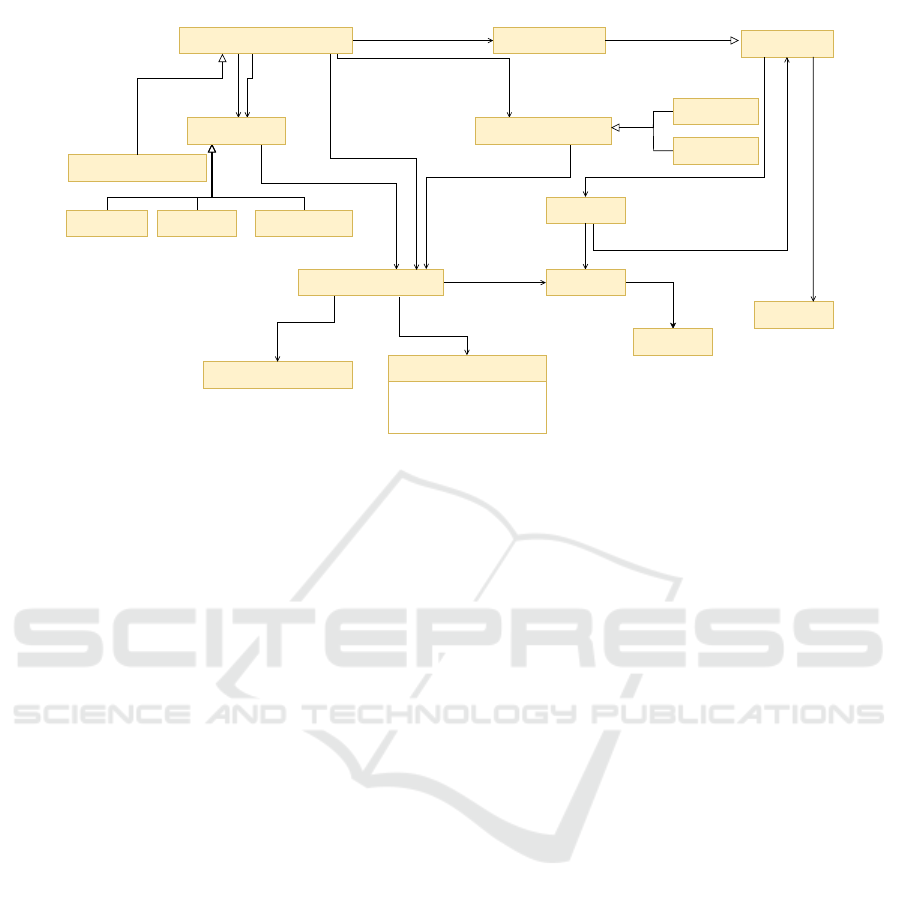
agram of this ontology is illustrated in Figure 1.
The property ParX:isDataFor asso-
ciates mathematical variables with corre-
sponding parameter instances, represented as
DINEN61360:DataElement individuals. To as-
sociate a mathematical expression with a specific
process step, ParX:hasInterdependency is
used to assign an OM:Application instance to
a VDI3682:ProcessOperator. Furthermore,
ParX:expectsUnit declares the expected unit
for each OM:Variable, enabling unit consistency
verification during evaluation and integration.
3.4 Decomposition and Composition of
Interdependencies
In complex manufacturing systems, it is often not fea-
sible to specify a comprehensive interdependency for-
mula for an entire process operator, especially when
process knowledge is distributed across multiple en-
gineering domains or abstraction levels. For example,
a manufacturing process may span multiple depart-
ments, with specialized teams using entirely different
technologies. As each process technology relies on
distinct domain expertise, formalizing interdependen-
cies across the entire process chain as a single expres-
sion becomes increasingly challenging.
Evaluating Process Parameter Interdependencies Based on Knowledge Graphs in Manufacturing
89
VDI3682:ProcessOperator
VDI3682:State
VDI3682:hasInput
VDI3682:Product VDI3682:Energy VDI3682:Information
DINEN61360:hasDataElement
DINEN61360:DataElement
OM:Application
OM:Operator
OM:arguments
DINEN61360:TypeDescription
UNECE:Unit
DINEN61360:hasTypeDescription
DINEN61360:hasInstanceDescription
OM:operator
OM:ObjectList
DINEN61360:InstanceDescription
+Value
+ExpressionGoal
+LogicInterpretation
VDI3682:isAssignedTo
DINEN61360:hasDataElement
VDI3682:ProcessOperator
VDI3682:State
VDI3682:TechnicalResource
OM:Variable
ParX:isDataFor
VDI3682:hasOutput
VDI3682:ProcessOperator
VDI3682:State
VDI3682:ProcessOperator
VDI3682:State
DIN8580:ManufacturingProcess
ParX:Interdependency
ParX:hasInterdependency
rdf:first
DINEN61360:hasDataElement
VDI2206:System
VDI2206:Module
UNECE:Unit
ParX:expectsUnit
0..*
1..*1..*
0..*
0..*
0..*
0..* 1
1
0..*
0..* 0..*
0..1
0..*
0..*
0..*0..*
0..* 0..*
0..*
0..* 0..*
0..*
1
0..*
1
rdf:first
Figure 1: Class diagram of the ParX alignment ontology illustrating the integration of VDI/VDE 3682, DIN EN 61360 and
OpenMath-RDF ontology design patterns (based on (Jeleniewski et al., 2023a)).
To address this, the ParX ontology supports the
decomposition of high-level process operators into
finer-grained subprocesses, for which interdependen-
cies can be formalized. Conversely, it allows the com-
position of these local expressions into a global inter-
dependency that approximates or represents the be-
havior of the parent process operator.
Interdependency Decomposition: If no interde-
pendency can be defined at a higher level of ab-
straction, the process may be decomposed into sub-
ordinate subprocesses. Following the concept of
VDI/VDE 3682, each of these subprocesses is again
modeled as a VDI3682:ProcessOperator, allow-
ing interdependencies to be specified at a more de-
tailed level. Each subprocess represents a more spe-
cific operation or transformation step and may be
linked to its own interdependency expression using
ParX:hasInterdependency. On the level of smaller
functional units, parameter interdependencies are typ-
ically easier to define and manage due to their reduced
complexity and well contained scope.
Interdependency Composition: If all subpro-
cesses that contribute to a higher-level process are
described with formalized interdependencies, it be-
comes possible to derive an overarching interde-
pendency expression by composing the mathemati-
cal content of the subordinate expressions. This is
achieved by symbolically substituting the outputs of
one subprocess into the inputs of the next.
Through recursive resolution and replacement,
nested formulas can be merged into an evaluable ex-
pression that characterizes the input-output behavior
of the entire composed process.
This approach allows system architects and engi-
neers to work with manageable and validated frag-
ments of process knowledge while enabling auto-
mated reasoning and evaluation at higher abstraction
levels. It supports both top-down modeling (starting
from an abstract specification and refining into sub-
processes) and bottom-up synthesis (aggregating de-
tailed subprocess knowledge into a global view).
As a result, the decomposition and composition
mechanisms offer a method to represent and evaluate
parameter interdependencies across process descrip-
tion hierarchies.
3.5 Integration and Instantiation of
Interdependencies
The integration of interdependencies into the ontol-
ogy follows a structured method introduced in (Jele-
niewski et al., 2023b), which enables the systematic
formalization of informal process knowledge and its
instantiation within the semantic model.
Two main types of input are required for this inte-
gration:
• A process model structured according to
VDI/VDE 3682, describing process operators,
their associated inputs, outputs, and assigned
technical resources. Such models can be created
using dedicated modeling tools and transformed
KEOD 2025 - 17th International Conference on Knowledge Engineering and Ontology Development
90

ex:TargetTemperature
DIN61360:DataElement
ex:Configuration
VDI3682:Information
ex:Curing
VDI3682:ProcessOperator
ex:ReinforcedPart
VDI3682:Product
ex:InjectedPreform
VDI3682:Product
ex:PreformTemperature
DIN61360:DataElement
ex:CuringTime
VDI3682:Information
ex:t
OM:Variable
ex:TimeDE
DIN61360:DataElement
ex:Time
DIN61360:TypeDescription
UNECE:SEC
ex:Time
ParX:Interdependency
ex:TimeFrac
OM:Application
CD:arith1/divide
OM:Object
CD:relation1/eq
OM:Object
ex:TimeAttribute2
rdf:List
ex:TimeAttribute1
rdf:List
ex:TDiff
OM:Application
CD:arith1/minus
OM:Object
ex:DiffAttribute1
rdf:List
ex:DiffAttribute2
rdf:List
ex:EqualAttribute1
rdf:List
ex:EqualAttribute2
rdf:List
ex:Phi
OM:Variable
ex:TTarget
OM:Variable
ex:TActual
OM:Variable
ex:CuringRate1
VDI3682:Information
ex:Rate
DIN61360:DataElement
ex:Temperature
DIN61360:TypeDescription
UNECE:KEL
ex:HeatRate
DIN61360:TypeDescription
UNECE:F12
DIN61360:hasDataElement
VDI3682:hasInput
ParX:hasInterdependency
OM:operator
OM:operator
OM:operator
OM:arguments
OM:arguments
OM:arguments
rdf:rest
rdf:first
rdf:first
rdf:first
rdf:first
rdf:rest
rdf:first
rdf:first
rdf:rest
ParX:isDataFor
ParX:isDataFor
ParX:isDataFor
ParX:isDataFor
DIN61360:hasDataElement
VDI3682:hasInput
VDI3682:hasOutput
VDI3682:hasOutput
VDI3682:hasInput
DIN61360:hasTypeDescription
DIN61360:hasTypeDescription
DIN61360:hasTypeDescription
DIN61360:hasDataElement
DIN61360:hasDataElement
ParX:expectsUnit
ParX:expectsUnit
ParX:expectsUnit
DIN61360:hasTypeDescription
Figure 2: Simplified excerpt of a curing process step in the ontology, focusing on interdependencies, data element bindings,
and unit semantics.
into OWL, e.g. using the fpb-owl-mapper
8
,
which converts JSON-based FPD models gen-
erated via FPB.js
9
(Nabizada et al., 2020) into
RDF/OWL representations conforming to the
VDI/VDE 3682 ODP.
• A mathematical expression describing the inter-
dependency between input and output parame-
ters, which must be represented in a form that
is compatible with the semantic process and pa-
rameter description model. To ensure this level
of integration, the expression must be encoded
using the OpenMath-RDF format. Since manu-
ally creating OpenMath-RDF structures is techni-
cally demanding, a dedicated parsing tool is pro-
vided: the openmath-rdf-parser
10
. It allows users
to enter formulas as human-readable strings (e.g.,
F = m · a) and automatically transforms them into
OpenMath-compliant RDF graphs.
Starting with the identification of the relevant
VDI3682:ProcessOperator, the process model is
analyzed to collect associated input and output pa-
rameters, as well as any assigned technical resources.
If an interdependency between these parameters is
known, the corresponding mathematical expression
can be integrated in the ontology as OpenMath-RDF.
The involved variables are then aligned to data el-
ements according to the concept described in Sec-
tion 3.3.
If no suitable interdependency is available at the
8
https://github.com/hsu-aut/fpb-owl-mapper
9
https://fpbjs.net
10
https://github.com/aljoshakoecher/openmath-rdf-parser
given abstraction level, the process can be decom-
posed into subprocesses where interdependencies are
known (cf. Section 3.4). Through application of
the integration procedure, these subprocesses are pro-
gressively enriched with interdependency knowledge.
This structured approach enables the construction
of semantically enriched process knowledge graphs
and is explained in more detail in (Jeleniewski et al.,
2023b).
An exemplary graph is shown in Figure 2. The
figure illustrates a process description that includes
both process parameters and an integrated representa-
tion of interdependencies used to calculate the curing
time of a curing process step (highlighted in black)
as part of the Resin Transfer Molding (RTM) process.
During curing, the already injected preform is trans-
formed into a reinforced product.
To enable this, input information such as the cool-
ing rate and target temperature, as well as the current
temperature of the injected preform, is provided.
The elements of the integrated formula (see (1)),
which represent the interdependencies between cur-
ing time and process parameters (required tempera-
ture T
target
, the actual temperature T
actual
, and the cur-
ing rate φ
cure
) are highlighted by crosshatched nodes
in the graph.
t
cure
=
T
target
− T
actual
φ
cure
(1)
Evaluating Process Parameter Interdependencies Based on Knowledge Graphs in Manufacturing
91
4 INTERDEPENDENCY
EVALUATOR
Understanding and applying parameter interdepen-
dencies in a reliable and reusable manner requires not
only formalized representations of these interdepen-
dencies, but also mechanisms to evaluate them in spe-
cific process contexts. For this purpose, we propose
an evaluation framework that computes output values
from process models by interpreting mathematical ex-
pressions embedded in the process knowledge graph.
The evaluator is available on GitHub
11
.
The approach enables reusable, fully semantic-
based evaluation without requiring external scripts for
formula implementations.
A key design decision is the complete reliance
on SPARQL queries for traversing and resolving
the mathematical expressions encoded in OpenMath-
RDF. By leveraging the queryable graph structure,
the evaluator avoids manual evaluation routines (e.g.,
identifying applicable formulas, collecting relevant
parameter or data values and manual execution of
calculations). Instead, the logical structure of the
OpenMath-RDF model itself guides the evaluation
and finally, the computation of interdependency de-
scriptions.
4.1 Workflow and Implementation
The evaluation framework enables the evaluation of
formally described parameter interdependencies by
computing mathematical expressions embedded in
the process knowledge graph. It is implemented as
a Node.js application and interacts with a SPARQL-
compliant triple store as graph database, where se-
mantic process models and parameter data are hosted.
The evaluation process follows a structured multi-
stage workflow, which is guided by SPARQL queries.
Each stage incrementally resolves the symbolic ex-
pressions and integrates instance data from the graph
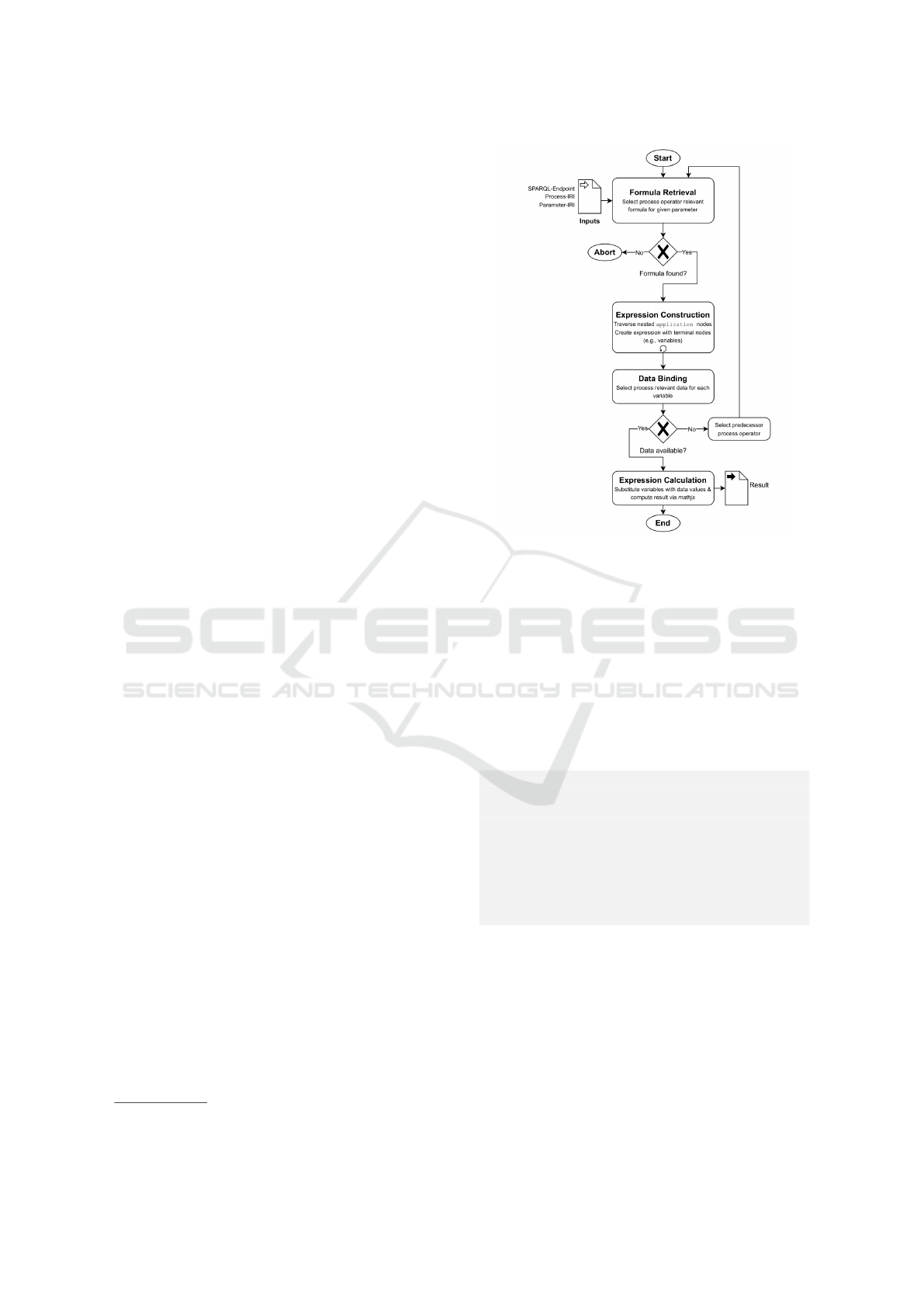
to obtain a final numerical result. In Figure 3, the
workflow performed by the framework is illustrated.
Formula Retrieval: The evaluation workflow be-
gins by identifying the mathematical expression that
defines a specific output parameter for a given
VDI3682:ProcessOperator. This is achieved
through a SPARQL query that selects expressions as-
sociated via the ParX:hasInterdependency relation
and additionally checks whether the expression repre-
sents an equality, indicated by the om:operator be-
ing CD:relation1/eq (see Listing 1).
11
https://github.com/jelenito/ParX-evaluator
Figure 3: Workflow performed by the evaluation frame-
work.
The query then navigates to the left-hand side of
the equality (first element of the rdf:List of argu-
ments) and verifies that it is a variable assigned to the
target parameter (DINEN61360:DataElement) using
the ParX:isDataFor property. This ensures that only
those expressions are retrieved in which the specified
parameter is explicitly defined as the variable being
solved for.
Listing 1: SPARQL-based formula retrieval.
SELECT ? fo rmu la WHERE {
<${ pr oc es s U r i }>
parx : ha s I n te rd e p e nd e n c y ? f or m ul a .
? f or mul a om : ar gu m en ts ? ar g Li s t ;
om : op e ra to r CD : r el at io n 1 / eq .
? a rg Lis t rdf : f i rst ? LHS .
? LHS a om : Va ri a bl e .
? de parx : i sD at a F o r ? LHS .
FILTER( s tr (? de ) = "${ da t a E l e m e nt Ir i } "
)}
Expression Construction: Once the correspond-
ing formula has been retrieved, the evaluator con-
structs a symbolic representation of the expression
by recursively traversing OM:Application nodes via
SPARQL queries. Each application node specifies a
mathematical operator via a reference to a OpenMath
CD and a set of arguments encoded as RDF lists.
The evaluator follows these references and expands
the expression tree by recursively resolving each ar-
KEOD 2025 - 17th International Conference on Knowledge Engineering and Ontology Development
92

gument. This process continues until all branches
of the expression reduce to terminal nodes (such as
OM:Variable), which represent the leaves of the tree.
The resulting symbolic tree accurately reflects the hi-
erarchical structure of the mathematical expression
and forms the basis for subsequent variable substitu-
tion.
Data Binding: Each OM:Variable in the expres-
sion is assigned to a DINEN61360:DataElement via
ParX:isDataFor. The evaluator queries the associ-
ated DINEN61360:InstanceDescription to retrieve
available numerical values. These are substituted into
the expression tree, forming the basis for further sym-
bolic evaluation.
Recursive Fallback Resolution. A particular chal-
lenge addressed by the framework is the recursive
resolution of missing data values. If no directly as-
signed data element provides a value for a required
variable, the evaluator identifies preceding formulas
that compute the corresponding data element as an
output. Evaluation is then recursively triggered for
these upstream processes, allowing multi-step depen-
dencies to be resolved without external orchestration
logic.
Expression Calculation: The evaluator distin-
guishes between semantic graph traversal and sym-
bolic computation. While SPARQL provides basic
query and arithmetic functionality, it lacks mecha-
nisms for symbolic evaluation, dynamic recursion, or
expression tree manipulation (Graux et al., 2020).
Hence, only graph access and structural analy-
sis are handled via SPARQL, whereas mathemati-
cal processing is delegated to mathjs. mathjs
12
is
a well documented open-source mathematics library
for JavaScript that supports symbolic parsing and nu-
meric computation of mathematical expressions.
Once all variables are resolved, the symbolic
expression is converted into the required mathjs
format and passed to the mathjs engine for final
evaluation. mathjs engine parses and computes the
result based on the defined mathematical operators
and numeric inputs.
The framework can be integrated as a component
into broader engineering environments or knowledge-
based systems. Its architecture provides a maintain-
able and extensible foundation for future capabilities
such as constraint checking, explanation facilities, or
domain-specific evaluation logic.
12
https://mathjs.org/
4.2 Application Example: RTM Process
In cooperation with an industrial partner from the
field of composite manufacturing for aerospace com-
ponents, a simplified example of an RTM process has
been modeled. The scenario represents a condensed
and illustrative segment of a process chain (see Fig-
ure 5), used to demonstrate the capabilities of the pro-
posed evaluation framework. To ensure clarity and fo-
cus, only a selected subset of interdependencies and
process operators is considered in this example.
RTM is a widely used closed-mold process for
manufacturing fiber-reinforced plastic components.
In this process, dry fiber preforms are placed into a
mold cavity, and a thermoset resin is injected to in-
filtrate the fibers. Once the mold is filled, curing is
initiated to solidify the composite structure. Process
performance depends on geometric, material, and in-
jection parameters, which exhibit various interdepen-
dencies that can be formalized and evaluated.
The selected example comprises three consec-
utive VDI3682:ProcessOperator instances, each
connected via data elements and mathematical ex-
pressions modeled using OpenMath-RDF. For im-
proved readability, the full formulas, which are de-
scribed in this section, are omitted in Figure 5
and are instead indicated after the instances of
ParX:Interdependency (crosshatched nodes). An
exemplary connection of variables within a formula
including assigned data elements can be seen in Fig-
ure 2.
Tool Setup. The first process operator deter-
mines the required resin volume based on geo-
metric properties of the component and the tool.
The VDI3682:TechnicalResource RTM-Tool pro-
vides the mold cavity area A
cav
, and the de-
sired laminate thickness h
lam
is supplied as a
VDI3682:Information input. The output is the con-
figured Tool annotated with the filling volume V . The
process operator is aligned to an interdependency de-
scribed by (2).
V = A
cav
· h
lam
(2)
Resin Preparation. The second process operator
describes the resin preparation. The aligned inter-
dependency description describes the resin shot mass
using the computed volume and the material density
ρ
res
of the selected resin. The output is a prepared
resin shot with the mass computed by the interdepen-
dency described by (3).
m
res
= ρ
res
·V (3)
Evaluating Process Parameter Interdependencies Based on Knowledge Graphs in Manufacturing
93
ex:InjectionFlowRate
DIN61360:DataElement
ex:FlowRate
DIN61360:TypeDescription
UNECE:2J
ex:InjectionFlowRate1
DIN61360:InstanceDescription
100
”actual value”
”=”
DIN61360:hasTypeDescription
DIN61360:hasInstanceDescription
DIN61360:value
DIN61360:logicInterpretation
DIN61360:expressionGoal
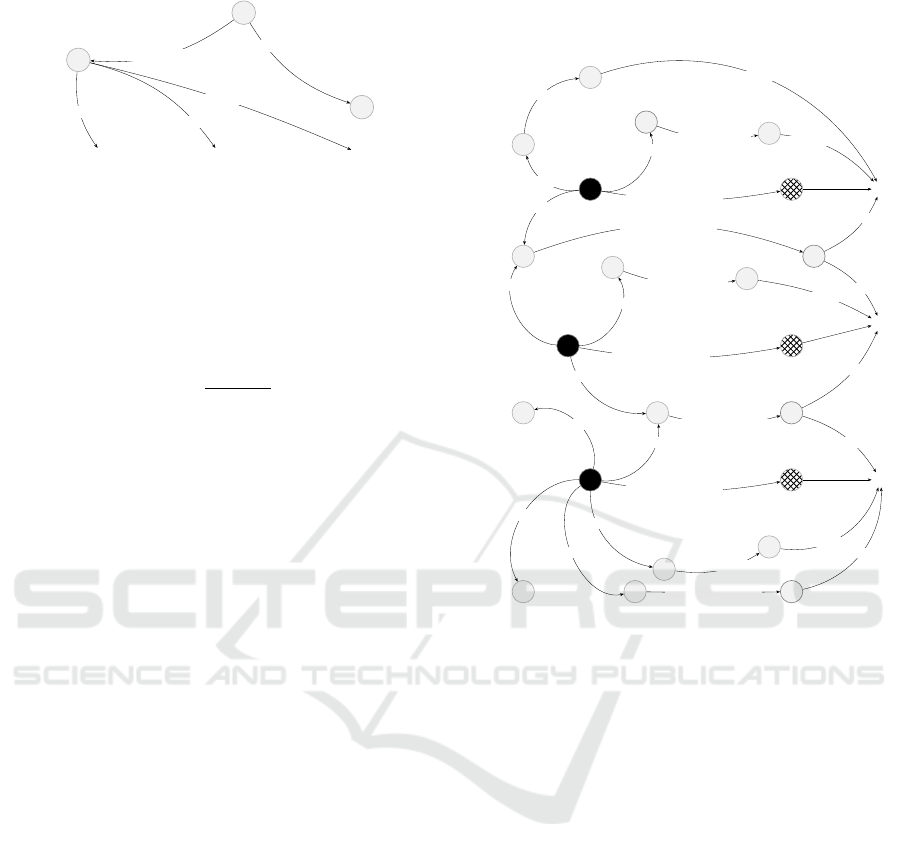
Figure 4: Examplary data element description for data bind-
ing.
Resin Injection. The third process operator repre-
sents the injection of the resin into the mold. It
takes the resin shot (with mass m
res
) and the injection
flow rate
˙
V
inj
as input. The injection time t
inj
can be
computed with the aligned interdependency descrip-
tion (see (4)).
t
inj
=
m
res
ρ
res
·
˙
V
inj
(4)
This example demonstrates a typical use case
during early-stage process planning, where a user
queries the system for the required injection time t for
a new composite component. The evaluator begins
by identifying the mathematical expression linked
to the injection operator and attempts to resolve all
input variables using the knowledge graph.
In this exemplary use case (ex:ResinInjection),
the flow rate
˙
V
inj
and resin density ρ
res
are directly
available via linked DINEN61360:DataElement
instances, but the resin shot mass m
res
is not. An ex-
emplary data element assignment for
˙
V
inj
= 100cm
3
can be seen in Figure 4. The unit cm
3
is assigned via
the classification as UNECE:2J.
To resolve this missing value, the eval-
uator recursively identifies the preceding
ex:ResinPreparation operator, retrieves its
associated expression, and checks whether its inputs
are available via SPARQL querying.
Again, the resin volume V required to calcu-
late m
res
is not directly given. Thus, the evaluator
continues to the ex:ToolSetup operator and resolves
the volume expression using the cavity area A
cav
and
laminate thickness h
lam
, both of which are connected
to data elements within the technical resource and in-
put information.
Once V is calculated, it is passed upstream to com-
pute m
res
, which in turn enables the evaluation of t
inj
.
Through this recursive traversal, the evaluator derives
the requested output value solely from the available
data for A
cav
, h
lam
, ρ
res
, and
˙
V
inj
.
This illustrates how the proposed framework en-
ables dynamic resolution and stepwise evaluation of
parameter interdependencies within process models,
supporting transparency, reusability, and automated
decision-making.
ex:ToolSetup
VDI3682:ProcessOperator
ex:VolumeCalc
ParX:Interdependency
[...]
ex:ResinPreparation
VDI3682:ProcessOperator
ex:MassCalc
ParX:Interdependency
[...]
ex:ResinInjection
VDI3682:ProcessOperator
ex:TimeCalc
ParX:Interdependency
[...]
ex:InjectionParam
VDI3682:Information
ex:InjectionFlowRate
DIN61360:DataElement
ex:Order
VDI3682:Information
ex:Height
DIN61360:DataElement
ex:Area
DIN61360:DataElement
ex:Resin
VDI3682:Product
ex:Density
DIN61360:DataElement
ex:RTM-Tool
VDI3682:TechnicalResource
ex:ToolConfiguration
VDI3682:Information
ex:ResinShot
VDI3682:Product
ex:Mass
DIN61360:DataElement
ex:Volume
DIN61360:DataElement
ex:InjectionPerformance
VDI3682:Information
ex:InjectionTime
DIN61360:DataElement
ex:Preform
VDI3682:Product
ex:InjectedPreform
VDI3682:Product
VDI3682:hasInput
VDI3682:isAssignedZTo
VDI3682:hasOutput
VDI3682:hasInput
VDI3682:hasInput
VDI3682:hasOutput
VDI3682:hasInput
VDI3682:hasInput
VDI3682:hasInput
VDI3682:hasOutput
VDI3682:hasOutput
ParX:hasInterdependency
ParX:hasInterdependency
ParX:hasInterdependency
DIN61360:hasDataElement
DIN61360:hasDataElement
ParX:isDataFor
ParX:isDataFor
ParX:isDataFor
ParX:isDataFor
ParX:isDataFor
ParX:isDataFor
ParX:isDataFor
ParX:isDataFor
ParX:isDataFor
DIN61360:hasDataElement
DIN61360:hasDataElement
DIN61360:hasDataElement
DIN61360:hasDataElement
DIN61360:hasDataElement
Figure 5: Exemplary excerpt of parameter interdependen-
cies across three process operators (black) in an RTM pro-
cess.
5 CONCLUSION AND FUTURE
WORK
This paper presents a semantic modeling and eval-
uation framework for representing process param-
eter interdependencies in manufacturing systems
based on knowledge graphs. The ParX ontol-
ogy integrates structural process descriptions, pa-
rameter semantics, and formalized mathematical ex-
pressions using ODPs derived from industrial stan-
dards such as VDI/VDE 3682, DIN EN 61360,
and OpenMath-RDF. This alignment enables a
machine-interpretable, reusable representation of pro-
cess knowledge, capable of capturing domain-specific
dependencies in a standardized form.
Building upon this model, a SPARQL-driven eval-
uation framework has been introduced that allows
mathematical interdependencies to be resolved and
computed directly based on the ontology. The ap-
proach separates semantic traversal and symbolic
KEOD 2025 - 17th International Conference on Knowledge Engineering and Ontology Development
94

computation by using SPARQL queries for graph nav-
igation and delegating the mathematical evaluation to
an external computation engine. This architecture al-
lows for flexible evaluation workflows and supports
recursive resolution of upstream dependencies along
process chains.
The framework enables automated parameter
evaluation, can support design-time decision support,
and offers a mechanism to evaluate interdependencies
across multiple levels of process abstraction. The pro-
posed approach demonstrates how semantic technolo-
gies can be extended beyond structural modeling to
actively support quantitative reasoning in manufactur-
ing engineering contexts.
Furthermore, the current evaluation framework
focuses primarily on value calculation. Restriction
checking against predefined constraints during run-
time evaluation has not yet been fully integrated.
As part of future work, the evaluation framework
will be extended to incorporate constraint-based val-
idation mechanisms, allowing computed outputs in-
cluding intermediate results to be automatically ver-
ified against parameter restrictions. This extension
will strengthen the integration between interdepen-
dency evaluation and restriction checking, and sup-
port advanced reasoning capabilities for knowledge-
based process analysis and optimization.
Although the proposed approach has shown no ob-
servable response delays in the presented scenarios,
it must be acknowledged that performance may de-
crease when the number of triples and the complex-
ity of concatenated formulas increase. As SPARQL
query execution time is inherently dependent on
graph size, the scalability remains a limitation and
subject of future work.
To further increase accessibility and practical
adoption, it is also planned to encapsulate the eval-
uation logic into a dedicated software package (e.g.,
an npm module), enabling its seamless reuse and inte-
gration into engineering environments and web-based
tools.
ACKNOWLEDGEMENTS
This contribution originates from the projects LaiLa
and iMOD, funded by dtec.bw – Digitalization and
Technology Research Center of the Bundeswehr
which we gratefully acknowledge. dtec.bw is funded
by the European Union – NextGenerationEU.
REFERENCES
Afazov, S. M. (2013). Modelling and simulation of manu-
facturing process chains. CIRP Journal of Manufac-
turing Science and Technology, 6(1):70–77.
Albers, A., St
¨
urmlinger, T., Mandel, C., Wang, J., de Fru-
tos, M. B., and Behrendt, M. (2019). Identification of
potentials in the context of Design for Industry 4.0 and
modelling of interdependencies between product and
production processes. Procedia CIRP, 84:100–105.
Cheng, H., Zeng, P., Xue, L., Shi, Z., Wang, P., and Yu, H.
(2016). Manufacturing Ontology Development Based
on Industry 4.0 Demonstration Production Line. In
2016 Third International Conference on Trustworthy
Systems and their Applications (TSA), pages 42–47.
IEEE.
Davenport, J. H. and Kohlhase, M. (2009). Unifying Math
Ontologies: A Tale of Two Standards. In Carette,
J., Dixon, L., Coen, C. S., and Watt, S. M., editors,
Intelligent Computer Mathematics, volume 5625 of
Lecture Notes in Computer Science, pages 263–278.
Springer Berlin Heidelberg, Berlin, Heidelberg.
Denkena, B., Behrens, B.-A., Charlin, F., and Dannenberg,
M. (2012). Integrative process chain optimization
using a genetic algorithm. Production Engineering,
6(1):29–37.
Denkena, B., Henjes, J., and Henning, H. (2011).
Simulation-based dimensioning of manufacturing
process chains. CIRP Journal of Manufacturing Sci-
ence and Technology, 4(1):9–14.
DIN EN 61360-1 (2018). Standard data element types with
associated classification scheme - Part 1: Definitions -
Principles and methods (IEC 61360-1:2017).
Gangemi, A. and Presutti, V. (2009). Ontology Design Pat-
terns. In Staab, S. and Studer, R., editors, Handbook
on Ontologies, pages 221–243. Springer Berlin Hei-
delberg, Berlin, Heidelberg.
Gill, M. S. and Fay, A. (2023). Utilisation of semantic tech-
nologies for the realisation of data-driven process im-
provements in the maintenance, repair and overhaul of
aircraft components. CEAS Aeronautical Journal.
Gill, M. S., Reif, J., Jeleniewski, T., Weigand, M.,
and Fay, A. (2022). Application potentials of se-
mantic technologies for digital twins in aircraft de-
sign, manufacturing and maintenance. In dtec.bw-
Beitr
¨
age der Helmut-Schmidt-Universit
¨
at / Univer-
sit
¨
at der Bundeswehr Hamburg: Forschungsak-
tivit
¨
aten im Zentrum f
¨
ur Digitalisierungs- und Tech-
nologieforschung der Bundeswehr dtec.bw - Band 1.
Universit
¨
atsbibliothek der HSU/UniBw H.
Graux, D., Sejdiu, G., Stadler, C., Napolitano, G., and
Lehmann, J. (2020). MINDS: A Translator to Embed
Mathematical Expressions Inside SPARQL Queries.
In Blomqvist, E., Groth, P., de Boer, V., Pellegrini,
T., Alam, M., K
¨
afer, T., Kieseberg, P., Kirrane, S.,
Mero
˜
no-Pe
˜
nuela, A., and Pandit, H. J., editors, Se-
mantic Systems. In the Era of Knowledge Graphs,
volume 12378 of Lecture Notes in Computer Sci-
ence, pages 104–117. Springer International Publish-
ing, Cham.
Evaluating Process Parameter Interdependencies Based on Knowledge Graphs in Manufacturing
95

Grigoriev, S. N., Kutin, A. A., and Turkin, M. V.
(2013). Modelling Complex Production Processes in
Aerospace Industry based on Dimensional Analysis.
Procedia CIRP, 7:473–478.
Hildebrandt, C., Glawe, M., M
¨
uller, A. W., and Fay, A.
(2017). Reasoning on Engineering Knowledge: Ap-
plications and Desired Features. In Blomqvist, E.,
Maynard, D., Gangemi, A., Hoekstra, R., Hitzler, P.,
and Hartig, O., editors, The Semantic Web, volume
10250 of Lecture Notes in Computer Science, pages
65–78. Springer International Publishing, Cham.
Hildebrandt, C., K
¨
ocher, A., K
¨
ustner, C., Lopez-Enriquez,
C.-M., M
¨
uller, A. W., Caesar, B., Gundlach, C. S.,
and Fay, A. (2020). Ontology Building for Cyber–
Physical Systems: Application in the Manufacturing
Domain. IEEE Transactions on Automation Science
and Engineering, 17(3):1266–1282.
Hoang, X.-L., Marks, P., Weyrich, M., and Fay, A.
(2017). Modeling of interdependencies between prod-
ucts, processes and resources to support the evolu-
tion of mechatronic systems. IFAC-PapersOnLine,
50(1):4348–4353.
Jarvenp
¨
a
¨
a, E., Siltala, N., and Lanz, M. (2016). Formal
resource and capability descriptions supporting rapid
reconfiguration of assembly systems. In 2016 IEEE
International Symposium on Assembly and Manufac-
turing (ISAM), pages 120–125. IEEE.
Jeleniewski, T., Nabizada, H., Reif, J., Gehlhoff, F., and
Fay, A. (2025). Consistency Verification in Ontology-
Based Process Models with Parameter Interdependen-
cies. In 2025 IEEE 30th International Conference
on Emerging Technologies and Factory Automation
(ETFA), pages 1–8. IEEE.
Jeleniewski, T., Nabizada, H., Reif, J., K
¨
ocher, A., and Fay,
A. (2023a). A Semantic Model to Express Process
Parameters and their Interdependencies in Manufac-
turing. In 2023 IEEE 32nd International Symposium
on Industrial Electronics (ISIE), pages 1–6. IEEE.
Jeleniewski, T., Reif, J., and Fay, A. (2023b). Integrating In-
terdependencies in Semantic Manufacturing Process
Description Models. In 2023 IEEE 28th International
Conference on Emerging Technologies and Factory
Automation (ETFA), pages 1–4. IEEE.
K
¨
ocher, A., Hildebrandt, C., Vieira da Silva, L. M., and
Fay, A. (2020). A Formal Capability and Skill Model
for Use in Plug and Produce Scenarios. In 2020
25th IEEE International Conference on Emerging
Technologies and Factory Automation (ETFA), pages
1663–1670. IEEE.
Lange, C. (2013). Ontologies and languages for represent-
ing mathematical knowledge on the Semantic Web.
Semantic Web, 4(2):119–158.
Liang, J. S. (2018). An ontology-oriented knowledge
methodology for process planning in additive layer
manufacturing. Robotics and Computer-Integrated
Manufacturing, 53:28–44.
L
¨
uder, A. and Schmidt, N. (2017). Challenges of Mecha-
tronical Engineering of Production Systems: An Au-
tomation System Engineering View. In Ghezzi, L.,
H
¨
omberg, D., and Landry, C., editors, Math for the
Digital Factory, volume 27 of Mathematics in Indus-
try, pages 93–114. Springer International Publishing,
Cham.
Marchiori, M. (2003). The Mathematical Semantic Web. In
Asperti, A., Buchberger, B., and Davenport, J. H., ed-
itors, Mathematical Knowledge Management, volume
2594 of Lecture Notes in Computer Science, pages
216–223. Springer Berlin Heidelberg, Berlin, Heidel-
berg.
Nabizada, H., K
¨
ocher, A., Hildebrandt, C., and Fay, A.
(2020). Offenes, webbasiertes Werkzeug zur In-
formationsmodellierung mit Formalisierter Prozess-
beschreibung. In Automation 2020, pages 443–454.
VDI Verlag.
Sabou, M., Biffl, S., Einfalt, A., Krammer, L., Kastner,
W., and Ekaputra, F. J. (2020). Semantics for Cyber-
Physical Systems: A cross-domain perspective. Se-
mantic Web, 11(1):115–124.
S
´
anchez-Maci
´
an, A., Pastor, E., de L
´
opez Vergara, J. E.,
and L
´
opez, D. (2007). Extending SWRL to Enhance
Mathematical Support. In Marchiori, M., Pan, J., and
Marie, C., editors, Web Reasoning and Rule Systems,
volume 4524 of Lecture Notes in Computer Science,
pages 358–360. Springer Berlin Heidelberg, Berlin,
Heidelberg.
Stark, R., Kind, S., and Neumeyer, S. (2017). Innovations
in digital modelling for next generation manufacturing
system design. CIRP Annals, 66(1):169–172.
UNECE (2010). Recommendation No. 20: Codes for Units
of Measure Used in International Trade.
VDI/VDE 2206 (2021). Development of mechatronic and
cyber-physical systems.
VDI/VDE 3682:1 (2015). Formalised Process Descriptions
- Concept and Graphic Representation.
Wenzel, K. (2021). OpenMath-RDF: RDF encodings for
OpenMath objects and Content Dictionaries. In 31st
OpenMath Workshop.
KEOD 2025 - 17th International Conference on Knowledge Engineering and Ontology Development
96
