
A Personalized Healthcare Model for Air Pollution Monitoring and
Prediction Using Machine Learning
Gade Navaneeth, Medi Praneeth, Mohammed Khasim and Y. Mohana Roopa
Department of CSE, Institute of Aeronautical Engineering, Gandimaisamma, Hyderabad, 500043, Telangana, India
Keywords: Personalized Healthcare, Air Pollution Prediction, Web Scraping, Linear Regression, AI‑driven Health
Recommendations, Air Quality Forecasting, Machine Learning.
Abstract: Air pollution, as a major contributor to respiratory, cardiovascular, and other chronic diseases, is a significant
environmental and public health problem. This paper developed a personalized healthcare model based on air
quality prediction and individual health recommendations-finally trained on machine learning skills and based
on time-series data. Unlike traditional air quality monitoring systems that measure particulate matter and other
gases, our approach is based on a Linear Regression algorithm that predicts PM2 levels and other pollutants.
5 by merging web-scraped infectious disease information with meteorological data. The model operates as a
web-based application that allows users to enter their location to receive personalized health precautions and
real-time air quality forecasts. The guidelines, which address the estimated risk of air pollution, tell consumers
how to act preventatively, and what they should do to protect themselves, like staying indoors or using air
filtration devices, they added. By combining real-time forecasts with individual participation, the system
enables proactive health management and increases public awareness. The proposed methodology reports on
the use of AI-driven insights to facilitate an evidence-based and straightforward approach for mitigating the
negative health effects of air pollution.
1 INTRODUCTION
Air pollution, a leading cause of severe respiratory
and cardiovascular ailments, is increasingly
recognized as an important global health threat
(Wang, X., Li, L., and Chen, Z., 2020). The
intensification of human activity in urban areas and
industrial areas has already started corroding the
environment, even more so particularly in recent two
decades, not limited to air pollutants such PM2. 5,
PM10, NO₂, and SO₂ have become more serious,
aggravated the baseline risk in the population and
promote the risk of disease (P. Huang, et al., 2022).
Accurate air quality prediction is essential for
mitigating these hazards, and enabling people to take
preventive action for their health (S. S. Kumar., et al.,
2024).
This work presents a personalized healthcare
platform that integrates health support with machine
learning-based air quality prediction (S. Kumari., et
al., 2025). This approach focuses on exposure at the
individual level, rather than general environmental
monitoring, by allowing users to input their location
and receive real-time predictions of pollutants (I.
Gryech., et al., 2024). It predicts pollution levels via
Linear Regression using past meteorological data and
also scrapes the web for air quality data. To enhance
usability, the model is implemented as a web-based
application that provides users with personalized
health advice based on expected air quality
(Kekulanadara., et al., 2021). These
recommendations advise individuals to take
precautionary actions such as wearing masks, staying
indoors, or minimizing outdoor activitie during times
of high pollution levels (R. Buvana., et al., 2022).
This use of AI-driven data creates the base for a more
proactive approach to air pollution reduction, by
empowering the people to take educated health
decisions based on the information (A. Mittal., et al.,
2024).
2 RELATED WORKS
Air quality is an important health global health
problem (1) and pollutants like PM2. 5, PM10, NO₂,
and SO₂ relevant to respiratory and cardiovascular
diseases. Thanks to machine learning and artificial
Navaneeth, G., Praneeth, M., Khasim, M. and Roopa, Y. M.
A Personalized Healthcare Model for Air Pollution Monitoring and Prediction Using Machine Learning.
DOI: 10.5220/0013935800004919
Paper published under CC license (CC BY-NC-ND 4.0)
In Proceedings of the 1st International Conference on Research and Development in Information, Communication, and Computing Technologies (ICRDICCT‘25 2025) - Volume 5, pages
575-579
ISBN: 978-989-758-777-1
Proceedings Copyright © 2026 by SCITEPRESS – Science and Technology Publications, Lda.
575
intelligence technology, long-term air quality
monitoring and personalized health advice by
predictive models and data-driven methods have
emerged as new avenues for research (S. B. Kasetty
and S. Nagini., 2022). We divide this literature review
into three sections that relate directly to the work in
our study: machine learning in predicting air
pollution, web scraping for data collection and AI-
powered health recommendations.
2.1 Air Pollution Prediction Using
Machine Learning
Historical weather data is often invaluable for
improving the accuracy of predictions, as machine
learning techniques have shown great promise in air
pollution forecasting A personalized healthcare
model (Behal and Singh, 2020) which integrates
various machine learning techniques to predict the
level of air pollution and its impact on parameters of
health of individuals is proposed. By utilizing both
environmental sensing data and ML algorithms, their
study improved the spatial and temporal resolution
of air quality predictions with personalized health
recommendations. The ultimate goal of the machine
learning research task is to create more accurate
predictions of air pollution and develop AI-based
health systems.
2.2 Web Scraping for Environmental
Data Collection
Web scraping is behind accurate air quality
prediction that relies on extensive datasets. Once
published these methods let alone the huge-scale
data they demand for the accurate time forecasting. It
provided an overview of the significance of web
scraping in automating data extraction processes and
converting unstructured data available on the web
into meaningful, stored, and analysable data
(Sirisuriya 2023). Their research showed how web
scraping can facilitate real-time updates to
environmental data, which helps to retrain machine
learning models using the most up-to-date pollution
metrics. Such an approach can greatly enhance the
responsiveness and accuracy of AI-based air quality
monitoring solutions.
2.3 AI-Driven Health
Recommendations Based on
Pollution Exposure
AI-driven systems are increasingly being used to
assess environmental risks and provide personalized
health interventions. Olawade et al. (2024)
highlighted how AI technologies enhance
environmental monitoring by enabling pollution
source detection, disaster forecasting, and air quality
monitoring. Their research emphasized the role of
predictive analytics in mitigating health risks,
allowing individuals to take precautionary actions
based on real-time pollution levels. Despite
challenges such as data accessibility and privacy
concerns, their study underscored the potential of AI
to revolutionize public health strategies by integrating
pollution forecasting with personalized healthcare
recommendations (Y Mohana Roopa., et al., 2023,
2022).
3 METHODOLOGY
Thus, the personalized healthcare model developed
for air pollution monitoring and prediction consists of
a methodological framework entailing data
collection, preprocessing, AQI prediction through
machine learning approaches, correlation analysis
between AQI levels and health conditions, and
finally, health recommendation generation. This
approach enables accurate prediction of air quality
while offering personalized healthcare
recommendations relative to the air pollution levels.
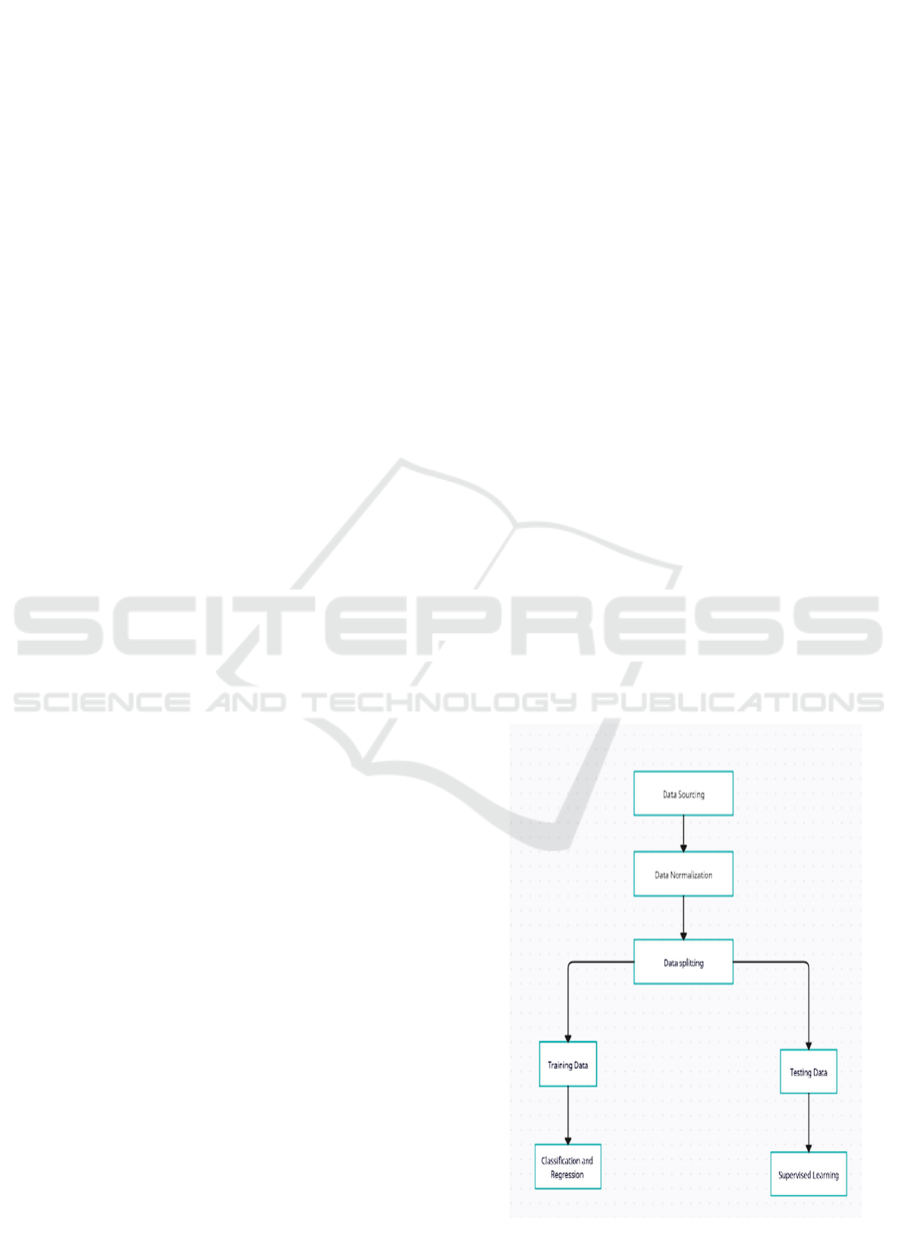
3.1 System Architecture
Figure 1: System Architecture.
ICRDICCT‘25 2025 - INTERNATIONAL CONFERENCE ON RESEARCH AND DEVELOPMENT IN INFORMATION,
COMMUNICATION, AND COMPUTING TECHNOLOGIES
576
This approach leverages the latest technologies to
create an automated and intelligent air quality
monitoring system that encompasses data collection,
analysis, and predictive modelling. It includes
different modules like data acquisition, pre-
processing, machine learning model training, user
interface integration, etc. The overall system
architecture is shown in Figure 1.
3.2 Data Collection and Preprocessing
Historical and real-time air pollution data were
collected from online sources such as Open Weather
API using web scraping techniques. The dataset
includes various meteorological and pollution-related
parameters such as PM2.5, NO2, CO, temperature,
humidity, precipitation, and wind speed.
The raw dataset undergoes preprocessing,
including data cleaning, handling missing values, and
normalization. The data is then aggregated into daily
average values for the years 2013 to 2017. The
cleaned dataset is structured to ensure consistency
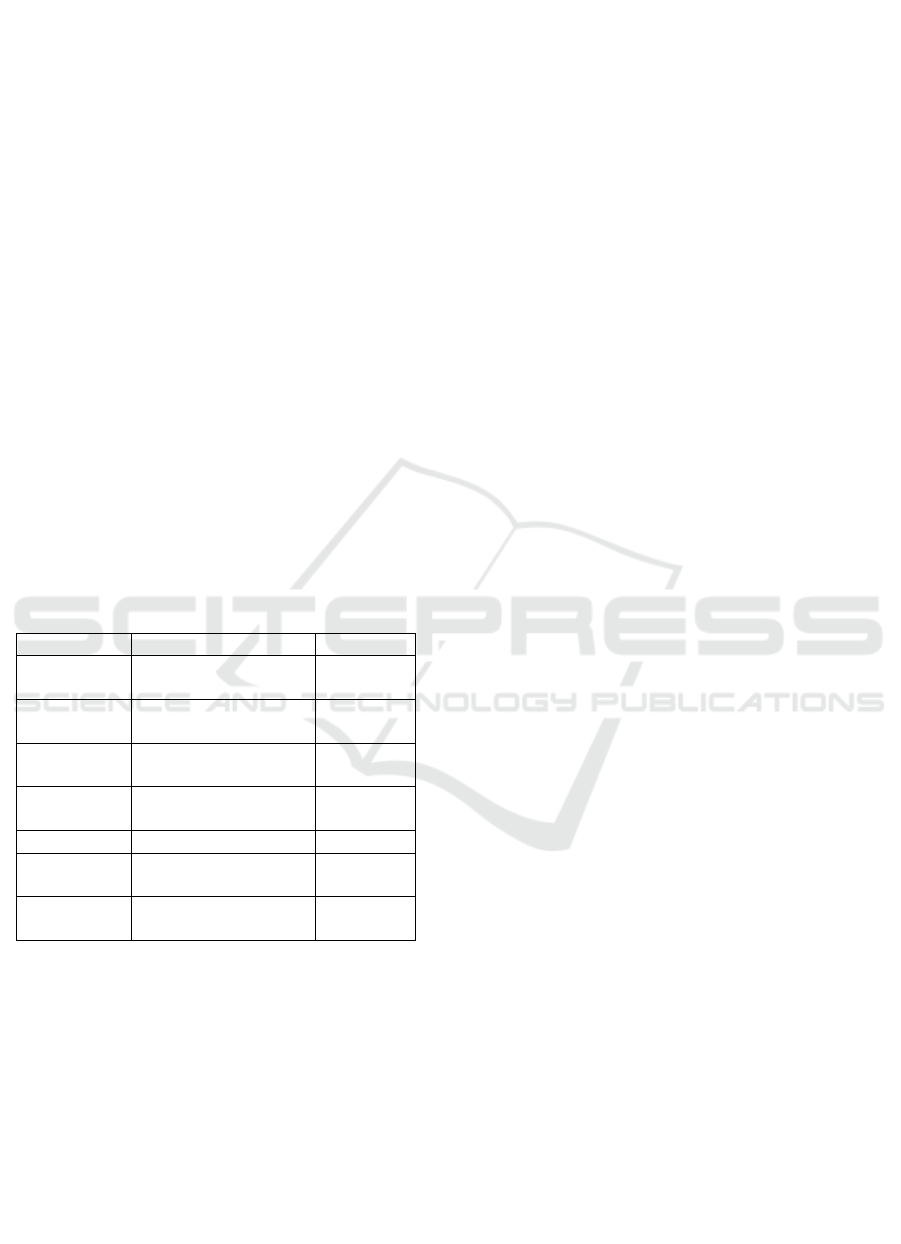
and readiness for machine learning analysis. Table 1
shows the Dataset Attributes Used for AQI
Prediction.
Table 1: Dataset Attributes Used for AQI Prediction.
Feature Description Unit
PM2.5
Fine particulate matter
concentration
µg/m³
NO2
Nitrogen dioxide
concentration
ppb
CO
Carbon monoxide
concentration
ppm
Temperature
Average daily
temperature
°C
Humidity Relative humidity %
Wind speed
Wind speed at ground
level
m/s
Precipitation
Rain or snow
precipitation
mm
3.3 Machine Learning Model for AQI
Prediction
The system employs supervised learning techniques,
specifically Linear Regression, to predict future AQI
levels. The dataset is divided into training (70%) and
testing (30%) sets, ensuring model generalizability.
Feature selection techniques are applied to retain the
most significant parameters influencing air pollution
trends.
The trained model evaluates its performance using
error metrics such as Root Mean Squared Error
(RMSE) and R² Score, ensuring the reliability of AQI
predictions. The results are visualized to compare
actual vs. predicted AQI values over time.
3.4 Personalized Healthcare
Recommendations
Using predicted AQI readings, it generates
customized healthcare recommendations. It then
offers users precautionary advice depending on how
severe the level of pollution exposure is. When
pollution levels peak, users are notified as well as
receive recommendations to reduce outdoor
activities, wear protective masks and turn on air
filtration systems.
3.5 Web-Based Deployment and User
Interaction
I mean integrated model into the platform defined in
web user models inputs the location and gets real time
model prediction with health sector prediction and
real time prediction. It securely authenticates the
users, enabling them to access environmental
conditions, pollution advisories, and health
information. This dynamic updating helps it get a
sense of how pollutants and dust flow around, so that
it can be aware of pollution in real time.
3.6 Implementation
The personalized healthcare model for air pollution
monitoring and prediction consists of three main
parts, which are data collection, ML model
development, and web deployment. The system
ingests real-time pollution data, forecasts air quality
levels, and suggests health care recommendations
It is built with Python for the data handling and
machine learning aspect of running the text analysis,
and leverages Scikit-learn for building and testing the
models. Beautiful Soup is used to scrape the web for
pollution and Meteorology data from datasets and
open Weather API. The data from pollution will be
stored in the structured form by using the SQL which
is efficient to retrieve and management of the
database. For the web-based implementation, I use
the Flask framework for the backend API and React.
as for the front-end allows the user to interact with
the system without any disturbance.
It consists of a well-defined workflow that
processes environmental data and generates custom
insights. Data Collection: Obtain pollution and
weather data from datasets and open Weather API.27
Data Pre-processing: Handle missing values if any,
A Personalized Healthcare Model for Air Pollution Monitoring and Prediction Using Machine Learning
577
and normalize the data for consistency. The model
training phase is executed using Linear Regression.
After training, the system generates AQI forecasts
along with healthcare recommendations, thus making
users aware of pollution risks and how to take
precautionary measures. The system receives input
from users via a web-based interface, in which they
share their location details and get updates on real-
time pollution in their area.
Using Pickle, the trained model is exported to be
used just fine with the Flask-based backend API. The
API enables real-time predictions by processing user
inputs to give AQI forecasts as well as personalized
health suggestions. React -- the frontend. js in this
project settles for easy-to-use interface for users to
insert their location and visualize pollution trends.
4 RESULTS AND EVALUATION
We developed and implemented a smart and
personalized healthcare model for air pollution
monitoring and prediction with the following
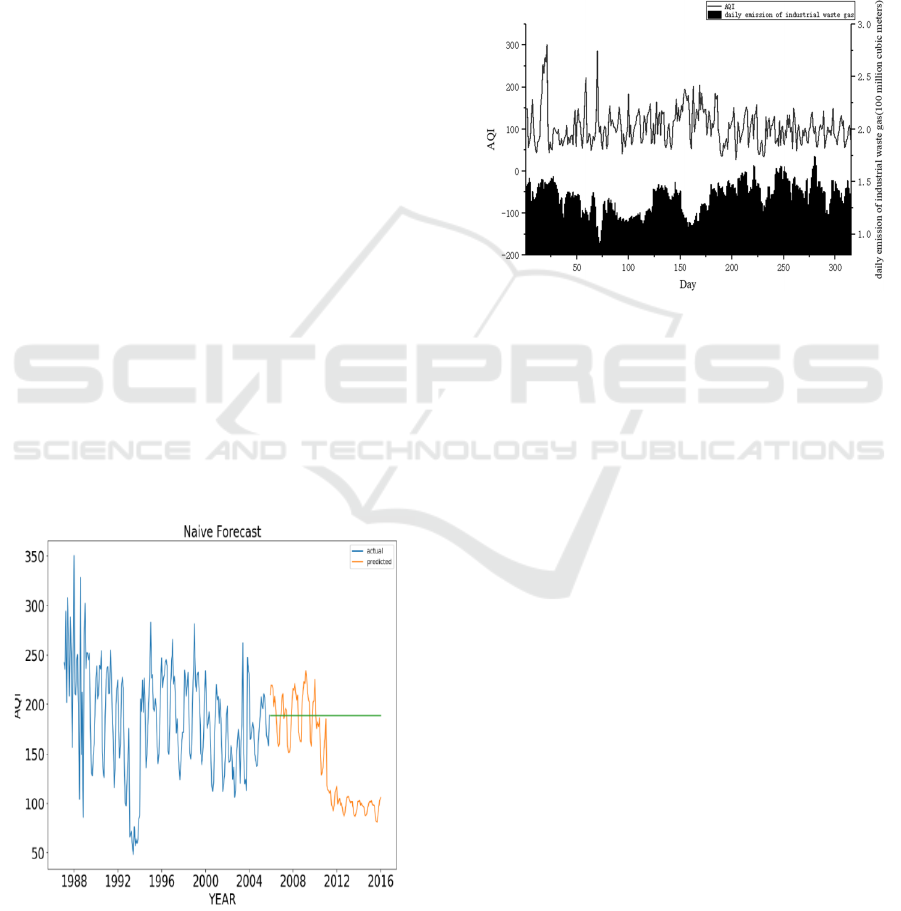
contributions: (1) reliable prediction of the PM2.5
AQI level and (2) personalized health advice. In the
evaluated time period the air pollution we have
trained a Linear Regression model on, are able to
determine the best combination of parameters with
air quality values. The red below the AQI prediction
graph (Figure 2) indicates smooth variance between
actual and prediction, demonstrating this system’s
predictive capability and therefore reliability in real-
world scenarios.
Figure 2: AQI Prediction Graph.
Moreover, correlation analysis between industrial
waste emissions and AQI levels, indicates that there
is a strong positive correlation between the two as
well, implying that industrial emissions contribute
significantly towards worsening air quality. This
relationship is depicted in the AQI vs Industrial
Waste Emissions Graph (Figure 3), which
demonstrates how industrial emissions contaminate
the air. The system also features a web-based user
interface to input their location, view AQI prediction
results, and get real-time health recommendations.
Figure 3: AQI and Industrial Waste Gas Emissions.
5 DISCUSSION
The system suggest which healthcare precautions
users can take, such as adjusting their mask use,
reducing their exposure to the outdoors or increasing
filtration to improve their indoor air quality; the
advice changes dynamically based on the level of
pollutants. This interactive dashboard provides a
user-friendly visualization of pollution trends, along
with any matching health advisories. While the model
can make accurate predictions, there are other areas
to improve in the future by setting up additional
machine learning models to increase prediction
accuracy, obtaining real-time pollutant sensor data
along with recommendations based on users' health
risks. This will augment the system's capacity to
combat pollution-induced health hazards and enhance
environmental awareness in general.
6 CONCLUSIONS
A personalized healthcare model for air pollution
monitoring and prediction using machine learning is
presented through this study. By investigating
historical and contemporary environmental data, the
ICRDICCT‘25 2025 - INTERNATIONAL CONFERENCE ON RESEARCH AND DEVELOPMENT IN INFORMATION,
COMMUNICATION, AND COMPUTING TECHNOLOGIES
578

system accurately forecasts AQI with health
advisories. The visually strong correlations between
real return AQI values and Linear Regression
predicted AQI values indicate a reliable predictive
performance, so we can go ahead and move on to air
pollution datasets training. Moreover, correlation
analysis validates the influence of industrial
discharge to the air, emphasizing the need for
pollution stormers.
It moves here closer to users by building a web-
based interface that lets users obtain health
recommendations based on the AQI in their area.
Depending on the pollution, the system decides real-
time pollution precaution measures according to
real-time pollution severity for users. The interactive
dashboard additionally increases the interaction of
users as the trends of pollution and their relevant
health risk have been displayed in a user-friendly
way.
While this model has a lot of positive impact in
terms of forecasting air pollution and providing
health advice, further enhancements can be made in
terms of exploring additional machine learning
techniques to improve model accuracy, integrating
live sensors data, and giving offer health advice
according to user-specific medical history.
REFERENCES
A. Mittal, S. Arora, S. Sharma and A. Garg, "Advancements
in Air Pollution Prediction and Classification Models:
Exploring Emerging Frontiers," 2024 10th International
Conference on Advanced Computing and
Communication Systems (ICACCS), Coimbatore,
India, 2024.
D. B. Olawade, O. Z. Wada, A. O. Ige, B. I. Egbewole, A.
Olojo, and B. I. Oladapo, "Artificial intelligence in
environmental monitoring: Advancements, challenges,
and future directions," Hygiene and Environmental
Health Advances, vol.12,2024
I. Gryech, C. Asaad, M. Ghogho, and A. Kobbane,
"Applications of Machine Learning & Internet of
Things for Outdoor Air Pollution Monitoring and
Prediction: A Systematic Literature Review,"
Engineering Applications of Artificial Intelligence, vol.
137, Part B, 2024
J. J. Bosco and V. Kowsalya, "A Novel Approach for Air
Pollution Prediction Using Machine Learning
Techniques," 2024 Third International Conference on
Electrical, Electronics, Information and Communicat-
ion Technologies (ICEEICT), Trichirappalli, India,
2024.
K. M. O. V. K. Kekulanadara, B. T. G. S. Kumara and B.
Kuhaneswaran, "Machine Learning Approach for
Predicting Air Quality Index," 2021 International
Conference on Decision Aid Sciences and Application
(DASA), Sakheer, Bahrain, 2021
P. Huang, K. Kim, and M. Schermer, "Ethical Issues of
Digital Twins for Personalized Health Care Service:
Preliminary Mapping Study," Journal of Medical
Internet Research, vol. 24, no. 1, 2022
R. Buvana, A. Sathya, R. Chathana, C. Jaysri and D. Jashna,
"Air Pollution Prediction with Machine Learning,"
2022 1st International Conference on Computational
Science and Technology (ICCST), CHENNAI, India,
2022.
S. B. Kasetty and S. Nagini, "A Survey Paper on an IoT-
based Machine Learning Model to Predict Air Pollution
Levels," 2022 4th International Conference on
Advances in Computing, Communication Control and
Networking (ICAC3N), Greater Noida, India, 2022.
S. D. S. Sirisuriya, "Importance of Web Scraping as a Data
Source for Machine Learning Algorithms - Review,"
2023 IEEE 17th International Conference on Industrial
and Information Systems (ICIIS), Peradeniya, Sri
Lanka, 2023.
S. S. Kumar, R. Chandra, and S. Agarwal, "Rule based
complex event processing for an air quality monitoring
system in smart city," Sustainable Cities and Society,
vol. 112, 2024
S. Kumari, A. K. Tyagi, S. Tiwari, and G. Kulshreshtha,
"Sensors and Digital Twin for Healthcare Monitoring
Frameworks," in Digital Twin, Blockchain, and Sensor
Networks in the Healthy and Mobile City, T. A.
Nguyen, Ed. Elsevier, 2025
Wang, X., Li, L., and Chen, Z., “Prediction of air quality
based on machine learning algorithms,” Environmental
Research, Vol. 188, pp. 109-118, 2020.
Y Mohana Roopa et, al,” Prediction Evaluation of Gene
Ontology Using Support Vector Machine",
International Journal on Recent and Innovation Trends
in Computing and Communication, June 2023, 11, pp.
522–526
Y. Mohana Roopa et.al,” Deep Learning-Based Hybrid
Framework Utilizing OpenCV and CNN for Automated
Brain Tumor Detection and MRI Image Classification”,
2024 4th International Conference on Sustainable
Expert Systems (ICSES) on 15-17 October 2024 at
Kaski, Nepal
Y. Mohana Roopa,et.al,” A secured IoT-based model for
human health through sensor data”, Measurement:
Sensors, Elsevier publisher, ISSN: 2665-9174 (Online),
Volume 24, December 2022Page No 50-58
A Personalized Healthcare Model for Air Pollution Monitoring and Prediction Using Machine Learning
579
