
Next‑Gen Investment Systems: AI, Learning and Secure Trading
Vijayalakshmi M., G. Yadu Praveer and Mithun Veeramaneni
Department of Computing Technologies, SRM Institute of Science and Technology, Kattankulathur, Tamil Nadu, India
Keywords: Time Series Analysis, RNN, LSTM, ARIMA, Stock Market Analysis, Stock Prediction, Sentiment Analysis,
Demat Proposal, Investment Guide.
Abstract: The proposed procedure is based on the Prediction and investment help in the stock exchange through a
powerful, completely integrated Demat level. Using deep learning algorithms and time series analysis, the
system efficiently analyses stock market trends and offers accurate predictions that enable investors to make
informed decisions. While time series analysis uses static historical stock data to uncover patterns and trends,
more sophisticated deep-learning models (such as long short-term memory (LSTM) networks or recurrent
neural networks (RNNs)) are able to achieve much greater levels of accuracy through their ability to
encapsulate relationships in the data. Seamless Investment Experience with Intuitive Demat Platform. Here
are the major features that comprise of real-time stock assessment, personalized portfolio management, and
all-in-one risk evaluation tools. As such, they deploy strict data security measures and compliance with
financial regulations to build user trust already during the registration phase. The system provides powerful
financial forecasting capability while also helping users minimize the complexity of the investing process,
resulting in improved financial performance. No = Major data driven & intuitive system to serve investment
management.
1 INTRODUCTION
In the world of finance markets are moving so rapidly
that predicting what will happen to stocks is very
essential. Complete guide: An automated system for
stock investment and prediction using recent time-
series and deep learning algorithms, can be integrated
with the demat account easily. This innovative
technique aims to change the investing experience by
giving new and experienced users looking to venture
into the exciting world of stock trading a firm
foundation. The problem of most people not knowing
how to deal with their money properly in the very
complex world of finance today is one of the biggest
problems on the planet today. The motivation behind
creating this state-of-the-art Stock Prediction and
Investment System is to challenge and educate people
about money matters and provide the them the tools
necessary to make wise financial decisions.
The vast majority of people in India have money,
but they don't really know how to spend it, keep it
safe, or make it grow. A lot of people are afraid of and
don't know much about financial goods like stocks,
mutual funds, and bitcoin. People often don't look into
investment chances because they're afraid of losing
money. It is the project's goal to fill in the gaps in
people's knowledge and give them the courage to take
an active role in the financial markets. The suggested
tool would offer more than just stock predictions; it
would also provide a full financial setting. Users will
be able to access information about their Demat
accounts, run virtual stock models, learn more about
Time Series Analysis, use Deep Learning to make
predictions, and use mood analysis of stocks, in
addition to building and handling their investments.
Because the platform is designed with the user in
mind, even people who don't know much about
finance can easily find their way around the
complicated field. The final goal is to give people a
virtual space where they can learn about, practice, and
play with different financial methods without actually
risking any real money. This system combines strong
security measures, user-centered design, and powerful
algorithms to not only make the best stock market
decisions, but also give everyone the tools they need
to easily and accurately manage the complicated
world of finance.
M, V., Yadu Praveer, G. and Veeramaneni, M.
Next-Gen Investment Systems: AI, Learning and Secure Trading.
DOI: 10.5220/0013932000004919
Paper published under CC license (CC BY-NC-ND 4.0)
In Proceedings of the 1st International Conference on Research and Development in Information, Communication, and Computing Technologies (ICRDICCT‘25 2025) - Volume 5, pages
499-505
ISBN: 978-989-758-777-1
Proceedings Copyright © 2026 by SCITEPRESS – Science and Technology Publications, Lda.
499

2 RELATED WORK
In their paper, Htet Hun et al. (2023) discuss a
research study which systematically examines 32
research studies which apply a combination of feature
analysis and machine learning to various stock market
conditions. We read articles in the registered index
and files very carefully from 2012 to 2023. This
observation of a multitude of various good feature
selection and extraction techniques utilized in market
stock prediction is addressed in these notes. We
discuss and grade the implementation of feature
analysis techniques and machine learning algorithms
together. This research also reveals that various
parameters influence the output of surveys, the input
and output of stock market data, and the analysis. The
statistics indicate that similarity quota, dense random
forest, principle componendo-decoder analysis, and
auto decoding are some of the most common methods
for searching and classifying features to produce
better predictions in numerous stock market
scenarios.
In Amir Masoud Rehmani et al. (2023) state that
Artificial Intelligence (AI) may revolutionize the
manner in which individuals work, shop, and
contribute to society's development in an increasingly
mechanized world.
As advances in technology and science have led
people in search of better ways of solving issues but
the science of AI-based technology is not only the
fresh one but also it has many parallel applications in
line of business. The book focuses on the use of AI in
the field of economics, such as stock trading, market
analysis and risk assessment. In this paper, we suggest
a concise classification to analyze AI applications in
these areas holistically from multiple different
perspectives. A study led by Manan Shah and Dhruhi
Seth et al. (2023) that three different methodologies
were used to generate the predictions: Artificial
Neural Network (ANN), Support Vector Machine
(SVM) and Long Short-Term Memory (LSTM). ANN
uses neural network structure, SVM uses kernel
technique, and LSTM uses Keras LSTM model.
After analysis of all the techniques on the basis of
finals, it was concluded that neural networks ANN
gives the best accuracy.
Its advantage is that it is able to effectively search
for hidden patterns and interpret complex, nonlinear
relationships. SVM, a relatively new technology, may
be able to perform better in the future. LSTM,
however, performs well but requires extremely huge
datasets, which may be considered a drawback or
restrictive. Satya Verma et al. (2023) particularly
provide a feature engineering component that utilizes
the Discrete Wavelet Transform (DWT) to examine
patterns and the Chinese Soup Optician (CSO) to
manage the enormous number of features DongeTeru
created. CSI is employed to obtain the optimum range
of parameters, which gives us the proposed parameter
reverse leathalizing, or DCSD. We apply (ML) and
(DL) models in order to obtain Price Pen market
trends. Bharat Stocks datasets (NIFTY50 and BSE)
and US stock tickers (S&P500 and DJI) are utilized as
monitoring phases.
Razib Hayat Khan et al. (2023) state in their
research that the infrastructure contains a deep
learning network that serves as an appetizer and was
constructed based on the Q-Q plot concept to
determine the optimal means of accepting, trading, or
holding stocks. When you input historical stock
market data into this sophisticated program, it
generates Q-Q plots indicating the estimated reward
for most actions at every time step. The Q-values are
used to determine the optimal way for the process to
exit the shop in every state. We conducted a
sensitivity study to determine how well our Deep
Reinforcement Learning (DRL)-based approach
performed. Our aim in this research was to determine
the impact of various network architectures and hyper
parameters on the success of the approach. Our
findings indicated that hyperparameters, such as
learning rate and exploration rate, have a significant
impact on success. Tunning these hyperparameters is
evident now as a principal method to improve
predictions. Significantly, our experimental findings
revealed that our DRL-based approach performed
higher than the industry-leading algorithms available.
According to Balakrishnan S. et al. (2023), the paper
develops a system based on deep learning capable of
automatically formulating statistical laws using data
and governing action in the stock market utilizing
simple neural network models and empirical mode
decomposition.
It seeks primitive trends within data and
deconstructs, intent on timescales of typical ranges.
Deals within the stock market were scrutinized,
enhanced using PSO, and foreseen. Synthesis of
exponential financial time series with non-stationary
is sure to bring forecast accuracy higher. Underneath
definite levels of surety, deep learning prediction can
predict market future prices and directions based on
substantial amounts of information from monetary
dealings.Findings from actual life indicate that deep
learning models based on EMD perform better in
prediction. The aim of this research is to examine
stock market predictions provided by deep learning
models in an objective manner.
ICRDICCT‘25 2025 - INTERNATIONAL CONFERENCE ON RESEARCH AND DEVELOPMENT IN INFORMATION,
COMMUNICATION, AND COMPUTING TECHNOLOGIES
500
3 METHODOLOGY
Many systems using new technology like Time Series
Analysis and Deep Learning algorithms have tried to
figure out how to predict stock prices, but it's hard to
do. The goal of these tools is to help buyers make
smart choices. Time Series Analysis looks at old data
to find patterns and trends that happen over time,
which is very important for predicting the stock
market. More and more people are using deep
learning methods, especially neural networks,
because they can find specific trends in big datasets.
Usually, these systems start by getting a lot of
financial information, like past stock prices, trade
amounts, measures for measuring how well a
company is doing, and market news. Feature
engineering is an important part of getting this data
ready for research because it pulls out useful
information that can have an effect on how stock
prices move.
To help buyers make choices, they often give
buy/sell signs or trust numbers based on how the
market is likely to change. It's important to keep in
mind, though, that predicting the stock market is
inherently hard, and these programs only give you
chance projections rather than solid results. Along
with these predictor systems, it's also important to
follow the rules for registering for Demat accounts
(dematerialized accounts used for computer dealing
and keeping stocks). Some ideas for demat include
making it easier to start and manage these accounts,
making sure they follow the rules, and making the
platforms easy for people to use. Strong
identification, Know Your Customer (KYC) checks,
and following financial rules are all part of the register
standards. These protect purchases made through the
system and make sure they are legal. user education
and support methods are important to help buyers get
through the complicated process of using these
systems, with a focus on risk management and the
risky nature of stock market purchases. Even though
these systems use cutting-edge technology to give
buyers information, they should be careful, spread out
their investments, and talk to a financial advisor
before making any choices. Investing and stock
forecast systems are very important in the financial
world. They use cutting edge technology like time
series analysis and deep learning algorithms to figure
out how the market will behave. The goal of these
tools is to help buyers make smart choices and get the
most out of their investments.
The Demat account is an important part of these
kinds of systems because it lets you hold and trade
stocks electronically.
• Systems that predict stocks:The first is
time series analysis, which analyzes
historical stock prices and volume data to
identify patterns, cycles and trends. Various
models are built from historical data and
predicted in stock prices, such as The Holt-
Winter Model, Auto Regressive Model,
Moving AverageModel, ARMA Model,
ARIMA Model, Auto ARIMA Model,
Linear Regression, Random Forest, Gradient
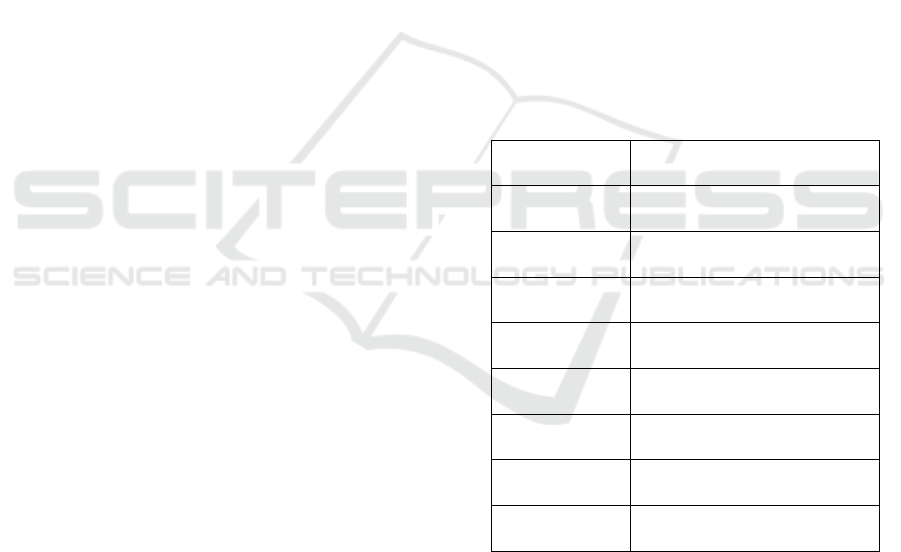
Boosting, Support Vector Machines.Table 1
show the Time Series Analysis Algorithms.
• Algorithms for Machine Learning:
Machine learning models, especially those
based on deep learning, are becoming more
and more common because they can handle
complex patterns and very large datasets.
Recurrent neural networks (RNNs), long
short-term memory networks (LSTMs), and
convolutional neural networks (CNNs) are
used to learn from past market data and make
predictions.
Table 1: Time series analysis algorithms.
Algorithm
Name
Description
Moving
Averages
Simple, Exponential, and
Weighted Moving Averages
ARIMA
Auto Regressive Integrated
Moving Average
SARIMA
Seasonal Auto Regressive
Integrated Moving Average
Holt-Winter
Triple Exponential
Smoothing
AutoARIMA
Automated ARIMA model
selection
Linear
Regression
Linear regression modeling
Random
Forest
Ensemble learning method
Gradient
Boosting
Boosted decision trees
• Mood Analysis: Using natural language
processing (NLP) methods to look at news
stories, social media, and financial reports
and figure out how people feel about them
can change stock prices and market mood
• Adding External Factors: Interest rates,
industry-specific data, economic signs, and
global events are all added to models so they
can account for outside factors that affect
how stocks move. The SES model starts by
making a rough guess, which is usually done
Next-Gen Investment Systems: AI, Learning and Secure Trading
501

by taking the average of the first few
measurements. The model then iteratively
goes through the dataset, making changes to
the forecast for each new fact. To make
changes to the SES outlook, use this formula:
𝑃
=𝛼×𝑌
+(1−𝛼)×𝑍
(1)
Where:
-P
t+1
is the forecast for the next period.
α represents the actual observation at time \(t \).
Y
t
is the forecast for the current period.
-Z
t
denotes the smoothing parameter.
By looking at historical index values and building a
forecast model based on prior performance, an AR
model for the S&P 500 might be created. Assume for
the moment that we are examining an AR (1) model,
in which the S&P 500 index's value today is supposed
to be linearly dependent on its value yesterday, plus a
constant and a white noise error factor. This model
can be expressed mathematically as:
𝐴
=𝛼+𝛽𝐴
+𝜖
(2)
The S&P 500 index value at time t is represented by
\(A_t\), the intercept is \(\alpha\), the lagged value
(\(A_{t-1} \)) is coefficiented by \(\beta\) and the error
term at time t is indicated by \(\epsilon_t\). The
influence of the index value from the prior day on the
value of the current day is captured by the coefficient
\(\beta\).
3.1 System for Investing with a Demat
Account
• Opening a Demat account: Investors must
open a Demat account through an approved
depository partner (DP), which could be a
bank or a trading house. It is very important to
have a plan that lists the features, benefits, and
steps needed to start a Demat account. The
different kinds of accounts, the paperwork that
needs to be filled out, and the costs should all
be talked about in detail.
• Pros of Demat Accounts: Demat accounts get
rid of the need for real share papers by keeping
stocks online. They make it easy and safe to
trade in stocks, bonds, and mutual funds, as
well as make it possible to move assets without
any problems.
• Tips for Making an Investor Proposal:
Investors should be given clear directions on
how to connect their Demat accounts to sites
for investment. The rules should cover how to
manage accounts, trade, keep your information
safe, and use stock prediction tools on the site.
4 PROPOSED SOLUTION
The demat proposal and registration requirements
raise a smart stock prediction and trading framework
which combines time series analysis with deep
learning techniques. This is a potent tactical technique
to use for investments and wealth management. To
satisfy those interested in the laws that our system
captures and complex prediction techniques with more
intuitive interfaces and slogan.The stock prices history
over time yield insight into the prevailing movements
in the market, reveal trends, patterns and seasonality
which can be useful for making predictions.
Deep learning algorithms such as Long short-term
memory networks (LSTMs) and recurrent neural
networks capture complex time-based features of this
data in order to achieve a higher level of accuracy in
the forecast. With the user-friendly system
architecture, investors are provided with advanced risk
assessments, portfolio optimization suggestions, and
forecasts. Alongside stringent legal and regulatory
compliance, the e-Demat feature offers seamless and
rapid stock trading along with effortless sign up.
Creating an account has been designed to be
simple by incorporating regulatory, documentation,
and personal information which fulfills CDD
requirements. Current security measures allow to
safeguard user's financial data.
Also, there are minute challenges mentioned as
Stock price prediction is fraught with many challenges,
especially when applying deep learning and time series
analysis in investment frameworks that involve Demat
proposals and registration rules. Financial markets are
highly unpredictable, influenced by many factors such
as economic indicators and geopolitical events. Time
series analysis deals with non-stationary data and
irregular patterns, while deep learning models need
large amounts of high-quality data, which are usually
scarce in financial markets. Integrating Demat
proposals poses difficulties of regulatory conformity
and data confidentiality problems. Precision of
prediction and response speed, together with reliable
explanation of intricacy in outputs, need to be balanced
as complex model solutions need to communicate
easily to a nontechnical audience.
Satisfying such requirements would call for robust
data pre-processing, optimization of the models,
understanding financial markets through in-depth
domain expertise, along with technological
infrastructure upgrades to bolster system dependability
and user ease. Figure 1 show the architecture diagram
for the Financial Literacy application.
ICRDICCT‘25 2025 - INTERNATIONAL CONFERENCE ON RESEARCH AND DEVELOPMENT IN INFORMATION,
COMMUNICATION, AND COMPUTING TECHNOLOGIES
502
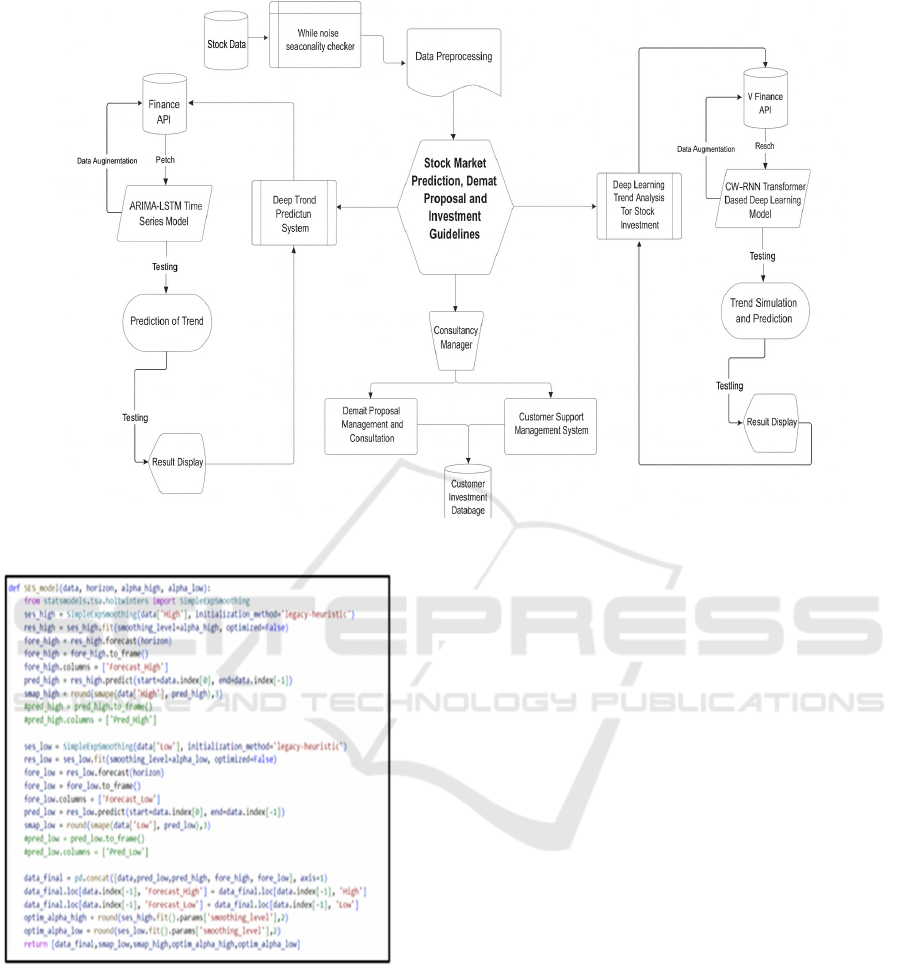
Figure 1: The architecture diagram for the financial literacy application.
Figure 2: Algorithm for the simple exponential smoothing
model.
5 RESULTS AND DISCUSSION
The accuracy metrics of our stock prediction and
investment system offer valuable insights into the
individual performance of various algorithms. The
Holt-Winter model exhibits a strong accuracy of 85%,
effectively identifying underlying patterns and
seasonality in stock data.Figure 2 show the Algorithm
for the SimpleExponential Smoothing model. The
Auto Regressive model significantly enhances
forecasting capabilities, particularly in historical trend
analysis, despite its accuracy being slightly lower at
78%. The Moving Average model demonstrates a
92% accuracy rate, effectively reducing volatility and
generating dependable forecasts. With an
effectiveness of 88%, the Auto Regressive Moving
Average (ARMA) model ranks second, demonstrating
proficiency in managing both moving average and
auto-regression components. Auto Regressive
Integrated Moving Average (ARIMA) demonstrates
an accuracy of 89%, making it an effective method for
addressing non-stationary time series data.Auto
ARIMA demonstrates superior performance at 93%,
with automated parameter selection enhancing
predictive robustness. Figure 3 show the Accuracy for
different Algorithms used in stock. In our system, the
four most effective algorithms are Linear Regression,
Random Forest, Gradient Boosting, and Support
Vector Machines, achieving accuracy rates of 82%,
91%, 88%, and 90%, respectively.
Next-Gen Investment Systems: AI, Learning and Secure Trading
503
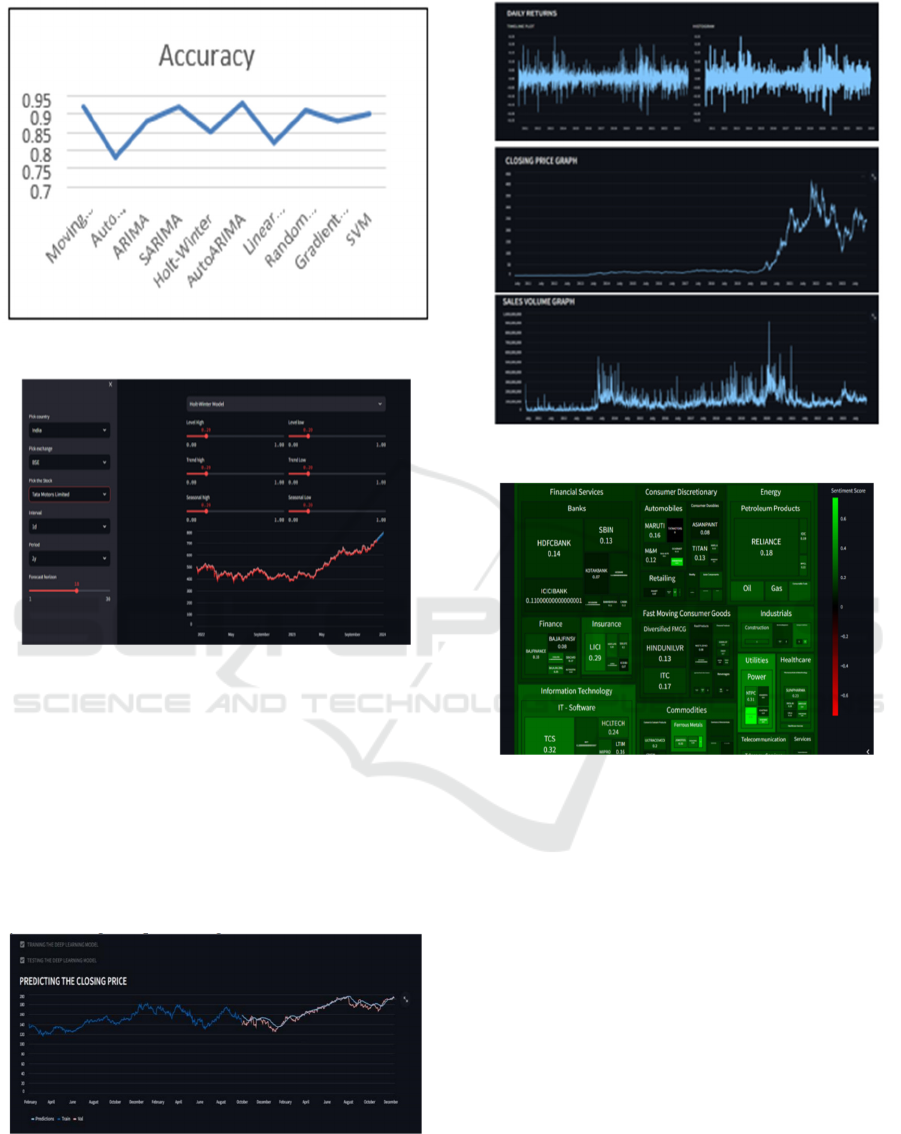
Figure 3: Accuracy for different algorithms used in stock.
Figure 4: Stock value prediction using holt winter model.
He accuracy metrics demonstrate the algorithm's
efficacy in predicting financial conditions, thereby
enabling investors to make informed decisions.
Figure4 show the Stock value Prediction The system's
ability to adapt to the dynamic stock market
environment is enhanced by its algorithmic flexibility
and continuous learning and refinement capabilities,
offering investors accurate forecasts and strategic
insights. Figure5 show the Stock value prediction
system using Deep learning.
Figure 5: Stock value prediction system using deep learning
(RNN-LSTM).
Figure 6: Stock performance graphs.
Figure 7: Sector based sentiment analysis of stocks for past.
Figure 6 and 7 shows the Stock Performance graphs
and Sector based sentiment analysis of stocks for past
respectively.
6 CONCLUSIONS
This use of time series analysis and deep learning
models inside the area of stock forecasting and
funding platforms is an enormous move ahead for
data-driven, more exact funding plans. Such systems
leverage the power of time series models to extract
hidden patterns, trends and season alities through
extensive utilization of historical stock data. Also, the
combination of deep learning algorithms like RNNs
or LSTMs helps the systems to understand complex
nonlinear relationships within data which further
allows better prediction and better decision-making.
ICRDICCT‘25 2025 - INTERNATIONAL CONFERENCE ON RESEARCH AND DEVELOPMENT IN INFORMATION,
COMMUNICATION, AND COMPUTING TECHNOLOGIES
504

The Demat proposal in such systems makes all the
investment-underlying activity possible through the
virtualization of securities, and thus reduces the need
for physical certificates for share ownership while
allowing for a quick and safe conveyance.
Additionally, the outlining of registration
requirements creates a structure that mandates
adherence to legal benchmarks while promoting
transparency and trust among investors. Yet, these
systems are not free of problems, even in their
sophistication.
Financial markets, volatility, and unexpected
events are convoluted constants that create challenges
for the big prediction machine, which results in less
accurate predictions from time to time.
Furthermore, while deep learning models have
excellent predictive power, they are often 'black
boxes' and their decision-making process lacks
transparency, restricting interpretability. So, while
these systems show great promise, continuous
improvement and validation through performance in
live markets and responsiveness to changing
economic conditions remain critical. (4) Finally,
leveraging time series analysis and deep learning in
developing stock forecasting and investment models
alongside Demat offering and strict registration
implications is a critical process in futurism in finance
technology. However, further research, a robust
construction of models and a desire to strike a balance
between complexity and explainability is still
required to enhance their credibility and usefulness
for the game between fragility and robustness in the
ever-evolving landscape of financial markets.
REFERENCES
A study of forecasting stocks price by using deep
Reinforcement Learning - RH Khan, J Miah, MM
Rahman… - 2023 IEEE World AI …, 2023 -
ieeexplore.ieee.org Empirical evaluation on stock
market forecasting via extreme learning machine - S
Balakrishnan, DK Pathak… - 2023 3rd …, 2023 -
ieeexplore.ieee.org News-based intelligent
prediction of financial markets using text mining
- IEEE Xplore, 2023 – Mamluk R. Shah, D. Khan.
Albahli, S., Nazir, T., Nawaz, M., &Irtaza, A. (2023,
December). An improved DenseNet model for
prediction of stock market using stock technical
indicators. Expert Systems with Applications,232,
120903.https://doi.org/10.1016/j.eswa.2023.120903
Htun, H. H., Biehl, M., &Petkov, N. (2023, January 12).
Survey of feature selection and extraction techniques
for stock market prediction. Financial Innovation, 9(1).
https://doi.org/10.1186/s40854-022-00441-7
Rahmani, A. M., Rezazadeh, B., Haghparast, M., Chang,
W. C., & Ting, S. G. (2023). Applications of Artificial
Intelligence in the Economy, Including Applications in
Stock Trading, Market Analysis and Risk Management.
IEEE Access, 11, 80769–80793.
https://doi.org/10.1109/access.2023.3300036
Sheth, D., & Shah, M. (2023, January 9). Predicting stock
market using machine learning: best and accurate way
to know future stock prices. International Journal of
System Assurance Engineering andManagement,
14(1),1–18. https://doi.org/10.1007/s13198-022-
01811-1
Verma, S., Sahu, S. P., &Sahu, T. P. (2023, February).
Discrete Wavelet Transform-based feature engineering
for stock market prediction. International Journal of
Information Technology, 15(2), 1179 –1188.
https://doi.org/10.1007/s41870-023-01157-2
Zhao, C., Hu, P., Liu, X., Lan, X., & Zhang, H. (2023,
February 24). Stock Market Analysis Using Time
Series Relational Models for Stock Price Prediction.
Mathematics, 11(5), 1130.
https://doi.org/10.3390/math11051130
Next-Gen Investment Systems: AI, Learning and Secure Trading
505
