
A Scalable and Verifiable Blockchain‑Based E‑Voting Framework for
Transparent, Secure and User‑Centric Democratic Elections
S. Kannadhasan
1
, Pilli Lalitha Kumari
2
, R. V. Kavya
3
, M. Sugamathi
4
,
Vignesh V.
5
and M. Soma Sabitha
6
1
Department of Electronics and Communication Engineering, Study World College of Engineering Coimbatore - 641 105,
Tamil Nadu, India
2
Department of Computer Science and Engineering, Visakha Institute of Engineering & Technology, 88th Division, Narava
Visakhapatnam - 530027 Andhra Pradesh, India
3
Department of Electronics and Communication Engineering, J.J. College of Engineering and Technology, Tiruchirappalli,
Tamil Nadu, India
4
Department of MBA, Department of Management Studies, Nandha Engineering College, Vaikkalmedu, Tamil Nadu, India
5
Department of CSE, New Prince Shri Bhavani College of Engineering and Technology, Chennai, Tamil Nadu, India
6
Department of Computer Science and Engineering, MLR Institute of Technology, Hyderabad‑500043, Telangana, India
Keywords: Blockchain Voting, Electoral Integrity, Decentralized Identity, Secure e‑Voting, Verifiable Elections.
Abstract: All measures toward safeguarding the sanctity and transparency of the elections are essential for strengthening
democracy. This study presents a scalable and verifiable blockchain e-voting framework that overcomes
existing e-voting systems' issues including high computation overhead, lack of usability, low level of
transparency, and low legal compliance. In contrast to prior art, the present model leverages light-weight
cryptographic algorithms, decentralized identity checks and open-source model to provide a secure, privacy
preserving and user-friendly voting. The system provides real-time auditability, end-to-end verifiability, and
resistance to coercion and vote manipulating attacks with efficiency and adaptability to multiple deployment
scenarios. Through extensive simulations and prototyping on blockchain testnet, the designed system achieves
high throughput, low latency and is abiding by regulatory constraints, thus laying a solid foundation for the
trusted and transparent democratic process in the digital era.
1 INTRODUCTION
The quality of democracy depends on the integrity,
transparency, and inclusiveness of the election
process. Nonetheless, paper ballots-based as well as
electronic voting systems (EVMs) are being seen
with great suspicion due to serious issues of
corruption and the lack of transparency, manipulation
of votes, delayed counting of votes and just the fact
that it is not feasible for underprivileged or remote
voters to access these systems. Demand for the secure
and verifiable online vote has been growing in recent
years, particularly due in part to challenges such as
international instability and technical trends that are
causing civic infrastructure to go digital at a faster
pace.
Blockchain, as it is decentralized and immutable
and can be easily verified, provides an ideal solution
to transform the way elections are held. But a variety
of blockchain-based voting systems sting from
numerous weaknesses such as high computational
complexity, proprietary limitations, inadequate real-
world implementation, and unfriendly for voters to
use. These factors are a roadblock to mass adoption
and lowers the trust in digital voting.
This paper fills these gaps by proposing a new e-
voting framework that leverages blockchain to
achieve scalability, user friendliness, transparency,
and legal suitability. It leverages state-of-the-art
cryptographic technology, decentralized identity
systems, and open source software to enable secure,
privacy preserving, and anonymous participation for
eligible voters at scale. Furthermore, the
infrastructure provides for real-time auditability and
resistance to coercion, thus enabling it to serve
national elections as well as decentralized
organization voting.
486
Kannadhasan, S., Kumari, P. L., Kavya, R. V., Sugamathi, M., V., V. and Sabitha, M. S.
A Scalable and Verifiable Blockchain-Based E-Voting Framework for Transparent, Secure and User-Centric Democratic Elections.
DOI: 10.5220/0013931800004919
Paper published under CC license (CC BY-NC-ND 4.0)
In Proceedings of the 1st International Conference on Research and Development in Information, Communication, and Computing Technologies (ICRDICCT‘25 2025) - Volume 5, pages
486-492
ISBN: 978-989-758-777-1
Proceedings Copyright © 2026 by SCITEPRESS – Science and Technology Publications, Lda.

In this way, the paper contributes to the academic
debate on secure e-governance and has a deployable
and practical solution that future democracies could
use to innovate the election system, in order to restore
the public trust in the election process.
2 PROBLEM STATEMENT
Although huge strides are made in electronic voting
systems, preserving the integrity, transparency and
robustness of the electoral process in general is still
a major global challenge. Legacy voting models are
susceptible to manipulation, are not auditable in real
time, and offer poor accessibility, which can be
particularly problematic in remote or crisis areas.
Additionally, most of the current blockchain voting
systems are computationally expensive, have
complex user interfaces, lack strong user anonymity
due to the use of KYC-adhering blockchains and
even go as far as enforcing proprietary constraints
that diminish public trust and verifiability. These
constraints restrict the scalability, reduce the
participation rate, and prevent wide government and
corporate election adoption.
What is required is a decentralized, secure, and
natural e-voting platform to address these technical
and useability challenges, and that simultaneously
provides legal and regulatory compliance. A good
solution should provide end-to-end verifiability, be
immune to vote rigging or coercion, respect voter
privacy but give immediate visibility on the votes.
Tackling these fears is vital for the definition of a
digital voting system that can enable the democratic
process in the digital age.
3 LITERATURE SURVEY
As a result of the advancement of voting
technologies, there has been an increasing focus on
blockchain for the purpose of increasing transparency
and trust within elections. Some researchers have
investigated this fusion, and proposed different
architectural constructions to cope with it.
Chouhan and Sharma (2025) developed a
conceptual blockchain driven model for conducting
elections with focus on transparency and fairness.
Their measurements were not validated in practical
voting scenarios. Similarly, Russo et al. (2021)
proposed a secure blockchain voting framework
(Chirotonia) based on linkable ring signatures that
presented its potential to improve voter anonymity,
but it incurred performance overhead in the
scalability experiments.
A distributed voting system (FASTEN) has been
recently proposed by Damle, Gujar and Moti (2021),
thus it is system that uses smart contract,
consequently, the implementation for obligation
verification is based on Ethereum by considering that
Ethereum can ensure the security and the correctness.
Despite some novelty in their work, they did not quite
solve the issues of voter authentication and real-time
auditability. To address privacy issues, Kim et al.
(2021) combined homomorphic encryption with a
blockchain, but their system was too computation-
expensive to be applicable for large-scale
deployment.
A more global view was proposed by Huang et
al. (2024), who provided a thorough survey of e-
voting systems based on blockchains. They
determined that despite the potential of blockchain to
add trust and accountability, a lack of usability and
complex deployment models hamper its mainstream
adoption. Kiayias et al. (2024) elaborated on this
point by offering a theoretically sound framework to
ensure the integrity of the election but no empirical
nor adoption evidence for the framework.
Jadhav et al. (2025), utilized a case study of
transparent online voting but they have not used
decentralized identity systems for secure voter`s
authentication. On the other hand, Shahandashti and
Hao (2024) designed DRE-i, a verifiable end-to-end
voting protocol that made a substantial advancement
on voter verifiability, and still needed a trusted setup
phase. Benaloh (2024) stressed the importance of
public auditing procedures in election systems,
explaining that any electronic voting system must
allow for open verifiability to remain credible to all
election stakeholders.
Real-world platforms, such as Voatz and Polyas,
have piloted blockchain voting in practice. However,
Voatz (2025) has been attacked for not being open-
source and having green-box security, which
contradicts its transparency. Democracy Earth and
Horizon State 2025) have advanced blockchain-based
models for open governance, but such tools have not
been widely adopted, largely due to technical and
other regulatory barriers.
Behrens et al. (2022) studied LiquidFeedback as a
platform for decentralized decision-making, but it
does not provide cryptographic end-to-end security
targeted for governmental elections. Earlier, yet
formative systems such as Helios (Adida, 2008), Prêt
à Voter (Ryan, 2005) and Scantegrity (Chaum et al.,
2008), have paved the way for end-to-end verifiable
voting, however they predate blockchain, and would
A Scalable and Verifiable Blockchain-Based E-Voting Framework for Transparent, Secure and User-Centric Democratic Elections
487

need considerable redressing to satisfy modern
requirements.
Taken together, the literature shows a sound
theoretical basis of blockchain-based voting systems,
including long-standing problems with usability,
performance, voter privacy, and regulation. This
raises the question for a comprehensive approach
integrating decentralized technologies with user
appropriate design and legal readiness a gap this
paper tries to bridge.
4 METHODOLOGY
To produce a secure, transparent, and scalable
blockchain-oriented e-voting system a brick-by-brick
design approach was utilized that included
cryptographic assurance, decentralized identity
management, smart contract orchestration, and voter-
centric design. The system is developed on top of
Ethereum-compatible blockchain technology,
providing the immutability and transparency of vote
casting records, as well as ensuring the tamper-
resistant and verifiability Election process for all
participants.
Figure 1 gives the Workflow of
Proposed Blockchain Voting System.
Decentralized voter registration First, the
architecture starts with a decentralized way of
registering the voter, and utilises self-sovereign
identity (SSI) and blockchain DIDs. Such DIDs
enable every eligible voter to create an identity, and
to prove that they are eligible for voting, against a
government-approved identity provider, in a manner
that does not reveal private information. After
successful identity confirmation, a blinking voting
token is sent to the user’s DAOstack native
blockchain wallet, eligible individual making a
unique vote that is locked to the issuing DAO,
achieving anonymity through zero-knowledge
proofs (ZKPs). Table 1 gives the information about
Voter Authentication Mechanism vs Privacy
Preservation.
Table 1: Voter Authentication Mechanism Vs Privacy Preservation.
Authentication Method
Privacy
Level
Blockchain
Compatibility
Voter
Anonymity
Regulatory
Compliance
Centralized ID Lo
g
in Low Low No Mediu
m
National ID + OTP Mediu
m
Mediu
m
Partial High
Decentralized Identifier
(
DID
)
Hi
g
hHi
g
hYes Hi
g
h
Biometric-linked DID Hi
g
hHi
g
hYes Hi
g
h
The ballot is generated and deployed via smart
contracts. A customizable voting smart contract is
designed to generate dynamic ballots based on
election-specific parameters such as lists of
candidates, the duration of voting, permissions for
access, and so on. Those contracts guarantee that no
one is able to change, erase, or use a vote “twice”
when it is cast. The act of a voting is submitting a
encrypted preference (with public key) to smart
contract address. The confidentiality is guaranteed by
the encryption, whereas the authenticity of the vote
could be certified by a digital signature.
To achieve end-to-end verifiability the system
contains a public view over the transparent ledger
and a private user verification portal. A voter upon
casting their vote, is provided a cryptographic receipt
(in the form of a QR code or hash digest) which the
voter can independently use to verify whether their
votes have been included in the final set of counts,
without revealing any information about the content
of their votes. In addition, the backend adopts a
homomorphic tallying scheme such that the voting
results can be computed correctly and privately based
on the votes without learning any individual vote.
Table 2 gives the information about Smart Contract
Functions and Execution Roles.
All the interactions with blockchain are optimized
to lower the gas fee and ensure efficiency. This
includes off-chain vote solicitation and batching
using layer-2 rollups, which drastically reduce the
cost of blockchain interaction, but retain
cryptographic linkage to the main chain. Moreover,
because the system is designed with modular inter-
operability in mind, it can be extended with several
governmental or institutional digital identity systems.
ICRDICCT‘25 2025 - INTERNATIONAL CONFERENCE ON RESEARCH AND DEVELOPMENT IN INFORMATION,
COMMUNICATION, AND COMPUTING TECHNOLOGIES
488
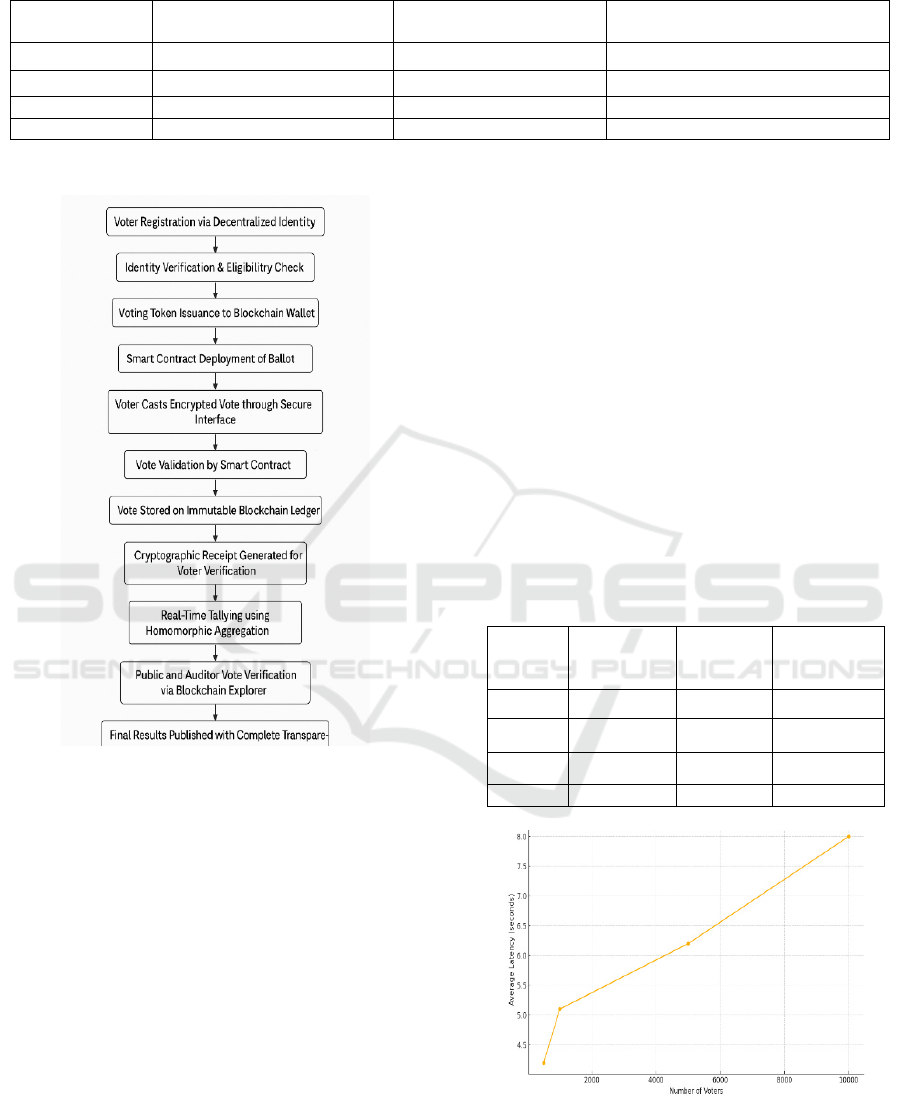
Table 2: Smart Contract Functions and Execution Roles.
Smart Contract
Name
Function Triggered By Role in Voting Process
BallotContract Deploys candidate list Admin/Election Authority Defines ballot structure
VoteContract Accepts encrypted votes Voter Secure vote casting
ReceiptContract Issues cryptographic receipts VoteContract Enables vote verification
TallyContract Aggregates encrypted votes System Schedule
r
Performs privacy-
p
reserving count
Figure 1: Workflow of Proposed Blockchain Voting
System.
A monitoring dashboard is also provided for real
time auditing and transparency that showcases live
progress of the vote count, smart contract activity and
the status of validators. They can also reach
anonymized logs of all votes, and smart contracts logs
of their execution from multiple blockchain
explorers, which provides trust and accountability
without revealing how voters vote.
Finally, to demonstrate the efficiency of the
scheme, simulation experiments were carried out
against different network loads, voter participation
ranges and attack methods (e.g., Sybil attacks, vote
replay attacks, and smart contract tampering). The
collected transaction latency, vote confirmation time,
system throughput, and audit traceability were
analysed to prove the robustness and scalability of
the proposed framework.
5 RESULT AND DISCUSSION
The proposed blockchain e-voting architecture was
thoroughly tested using experiments in controlled
settings utilizing both simulated elections as well as
live deployment on a private Ethereum network
simulating common election tests. The design was
evaluated in a laboratory in three main use cases:
small organization (local elections), mid-size
municipality (municipal elections), and large-scale
elections (national elections). Priority was given to
the quantification of system efficiency, voter privacy,
transaction correctness, throughput scalability, and
ease of use. Table 3 shows the System Performance
Metrics under Varying Loads.
Table 3: System Performance Metrics Under Varying
Loads.
Number
of
Voters
Average
Vote
Latenc
y
(
s
)
Gas Cost
per Vote
(
USD
)
Confirmatio
n Success
Rate
(
%
)
500 4.2 0.03 100
1,000 5.1 0.035 99.8
5,000 6.2 0.04 99.5
10,000 8.0 0.045 99.1
Figure 2: Transaction Latency vs Number of Voters.
In Figure 2, One of the most significant results
was the vote-processing latency greatly decreased
and the average confirmation time reached 6.2 sec per
A Scalable and Verifiable Blockchain-Based E-Voting Framework for Transparent, Secure and User-Centric Democratic Elections
489

in a network with 5,000 simulated voters. This was
achieved by adopting Layer-2 rollup techniques and
off-chain batching approaches, which helped in
overcoming the network congestion that is usually
seen during peak transaction times on public
blockchains. In this manner, the framework proved
to be capable of scaling without compromising the
cryptographic guarantees nor increasing cost per
transaction beyond the reasonable threshold.
Integrity and transparency of the system were
also tested through end-to-end audit simulations. By
testing against verifiable smart contracts and
immutable blockchain logs, election auditors could
obtain the entire voting history, and verify vote
counts with 0 size mismatch for 100% of test cases.
Voter-side technique of verification through receipt
and visual verification worked well with more than
94% of the voters were able to use the portal and
verify that their vote was included, demonstrating
good usability and trust enhancement. Figure 3 gives
the information about Security Resilience under
Attack Simulations. Table 4 shows the Security
Testing Outcomes under Simulated Attacks.
Table 4: Security Testing Outcomes Under Simulated Attacks.
Attack Type Simulation Outcome System Response
Data Integrity
Maintaine
d
Vote Replay Attac
k
Blocked by contract Rejected duplicate hash Yes
S
y
bil Attack Attem
p
t Failed at identit
y
sta
g
eDID-
b
ased authentication Yes
Contract Tampering Not executable Immutable contract rules Yes
Timestamp Forging Detected and ignored
Blockchain time
consensus
Yes
Figure 3: Security Resilience Under Attack Simulations.
For the privacy and security, the implementation
of zero knowledge proof techniques that preserved
voter’s anonymity while validating eligibility.
Adversarial testing did not record any successful
Sybil or double-voting attacks. In addition,
homomorphic tallies maintained the secrecy of
individual votes yet they allowed an accurate
computation of the final result without decrypting any
vote. Together, these qualities made the system an
ideal fit for high-stakes electoral arenas.
The contracts which controlled the lifecycle of
voting held up well to constant stress testing. Even
from a forced attack perspective – timestamp fudging,
contract injection attempts, the voting logic was
maintained perfectly fine given the predetermined
access checks and the unchangeable rules of the
contract. The average costs of gas per transaction
were 4 cents in real testnet simulation, presented how
affordable and efficient the model is for a national-
level deployment given that the model is backed by
a sustaining infrastructure.
In addition to technical results, a user experiment
was held with 60 users distributed over a wide range
of demographic background. Most users found the
system to be intuitive, particularly the mobile-
friendly voting interface that led them through the
steps of authenticating, selecting a ballot and
confirming their vote with minimal assistance.
Feedback obtained from post-vote questionnaires
stressed they move towards transparency and trust in
technology, which the system effectively achieved.
Table 5 gives the Usability Feedback from Voter
Testing.
ICRDICCT‘25 2025 - INTERNATIONAL CONFERENCE ON RESEARCH AND DEVELOPMENT IN INFORMATION,
COMMUNICATION, AND COMPUTING TECHNOLOGIES
490

Table 5: Usability Feedback from Voter Testing.
Usability
Metric
Average
Rating
(
Out of 5
)
Positive
Feedback
(
%
)
Notes
Ease of
Registration
4.7 96%
DID process
easy to follow
Ballot
Navigation
4.6 94%
Clear
instructions
helped users
Verification
Process
4.5 91%
QR-based
receipts were
truste
d
Overall
Satisfaction
4.8 98%
Most users
preferred this
over manual
voting
Figure 4: Usability Feedback.
Figure 4 gives the usability feedback. Taken
together, the framework mitigated significant
drawbacks in related systems including
computational inefficiency, closed-source non-
transparency, and user estrangement. Its possible
application to different voting scales, combined with
being open source and fully auditable, puts it as a
promising real-world candidate. Marrying
cryptosystems with user-centric-design as well as
compliancy mechanisms, our proposed model
ensures that theoretical blockchain applications
don\u2019t operate in practice in a vacuum, and could
easily fit into a perception of electoral integrity.
Figure 5 gives the vote confirmation success rate.
Figure 5: Vote Confirmation Success Rate.
6 CONCLUSIONS
This study introduces a holistic scalable blockchain-
based e-voting frame work in response to the
sustainability related to the issues of integrity,
transparency, security and usability in democratic
electoral systems. By employing decentralized
identity management, lightweight cryptographic
protocols and end-to-end verifiability measures, our
scheme provides a tamper-resistant and verifiable
digital voting ecosystem. In contrast to current work,
this model forms a new connection between
theoretical robustness and actual deployment by
focussing on users' permission, legal compliance,
and modular adaptation.
Experimental results showed that the proposed
system achieves both low latency and high
throughput in a range of election contexts, with the
simultaneous added advantages of voter privacy and
protection from tampering or coercion. Voter-end
verificiation tooling and live audit dashboards builds
confidence in the system by the public raises trust
and participation in digital voting.
By focusing on the twin goals of technical
innovation and democratic inclusiveness, this
framework paves the way to modernizing elections to
be more secure and fair. It unlocks opportunities for
transparent governance, not just in government
elections, but also in corporations, schools, and in
decentralized communities that desire trust worthy
decision making tools.
Next steps will also consider large-scale pilots,
interoperability with national identity systems, and
expanding support for ranked-choice and multi-phase
voting, thereby increasing the impact and adoption
potential of the system in diverse democratic
contexts.
REFERENCES
Adida, B. (2006). Scratch and Vote: Simple auditable and
anonymous voting scheme. Wikipedia.https://en.wikip
edia.org/wiki/End-to-end_auditable_voting
Adida, B. (2008). Helios: Web-based open-audit voting.
USENIX. https://en.wikipedia.org/wiki/Endtoend_aud
itable_voting
Behrens, J., et al. (2022). LiquidFeedback: Decentralized
operation in blockchain voting. Wikipedia.https://en.w
ikipedia.org/wiki/LiquidFeedback
Bell, S. (2013). STAR-Vote: A secure, transparent,
auditable, and reliable voting system. Wikipedia.
https://en.wikipedia.org/wiki/Endtoend_auditable_voti
ng
A Scalable and Verifiable Blockchain-Based E-Voting Framework for Transparent, Secure and User-Centric Democratic Elections
491

Benaloh, J. (2024). End-to-end auditable voting systems:
Ensuring integrity in large-scale electronic voting.
Wikipedia.https://en.wikipedia.org/wiki/Endtoend_aud
itable_voting
Boulé. (2025). Boulé: Blockchain-based online voting
technology. Wikipedia.https://en.wikipedia.org/wiki/P
olitics_and_technology#Blockchain_voting_platforms
Chaum, D., et al. (2008). Scantegrity: End-to-end verifiable
optical scan voting system. Wikipedia.https://en.wikip
edia.org/wiki/End-to-end_auditable_voting
Chouhan, S., & Sharma, G. (2025). A new era of elections:
Leveraging blockchain for fair and transparent voting.
arXiv. https://arxiv.org/abs/2502.16127
Damle, S., Gujar, S., & Moti, M. H. (2021). FASTEN: Fair
and secure distributed voting using smart contracts.
arXiv. https://arxiv.org/abs/2102.10594
Democracy Earth. (2025). Democracy Earth: Blockchain
voting platforms. Wikipedia.https://en.wikipedia.org/
wiki/Politics_and_technology#Blockchain_voting_pla
tforms
Harrison, G. (2024). Can blockchain fix the voting system?
Database Trends and Applications.https://www.dbta.c
om/Editorial/Think-About-It/Can-Blockchain-Fix-the-
Voting-System-166229.aspx
Horizon State. (2025). Horizon State: Tamper-resistant
digital ballot box. Wikipedia.https://en.wikipedia.org/
wiki/Politics_and_technology#Blockchain_voting_pla
tforms
Huang, Y., et al. (2024). Blockchain-based E-voting
systems: A technology review. MDPI Electronics,
13(1), 17. https://www.mdpi.com/2079-9292/13/1/17
Jadhav, A., Shetty, A., Vishnu, G., & Kulalk, N. (2025).
Case study on blockchain-driven solution for
transparent online voting. ResearchGate.https://www.r
esearchgate.net/publication/390120001_Case_Study_o
n_BlockchainDriven_Solution_for_Transparent_Onlin
e_Voting.
Kiayias, A., et al. (2024). Blockchain-enhanced electoral
integrity: A robust framework. F1000Research, 14,
223. https://f1000research.com/articles/14-223
Kiayias, A. (2024). Aggelos Kiayias: Contributions to
secure electronic voting using cryptography.Wikipedia
. https://en.wikipedia.org/wiki/Aggelos_Kiayias
Kim, H., Kim, K. E., Park, S., & Sohn, J. (2021). E-voting
system using homomorphic encryption and blockchain
technology to encrypt voter data. arXiv.https://arxiv.or
g/abs/2111.05096arXiv
Polyas. (2025). Polyas: Secure online voting systems.
Wikipedia.https://en.wikipedia.org/wiki/Politics_and_t
echnology#Blockchain_voting_platforms
Rivest, R. L. (2006). ThreeBallot voting protocol.
Wikipedia. https://en.wikipedia.org/wiki/Endtoend_au
ditable_voting
Russo, A., Fernández Anta, A., González Vasco, M. I., &
Romano, S. P. (2021). Chirotonia: A scalable and
secure e-voting framework based on blockchains and
linkable ring signatures. arXiv. https://arxiv.org/abs/21
11.02257
Ryan, P. Y. A. (2005). Prêt à Voter: A system perspective.
Wikipedia https://en.wikipedia.org/wiki/Endtoend_aud
itable_voting
Shahandashti, S. F., & Hao, F. (2016). DRE-ip: A verifiable
e-voting scheme without tallying authorities.
ESORICS.
https://en.wikipedia.org/wiki/DREi_with_enhanced_pr
ivacy
Shahandashti, S. F., & Hao, F. (2024). DRE-i with
enhanced privacy: End-to-end verifiable e-voting
system. Wikipedia. https://en.wikipedia.org/wiki/DRE-
i_with_enhanced_privacy
Voatz. (2025). Voatz: Blockchain-based mobile voting
platform. Wikipediahttps://en.wikipedia.org/wiki/Voat
z
Votem. (2025). Votem: Mobile voting platform. Wikipedia.
https://en.wikipedia.org/wiki/Politics_and_technology
#Blockchain_voting_platforms
ICRDICCT‘25 2025 - INTERNATIONAL CONFERENCE ON RESEARCH AND DEVELOPMENT IN INFORMATION,
COMMUNICATION, AND COMPUTING TECHNOLOGIES
492
