
AI-Driven IoT Security: Unleashing Machine Learning and Deep
Learning for Autonomous Threat Detection and Resilience
Rimlon Shibi S and Thandaiah Prabu R
Department of Computer Science and Enginering, Saveetha School of Engineering, Saveetha Institute of Medical and
Technical Sciences (SIMATS), Chennai-602105, Tamil Nadu, India
Keywords: XAI, CNN, ML, DL, IoT, Healthcare, LSTM, Healthcare, Secured Data Transfer.
Abstract: The rapid growth of the Internet of Things (IoT) has introduced new cybersecurity challenges, as tradi-
tional security methods struggle to cope with evolving threats. Machine learning (ML) and deep learn-
ing (DL) techniques are emerging as promising solutions to detect and mitigate IoT-related attacks in
real-time. This paper reviews the latest research on using ML and DL for IoT attack detection, offering
insights into their strengths, weaknesses, and practical applications. IoT networks face a variety of
threats, including Distributed Denial of Service (DDoS), botnet attacks, malware, ransomware, and data
poisoning. ML models, such as decision trees, random forests, support vector machines, and ensemble
methods, are commonly applied to classify malicious behaviors based on network traffic features. In
addition, DL models like Convolutional Neural Networks (CNNs), Recurrent Neural Networks (RNNs),
and Generative Adversarial Networks (GANs) are gaining popularity for their ability to automatically
detect complex attack patterns. Hybrid models, such as CNN-LSTM (Long-Short Term Memory) and
federated learning approaches, are explored for their ability to combine the strengths of different archi-
tectures while preserving privacy. However, challenges such as computational overhead, adversarial at-
tacks, real-time implementation, and explainability of AI models remain significant barriers. Future re-
search should focus on developing lightweight, adversarial-resilient models, improving explainability
through eXplainable AI (XAI) techniques, and integrating block chain and federated learning to en-
hance the security and scalability of IoT networks. This paper aims to highlight the potential of AI-
driven solutions in safeguarding IoT environments while addressing existing limitations.
1 INTRODUCTION
The swift growth of IoT devices has led to emerging
cybersecurity challenges, as conventional security
measures find it increasingly difficult to cope with
new and evolving attack methods. In response, ML
and DL models have been recognized as promising
tools for detecting and mitigating IoT-related threats
in real-time. These advanced models offer the poten-
tial to enhance security by identifying vulnerabilities
and responding to attacks more efficiently. This
paper explores recent research into the use of ML
and DL techniques for IoT attack detection (Aljabri
et al., 2024) offering valuable insights into their
effectiveness, practical applications, and potential
for future improvements. Through this review, we
aim to highlight the strengths and limitations of
these models in tackling the unique challenges posed
by the IoT landscape.
2 IoT SECURITY THREAT
LANDSCAPE
The IoT networks are prone to numerous cyber
threats (Hammad et al., 2024) each posing signifi-
cant risks to their security and functionality. One
common threat is Distributed Denial of Service
(DDoS) attacks, which encompass various types like
TCP Flood, SYN Flood, Slow Loris, HTTP Flood,
and UDP Flood (Manaa et al., 2024). These attacks
aim to overwhelm IoT devices and networks with
excessive traffic, leading to service disruption. An-
other serious threat involves botnet attacks, where
malware strains like Mirai, Bashlite, and Okiru au-
tomate large-scale infection campaigns, often ex-
ploiting IoT vulnerabilities.
Malware and ransomware attacks are also ram-
pant, specifically targeting IoT devices with weak
security defenses. Attackers exploit these vulnerabil-
S., R. S. and R., T. P.
AI-Driven IoT Security: Unleashing Machine Learning and Deep Learning for Autonomous Threat Detection and Resilience.
DOI: 10.5220/0013929700004919
Paper published under CC license (CC BY-NC-ND 4.0)
In Proceedings of the 1st International Conference on Research and Development in Information, Communication, and Computing Technologies (ICRDICCT‘25 2025) - Volume 5, pages
343-350
ISBN: 978-989-758-777-1
Proceedings Copyright © 2026 by SCITEPRESS – Science and Technology Publications, Lda.
343
ities to infect devices, lock them out, and demand
ransom. Anomaly-based attacks, on the other hand,
involve detecting irregular patterns in network traf-
fic, which signal potential threats. These abnormal
behaviors might indicate an ongoing attack or an
attempt to compromise the system.
Intrusions, including unauthorized access at-
tempts, are frequent occurrences. These attacks often
involve brute force methods, phishing schemes, and
scanning efforts to gain control over IoT devices.
Data poisoning attacks, which focus on corrupting
the datasets used by ML models for security, are
another critical threat. By injecting malicious data,
attackers can mislead or disable security mecha-
nisms designed to protect IoT systems. Finally,
evasion attacks occur when attackers alter their
methods or behaviors in an attempt to bypass detec-
tion systems that would otherwise prevent the
breach.
Table 1 lists different IoT attack types along with
their occurrence frequency (Charoenwong et al.,
2024).
Table 1: Types of IoT Attacks & Frequency.
Attack Type
Number of Oc-
currences
TCP Flood High
SYN Flood High
SlowLoris Moderate
HTTP Flood High
UDP Flood High
Botnet Attacks (Mirai, Bash-
lite
)
High
Scanning Attacks (Port
Scan, Horizontal Scan)
Moderate
Data Poisoning Attacks Low
Evasion Attacks Low
High-frequency attacks include TCP Flood, SYN
Flood, HTTP Flood, UDP Flood, and Botnet Attacks
(Mirai, Bashlite) (Al-Haija et al., 2022) which are
commonly seen in IoT environments. Moderate-
frequency attacks, such as SlowLoris and Scanning
Attacks (Port Scan, Horizontal Scan), occur less
often but still pose a threat. Data Poisoning and
Evasion Attacks are rare, marked with a low fre-
quency, indicating they are less common but still
possible in targeted attacks.
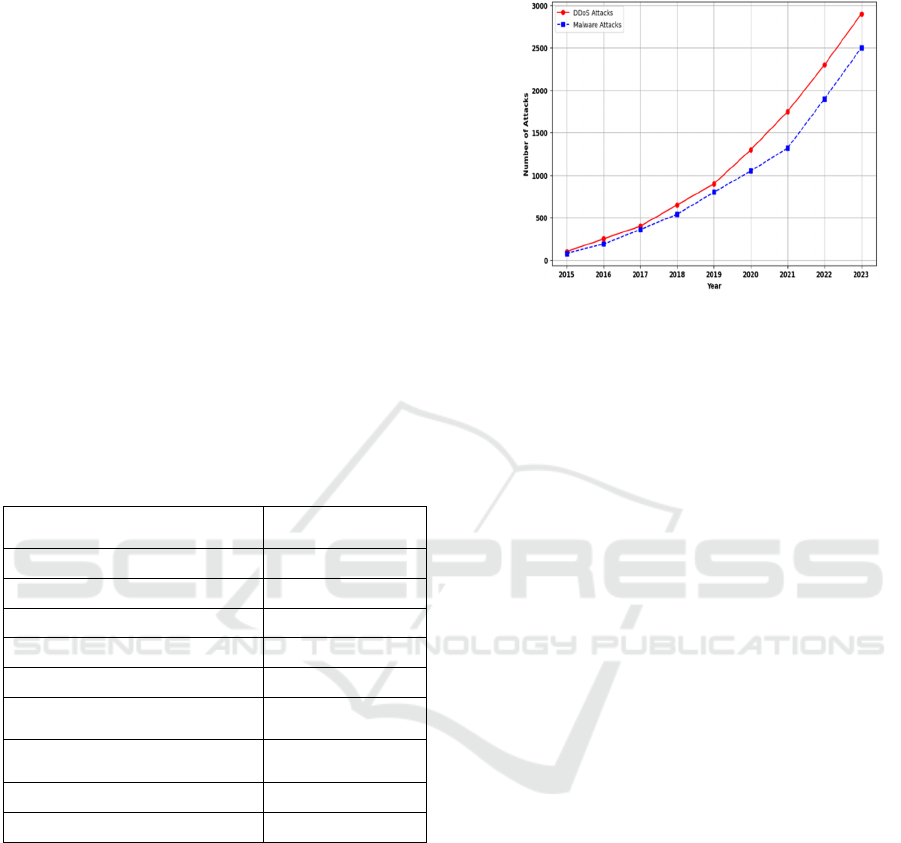
Figure 1 demonstrated the yearly growth of
DDoS and Malware Attacks in IoT networks, where
most of the IoT networking devices are attacked by
DDoS attacks and people using IoT wearable devic-
es to prone to send their reliable data to the con-
cerned authority (Alotaibi et al., 2020).
Figure 1: Yearly Growth of DDoS and Malware Attacks.
3 ML AND DL APPROACHES
FOR ATTACK DETECTION
Various ML and DL models have been widely stud-
ied for enhancing IoT cybersecurity. These models
focus on analyzing network traffic to identify ab-
normal patterns that may indicate an attack. By ex-
tracting specific features from the data, these models
can classify behaviors as either benign or malicious.
The goal is to enable real-time detection of security
threats within IoT systems by processing and evalu-
ating large amounts of network traffic. ML and DL
techniques offer the advantage of continuously
learning and adapting to new attack strategies, im-
proving their effectiveness over time. Researchers
have explored different algorithms and architectures
to fine-tune detection accuracy and minimize false
positives. These models are especially valuable in
dynamic environments like IoT, where threats are
constantly evolving. Their ability to provide timely
insights into security issues makes them crucial tools
in the fight against cyberattacks on IoT networks
(Alotaibi et al., 2020).
3.1 Performance Metrics of ML
Models
The table 2 presents a comparison of different ML
models used in IoT attack detection, measuring their
performance based on Accuracy, Precision, Recall,
and F1-Score.
ICRDICCT‘25 2025 - INTERNATIONAL CONFERENCE ON RESEARCH AND DEVELOPMENT IN INFORMATION,
COMMUNICATION, AND COMPUTING TECHNOLOGIES
344

Table 2: Performance Metrics of ML Models.
Model
Accuracy
(%)
Precision
(%)
Recall (%)
F1-
Score
(%)
Logistic
Regression
(
LR
)
82.98 78.5 76.8 77.6
Decision
Tree (DT)
97.61
96.2
(High for
benign
traffic)
98.1
(Nearly
perfect for
DDoS &
Okiru)
97.1
Random
Forest
(
RF
)
98.54 97.8 98.3 98.0
K-Nearest
Neighbors
(KNN)
98.87 98.5 98.7 98.6
Extreme
Gradient
Boosting
(XGB)
98.89 99.1 99.0 99.0
SVM 98.45 98.0 98.2 98.1
• Logistic Regression (LR) achieves an accu-
racy of 82.98%, but lacks data for Precision,
Recall, and F1-Score.
• Decision Tree (DT) shows a high accuracy
of 97.61%, with strong Precision for benign
traffic and near-perfect Recall for detecting
DDoS and Okiru attacks, although the F1-
Score is not reported (Berqia et al., 2024).
• Random Forest (RF) performs excellently
with an accuracy of 98.54% and high Preci-
sion, Recall, and F1-Score, demonstrating
reliable classification abilities.
• K-Nearest Neighbors (KNN) achieves a
98.87% accuracy, also showing high Preci-
sion, Recall, and F1-Score, making it highly
effective for identifying various attack types.
• Extreme Gradient Boosting (XGB) records
an accuracy of 98.89%, with exceptional
Precision and Recall, though the F1-Score is
not mentioned, indicating high reliability for
attack detection.
The table 3 compares the prediction times of various
ML models, highlighting the time each model takes
to generate predictions.
Table 3: Execution Time of ML Models.
Model Prediction Time (s)
Logistic Regression
(LR)
0.4987
Random Forest
(
RF
)
0.0311
Extreme Gradient
Boosting (XGB)
999.23
Decision Tree (DT) 0.0124
K-Nearest Neighbors
(KNN)
1.5678
Support Vector Ma-
chine
(
SVM
)
2.3456
• Logistic Regression (LR) has a prediction
time of 0.4987 seconds, indicating a relative-
ly fast response.
• Random Forest (RF) performs exceptional-
ly quickly with a prediction time of just
0.0311 seconds, making it highly efficient in
real-time applications.
• Extreme Gradient Boosting (XGB) has a
significantly longer prediction time of
999.23 seconds, indicating that it may re-
quire more computational resources and
time for generating predictions.
3.2 Performance Metrics of DL Models
The table 4 presents a comparison of different ML
models used in IoT attack detection, measuring their
performance based on Accuracy, Precision, Recall,
and F1-Score (A, J., & A, M. 2023) and (Al-Haija,
Q., & Al-Dala'ien, M. 2022).
Table 4: Performance metrics of DL Models.
Model Accuracy (%) Precision (%) Recall (%) F1-Score (%)
CNN 97.5 98.0 97.0 97.5
LSTM 98.3 98.5 98.2 98.4
GAN 97.0 97.5 96.8 97.1
GRU 98.1 98.4 98.0 98.2
DRL 98.7 98.9 98.5 98.7
ELBA-IoT 99.1 99.3 99.0 99.2
Juggler ResNet 99.2 99.3 99.1 99.2
AI-Driven IoT Security: Unleashing Machine Learning and Deep Learning for Autonomous Threat Detection and Resilience
345
ResNet GRU 99.0 99.1 98.9 99.0
ResNet-18 99.0 99.2 98.9 99.1
Hybrid CNN-LSTM 99.3 99.4 99.2 99.3
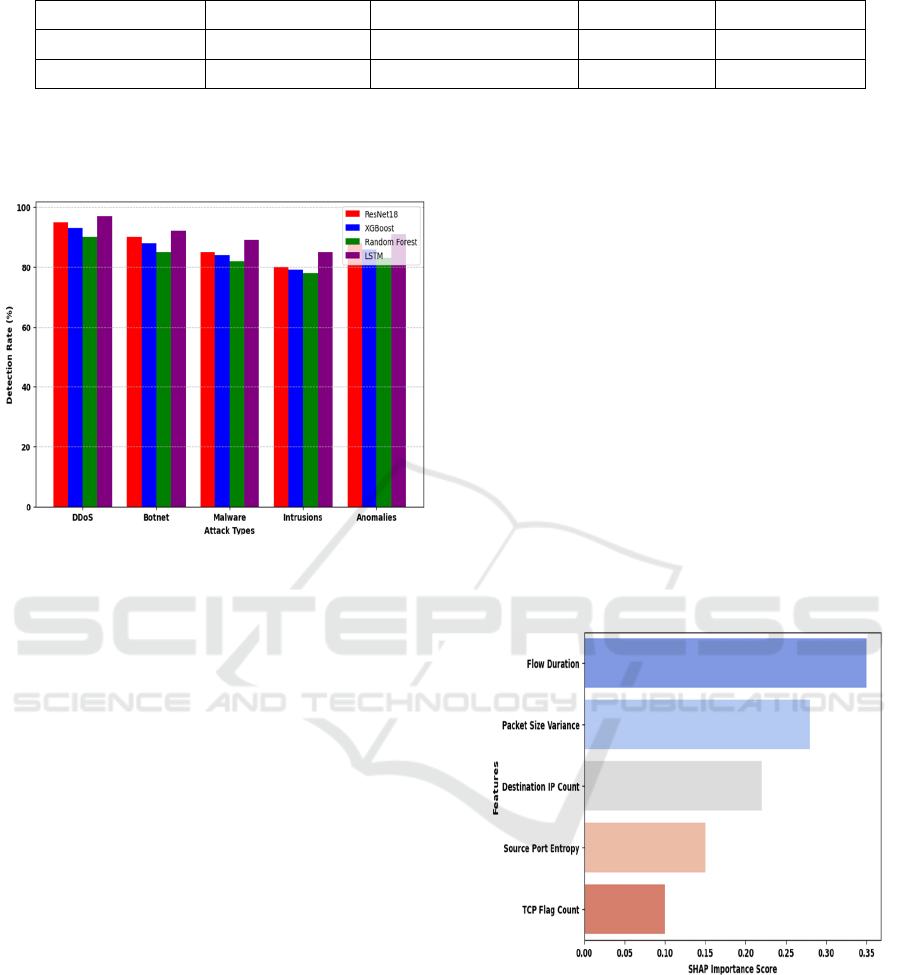
Figure 2 represents the detection rate of different
models for various attack types such as Resnet 18,
XGB, Random Forest and LSTM (Zhu et al., 2022).
Figure 2. Detection Rate of Different Models for Various
Attack Types.
4 FEATURE ENGINEERING AND
DATA PRE-PROCESSING
TECHNIQUES
Effective cybersecurity models depend on well-
optimized feature selection and pre-processing tech-
niques to improve detection accuracy and efficiency
(SeenaBinth, Jayasree 2024).
• Feature Extraction:Key traffic attributes
such as packet size, protocol types, and flow
duration are identified and extracted. These
features are crucial for to differentiate be-
tween normal and malicious network behav-
iour, enabling the model to detect attacks ac-
curately.
• Dimensionality Reduction: Principal Com-
ponent Analysis (PCA), t-Distributed Sto-
chastic Neighbour Embedding (t-SNE), and
Linear Discriminant Analysis (LDA) are
employed to reduce the number of features.
These methods help optimize computational re-
sources and improve model performance by
eliminating redundant or irrelevant data.
• Data Normalization and Standardiza-
tion:It is used to scale the data, ensuring that
all features contribute equally to the model's
learning process. Normalization and stand-
ardization help improve model convergence
and increase the accuracy of predictions.
• Synthetic Minority Oversampling
(SMOTE): SMOTE is used to address data
imbalance by generating synthetic samples
for underrepresented classes in training sets.
This technique helps ensure the model is not
biased towards the majority class, improving
detection performance for rare attack types.
• Feature Selection Techniques: Methods
like Recursive Feature Elimination (RFE)
and Mutual Information Gain are used to
identify the most relevant features for classi-
fication (Alrefaei, A., & Ilyas, M. 2024). By
eliminating irrelevant or redundant features,
these techniques enhance the model's effi-
ciency and accuracy in attack detection
(Panda et al).
Figure 3: Feature Importance in IoT Attack Detection
(SHAP).
Figure 3 represents the SHAP feature importance
graph highlights key network traffic features influ-
encing IoT security models. Flow Duration has the
highest impact, indicating prolonged malicious con-
nections in DDoS and botnet attacks. Packet Size
Variance detects irregular traffic patterns, often
linked to encryption-based evasion. Destination IP
Count helps identify scanning attacks by measuring
unique connections. Source Port Entropy signals port
ICRDICCT‘25 2025 - INTERNATIONAL CONFERENCE ON RESEARCH AND DEVELOPMENT IN INFORMATION,
COMMUNICATION, AND COMPUTING TECHNOLOGIES
346

scanning or evasive malware through randomness in
port selection. TCP Flag Count, though less impact-
ful, aids in detecting SYN floods in DDoS attacks.
These insights enhance IoT security models by pri-
oritizing the most relevant features for threat detec-
tion.
5 PERFORMANCE METRICS
AND BENCHMARK DATASETS
Accuracy, Precision, Recall, And F1-Score: These
metrics evaluate the model’s overall classification
performance. Accuracy measures the correct predic-
tions, while Precision and Recall assess how well the
model identifies true positives. The F1-score balanc-
es Precision and Recall, providing a single measure
of model efficiency.
False Positive Rate (FPR) and False Negative
Rate (FNR): These metrics help gauge the robust-
ness of detection. The FPR measures how often the
model incorrectly labels benign traffic as malicious,
while the FNR indicates how often the model fails to
detect actual attacks.
Execution Time and Scalability: These factors
evaluate how well the model performs in real-time
scenarios and how easily it can handle growing data
volumes. Faster execution time and good scalability
are crucial for effective deployment in large-scale
IoT environments.
Table 5: IoT Attack Types and Suitable Datasets.
Attack Type
Best Dataset
for Detection
DDoS (TCP, SYN,
HTTP Flood)
CIC DoS2019,
IoT-23
Botnet Attacks (Mirai,
Bashlite)
Bot-IoT, N-
BaIoT
Scanning Attacks (Port
Scan, Horizontal Scan
)
ToN_IoT,
UNSW-NB15
Data Poisoning Attacks
IoTID2020,
Ed
g
e-IIoTset
Evasion Attacks CICIoT2023
Table 5 represents the different types of cyberattacks
in IoT environments require specific datasets for
effective detection and model training. DDoS attacks
(TCP, SYN, HTTP Flood) are best analyzed using
datasets like CIC DoS2019 and IoT-23, which con-
tain large-scale attack traffic. Botnet attacks (Mirai,
Bashlite) are effectively studied using Bot-IoT and
N-BaIoT, which include real-world botnet behavior.
Scanning attacks (Port Scan, Horizontal Scan) re-
quire datasets such as ToN_IoT and UNSW-NB15,
which contain diverse scanning activities. Data poi-
soning attacks, where adversaries manipulate train-
ing data, are well-represented in IoTID2020 and
Edge-IIoTset. Lastly, evasion attacks, where attack-
ers attempt to bypass detection systems, are best
studied using the CICIoT2023 dataset. These da-
tasets provide high-quality labeled attack traffic,
enabling robust machine learning and deep learning
models for IoT security.
Table 6: Benchmark Datasets Used in IoT Attack Detec-
tion.
Dataset Purpose
Edge-IIoTset
Industrial IoT security da-
taset
CIC DoS2019
& IoT-23
DDoS attack detection da-
tasets
UNSW-NB15
& IoTID2020
Intrusion detection datasets
N-BaIoT2021
& CICIoT2023
Behavioral datasets for IoT
b
otnet detection
ToN_IoT&
Bot-IoT
Large-scale datasets for di-
verse IoT security evaluations
Table 6 represents various datasets to enhance IoT
security research, each tailored for specific attack
detection and evaluation. Edge-IIoTset is a special-
ized dataset designed for Industrial IoT (IIoT) secu-
rity, covering real-world threats in smart manufac-
turing and industrial automation. CIC DoS2019 and
IoT-23 focus on DDoS attack detection, providing
comprehensive traffic data to analyze large-scale
denial-of-service attacks. UNSW-NB15 and
IoTID2020 are primarily used for intrusion detec-
tion, containing a mix of normal and malicious net-
work behaviors. N-BaIoT2021 andCICIoT2023
serve as behavioral datasets for identifying IoT bot-
net attacks, enabling machine learning models to
distinguish between legitimate and compromised
device activities. Finally, ToN_IoT and Bot-IoT
arelarge-scale datasets covering a wide range of IoT-
based security threats, making them essential for
training and evaluating modern cybersecurity solu-
tions.
6 ATTACK DETECTION
Feature Importance.
Flow Duration and Packet Size Variance are the
most influential features for detecting IoT attacks
AI-Driven IoT Security: Unleashing Machine Learning and Deep Learning for Autonomous Threat Detection and Resilience
347

(Purnachandrarao et al.,2024) with TCP Flag Count
and Source Port Entropy also playing important
roles in identifying malicious behavior (Al-Sarem et
al., 2021).
Impact of XAI on Model Performance.
Without XAI, models may exhibit slightly higher
accuracy but lack transparency. With XAI, while
accuracy may decrease slightly (by about 0.5%),
security analysts will gain a better understanding and
trust in the AI’s decision-making process.
Preferred XAI Techniques for IoT.
SHAP and LIME are effective for explaining ML-
based Intrusion Detection Systems (IDS), while
Layer-wise Relevance Propagation (LRP) enhances
the interpretability of DL models used in IoT securi-
ty.
Table 7 represents the XAI methods to enhance
transparency in IoT security by making machine
learning (ML) and deep learning (DL) models more
interpretable. SHAP (Shapley Additive Explana-
tions) measures feature contributions, helping identi-
fy critical factors in attack detection. LIME (Local
Interpretable Model-agnostic Explanations) explains
specific attack instances, offering localized inter-
pretability. Feature Importance Analysis (using
Random Forest and XG-Boost) ranks key features,
guiding security teams in optimizing threat detec-
tion. Decision Tree Interpretability provides human-
readable rules, making attack classification transpar-
ent. Layer-wise Relevance Propagation (LRP) high-
lights critical input regions in DL models, improving
neural network-based intrusion detection. These
XAI techniques improve trust, compliance, and
cybersecurity model efficiency, making IoT security
more reliable.
Table 7: XAI Techniques Used in IoT Security.
XAI Method Purpose in IoT Security
SHAP (Shapley Additive
Explanations)
Measures feature contribu-
tion to attack detection
LIME (Local Interpretable
Model-agnostic Explana-
tions)
Explains model decisions
for specific attack instanc-
es
Feature Importance Analy-
sis (Random Forest, XG-
Boost)
Identifies the most signifi-
cant features in attack
detection
Decision Tree Interpretabil-
it
y
Provides human-readable
rules for detecting threats
Layer-wise Relevance
Pro
p
a
g
ation
(
LRP
)
Highlights important input
re
g
ions for DL models
7 CHALLENGES AND FUTURE
DIRECTIONS
Despite the progress in ML and DL for cybersecuri-
ty, several challenges continue to affect their effec-
tiveness:
• Computational Overhead: DL models of-
ten require substantial processing power,
which can strain system resources, especial-
ly in IoT environments with limited compu-
tational capacity (Shibi et al., 2022). The
high resource demand can lead to slower de-
tection times and reduced efficiency.
• Adversarial Attacks: ML models are vul-
nerable to adversarial attacks, where mali-
cious inputs are intentionally crafted to mis-
lead the model into making incorrect predic-
tions. This poses a significant risk to the re-
liability and security of IoT systems.
• Real-time Implementation: Many ML and
DL models struggle to operate efficiently in
dynamic IoT environments, where real-time
detection is critical. Models need to be opti-
mized to quickly process and respond to
threats as they occur, without compromising
performance.
• Data Privacy and Security: Decentralized
learning and data sharing across devices
raise concerns about data privacy and securi-
ty. Ensuring that sensitive information is
protected while still enabling effective mod-
el training is a major challenge (Shibi et al.,
2025).
• Explainability of AI Models: Complex DL
models, while powerful, are often seen as
"black boxes." This lack of transparency
makes it difficult to interpret how the mod-
els make decisions, complicating their use in
critical security applications where under-
standing model behavior is essential.
• Cross-Domain Adaptation: Many models
are tailored to specific IoT applications,
which limits their ability to generalize across
different domains. This challenge hinders
the widespread deployment of a single secu-
rity solution across various IoT environ-
ments.
• Scalability in Edge Computing: Develop-
ing lightweight, optimized models for edge
devices in IoT networks is crucial. These
devices often have limited processing capa-
bilities, so models must be designed to func-
tion effectively within these constraints, en-
ICRDICCT‘25 2025 - INTERNATIONAL CONFERENCE ON RESEARCH AND DEVELOPMENT IN INFORMATION,
COMMUNICATION, AND COMPUTING TECHNOLOGIES
348

suring scalability and efficiency.Future re-
search in IoT security should prioritize sev-
eral areas to address ongoing challenges:
• Federated Learning: This approach can
enhance privacy by allowing distributed
learning across devices without needing to
share sensitive data, thus preserving privacy
while improving model performance.
• Blockchain Integration: Incorporating
blockchain for secure authentication and en-
suring data integrity in IoT networks is vital
for creating trustworthy, tamper-resistant
systems.
• Lightweight DL Models: Developing mod-
els with reduced computational complexity
is essential for enabling real-time attack de-
tection in resource-constrained IoT envi-
ronments.
• Adversarial-Resilient AI Models: Re-
search should focus on creating ML models
that are robust to adversarial manipulations,
improving the resilience of IoT security sys-
tems against sophisticated attacks.
• Automated Threat Adaptation: Self-
learning models that can evolve and adapt to
emerging cyber threats will make IoT securi-
ty more dynamic and responsive to new at-
tack vectors.
• XAI for IoT Security: Enhancing the inter-
pretability of AI models will help security
experts trust the decision-making process,
making AI-driven systems more transparent
and reliable in IoT security applications
(Hussain et al., 2020).
8 CONCLUSIONS
The application of ML and DL for IoT attack detec-
tion has shown promising results in enhancing cy-
bersecurity (Sham et al., 2024). Traditional models
like decision trees and support vector machines have
proven effective in classifying cyber threats, while
DL models such as CNNs, LSTMs, and GANs offer
more robust detection capabilities. Hybrid models
and federated learning approaches provide scalable
and privacy-preserving solutions for securing IoT
networks. However, further research is required to
address challenges like computational efficiency,
real-time adaptability, and adversarial resilience.
Advancements in AI-driven cybersecurity solutions
will play a crucial role in safeguarding IoT ecosys-
tems against evolving cyber threats.
REFERENCES
Hammad, A.A., Falih, M.A., Abd, S.A., Ahmed, A.R.:
Detecting Cyber Threats in IoT networks: A ML ap-
proach. International Journal of Computing and Digi-
tal Systems. 17, 125 (2024).https://doi.org/10.12785/ij
cds/1571020041.
Manaa, M.E., Hussain, S.M., Alasadi, N.S.A., Al-
Khamees, N.H. a. A.: DDoS Attacks Detection based
on Machine Learning Algorithms in IoT Environ-
ments. INTELIGENCIA ARTIFICIAL. 27, 152–165
(2024).
https://doi.org/10.4114/intartif.vol27iss74pp152-165.
Aljabri, M., Shaahid, A., Alnasser, F., Saleh, A., Alomari,
D., Aboulnour, M., Al-Eidarous, W., Althubaity, A.:
IoT attacks detection using supervised machine learn-
ing techniques. HighTech and Innovation Journal. 5,
534–550 (2024). https://doi.org/10.28991/hij-2024-05-
03-01.
Charoenwong, N., Kosolsombat, S., &Ratanavilisagul, C.
(2024). Classification Attack on IoT Devices with Ma-
chine Learning. 2024 IEEE 9th International Confer-
ence on Computational Intelligence and Applica-
tions (ICCIA), 1117.https://doi.org/10.1109/ICCIA625
57.2024.10719134.
Berqia, A., Bouijij, H., Merimi, A., &Ouaggane, A.
(2024). Detecting DDoS Attacks using Machine
Learning in IoT Environment. 2024 International Con-
ference on Intelligent Systems and Computer Vision
(ISCV), 18.https://doi.org/10.1109/ISCV60512.2024.1
0620122.
Purnachandrarao, M., Sushma, K., Anantha, M., Reddy,
S., Nithin, M., &Ranjithkumar, V. Detecting Iot Bot-
net Attacks: A Machine Learning Paradigm. 2024 10th
International Conference on Communication and Sig-
nal Processing (ICCSP), 248-253.
https://doi.org/10.1109/ICCSP60870.2024.10543288.
Alshdadi, A., Almazroi, A., Alsolami, E., Ayub, N.,
&Lytras, M. (2024). Enhanced IoT Security for DDOS
Attack Detection: Split Attention-Based ResNeXt-
GRU Ensembler Approach. IEEE Access, 12, 112368-
112380.https://doi.org/10.1109/ACCESS.2024.344306
7.
Sham, S., Ishak, K., Razali, N., Noor, N., &Hasbullah, N.
(2024). IoT Attack Detection using Machine Learning
and DL in Smart Home. JOIV: International Journal
on Informatics Visualization.https://doi.org/10.62527/j
oiv.8.1.2174.
SeenaBinth, Jayasree: IoT attack detection using feature
selection and machine learning algorithms. 2024 IEEE
Recent Advances in Intelligent Computational Systems
(RICS).https://doi.org/10.1109/RAICS61201.2024.106
89827.
Alrefaei, A., & Ilyas, M. (2024). Using Machine Learning
Multiclass Classification Technique to Detect IoT At-
tacks in Real Time. Sensors (Basel, Switzerland), 24.
https://doi.org/10.3390/s24144516.
A, J., & A, M. (2023). A Novel Paradigm for IoT Securi-
ty: ResNet-GRU Model Revolutionizes Botnet Attack
Detection. Int. Journal of Advanced Computer Science
AI-Driven IoT Security: Unleashing Machine Learning and Deep Learning for Autonomous Threat Detection and Resilience
349

and Applications.https://doi.org/10.14569/ijacsa.2023.
0141231.
Al-Haija, Q., & Al-Dala'ien, M. (2022). ELBA-IoT: An
Ensemble Learning Model for Botnet Attack Detection
in IoT Networks. J. Sens. Actuator Networks, 11, 18.
https://doi.org/10.3390/jsan11010018.
Zhu, Z., Zhai, W., Liu, H., Geng, J., Zhou, M., Ji, C., &
Jia, G. (2022). Juggler-ResNet: A Flexible and High-
Speed ResNet Optimization Method for IDSs in Soft-
ware-Defined Industrial Networks. IEEE Transactions
on Industrial Informatics, 18, 4224-4233.
https://doi.org/10.1109/tii.2021.3121783.
Hussain, F., Abbas, S., Pires, I., Tanveer, S., Fayyaz, U.,
Garcia, N., Shah, G., & Shahzad, F. (2021). A Two-
fold Machine Learning Approach to Prevent and De-
tect IoT Botnet Attacks. IEEE Access, PP, 1-1.
https://doi.org/10.1109/ACCESS.2021.3131014.
Al-Sarem, M., Saeed, F., Alkhammash, E., & Alghamdi,
N. (2021). An Aggregated Mutual Information Based
Feature Selection with Machine Learning Methods for
Enhancing IoT Botnet Attack Detection. Sensors (Ba-
sel, Switzerland), 22.https://doi.org/10.3390/s2201018
5.
Panda, M, Mousa, A, Hassanien, A. Developing Efficient
Feature Engineering and Machine Learning Model for
Detecting IoT-Botnet Cyber Attacks. IEEE Access, 9,
91038-91052.
https://doi.org/10.1109/ACCESS.2021.3092054.
Alotaibi, B., & Alotaibi, M. (2020). A Stacked Deep
Learning Approach for IoT Cyberattack Detection. J.
Ssors, 2020, 8828591:18828591:10.https://doi.org/10.
1155/2020/8828591.
Hussain, F., Abbas, S., Husnain, M., Fayyaz, U., Shahzad,
F., & Shah, G. (2020). IoT DoS and DDoS Attack De-
tection using ResNet. 2020 IEEE 23rd International
Mul tto ic Conference (INMIC), 16.https://doi.org/10.
1109/INMIC50486.2020.9318216.
Shibi, R., Grace, E., Rashmi, G., &Ponkumar, D. (2022).
Finding the Productivity of Implementing IoT in Ma-
lawi and improve the usage of IoT devices to enhance
nation Building: A survey. Journal of Ubiquitous
Computing and Communication Technologies.
https://doi.org/10.36548/jucct.2022.2.004.
Shibi, S.R., Prabu, R.T.: Enhancing security and privacy
in healthcare IoT through Multi-Layered Security
Frameworks. SSRN Electronic Journal. (2025).
https://doi.org/10.2139/ssrn.5088965.
ICRDICCT‘25 2025 - INTERNATIONAL CONFERENCE ON RESEARCH AND DEVELOPMENT IN INFORMATION,
COMMUNICATION, AND COMPUTING TECHNOLOGIES
350
