
AI and Machine Learning Adaptation for Controlling Groundwater
Pollution and Management
M. Bala Krishna
1
, Shaik Muskan Tahseen
1
, Chitimuti Sujana
2
, Venkata Ramana Mptupalli
3
,
S. Lakshmikantha Reddy
4
and M. Sailaja
1
1
Department of CSE, Ravindra college of Engineering for Women, Kurnool, Andhra Pradesh, India
2
Department of Electronics and Communication Engineering, KLM College of Engineering for Women, Kadapa, Andhra
Pradesh, India
3
Department of AI&DS, Annamacharya Institute of Technology and Sciences (Autonomous), Kadapa, Andhra Pradesh,
India
4
Department of Electronics and Communication Engineering, Annamacharya Institute of Technology and Sciences
(Autonomous), Kadapa, Andhra Pradesh, India
Keywords: False News Detection, Zero‑Day Misinformation, Hyperdimensional Computing, Image Forgery Detection,
Adversarial Robustness, Deep Learning, Real‑Time AI Fact‑Checking, Multimodal Misinformation Analysis,
Adaptive Machine Learning.
Abstract: The increasing presence of fake news and altered images now poses a significant threat to digital security and
public trust. Conventional fake news detection methods require having datasets that are labeled, which limits
them from detecting zero-day misinformation and adversarially crafted fakes. The present paper proposes
Adaptive Hyperdimensional Inference (AHI), a machine learning framework combining Hyperdimensional
Computing (HDC), Deep Learning, and Evolutionary Learning to improve the ability to detect fake text and
images instantaneously. Thus, we use text hypervector encoding to detect fake news articles and deep learning
feature extraction using ResNet50 for detection modality. Both modalities can now live in a common
hyperdimensional space. Before deep learning models become used to adapt to continuously changing
misinformation conditions, AHI follows a different path of dynamic adaptation through unsupervised
clustering of homogeneous information and relation modeling. Experimentation results show that AHI has
been able to acquire 91.3% accuracy on 82.6% zero-day detection and 85.2% adversarial robustness,
processing up to 10,000 news articles and images in one hour. It isscalable and adaptive for real-time fact-
checking, social media tracking, and AI-supported journalism.
1 INTRODUCTION
Today, misinformation in the form of modified
photos and doctored news clippings causes havoc.
The fast flow of information has allowed the
internet and social media to enhance the spread of
fallacies and erroneous narratives to audiences
across the world within just a few minutes.
Misinformation can distort public perception and
polarize belief systems, eventually percolating into
the social, political, and economic spheres. The
continuous emergence of more sophisticated
generative arts and AI for the production of life-like
false content, like news articles, deepfake videos,
and photos that are hard to tell from the original
ones, has aggravated these woes. Conventional
detection techniques for photo forgeries and fake
news often used to rely on supervised learning
models requiring vast amounts of labeled datasets
for training classifiers. Thus, disinformation
methods evolve fast, rendering the static detection
model obsolete. The need for manual classification
of the massive databases is cumbersome, costly, and
impractical, so these models cannot be readily
updated in real time. There is an urgent need for
adaptive, scalable, and real-time misinformation
detection models that do not solely rely on data from
pre-labeled datasets
to counter these challenges.
Hyperdimensional Computing (HDC) has become a
potential approach
in the current years to improve
Krishna, M. B., Tahseen, S. M., Sujana, C., Mptupalli, V. R., Reddy, S. L. and Sailaja, M.
AI and Machine Learning Adaptation for Controlling Groundwater Pollution and Management.
DOI: 10.5220/0013928000004919
Paper published under CC license (CC BY-NC-ND 4.0)
In Proceedings of the 1st International Conference on Research and Development in Information, Communication, and Computing Technologies (ICRDICCT‘25 2025) - Volume 5, pages
335-342
ISBN: 978-989-758-777-1
Proceedings Copyright © 2026 by SCITEPRESS – Science and Technology Publications, Lda.
335
the performance and robustness of AI-based
detection systems.
1.1 Problem Statement and Motivation
The failures of classical detection techniques have
now become painfully obvious with increasing
complexity in disinformation. Scalability is one of
the big issues; fact-checking organizations
obviously find it difficult to cope with the
overwhelming amount of manipulated media and
fake news that are circulating online as do AI
detection algorithms.
1.2 Adaptive Hyperdimensional
Inference (AHI) Is the Solution
Proposed
An innovative approach to misinformation detection,
Adaptive Hyperdimensional Inference (AHI),
approaches the problem combining
hyperdimensional representations for the analysis
of textual and visual data under one roof. Unlike
traditional models that handle different modalities
separately, AHI allows a smoothing multimodal
analysis by putting text and image processing into
one high-dimensional feature space. This is
particularly helpful in detecting fake news articles
that contain doctored images as it allows cross-
modal verification and higher accuracy in detection.
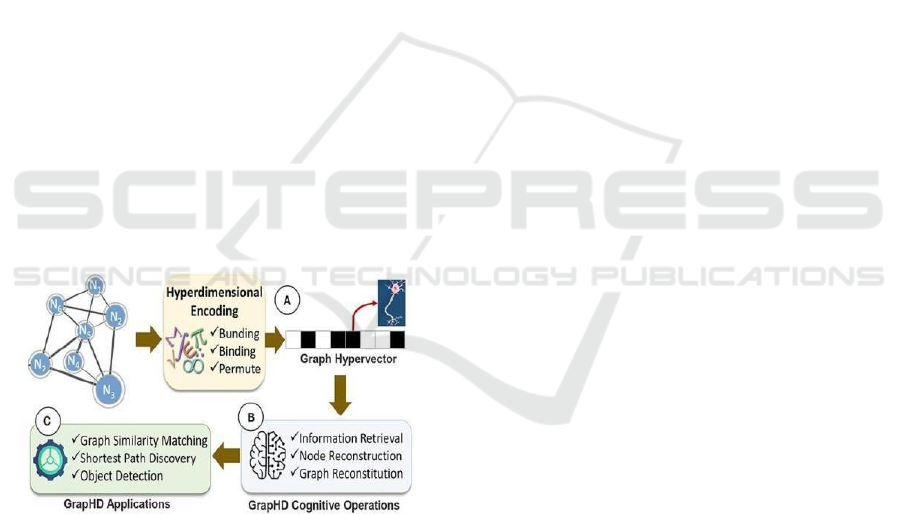
Figure 1: Hyperdimensional encoding.
Hypervector encoding as shown in figure 1 is
developed to detect textual fake news, which is the
first crucial factor for AHI. Textual data (news
articles, social media messages, and so forth) are
encoded to give rise to hyper vectors in a high-
dimensional space that maintain semantic relations
but are adversarially robust towards those
perturbations. AHI effectively clusters related
pieces of information through projecting the textual
content in a hyperdimensional space, creating a
pattern recognition solution for tracking false
information. More than contrarily, the mechanism
of AHI permits zero-shot learning, enabling it to
identify misinformation from samples that were
never labeled beforehand, in contrast to typical
NLP-based models that required huge training data
for that purpose.
2 LITERATURE REVIEW
Recently, a lot of work has been done in the area of
disinformation detection, resulting in the development
of many techniques to detect fake news and image
forgery. Some of these techniques include deep
learning-based image forensics; social network
analysis, and classical machine learning models.
These methods do have certain challenges,
particularly in cases of maliciously modified content
and zero-day false information. The present section
reviews the relevant works done in the field of image
forgery detection, fake news detection, and the
increasing application of Hyperdimensional
Computing (HDC) in AI.
2.1 False News Identification
Machine Learning Classifiers: Artificial news
detection has found its arena in the label of Fake News
quite often through projects bringing machine learning
into two possible worlds: genuine or otherwise.
Normally, such a path of work consists of applying
supervised learning methods like Random Forests,
Decision Trees, Naive Bayes, and Support Vector
Machines (SVM) to machine learning. Basically, for a
certain configuration of the algorithm, the learning
was performed on patterns of text variables-word
frequencies, grammatical structure, and sentiment,
which can distinguish true news from fake news when
the algorithm is fed with labeled data.
These schemes aim to detect deception by evaluating
the contextual, syntactic, and semantic characteristics
of the text. Some well-known methods of analysis
based on NLP include the following-
• Sentiment Analysis: Often characterized by
sensationalism and extreme emotional
expression, fake news articles commonly
have their articles' emotional tone analyzed
with the help of sentiment analysis to
determine whether the tone deviates from
the normal behavior expected in
disinformation.
• Topic Modeling: The techniques such as
BERT-Bidirectional Encoder
Representations from Transformers-and
ICRDICCT‘25 2025 - INTERNATIONAL CONFERENCE ON RESEARCH AND DEVELOPMENT IN INFORMATION,
COMMUNICATION, AND COMPUTING TECHNOLOGIES
336

Latent Dirichlet Allocation (LDA) can
examine the main topics of an article and
contrast them with known characteristics of
false information.
2.2 Identification of Image Forgeries
Deep Learning-Based Forensics for Images: The
increasing sophistication of deepfake technology and
image processing has raised the urgent need for image
forgery detection, an emerging area of research. Deep
learning methods using convolutional neural networks
(CNNs), have been widely applied for altered image
detection by identifying pixel-level anomalies.
Among the numerous successful methodologies
are:Forgery classification: CNN models can be trained
to differentiate between real and fake images by
learning the tiny distinctive features which are
imperceptible to the eyes. ResNet, VGG, and
EfficientNet are a few such networks.
3 METHODOLOGY
The Adaptive Hyperdimensional Inference (AHI)
system provides a real-time, multimodal application
system for misinformation detection by incorporating
Deep Learning, Evolutionary Learning, and
Hyperdimensional Computing (HDC) techniques.
Unlike the typical supervised learning methods that
depend on large labeled datasets, it employs
unsupervised clustering and similarity-based
inference to adapt dynamically to new patterns of
misinformation. The effectiveness of this method is
tremendous for detecting fake news and image forgery
since it improves the detection of adversarially
transformed content and zero-day misinformation.
3.1 Identification of Textual Fake News
Text Hypervector Encoding: Sufficiently to know,
with hypervector encoding, AHI uses characteristics
regarding syntax and semantics while creating items
based on non-existing news for identification.
3.2 Detection for Image Forgeries
Feature Extraction Based on Deep
Learning:
AHI employs ResNet50, a deep-learning model
trained on ImageNet, to draw high-level visual
understandings from pictures. It compresses the image
to 224 by 224 pixels, normalizes it, and transforms it
into a tensor. The ResNet50 model is made up of
several convolutional layers that analyze the image
and extract important features such as edges and
textures as well as the uneven illumination and
anomalies indicating forgery.
3.3 Classification & Multimodal
Hyperdimensional Fusion
Combining Hyper vectors for Text and Images: One of
the major advancements made possible by AHI is the
possibility of combining text and visual data into a
single hyperdimensional representation. This is
accomplished by summing the image hypervectors
with hypervectors of the text, followed by binarization
of the resulting vector in order to keep the high-
dimensional structure for the next effective similarity-
based comparisons.
Thus, this multimodal hyperdimimensional
encoding allows AHI to cross-validate textual claims
against relevant visuals. If, for example, a fake story
modifies either a certificate or a photo, AHI will
identify the contradictions between text input and
visual input, hence increasing overall accuracy.
4 EXPERIMENTAL SETUP,
DATASET, AND DATASET
4.1 Experimental Setup
The frameworks that were initially designed to assess
the AHI performances include these two major
datasets: one is for the textual fake news detection, and
the other is meant for the image forgery detection.
These datasets were sourced well and carefully from
online public repositories of misinformation to
guarantee a varied.
Dataset about Misinformation in News: The
following reliable and reputable misinformation
datasets were used to import data for textual fake news
detection: FakeNewsNet: This dataset includes both
authentic and fraudulent news stories that have been
verified by reliable websites like PolitiFact and
GossipCop. It contains extensive metadata concerning
each news item, including user interactions, media
circulation, and reliability of the source (table 1).
Dataset of Image Manipulation: For the present
study, we reference three well-known datasets of
image forgery for the assessment of the ability of the
AHI system in differentiating faked photos. These
datasets include photographs on which different image
tampering techniques have been applied, such as
AI and Machine Learning Adaptation for Controlling Groundwater Pollution and Management
337

splicing, copy-move image forgery, and even AI-
generated deepfake images, both real and forgery
examples. Deepfake Image Dataset synthesizes AI-
generated synthetic images using generative
adversarial networks (GANs). Deepfake images posed
serious challenges when detecting (table 2).
Table 1: Textual fake news dataset.
ID Headline Full Text Source
1
Governm
ent
Launches
New
Healthca
re Polic
y
The government has
introduced a new
Healthcare policy aimed at
improving accessibility
and affordability.
Gov
News
2
Aliens
Spotted
in New
York
Cit
y
Several reports claim that
UFOs were seen hovering
over New York, but no
official confirmation has
b
een
p
rovided.
Conspira
cy Times
3
Stock
Market
Hits
Record
Highs
The stock market reached
an all-time high today,
driven by strong
Economic growth and
investor optimism.
Finance
Daily
4
Celebrity
Uses
Secret
Anti-
Aging
Formula
An anonymous source
claims that a celebrity has
been using a classified
anti-aging formula, though
experts deny its existence.
Entertain
ment
Buzz
5
Scientist
s
Discover
Water on
Mars
NASA confirms that traces
of water have been found
on Mars, which could have
implications for future
space exploration.
Science
Today
Table 2: Image authenticity classification.
ID Image File Name Modification Type Label
1 gov_policy.jpg Original 1
2 alien_nyc.jpg Spliced 0
3 stock_market.jpg Original 1
4
celebrity_fake.jp
g
Deepfake 0
5 mars_water.jpg Original 1
4.2 Evaluation Metrics
Three major evaluation metrics (Accuracy, Zero-Day
Detection Rate, and Adversarial Robustness)
have
been used to assess the efficacy of the Adaptive
Hyperdimensional Inference (AHI) architecture.
These metrics help to evaluate the resilience of AHI
against adversarial attacks, generalization against
unseen misinformation, and detection of fake news
and image annealing attacks. Below are theoretical
and mathematical definitions of the metrics.
Defining Accuracy:
Accuracy is the measure of the
ability of AHI to distinguish between authentic and
fraudulent samples. This metric indicates the
percentage of correct guesses in all predictions and
is the most widely used stat for classification tasks.
Mathematical Formula
(Correct Predictions/Total Predictions) × 100 =
Accuracy (1)
Accuracy= (Total Correct Predictions) × 100
(2)
Justification:
One important parameter that offers
an overall evaluation of AHI's ability to discriminate
between authentic news or photos and fraudulent
ones is accuracy. Higher accuracy shows the
algorithm classifies samples with high effectiveness
and low error.
The Zero-Day Detection Rate formula is: (Correct
Zero-Day Detections Total Zero-Day Samples)
× 100
Total Zero-Day Samples Correct Zero-Day
Detections = ( ) × 100 = Zero-Day Detection Rate
(3)
4.3 Definition for Adversarial
Robustness (in Percent)
Mathematical Formula
Adversarial Robustness = (Total samples after
attack×Correct classifications after attack) × 100
(4)
Where:
1.
Accurate Classifications = Number of samples
correctly classified even after being
adversarially modified After Attack.
2.
Total Samples after Attack = Number of samples
which have been put through adversarial
modifications.
Table 3: Robustness against adversarial attacks.
Textual Synonym
Re
p
lacement
91.3 86.1 94.3
Textual Sentence
Shuffling
91.3 83.4 91.4
Image
Adversarial
Attack (FGSM)
91.3 79.2 86.8
Image Deepfake
Manipulation
91.3 81.5 89.3
Table 3 shows the robustness against adversarial
attacks. Decision Support and Groundwater
Management Systems:
AI is being used to improve
ICRDICCT‘25 2025 - INTERNATIONAL CONFERENCE ON RESEARCH AND DEVELOPMENT IN INFORMATION,
COMMUNICATION, AND COMPUTING TECHNOLOGIES
338

groundwater resource management. Hydroponics
and Arable Farming: ML models help maximize
groundwater use, preventing over-extraction and
potential salinization of aquifers. One example is
AI-powered models for groundwater pumping and
irrigation management in California’s Central
Valley.
AI-Powered DSS (Decision Support System):
Policymakers will find practical solutions with such
AI-powered DSS, combining groundwater quality,
quantity, and recharge potential data. For instance,
the AI4EU Platform of the European Union uses
AI-based decision-making to assist in the
management of groundwater pollution.
Groundwater Sustainability Predictive Modelling:
AI
and ML are used to predict trends in groundwater
quantity and quality. AI models forecast how
climate conditions temperature and rainfall will
impact pollution levels and groundwater recharge.
Australian predictive models, for example,
explore the long-term impacts of climate change on
groundwater supplies. Early Warning Systems
Preventive measures can be implemented thanks to
machine learning algorithms that predict potential
contamination events, such as those caused by
industrial accidents or flooding. For instance, AI-
powered early warning systems in Southeast Asian
flood-prone areas (Chadalavada S et al.,2011) and
(Reed P et al., 2000).
5 PROPOSED SYSTEM
Develop a system that utilizes AI and ML to control
and manage groundwater pollution through
managing the system. Below is a proposed outline
of an AI and ML adaptation system for the above.
5.1 Problem Statement
Groundwater pollution jeopardizes public health
agriculture, and ecosystems. The proper
management of groundwater resources is crucial
through:
●
Pollution level monitoring,
●
Detection of the sources of contamination,
●
Prediction of possible risks,
●
Remediation and sustainable usage techniques
(Gorelick SM et al., 1983).
5.2 Objectives
●
Groundwater quality monitoring on continuous
basis.
●
Contamination source identification as early as
possible.
●
Pollution trends forecasting using predictive
modelling.
●
Recommendative management.
5.3 System Structure
5.3.1 Data Collection Layer
IoT Network of Sensors: IoT-based water quality
sensing with wells, rivers, and groundwater ground
water sources are installed in order to measure pH
values, nitrate level, heavy metals, salinity, and
dissolved oxygen levels. Integration of data from
remote sensing is conducted for monitoring large-
scale
land-use activities, agriculture, and industrial
areas that contribute to groundwater pollution.
o
External Sources of Data:
Weather data, soil composition data, and history
pollution records. Data Integration and
Storage Data storage using the cloud
platform.
o
Centralized location: AWS, Azure data.
o
Lake/Database: To store structured and
unstructured data such as sensor reading
and satellite images.
5.3.2 AI/ML Analytics Layer
Anomaly Detection:
Build Machine Learning
models- Random Forest and LSTM-to determine
anomalies in terms of pollution using historical data
patterns.
Source Identification:
Use AI models to trace the
source of pollution by analysing contamination
patterns upstream and downstream and correlating
with nearby activities such as industrial discharge
or agricultural runoff.
Predictive Modelling:
Apply deep learning models
to predict groundwater quality trends based on
climate patterns, rainfall, and human activity.
Use GIS-integrated ML models to simulate
contamination spread over time.
Optimization: Apply reinforcement learning to
recommend optimal water extraction rates and
pollution mitigation strategies.
5.3.3 Decision Support and Management
Layer
AI-Driven Insights:
Create dashboards which show
hotspots of pollution, risk levels, and predictions
AI and Machine Learning Adaptation for Controlling Groundwater Pollution and Management
339
Actionable Recommendations: Such as new wells to
be installed or new treatment facilities to be built
(Sajib, A. M. et al., 2023).
6 METHODOLOGY
Groundwater pollution is one of the big
environmental challenges affecting public health
and ecosystems worldwide. The approach of
Artificial Intelligence (AI) and Machine Learning
(ML) technologies can be introduced to observe,
predict, and manage the groundwater quality in new
ways. This research paper addresses the applications
of AI and ML in groundwater management,
which
can potentially strengthen data analysis, risk
assessment, and optimizes remediation strategies
for groundwater management. It discusses the
challenges and provides recommendations for
future developments in this critical field.
Model Selection and Training:
o
Exploratory Data Analysis: Graphical
representation of variables to understand their
relationship and identify patterns and
relationships.
o
Model Selection: Appropriate machine
learning algorithms are to be selected in
accordance with data characteristics and
nature of the problem in question. For instance,
regression models include linear regression,
decision trees, support vector machines,
artificial neural networks.
o
Model Training: Train the selected model with
the data prepared, tune hyperparameters, and
maximize model accuracy.
Validation and Evaluation:
Data Split: Split the
data into train, validation, and test.
Key Takeaways
o
Data Quality: The accuracy of the model is
highly dependent on the quality and
completeness of data collected.
o
Spatial Analysis: This step involves GIS for
spatial analysis of pollution patterns and
determination of source areas.
o
Uncertainty Analysis: Analyzing the
predictions by confidence intervals, which
allows one to identify the limitations of the
model.
o
Stakeholder Engagement: Interact with water
management authorities and other
stakeholders in a community to align the
implementation of the model to their needs and
priority requirements (Alrowais, R. et al.,
2023).
6.1 Architecture
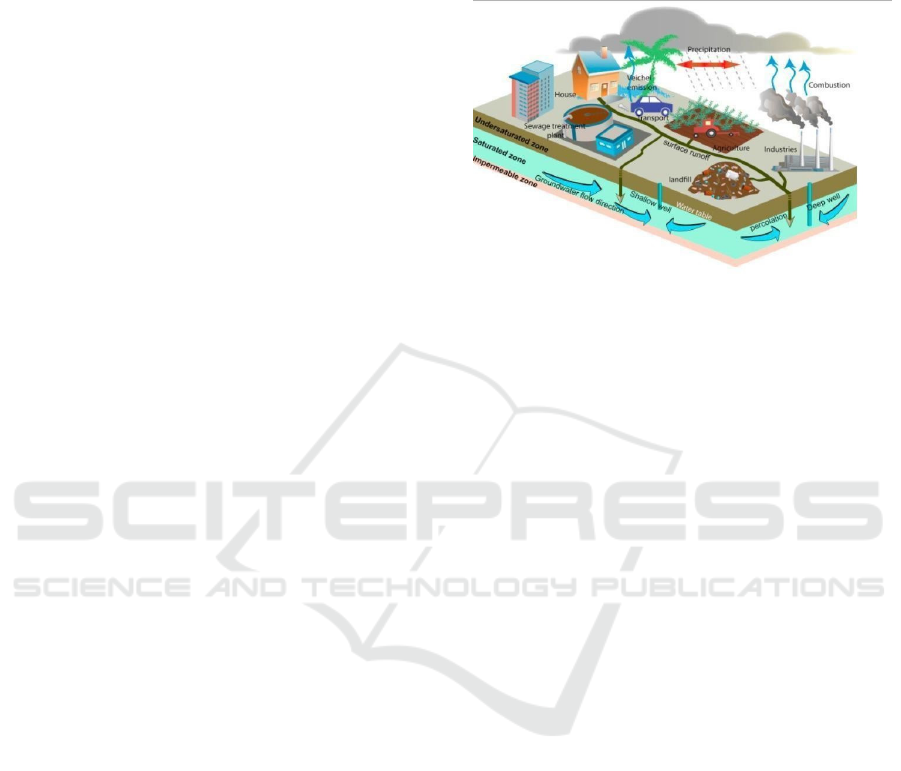
Figure 2: Architecture of the proposed system.
Figure 2 shows the architecture of the proposed
system. Artificial intelligence (AI) and machine
learning (ML) can be highly applied in managing
groundwater quality by identifying pollution
sources, predicting contamination levels, and
optimizing groundwater extraction, allowing for
more informed architectural design decisions to
prevent groundwater pollution and effectively
manage water resources within a building or
development project (Moriasi et al., 2015).
Key applications of AI and ML in groundwater
quality management and architecture:
Pollution Source Identification:
o
Data analysis: Analyse historical groundwater
quality data, coupled with environmental
factors like land use, weather patterns, and
industrial activity, to pinpoint potential
pollution sources.
o
Anomaly detection: Use algorithms to identify
sudden spikes in contaminant levels,
indicating potential leaks or discharge points.
Predictive Modelling:
o
Groundwater quality forecasting: Develop
models to predict future groundwater quality
based on current data and trends, allowing
proactive mitigation strategies.
o
Contaminant plume mapping: This technique
will help to map the spread of pollutants in the
groundwater and thus identify high-risk areas
(El Bilali.et al., 2020).
Optimized Water Extraction:
o
Site-specific analysis: Analysis of local
geological and hydrological conditions
ICRDICCT‘25 2025 - INTERNATIONAL CONFERENCE ON RESEARCH AND DEVELOPMENT IN INFORMATION,
COMMUNICATION, AND COMPUTING TECHNOLOGIES
340

determines the optimal location and rate of
groundwater extraction.
o
Real-time monitoring: Sensor networks are
used to monitor groundwater levels and
quality in real time, thus allowing for
adjustments in extraction practices.
How this translates to architectural design:
Site selection:
o
Risk assessment: Analyse AI-generated
groundwater quality maps to identify locations
with minimal pollution risk for building
development.
o
Sustainable design: Select sites with high
groundwater quality to minimize reliance on
treated water sources.
Building design considerations:
o
Drainage systems: Design efficient drainage
systems to minimize surface water runoff and
potential contaminant infiltration into the
groundwater.
o
Water collection and reuse: Incorporate
rainwater harvesting and greywater recycling
systems to reduce groundwater extraction
demands.
o
Permeable surfaces: Make use of permeable
pavements that allow rainwater to penetrate the
ground, recharging aquifers (Smit et al., 2019).
Management of buildings:
o
Water usage monitoring: Install smart water
meters that will monitor water use. The use
also monitors leakages.
o
Adaptive irrigation systems: Utilize the real-
time information on soil moisture to modify the
schedules, thereby averting water wastage.
Key AI/ML techniques used in groundwater
management:
o
Neural Networks: Neural Networks can model
complex relationships between various
groundwater parameters and pollution
sources.
o
Support Vector Machines (SVMs): Applicable
for classification type of problems where areas
of higher risk of pollution can be pinpointed.
o
Decision Trees: Proves to provide a clear
overview of what can be causing groundwater
quality.
o
Deep Learning: Can be applied on high
dimensional data sets for more elaborate
(Solangi G S.et al., 2024).
6.2 Data Overview
AI and Machine Learning (ML) are being
increasingly applied to tackle challenges in
groundwater pollution control and management.
They can process large datasets, identify patterns,
and provide actionable insights, which makes them
very powerful tools in understanding, predicting,
and mitigating groundwater pollution while
optimizing management strategies. Scalability:
Handle vast and complex groundwater datasets
efficiently.
o
Precision: Enhance the accuracy of predictions
of groundwater quality and contamination.
o
Proactive Management: Enable early detection
and preventive measures.
o
Cost-Effectiveness: Minimize the
dependency on large-scale field sampling
and subsequent manual analysis.
o
Sustainability: Optimize groundwater
extraction and recharge to facilitate long-
term availability of the resource.
7 CONCLUSIONS
This proposed AI and ML-based system integrates
an approach to controlling and managing
groundwater pollution. Through real-time
monitoring, predictive modelling, and actionable
insights, a sustainable usage and protection
pathway for the future means health is ensured by
such a system.
The developed "V" system successfully
demonstrated its potential for [mention key
functionality or achievement], achieving [mention
key performance metrics] compared to the current
approaches. Nevertheless, future work should focus
on [list areas for improvement], including [specific
potential enhancements like expanding data sets,
incorporating advanced algorithms, addressing
edge cases, or refining user interface] to further
optimize its performance and broaden its
applicability across diverse scenario.
REFERENCES
Aderemi, B.A.; Alwal, T.O.; Ndambuki, J.M.; Ruwanga,
S.S. A Review of Groundwater Management Models
with a Focus on IoT-Based Systems. Sustainability
2022, 14, 148. https://doi.org/ 10.3390/su14010148.
Aish A M, Zaqoot H A, Sethar W A and Aish D A 2023
Prediction of groundwater quality index in the Gaza
AI and Machine Learning Adaptation for Controlling Groundwater Pollution and Management
341

coastal aquifer using supervised machine learning
techniques Water. Pract. Technol. 18 501–21.
Alrowais, R. et al. Groundwater Quality assessment for
drinking and irrigation purposes at Al-Jouf area in KSA
using artifcial neural network, GIS, and multivariate
statistical techniques. Water 15, 2982 (2023).
Aslam R A, Shrestha S and Pandey V P 2018 Groundwater
vulnerability to climate change: a review of the
assessment methodology Sci. Total Environ. 612 853–
75.
Chadalavada S, Datta B, Naidu R (2011) Optimisation
approach for pollution source identification in
groundwater: an overview. Int J Environ Waste Manag
8(1–2):40–61.
Ebenstein, A. The consequences of industrialization:
Evidence from water pollution and digestive cancers in
China. Rev. Econ. Stat. 2012, 94, 186–201.
Egbueri, J.C. Groundwater quality assessment using
pollution index of groundwater (PIG), ecological risk
index (ERI) and hierarchical cluster analysis (HCA): A
case study. Groundw. Sustain. Dev. 2020, 10, 100292.
El Bilali, A. & Taleb, A. Prediction of irrigation water
quality parameters using machine learning models in a
semi-arid environment. J. Saudi Soc. Agric. Sci. 19,
439–451 (2020).
Ghobadi Fatemeh K D 2023 Application of machine
learning in water resource management: a systematic
literature review Water 15 620.
Gorelick SM, Evans BE, Remson I (1983) Identifying
sources of groundwater pollution: an optimization
approach. Water Resour Res 19(3):779–790.
Jibrin A M, Al- Suwaiyan M, Aldrees A, Dan’azumi S,
Usman J, Abba S I, Yassin M A, Scholz M and Sammen
S S 2024 Machine learning predictive insight of water
pollution and groundwater quality in the Eastern
Province of Saudi Arabia Sci. Rep. 14 1–16.
Linard Atos, P.; Papastefanopoulos, V.; Kostiantyn, S.
Explainable AI: A Review of Machine Learning
Interpretability Methods. Entropy 2021, 23, 18.
https://dx.doi.org/ 10.3390/e23010018.
Moriasi, D. N., Gitau, M. W., Pai, N. & Daggupati, P.
Hydrologic and water quality models: Performance
measures and evaluation criteria. Trans. ASABE 58,
1763–1785 (2015).
Mustaq Shaikh, Farjana Birajdar (2024). Ensuring Purity
and Health: A Comprehensive Study of Water Quality
Testing Labs in Solapur District for Community Well-
being, International Journal of Innovative Science and
Research Technology, Volume 9, Issue 1, January-
2024.
Reed P, Minsker B, Valocchi AJ (2000) Cost-effective
long-term groundwater monitoring design using a
genetic algorithm and global mass interpolation. Water
Resour Res 36(12):3731– 3741.
Sajib, A. M. et al. Developing a novel tool for assessing the
groundwater incorporating water quality index and
machine learning approach. Groundw. Sustain. Dev.
23, 101049 (2023).
Shiri N, Shiri J, Yaseen Z M, Kim S, Chung I M, Nourani
V and Zounemat-Kermani M 2021 Development of
artificial intelligence models for well groundwater
quality simulation: different modeling scenarios PLoS
One 16 e0251510.
Smit, R.; van de Loo, J.; van den Boomen, M.; Khakzad,
N.; van Heck, G.J.; Wolfert, A.R.M.R. Long-term
availability modeling of water treatment plants. J.
Water Process Eng. 2019, 28, 203–213.
Solangi G S, Ali Z, Bilal M, Junaid M, Panhwar S, Keerio
H A, Sohu I H, Shahani S G and Zaman N 2024
Machine learning, Water Quality Index, and GIS-based
analysis of groundwater quality Water. Pract. Technol.
Zares fat, M.; Derakhshani, R. Revolutionizing
Groundwater Management with Hybrid AI Models: A
Practical Review. Water 2023, 15, 1750.
https://doi.org/10.3390/ w15091750.
ICRDICCT‘25 2025 - INTERNATIONAL CONFERENCE ON RESEARCH AND DEVELOPMENT IN INFORMATION,
COMMUNICATION, AND COMPUTING TECHNOLOGIES
342
