
Waste Classification Using Machine Learning Models: A
Comparative Study
M. S. Minu, Varshitha Priya Kasa, Harshita Ketharaman, Varun Mandepudi,
Nirmal K. and Shreyan Krishnaa
Department of Computer Science Engineering, SRM Institute of Science & Technology, Ramapuram, Chennai, Tamil Nadu,
India
Keywords: Waste Management, Waste Classification, Environmental Sustainability, Convolutional Neural Networks
(CNN), Support Vector Machine (SVM), Image Classification.
Abstract: Waste Management is a serious issue and demands the world’s attention today as it plays an important role in
maintaining environmental sustainability. Segregation of waste is one of the primary components of waste
management. Accurate classification of waste gives room for improving the efficiency of the process of
recycling by maximizing material recovery, reducing contamination during the process of recycling, and most
importantly, decreasing the amount of mismanaged waste, especially hazardous wastes. Proper waste
management has not only contributed to positive environmental impacts and social benefits but has also
helped nations economically. With water treatment facilities saving on operational costs and revenue being
generated by the reselling of recycled materials, a study on automatic waste segregation is useful in tackling
the said challenges and moving towards a cleaner society. In this study, we propose a comparison between
the performance of machine learning models for classifying waste images using the Trash Net dataset. We
compared the Convolutional Neural Network (CNN), and Support Vector Machine (SVM) classifiers using
features from MobileNetV2, with two models of transfer learning: MobileNetV2 and ResNet50.
1 INTRODUCTION
Waste management is a global concern, and is
expected to rise by approximately 70% in 2050 due
to high growth in urbanization and population
growth. Therefore, efficient segregation of wastes
provides sustainable recycling, helps to minimize the
reliance on landfills, and decreases greenhouse gas
emissions. Conventional waste classification is a
labour-consuming process. Additionally, the manner
applied here is highly inefficient and is more prone to
contamination which can further decline the quality
of the recycled materials. With improved awareness
of sustainable environments, effective classification
and recycling of waste are now high subjects of
research and development. Artificial intelligence (AI)
has recently become a transformative waste
management technology, allowing for rapid
improvements in sorting accuracy and operational
efficiency R. Kumar et al., 2021. Specifically, deep
learning models have exhibited a tremendous
capacity in complex visual recognition tasks and,
thus, can be used for waste classification from images
N. Yadav et al., 2023. Automated waste classification
based on ML seems to be a promising solution to
these issues by making it possible to accurately and
efficiently sort waste. S. Khana et al., 2021 ML
image-based classification models help optimize
recycling workflows and enhance environmental
sustainability. Recent studies have explored various
architectures of ML in waste classification. CNNs and
transfer learning models were found to provide good
accuracy in image classification tasks A. Thompson
et al., 2022. J. Singh et al., 2022, It has been observed
that deep CNNs surpass other algorithms in feature
extraction related to image data, including closer
differences between variants like plastics and paper
with high Accuracy.
However, the question of how this can be done in
practice where lighting, background, and condition of
waste can create performance issues still pertains.
The need, therefore, is to use models that generalize
well across a very large range of conditions.
308
Minu, M. S., Kasa, V. P., Ketharaman, H., Mandepudi, V., K., N. and Krishnaa, S.
Waste Classification Using Machine Learning Models: A Comparative Study.
DOI: 10.5220/0013927500004919
Paper published under CC license (CC BY-NC-ND 4.0)
In Proceedings of the 1st International Conference on Research and Development in Information, Communication, and Computing Technologies (ICRDICCT‘25 2025) - Volume 5, pages
308-315
ISBN: 978-989-758-777-1
Proceedings Copyright © 2026 by SCITEPRESS – Science and Technology Publications, Lda.
C. Zhao et al., 2022, Scientists have now started
to turn towards techniques of transfer learning which
leverage pre-trained models with an expectation of
improving classification on new domains without
vast amounts of labeled data. For example, M. S.
Patel et al., 2020., the success prospects of
MobileNetV2 and ResNet50 have been
demonstrated, especially for better generalization of
novel data, rapid image processing, and possible
applications in real-time applications.
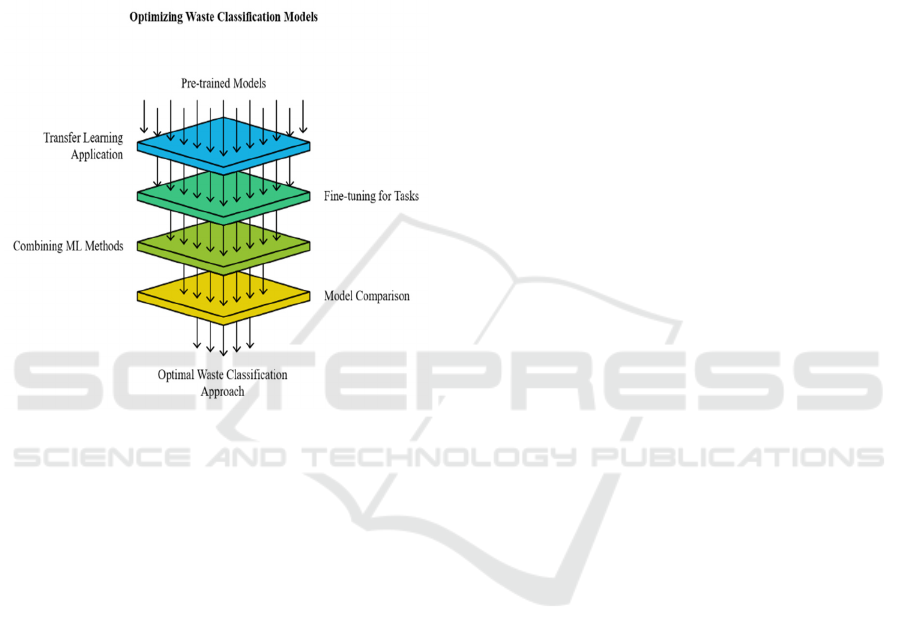
Figure 1: Optimizing Waste Classification Models.
Further, they can be fine-tuned to perform the task
of waste classification so that predictions can be made
more accurately with less computational overhead. In
addition to this, research on how to achieve a good
trade-off between accuracy and computational
efficiency is made by bringing together traditional
ML methods like SVMs with deep learning feature
extractorsB. Lee et al., 2020. It also enhances the
model's interpretability and brings down the
processing demand for real-time applications P. Li et
al., 2023. Our proposed study aims to identify the best
approach towards the classification of waste samples
on the Trash Net dataset by comparing different
performances of CNNs, MobileNetV2, ResNet50,
and SVM with feature extraction.
2 RELATED WORKS
Artificial Intelligence and Machine Learning have
been of great interest in research in models that can
classify waste correctly. It is with this that significant
work has recently been devoted to demonstrating the
efficacy of deep learning-based classification of
images via methods such as CNNs. For example,
Kumar and Verma gave a review of AI-based
approaches in waste management, particularly CNNs,
as they can be highly effective on image data due to
their ability to learn sophisticated patterns. Yadav et
al. compared deep learning models to classify waste
material and concluded that architectures such as
ResNet and DenseNet can achieve good accuracy,
particularly in finding the difference between visually
similar materials. Such works highlight future uses of
CNNs in environmental applications and emphasize
that appropriate identification of waste is a critical
aspect of increasing recycling efficiency.
Transfer learning also emerges as a very important
technique in waste classification. Models pre-trained
on large datasets can be fine-tuned using minimal data
exclusively for waste tasks. Singh used transfer
learning along with MobileNetV2 and achieved an
excellent level of accuracy and reduced training time,
suitable for real-time classification, especially in
resource-constrained environments. Zhao and Chen
further elaborated on this with methods that applied
transfer learning techniques to improve the
performance of models used on waste images. They
showed that training models pre-trained on ImageNet
and fine-tuning on smaller datasets can even
significantly enhance accuracy for challenging,
varied images of waste. Such studies demonstrate the
flexibility of transfer learning when addressing the
limitations of data and adapting high-performing
models to niche applications.
Another region of study has been the merging of
traditional machine learning techniques with CNNs to
be more efficient and interpretable. Li and Zhang
studied the merging of SVMs with CNN feature
extraction for waste classification with computational
efficiency and classification accuracy. Hybridization
in the system allows it to tap into CNN's ability to
draw features while simplifying the nature of the
classification task through an SVM. Such studies
prove that hybrid models are suitable for
classification without involving a large number of
computational resources. These would provide ample
opportunities for the implementation of proposed
solutions in real-world environments that are, in most
cases, characterized by processing power limitations.
3 PROPOSED WORK
This work attempts comparative analysis among
different machine learning methods for waste
classification on the TrashNet dataset. The main
Waste Classification Using Machine Learning Models: A Comparative Study
309
objective of this study is to assess the accuracy and
efficiency of different models and identify the best
one for practical implementation in automated waste
management systems. The complete workflow
consists of preparing the dataset, feature extraction,
model training, and evaluation. This particular work
attempts to address a comparative analysis of various
machine learning methods in waste classification,
where the TrashNet dataset has served as the research
material. The prime objectives of this research would
be to assess the accuracy and efficiency of different
models and ascertain the most suitable model for real-
life deployment into automated waste management
systems. These processes include dataset preparation,
feature extractions, model training, and evaluation.
This study attempts a comparative analysis of
different machine-learning methods for waste
classification using the TrashNet dataset. The main
intention of this research is to evaluate the accuracy
and efficiency of various models and to identify the
best-fit model for real-world deployment into
automated waste management systems. The
processes include dataset preparation, feature
extraction, model training, and evaluations.
3.1 Proposed Model Architecture
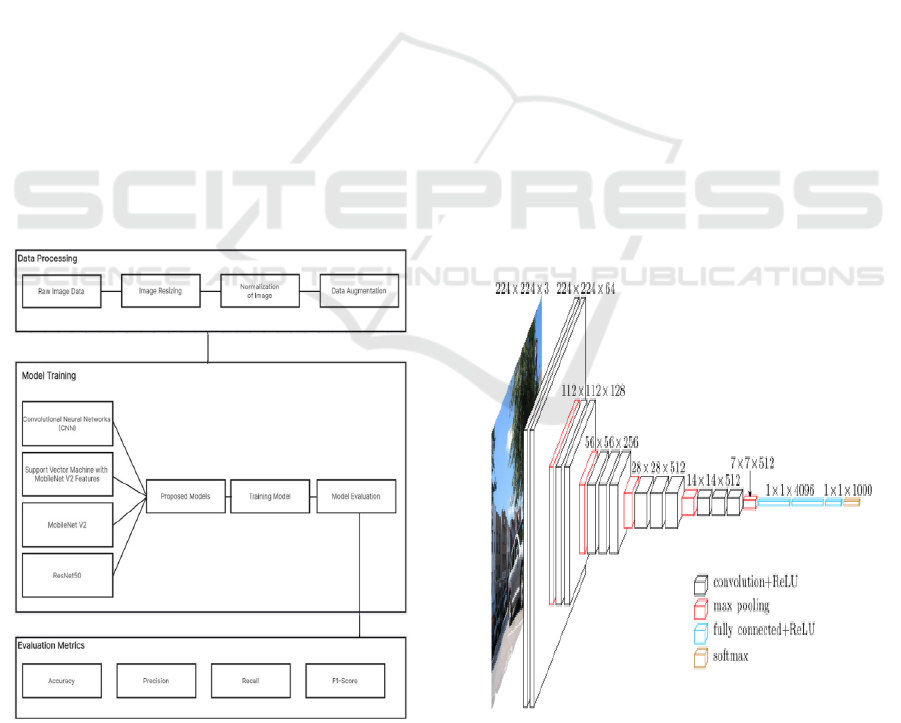
Figure 2 Shows the Proposed Model Training and
Evaluation Pipeline
.
Figure 2: Proposed Model Training and Evaluation
Pipeline.
3.1.1 Support Vector Machine (SVM) Using
MobileNetV2 Features
This is a lightweight convolutional neural network,
MobileNetV2, which is used as a feature extractor.
Very high-level features from the last convolutional
layer of MobileNetV2 were fed into the classifier
SVM.
3.1.2 Convolutional Neural Network (CNN)
Custom CNN architecture for the following layers:
The architecture of the convolutional neural network
(CNN) used in this study is illustrated in the Figure
3.
Convolutional Layer: It was designed to have three
convolutional layers with 32, 64, and 128 filters, with
ReLU activation following each layer.
Pooling Layer: Max-pooling layers were used after
each of the convolutional blocks to reduce
dimensionality.
Fully Connected Layer: There are two dense layers:
one with 256 neurons, and another with 64 neurons.
A dropout technique is provided to prevent
overfitting.
Output Layer: A softmax layer, with six neurons
assigned to it (for each of the classes).
Figure 3: Architecture of a Convolutional Neural Network
(CNN).
ICRDICCT‘25 2025 - INTERNATIONAL CONFERENCE ON RESEARCH AND DEVELOPMENT IN INFORMATION,
COMMUNICATION, AND COMPUTING TECHNOLOGIES
310

Algorithm:
Input: Preprocessed dataset X={x1,x2,...,xN}
X = \{x_1, x_2, ..., x_N\}X={x1,x2,...,xN},
corresponding labels Y={y1,y2,...,yN}
Y = \{y_1, y_2, ..., y_N\}Y={y1,y2,...,yN}.
Output: Fine-tuned ResNet50 model and predictions.
1. Load ResNet50 pre-trained on ImageNet.
o Retain the convolutional base.
o Replace the classification head with:
• GlobalAveragePooling2D.
• Dense layer (ReLU activation).
• Output layer (Softmax activation).
2. Freeze convolutional base.
3. Compile the model:
o Loss function = Categorical Cross-
Entropy.
o Optimizer = Adam (learning rate =
10−410^{-4}10−4).
o Metrics = Accuracy.
4. While e≤MaxEpochse \leq
MaxEpochse≤MaxEpochs:
o Train on Xtrain,YtrainX_{train},
Y_{train}Xtrain,Ytrain.
o Validate on Xval,YvalX_{val},
Y_{val}Xval,Yval.
o Gradually unfreeze layers for fine-tuning.
e=e+1e = e + 1e=e+1.
5. Test the model:
o Predict labels for XtestX_{test}Xtest.
o Evaluate performance using accuracy,
precision, recall, and F1-score.
6. Return the fine-tuned ResNet50 model and
predictions.
Algorithm:
Input: Preprocessed dataset X={x1,x2,...,xN}X = \{x_1,
x_2, ..., x_N\}X={x1,x2 ,...,xN}, corresponding labels
Y={y1,y2,...,yN}Y = \{y_1, y_2, ..., y_N\}Y={y1,y2,...,yN
}.
Output: Trained CNN model and predictions.
1. Initialize CNN parameters:
o Number of filters, kernel size, learning rate, batch
size, and number of epochs.
2. Build CNN architecture:
o Add convolutional layers
Conv2DConv2DConv2D with ReLU activation.
o Add max-pooling layers
MaxPooling2DMaxPooling2DMaxPooling2D to
reduce spatial dimensions.
o Flatten output and connect to dense layers.
o Add softmax activation in the output layer.
3. Compile the CNN:
o Loss function = Categorical Cross-Entropy.
o Optimizer = Adam.
o Metrics = Accuracy.
4. While e≤MaxEpochse \leq MaxEpochse≤MaxEpochs:
o Train the CNN on Xtrain,YtrainX_{train},
Y_{train}Xtrain,Ytrain.
o Validate the CNN on Xval,YvalX_{val},
Y_{val}Xval,Yval.
o Update weights using backpropagation. e=e+1e =
e + 1e=e+1.
5. Test the CNN:
o Predict labels for XtestX_{test}Xtest.
o Evaluate performance using accuracy, precision,
recall, and F1-score.
Return the trained CNN and predictions.
3.1.3 Transfer Learning Models for Waste
Classification
MobileNetV2:
Fine-tuned on the TrashNet data set and pretrained in
ImageNet.
Lightweight architecture designed for edge
deployment.
Depthwise separable convolutions reduce
computation while retaining accuracy.
ResNet50:
High-quality abstract with 50 layers of a deep residual
net pre-trained on imagenet. Skip connections where
possible to avoid the addition of errors read more
about the vanished gradient issue. Fine-tuned on
TrashNet data set to help it adapt to waste class.
Algorithm:
Input: Preprocessed dataset X={x1,x2,...,xN}
X = \{x_1, x_2, ..., x_N\}X={x1,x2,...,xN},
corresponding labels Y={y1,y2,...,yN}
Y = \{y_1, y_2, ..., y_N\}Y={y1,y2,...,yN}.
Output: Fine-tuned ResNet50 model and predictions.
1. Load ResNet50 pre-trained on ImageNet.
a. Retain the convolutional base.
b. Replace the classification head with:
i. GlobalAveragePooling2D.
ii. Dense layer (ReLU activation).
iii. Output layer (Softmax
activation).
2. Freeze convolutional base.
3. Compile the model:
a. Loss function = Categorical Cross-
Entropy.
b. Optimizer = Adam (learning rate =
10−410^{-4}10−4).
c. Metrics = Accuracy.
4. While e≤MaxEpochse \leq
MaxEpochse≤MaxEpochs:
a. Train on Xtrain,YtrainX_{train},
Y_{train}Xtrain,Ytrain.
b. Validate on Xval,YvalX_{val},
Y_{val}Xval,Yval.
c. Gradually unfreeze layers for fine-tuning.
Waste Classification Using Machine Learning Models: A Comparative Study
311

e=e+1e = e + 1e=e+1.
5. Test the model:
a. Predict labels for XtestX_{test}Xtest.
b. Evaluate performance using accuracy,
precision, recall, and F1-score.
6. Return the fine-tuned ResNet50 model and
predictions.
3.2 Evaluation Metrics
The models are evaluated based on the
following parameters:
Accuracy: the correctly classified images in
percentage.
Precision: the number of true positives
gained from all positive predictions.
Recall: the number of true positives gained
from all actual positives.
F1-Score: the average between precision and
recall.
Confusion Matrix: is the matrix that
summarizes the number of
misclassifications in it.
3.3 Hardware and Software
Specifications
Hardware:
GPU: NVIDIA RTX 3060 (or its
equivalent).
RAM: 16 GB.
Processor: Intel Core i7.
Software:
Python 3.10.
Tensorflow 2.9.
Scikit-learn.
OpenCV for image preprocessing.
3.4 Modules
3.4.1 Dataset Module
Tasks: Load the TrashNet dataset.
Organize the images into six categories: cardboard,
glass, metals, paper, plastics, and trash.
Description: This module takes care of procuring,
storing, and organizing the dataset. It guarantees the
input data is ready to preprocess.
Input: Raw images of waste.
Output: Labeled data set by category.
3.4.2 Preprocessing Module
Resize all images at standard dimensions i.e. 224 ×
224 pixels. Normalize pixel values from 0 to 1. Apply
data augmentation techniques (for example, flipping,
rotation, zooming, etc.).
Description: This module processes raw images for
formatting, and improves the dataset with diverse
forms for solid training.
This module comprises the following:
Input: Raw images of the dataset.
Output: Preprocessed and augmented dataset
images.
3.4.3 Feature Extraction Module
Tasks: Use high-level feature extraction from
MobileNetV2 features for SVM classification.
Remove the classification head and retrieve feature
vectors with a feeder from the penultimate layer.
Description: This module extracts useful features
from images using a pre-trained deep learning model
-obilenetV2- so that these feature vectors can be
classified efficiently through traditional classifiers
like SVM.
Input: Preprocessed dataset.
Output: Magic feature vectors extracted from the
database.
3.4.4 Model Training Module
Submodules:
Custom CNN: Construct and constructionize a
Convolutional Neural Network from the ground.
MobileNetV2 and ResNet50: Make modifications to
the pre-trained models for transfer learning by adding
a dense layer for six categories into the output layer.
Description: In this specific instance, different
machine learning models will be trained with the
previously mentioned data to classify images into
waste categories regardless of their type.
Input: Preprocessed dataset and features extracted.
Output: Trained models (CNN, SVM,
MobileNetV2, ResNet50).
ICRDICCT‘25 2025 - INTERNATIONAL CONFERENCE ON RESEARCH AND DEVELOPMENT IN INFORMATION,
COMMUNICATION, AND COMPUTING TECHNOLOGIES
312
3.4.5 Evaluation Module
Tasks: Partition the dataset into a training set (80%)
and a testing set (20%). Evaluate models through the
metrics: actual over-predicted cases of the positive
class. True positive cases overall predicted positives.
True positive cases overall actual positive cases.
Metrics predicted positives over actual positives to
negatives ratio. Confusion classification matrix.
Draw the training/validation accuracy and loss
curves.
Description: This module is created for the diagnosis
of the performance of every model, their strong and
weak points as well, as by visualization analysis
results.
Input: Modelling models and test dataset.
Output: Performance metrics and evaluation
reporting and visualization results.
3.4.6 Comparison Module
Tasks: Contrasting CNN, SVM, MobileNetV2, and
ResNet50 according to: True positive cases over all
predicted positives. Reports the ratio of completion to
time spent on both training and inferencing. Ability
to classify objects incorrectly yet still provide useful
information (a measure of how well a system
performs beyond its primary objectives). Determine
which model performs the best overall.
Description: This module is in charge of attempting
to find the model that can be deployed which will
yield the best accuracy against all other models
including efficiency.
Input: Evaluation reports, images.
Output: Comparative analysis report.
4 RESULTS AND DISCUSSIONS
This section holistically reviews the machine learning
models proposed for waste classification with the
TrashNet dataset. Model performance metrics,
confusion matrices, computational efficiency, and
practical implications are used to analyze results. In
addition, it discusses challenges faced, possible areas
of improvement, and real-world implications.
4.1 Performance Metrics
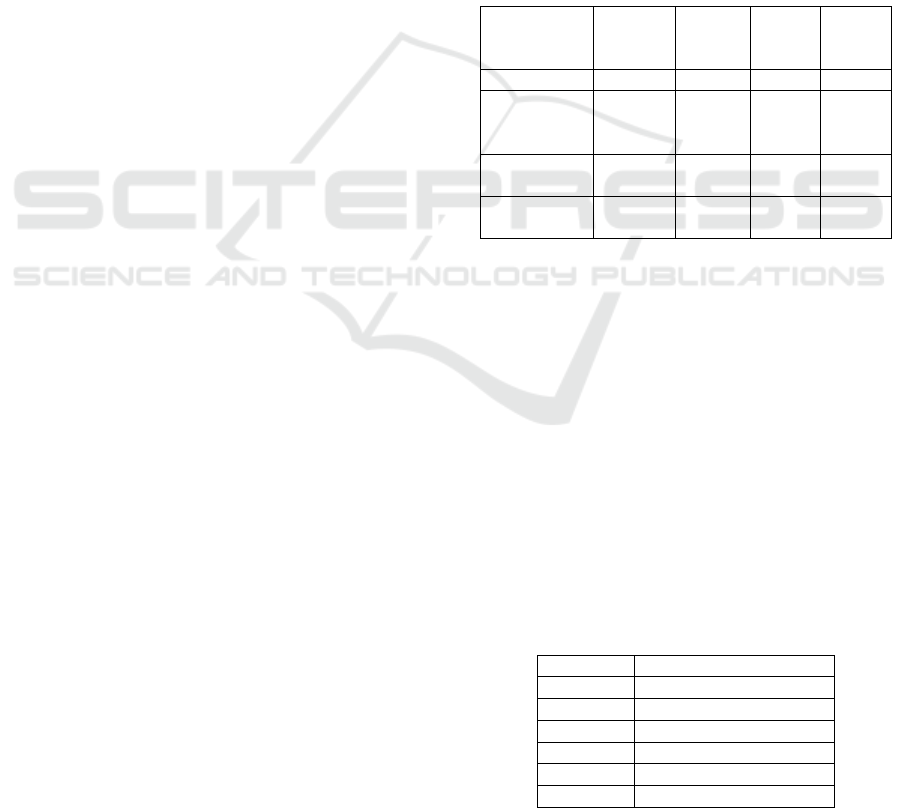
The performance metrics measured for these models
were summarized in Tab. 1, which included CNN,
SVM with MobileNetV2, MobileNetV2, and
ResNet50. Precision, recall, and F1-score were
calculated for each of these models.
4.1.1 Analysis of Precision
Precision is a measure of the ratio of the true positive
instances to the total number of instances predicted as
positive. Table 1 shows the
Performance Comparison of
Different Models. Concerning its precision, ResNet50
is the best classifier across all classes, particularly for
detecting the Glass and Metal classes. Due to the
feature overlaps between Trash and Plastic, the latter
has relatively low precision.
Precision for Cardboard: 91.43%
Precision for Glass: 94.29%
Table 1: Performance Comparison of Different Models.
Model
Accurac
y (%)
Precisi
on (%)
Recall
(%)
F1-
Score
(
%
)
CNN 85.34 83.12 84.45 83.78
SVM with
MobileNetV
2
88.90 87.15 88.30 87.72
MobileNetV
2
(
TL
)
91.67 90.20 91.00 90.59
ResNet50
(
TL
)
93.45 92.10 92.80 92.44
4.1.2 Recall Analysis
It measures how many of the actual positive instances
have been correctly determined. Again, it is to be
noted that models like ResNet50 and MobileNetV2
have produced high recall values, which once again
testify to their abilities in false negative cases. They
all seem to be victims of trash since they eventually
led to a small drop in recall due to the mismatched
data set size.
Recall for Trash: 83.33%-ResNet50, i.e., lowest for
all the classes.
4.1.3 F1-Score Analysis
Table 2: Area Under the ROC Curve (AUC) Scores for
Each Class.
Class AUC Score
Cardboar
d
0.95
Glass 0.97
Metal 0.96
Pa
p
e
r
0.96
Plastic 0.94
Trash 0.91
Waste Classification Using Machine Learning Models: A Comparative Study
313
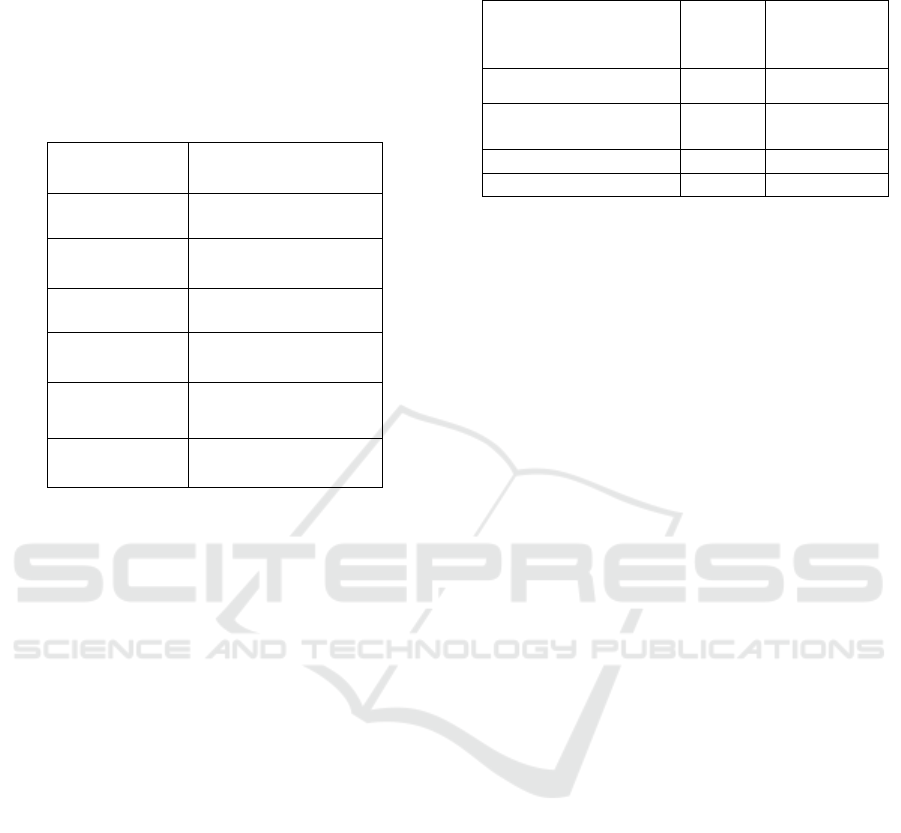
F1-Score is the harmonic mean of precision and recall
and can be used to evaluate a very imbalanced
dataset. Superior performance and F1 scores for Glass
and Metal were shown by Table 2 and 3 ResNet50
which could be explained concerning their texture
and color features as they are more distinct.
Table 3: ResNet50 F1-Scores Per Class.
Class ResNet50 F1-Score (%)
Cardboard 91.86
Glass 94.72
Metal 92.97
Paper 95.22
Plastic 90.00
Trash 84.75
4.2 Confusion Matrix Analysis
The confusion matrix for ResNet50 (the best-
performing model) is displayed in Figure 1.
Patterns of Misclassification.
Paper and Cardboard: Greatest confusion owing to
the common texture and appearance, particularly in
recycled materials.
Plastic vs. Trash: Highly intra-class variable plastic
waste made it difficult to trash.
4.3 Analysis of ROC-AUC and
Precision-Recall
The average AUC of the Receiver Operating
Characteristic (ROC) curves for ResNet50 was 0.96,
showing near-perfect discrimination ability. The
Precision-Recall (PR) curve also supported the ability
of the model to have good precision along with high
recall at different thresholds.
4.4 Computational Efficiency
Table 4 shows the Training and Inference Time
Comparison of Different Models.
Table 4: Training and Inference Time Comparison of
Different Models.
Model
Training
Time
(min)
Inference
Time
(sec/image)
CNN 45 0.03
SVM with
MobileNetV2
30 0.01
MobileNetV2 (TL) 20 0.02
ResNet50 (TL) 25 0.03
5 DISCUSSIONS
MobileNetV2 was the quickest model for training as
well as inference that suited deployment for resource-
constrained devices. A little slower, but worth the cost
in terms of its trade-off between computational and
accuracy is ResNet50.
Challenges and limitations: Class Imbalance. The
Trash class was deficient in samples which led to
higher misclassified instances in them. Possible
results could be brought about by balancing the
dataset. Intra-Class Variability. The plastics were
different, shape-wise, size-wise, and differently
made, causing them quite a bit of difficulty in
classification.
Dataset Size: This is a very good benchmark, but
it is still not representative of the whole possible mess
in the real world.
Discussion of Practical Implications: This makes
a case for the application of machine learning models
in-field performance in waste segregation: Transfer
Learning Models: MobileNetV2 or ResNet50 have a
high degree of viability as industrial applications
concerning performance in accuracy and efficiency.
Sustainability: Recycling processes improve greatly
while contamination in recycling is lowered and
environmental sustainability is improved by
automated waste separations. Edge Deployment:
Lightweight models like MobileNetV2 are easily
used in edge devices to allow for real-time
classification of waste by smart bins.
Literature suggests possible future directions for
research efforts: Ensemble Methods: Combining
more than one model may reap the fruits of their
strengths and push classification accuracy further up.
Larger Datasets: A large set of waste categories with
sampled extensive examples should significantly
improve robustness. Explainable AI: Visualizing
important features could give insights into model
bias, thereby increasing the trust and interpretability
of the model.
ICRDICCT‘25 2025 - INTERNATIONAL CONFERENCE ON RESEARCH AND DEVELOPMENT IN INFORMATION,
COMMUNICATION, AND COMPUTING TECHNOLOGIES
314

6 CONCLUSIONS
This research performed a comparative study of
machine learning models for waste classification
using the TrashNet dataset, aiming to determine the
most efficient method of automation in waste
separation. The models being tested included a
personalized convolutional neural network (CNN), a
support vector machine (SVM) with features
extracted from MobileNetV2, and two transfer
learning models: MobileNetV2 and ResNet 50. The
analysis results revealed the following major
findings: Among the models considered, it was
ResNet50 that performed best with 93.45% accuracy,
featuring higher precision, recall, and F1 scores
across all six waste types. Very deep architecture
along with pre-trained weights made ResNet50 learn
features from the problem domain very effectively
and this makes the network highly suitable for waste
classification tasks. It was MobileNetV2 that
performed comparably less with 91.67% accuracy;
however, it proved to be lightweight and
computationally efficient, giving the additional
advantage of faster training and inference, thus ideal
for deployment in resource-constrained environments
like smart bins or IoT devices. SVM with
MobileNetV2 features performed well (88.90%
accuracy), surpassing the CNN trained from scratch.
Thus, it emphasizes the importance of strong feature
extraction to enhance traditional classifiers. The CNN
model reached an acceptable accuracy level of
85.34%, but it could be recognized as weaker than
transfer learning approaches due to limited depth and
lack of pre-trained feature representations.
REFERENCES
A. Mazloumian, M. Rosenthal, and H. Gelke, "Deep
Learning for Classifying Food Waste," arXiv, 2020.
A. Thompson et al., "Image-Based Waste Sorting Using
Convolutional Neural Networks," IEEE Transactions
on Environmental Engineering, 2022.
B. Lee et al., "Integrating SVM with CNN Features for
Enhanced Waste Classification," Machine Vision
Applications, 2020.
C. Zhao et al., "Transfer Learning in Environmental Data:
Applications in Waste Sorting," Sustainable
Computing, 2022.
C. Zhao et al., "Transfer Learning in Environmental Data:
Applications in Waste Sorting," Sustainable
Computing, 2022.
D. Gyawali et al., "Comparative Analysis of Multiple Deep
CNN Models for Waste Classification," arXiv, 2020.
D. K. Sharma, U. Bharti, and T. Pandey, "Deep Learning
Approaches for Automated Waste Classification and
Sorting," International Journal for Research in Applied
Science and Engineering Technology, 2024.
J. Singh et al., "Convolutional Neural Networks for Image-
Based Waste Classification," Journal of AI in
Environmental Engineering, 2022.
J. Shah and S. Kamat, "A Method for Waste Segregation
using Convolutional Neural Networks," arXiv, 2022.
J. Singh et al., "Convolutional Neural Networks for Image-
Based Waste Classification," Journal of AI in
Environmental Engineering, 2022.
K. Srivatsan, S. Dhiman, and A. Jain, "Waste Classification
using Transfer Learning with Convolutional Neural
Networks," IOP Conference Series: Earth and
Environmental Science, 2021.
M. S. Patel et al., "Transfer Learning for Sustainable Waste
Classification: A Case Study Using MobileNetV2,"
Journal of Sustainable AI Research, 2020.
M. S. Nafiz et al., "ConvoWaste: An Automatic Waste
Segregation Machine Using Deep Learning," arXiv,
2023.
N. Yadav et al., "Waste Image Classification Using Deep
Learning: A Comparative Study," Computational
Ecology and Environmental Science, 2023.
N. Yadav et al., "Waste Image Classification Using Deep
Learning: A Comparative Study," Computational
Ecology and Environmental Science, 2023.
P. Li et al., "Enhancing Waste Classification with SVM-
CNN Hybrid Models," International Journal of
Environmental AI Research, 2023.
P. Li et al., "Enhancing Waste Classification with SVM-
CNN Hybrid Models," International Journal of
Environmental AI Research, 2023.
R. Kumar et al., "Artificial Intelligence in Waste
Management: Current Trends and Future Directions,"
Environmental AI Applications, 2021.
R. Kumar et al., "Artificial Intelligence in Waste
Management: Current Trends and Future Directions,"
Environmental AI Applications, 2021.
S. Khana et al., "Automated Waste Classification with Deep
Learning: Enhancing Recycling Efficiency," Journal of
Environmental Science & Technology, 2021.
S. Kunwar, B. R. Owabumoye, and A. S. Alade, "Plastic
Waste Classification Using Deep Learning: Insights
from the WaDaBa Dataset," arXiv, 2024.
World Bank, "What a Waste 2.0: A Global Snapshot of
Solid Waste Management to 2050," World Bank
Group, 2019.
Y. Narayan, "DeepWaste: Applying Deep Learning to
Waste Classification for a Sustainable Planet," arXiv,
2021.
Z. Yuan and J. Liu, "A Hybrid Deep Learning Model for
Trash Classification Based on Deep Transfer
Learning," Journal of Electrical and Computer
Engineering, 2022.
Z. Qiao, "Advancing Recycling Efficiency: A Comparative
Analysis of Deep Learning Models in Waste
Classification," arXiv, 2024.
Waste Classification Using Machine Learning Models: A Comparative Study
315
