
An Overview of the Advancements and Upgrades Made to the
Connecting Rods in the Internal Combustion Engine
M. Kathirselvam, Meiyalagan S., Raji C. and Sudhakar S.
Department of Mechanical Engineering, K.S.Rangasamy College of Technology, Tiruchengode, Namakkal, Tamil Nadu,
India
Keywords: SI Engine, Connecting Rod, Composite Materials, Optimization.
Abstract: Automotive engineering design prioritizes lowering emissions and enhancing safety features. Connecting rod
optimization, which transmit power from the piston to the crankshaft, is especially important for maximizing
engine economy and performance. The weight and design of a connecting rod in an automotive engine have
an impact on its performance. Therefore, in order to produce a connecting rod that is more affordable, robust,
and lightweight, optimization and analysis are required. This article reviews the experiments, designs, and
analyses of several researchers on the connecting rod of an engine. A detailed comparison table and graphs
are included with the evaluation. Both seasoned and inexperienced scholars in the subject of vehicle design
will find this article to be a useful resource.
1 INTRODUCTION
The connecting rod is a crucial part of IC engines,
converting the piston's alternating transverse motion
into the crankshaft's rotation. Its two eye-shaped
extremities, the big end and tiny end, are connected
by a beam-like shank. The rod's design and material
must be carefully chosen to endure high stress and
ensure smooth engine running. Due to the high-cycle
fatigue stress experienced by the connecting rod, gas
forces and inertial forces must be considered. It needs
to be sturdy enough to hold external loads,
sufficiently light to lessen inertial forces, and stiff
sufficient to permit for a suitable link with the
crankpin and Gudgeon pin. The identification of a
particular connecting rod segment as an alternating
mass can have a direct effect on the maximum value
of alternating forces. Designing connecting rods
requires special attention, and connecting rod
optimization often uses both analytical and numerical
approaches.
2 NUMERICAL ANALYSIS ON
CONNECTING ROD
An internal combustion engine's connecting rod is an
essential component. Using aluminium alloy (2024-
T361) material can help reduce weight. According to
Ebhojiaye and Eboigbe (2022), the connecting rod's
extreme end is where distortion peaks. Consequently,
the distortion will be reduced by thickening the rod's
tiny end. The values obtained for the stress
distribution was acceptable because the stress was
minimal. Maximum deformation of 0.062428mm
was recorded at the small connecting rod end, because
the material thickness was unable to support the
applied force at the rod end. The simulation results
showed that von Mises stress present in the aluminum
alloy (2024-T361) rod was less than its yield strength
indicating that there can be material saving in the
lowest stressed region.
Vinay Kumar et al. (2019) conducted a solid
modelling study on connecting rods using aluminum
alloy using CATIA V5 and ANSYS 14.0. The study
analyzed the effects of tensile and compressive loads
on the rods, focusing on normal stress and shear stress
in the x-y plane. The results showed that Ansys was
more effective than other software for identifying
minimum stresses at the piston endand crank end cap,
reducing material costs & improving material
performance. A dynamic study of the connecting rod
is necessary for additional optimisation, and finite
element analysis will yield more precise findings.
Antony et al. (2016) report that connecting rods made
of aluminium undergo higher levels of stress
induction than connecting rods made of teel. There's
224
Kathirselvam, M., S., M., C., R. and S., S.
An Overview of the Advancements and Upgrades Made to the Connecting Rods in the Internal Combustion Engine.
DOI: 10.5220/0013925600004919
Paper published under CC license (CC BY-NC-ND 4.0)
In Proceedings of the 1st International Conference on Research and Development in Information, Communication, and Computing Technologies (ICRDICCT‘25 2025) - Volume 5, pages
224-231
ISBN: 978-989-758-777-1
Proceedings Copyright © 2026 by SCITEPRESS – Science and Technology Publications, Lda.
also a great opportunity to improve the design. For
connecting rods, steel is consequently a better
material choice.
Figure 1: Schematic diagram of connecting rod.
Utilising SOLID WORK and ANSYS 15.0, Hussin et
al. (2014) used the aluminium alloys 7068 T6 and
T6511 to study solid modelling and analysis of
connecting rods. The study found that Solid Work
was effective in modelling and simulation, but Ansys
was found to be more accurate in analysis. The study
found minimum stresses at the piston end&crank end
cap, reducing material costs. A finite element analysis
will yield more accurate results than current results
and is necessary for further optimisation. A dynamic
analysis of the connecting rod is also needed. The
study highlights the need for more accurate material
optimization in connecting rod design and analysis.
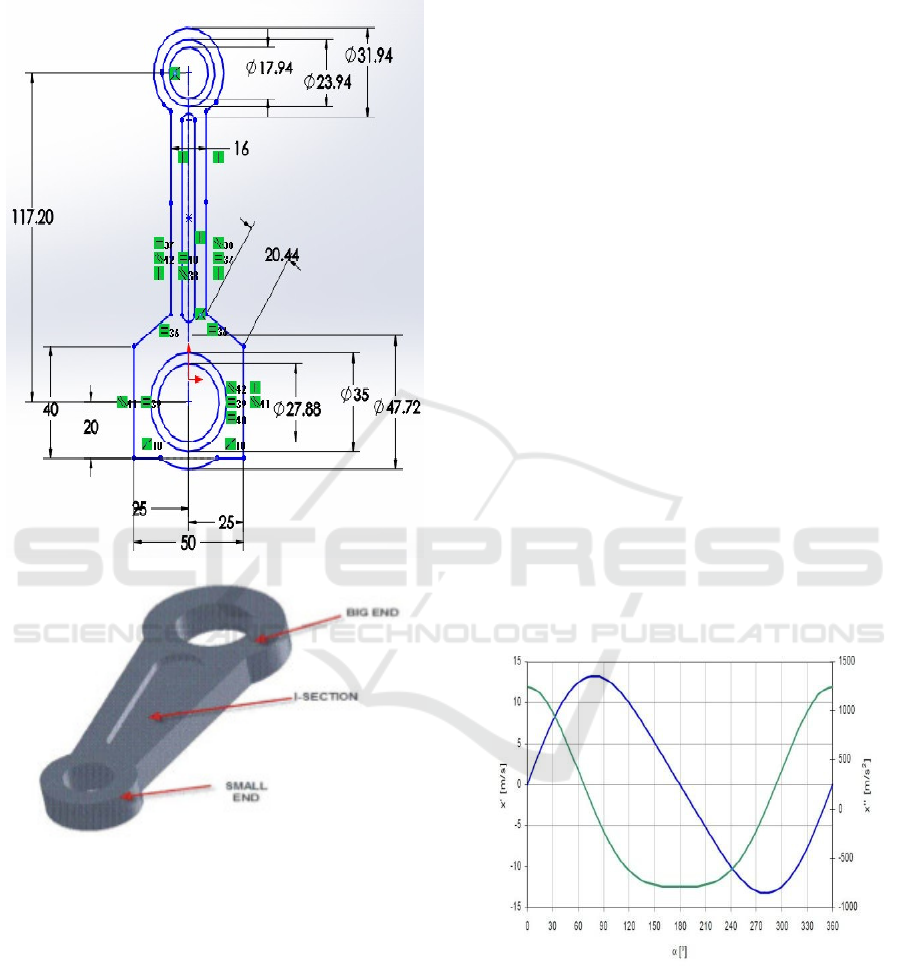
Figure 1 shows the Schematic Diagram of Connecting
Rod (Abdusalam MH, Prabhat KS & Arvind SD
2014).
The connecting rod is made for maximum engine
speed and pressure, according to Murthy et al. (2019).
The big end area, small end area, and connection to
the rod's small end all had substantial material
reductions, according to finite element analysis.
Analysis and computations suggest thinner I-sections.
In addition to titanium's superior mechanical
qualities, it is lighter than steel and has lower ductility
than steel. Additionally, the new connecting rod form
weighs less than the old one.
The greatest primary stress, as determined by
Singh et al. (2015), was 411.32 MPa, which is lower
than the 530 MPa yield compressive strength. While
0.053 mm was the greatest deformation determined
by the conventional approach, 0.041 mm was the
maximum deformation determined by ANSYS
V14.0. This difference can be attributed to the
consideration of simplification hypotheses in the
classic calculation. The results were obtained at the
Inner Dead Center, indicating that the maximum
force is acting at that point. Using finite element
analysis software for stress and deformation
calculations saves time and provides results at all
nodes of the structure. The connecting rod, which is
hinged by a piston pin and a crank pin, experiences
compressive forces, resulting in a design that behaves
like a strut.
Figure 2: Acceleration and piston speed pattern dependent
on crankshaft angular displacement.
Mohsin et al. (2015) performed a connecting rod
study. They used Catia software to build the rod to
actual dimensions and conducted axi-symmetric
analysis to determine interference effects on joint
stress behavior. The research discovered increased
compressive stress in the bush, tensile stress
An Overview of the Advancements and Upgrades Made to the Connecting Rods in the Internal Combustion Engine
225

development at the tiny end, and contact pressure
development at the interface. Plots of the results were
made for the von Misses, hoop, and radial stresses.
Axial-symmetric alternatives were used to create
three-dimensional perspectives. To ascertain the
connecting rod's fatigue nature in light of load
transfer fluctuations, more investigation was done.
For the study, two load nature models, Models A and
B, with assembly and service loads, were taken into
consideration.
Figure 2 shows the Acceleration and
Piston Speed Pattern Dependent on Crankshaft
Angular Displacement (Puran Singh et al.,2015).
The study by Vinayakrao and Swami (2017)
evaluated alternative materials for connecting rods
with fewer stresses and a lighter weight. Using FEA
analysis using ANSYS 18.1 software, the study found
that the aluminum 7075-T651 connecting rod showed
nearly the same amount of stress as the existing
carbon steel connecting rod. The maximum stress
generated in case 1 was almost the same in all
materials, while in case 2, it was the same in all
materials. However, the aluminum connecting rod
had a significantly lower weight than the other two
materials. The deflection of the current connecting
rod made of CS (42CrMo4) and the connecting rod
made of aluminium (7075-T651) is equal.
Furthermore, it was discovered that the connecting
rod made of aluminium, model number 7075-T651,
weighed around 35% less.
Kushwah et al. (2021) conducted research on
improving connecting rod material through ANSYS
software analysis They discovered that the
connecting rod's bulk and power may be decreased. If
the wire is not attached, the design, material quality,
or both parameters can be improved. The connecting
rod's performance can be improved by changing the
material composition. They also found that alloying
materials can obtain desired properties by combining
various materials with different qualities.
In a static structural study, Abhishek Kumar and
Pankaj Panday (2019) compared the comparable
elastic strains and von Mises stresses for structural
steel and aluminum alloy. They discovered that,
under some loading circumstances, aluminum alloy
had more stresses and strength than structural steel. In
order to maintain the necessary pressure produced
within the cylinder, they optimized AA7068
aluminum alloy connecting rods, which needed less
material and lower dimensions. Compared to the
other materials employed in the investigation, the
optimized material was shown to have a superior
nature.
According to study, Atharuddin et al. (2019)
found that using aluminum alloys instead of forged
steel to replace a damaged connecting rod can lighten
it and extend its lifespan. The study involved
analyzing the force applied to the piston head and the
effect of these forces on the connecting rod. The
automotive industry is increasingly demanding
components with high techno-economic
performance, with the connecting rod being a key
component in automobiles. The study explains the
stresses to consider when designing the connecting
rod and compares the results of the dissimilar
materials used. The findings can be applied to
designing any connecting rod in an automobile,
aiming for weight and cost reduction as well as
increasing the rod's life. The lighter weight and
increased strength of the connecting rod can be
achieved compared to the original design.
According to Ramani et al. (2014), there are two
topics covered in their study: optimising for weight
reduction and analysing the load and stress on the
connecting rod. Compressive load is one extreme
load, and tensile load is one of two load ranges in
which the connecting rod may be constructed and
improved. In addition, it is possible to optimise the
current connecting rod and replace it with a new one
that weighs 15% less.
Samal et al. (2015) used CATIA-V5 and a
machine drawing textbook to create a 3D CAD
model. They used MATLAB to compute piston
forces at crucial crank angles and Radioss and Altair
Hypermesh for finite element modelling. In the
second load example, when the connecting rod was
exposed to 37.3 bar of cylinder pressure at a 300-
degree crank angle, the highest stress created was
227.3 MPa. The connecting rod was redesigned to be
11.3% lighter and have a maximum stress of 274.2
MPa, which is also below the material's yield strength
because this stress was lower than the material's yield
strength.
A study of the literature on connecting rods under
various load situations and stress experiments was
done by Gorane et al. (2023). They carried out
optimisation research and analysis to create a more
effective connecting rod design process. For the
purpose of evaluating the connecting rod
specifications, they used forged steel material, and
they also chose I cross-sections. Weight optimisation
followed topology optimisation, which considered
the optimal material and cross-section. The
optimisation of geometry was then carried out using
the topology and FEA data. Following optimisation,
the connecting rod was put through several load
scenarios for testing, and the outcomes were
consistent with the findings drawn and the existing
design.
ICRDICCT‘25 2025 - INTERNATIONAL CONFERENCE ON RESEARCH AND DEVELOPMENT IN INFORMATION,
COMMUNICATION, AND COMPUTING TECHNOLOGIES
226
Chougale (2014) designed a two-wheeler
connecting rod using analytical methods and FEA
analysis. A physical model was created using CATIA
V5, and stresses were calculated using ANSYS
Workbench 14.5. Thermal analysis was performed on
different materials. Results showed a significant
reduction in weight, equivalent and maximum shear
stress, and longer life cycles for new connecting rods
compared to steel rods. The Al-360 connecting rod
had a higher total heat flux of 32.765 W/𝑚𝑚2, which
is higher than structural steel's total heat flux. The
results were compared based on various performance
factors.
3 HYBRID AND COMPOSITE
MATERIAL WORKS ON
CONNECTING ROD
Velliyangiri and Vinothkumar (2022) discovered that
the minimum deformation, stress, and strain occur at
a ratio of 2 boron carbide to 10% of the alumina oxide
matrix of ordinary Al-1100. This ratio is better for
deformation and displacement. With their superior
mechanical qualities over traditional materials,
composite materials in particular, aluminium 1100
boron carbide and aluminium oxide composites find
use in a wide range of industries, including the
automotive sector. After analysing the mechanical
characteristics of the Al1100 metal matrix, the study
discovered that the good tensile and compressive
strengths were improved by the boron carbide
reinforcement. Alumina oxide has a lower impact
strength than pure 1100. While alumina oxide's metal
matrix had a higher impact strength, boron carbide
demonstrated superior compressive and tensile
strengths. The FEA analysis revealed that the
minimum strain and maximum von Mises stress occur
at a ratio of 2 Boron Carbide to 10%, while the
alumina oxide matrix of ordinary Al1100 is higher.
Prakash and Bagade's study from 2021 make
recommendations for changes to the connecting rod's
design, material, and production method. In
comparison to forging and sintering steel, advanced
materials such as micro-alloyed steel and C70
(crackable) steel provide more strength and stiffness.
Heat treatment can reduce residual strains, whereas
shot peening extends fatigue life and strengthens
fatigue. Compared to traditional materials,
MMC’ssuch as Al-15% Al2O3 and Al-10% SiC are
lighter and more rigid. Small holes can be drilled at
appropriate locations to reduce stress in the shank
section. The modified model reduces maximum Von-
Mises stress by 3.395%, resulting in more uniform
stress distribution and improving overall performance
and durability.
For connecting rods constructed of aluminium
alloy 6082, Janutienė et al. (2015) developed a
thermo-mechanical method that increased
mechanical qualities, safety, durability, and reduced
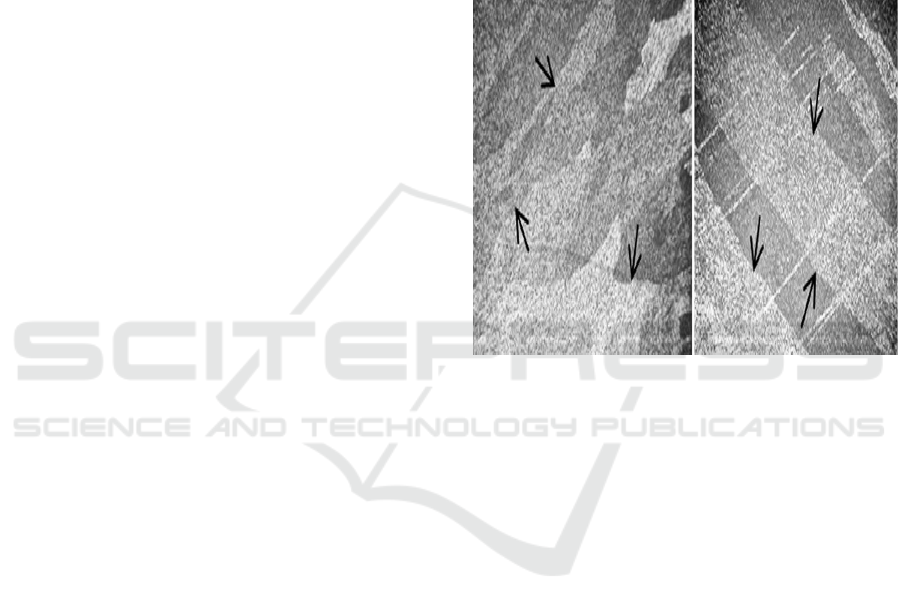
production costs. Impact strength was double that of
the previous workpiece, and ultimate strength rose by
up to 25%. The hardness varied from 58 to 62 HRB,
and the fibrous microstructure inhibited brittle
fracture and component deformation.
Figure 3: Regime A: Cross-cut of forging (Black arrows
mark the boundaries of coarse recrystallized grains).
Forces acting on the piston head and connecting
rod were examined by Selvakumar et al. (2021). For
displacement, von-misses stress, and strain intensity
output, they examined the pressure in the crank end
bearing & the bottom part of the connecting rod. They
found that Al6061, the material used for connecting
rods, has high deformation and low von-misses stress,
resulting in lower life and strength. However,
Al6061+SiC, with high von-misses stress, has high
strength. Aluminium 6061+SiC has greater hardness
than aluminium 6061.
Figure 3 shows the Regime A:
Cross-cut of Forging (Black Arrows Mark the
Boundaries of Coarse Recrystallized Grains) (Rasa
Kandrotaitė J. 2016).
Nitturkar et al. (2020) conducted a solid
modelling study on a connecting rod using NX 10 and
ANSYS Workbench. The study found that the
minimum stresses were found at the piston
end&crank end cap, reducing material costs. A finite
element study must come first, followed by a dynamic
analysis of the connecting rod for additional
optimisation. The connecting rod's tiny end was
where the greatest tension was discoveredIn contrast
An Overview of the Advancements and Upgrades Made to the Connecting Rods in the Internal Combustion Engine
227

to other materials, forged steel is less rigid and weighs
more, and connecting rods made of aluminium,
magnesium, and beryllium alloy exhibit more erratic
behaviour. Beryllium alloy connecting rods have the
lowest von Mises stress, lowest von Mises strain, and
maximum displacement. This study emphasizes the
requirement for more precise material optimization
outcomes.
4 EXPERIMENTAL WORKS ON
CONNECTING ROD
The stress on a connecting rod in a two-wheeler was
analysed by Khan et al. (2016) using the
photoelasticity approach and finite element analysis.
The finite element analysis results and the
experimental results showed a substantial difference,
with tensile stresses being found to be larger than
compressive stresses at both ends of the research. It
was found that the little end of the connecting rod
caused larger strains than the big end. The stress
concentration effect was found to be minimal in the
core and to exist at both ends. It was discovered that
the fillet portion on both ends was where the
connecting rod had the highest likelihood of failing.
According to the finite element study, the rod's risks
of failure were highest at the fillet portions on both
ends, where maximum stresses were also created. The
connecting rod's fillet portions need to have material
added to them in order to prevent these pressures and
failures.
Figure 4 shows the (Left) Experimental
Setup and (Right) Tensile and Compressive Loads
Acting from Both Ends.
Figure 4: (left) Experimental setup and (right) Tensile and
compressive loads acting from both ends.
Figure 5: Displays the fringes that developed at both the
compressive and tensile loads.
Li et al. (2017) investigated the emissions,
performance, and combustion of a SI engine running
on a combination of gasoline and butanol. In
comparison to G100, they discovered that B10 and
B30 had enhanced combustion phasing, shorter flame
generation times, and longer main combustion
durations. Butanol lowered BTE, while B30 reduced
CO, UHC, and NOX emissions while producing
better results with equivalent BTE. M30, E30, and
B30 alcohol alternative fuels showed similar
combustion phasing. When fuelling with butanol-
gasoline blends, the research suggests postponing the
timing of sparking since B30 engine performance and
emissions beat G100.
Figure 5 shows the Displays the
Fringes that Developed at Both the Compressive and
Tensile Loads.
Rakić et al. (2016) identified stress and surface
roughness as the majorreasons of connecting rod
fractures. The engine's prolonged use at full load had
an impact on the breakage as well. In order to avoid
rod breakage in the forthcoming, it is suggested to
raise the radius of rounding in areas where stress
concentration is higher, schedule polishing during
final machining, and enhance control over engine
components during serial manufacturing. The study
suggests that increasing the radius of rounding and
scheduling polishing within the final machining
process can help reduce stress on the connecting rod
and prevent future rod breakage.
Figure 6 shows the
(а) The Fractured Connecting Rod (b) The
Metallographic Specimen Utilised for Macro-
Structural Examination (Intersection A-A) (Roger
Rabb 1995).
ICRDICCT‘25 2025 - INTERNATIONAL CONFERENCE ON RESEARCH AND DEVELOPMENT IN INFORMATION,
COMMUNICATION, AND COMPUTING TECHNOLOGIES
228
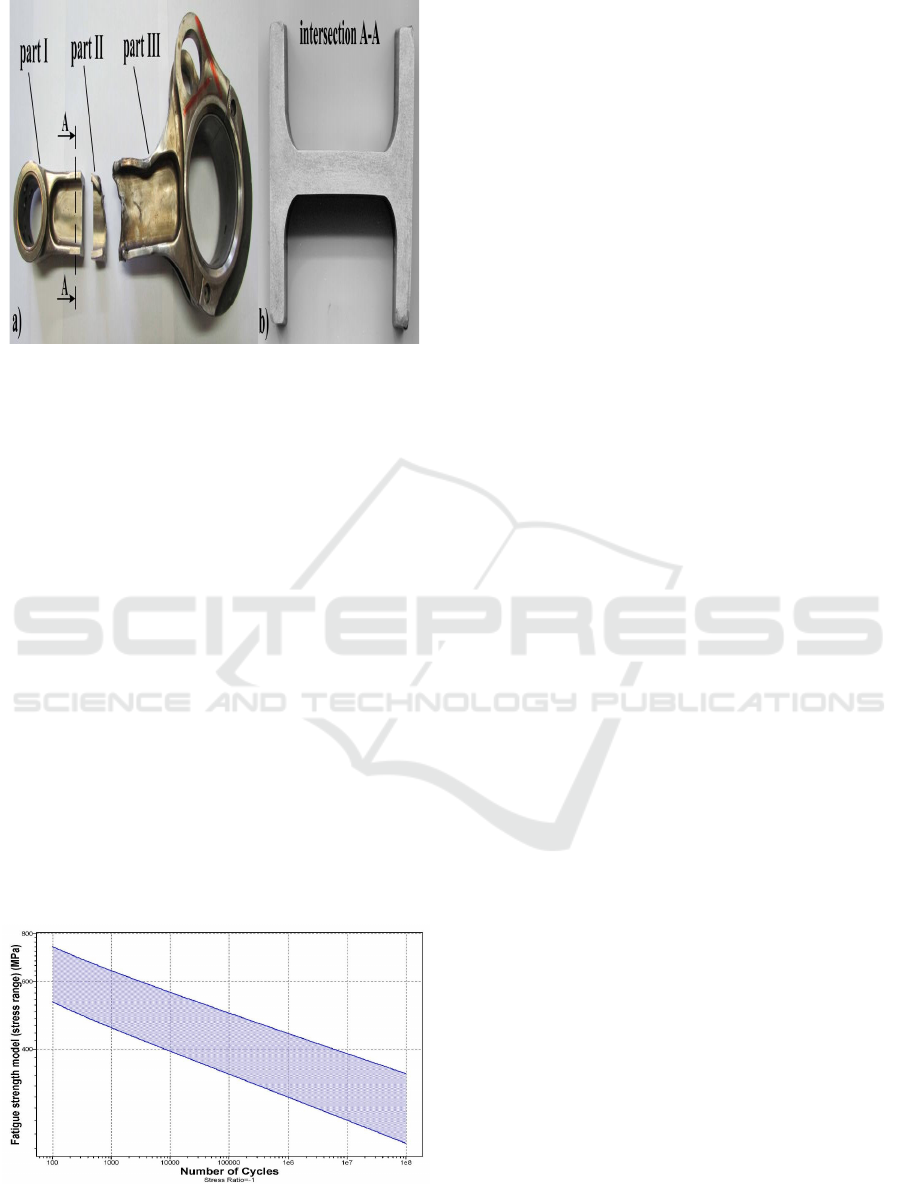
Figure 6: (а) The fractured connecting rod (b) The
metallographic specimen utilised for macro-structural
examination (Intersection A-A).
After one million fatigue cycles, as shown in
Figure 7, Bari et al. (2017) investigated the fatigue-
related failure of a connecting rod in a car owing to
street usage design and discovered that a stronger
chassis was required for the Global GT1 engine. It is
anticipated that the material has a safe service life of
at least ninety minutes at 11,000 RPM. Scale
accumulation in the steel caused microcracks to
develop, which spread under fatigue stress and
eventually caused the item to fail unexpectedly. Due
to improper refurbishment or sulfurized oil, the
fracture surface displayed brittle inclusions that were
sulfurized. The connecting rod broke towards the
conclusion of the exhaust stroke, mostly as a result of
fatigue loading, and the engine management system
heard noises prior to failure. Based on estimates, the
maximum bending stress at the shank centre would be
equivalent to 25% of the maximum stress after a
single engine cycle. The highest stress found at the
large end of the FE simulation corresponds with the
real fracture location.
Figure 7: Probable fatigue strength vs fatigue cycle of low
alloy steel AISI 4140.
Cervelin et al. (2019) introduced a novel method
for signal conditioning force measurements in crank-
slider systems. Utilising data processing methods, by
using this method, the connecting rod force is less
affected by interference and noise. The immediate
IMEP approach serves as its foundation. The method
was tested on a small-sized sintered connecting rod,
which reacted linearly to static axial forces. Dynamic
tests were performed to confirm that the approach is
applicable. The anticipated outcomes of the static and
dynamic testing showed that, at least in low-
frequency situations, glueing a tee rosette to the
midspan of a connecting rod can convert it into a force
transducer. Since the friction forces within the slider
crank are usually larger than the 6 N taken into
consideration in the study, consistent connecting rod
outcomes are anticipated to be superior. The same
SNR may be maintained by using a low-pass filter
with a smaller pass band. As a result of the suggested
measuring method, the results may be directly tested
in reciprocating machine applications, which makes
them pertinent to the research of mechanisms and
mechanical compound design. An improved
representation of real behaviour is made possible by
the dynamic connecting rod stresses, which can
record friction forces, motor torque, instantaneous
pressure, and other data immediately inside the
machine. Further tests are needed to ensure the
method provides coherent results at higher speeds.
5 CONCLUSIONS
In piston engines, the connecting rod plays a critical
role in transferring loads from the piston to the
crankshaft. Diesel engines with high torque at low
rotation rates put a lot of stress on the crankshafts,
pistons, and other engine parts. The fatigue strength
of the rod is limited by several factors, including
mistakes in material composition, technical
malfunctions, and poor design. This study employs
both computational and experimental investigation of
the failure of a connecting rod using advanced stress
analysis utilizing the finite element method (FEM).
The results exhibited that the main cause of failure
in connecting rods was excessive bending stress,
leading to cracks and ultimately fractures.
Additionally, the study highlighted the importance of
proper material selection and design considerations in
improving the fatigue strength of connecting rods in
piston engines.
The surface finish and heat treatment processes
play a crucial role in enhancing the durability of
connecting rods.
An Overview of the Advancements and Upgrades Made to the Connecting Rods in the Internal Combustion Engine
229

Overall, a holistic approach that considers all
these factors is essential for preventing failures and
improving the performance of connecting rods in
piston engines. Furthermore, regular inspection and
maintenance of connecting rods can help identify
potential issues before they lead to catastrophic
failures. By implementing these measures, engine
manufacturers can ensure the reliability and longevity
of their products.
REFERENCES
Abdusalam MH, Prabhat KS & Arvind SD “Design and
Analysis of Connecting Rod Using Aluminium Alloy
7068 T6, T6511”, International Journal of Mechanical
Engineering and Technology (IJMET), 2014, Vol 05,
pp: 57-69.
Abhishek Kumar &. Pankaj Panday “Comparative Study of
Connecting Rod Materials Using NumericTechnique”,
International Journal of Innovative Trends in
Engineering (IJITE), 2019, Vol 08, pp: 19-26.
Akbar Khan H, Dhananjay RD & Mirza MM
“Experimental Stress Analysis ofTwo-Wheeler
Connecting Rod Using Photoelasticity”, IJARIIE,
2016, Vol 02, pp: 1141-1150.
Ambrish Tiwari, Jeetendra Kumar Tiwari & Sharad Kumar
Chandrakar “Fatigue Analysis of Connecting Rod
Using Finite Element Analysis to Explore Weight and
Cost Reduction Opportunities for a Production of
Forged Steel Connecting Rod”, International Journal of
Advanced Mechanical Engineering, 2014, Vol 04, pp:
782-802.
Andoko& Nanang Eko Saputro “Strength analysis of
connecting rods with pistons using finite element
method”, MATEC Web of Conferences 204, 2018.
AndokoAndoko, Imam Muda Nauri, Paryono Paryono,
Pradhana Kurniawan, Dhanang Reza Pradica,
Raymond Philander Jeadi, RiduwanPrasetya, and
TurnadLenggo Ginta “Failure Analysis of Connecting
Rod”, AIP Conference Proceedings 2262, 2020.
Antony S, Arjun A &Shinos TK “Design and Analysis of a
Connecting Rod”, International Journal of Engineering
Research & Technology (IJERT), 2016, Vol 05, pp:
188-192.
Bari K, Rolfe A, Christofi A, Mazzuca C & Sudhakar KV
“Forensic Investigation of a Failed Connecting Rod
from a Motorcycle Engine”, Case studies in
engineering failure analysis, 2017.
Daramy Vandi Von Kallon & Bai Kamara “FEA of a Lab-
Scale IC Engine Connecting Rod”, Proceedings of the
2nd African International Conference on Industrial
Engineering and Operations Management Harare, 2020
DewenJiaa, Yunpeng Lia, Xiwen Denga, Jilin Leia& Wei
Dengb “Design research on forging mark of connecting
rod”, Engineering Failure analysis, 2019.
Ebhojiaye RS &Eboigbe CI “Design and Analysis of 80cc,
4-Stroke Spark Ignition Engine Connecting Rod”,
Journal of Science and Technology Research, 2022,
Vol 4, pp: 278- 288.
Fanil Desai, Kirankumar Jagtap&Abhijeet Deshpande
“Numerical and Experimental Analysis of Connecting
Rod”, International Journal of Emerging Engineering
Research and Technology, 2014, Vol 2, pp: 242-249.
Fengjun Zhang and Yi Zhang “Setting of Natural Fracture
Splitting Surface on Connecting Rod and Its Formation
Mechanism”, Metals, 2020, Vol 10.
Fuertes JP, Murillo O, Leon J, Luis C, Salcedo D, Puertas I
&Luri R “Mechanical properties analysis of an Al-Mg
alloy connecting rod with submicrometric structure”,
Procedia Engineering, 2015, Vol 132, pp:313 – 318.
Fuertes JP, Luis CJ, Luri R, Salcedo D, Leon & Puertas
“Design, simulation and manufacturing of a connecting
rod from ultra-fine-grained material and isothermal
forging”, Journal of Manufacturing Processes, 2016,
Vol 21, pp: 56–68.
Gu Z, Yang S, Zhao Y & Dai X “Fracture splitting
technology of automobile engine connecting rod”, Int J
Adv Manuf Technol ,2005, Vol 25, pp; 883-887.
Leonardo Cervelin, Carlos AF, Rodolfo CCF, Julio NS &
Cesar AP “Measurement of the friction forces between
piston and cylinder in reciprocating machines using the
connecting rod strain behavior”, Mechanical Systems
and Signal Processing, 2019, Vol 130, pp: 677-691.
Mohsin Ali MH & Mohamed Haneef “Analysis of Fatigue
Stresses on Connecting Rod Subjected to Concentrated
Loads at The Big End”, Materials Today, 2015, Vol 02,
pp: 2094 - 2103.
Momin atharuddin, sandeepkumar JA, Hussain P &
Mallikarjuna reddy P “design & analysis of a
connecting rod with Different materials”, Journal of
engineering science, 2019, Vol 10, pp: 184-196.
Murthy BSN, Adarsh Kumar K, Abdul MS, Praveen SSS
“Design and Analysis of Connecting Rod for Weight
and Stress Reduction”, International Journal of
Engineering Research & Technology (IJERT), 2019,
Vol 07.
Mustafa Guven Gok & Omer Cihan “Investigation of
Failure Mechanism of a DCI Engine Connecting Rod”,
European Journal of Technique, 2021, Vol 11, pp: 222-
22.
Nitturkar HD, Kalshetti SM &Nadaf AR “Design and
Analysis of Connecting Rod using Different Materials”,
International Research Journal of Engineering and
Technology (IRJET), 2020, Vol 07, pp: 1011-1017.
Poppy Puspitasari, Dewi IzzatusTsamroh,MochamadAchy
arsyah, Beny Bandanajaya and Dewi puspitasari
“Multistage artificial aging optimization for tensile
properties of Duralium using Response Surface Method
(RSM)”, MATEC Web of Conferences 204, 2018.
Pradeep Kumar D & Prakash Kumar P “A Review on
Analysis of Connecting Rod Using Finite Element
Method”, International Journal of Science, Engineering
and Technology, 2023.
Prasanta Kumar Samal, Murali B, Abhilash &Tajmul Pasha
“Finite Element Analysis of Connecting Rod of IC
Engine”, MATEC, 2015.
ICRDICCT‘25 2025 - INTERNATIONAL CONFERENCE ON RESEARCH AND DEVELOPMENT IN INFORMATION,
COMMUNICATION, AND COMPUTING TECHNOLOGIES
230

Prathamesh SG, Vijay BR, Vijaykumar J, Kuldeep A,
Mahajan Sachin RK & Anil Shirgire, European
Chemical Bulletin, 2023, Vol 12, pp: 2861-2871.
Priyabrata Parida, Mausam Acharya, Ajay Purty &
Chandan Soren “Analysis of Connecting Rod Under
Different Material Condition”, International Journal of
Engineering Research & Technology (IJERT), 2021,
Vol 10, pp: 616- 628.
Puran Singh, Debashis Pramanik & Ran Vijay Singh
“Fatigue and Structural Analysis of Connecting Rod’s
Material Due to (C.I) Using FEA”, International
Journal of Automotive Engineering and Technologies,
2015, Vol 04, pp: 245-253.
Ramani JD, Sunil Shukla & Pushpendra KS “FE-Analysis
of Connecting Rod of I.C.Engine by Using Ansys for
Material Optimization”, Journal of Engineering
Research and Applications, 2014, Vol 04, pp: 216-220.
Rasa Kandrotaitė J “Behaviour of Truck’s Compressor’s
Connecting Rods Made of Aluminium Alloy under
Different Manufacturing Conditions”, Transport, 2016,
Vol 31, pp: 41-46.
Rianti Dewi Sulamet-Ariobimo, Muhammad Fadhlan,
Yoska Oktaviano, Tono Sukarnoto, YusepMujalis&
Amal Witonohadi “The effects of I-Beam thickness to
microstructure and compression load of thin wall
ductile iron connecting rod”, International Journal of
Lightweight Materials and Manufacture, 2023, Vol 06,
pp: 392-404.
Roger Rabb “Fatigue Failure of a Connecting Rod”,
Wartsila Diesel International Ltd, 1995, pp: 97-112.
Saharash Khare, Singh OP, Bapanna Dora K &Sasun C
“Spalling investigation of connecting rod”Engineering
Failure Analysis, 2012, Vol 19, pp: 77-86.
Satish Sanjeev Marathe & Prayag Satish Patil “Modelling
and Analysis of Connecting Rod for Multicylinder
Engine by FEA Approach”, Indian Journal of Applied
Research, 2020, Vol 10.
Selvakumar S, Abhinand P, Ajai Baranidaran, Aswin
Paroli& Mebin Thomas “Analysis and Evaluation of
connecting rod using composite materials (Al+SiC)”,
International Journal of Advances in Engineering and
Management (IJAEM), 2021, Vol 03, pp: 01-11.
Shaik Rafi & Amara Nageswara Rao “Design and
Numerical Analysis of Connecting Rod with Different
Materials”, International Journal of Research
Publication and Reviews, 2023, Vol 04, pp: 2133-2142.
Shubham Chougale “Thermal and Structural Analysis of
Connecting Rod of An Ic Engine”, Journal of Emerging
Technologies and Innovative Research (JETIR), Vol
04, pp: 209-215.
Slavko Rakic, UgljesaBugaric, Igor Radisavljevic& Zeljko
Bulatovic “Failure analysis of a special vehicle engine
connecting rod”, Engineering Failures Analysis, 2016.
Strozzi A, Baldini A, Giacopini M, Bertocchi E &
Mantovani S “A Repertoire of Failures in Connecting
Rods for Internal Combustion Engines, And Indications
on Traditional and Advanced DESIGN METHODS”,
Engineering Failures Analysis, 2015.
Sudheer Singh K, Amit Agrawal & Koli CS “A Review
Study on Simulation Analysis of Connecting Rod of
Engine”, International Journal of Science, Engineering
and Technology, 2021.
Tanya Buddi & Rana RS “Fabrication and finite element
analysis of two-wheeler connecting rod using
reinforced aluminum matrix composites Al7068 and
Si3N4”, Materials Today: Proceedings, 2021, Vol 44,
pp: 2471–2477.
Veda Prakash V “Connecting Rod Testing for Improvement
of Engine Performance with Nano Composite Material
Approch”, International Journal of Mechanical
Engineering, 2021, Vol 06, pp: 4344- 4352.
Velliyangiri B & Vinothkumar S “Design Analysis and
Comparative Mechanical Properties of Al -Metal
Matrix S.I Engine Connecting Rod”, International
Research Journal of Modernization in Engineering
Technology and Science, 2022, Vol 04, pp: 5995- 6000.
Vinay Kumar K, Mahesh M, Sharan P, Gopi J & Venkatesh
J “Design and Analysis of a Connecting Rod”,
International Journal of Research in Engineering,
Science and Management, 2019, Vol 02, pp: 401- 405.
Vinayakrao BA & Swami MC “Analysis and Optimization
of Connecting Rod used in Heavy Commercial
Vehicles”, International Journal of Engineering
Development and Research, 2017, Vol 05, pp: 684-707.
Yoo YM, Haug EJ & KK Choi “Shape Optimal Design of
an Engine Connecting Rod”, Journal of Mechanisms,
Transmissions, and Automation in Design, 1984, Vol
106, pp: 415-419.
Yu Li, Jinke Gong, Wenhua Yuan, Jun Fu, Bin Zhang and
Yuqiang Li “Experimental investigationoncombustion,
performance, and emissions characteristics of butanol
as an oxygenate in a spark ignition engine”, Advances
in Mechanical Engineering, 2017, Vol 09.
Zhongjian Pan & Yi Zhang “Numerical investigation into
high cycle fatigue of aero kerosene piston engine
connecting rod”, Engineering Failure Analysis, 2020.
Zhou Shi &Shuqing Kou “Inverse Reconstruction of
Fracture Splitting Connecting Rod and its Strength and
Fatigue Life”, J Fail. Anal. and Preven, 2018.
Zhu Jun-chao, Zhu Han-hua, Fan Shi-dong, Xue Liang-
jun& Li You-feng “A Study on the influence of Oil film
lubrication to the Strength of Engine Connecting Rod
Components”, Engineering Failures Analysis, 2015.
An Overview of the Advancements and Upgrades Made to the Connecting Rods in the Internal Combustion Engine
231
