
Detection and Prevention of Termite Infestation Using IoT through
Machine Learning
Soumya Madduru, Bindu Devarakonda, Bhumika Bhumireddy,
Bhanuprakash Boya and Purushotham Dandu
Department of CSE, Srinivasa Ramanujan Institute of Technology, Rotarypuram Village, B K Samudram Mandal,
Anantapuramu - 515701, Andhra Pradesh, India
Keywords: LCD, Alert, Raspberry PI, Decision Making, GSM.
Abstract: This project outlines an innovative system designed for the detection and prevention of termite infestations in
furniture and walls, utilizing IoT and machine learning technologies. At the core of the system is a Raspberry
Pi microcontroller, which manages and processes data from various environmental sensors. The system
includes a DHT11 sensor to monitor temperature and humidity, and a soil moisture sensor to detect moisture
levels both of which are critical indicators of termite activity. Additionally, an ADC module is incorporated
to ensure accurate data acquisition from analog sensors, enhancing the reliability of the information being
processed. The data gathered by the sensors is analyzed using a Random Forest machine learning algorithm,
which identifies patterns that may suggest the presence of termites. When abnormal environmental conditions
are detected, the system triggers alerts through a GSM module, sending notifications to users, while a buzzer
provides a local warning. Real-time data is also displayed on an LCD, offering immediate access to critical
information. By combining IoT connectivity with advanced machine learning, this system enables proactive
monitoring and prevention of termite infestations, ultimately helping to protect furniture and structures from
damage and minimizing the risk of costly repairs.
1 INTRODUCTION
Termite infestations are a significant concern for
homeowners and businesses, causing severe damage
to furniture, walls, and other wooden structures.
Traditional methods of detecting and preventing
termite activity often rely on visual inspections,
which can be time-consuming and ineffective until
significant damage has already occurred. As a result,
there is a growing need for more efficient, proactive
solutions to monitor and address termite infestations
in real time. This project aims to address this need by
integrating advanced technologies such as the
Internet of Things (IoT) and machine learning to
create an intelligent system for the early detection and
prevention of termite damage.
The system leverages a Raspberry Pi
microcontroller at its core, which communicates with
multiple sensors to monitor environmental factors
that promote termite activity. By utilizing a
combination of temperature, humidity, and moisture
sensors, along with data analysis powered by a
Random Forest machine learning algorithm, the
system can detect patterns indicative of an infestation.
This innovative approach ensures early intervention
through automated alerts and real-time monitoring,
providing a reliable and efficient way to safeguard
valuable assets from termite damage. By combining
IoT with machine learning, this project offers a
cutting-edge solution that enhances the long-term
protection of furniture and walls.
In addition to its core functionality of detecting
termite infestations, the system also emphasizes ease
of use and prompt response to abnormal conditions.
The integration of a GSM module allows for
immediate notifications to be sent to users, ensuring
they are alerted as soon as the system detects
environmental changes that suggest potential termite
activity. A buzzer further enhances the alert system
by providing a local sound warning, which is
particularly useful in areas where immediate attention
is needed. With real-time information displayed on an
LCD screen, users can continuously monitor the
conditions and take necessary action without delay.
This multi-faceted approach not only enhances the
Madduru, S., Devarakonda, B., Bhumireddy, B., Boya, B. and Dandu, P.
Detection and Prevention of Termite Infestation Using IoT through Machine Learning.
DOI: 10.5220/0013924400004919
Paper published under CC license (CC BY-NC-ND 4.0)
In Proceedings of the 1st Inter national Conference on Research and Development in Information, Communication, and Computing Technologies (ICRDICCT‘25 2025) - Volume 5, pages
161-167
ISBN: 978-989-758-777-1
Proceedings Copyright © 2026 by SCITEPRESS – Science and Technology Publications, Lda.
161

efficiency of termite detection but also empowers
users to act swiftly, preventing extensive damage and
reducing maintenance costs over time.
2 RELATED WORKS
The "Termite Detection Scanner: Design and
Development" by F. R. Mohammed, S. Prakash, D.
Brindha, and T. Kumaran, discusses a method to
identify the presence of termites that could potentially
cause severe damage to wooden structures and
buildings if not addressed promptly. Termites, which
thrive in colonies and feed on cellulose-rich
materials, can compromise the structural integrity of
a building. Detecting them early is crucial, and one
effective way to do so is through thermal imaging
technology. Thermal sensors are employed to monitor
temperature fluctuations within a given area or
system, enabling the detection of these pests by
observing temperature variations. The resulting data
is then presented on a screen as a thermal image,
allowing easy visualization of potential termite
presence.
The study titled *"Classroom Furniture
Vulnerability to Drywood Termite Infestation"* by
A. J. Mark Rojo, investigates the extent of drywood
termite infestations in classroom furniture at the
University of the Philippines Los Baños, College of
Forestry and Natural Resources, located in Laguna,
Philippines. Conducted in February 2016, the
research utilized nonparametric statistical tests to
assess whether the type of furniture, material
composition, and protective coatings could influence
susceptibility to termite damage. Out of all the
furniture examined, only 15% showed signs of
drywood termite infestation, including visible
damage and fecal pellets. The Kruskal-Wallis test
revealed a statistically significant variation in damage
ratings across different furniture types and materials
at a 95% confidence level. Furthermore, the Mann-
Whitney U test indicated that unpainted furniture was
significantly more prone to termite infestation. The
study also identified specific features such as cracks,
natural checks, misaligned or overlapping wood, and
exposed end grain as key factors that contribute to the
vulnerability of furniture, as they provide entry points
for termite swarmers (alates).
3 PROPOSED METHOD
The proposed method for termite detection and
prevention integrates Internet of Things (IoT) and
machine learning technologies to create an advanced
monitoring system. Central to this system is a
Raspberry Pi microcontroller that serves as the
processing unit, gathering data from various sensors.
These sensors include a DHT11 sensor for measuring
temperature and humidity, and a soil moisture sensor
to track moisture levels, both of which are key
indicators of termite activity. To ensure the accuracy
and reliability of the data, an Analog-to-Digital
Converter (ADC) module is used for precise data
acquisition from analog sensors. This setup allows
the system to continuously monitor environmental
factors that could signal potential termite
infestations.
Once the data is collected, it is analyzed using a
Random Forest machine learning algorithm, which is
capable of detecting patterns that indicate the
presence of termites. If the system identifies
abnormal environmental conditions, it triggers alerts
through a GSM module to notify users, while a local
buzzer provides an immediate warning. Additionally,
real-time data is displayed on an LCD screen, giving
users direct access to critical information. By
combining real-time sensor data with machine
learning capabilities, the system not only detects but
also helps prevent termite infestations, offering a
proactive solution to protect furniture and structures
from significant damage.
The system leverages a combination of real-time
environmental monitoring and advanced data
analysis to provide an efficient solution for termite
prevention. By continuously tracking temperature,
humidity, and moisture levels in the surrounding
environment, the system can detect fluctuations that
may indicate favorable conditions for termite
activity. The integration of machine learning further
enhances the system's ability to recognize patterns in
the data and make accurate predictions about
potential infestations. The use of IoT technology
ensures seamless communication between sensors,
the Raspberry Pi microcontroller, and the GSM
module, allowing for immediate notifications and
alerts. With this proactive approach, the system not
only alerts users to possible termite threats but also
enables timely intervention, reducing the risk of
extensive damage and the need for costly repairs.
3.1 Block Diagram
The figure 1 shows Block Diagram.
ICRDICCT‘25 2025 - INTERNATIONAL CONFERENCE ON RESEARCH AND DEVELOPMENT IN INFORMATION,
COMMUNICATION, AND COMPUTING TECHNOLOGIES
162

Figure 1: Block Diagram.
4 METHODOLOGY
Hardware Required for this project
4.1 Raspberry Pi
Figure 2: Raspberry Pi.
In this project, the Raspberry Pi (figure 2) plays a
pivotal role as the central microcontroller that
manages and processes data from various
environmental sensors. Chosen for its versatility and
computing power, the Raspberry Pi acts as the
system's brain, collecting real-time data from sensors
like the DHT11 and soil moisture sensors. With its
GPIO (General Purpose Input/Output) pins, the
Raspberry Pi interfaces directly with the sensors,
converting analog readings into digital data that can
be processed and analyzed. The compact size and
processing capabilities of the Raspberry Pi make it an
ideal choice for IoT applications, enabling the
integration of multiple sensors and peripherals into a
single cohesive system.
Moreover, the Raspberry Pi facilitates seamless
connectivity for communication and alerting
functions within the system. Through its onboard Wi-
Fi or Ethernet capabilities, it can send notifications
via the GSM module to inform users of potential
termite activity. The microcontroller also displays
real-time data on an LCD screen, providing
immediate access to critical environmental
information. By using the Raspberry Pi, the project
can harness the power of machine learning algorithms
to analyze the sensor data, improving accuracy in
detecting and predicting termite infestations. This
makes the Raspberry Pi a key component in achieving
the project's goal of proactive termite detection and
prevention.
4.2 MOISTURE SENSOR
The soil moisture sensor (figure 3) in this project
plays a critical role in detecting environmental
conditions that may contribute to termite activity.
Termites are highly sensitive to moisture levels, and
they often thrive in areas with high humidity or excess
moisture, such as walls or furniture exposed to damp
conditions. By monitoring the moisture content in the
surrounding environment, the sensor provides
valuable data that helps identify areas at risk of
termite infestations. The sensor works by measuring
the electrical resistance or capacitance in the soil,
with higher resistance indicating drier conditions and
lower resistance signaling increased moisture. This
allows the system to detect subtle changes in moisture
levels, which can be an early indicator of termite
presence or activity.
In the context of the termite detection system, the
soil moisture sensor enhances the overall accuracy of
the monitoring process by providing real-time data
that correlates with other environmental factors, such
as temperature and humidity. By integrating this
sensor with the machine learning algorithm, the
system can better understand patterns and trends in
the environment, leading to more accurate predictions
of potential termite infestations. The sensor's ability
to detect even small fluctuations in moisture levels
ensures that the system can react quickly to changes
in the environment, alerting users to possible termite
threats before they cause significant damage. This
proactive monitoring approach helps protect both
furniture and structures, reducing the need for
expensive repairs.
Detection and Prevention of Termite Infestation Using IoT through Machine Learning
163
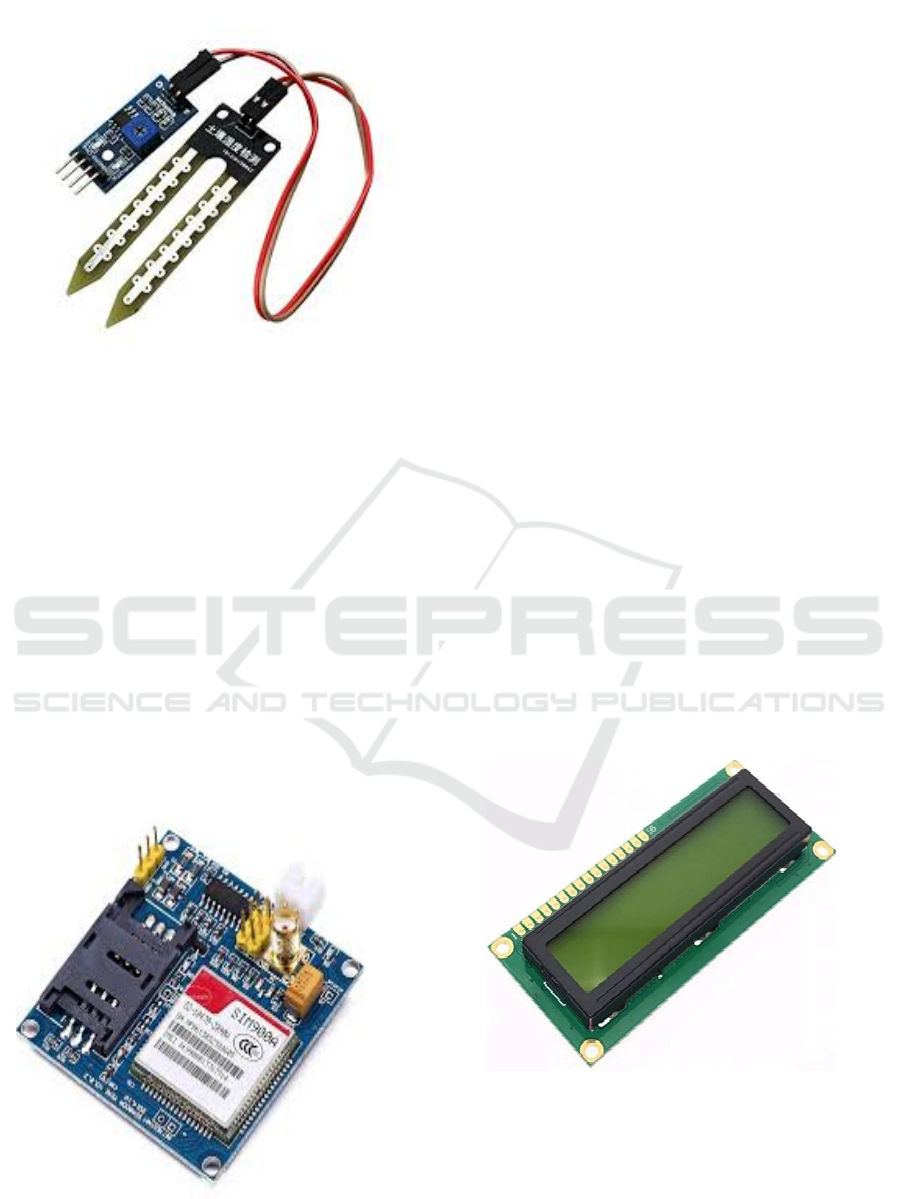
Figure 3: Moisture Sensor.
4.3 GSM
In this project, the GSM module plays a crucial role
in enabling remote communication and alert
functionality. The GSM module is integrated with the
Raspberry Pi microcontroller, allowing the system to
send notifications directly to the user's mobile phone
when abnormal conditions are detected. This feature
is particularly important for users who may not be in
close proximity to the monitored area, as it ensures
they are promptly informed of any potential termite
infestations. Once the sensors detect environmental
anomalies such as unusual temperature, humidity, or
moisture levels, the GSM module is triggered to send
a text message alert to the user, providing them with
real-time information about the status of the system.
Figure 4: GSM.
The GSM (figure 4) module enhances the overall
functionality of the system by offering a reliable
communication channel, independent of local
network infrastructure. This means that even if the
user is outside of the immediate vicinity or in an area
without internet access, they will still receive critical
alerts via SMS. The ability to send alerts through
SMS ensures that users can take immediate action to
address the problem, whether by inspecting the area
further or contacting pest control services. In
combination with the other components of the
system, the GSM module ensures that termite
detection and prevention efforts are timely and
effective, ultimately helping to safeguard valuable
furniture and structures from damage.
4.4 LCD
In this project, an LCD screen is incorporated to
provide real-time feedback and display vital
information related to the environmental conditions
monitored by the sensors. The LCD offers a clear and
intuitive interface, allowing users to quickly access
data on temperature, humidity, and soil moisture
levels, which are key indicators of termite activity. By
continuously updating the display, the LCD ensures
that the user has up-to-date insights into the
conditions within the monitored space, making it
easier to track potential termite risks. This real-time
display also serves as an immediate visual reference
for the system’s status, offering a user-friendly
method to monitor the system's performance and
detect abnormalities.
Figure 5: LCD.
The use of the LCD (figure 5) enhances the
system’s functionality by presenting the data in a
structured and readable format. Instead of relying
solely on alerts or notifications, users can visually
assess the environmental conditions at a glance,
ICRDICCT‘25 2025 - INTERNATIONAL CONFERENCE ON RESEARCH AND DEVELOPMENT IN INFORMATION,
COMMUNICATION, AND COMPUTING TECHNOLOGIES
164
making it easier to interpret sensor data. Whether the
system is running normally or triggering warnings,
the LCD provides an accessible overview of all
relevant parameters. This contributes to the overall
effectiveness of the system, ensuring that users have
the necessary information to make informed
decisions regarding termite prevention and
maintenance, ultimately helping protect their
furniture and structures from potential damage.
4.5 Buzzer
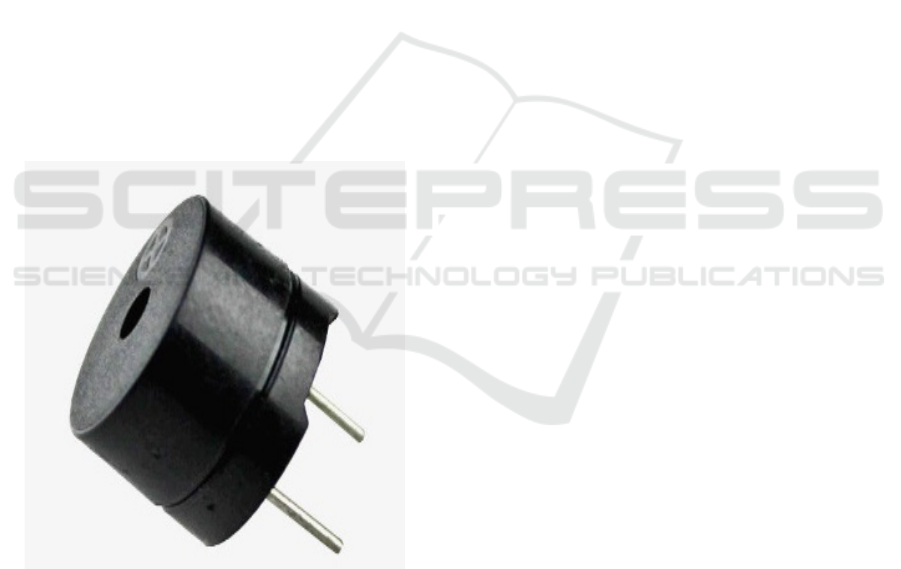
In this project, the buzzer plays a critical role in
providing immediate, local alerts when the system
detects potential termite activity. The buzzer is
connected to the Raspberry Pi microcontroller and is
triggered whenever abnormal environmental
conditions, such as a rise in temperature or moisture
levels, are detected by the sensors. This serves as an
audible warning, notifying users in the vicinity of
potential termite presence, enabling quick action to
address the issue before it escalates into significant
damage. The buzzer's sound ensures that the alert is
heard even in noisy environments, making it a reliable
tool for raising awareness about the problem.
Figure 6: Buzzer.
The buzzer also complements the GSM module,
which sends remote notifications to users. While the
GSM module communicates the alert over long
distances, the buzzer provides an immediate response
to any changes in the local environment. This dual-
alert system increases the effectiveness of the
monitoring system by ensuring that users are alerted
both locally and remotely. The use of a buzzer adds a
layer of responsiveness and efficiency to the system,
contributing to the overall goal of proactive termite
infestation prevention. The figure 6 shows buzzer.
4.6 Power supply
The power supply board in this project is designed to
efficiently convert and regulate input power to meet
the requirements of various system components. It
accepts an input voltage range from 12V to 18V and
utilizes two separate regulators: a 12V regulator and
a 5V regulator. The 12V regulator provides a stable
12V output to power components that require this
voltage, such as the Raspberry Pi and certain sensors.
Meanwhile, the 5V regulator ensures that components
requiring 5V, such as the GSM module and certain
other sensors, receive the appropriate power supply.
By splitting the output into two regulated voltages,
the power supply board ensures that all components
receive the correct voltage, preventing damage and
ensuring the system operates reliably.
The board is equipped with essential components
such as capacitors and diodes, which work together to
provide smooth and efficient power conversion. A
bridge rectifier, made up of diodes, is included to
convert the alternating current (AC) input into direct
current (DC), ensuring that the power supply provides
the necessary DC output for the system's components.
Capacitors are placed across the output lines to filter
out any voltage spikes or fluctuations, providing
stable and clean power. This well-designed power
supply board is crucial for the proper functioning of
the system, ensuring all components are powered
reliably while protecting them from voltage
irregularities.
Advantages and Applications
Advantages
Proactive
Efficient
Reliable
Cost-effective
Smart
Scalable
Real-time
Sustainable
User-friendly
Applications
Pest control
Home automation
Building maintenance
Environmental monitoring
Smart homes
Agriculture
Detection and Prevention of Termite Infestation Using IoT through Machine Learning
165
Structural health
IoT security
Property protection
Forestry management
5 RESULTS
Figure 7: Implementation Code.
Figure 8: User Details.
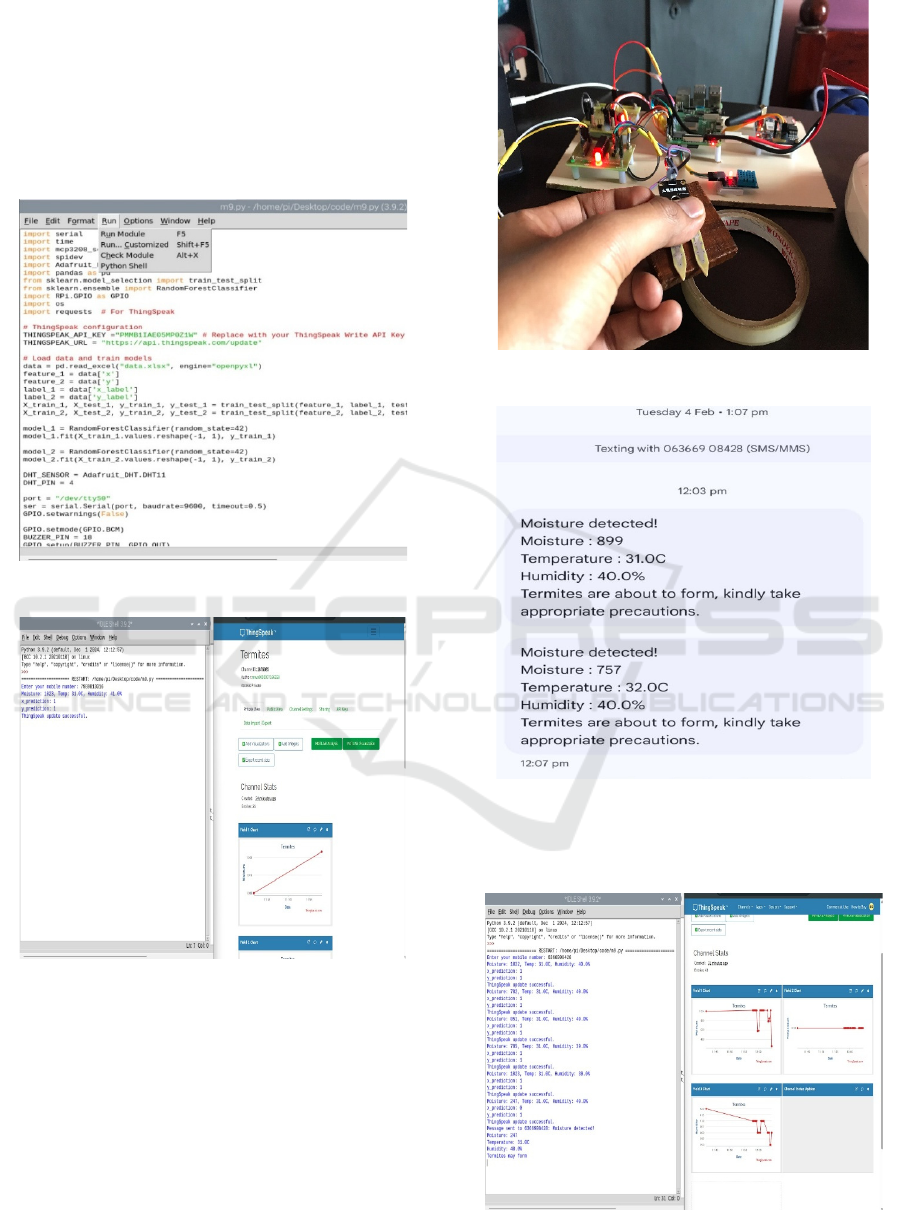
The figure 7 shows Implementation Code and
figure 8 shows Figure 8: User Details.
Figure 9: Testing Wooden pieces.
Figure 10: Sending Alerts to User.
The figure 9 shows Testing Wooden pieces and
figure 10 shows Sending Alerts to User.
Figure 11: Graphical Updates on Thing Speak.
ICRDICCT‘25 2025 - INTERNATIONAL CONFERENCE ON RESEARCH AND DEVELOPMENT IN INFORMATION,
COMMUNICATION, AND COMPUTING TECHNOLOGIES
166
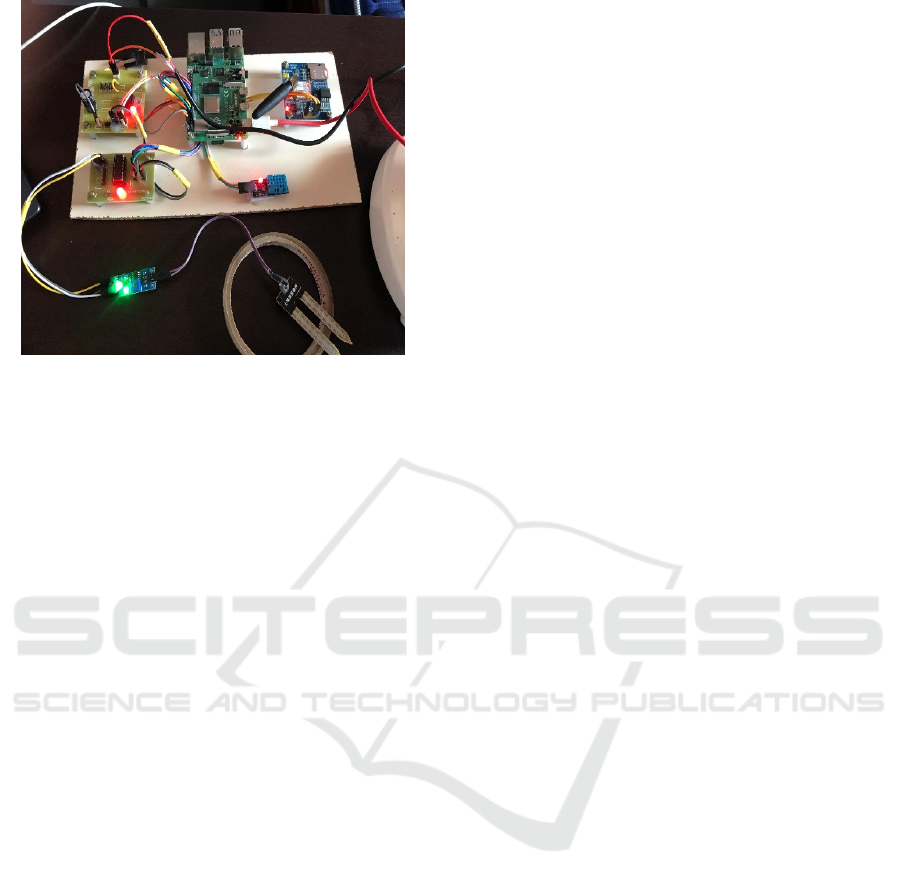
Figure 12: Circuit Diagram -Total KIT.
The figure 11 shows Graphical Updates on Thing
Speak and figure 12 shows Circuit Diagram -Total
KIT.
6 CONCLUSIONS
In conclusion, the proposed termite detection and
prevention system successfully integrates IoT and
machine learning technologies to provide an efficient
and proactive solution for monitoring and managing
termite infestations. By utilizing sensors to measure
critical environmental factors such as temperature,
humidity, and moisture, the system can detect
fluctuations that indicate the presence of termites.
The combination of real-time data analysis through
machine learning and seamless communication via
IoT ensures that the system can accurately identify
potential threats, triggering alerts through both GSM
notifications and local buzzers. This integrated
approach not only helps prevent significant structural
damage but also empowers users to take timely
action, ultimately reducing the risk of costly repairs
and enhancing the protection of valuable furniture
and buildings.
REFERENCES
Adebote DA, Ibrahim BU. Economic Impact of Termite
Activities: A Comprehensive Review. Bayero Journal
of Pure and Applied Sciences. 2012; 5(1): 84-89.
Farkhanda M. "Termite control using biosensors." IOP
Conference Series: Materials Science and Engineering,
2013; doi:10.1088/1757-899X/51/1/012014.
Fujii Y, Okumura S, Yoshimura T, Yanase Y. "Utilizing
semiconductor gas sensors for the detection of
metabolic gases emitted by termites." Forest Products
Journal, 62(7/8).
Lenz M, Crozier RH, Miller LR, Thompson GJ. Trait
evolution and phylogenetic analysis in drywood termite
lineages from Australia (Isoptera, Kalotermitidae).
Molecular Evolution and Phylogenetics. 2000; 17(3):
419-429.
MN Acda. Control and economic significance of termites
(Isoptera) in the Philippines. Sociobiology. 2004;
43(2):159-168.
Pirainila R, G Amitha Stains Mary, K Srinivasan, Dr. S
Jayakumar. "Experimental analysis on termite detection
using thermal camera and moisture sensor." IOSR
Journal of Engineering, 2019.
San Pablo MR, Villena EM, Garcia CM, Eusebio DA. The
resistance of cement wood wool board to termite attack
in the Philippines. Insects. 2011; 3(1): 18-24.
Scheffrahn RH, Su NY. Termites of Economic Significance
in Sociobiology. 1990; 17(1).
Detection and Prevention of Termite Infestation Using IoT through Machine Learning
167
