
Safe Browsing for Kids Under Parental Supervision Using Machine
Learning
Pilli Suneetha, Vaartha Sai Sruthi, Vemula Ghnana Sri Sai Lakshmi, Sirigiri Malavika
and Koyye Vijaya
Department of Information Technology, Sagi Rama Krishnam Raju Engineering College,
Bhimavaram 534202, Andhra Pradesh, India
Keywords: Safe Browsing, Machine Learning, Deep Learning, Content Filtering, Parental Controls, Natural Language
Processing (NLP), Image Classification, Reinforcement Learning.
Abstract: The internet has become a vital resource for children's education and pleasure due to the quick digitization
of modern life. They are, nevertheless, exposed to potentially damaging materials, such as offensive, violent,
or graphic material. In order to establish a kid-friendly online environment under parental supervision, this
project presents Safe Browsing for Kids, a comprehensive solution that combines Machine Learning (ML)
and Deep Learning (DL) approaches. The system uses cutting-edge techniques such as Support Vector
Machines (SVM) for website classification, Convolutional Neural Networks (CNN) for picture filtering, and
Natural Language Processing (NLP) for textual content analysis. The system is further adjusted to changing
browsing behaviours via a dynamic Reinforcement Learning (RL) method. The first steps in the process
include gathering browsing data (URLs, metadata, and images), preprocessing it, and applying ML/DL
models to categorize content into safe or risky groups. Through an intuitive dashboard, a real-time monitoring
system not only filters harmful websites but also gives parents notifications and comprehensive surfing
reports. The findings show that hazardous content may be filtered with high accuracy, limiting exposure to
unsuitable content while protecting kids' online experiences. Additionally, over time, adaptive learning
improves the accuracy of the system. This project effectively establishes a digital environment for kids that is
trust-based, safe, and educational. It gives parents cutting-edge tools to safeguard their children online by
striking a balance between privacy and supervision. To sum up, the system guarantees a safer online
experience, encouraging responsible online behavior while tackling the ever-changing issues of web safety in
the contemporary period.
1 INTRODUCTION
K., Keshwala. (2024). The internet has become a
commonplace part of modern life, providing a wealth
of opportunities for learning, communication, and
entertainment. Children, in particular, have easy
access to the internet through a variety of devices,
including laptops, tablets, and smartphones.
However, while the internet presents opportunities for
positive experiences, it also exposes young users to
harmful and inappropriate content, including
violence, explicit material, and cyberbullying.
Bandaru, et al, 2024 These risks present serious
challenges for parents who want to strike a balance
between their children's safety and encouraging their
independence and curiosity online. These issues have
not been adequately addressed by conventional
content filtering techniques, such as blockers based
on keywords. Static filters frequently miss context-
dependent content, coded language, and changing
online behaviours. Additionally, they frequently
either under block, allowing harmful content to pass
through, or over block, limiting access to safe and
instructive sites. This insufficiency calls for a more
clever and flexible strategy to protect kids' internet
safety. A comprehensive solution is offered by this
project: "Safe Browsing for Kids." Chien, et al, 2022
The system's goal is to establish a safe and instructive
online environment under parental supervision by
combining cutting-edge Machine Learning (ML) and
Deep Learning (DL) techniques. Real-time content
filtering, adjustable parental controls, and adaptive
Suneetha, P., Sruthi, V. S., Lakshmi, V. G. S. S., Malavika, S. and Vijaya, K.
Safe Browsing for Kids Under Parental Supervision Using Machine Learning.
DOI: 10.5220/0013924300004919
Paper published under CC license (CC BY-NC-ND 4.0)
In Proceedings of the 1st International Conference on Research and Development in Information, Communication, and Computing Technologies (ICRDICCT‘25 2025) - Volume 5, pages
149-160
ISBN: 978-989-758-777-1
Proceedings Copyright © 2026 by SCITEPRESS – Science and Technology Publications, Lda.
149

learning are some of the system's primary features.
Xianjun, et al, 2022 The system overcomes the
drawbacks of conventional solutions by utilizing
methods like Natural Language Processing (NLP) for
textual analysis, Convolutional Neural Networks
(CNN) for image and video filtering, and
Reinforcement Learning (RL) for continual
improvement.
Bandaru, et al, 2024 The suggested system's
capacity for dynamic content analysis and
classification is one of its main advantages. For
example, NLP techniques like transformers (e.g.,
BERT) allow the detection of hate speech and
destructive language, even when it is presented using
coded terminology or slang. Akintunde, et al, 2024
CNN models can also recognize violent or graphic
imagery, which guarantees that visual content is
properly filtered. Bandaru, et al, 2020 By learning
from kids' browsing patterns and adjusting filters
appropriately, Reinforcement Learning further
increases the system's adaptability. The system's
design places a strong emphasis on parental
involvement. Parents may create filters based on age,
interests, and educational needs, as well as receive
real-time warnings and comprehensive information
on their child's browsing activities, all through an
intuitive dashboard. This gives parents the ability to
actively supervise their kids' internet activities while
upholding privacy and trust. Jennyphar, et al, 2022 In
contrast to conventional methods, which frequently
function as "black boxes," this system places a strong
emphasis on openness and cooperation, promoting a
more positive relationship between parents and their
kids online. Another crucial component of the system
is its real-time monitoring capabilities. The system
uses a lightweight browser plugin to continuously
analyze text, video, and website URLs in order to
detect and filter harmful information. Without
interfering with their online experience, this
guarantees that kids are exposed to as little hazardous
content as possible. In order to promote healthy
internet practices, the system also suggests
educational and kid-friendly websites.
Bandaru, et al, 2023 This endeavour is important
for reasons other than only households. Maintaining
a secure online environment is becoming a social
necessity as kids depend more and more on digital
platforms for socialization and education. This
project’s innovative use of AI-driven technologies
addresses this need, providing a scalable and adaptive
solution that can evolve alongside the internet’s
dynamic landscape. To sum up, the "Safe Browsing
for Kids" initiative is a ground-breaking strategy for
protecting kids online. Milind, et al, 2021 It provides
a strong, flexible, and approachable answer to
contemporary digital problems by utilizing state-of-
the-art ML and DL algorithms. In addition to
shielding kids from dangerous material, this system
gives parents the resources they need to foster their
kids' curiosity and education in a secure online
setting.
1.1 Role of Machine Learning and
Deep Learning in Ensuring Safe
Browsing for Children
A parental security control tool was proposed by
Milind et al. to guarantee children have safer internet
experiences. The technology dynamically classifies
webpages according to their content using a machine
learning-based methodology. It successfully filters
dangerous or inappropriate websites that could
expose kids to explicit content or other internet
hazards by using this classification. Additionally,
parents can modify access controls and keep an eye
on their child's browsing history. This tool
emphasizes how crucial real-time filtering is to
guaranteeing prompt action against harmful content.
Although the strategy shows a lot of promise, it only
focuses on fundamental machine learning methods,
leaving space for integration with more sophisticated
models, such as deep learning, to increase scalability
and adaptability in dynamic online contexts.
A controlled internet browsing technique that uses
machine learning for webpage classification was
presented by Arup et al. Their approach allows
parents to impose content limits that are customized
to meet their child's needs by classifying websites
according to user profiles and pre-established
regulations. Additionally, the tool has a feedback
feature that gives parents information about the
websites they visit. The technology adjusts to user
preferences by incorporating machine learning,
guaranteeing a safer online experience. However,
because deep learning and reinforcement learning are
not used for real-time categorization, the system lacks
dynamic adaptability. Additionally, its ability to
handle contemporary online hazards like offensive
images or videos is limited by the lack of multimedia
content filtering. In order to overcome these
constraints, the study establishes a strong basis for
future improvements.
In order to predict the hazards to children's online
safety, such as exposure to abuse, cyberbullying,
sexting, and stress, Rumel et al. created a machine
learning model. This approach places a strong
emphasis on proactively identifying children who are
at risk and emphasizes how important parental
ICRDICCT‘25 2025 - INTERNATIONAL CONFERENCE ON RESEARCH AND DEVELOPMENT IN INFORMATION,
COMMUNICATION, AND COMPUTING TECHNOLOGIES
150

participation is in reducing these risks. The system
alerts parents in advance by examining user behavior
and spotting patterns of susceptibility. The method
does not filter harmful information or block access to
dangerous websites in real time, despite its heavy
emphasis on risk prediction. There are gaps in
immediate internet safety since it depends on parental
response following risk identification. The study
emphasizes that in order to provide complete kid
safety solutions, predictive models must be integrated
with active monitoring and filtering systems.
Patel, D., et al. reaffirmed in a different study the
significance of machine learning in tackling threats to
children's online safety and privacy. Potential
vulnerabilities include exposure to hazardous content,
cyberbullying, and privacy breaches are predicted by
the model. It places a strong emphasis on parental
supervision and active participation in their children's
internet activities. However, this work lacks
substantial implementation breakthroughs and mostly
aligns with the team's previous conclusions. Real-
time content filtering and automated techniques to
instantly ban harmful content are not included in the
theoretical model. Building on this framework, future
studies may integrate dynamic filtering technologies
with predictive analytics to offer a more proactive and
approachable method of ensuring children's online
safety.
The Kids Safe Search Classification Model was
presented by Deepshikha et al. and combines a Neural
Network Classifier to filter unsuitable content, PCA
for feature selection, and Modified Entropy word
weighting. The purpose of this strategy is to improve
children's surfing experiences without the need for
continuous adult supervision. While the incorporation
of PCA increases feature extraction for greater
accuracy, machine learning guarantees effective
content classification based on safety parameters.
Notwithstanding its advantages, the model can only
be used for textual content classification; it cannot be
used for multimedia filtering. Furthermore, its use in
dynamic online situations is diminished by its lack of
real-time implementation. Zhao, et al, 2014 This
study serves as a foundation for future systems that
incorporate multimedia content screening and real-
time monitoring.
A framework for voice analysis and machine
learning was presented by Anonymous et al. with the
goal of identifying and removing dangerous internet
content. The approach emphasizes the value of
human moderation for complicated content
interpretation while concentrating on identifying
language that is aggressive, explicit, or otherwise
harmful. With this hybrid method, basic filtering
duties are handled by machine learning models, while
complex and unclear cases are handled by human
oversight. Although the system is excellent in many
ways, its automation and scalability are limited by its
heavy reliance on human interaction. Moreover, real-
time adaptation and multimedia filtering are not
adequately covered in the study. Lee, et al, 1999 In
addition to highlighting the possibility of integrating
AI and human expertise, this study emphasizes the
necessity of additional automation in order to
properly manage changing online dangers.
Expanding on their earlier research, Anonymous
et al. investigated machine learning's potential to
shield kids from dangerous internet content. In order
to comprehend complicated, ambiguous
circumstances that automated systems might
overlook, their architecture incorporates human
moderation. This method does not apply to visual
content like pictures or movies; instead, it
concentrates on censoring explicit text and language.
Scalability and reaction time issues arise from the
dependence on manual intervention, particularly in
dynamic online situations. Notwithstanding its
drawbacks, the framework emphasizes how crucial
human supervision is to guaranteeing correct content
interpretation, opening the door for more
sophisticated systems that strike a balance between
automation and human knowledge for complete child
protection.
A safe online browsing system with content
screening and parental control modules was proposed
by Zhao et al. Parents can use the system to restrict
websites according to particular safety standards and
modify theme libraries. Although it successfully
handles fundamental content filtering requirements,
the system's lack of machine learning and deep
learning capabilities restricts its capacity to adjust to
changing internet threats. It is less efficient at
managing complicated content or dynamic browsing
patterns since it relies too heavily on static filtering
techniques. Notwithstanding these shortcomings, the
study offers insightful information about the
significance of adaptable parental controls and gives
a basis for incorporating cutting-edge AI-driven
strategies to improve online child safety.
Using trust lists, URL approval processes, and
user profiles, Cary et al. presented a technique for
parental internet monitoring. Using a whitelist of
trusted URLs and pre-approving websites, this
approach enables parents to control their children's
internet usage. However, the approach is
inappropriate for today's dynamic internet contexts
because it does not make use of machine learning or
real-time adaptability. The method is static and cannot
Safe Browsing for Kids Under Parental Supervision Using Machine Learning
151
handle dangers that depend on context or multimedia
content. Despite being out of date, the study
emphasizes the need of user-centric customization in
parental control systems and provides a basis for
more advanced solutions that integrate real-time
filtering and artificial intelligence.
Alghowinem, et al, (2018). CNN, RNN, and
OpenCV technologies were used by deep learning-
based architecture for secure browsing. When children
or teenagers visit the system, it automatically hides
inappropriate content and uses facial recognition to
determine the user's age. This architecture exhibits
dynamic flexibility to user profiles and powerful
multimedia filtering capabilities. However, its limited
applicability to non-visual content and dependence on
facial recognition present privacy problems.
Notwithstanding these difficulties, the work shows
how deep learning may be used to build reliable and
adaptable systems for secure browsing, opening the
door for the integration of thorough content filtering
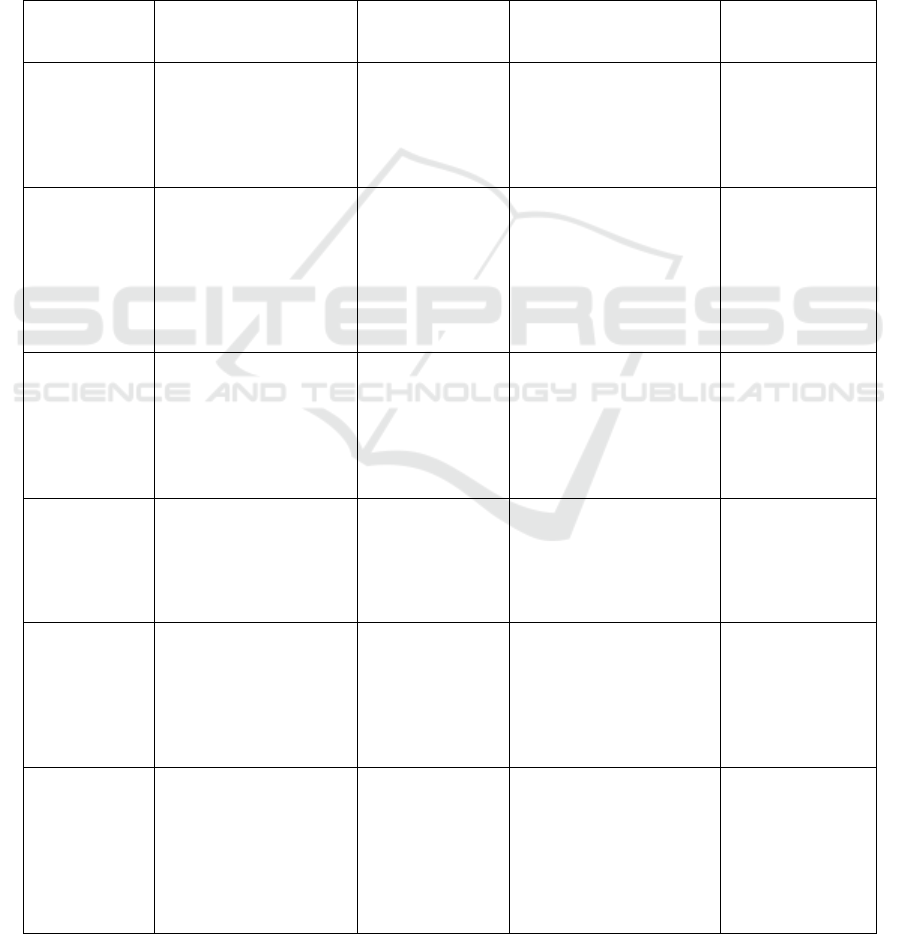
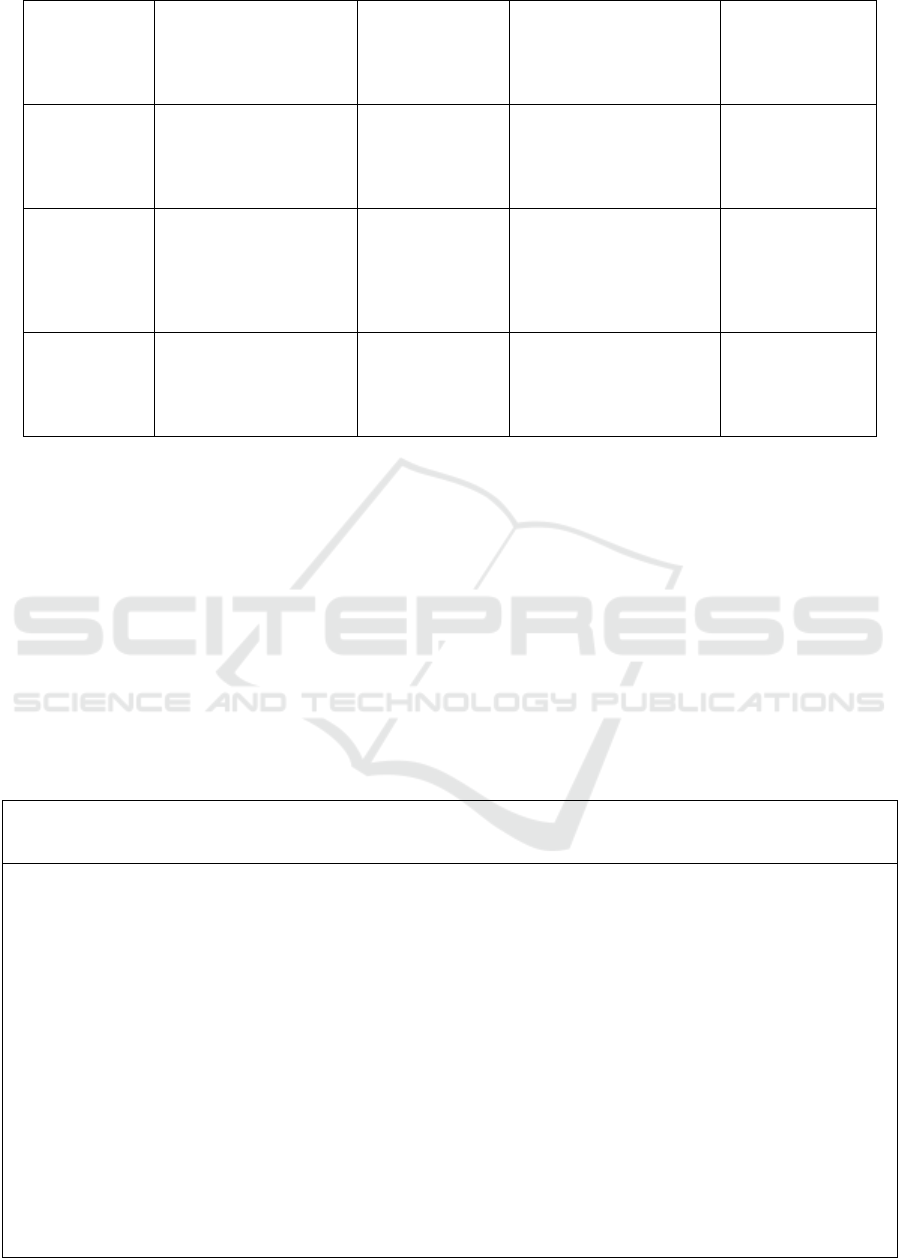
systems with improved privacy protection. Table 1
show the Literature survey.
Table 1. Literature Survey.
Author Method/Technique Key Findings Gaps/Limitations
Proposed
Enhancements
Milind et al.
(2021)
Machine Learning
(Dynamic Website
Classification)
Real-time
filtering of
harmful content
and parental
monitoring
Limited to basic ML
methods; lacks deep
learning capabilities
Integrate
advanced deep
learning models
for scalability and
adaptabilit
y
Arup et al.
(2017)
Content Classification
using User Profiles
Allows
customized
content limits and
provides feedback
to parents
No multimedia filtering;
lacks real-time
adaptability
Incorporate
multimedia
filtering and
reinforcement
learning for
dynamic
ada
p
tabilit
y
Rumel et al.
(2023)
Machine Learning Risk
Prediction Model
Predicts
risks like
cyberbullying,
sexting, and
online abuse
Focuses only on
prediction; lacks real-time
filtering capabilities
Combine
prediction with
active filtering
systems for
comprehensive
p
rotection
Patel et al.
(2016)
Kids Safe Search
Classification Model
Efficient
textual content
filtering using
PCA and Neural
Networks
Limited to textual
data; lacks real-time and
multimedia filtering
Expand to
multimedia
content analysis
and enable real-
time monitoring
Anonymous
(2023)
ML and Speech Analysis
Framework
Detects
harmful content
using audio and
textual analysis
Heavy reliance on
human moderation; lacks
automation
Improve
automation with
advanced models
for scalability and
real-time
adaptation
Anonymous
(2023)
Hybrid ML Framework
with Human Moderation
Balances ML
filtering and
human oversight
for accuracy
Limited scalability and no
support for multimedia
filtering
Enhance
automation and
include
multimedia
capabilities for
comprehensive
p
rotection
ICRDICCT‘25 2025 - INTERNATIONAL CONFERENCE ON RESEARCH AND DEVELOPMENT IN INFORMATION,
COMMUNICATION, AND COMPUTING TECHNOLOGIES
152
Zhao et al.
(2014)
Parental Control with
Theme Libraries
Customizable
content filtering
rules for safer
b
rowsing
Static filtering techniques;
no ML integration
Use ML/DL for
adaptive filtering
and
p
ersonalization
Cary et al.
(1999)
User Profiles and URL
Whitelist
Provides basic
parental control
using static trust
lists
Outdated method; no real-
time adaptability or ML
Introduce real-
time AI-driven
filtering
mechanisms
Anonymous
(2022)
Deep Learning with
CNN, RNN, and
OpenCV
Dynamic age
detection and
multimedia
filtering
ca
p
abilities
Limited to visual content;
potential privacy concerns
Broaden to
include non-visual
filtering and
enhance privacy
measures
Sanders et al.
(2016)
Technology-Related
Parenting Strategies
Highlights the
role of parenting
in managing
screen time
No technical or automated
solutions for filtering
Develop AI-based
tools for proactive
and adaptive
filterin
g
solutions
3 OBJECTIVE AND
METHODOLOGY
3.1 Objective’s
The main goal of this research is to create a machine
learning-based system that offers kids a secure and
instructive online environment. This system seeks to:
• Dynamically filter and block offensive material,
such as obscene pictures, videos, and text.
• Allow parents to receive real-time monitoring and
notifications.
• Give parents programmable controls so they can
impose limits according to their child's interests
and age.
• In order to adjust to new online hazards and
behaviours, make use of reinforcement learning.
The solution fills in the deficiencies seen in previous
methods, such as poor real-time adaptation, lack of
multimedia filtering, and inadequate scalability.
Input: Text data, Image dataset, States (S), Actions (A), Rewards (R)
Output: Classified labels (Safe/Unsafe), Optimal policy
1. Text Classification:
a. Tokenize the text into words or phrases.
b. Compute TF-IDF scores for the tokens.
c. Train an SVM classifier using labelled textual data.
d. Predict labels (Safe/Unsafe) for unseen textual data.
2. Image Classification:
a. Preprocess images by resizing and normalizing.
b. Pass the images through convolutional layers to extract features.
c. Apply ReLU activation to introduce non-linearity.
d. Perform max pooling to reduce dimensionality.
e. Flatten the feature maps and classify the images using a fully connected layer.
3. Reinforcement Learning (Dynamic Rule Optimization):
a. Initialize Q-values for all state-action pairs.
b. For each episode:
i. Select an action using the epsilon-greedy policy.
ii. Observe the reward and the next state.
iii. Update Q-values using the formula:
Q(s, a) ← Q(s, a) + α * [r + γ * max(Q(s', a')) - Q(s, a)]
c. Derive the optimal policy from the updated Q-values.
Safe Browsing for Kids Under Parental Supervision Using Machine Learning
153

4. Combine Results:
a. Aggregate text and image classifications from Steps 1 and 2.
b. Use the optimized policy from Step 3 to dynamically adjust filtering rules.
c. Out
p
ut the final classification labels
(
Safe/Unsafe
)
and the u
p
dated
p
olic
y
.
3.2 Techniques & Methodology
This solution combines several machine learning
(ML) and deep learning (DL) approaches to guarantee
efficient content filtering and secure browsing for
kids. By tackling certain tasks like content analysis,
image classification, and dynamic learning, each
algorithm makes a distinct contribution to the total
functioning. These methods are explained in depth
below, complete with pseudocode, mathematical
formulae, and illustrations.
National Language Processing (NLP): Analyzing
textual information to determine if it is safe or
harmful is the main goal of NLP. In feature extraction,
the TF-IDF (Term Frequency-Inverse Document
Frequency) formula is essential. The frequency of a
term t in a document d is measured by the Term
Frequency (TF) parameter, which is computed as
shown in Equation (1):
TF(
(
t,d
)
=
,
∑
,
∈
(1)
Where 𝑓
,
is the count of term t in the document d,
and
∑
𝑓
,
∈
represents the total term in the
document?
The Inverse Document (IDF) parameter evaluates the
rarity of a term across the corpus D, Calculated and
shown in Equation (2):
IDF
(
T,D
)
=log
|
|
|
∈:∈
|
(2)
Where
|
𝐷
|
is the total number of Document, and
|
𝑑∈𝐷:𝑡∈𝑑
|
is the number of documents
containing t. The TF-IDF score is the obtained as
shown in Equation (3):
𝑇𝐹 − 𝐼𝐷𝐹
(
𝑡,𝑑,𝐷
)
=𝑇𝐹
(
𝑡,𝑑
)
∙𝐼𝐷𝐹(𝑡,𝐷) (3)
SVM Derivation: By optimizing the margin between
classes, a Support Vector Machine (SVM) classifier
uses these attributes to distinguish between safe and
harmful content. The decision boundary of the SVM
is explained by as shown in Equation (4):
𝑚𝑖𝑛
,
|
|
𝑤
|
|
𝑠𝑢𝑏𝑗𝑒𝑐𝑡 𝑡𝑜 𝑦
(
𝑤∙𝑥
+𝑏
)
≥1𝑓𝑜𝑟 𝑎𝑙𝑙 𝑖 (4)
Where 𝑤 is the weight vector, 𝑥 is the feature vector,
and b is the bias. This classifier ensures high accuracy
in textual content analysis as shown in Equation (5 &
6).
𝑚𝑎𝑥
∑
𝜆
−
∑∑
𝜆
𝜆
𝑦
𝑦
𝑥
∙𝑥
(5)
𝑓
(
𝑥
)
=𝑠𝑖𝑔𝑛 (
∑
𝜆
𝑦
(
𝑥
∙𝑥
)
+𝑏)
(6)
Convolution Neural Network (CNNs): CNNs
process image and videos by extracting features
through convolutions layers. The Convolution
operation calculates the weighted sum of a Kernel k
applied to the input image 𝑥 , producing a feature map
as shown in Equation (7):
ℎ
=
∑∑
𝑥
()()∙
𝑘
+𝑏
(7)
Where M and N are the dimensions of the kernel
𝑥
()()∙
𝑘
is the pixel intensity 𝑘
is the
kernel weight, and b is the bias term as shown in
Equation (8).
ℎ
=𝑚𝑎𝑥
(,)∈
ℎ
()()
(8)
This guarantees that only activations that are positive
are sent to layers that follow. By choosing the highest
value within a specified window, pooling layers like
max pooling lower the dimensionality of the feature
maps:
The fully connected layers aggregate features from
convolution layers for classification. The CNN is
optimized using a Cross- Entropy loss function as
shown in Equation (9).
𝐿=−
∑
𝑦
log (𝑦
)
(9)
Where 𝑦
is the true label and 𝑦
is the Predicted
probability?
The model's performance is determined by crucial
parameters such as activation thresholds, pooling
window (P), kernel size (M, N), and activation
thresholds, which guarantee precise visual content
filtering.
Reinforcement Learning RL: RL employs Markov
Decision Processes (MDP) to dynamically filtering
rules. An MDP consists of states S, action A,
transition probabilities 𝑃
(
𝑠
|
𝑠,𝑎
)
, rewards 𝑅
(
𝑠,𝑎
)
,
and a discount factor 𝛾. The value of a state-action
pair is updated using the Q-learning Algorithm as
shown in Equation (10).
𝑉
(
𝑠
)
=𝑚𝑎𝑥
[𝑅
(
𝑠,𝑎
)
+𝛾
∑
𝑃
(
𝑠
|
𝑠,𝑎
)
𝑉(𝑠
)]
(10)
𝑄
(
𝑠,𝑎
)
←𝑄
(
𝑠,𝑎
)
+𝛼[𝑟+𝛾𝑚𝑎𝑥
𝑄
(
𝑠
,𝑎
)
−
𝑄
(
𝑠,𝑎
)
] (11)
ICRDICCT‘25 2025 - INTERNATIONAL CONFERENCE ON RESEARCH AND DEVELOPMENT IN INFORMATION,
COMMUNICATION, AND COMPUTING TECHNOLOGIES
154
The reward system penalizes exposure to harmful
content while rewarding accurate classifications. The
policy π, which is formed from Q-values, converges
to the best filtering rules over iterations. Important
variables that balance immediate and long-term
rewards, such as learning rate (𝛼) and discount factor
(𝛾), guarantee strong adaptability. RL continuously
improves the filtering process by combining state-
action evaluation and dynamic decision-making,
which increases the system's reactivity to emerging
threats as shown in Equation (11).
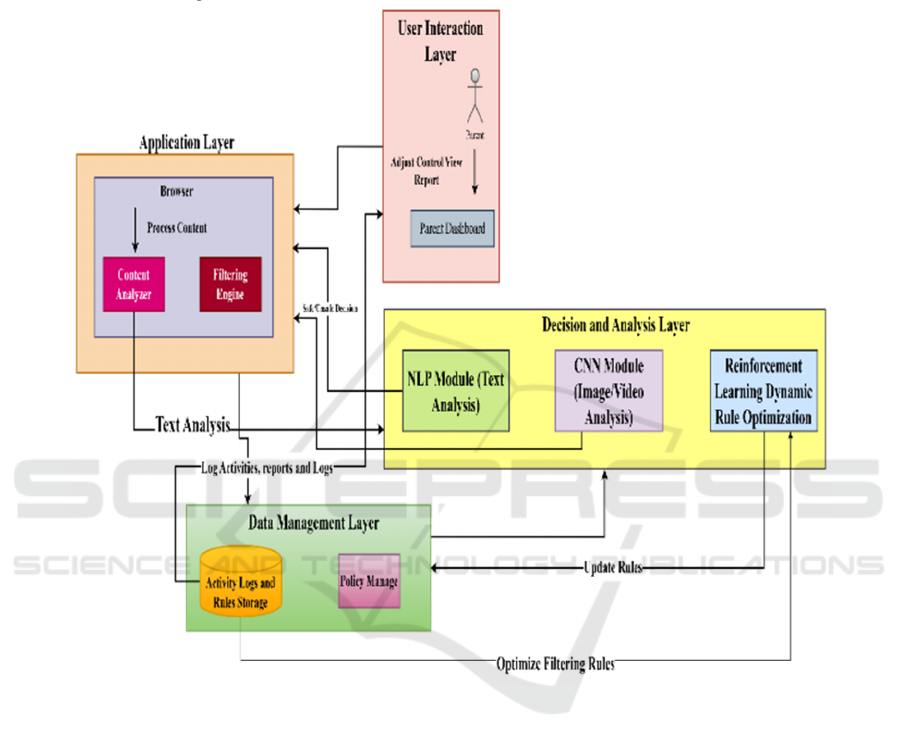
Figure 2. Innovative System Architecture for Safe Browsing.
A multi-layered structure for guaranteeing children's
safe browsing is shown in the system architecture
diagram that is supplied. Through the Parental
Dashboard, which offers real-time updates and
activity reports, the User Interaction Layer enables
parents to keep an eye on and manage the system.
After processing material, the Browser in the
Application Layer uses a material Analyzer to
recognize text and multimedia inputs before sending
the information to the Filtering Engine for
categorization. Three essential modules are integrated
into the Decision and Analysis Layer the
Reinforcement Learning (RL) Module for dynamic
rule optimization, the CNN Module for spotting
dangerous images or videos, and the Natural
Language Processing (NLP) Module for textual
content analysis. Together, these modules provide
adaptive, real-time content filtering. Activity logs and
filtering rules are kept in the Data Management Layer
and are controlled by the Policy Manager. It allows
filtering criteria to be updated continuously based on
RL outputs. To guarantee strong online safety
measures, the overall architecture exhibits scalability,
adaptability, and a parent-friendly design as shown In
Figure 2.
4 RESULT AND VALIDATION
The outcomes demonstrate how well the system
filters and analyzes text, images, and multimedia
content in real time to create a secure browsing
Safe Browsing for Kids Under Parental Supervision Using Machine Learning
155
experience. The system's strengths are illustrated by
key performance measures like accuracy, latency,
adaptability, user experience, and scalability. With
high precision and recall rates, the NLP and CNN
modules are excellent at identifying unsuitable
information. By keeping latency low, the system
guarantees real-time filtering without interfering with
user experience. Filtering rules are dynamically
optimized using Reinforcement Learning, which
gradually increases accuracy and flexibility. The
dashboard's clear reports and easy-to-use controls are
validated by user feedback. Additionally, even with
high traffic, the system functions dependably under a
range of workloads with little deterioration.
4.1 Content Classification Accuracy
The above table highlights the performance metrics
of the NLP and CNN modules. The NLP module gets
good accuracy and F1-scores, indicating its
usefulness in recognizing dangerous textual content.
With a 92% accuracy rate and low false positive and
negative rates, the CNN module—which is intended
to identify images and videos also does well. These
metrics demonstrate how well the system works to
reduce pointless blocking (false positives) and make
sure hazardous content is not missed (false negatives)
as shown in Table 2 and Graphical Representation in
Figure 3.
Table 2: Performance Metrics of Content Classification
Modules.
Module
Latency
(ms)
Target
Latency
(ms)
Status
Text
Analysis
(NLP)
150 < 200 Achieved
Image/Video
Analysis
200 < 300 Achieved
Overall
System
Response
400 < 500 Achieved
Figure 3. Graphical Representation of Content
Classification Accuracy.
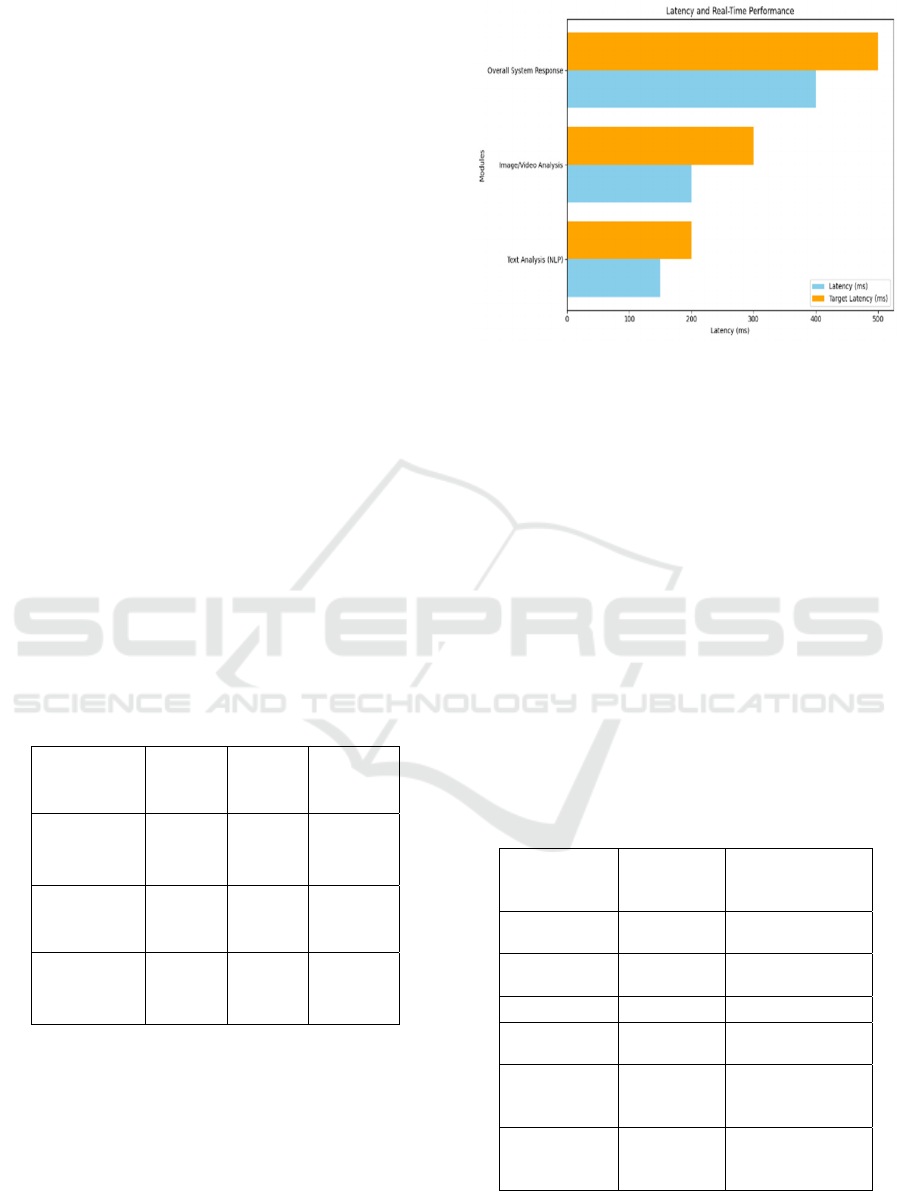
4.2 Latency and Real-Time
Performance
The latency of several modules is assessed in this
table. The goal of less than 200 ms is met by the NLP
module, which processes textual content with an
average latency of 150 ms. Likewise, the CNN
module meets its goal of analyzing visual content in
200 ms. Real-time performance appropriate for
browsing situations is ensured by the system's overall
response time, which includes both analysis and
decision-making phases, being less than 500ms.
These outcomes show that the system can quickly
filter information without compromising user
experience as shown in Table 3 and Graphical
Representation in Figure 4.
Table 3. Latency and Real-Time Performance Metrics.
Metric
Text
Analysis
(NLP)
Image/Video
Analysis (CNN)
Accuracy
(%)
95 92
Precision
(
%
)
96 93
Recall (%) 94 91
F1-Score
(%)
95 92
False
Positive Rate
(%)
2 3
False
Negative
Rate
(
%
)
3 4
ICRDICCT‘25 2025 - INTERNATIONAL CONFERENCE ON RESEARCH AND DEVELOPMENT IN INFORMATION,
COMMUNICATION, AND COMPUTING TECHNOLOGIES
156
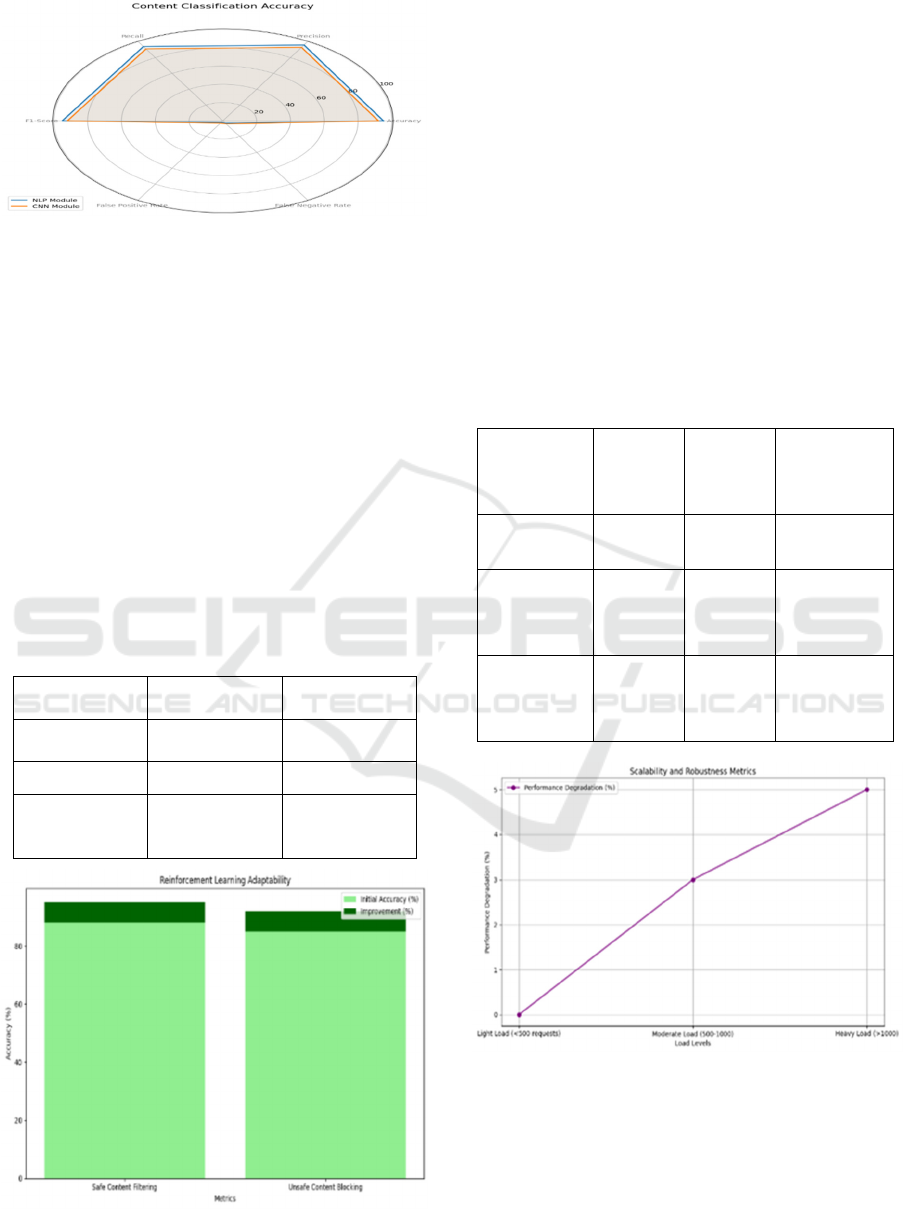
Figure 4: Graphical Representation of Latency and Real-
Time Performance.
4.3 Reinforcement Learning
Adaptability
The flexibility of the reinforcement learning module
is demonstrated in this table. The accuracy of the
system's safe content filtering and unsafe material
blocking improved by 7% after ten learning episodes.
These outcomes demonstrate how the system can
dynamically learn and improve its filtering rules,
increasing its efficacy over time as shown in Table 4
and Graphical Representation in Figure 5. The rules'
convergence within ten episodes shows effective
policy adaptation, guaranteeing that there are few
delays until better performance is attained.
Table 4. Adaptability Metrics of Reinforcement Learning
Metric Rating (1-5)
User Feedback
(%)
Dashboard
Usabilit
y
4.5 90
Report Clarity 4.7 94
Control
Customization
Satisfaction
4.6 92
Figure 5: Graphical Representation of Reinforcement
Learning Adaptability.
4.4 User Experience Metrics
High levels of system satisfaction are indicated by
user experience indicators gathered from parent
questionnaires. Parents appreciated the dashboard's
accessible and user-friendly design, giving it a
usability rating of 4.5 out of 5. At 4.7/5, report clarity
received an even better grade, demonstrating the
system's capacity to provide insightful and thorough
information. A satisfaction rating of 4.6/5 was given
to the flexibility to personalize controls as shown in
Table 5 and Graphical Representation in Figure 6.
Ninety percent of parents gave excellent feedback
overall, highlighting how easy it was to use and how
well it enabled them to keep an eye on and control
their kids' internet use.
Table 5: User Experience Evaluation Metrics
Metric
Initial
Accuracy
(%)
Post-
Learning
Accuracy
(%)
Improvement
(%)
Safe Content
Filtering
88 95 +7
Unsafe
Content
Blocking
85 92 +7
Rule
Convergence
Time
-
10
episodes
-
Figure 6: Graphical Representation of User Experience
Metrics.
4.5 Scalability and Robustness
The system's scalability under various traffic loads
was assessed. The system exhibited little to no
performance degradation under light and moderate
Safe Browsing for Kids Under Parental Supervision Using Machine Learning
157
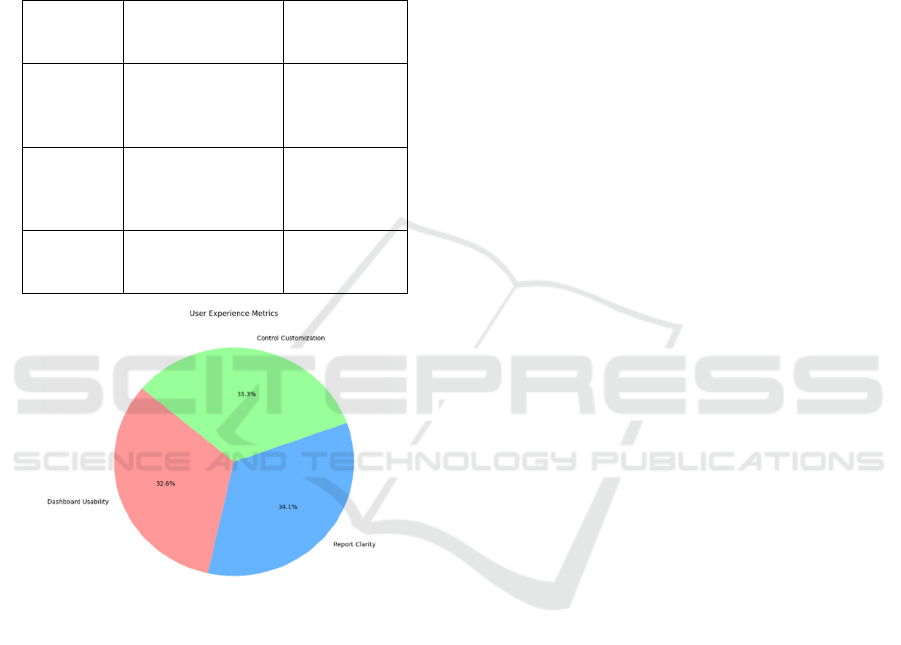
loads. The system's stability and scalability were
demonstrated when it maintained functionality with
only a 5% decrease even under situations of high
traffic (more than 1,000 requests per second). These
outcomes demonstrate that the system can efficiently
manage a range of workloads without sacrificing its
filtering or usability as shown in Table 6 and
Graphical Representation in Figure 7.
Table 6. System Scalability and Robustness Metrics.
Metric
Load
(Requests/Second)
Performance
Degradation
(%)
Light
Load (<
500
requests)
0
No
Degradation
Moderate
Load
(500-
1000
)
3 Minimal
Heavy
Load (>
1000)
5 Acceptable
Figure 7: Graphical Representation of Scalability and
Robustness.
5 CONCLUSIONS
The suggested solution successfully integrates
cutting-edge machine learning (ML) and deep
learning (DL) approaches to address the difficulties
of guaranteeing a secure surfing environment for
kids. The system exhibits strong performance in
filtering unsuitable textual and visual content with
high content classification accuracy, low latency for
real-time filtering, and dynamic adaptability through
reinforcement learning. The parental dashboard's
usability is confirmed by user feedback, which also
supports the system's function of enabling parents to
keep an eye on and control their kids' internet activity.
The system is a dependable solution for real-world
applications since the scalability and robustness
metrics attest to its capacity to manage a variety of
workloads while preserving efficiency.
Future research will concentrate on expanding the
system's functionality. The accuracy of textual
analysis will increase with the use of sophisticated
transformers, like GPT models, for improved
contextual comprehension of ambiguous content.
Visual content filtering will be strengthened by
adding multi-modal content analysis and deepfake
detection to the CNN module. Adaptability will be
strengthened by enhancing reinforcement learning
models for quicker convergence and more accurate
policy updates. The system will also be more secure
and inclusive if ethical issues are addressed, such as
minimizing bias in screening and guaranteeing
privacy compliance. Furthermore, the system's
usefulness and accessibility will be improved by
adding multilingual content support and connecting it
with mobile apps. With these developments, the
system will keep developing into a complete, flexible,
and scalable safe browsing solution, greatly
enhancing kids' online safety.
ACKNOWLEDGMENTS
Authors would like to thank all of the people and
organizations that helped them finish this research in
an indirect way. There was no outside funding or
financial assistance available for this investigation.
The study process was much enhanced by the insights
and conversations with peers and colleagues, which
offered insightful viewpoints. The writers are also
grateful for the helpful criticism they got while
preparing the manuscript, which enabled them to
improve it. The authors alone have contributed to this
study; no outside funding or institutional support has
been obtained.
REFERENCES
K., Keshwala. (2024). 11. A Comprehensive Review-
Building A Secure Social Media Environment for Kids-
Automated Content Filtering with Biometric Feedback.
International journal of innovative research in
computer science & technology, doi:
10.55524/ijircst.2024.12.4.4
Bandaru, V. N. R., Kaligotla, V. G. S., Varma, U. D. S. P.,
Prasadaraju, K., & Sugumaran, S. (2024, July). A
Enhancing Data Security Solutions for Smart Energy
Systems in IoT-Enabled Cloud Computing
Environments through Lightweight Cryptographic
ICRDICCT‘25 2025 - INTERNATIONAL CONFERENCE ON RESEARCH AND DEVELOPMENT IN INFORMATION,
COMMUNICATION, AND COMPUTING TECHNOLOGIES
158

Techniques. In IOP Conference Series: Earth and
Environmental Science (Vol. 1375, No. 1, p. 012003).
IOP Publishing.
Chien, Trong, Nguyen., Giang, Hoang, Nguyen., Long,
Khac, Pham., Anh, Nguyen., D., V., Nguyen., Son,
Ngo., Anh, Ngoc, Bui. (2022). 13. A Deep Learning
Based Application for Recognition and Preventing
Sensitive Image. doi: 10.1145/3556223.3556239
Xianjun, Meng., Shaomei, Li., Muhammad, Mohsin,
Malik., Qasim, Umer. (2022). 14. Machine-Learning-
Based Suitability Prediction for Mobile Applications
for Kids. Sustainability, doi: 10.3390/su141912400
Bandaru, V. N. R., Sumalatha, M., Rafee, S. M., Prasadraju,
K., & Lakshmi, M. S. (2024). Enhancing Privacy
Measures in Healthcare within Cyber-Physical Systems
through Cryptographic Solutions. EAI Endorsed
Transactions on Scalable Information Systems.
Akintunde, Nelson, Oshodi., Mojeed, Omotayo, Adelodun.,
Evangel, Chinyere, Anyanwu., Nkoyo, Lynn, Majebi.
(2024). 16. Combining parental controls and
educational programs to enhance child safety online
effectively. International journal of applied research in
social sciences, doi: 10.51594/ijarss.v6i9.1592
Bandaru, V. N. R., Kiruthika, S. U., Rajasekaran, G., &
Lakshmanan, M. (2020, December). Device aware
VOD Services with Bicubic Interpolation Algorithm on
Cloud. In 2020 IEEE 4th Conference on Information &
Communication Technology (CICT) (pp. 1-5). IEEE.
Jennyphar, Kavikairiua., Fungai, Bhunu, Shava. (2022). 18.
Algorithm to Impact Children’s Online Behaviour and
Raise their Cyber Security
Awareness. doi: 10.1109/icABCD54961.2022.985601
7 (2022). 19. Algorithm to Impact Children’s Online
Behaviour and Raise their Cyber Security
Awareness. doi: 10.1109/icabcd54961.2022.9856017
Bandaru, V. N. R., & Visalakshi, P. (2023, August). EEMS-
Examining the Environment of the Job Metaverse
Scheduling for Data Security. In International
Conference on Cognitive Computing and Cyber
Physical Systems (pp. 245-253). Cham: Springer
Nature Switzerland.
Milind, K., Dwivedi, V., Sanyal, A., Bhatt, P., & Koshariya,
R. (2021). Parental security control: A tool for
monitoring and securing children's online activities.
Proceedings of the ACM SIGMIS Conference.
https://doi.org/10.1145/3474124.3474196
Bhattacharya, A., Jun, J., & Wu, J. (2017). Method and
system to enable controlled safe internet browsing.
International Journal of Internet Security Research.
Rumel, M. S., Rahman, P. M., & Forhad, R. M. (2023).
Applying a machine learning model to forecast the risks
to children's online privacy and security. Proceedings of
the IEEE ISACC Conference 2023.
https://doi.org/10.1109/ISACC56298.2023.10084054
Patel, D., & Singh, P. K. (2016). Kids safe search
classification model. Proceedings of the IEEE CESYS
Conference 2016. https://doi.org/10.1109/CESYS.201
6.7914186
Anonymous. (2023). Machine learning and speech analysis
framework for protecting children against harmful
online content. Proceedings of the IEEE
ICEARS Conference 2023. https://doi.org/10.1109/IC
EARS56392.2023.10085565
Zhao, X., Zhang, K., Guo, L., & Wang, Y. (2014). Secure
web browsing system based on parental personalized
recommendation control. Journal of Internet Security
and Applications.
Lee, C., Bates, B. J., Cragun, P. R., & Day, P. R. (1999).
Method and computer program product for
implementing parental supervision for internet
browsing. Journal of Internet Control Systems.
Anonymous. (2022). Ensure safe internet for children and
teenagers using deep learning. Proceedings of the IEEE
DASA Conference 2022. https://doi.org/10.1109/dasa5
4658.2022.9765035
Alghowinem, S. (2018). A safer YouTube Kids: An extra
layer of content filtering using automated multimodal
analysis. Advances in Intelligent Systems and
Computing, Springer Verlag, 294-308.
Sanders, W., Parent, J., Forehand, R., & Breslend, N. L.
(2016). The roles of general and technology-related
parenting in managing youth screen time. Journal of
Family Psychology, 30(5), 641–646.
Sharifa, Alghowinem. (2018). 21. A Safer YouTube Kids:
An Extra Layer of Content Filtering Using Automated
Multimodal Analysis. doi: 10.1007/978-3-030-01054-
6_21
Christopher, Frye., Ilya, Feige. (2019). 22. Parenting: Safe
Reinforcement Learning from Human Input. arXiv:
Artificial Intelligence, Mike, Sullivan. (2003). 23.
Safety Monitor: How to Protect Your Kids Online.
Parry, Aftab. (1999). 24. The Parent's Guide to Protecting
Your Children in Cyberspace.
Nancy, E., Willard. (2007). 25. Cyber-Safe Kids, Cyber-
Savvy Teens: Helping Young People Learn To Use the
Internet Safely and Responsibly.
J., Bolton. (1999). 26. Keeping children safe on-line.
Multimedia information & technology, Rashid, Tahir.,
Faizan, Ahmed., Hammas, Saeed., Shiza, Ali., Fareed,
Zaffar., Christo, Wilson. (2019). 27. Bringing the kid
back into YouTube kids: detecting inappropriate
content on video streaming platforms. doi: 10.1145/3
341161.3342913
Chet, Thaker. (2011). 28. Tools for mobile safety for
children.
Saeed, Alqahtani., Wael, M., S., Yafooz., Abdullah,
Alsaeedi., Liyakathunisa, Syed., Reyadh, Alluhaibi.
(2023). 29. Children’s Safety on YouTube: A
Systematic Review. Applied Sciences, doi:
10.3390/app13064044
Tadikonda, Bala, Venkata, Naga, Abhya, Dattu., Pamarthi,
Bharath, Prabhakar., Davuluri, HemaLatha, Chowdary.,
Oleti, Dolly, Sumanta., G., Navya, Sree. (2024). 30.
Safe Browse Guardian. International Research Journal
on Advanced Science Hub, doi:
10.47392/irjash.2024.031
Xianjun, Meng., Shaomei, Li., Muhammad, Mohsin,
Malik., Qasim, Umer. (2022). 31. Machine-Learning-
Based Suitability Prediction for Mobile Applications
for Kids. Sustainability, doi: 10.3390/su141912400
Safe Browsing for Kids Under Parental Supervision Using Machine Learning
159

A., Chiwanza., Fungayi, D., Mukoko., B., Mupini. (2024).
32. A Web Crawling and NLP-Powered Model for
Filtering Inappropriate Content for Primary School
Learners' Online Research. International journal of
innovative science and research technology, doi: 10.3
8124/ijisrt/ijisrt24jul1083
Ta, Vinh, Thong. (2024). 33. A safety risk assessment
framework for children's online safety based on a novel
safety weakness assessment approach. arXiv.org, doi:
10.48550/arxiv.2401.14713
Dunja, Mladeni. (2000). 34. Machine learning for better
Web browsing. (2022). 35. Machine Learning for Web
Proxy Analytics. doi: 10.4018/978-1-6684-6291-
1.ch045 (2023). 36. Safeguarding your Data from
Malicious URLs using Machine Learning.
International Journal for Science Technology and
Engineering, doi: 10.22214/ijraset.2023.50907
Ahmad, El, Bakri., Abdullah, Yehia., Murtazza, Ali., Reem,
Osama., Zeyad, Adel., Omar, Gamal., Sherine, Nagy,
Saleh. (2024). 37. The Eye: An AI-Powered Video
Streaming Platform to Protect Children from
Inappropriate Content. doi: 10.1109/niles63360.2024.
1075322
S., Yazhini. (2023). 38. Child Digital Monitoring and
Controlling System. doi: 10.1109/ICAAIC56838.2023
.101415
Mark, Maldonado., Ayad, Barsoum. (2019). 39. Machine
Learning for Web Proxy Analytics. doi:
10.4018/IJCRE.2019070103
K., Gowsic., S, Siranjeevi., Nataliia, Shmatko., K., Swathi.
(2024). 40. Web spoofing defense empowering users
with phishcatcher's machine learning. ShodhKosh
Journal of Visual and Performing Arts, doi:
10.29121/shodhkosh. v5.i3.2024.2713
ICRDICCT‘25 2025 - INTERNATIONAL CONFERENCE ON RESEARCH AND DEVELOPMENT IN INFORMATION,
COMMUNICATION, AND COMPUTING TECHNOLOGIES
160
