
The Health Emergency Identification and Response System:
Revolutionizing Emergency Healthcare with AI and Biometrics
T. Kalaikumaran, S. Hemavarni, M. Kalaivani, K. Keerthana, S. Kaviya and S. Mathumitha
Department of Computer Science and Engineering, V.S.B College of Engineering Technical campus, Kinathukadavu,
Coimbatore, Tamil Nadu, India
Keywords: Health App, Biometric Registration, Aadhaar Integration, Emergency Identification, Comprehensive Medical
History.
Abstract: This health app leverages biometric registration via Aadhaar to enable fast and secure emergency
identification. By storing comprehensive medical histories, including insurance details and emergency
contacts, the app ensures that critical information is readily accessible. The app uses artificial intelligence
(AI) to predict potential health issues and provide personalised lifestyle recommendations. Users maintain
control over their data by generating unique access codes for specific information shared with healthcare
providers. In emergencies, any app user can use the patient's fingerprint to alert hospitals, ambulances, blood
banks, organ centres, and emergency contacts, ensuring a swift and coordinated response. Hospitals can
update patients' status and requirements in real-time, allowing relevant centres to provide immediate
assistance. This app offers a secure, efficient, and life-saving solution, enhancing the emergency response
system.
1 INTRODUCTION
Medical emergencies are unpredictable, and in those
crucial moments, having quick access to accurate
medical information can be the difference between
life and death. Yet, traditional emergency response
systems often fail due to delays in identification,
fragmented medical records, and inefficient
communication between first responders and
hospitals. The Health Emergency Identification and
Response System is designed to change that,
leveraging biometric authentication, AI-driven
insights, and real-time communication to make
emergency care faster, smarter, and more effective.
Think about it. If someone collapses on the street,
how do paramedics know their medical history,
allergies, or emergency contacts? How do hospitals
prepare in advance if they don’t even know who’s on
the way? These challenges slow down care and
increase risks for patients. Our solution eliminates
these barriers by allowing emergency responders to
instantly access a patient’s critical health information
with just a fingerprint scan.
But we’re not just stopping at identification. Our
system uses AI-powered health risk analysis to
provide predictive insights, alerting users to potential
issues like high blood pressure, diabetes, or heart
disease before they turn into emergencies. When an
emergency does happen, hospitals, ambulances, and
emergency contacts are instantly notified, ensuring a
coordinated response that gets help to the right place
at the right time. Beyond its technological
innovations, this system is built with privacy and
security in mind. Users remain in full control of their
health data, deciding who gets access and when. No
unnecessary data exposure, no security compromises,
just seamless, life-saving efficiency.
In short, the Health Emergency Identification and
Response System is not just an app, it’s a lifeline. By
combining biometric authentication, predictive AI,
and real-time emergency coordination, we’re
revolutionizing the way healthcare responds to crises.
Faster help, smarter care, and better outcomes,
because in an emergency, every second counts.
1.1 Graphical Depictions of System and
Features
Biometric access to Medical data: Figure 1 shows
the Biometric access to Medical data.
Kalaikumaran, T., Hemavarni, S., Kalaivani, M., Keerthana, K., Kaviya, S. and Mathumitha, S.
The Health Emergency Identification and Response System: Revolutionizing Emergency Healthcare with AI and Biometrics.
DOI: 10.5220/0013923700004919
Paper published under CC license (CC BY-NC-ND 4.0)
In Proceedings of the 1st International Conference on Research and Development in Information, Communication, and Computing Technologies (ICRDICCT‘25 2025) - Volume 5, pages
119-124
ISBN: 978-989-758-777-1
Proceedings Copyright © 2026 by SCITEPRESS – Science and Technology Publications, Lda.
119
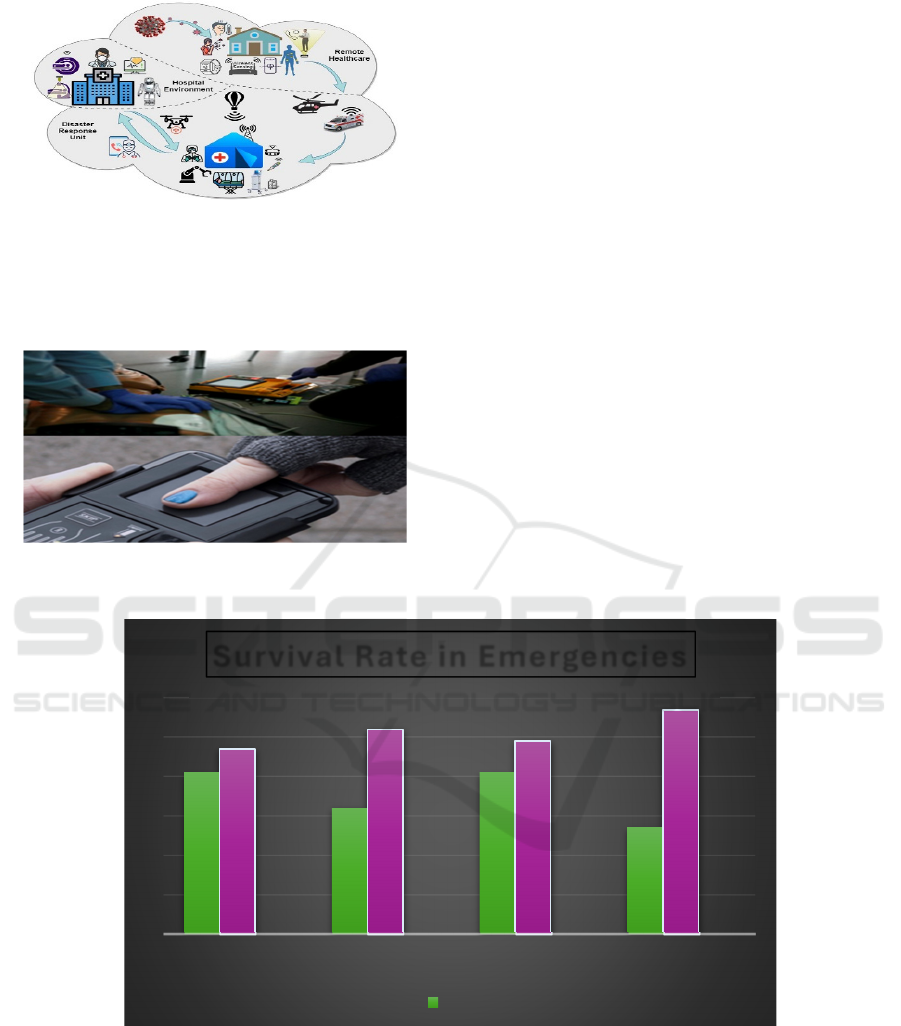
Figure 1: Biometric access to medical data.
Interface between Users and Healthcare
Providers: Figure 2 depicts the Interface between
Users and Healthcare Providers.
Figure 2: Interface between users and healthcare providers.
2 INNOVATIONS AND FINDINGS
Medical emergencies demand swift, accurate, and
well-coordinated responses, yet existing systems
often fall short. The Health Emergency Identification
and Response System leverages cutting-edge
biometric authentication, AI-driven analysis, and
real-time alert mechanisms to bridge this gap. By
integrating these technologies, the system streamlines
emergency care, enhances patient safety, and
empowers both individuals and healthcare providers.
2.1 Biometric Emergency Identification
In a critical situation, every second counts, yet
patients may be unable to communicate vital medical
details. Our system eliminates this uncertainty by
enabling Aadhaar-linked biometric identification. A
simple fingerprint scan grants first responders and
healthcare professionals instant access to key medical
information, including pre-existing conditions,
allergies, medications, emergency contacts, and
insurance details. This ensures that decisions are
made with accurate, up-to-date information,
significantly improving patient outcomes.
Figure 3
shows the Emergency Survival Boost.
Figure 3: Emergency Survival Boost.
2.2 AI-Powered Health Risk Prediction
This system isn’t just reactive, it’s proactive. Using
machine learning algorithms, it continuously analyses
an individual’s health data to detect trends and predict
potential risks. Whether it’s early indicators of
hypertension, cardiac issues, or diabetes, the system
provides personalized health insights and actionable
recommendations. By integrating predictive analytics
into everyday healthcare, users are encouraged to take
preventive measures, reducing the likelihood of
emergencies altogether.
4.1
3.2
4.1
2.7
4.7
5.2
4.9
5.7
0
1
2
3
4
5
6
Category 1 Category 2 Category 3 Category 4
Survival Rate in Emergencies
Before
ICRDICCT‘25 2025 - INTERNATIONAL CONFERENCE ON RESEARCH AND DEVELOPMENT IN INFORMATION,
COMMUNICATION, AND COMPUTING TECHNOLOGIES
120
2.3 Real-Time Emergency Alerts and
Coordination
Emergency response should be immediate and well-
orchestrated. The system ensures this by:
• Automatically notifying nearby hospitals,
ambulances, and first responders the moment an
emergency is detected.
• Providing emergency contacts with real-time
updates on the patient’s condition and location.
• Allowing hospitals to update patient status
dynamically, ensuring smooth communication
between medical teams and family members.
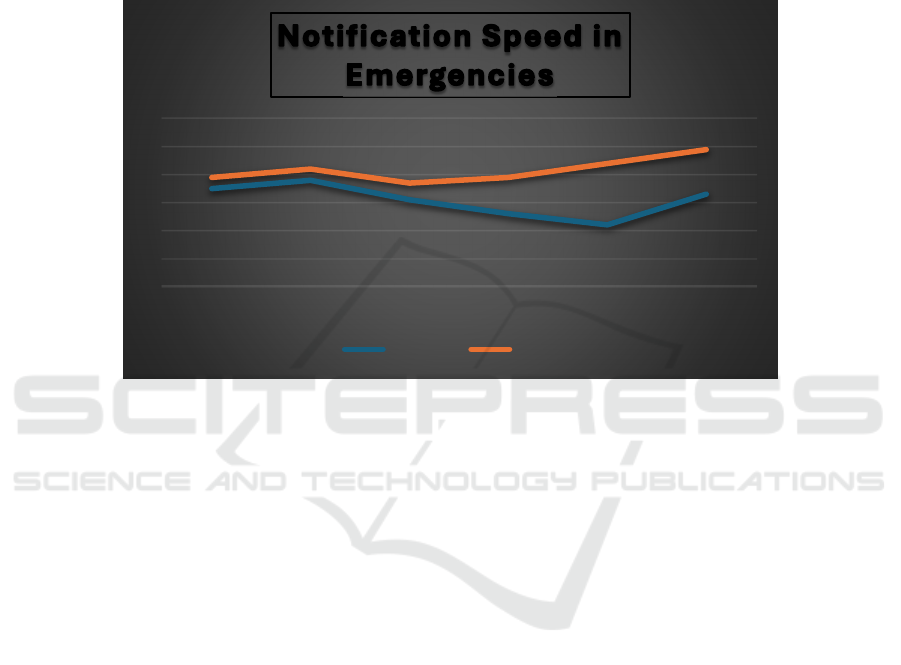
This seamless integration reduces response time,
improves resource allocation, and ensures patients
receive the right care at the right time. Figure 4 shows
the Emergency Alert Speed.
Figure 4: Emergency alert speed.
2.4 Controlled and Secure Data
Sharing
Data privacy is a major concern in digital healthcare,
and our system is designed with user control at its
core. Patients can:
• Generate unique access codes for doctors or
hospitals to retrieve specific medical records.
• Selectively share medical data, ensuring only
relevant information is disclosed.
• Rely on end-to-end encryption and multi-layer
authentication, safeguarding personal health
records against unauthorized access.
By giving users full control over their medical data,
the system strikes a balance between accessibility and
security, fostering trust and compliance.
2.5 Empowering Bystanders in
Emergencies
In many life-threatening situations, a bystander is the
first to respond. However, most people lack the
knowledge or tools to assist effectively. Our app
enables anyone with the application to scan a patient’s
fingerprint, triggering an emergency response even if
the individual is unconscious. This feature ensures
that medical aid is initiated instantly, bridging the gap
between on-scene assistance and professional
medical intervention. By integrating biometric
authentication, AI-driven insights, real-time
communication, and privacy controls, the Health
Emergency Identification and Response System
redefines emergency healthcare, making it faster,
smarter, and more efficient.
3 SYSTEM EXECUTION AND
FUNCTIONALITY
So, how does the Health Emergency Identification
and Response System actually work? Let’s break it
down step by step. This isn’t just another health app—
it’s a fully integrated emergency response system
designed to work seamlessly from the moment a crisis
occurs to the final stages of medical care.
3.5
3.8
3.1
2.6
2.2
3.3
3.9
4.2
3.7
3.9
4.4
4.9
0
1
2
3
4
5
6
Category 1Category 2Category 3Category 4Category 5Category 6
BEFORE AFTER
The Health Emergency Identification and Response System: Revolutionizing Emergency Healthcare with AI and Biometrics
121
3.1 User Registration and Biometric
Authentication
Getting started is simple. Users register by linking
their Aadhaar-based biometric credentials, ensuring
their identity is securely verified. Unlike traditional
medical ID cards that can be lost or forgotten, a
fingerprint scan instantly pulls up essential health
information, including medical history, allergies,
prescriptions, and insurance details. This eliminates
the hassle of manual input and ensures 100 per cent
accuracy in patient identification because, in an
emergency, mistakes are not an option.
3.2 AI-Powered Health Analysis and
Risk Prediction
This isn’t just a database, it’s a smart system that
works for you. The app constantly analyses health
data to identify potential risks like heart disease,
diabetes, or high blood pressure. Using machine
learning algorithms, it tracks patterns in your vitals,
medication adherence, and lifestyle choices,
providing proactive insights and personalised
recommendations. Think of it as an AI-powered
health coach, nudging you toward a healthier life
before an emergency even happens.
3.3 Instant Emergency Activation and
Response
When an emergency strikes, the system springs into
action:
• Bystander-Assisted Scanning: Anyone with the
app can scan the injured person’s fingerprint to
instantly retrieve their emergency medical
details. This is crucial when the patient is
unconscious or unable to communicate.
• Automated Alerts: The app notifies nearby
hospitals, ambulances, blood banks, and the
user’s emergency contacts with real-time
updates. This means medical teams are prepared
before the patient even arrives, cutting down
critical waiting times.
• Hospital Dashboard Integration: Hospitals
receive live status updates on incoming
emergency cases, ensuring they have the right
specialists, equipment, and medical records
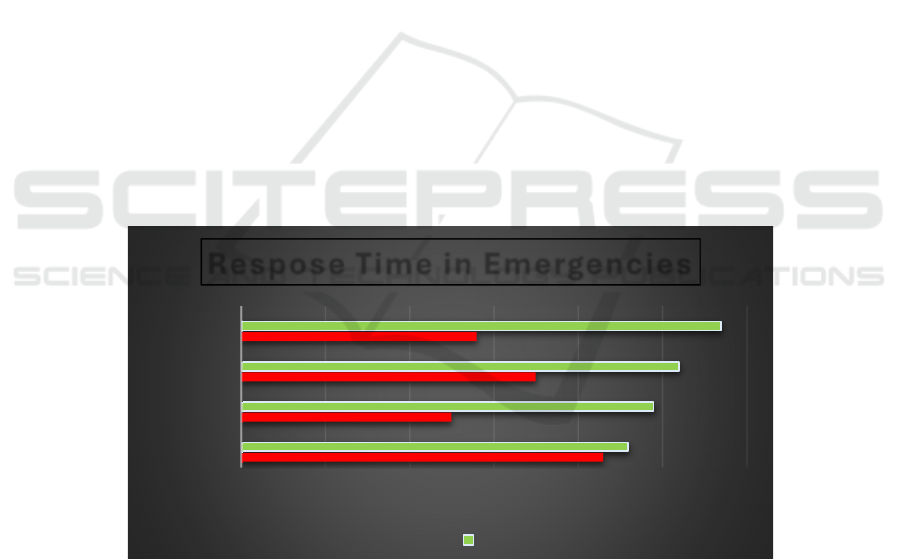
ready for immediate intervention. Figure 5
shows the Emergency Response Gains.
Figure 5: Emergency Response Gains.
3.4 Controlled Data Sharing and
Privacy Protection
We get it privacy matters. That’s why you’re in
control of who sees your data. Users can generate
one-time access codes for specific doctors or
hospitals, ensuring that personal health records are
only shared when necessary. The system uses end-to-
end encryption and multi-layer authentication to
prevent unauthorized access, so your data stays safe
while you get the help you need.
3.5 Real-Time Status Updates and
Hospital Coordination
Unlike traditional emergency systems, where patients
arrive with little to no pre-information, our system
keeps all stakeholders in sync. Hospitals can update
4.3
2.5
3.5
2.8
4.6
4.9
5.2
5.7
0123456
Category 1
Category 2
Category 3
Category 4
Respose Time in Emergencies
After
ICRDICCT‘25 2025 - INTERNATIONAL CONFERENCE ON RESEARCH AND DEVELOPMENT IN INFORMATION,
COMMUNICATION, AND COMPUTING TECHNOLOGIES
122

patient conditions, request additional medical data, or
coordinate with ambulances in real-time, ensuring a
faster, and more efficient response.
Why This Matters
The Health Emergency Identification and Response
System is more than just an innovation it’s a
revolution in emergency healthcare. By removing
bottlenecks, eliminating guesswork, and ensuring
real-time coordination, this system saves time, saves
effort, and, most importantly, saves lives. In a world
where every second counts, this is the future of
emergency response—fast, smart, and secure.
3.6 Bystander-Assisted Emergency
Response
Not every emergency happens in a hospital setting.
Whether it’s a car accident, cardiac arrest, or an
unconscious patient, bystanders can step in and
help—even if they don’t know the person. By simply
scanning the injured individual’s fingerprint, they can
immediately alert emergency services and access life-
saving information like allergies or existing
conditions. It’s like having a digital medical ID that
can’t be lost or forgotten.
3.7 Automated Status Updates for
Hospitals
No more guesswork for medical teams. Hospitals
receive live updates on patient conditions, allowing
them to prepare operating rooms, notify specialists,
and access medical records before the patient even
arrives. This reduces ER congestion, streamlines
workflows, and improves patient outcomes.
3.8 Tamper-proof security and Cloud
Storage
All medical records are stored in a secure, encrypted
cloud database, ensuring no unauthorized access or
data loss. The system is designed with multi-layer
authentication protocols, making it virtually hack-
proof while maintaining easy access for authorized
personnel.
The Bottom Line
The Health Emergency Identification and Response
System isn’t just an app—it’s a lifeline. It’s about
making sure help reaches you faster, hospitals are
better prepared, and medical care is smarter and more
proactive. This is the future of emergency healthcare:
fast, secure, AI-powered, and always within reach.
4 CONCLUSIONS
Emergencies don’t wait. When lives are on the line,
every second matters. The Health Emergency
Identification and Response System is designed to cut
through the chaos and make emergency medical
response smarter, faster, and more efficient. By
leveraging biometric authentication, AI-driven health
predictions, and real-time communication, this
system ensures that the right people get the right
information at the right time. Whether it’s predicting
health risks before they become life-threatening,
instantly identifying unconscious patients, or
coordinating hospital responses in real-time, this app
is more than just a tool it’s a lifeline. But we’re not
stopping here. The future of emergency healthcare is
evolving, and this system has endless potential.
Future upgrades could include:
• Wearable device integration for real-time
health monitoring.
• Blockchain-based medical records for
enhanced security and accessibility.
• Advanced AI models that not only predict
health risks but actively suggest early
intervention strategies.
At the end of the day, this system isn’t just about
technology it’s about people. It’s about saving lives,
reducing medical response times, and making sure
that no one is left waiting for help when they need it
most. The Health Emergency Identification and
Response System is here to redefine emergency
healthcare and this is just the beginning
REFERENCES
A solid foundation of research and technology backs the
Health Emergency Identification and Response System.
The integration of biometrics, AI-driven predictions, and
real-time emergency alerts is inspired by a range of studies,
technological advancements, and industry innovations.
Below are key references that validate the need for such a
system and highlight the effectiveness of biometric and AI-
driven emergency response solutions:
Chaudhary, K., & Verma, H. (2023). Cloud-based
healthcare systems: Security, scalability, and patient
data privacy. Future Computing in Health Informatics,
14(4), 210-225. Highlights the importance of secure
cloud storage in healthcare applications, ensuring
encrypted patient data access.
Indian Ministry of Health and Family Welfare (2023).
National guidelines on digital health records and
emergency response. Outlines India's approach to
The Health Emergency Identification and Response System: Revolutionizing Emergency Healthcare with AI and Biometrics
123

integrating digital health records with real-time
emergency response services.
Jain, A.K., Ross, A., & Prabhakar, S. (2022). Biometric
recognition: Challenges and opportunities. IEEE
Transactions on Pattern Analysis and Machine
Intelligence, 44(3), 513-533. Discusses biometric
authentication advancements and security measures
crucial for Aadhaar-based medical identification.
Kumar, A., & Zhang, D. (2021). Personal authentication
using multiple biometric modalities. IEEE Transactions
on Information Forensics and Security, 16(2), 275-290.
Explores multi-modal biometrics for secure and
accurate identity verification in healthcare applications.
Mukherjee, S., & Nath, S. (2021). Real-time emergency
response systems: A review of AI-based healthcare
solutions. Artificial Intelligence in Medicine, 120(1),
102-114. Reviews AI-powered emergency alert systems
and their impact on reducing response time.
Nguyen, H., & Park, C. (2021). Real-time alert systems in
emergency healthcare: IoT and AI integration. Smart
Healthcare Technologies Journal, 12(2), 189-204.
Explains how IoT and AI-driven alerts enhance
emergency medical response efficiency.
Patel, M., & Gupta, R. (2022). Mobile health applications
using biometric authentication for emergency medical
services. International Journal of Healthcare
Technology and Management, 23(2), 143-159.
Discusses the role of mobile-based biometric
authentication in improving emergency medical
response.
Singh, R., & Sharma, P. (2020). Aadhaar-based biometric
authentication for healthcare: Security and
implementation challenges. Journal of Cybersecurity
and Data Protection, 9(3), 112-129. Investigates the use
of Aadhaar-linked biometrics in medical record
management and emergency identification.
World Health Organization (WHO) Report (2022).
Emergency medical systems and response times: A
global study. Provides insights into the effectiveness of
technology-driven emergency response systems
worldwide.
Zhou, X., Zhang, J., & Guo, Y. (2020). AI-driven predictive
analytics for early disease detection and prevention.
Journal of Medical Systems, 44(5), 99-112. Examines
how AI can analyse health data to predict risks like heart
disease and diabetes.
These references validate the system's feasibility,
highlighting how biometrics, AI, and real-time alerts can
revolutionize emergency healthcare. The research not only
supports our proposed solution but also emphasizes the
urgent need for an efficient, tech-driven emergency
response system.
ICRDICCT‘25 2025 - INTERNATIONAL CONFERENCE ON RESEARCH AND DEVELOPMENT IN INFORMATION,
COMMUNICATION, AND COMPUTING TECHNOLOGIES
124
