
The Role of Demographic Variables in Understanding Workplace
Happiness among Hospital Professionals
Pushkar Dubey
1
, Abhishek Kumar Pathak
2
, Ankita Anant
2
and Kailash Kumar Sahu
3
1
Department of Management, Pandit Sundarlal Sharma (Open) University Chhattisgarh, Bilaspur (CG), Chhattisgarh,
India
2
Department of Commerce and Management, Dr. C. V. Raman University, Bilaspur (CG), Chhattisgarh, India
3
Amity Business School, Amity University Chhattisgarh, Raipur (CG), Chhattisgarh, India
Keywords: Workplace Happiness, Demographic Variables, Age, Gender, Experience, Area, Experience, Nature of Job.
Abstract: This study examines how age, gender, area, work experience, and nature of job affect workplace happiness
among hospital staff in Chhattisgarh. Based on 532 responses and analyzed using Smart PLS 3 (trial version),
the results show that older employees are generally happier, while those with longer experience, temporary
jobs, or living in certain areas feel less satisfied. Gender had no major effect. Permanent jobs were linked to
greater happiness due to job security. These insights can help hospital managers create better work
environments by understanding and addressing the different needs of employees.
1 INTRODUCTION
In today’s fast-changing and competitive work
environment, workplace happiness has become an
important topic for researchers, HR professionals,
and leaders in organizations (Awada & Ismail, 2019;
Zhenjing et al., 2022). Workplace happiness means
how satisfied and emotionally positive employees
feel about their job and work setting (Kun &
Gadanecz, 2022; Santhosh, 2024). It is now well
understood that happy employees are usually more
productive, creative, and committed. They also build
better relationships at work and help the organization
reach its goals.
Many researchers have studied how workplace
practices, leadership, and job roles affect happiness at
work (Muttalib et al., 2023; Al-Shami et al., 2023).
However, the effect of demographic factors—like
age, gender, place of living, job experience, and type
of job is also gaining attention. These factors
influence how employees view their work, handle
pressure, and react to workplace rules (Kumar, 2020;
Amegayibor, 2021). For example, older employees
may feel happier because they have more stability and
control, while younger ones might prefer flexibility
and growth (Kollmann et al., 2020). Gender can also
make a difference, as men and women may have
different experiences with fairness and support at
work (Stamarski & Son Hing, 2015).
People from rural or urban areas may have
different workplace expectations due to their different
backgrounds (Litsardopoulos et al., 2020). Also,
whether someone’s job is permanent, part-time, or
contract-based affects their sense of security and
belonging, which connects closely to happiness
(Kundi et al., 2021). Understanding these
demographic factors is important for organizations
that want to create friendly and encouraging
workplaces (O’Donovan, 2018). By realizing that
different employees have different needs,
organizations can make better policies, offer targeted
support, and create a culture that respects diversity
and employee well-being. This is especially
important now, as today’s workforce includes people
from many different backgrounds, and knowing how
these differences affect happiness at work can help
reduce employee turnover and improve long-term
success (Charles-Leija et al., 2023). This study
focuses on how age, gender, residence, experience,
and job type influence workplace happiness, using
both theory and data to suggest ways for
organizations to improve happiness for everyone.
106
Dubey, P., Pathak, A. K., Anant, A. and Sahu, K. K.
The Role of Demographic Variables in Understanding Workplace Happiness among Hospital Professionals.
DOI: 10.5220/0013923500004919
Paper published under CC license (CC BY-NC-ND 4.0)
In Proceedings of the 1st International Conference on Research and Development in Information, Communication, and Computing Technologies (ICRDICCT‘25 2025) - Volume 5, pages
106-113
ISBN: 978-989-758-777-1
Proceedings Copyright © 2026 by SCITEPRESS – Science and Technology Publications, Lda.

2 LITERATURE REVIEW
2.1 Age
The relationship between age and workplace
happiness is not straightforward and can change
depending on the situation. Some studies found that
age has an effect, while others did not. For example,
Altan and Turunç (2021) found that older employees
react differently to support at work, which can affect
their emotions and happiness. Noguchi et al. (2022)
showed that for older workers, having the right job fit
and control over their work leads to more happiness.
Raab (2016) pointed out that older employee’s value
things like learning opportunities and being
recognized, but age by itself doesn’t strongly affect
job satisfaction. On the other hand, Ngatuni and
Gasengayire (2022) found that age makes a difference
for younger employees how satisfied they are with
their job affects how committed they feel to the
organization. Thus, age can influence workplace
happiness, but this depends on other factors like the
type of job, level of support, and what employees
need at different stages of life. Hence, the present
study hypothesizes, H1: Age demography would
emerge as significant predictor of workplace
happiness.
2.2 Gender
The link between gender and workplace happiness is
not the same in every situation and can vary from one
place to another. Some studies, like Islam and Penalba
(2024), show that having a mix of men and women at
work can improve job satisfaction and make people
happier. But other research found that gender doesn’t
always make a big difference. For example, Al-Taie
(2023) found no major difference in happiness
between male and female university professors in the
UAE. Similarly, Silva et al. (2023) found that men
and women in Brazil were equally happy at work,
showing that other factors matter more. In contrast,
some studies found different things. Rodríguez-
Leudo and Navarro-Astor (2024) said that in
architecture firms in Spain, women cared more about
a good work environment, while men focused more
on career growth. Also, Sabir et al. (2019) found that
female teachers in Pakistan were happier and showed
more positive behavior at work than male teachers.
Thus, gender may not always decide how happy
someone is at work, but it can affect what makes
people feel happy in different jobs and cultures. The
present study hypothesizes, H2: Gender demography
would emerge as significant predictor of workplace
happiness.
2.3 Area
The connection between where a person lives (rural
or urban area) and workplace happiness is not simple
and depends on many different factors. Some studies,
like Prati (2023), found a small link between living in
rural or urban areas and overall happiness, but the
difference wasn’t very strong. Schuler (1973) pointed
out that some research shows no real effect, while
other studies say people from rural areas may feel
more satisfied with their jobs. Other researchers, like
Goffe (2023) and Burger (2021), found that people in
rural areas often feel happier than those in cities. This
is known as the rural-urban happiness paradox. But
this can also depend on things like the cost of living
and who lives in those areas. Elburz et al. (2022) said
city life can increase happiness, but if a city is too
crowded, it can make people feel stressed. In another
study, Idaiani and Saptarini (2023) found that urban
women in Indonesia were generally happier than rural
women, although living in very busy cities didn’t
always mean higher happiness. Hence, the study
hypothesizes, H3: Area demography would emerge as
significant predictor of workplace happiness.
2.4 Experience
The connection between work experience and
workplace happiness is not straightforward. Some
studies say that the experiences people have during
their working years can affect how happy they feel
later in life (Wu et al., 2018). However, many
researchers believe that what matters more is how
satisfied people are with their current job, how
committed they feel to their organization, and how
good their overall work environment is (Agustiani et
al., 2024; Felicia et al., 2024). Things like feeling
supported by the organization, being engaged in the
job, and having a positive attitude play a bigger role
in workplace happiness than just the number of years
someone has worked (Joo & Lee, 2017; Rashid & Al–
shami, 2024). Older employees might feel happier
because they have higher positions or better salaries,
but this is due to career growth, not just years of
experience (Tugade & Arcinas, 2023). Overall, while
work experience can help, having a supportive,
satisfying, and positive work environment is more
important for workplace happiness (Fisher, 2010;
Fidelis et al., 2017; Gouri & AS, 2024). Hence, the
study hypothesizes, H4: Experience demography
The Role of Demographic Variables in Understanding Workplace Happiness among Hospital Professionals
107

would emerge as significant predictor of workplace
happiness.
2.5 Nature of Job
The connection between the type of job permanent or
temporary and how happy people feel at work is not
always straightforward. Many studies have found that
people in permanent jobs are often more satisfied and
happier because they feel more secure about their
future (Goldan et al., 2022; Saputri & Dwityanto,
2018). But some research shows that there isn’t
always a big difference in job satisfaction between
permanent and temporary workers, although things
like involvement and motivation might be different
(Handayani, 2015). Also, how happy temporary
workers feel often depends on whether they chose the
job willingly or had no other option (Krausz et al.,
1995). Thus, permanent jobs are more likely to make
people happy at work, but other things like job
security, personal choice, and the work environment
also matter a lot. Hence, the study hypothe, H5:
Nature of Job demography would emerge as
significant predictor of workplace happiness.
3 RESEARCH METHODOLOGY
3.1 Sampling and Data Collection
The study used simple random sampling to fairly
select employees from government and private
hospitals across Chhattisgarh. A total of 300 printed
questionnaires were shared, and 274 were returned.
After checking the responses, 243 were found valid.
Additionally, an online Google Form was used, which
received 295 responses, out of which 289 were
complete and usable. In total, 532 valid responses
were collected, providing a strong and reliable dataset
for the study (see Table 1).
Table 1: Demographic description.
Gender Nature of Job Locality Total
Male Female Permanent Temporary Rural Urban Tribal
532
448 84 322 210 147 336 49
3.2 Research Instrument
To ensure accurate measurement for this study, the
researchers adapted one existing scale Workplace
Happiness and included key demographic variables
such as age, gender, area of residence, work
experience, and job nature. Since many participants
spoke Hindi, the questionnaire was translated into
Hindi to improve understanding and increase
participation. This helped avoid confusion and made
sure the questions clearly reflected the intended
meanings. A step-by-step process was followed to
check the reliability and accuracy of the modified
questionnaire. First, the items were reviewed by four
subject experts to check content validity. Based on
their feedback, the number of items was reduced to
avoid repetition and make the questionnaire easier to
answer. Minor changes in wording and formatting
were also made. A pilot study with 50 participants
was then conducted, which helped identify areas for
improvement. Based on the responses, the
questionnaire was further refined and finalized with 9
items. To measure workplace happiness, the final
version used a 7-point Likert scale ranging from
Strongly Disagree to Strongly Agree. This careful
process ensured that the tool was reliable, easy to
understand, and suitable for the cultural and linguistic
background of the respondents.
3.2 Data Analysis Tools
The study used Smart PLS 3 (trial version) for the
study to test the reliability and validity of the
collected data, as well as to test the formulated
hypotheses of the study.
3.3 Ethical Considerations
Before starting data collection, the researchers
received ethical approval from the institutional ethics
committee, showing their commitment to following
proper research guidelines. This approval ensured
that the study’s design and methods respected the
rights and well-being of all participants. Each
participant gave informed consent after being clearly
told about the purpose of the study, how it would be
conducted, any possible risks, and the expected
benefits. This helped them make a free and informed
ICRDICCT‘25 2025 - INTERNATIONAL CONFERENCE ON RESEARCH AND DEVELOPMENT IN INFORMATION,
COMMUNICATION, AND COMPUTING TECHNOLOGIES
108

choice to take part. Participants were also assured that
their personal details and responses would stay
confidential, and they had the right to withdraw at any
time without any negative consequences. By
following these ethical steps like clear
communication, voluntary participation, and privacy
protection the study maintained high ethical
standards, which adds to its trustworthiness and
credibility.
3.4 Reliability and Validity
To measure Workplace Happiness, five items (WH5
to WH9) were used in the study. These items showed
good item loadings, ranging from 0.754 to 0.881,
which means they were strongly related to the main
concept being measured. Some items with loadings
below 0.7 were removed to improve the quality and
accuracy of the scale. The reliability of the scale was
confirmed with a Cronbach’s Alpha of 0.887,
showing that the items are consistently measuring the
same concept. Further, Rho A was 0.891, and the
Composite Reliability (CR) was 0.917, both
indicating high internal consistency. The Average
Variance Extracted (AVE) was 0.691, which means
that more than 69% of the variance in the items is
explained by the construct of workplace happiness
(see Table 2). These values confirm that the
measurement model for workplace happiness is both
reliable and valid.
Table 2: CFA for reliability and validity values.
Variables Item Code Item Load
Cronbach
Alpha
Rho A CR AVE
Workplace
Happiness
WH5 0.79
0.887 0.891 0.917 0.691
WH6 0.754
WH7 0.854
WH8 0.868
WH9 0.881
4 ANALYSIS AND
INTERPRETATION
The analysis of the relationship between different
demographic variables (i.e., age, gender, area,
experience and nature of job) and workplace
happiness provides several important insights (see
Table 3 and Figure 1). Age has a positive and
statistically significant effect on workplace happiness
(β = 0.192, t = 3.281, p = 0.001), which means that as
individuals grow older, they tend to feel happier at
work. In contrast, the area of residence shows a strong
negative relationship with workplace happiness (β =
-0.262, t = 3.988, p = 0.000), suggesting that people
living in certain locations may experience challenges
that reduce their job satisfaction. Work experience
also has a negative impact on workplace happiness (β
= -0.157, t = 2.699, p = 0.007), indicating that
employees with more years on the job may face
increased stress, routine, or declining enthusiasm,
which affects their overall happiness. Gender does not
show a statistically significant impact (β = -0.095, t =
1.791, p = 0.074), although the slightly negative
coefficient suggests that there might be differences in
experiences between men and women, but not enough
to be considered meaningful in this study. Lastly, the
nature of the job significantly affects workplace
happiness in a negative way (β = -0.258, t = 5.408, p
= 0.000), highlighting that the kind of work, its
responsibilities, and work conditions can strongly
influence how happy employees feel.
Table 3: SEM result of objective 1.
Predicted
Relationships
β
value
STDEV
t
value
p
value
Age -->
Workplace
Happiness
0.192 0.059 3.281 0.001
Area -->
Workplace
Happiness
-0.262 0.066 3.988 0.000
Experience --
> Workplace
Ha
pp
iness
-0.157 0.058 2.699 0.007
Gender -->
Workplace
Ha
pp
iness
-0.095 0.053 1.791 0.074
Nature of Job
-->
Workplace
Ha
pp
iness
-0.258 0.048 5.408 0.000
The Role of Demographic Variables in Understanding Workplace Happiness among Hospital Professionals
109
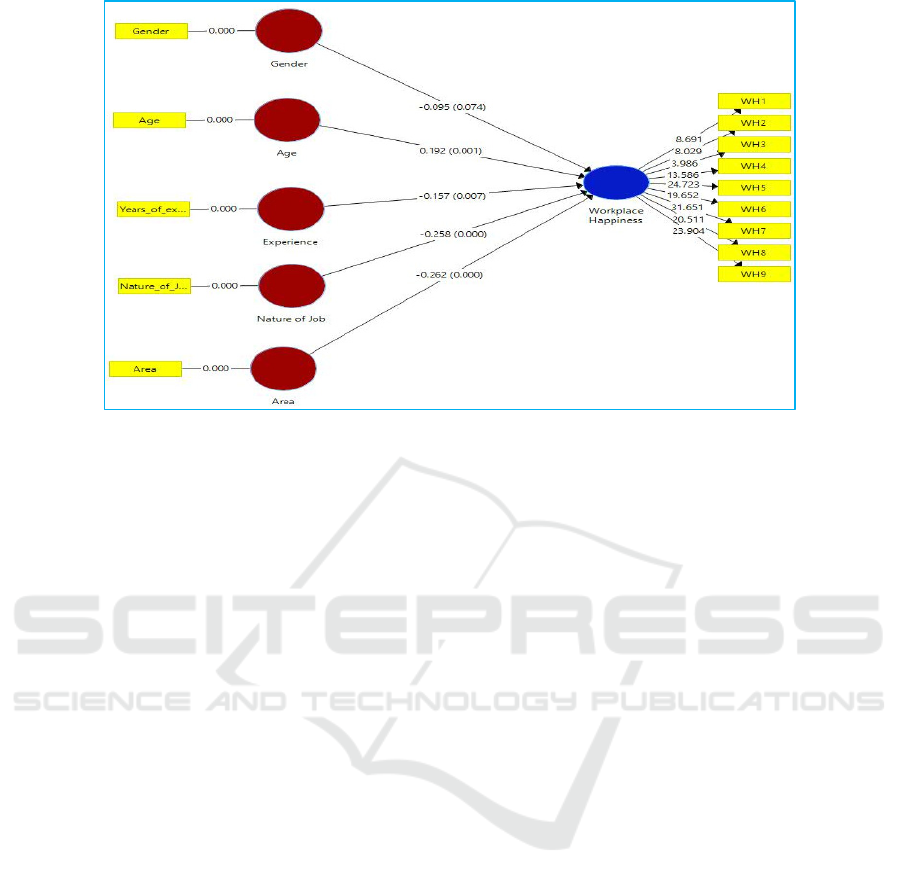
Figure 1: Effect of Demographic Variables on Workplace Happiness.
5 DISCUSSION
The analysis, done using Smart PLS 3 (trial version),
gave useful insights into how different personal and
job-related factors affect workplace happiness. The
study found that age has a positive and significant
effect on workplace happiness (β = 0.192, t = 3.281,
p = 0.001), which supports Hypothesis 1 (H1). This
means that as people grow older, they tend to feel
happier at work. This could be because older
employees usually have more stability, experience,
and are better at handling challenges. They might also
hold senior positions that offer more job security and
independence, which increases their satisfaction. This
result matches earlier studies showing that job
satisfaction often goes up with age due to career
growth and a better work-life balance.
There was a strong negative connection between
area of residence and workplace happiness (β = -
0.262, t = 3.988, p = 0.000), supporting Hypothesis 3
(H3). This suggests that where a person lives can
affect how happy they feel at work. People in urban
areas might face high stress due to heavy traffic, long
commutes, or high living costs, while those in rural
areas might struggle with fewer job opportunities and
less support. These issues can lower job satisfaction.
So, organizations need to be aware of these
differences and create location-based strategies to
support all employees. The study also found that work
experience has a negative impact on workplace
happiness (β = -0.157, t = 2.699, p = 0.007),
confirming Hypothesis 4 (H4). This means that the
longer someone works, the less happy they might
feel. Reasons could include boredom with routine
tasks, feeling stuck in the same role, or having too
much responsibility. Also, experienced employees
might be more aware of problems in the organization,
which could reduce their satisfaction. To address this,
companies should offer training, career development,
and new challenges to keep long-term employees
motivated.
Also, job nature had a strong negative effect on
workplace happiness (β = -0.258, t = 5.408, p =
0.000), supporting Hypothesis 5 (H5). This means
that the type of job someone has whether it’s stressful,
repetitive, or has poor working conditions can lower
how happy they feel. Jobs that don’t allow employees
to grow or have control over their tasks tend to lead
to low satisfaction. On the other hand, jobs that offer
meaningful work, flexibility, and opportunities to
learn tend to make employees happier. Companies
should focus on improving job roles, offering support,
and helping employees balance their work and
personal lives. When it comes to gender, the analysis
shows no significant effect on workplace happiness
(β = -0.095, t = 1.791, p = 0.074), meaning
Hypothesis 2 (H2) is not supported. Even though the
number is slightly negative, it’s not strong enough to
say that men and women have very different
experiences when it comes to happiness at work. Still,
other research suggests that things like company
culture or hidden gender bias can affect how people
ICRDICCT‘25 2025 - INTERNATIONAL CONFERENCE ON RESEARCH AND DEVELOPMENT IN INFORMATION,
COMMUNICATION, AND COMPUTING TECHNOLOGIES
110

feel at work, so creating a fair and inclusive
environment is still important.
Thus, the study shows that age helps improve
workplace happiness, while area of residence, work
experience, and job nature can reduce it. Gender does
not play a major role by itself, but fairness and
inclusiveness still matter.
6 MANAGERIAL
IMPLICATIONS
The present study contributes to the management
field by offering clear insights into what affects
workplace happiness. These findings can be useful
for HR managers, team leaders, policy makers,
organizational psychologists, and business owners
who want to improve employee well-being and
productivity. The study shows that older employees
are generally happier at work, so organizations can
benefit from encouraging age diversity and using
their experience in leadership or mentoring roles. It
also highlights how location affects happiness, which
means offering flexible work arrangements or region-
specific support can help. The negative link between
long work experience and happiness suggests that
companies should keep experienced employees
engaged through skill development, job rotation, and
recognition programs. Although gender didn’t have a
strong impact, promoting fairness and inclusion is
still important. Job nature had the strongest effect on
happiness, showing that meaningful work, growth
opportunities, and manageable workloads are key to
keeping employees satisfied. Additionally, what
makes this study unique is that it takes demographic
factors using Smart PLS 3 software to give a clearer
picture of what truly matters for workplace happiness.
This helps decision-makers understand not just who
is happy, but why making their strategies more
effective and employee-focused.
7 CONCLUSIONS
This study helps us understand how demographic
factors affect how happy people feel at work. The
results show that as employees get older, they tend to
be happier in their jobs. However, where they live,
how long they have been working, and the type of job
they do can lower their workplace happiness. Gender
does not have a strong effect on happiness in this
study. These findings show that companies need to
pay attention to each employee's background and job
situation to improve their overall well-being. Using
Smart PLS 3 software gave us a clear and reliable way
to study these relationships. This research adds useful
knowledge to the field of management and gives
practical ideas for managers and HR professionals to
create a better and more supportive workplace.
REFERENCES
Agustiani, T., Mora, L., & Ibad, C. (2024). Increasing
employee engagement through workplace happiness: A
quality of work life mediation study. Psikoborneo:
Jurnal Ilmu Psikologi, 12(3), 378. https://doi.org/10.30
872/psikoborneo.v12i3.16491
Al-Shami, S. A., Rashid, N., & Cheong, C. B. (2023).
Happiness at workplace on innovative work behaviour
and organization citizenship behavior through moderat
ing effect of innovative behaviour. Heliyon, 9(5). https
://doi.org/10.1016/j.heliyon.2023.e16021
Al-Taie, M. (2023). Antecedents of happiness at work: The
moderating role of gender. Cogent Business & Manag
ement, 10(1). https://doi.org/10.1080/23311975.2023.
2283927
Altan, S., & Turunç, Ö. (2021). The role of age and work-
life balance in the relationship between perceived
organizational support and happiness at work. Journal
of Business Research- Turk, 13(3), 2552– 2570. https:/
/doi.org/10.20491/ISARDER.2021.1277
Amegayibor, G. K. (2021). The effect of demographic
factors on employees’ performance: A case of an
owner-
manager manufacturing firm. Annals of Human Resou
rce Management Research, 1(2), 127–143.
Awada, N. I., & Ismail, F. (2019). Happiness in the
workplace. International Journal of Innovative Techno
logy and Exploring Engineering, 8(9S3), 1496–1500.
Burger, M. (2021). Urban-rural happiness differentials in
The Netherlands. In Urban Socio- Economic Segregati
on and Income Inequality (pp. 49–58). Springer, Cham.
https://doi.org/10.1007/978-3-030-53779-1_5
Charles-Leija, H., Castro, C. G., Toledo, M., & Ballesteros-
Valdés, R. (2023). Meaningful work, happiness at
work,
and turnover intentions. International Journal of Envir
onmental Research and Public Health, 20(4), 3565.
https://doi.org/10.3390/ijerph20043565
Elburz, Z., Kourtit, K., & Nijkamp, P. (2022). Well-being
and geography: Modelling differences in regional well-
being profiles in case of spatial dependence—Evidence
from Turkey. Sustainability, 14(24), 16370. https://doi
.org/10.3390/su142416370
Felicia, M., Pramudita, D. P. D., Palupi, R. D. L. D. R., &
Bhimasta, R. A. (2024). Peran kepuasan kerja dan
komitmen organisasional terhadap kebahagiaan di tem
pat kerja. Inobis, 8(1), 82– 92. https://doi.org/10.3184
2/jurnalinobis.v8i1.354
The Role of Demographic Variables in Understanding Workplace Happiness among Hospital Professionals
111

Fidelis, A. C., Fernandes, A., & Tisott, P. B. (2017). A
relação entre felicidade e trabalho: Um estudo explorat
ório com profissionais ativos e aposentados. Psicologia
em Revista, 2(1), 19– 32. https://doi.org/10.17058/psiu
nisc.v2i2.9840
Fisher, C. D. (2010). Happiness at work. International
Journal of Management Reviews, 12(4), 384–412.
https://doi.org/10.1111/j.1468-2370.2009.00270.x
Goffe, N. V. (2023). Spatial dimension of subjective well-
being. Obshchestvennye Nauki i Sovremennostʹ, (3).
https://doi.org/10.31857/s0869049923060060
Goldan, L., Jaksztat, S., & Gross, C. (2022). How does
obtaining a permanent employment contract affect the
job satisfaction of doctoral graduates inside and outside
academia? The International Journal of Higher
Education, 86(1), 185– 208. https://doi.org/10.1007/s1
0734-022-00908-7
Gouri, S. S., & AS, A. (2024). Workplace happiness among
the teaching staff. Journal of Economics, Finance and
Management Studies, 7(9). https://doi.org/10.47191/je
fms/v7-i9-59
Handayani, T. (2015). The comparison analysis of work
related attitude between permanent employee’s and
temporary employee’s in Bank Sulut (Analisa perband
ingan perilaku kerja antara pegawai tetap dan pegawai
kontrak di Bank Sulut) [Unpublished master's thesis].
Idaiani, S., & Saptarini, I. (2023). Urban and rural dispariti
es: Evaluating happiness levels in Indonesian women.
Healthcare in Low- Resource Settings. https://doi.org/
10.4081/hls.2023.12005
Islam, S., & Penalba, M. (2024). Does gender diversity
mediate the relationships of diversity beliefs and
workplace happiness? Frontiers in Sociology, 9.
https://doi.org/10.3389/fsoc.2024.1384790
Joo, B.-K., & Lee, I. (2017). Workplace happiness: Work
engagement, career satisfaction, and subjective well-
being. European Business Review, 5(2), 206–221.
https://doi.org/10.1108/EBHRM-04-2015-0011
Kollmann, T., Stöckmann, C., Kensbock, J. M., & Peschl,
A. (2020). What satisfies younger versus older
employees, and why? An aging perspective on equity
theory to explain interactive effects of employee age,
monetary rewards, and task contributions on job
satisfaction. Human Resource Management, 59(1),
101–115.
Krausz, M., Brandwein, T., & Fox, S. (1995). Work
attitudes and emotional responses of permanent,
voluntary, and involuntary temporary‐help employees:
An exploratory study. Applied Psychology, 44(3), 217–
232. https://doi.org/10.1111/j.1464- 0597.1995.tb0107
7.x
Kumar, T. K. V. (2020). The influence of demographic
factors and work environment on job satisfaction
among police personnel: An empirical study. Internati
onal Criminal Justice Review, 31(1), 59– 83. https://d
oi.org/10.1177/1057567720944599
Kun, A., & Gadanecz, P. (2022). Workplace happiness,
well-being and their relationship with psychological
capital: A study of Hungarian teachers. Current
Psychology, 41, 185– 199. https://doi.org/10.1007/s12
144-019-00550-0
Kundi, Y. M., Aboramadan, M., Elhamalawi, E. M. I., &
Shahid, S. (2021). Employee psychological well-being
and job performance: Exploring mediating and
moderating mechanisms. International Journal of
Organizational Analysis, 29(3), 736– 754. https://doi.
org/10.1108/IJOA-05-2020-2204
Litsardopoulos, N., Saridakis, G., & Hand, C. (2020). The
effects of rural and urban areas on time allocated to self-
employment: Differences between men and women.
Sustainability, 12(17), 7049. https://doi.org/10.3390/su
12177049
Muttalib, A., Danish, M., & Zehri, A. W. (2023). The
impact of leadership styles on employee’s job
satisfaction. Research Journal for Societal Issues, 5(2),
133–156. https://doi.org/10.56976/rjsi.v5i2.91
Ngatuni, P., & Gasengayire, J. C. (2022). Moderating role
of age in the relationship between job satisfaction and
organizational commitment among employees of a
special mission organization in Rwanda. PanAfrican
Journal of Business and Management, 5(2). https://doi.
org/10.61538/pajbm.v5i2.1015
Noguchi, T., Suzuki, S., Nishiyama, T., Otani, T. Nakaga
wa-Senda, H., Watanabe, M., Hosono, A., Tamai, Y.,
& Yamada, T. (2022). Associations between work-
related factors and happiness among working older
adults: A cross-sectional study. Annals of Geriatric
Medicine and
Research, 26(3), 256– 263. https://doi.org/10.4235/ag
mr.22.0048
O’Donovan, D. (2018). Diversity and inclusion in the wor
kplace. In C. Machado & J. Davim (Eds.), Organizatio
nal behavior and human resource management (pp. 67
– 83). Springer. https://doi.org/10.1007/978-3-319-
66864-2_4
Prati, G. (2023). The relationship between rural-urban place
of residence and subjective well-being is nonlinear and
its substantive significance is questionable. Internation
al Journal of Applied Positive Psychology, 9(1), 27–43.
https://doi.org/10.1007/s41042-023-00117-2
Raab, R. (2020). Workplace perception and job satisfaction
of older workers. Journal of Happiness Studies, 21(3),
943–963. https://doi.org/10.1007/s10902-019-00109-7
Rashid, N., & Al–Shami, S. A. (2024). Exploring the
interplay between happiness and employee wellbeing:
A comprehensive review. International Journal of
Academic Research in Business & Social Sciences,
14(8). https://doi.org/10.6007/ijarbss/v14-i8/22347
Rodríguez-Leudo, A. L., & Navarro-Astor, E. (2024).
Workplace happiness in architectural companies in the
city of Valencia: A gender comparison. Frontiers in
Sustainable Cities. https://doi.org/10.3389/frsc.2024.1
460028
Sabir, F. S., Maqsood, Z., Tariq, W., & Devkota, N. (2019).
Does happiness at work lead to organisation citizenship
behaviour with mediating role of organisation learning
capacity? A gender perspective study of educational
institutes in Sialkot, Pakistan. International Journal of
ICRDICCT‘25 2025 - INTERNATIONAL CONFERENCE ON RESEARCH AND DEVELOPMENT IN INFORMATION,
COMMUNICATION, AND COMPUTING TECHNOLOGIES
112

Work Organisation and Emotion, 10(4), 281–299.
https://doi.org/10.1504/IJWOE.2019.10027824
Santhosh. (2024). Why does workplace happiness matter:
Top pillars and best practices? CultureMonkey. https://
www.culturemonkey.io/employee- engagement/workp
lace-happiness/
Saputri, C. D. J., & Dwityanto, A. (2018). Kepuasan kerja
karyawan ditinjau dari job insecurity dan status
kepegawaian [Job satisfaction viewed from job
insecurity and employment status] [Bachelor’s thesis,
Universitas Muhammadiyah Surakarta]. http://eprints.
ums.ac.id/65743/
Schuler, R. (1973). Worker background and job
satisfaction: Comment. Industrial and Labor Relations
Review, 26(2), 851– 853. https://doi.org/10.1177/001
979397302600209
Silva, N., Pires, J. G., & Ribeiro, A. D. S. (2023). Inventário
de felicidade no trabalho: evidência de validade de
critério. Psicologia e Saúde em Debate, 9(1), 164–177.
https://doi.org/10.22289/2446-922x.v9n1a11
Stamarski, C. S., & Son Hing, L. S. (2015). Gender
inequalities in the workplace: The effects of organizati
onal structures, processes, practices, and decision
makers' sexism. Frontiers in Psychology, 6, 1400.
https://doi.org/10.3389/fpsyg.2015.01400
Tugade, G. Y. G., & Arcinas, M. M. (2023). Employees’
work engagement: Correlations with employee person
al characteristics, organizational commitment and
workplace happiness. International Journal of
Multidisciplinary: Applied Business and Education
Research, 4(1), 136– 155. https://doi.org/10.11594/ijm
aber.04.01.14
Wu, L., Tsay, R.-M., & Tsay, R.-M. (2018). The search for
happiness: Work experiences and quality of life of older
Taiwanese men. Social Indicators Research, 136(3),
1031–1051. https://doi.org/10.1007/s11205-016-1531-
y
Zhenjing, G., Chupradit, S., Ku, K. Y., Nassani, A. A., &
Haffar, M. (2022). Impact of employees' workplace
environment on employees' performance: A multi-
mediation model. Frontiers in Public Health, 10,
890400. https://doi.org/10.3389/fpubh.2022.890400
The Role of Demographic Variables in Understanding Workplace Happiness among Hospital Professionals
113
