
Investigation of Mechanical Properties of Concrete by Partially
Replacing Fine Aggregate with Cupola Slag
Ashwin Kumar S., Sona P., Saritha V. and Thomas Eucharist A.
Civil Engineering, KSR College of Engineering, Tiruchengode, Namakkal District, Tamil Nadu, India
Keywords: Slag from Cupola, Strength of Compression, Strength in Tensile, Permeability of Water, Resistance to
Abrasion, Statistical Analysis.
Abstract: Cupola furnaces, which are typically used in foundry industries to melt metals, produce cupola slag, one of
the industrial byproducts Waseem, S. A., et al. (2021). There aren't many studies in the literature that show
cupola slag being used in the making of concrete, and it is underutilized Waseem, S. A., et al. (2021). An
attempt has been made to look into how cupola slag, when utilized in part in the form of a fine aggregate
substitute, affects the mechanical characteristics and concrete's resilience Thakur et al., (2021). Five different
percentages of Cupola slag were utilized to replace fine aggregate: 0%, 10%, 20%, 30%, 40% Veena, N et
al., (2021). Moreover, the Water cement ratio is varied from 0.400 to 0.450 to 0.500 at a consistent 380 kg/m3
cement content Lanjewar, B et al., (2021).At lower water cement ratios are the improvement in strength of
compression was larger. For split tensile strength, similar trends were seen Bhat, S et al., (2022). As the
percentage of replacement cupola (CR) increased from 0% to 40%, a A reduction in the amount of water that
penetrates depth was seen for all curing ages; This decrease was very noticeable at the water cement ratio of
0.4 Meshram, S. S et al., (2024). In a similar vein, all of the aforementioned metrics showed a notable
enhancement in resistance to abrasion in terms of a decrease in the depths of wear Adese et al., (2021). To
validate the experiment's results, strength and durability qualities were correlated Nainwal, A. Both the
"effect" and the "size of effect" of the water cement ratio and CR percentage on the characteristics of concrete
were examined using statistically significant findings using two-way analysis of variance Venkatesan, B et
al., (2021. To demonstrate how CR and w/c ratio affect concrete quality at every age of curing, a quadratic
correlation was created. According to the study's findings, one substance that is sustainable is cupola slag.
That may be applied to partially replace natural sand Sambhaji, Z. K., & Autade, P. B. (2016).
1 INTRODUCTION
In place of natural river sand, a variety of industrial
byproducts have been used, such as waste Concrete is
now a major an aspect of a country’s economic
development worldwide as a result of increased use
brought on by growing industrialization. Recent data
from the US Geological Survey Waseem, S. A., et al.
(2021) shows that 4100 million metric tons of cement
are manufactured annually throughout the world,
corresponding to an approximate yearly consumption
of 27000 million metric tonnes of concrete. Because
it makes about 30–40% of the concrete’s volume, fine
aggregate has significant effect on natural resources.
There are efforts underway to identify substitutes
sources of river sand found naturally for the
construction industry’s future development because
of the shortage of fine aggregates brought on by
ongoing quarrying and rising transportation costs
Waseem, S. A., et al. (2021). To protect natural
resources and create a more sustainable construction
sector, researchers from all over Researchers
worldwide are looking into the possibility of using
solid waste in the manufacturing of concrete Veena, N
et al., (2021). Organic coarse or fine aggregates can be
easily replaced with recyclable industrial waste
products. Slag, a byproduct of the foundry industry, is
one of these sources of fine aggregates Lanjewar, B et
al., (2021). The disposal of slag has become an issue for
the environment due to its large- scale production.
Concrete made with slag instead of natural sand
contributes to a more sustainable environment by
lowering the quantity of waste that ends up in
landfills. Additionally, less energy will be required for
S., A. K., P., S., V., S. and A., T. E.
Investigation of Mechanical Properties of Concrete by Partially Replacing Fine Aggregate with Cupola Slag.
DOI: 10.5220/0013920000004919
Paper published under CC license (CC BY-NC-ND 4.0)
In Proceedings of the 1st International Conference on Research and Development in Information, Communication, and Computing Technologies (ICRDICCT‘25 2025) - Volume 4, pages
733-740
ISBN: 978-989-758-777-1
Proceedings Copyright © 2026 by SCITEPRESS – Science and Technology Publications, Lda.
733

the extraction or refinement of aggregates, thus
reducing the quantity of greenhouse gases discharged
into foundry sand, copper slag, and slag from electric
arc furnaces Meshram, S. S et al., (2024) the atmosphere.
Because of their underutilization, these leftovers are
usually disposed of at waste disposal sites. Cupola
slag is a manufacturing byproduct that might be used
to partially replace aggregate in concrete. In foundry
industries, among the cupola furnaces are common
tool for melting materials like cast iron and bronze. A
cupola furnace produces roughly 50 kg of slag for
every ton of molten metal Adese et al., (2021). Only a
small amount of study has been published in the
research on the viability of substituting for some or all
of the cupola slag the cement or aggregates in concrete
Nainwal, A. The possible combination of cupola slag
and blast furnace as an alternative to coarse aggregates
entirely in the production of concrete was investigated
by Baricova and associates Venkatesan, B et al., (2021).
Examined the potential for replacing coarse particles
entirely in the manufacturing of concrete using cupola
slag and blast furnace slag. These concretes are said to
be suitable for the middle sections of framed structures
as well as the base or leveling layers and foundation
of buildings. Granulated cupola slag was used by
Arum and Mark Saravanakumar, A et al., (2019) to
create low permeability concrete. A 31% increase in
compressive strength was seen when 15% cupola slag
was substituted for cement. According to them,
concrete’s porosity dropped, indicating that it is
suitable for hard environmental conditions were
minimal Permeability is necessary.
When Alabi and Afolayan Sambhaji, Z. K., &
Autade, P. B. (2016) looked into how Slag from a
granulated cupola furnace affected the concrete’s
mechanical characteristics, they discovered that it
marginally improved compressive strength. Alabi and
Mahachi Velumani, M (2023) discovered that at all
higher temperatures, the compressive strength of
concrete mixed with slag from a cupola furnace was
superior to that of regular concrete. Cupola slag was
added in different amounts up to 12% to create high-
performance concrete, according to Thomas and
associates. The mechanical properties were said to
have improved by 10%. Primulova et al. conducted A
thorough investigation on the characteristics and uses
of slag from cupola boilers Kaish et al., (2021). They
concluded that the building industry may considerably
profit from the usage of cupola slag, pointing out that
it is completely underutilized in several countries.
Thomas et al. conducted a thorough experimental
program that included microstructural
2haracterization and assessment of the powder’s
mechanical and fresh properties Rajasekar, A et al.,
(2019) investigated whether cupola slag powder
might be used in mortars. 20% cupola slag was found
to be the optimal percentage of cement substitution,
and the resulting mortars were shown to have
improved mechanical and durability attributes. Sosa et
al. conducted experimental study with cupola slag
powder up to 30% in place of cement to examine the
feasibility of using it as a binder instead of cement.
Chakravarty and associates carried out a
comprehensive investigation into the possible uses of
cupola slag Afolayan et al., (2022). Except for of a
little amount utilized in the construction sector to
replace cement and fine and coarse stones, they
concluded that cupola slag has no purpose
whatsoever.
2 MATERIALS AND METHODS
The materials utilized for a project that looks at the
mechanical qualities of concrete with the use of cupola
slag instead of some of the fine aggregate include both
conventional and specialty components. In concrete,
cement, usually Ordinary Portland Cement, or OPC is
the main binding agent that promotes hydration and
strengthens the mixture. Cupola slag partially replaces
fine aggregate natural river sand or crushed stone
sand, a byproduct that is collected during iron casting.
The replacement is proposed to study the impact of
cupola slag on the mechanical and sustainability
properties of concrete. In this study, the coarse
aggregate (crushed stone/gravel) is used as
recommended and not replaced. The quantity and
quality of water, which is used in cement hydration
and workability control, are strictly controlled. In
some cases, the addition of superplasticizer can be
added into the mixture to overcome the consistency
change of concrete due to cupola slag. To improve
strength and durability over time, fly ash or other
pozzolanic minerals may also be added as optional
ingredients. Additives like accelerators or retarders
could also be used to optimize curing conditions and
regulate the setting time Mounika et al., (2024). A
number of concrete combinations designed to
evaluate the effects of slag cupola on workability,
mechanical functionality along with environmental
sustainability are based on the combination of these
components. The concrete mixtures were designed in
accordance with IS 10262. Three control concrete
mixes in all with 0.40, 0.45, and 0.50 water cement
ratios were produced. Table 1. Shows the Chemical
Composition of Cupola Slag and Comparison with IS
ICRDICCT‘25 2025 - INTERNATIONAL CONFERENCE ON RESEARCH AND DEVELOPMENT IN INFORMATION,
COMMUNICATION, AND COMPUTING TECHNOLOGIES
734
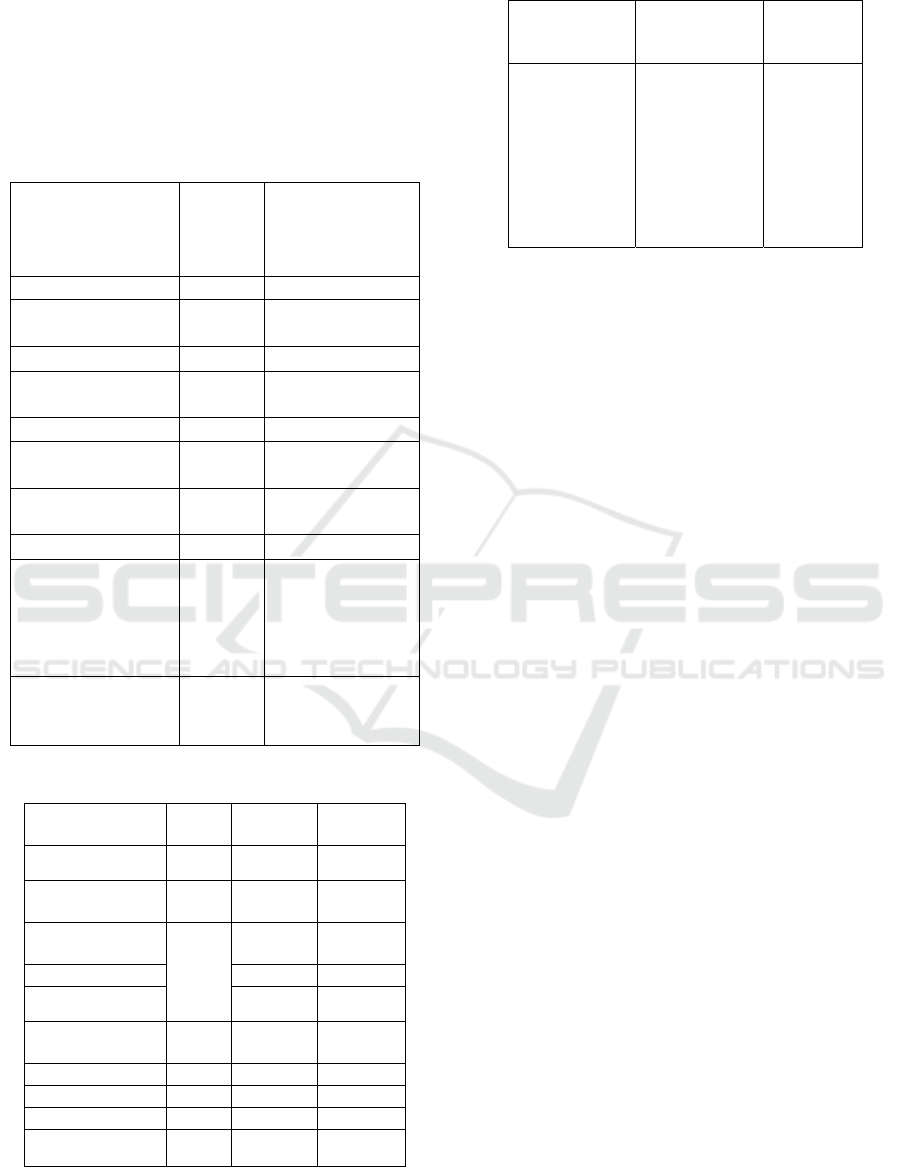
8112 Standard Limits. Table 2. Shows the Cement's
physical characteristics. Table 3. Shows the
Aggregate's physical characteristics.
Varying proportions of cupola furnace slag (10%,
20%, 30%, and 40%). Table 6 provides information
about each concrete combination.
Table 1: Chemical composition of cupola slag and
comparison with is 8112 standard limits.
Chemical
composition
Test out
(%)
(%) Restrictions
outlined in IS
8112
[20] (%)
(SiO2)Silica 22 –
Ferric,or oxide
(Fe2O3)
3.3 –
(Al2O3)Alumina 5.4 –
Calcium,or oxide
(CaO)
61.2 –
(MgO)Magnesia 3.4
≤6.5
Anhydride of
sulfur (SO3)
1.44
≤3.4
Insoluble The
residue
1.4
≤4.3
Ignition Loss 2
≤5.5
Ignition Alkali
content loss due to
insoluble residues
in terms of Na2O
K2O
0.43
≤0.6
Ratio of
Al2O3/Fe2O3
1.52
0.81
≥0.66
≥0.66 &
≤
1.03
Table 2: Cement's physical characteristics.
Property Units
Test
result
Limiting
values
Soundness Mm 1.6
≤10.6
Relative
densit
y
_ 3.19 3.15
Minutes of
setting time
First time 93
≥30
Last time 400
≤600
Strength of
compression
MPa
3 days
7 days 24.1
≥23
28 days 34.2
≥33
44.2
≥43
Table 3: Aggregate's physical characteristics.
Physical
attributes
Coarse-
grained
material
Fine-
grained
material
Relative
density
Water
absorption
(%) Color
Zone
2.67
1.3
Grey
_
2.66
2.5
_
I
I
The proportions of the corresponding mix containing
cupola slag as fine aggregates were intended to be
partially replaced using the DWR approach, or direct
weight replacement, has been applied in the literature
for circumstances where materials with varying
specific gravities are swapped out for one another.
During this process, the amount of weight that each
ingredient contains remains constant, with the
exception of the material that needs to be changed, in
this case fine aggregate. Since its specific gravity
(2.65) is larger compared to cupola slag (2.45), fine
aggregate quantities are reduced in the current study to
get identical volumetric output. This is due to the fact
that cupola slag and fine aggregate with similar
weights may take up various quantities depending on
the specific gravity. Very little volumes of
superplasticizer were used to generate the mixtures,
which had a consistent slump of 75 ± 10 mm. A
traditional concrete mixer with a 300-liter rotating
drum was utilized to thoroughly mix all of the
ingredients. Every sample was castat the standard
temperature. Three layers of the samples were cast to
guarantee adequate compaction and the elimination of
air gaps. For 7, 28, and 56 days, the concrete samples
were demolded and allowed to moisten after a 24-hour
casting time Gupta and Bakshi (2023).
3 STATISTICAL ANALYSIS
3.1 Mechanical Characteristics
Testing the concrete's mechanical characteristics is
crucial to ensure that it performs well and is safe for
use in construction. Several common tests are used to
evaluate how concrete behaves under different
conditions .The test for compressive strength is the
most commonly utilized, in which cubes of concrete
or cylinders are pressed until they break. This
Investigation of Mechanical Properties of Concrete by Partially Replacing Fine Aggregate with Cupola Slag
735
measures the concrete's ability to withstand crushing
forces. The tensile strength test checks how well
concrete can resist stretching or pulling apart, often
using a split cylinder method where a concrete
cylinder is cracked by pressure. The flexural strength
test is used to measure how concrete bends or resists
breaking when subjected to bending forces, usually
by placing a beam on supports and applying pressure
in the middle Venkatesan, B et al., (2021) and
Saravanakumar, A et al., (2019).
The elasticity modulus test measures Concrete's
stiffness, or how much it will bend under pressure.
Rebound hammer tests are a quick way to check the
surface strength of concrete without damaging it,
using a tool that bounces back after hitting the surface,
giving an estimate of its strength. Not only strength,
but concrete's durability is also put to the test. The
water absorbtion test measures the amount of water
absorbtion of the concrete, while the chlorid
penetration test checks if harmful chemicals can
penetrate the concrete and create damage to the
concrete in aggressive environments. Engineers use
these tests to ascertain how strong and flexible and
how resilient to the ravages of time concrete will be,
to ensure that it is safe and appropriate to be used in
a construction project Waseem, S. A and Lanjewar, B
(2021).
3.2 Durability Properties
How resistant it is to damage and strength when
exposed to various environmental conditions over
time is the durability of concrete. DIY-2 Concrete:
The Good, The Bad, the Ugly Concrete can be
susceptible to hitting water, chemicals, and extreme
weather, plus things that can weaken it. One
important thing is water resistance concrete has to
keep the water out, water coming in can crack the
concrete, rust the steel within. Freeze-thaw resistance
is also critical in cold climates where water that
becomes trapped inside concrete can freeze and
expand, cracking it.) Concrete also has to be resistant
to chloride ions, which can be found in seawater or
de-icing salts and will attack the steel reinforcing rods
inside. In places where soil or water has high sulfates,
concrete must be resistant to that attack that can cause
it to expand and crack. A second problem is
carbonation, which occurs when carbon dioxide from
the air interacts with the concrete, reducing its ability
to protect the internal steel Sambhaji, Z. K (2016)
and Velumani, M et al., (2023).
Table 4: Chemical composition of slag examples.
Compou
nds
Weight of Jalandhar
Slag (%)
Slag in
Ludhiana
Slag in
Batala
MgO 8.97 4.81 7.32
Al
2
O
3
16.01 8.78 12.61
SiO
2
47.06 23.56 48.20
SO
3
0.39 – 0.13
K
2
O
1 – 1.33
CaO 12.10 17.59 15.02
Feo 16.51 5.32 16
CO
2
43.61
Alkali-aggregate reaction can also happen when
certain aggregates react with the cement, causing
cracks. Abrasion resistance is important for concrete
exposed to wear, like floors or roads, to prevent
surface damage. Concrete must also resist chemical
attacks from substances like acids or oils, which can
break it down. Shrinkage and expansion are natural
changes that happen as concrete dries or absorbs
moisture; if they’re too severe, they can cause cracks.
Lastly, corrosion resistance is essential to protect the
steel reinforcement inside concrete, especially in
areas with water or aggressive chemicals. Testing
these durability properties helps ensure concrete lasts
longer, especially in harsh conditions, and reduces the
need for repairs, making buildings and structures
safer and more reliable. Table 4. Shows the Chemical
composition of slag examples. Table 5. Shows the
Physical Properties of slag samples.
Table 5: Physical properties of slag samples.
Physical
Property
Values
obtained
Jalandha
r
Ludhiana
Batala
Slag
Specific
gravity Water
absorption
Colo
r
2.22
1.51%
Light Grey
1.75
1.62%
Light
Gre
y
2.46
1.46%
Dark black
4 RESULT
4.1 Strength of Compression
The results of each cube specimen's strength of
compression evaluation after 7, 28, and 56 Days are
displayed. All concrete mixes received the include
cupola slag, which increased the strength of
compression by up to 30% when fine particles were
replaced. Then, as additional cupola slag was added to
the concrete mixtures, a decrease in strength was seen.
For example, substituting 10% cupola slag for fine
ICRDICCT‘25 2025 - INTERNATIONAL CONFERENCE ON RESEARCH AND DEVELOPMENT IN INFORMATION,
COMMUNICATION, AND COMPUTING TECHNOLOGIES
736
aggregates following seven days of curing, yields
increases in strength of compression of 15.76%,
14.12%, and 1.93%, respectively. These increases
correspond to 0.40, 0.45 and 0.50 water-binder
ratios.A 20% replacement of slag from cupola
furnaces for fine aggregates may result in
Compressive strength growth of the corresponding
w/c ratios were 20.40, 0.5, and 13.9%, 21.97%, and
24.22%. Furthermore, increases using w/c ratios of
0.40, 0.45, and 0.50, respectively, with compression
strengths of 30.08%, 27.81%, and 29.11%-occur
When using cupola slag instead of fine aggregates by
30%. Strength was then shown to diminish with the
addition of more cupola slag.
Table 6: Proportions of the mixture for different water-to-cement ratios and cupola replacement percentages.
Cupola
Replacement
ratio (%)
w/c
ratio
Water
(kg/m3)
Cement
(kg/m3)
Fine
aggregate
(kg/m3)
Coarse
aggregate
(10mm-20mm)
(
k
g
/m3
)
Coarse
aggregate
(4.75mm-
10mm
)
(
k
g
/m3
)
Cupola
slag
(kg/m3)
0 0.5 190 380 650 700 420 -
10 0.5 190 380 579 700 420 66
20 0.5 190 380 508 700 420 131
30 0.5 190 380 440 700 420 196
40 0.5 190 380 370 700 420 260
0 0.45 171 380 671 710 426 -
10 0.45 171 380 599 710 426 68
20 0.45 171 380 525 710 426 132
30 0.45 171 380 453 710 426 201
40 0.45 171 380 380 710 426 268.4
0 0.4 152 380 695 730 438 -
10 0.4 152 380 620 730 438 69.6
20 0.4 152 380 545 730 438 138
30 0.4 152 380 470 730 438 208.4
40 0.4 152 380 394 730 438 279
4.2 Split Tensile Strength
The correlation between cupola replacement (CR)
percentages and split tensile strength for different
curing ages and w/c ratios. Table 4 shows that Slag
from cupola furnaces is up to 30% replaced with fine
aggregates replacement only as the concrete's
increased split tensile strength. For every concrete
mix utilized in this investigation, this is generally the
case. There's a noticeable reduction in the split tensile
strength. When using cupola slag instead of 10% of
fine aggregates at a curing age of seven days, for
instance, the tensile strength increases by with w/c
ratios of 0.40, 0.45, and 0.50, respectively, of 11.11%,
8.75%, and 3.94%. Likewise, for 20% and 30%
cupola slag replacement levels with fine aggregate,
respectively, tensile strength rose by 31.48%, 22.91%,
19.73%, and 32.09%, 30.41%, and 22.8% for the
previously stated w/c ratios. That pattern is almost
exactly the same as the compressive strength
numbers. It is also clear that the rate of growth in
compressive strength is Situated a little above the rate
of rise in Tensile strength of split for lower ratios.
The reactive properties of cupola slag are
responsible for this increase in tensile strength. which
strengthen the connections among the particles in the
ITZ. Split tensile strength is comparable to
compressive strength seen to decline as cupola slag
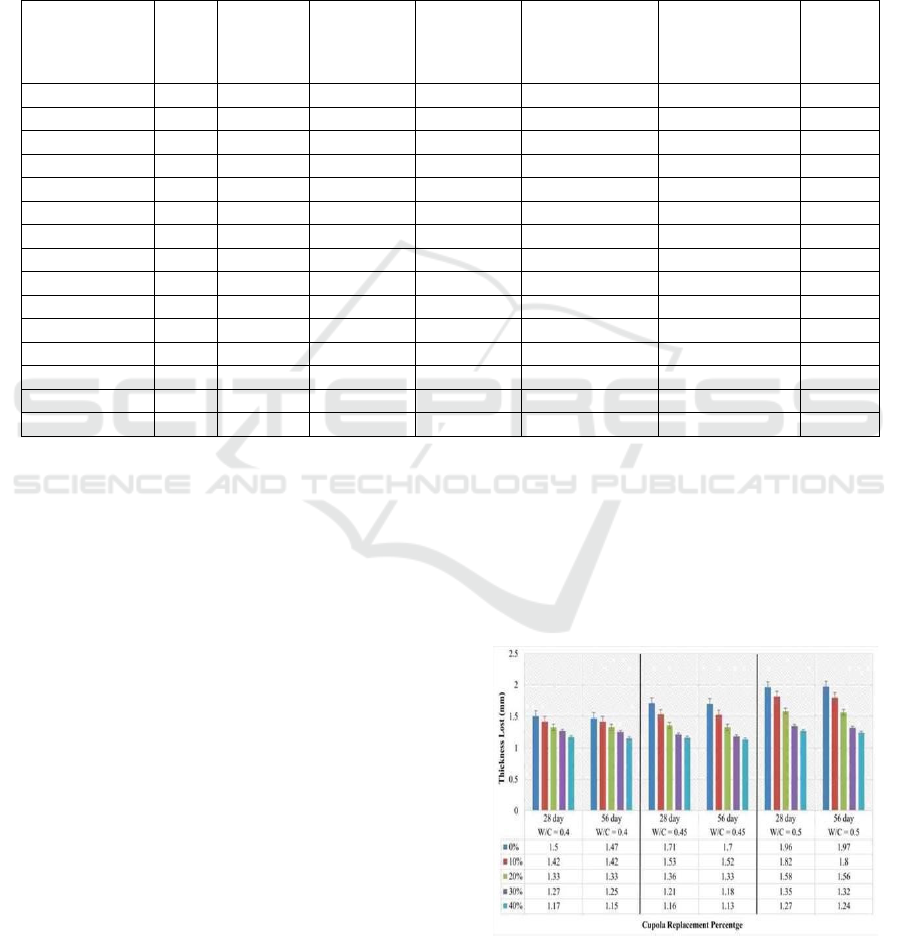
additions go over 30%. Figure 1 Shows the Effect of
Cupola Replacement Percentage on Thickness Loss at
Different Water-Cement Ratios and Curing Periods
Figure 1: Effect of Cupola Replacement Percentage
on Thickness Loss at Different Water-Cement Ratios
and Curing Periods.
Investigation of Mechanical Properties of Concrete by Partially Replacing Fine Aggregate with Cupola Slag
737

4.3 Water Permeability
This study examines the effects of adding cupola slag
to concrete in place of some of the fine sand on the
material's strength and durability. Using cupola slag,
a byproduct of the manufacturing of iron, in concrete
can help cut waste and increase sustainability. In the
project concrete cubes are prepared by replacing the
ordinary sand with various percentage of cupola slag
(5%, 10% & 15%). The compressive strength of the
cubes is tested at different periods (7, 14, and 28 days)
to assess the durability of the concrete. In addition,
to determine the water resistance of the concrete, a
water permeability test is conducted that is important
for durability. Other testing methods, like stress
testing of the concrete and examining the tensile
strength and elasticity of the concrete, provide insight
into the performance of the concrete as a whole. The
study aims to determine whether cupola slag can be
used as a partial sand replacement in concrete to
improve concrete durability and mechanical
properties and to decrease its environmental impact.
4.4 Abrasion Resistance Test
Therefore, a study was carried out using cupola slag,
an iron-producing residue, to investigate the
properties of concrete. Different proportions (5%
10% and 15%) of cupola slag are used with the
concrete. and tested for its mechanical properties the
cube test assesses slag influence on strength over
time by determining compression strength at the 7th,
14th, and 28th day. The abrasion resistance Examine
was designed to simulate difficult or busy
atmospheres to evaluate how good the concrete deals
with surface area damage. It aims to serve as a better
alternative to conventional materials by assessing
whether cupola slag has an impact on the advantages
of concrete such as strength, durability, and
sustainability. (Bakshi 2019)
4.5 Discussion
The regression analysis reveals insights into the
compressive strength and split tensile strength of
concrete at different curing periods, influenced by the
water-cement ratio and varying levels of cupola
replacement. For compressive strength, the R² value
observed at 7 days is 0.864, indicating a strong
correlation between the variables and the strength
outcome. After 28 days, the compressive strength
shows a slightly lower R² value of 0.743, reflecting
moderate predictability. At 56 days, the compressive
strength shows improvement, with an R² of 0.811,
suggesting an enhanced level of correlation over time.
The split tensile strength values are detailed
across several model evaluations. One model lists an
intercept value of 57.376 with a cupola replacement
coefficient of 48.156. Another model presents
coefficients of -99.383 and -78.521 for the intercept
and cupola replacement, respectively. In subsequent
models, the intercepts and cupola coefficients vary:
48.820 and 52.775 in one, and -108.787 and -45.110
in another. A more comprehensive regression
includes an intercept of 72.076, with cupola
replacement values of 55.941 and -121.691, and a
water-cement ratio coefficient of -85. The associated
standard errors are also reported—5.585 and 4.385
for the first model, followed by 5.095 and 11.321.
Another model lists errors of 27.125 and 11.124, then
5.776 and 12.826, and later 30.745 and 12.600.
The t-values and p-values correspond to the
respective models. For example, t-values of -3.661
and -7.058 are paired with p-values of 0.00000024
and 0.00135872. Another model includes t-values of
-3.534 and 10.646, with p-values of 0.00374134 and
0.00002100. Additional models show values like -
3.376 and -6.738 (t-values), and p-values of
0.00000387 and 0.00172665. For 7-day split tensile
strength, the R² remains 0.743. This trend continues
across 28-day and 56-day split tensile strength
measurements, both maintaining R² values of 0.743.
Water permeability results are also consistent
across durations. At 28 days, water permeability has
an R² value of 0.743, and the same is observed at 56
days. In terms of abrasion resistance, the analysis at
28 days includes coefficients like 8.453 for the
intercept and -7.881 for cupola replacement. A more
complex model includes values of 4.526, 4.478, -
9.072, and -4.550 for the intercept and other
parameters. Another includes 4.448, 3.835, -7.951,
and -3.860. The standard errors range from 0.473 to
35.600 across models.
T-values and p-values for abrasion resistance are
similarly documented. For example, values include -
3.488 and -4.278 with associated p-values of 0.024
and 0.016, while another model notes values such as
-2.466 and -2.909, with p-values of 0.04303907 and
0.00000144. These results again suggest strong
statistical significance.
Finally, for abrasion resistance at 56 days, the
water-cement ratio becomes more influential. The
model includes an intercept of 2.580 and coefficients
of 0.564, -1.410, and 2.540 for cupola replacement
and water-cement ratio. The standard errors for this
model are 0.054, 0.026, 0.017, and 0.058. The p-
ICRDICCT‘25 2025 - INTERNATIONAL CONFERENCE ON RESEARCH AND DEVELOPMENT IN INFORMATION,
COMMUNICATION, AND COMPUTING TECHNOLOGIES
738

values recorded for these variables are 0.00043216,
0.05476431, 0.00000235, and 0.00091579
respectively, reinforcing the statistical significance of
the model. The R² value for this 56-day abrasion
resistance model also remains at 0.743, suggesting
consistent reliability across the study's models.
5 CONCLUSIONS
This study examined the effects of substituting cupola
slag for some of the sand in concrete on the material's
strength. The findings demonstrated that adding up to
30% slag in place of sand strengthened the concrete.It
also improved how well the concrete resists pulling
forces, but not as much as it did for pressure. The
concrete was a little harder to mix because the slag
particles are rough, but this can be fixed by adding
more water or special chemicals. Using cupola slag is
also good for the environment because it helps recycle
waste and lowers the cost of concrete. It may also
make the concrete last longer. The best results were
seen when 20-30% of the sand was replaced, but using
too much slag could make the concrete weaker. In the
end, using cupola slag in concrete can make it stronger
and more affordable while being better for the
environment, but more studies are needed to see how
it holds up over time.
REFERENCES
Adese, A. J., Olajide, O. D., & Olaoyenikan, O. A. (2021).
Properties of concrete made from cupola furnace slag
and recycled construction aggregates. Retrieved from
(Website)
Afolayan, J. O., & Alabi, S. A. (2013). Investigation on the
potentials of cupola furnace slag in concrete. Retrieved
from Fedorov, P., & Sinitsin, D. (2022). Alkali-
activated binder based on cupola dust of mineral wool
production with mechanical activation. Retrieved from
https://www.mdpi.com/2075-5309/12/10/1565
Bhat, S., Sood, H., & Waseem, S. A. (2022). Recycling
cupola slag in concrete as partial replacement of fine
aggregate for sustainable construction. International
Journal for Research in Applied Science & Engineerin
g Technology. Retrieved from https://www.ijraset.com
/research-paper/recycling-cupola-slag-in-concrete-as-
partialreplacement-of-fine-aggregate
Dos Anjos, M. A. G., Sales, A. T. C., & Andrade, N. (2017).
Blasted copper slag as fine aggregate in
Portland cement concrete. Retrieved from https://www
.sciencedirect.com/science/article/abs/pii/S030147971
7302475
Gupta, A., & Das, P. (2023). Impact of cupola blast furnace
slag on mortar and concrete M20. Retrieved from
https://seyboldreport.net/pdf/2023/05/13.pdf
Kaish, A. B. M. A., Odimegwu, T. C., Zakaria, I., & Abood,
M. M. (2021). Effects of different industrial waste
materials as partial replacement of fine aggregate on
strength and microstructure properties
of concrete. Retrieved from https://www.sciencedirect
.com/science/article/abs/pii/S2352710220337244
Lanjewar, B., Jayan, N., Chaware, A., Kondawar, S.,
Chippagiri, R., Dakwale, V., & Ralegaonkar, R. (2021).
Effect of cupola slag as a coarse aggregate on
compressive strength of concrete. Retrieved from
https://www.sciencedirect.com/science/article/abs/pii/
S2214785323021107
Meshram, S. S., Raut, S. P., Giri, J., Sathish, T., Khan,
S., & Giri, P. (2024). Physico chemical characterizatio
n of cupola slag: Enhancing its utility in
construction. Retrieved from https://www.researchgat
e.net/publication/382941729_Physicochemical_charac
terization_of_cupola_slag_Enhancing_its_utilit
Mounika, G. V. V., & Ramesh, B. (2024). Experimental
investigation of M35 grade self-compaction concrete
by using bagasse ash as a partial replacement of cement
and cupola slag with coarse aggregate.
Retrieved from https://doi.org/10.22214/ijraset.2024.6
5828
Nainwal, A. (n.d.). Mechanical and durability properties of
concrete made by replacing copper slag with fine
aggregates: A review. Retrieved from https://www.ijea
st.com/papers/33-39,Tesma308,IJEAST.pdf
Patil, A., & Kapure, H. (2023). Durability and microstruct
ure analysis of cupola replacement in fine aggregate
and reinforced graphene oxide. Retrieved
from https://assetseu.researchsquare.com/files/rs30708
56/v1/bc8c08d672e447f8bbc353d74ba2ecbc.pdf?c=16
91144551
Rajasekar, A., Arunachalam, K., & Kottaisamy, M. (2019).
Assessment of strength and durability characteristics of
copper slag incorporated ultra-high
strength concrete. Retrieved from https://www.scienc
edirect.com/science/article/abs/pii/S095965261833134
2
Sambhaji, Z. K., & Autade, P. B. (2016). Effect of copper
slag as fine aggregate on properties of
concrete. Retrieved from https://www.irjet.net/archive
s/V3/i6/IRJET-V3I675
Saravanakumar, A., Krishna, B., Ponsanthosh, G., &
Krishnan, K. N. (2019). Suitability of concrete by using
cast iron slag and cupola slag as partial replacement of
fine and coarse aggregate: A critical
review. Retrieved from http://hbrppublication.com/OJ
S/index.php/JACCT/article/view/752
Thakur, K. K., Shafeeq, M. M., Rahman, A., & Mondal, D.
P. (2021). Effect of sintering temperature and binder
addition on the properties of cupola slag
glass ceramic tiles. Retrieved from https://link.springe
r.com/article/10.1007/s13762-021-03755-8
Investigation of Mechanical Properties of Concrete by Partially Replacing Fine Aggregate with Cupola Slag
739

Veena, N., Chaithra, C. V., Kaveri, Yadav, B., & Goudar,
S. S. (2021). Experimental investigation on properties
of concrete by partial replacement of bagasse ash with
cement and cupola slag with coarse aggregate.
International Journal of Engineering
Research & Technology. Retrieved from https://www.i
jert.org/research/experimentalinvestigation on properti
esofconcretebypartial replacementof bagasseashwithce
mentand cupolaslagwithcoarseaggregateIJERTV10IS0
80098.pdf
Velumani, M., Gowtham, S., Dhananjayan, M. P., &
Eniyan, G. T. (2023). Strength assessment of concrete
with copper slag as fine aggregates. Retrieved from
https://www.sciencedirect.com/science/article/abs/pii/
S2214785323033527
Venkatesan, B., Lijina, V. J., Kannan, V., & Devasena, P.
R. (2021). Partial replacement of fine aggregate by steel
slag and coarse aggregate by walnut shell in
concrete. Retrieved from https://www.sciencedirect.co
m/science/article/abs/pii/S2214785320354717
Waseem, S. A., Thakur, N., Islam, S. U., Kumar, M., &
Saini, J. S. (2021). Cupola slag as partial replacement
of fine aggregate in concrete – An experimental
study. Retrieved from https://www.sciencedirect.com/
science/article/pii/S2352710221012018
Waseem, S. A., et al. (2021). Cupola slag as partial
replacement of fine aggregate in concrete–An
experimental study. Journal of Building Engineering.
Retrieved from https://www.sciencedirect.com/scienc
e/article/pii/S2238785423004106
Waseem, S. A., et al. (2021). Cupola slag as partial
replacement of fine aggregate in concreteAn experime
ntal study. Journal of Building Engineering, 44. Retrie
ved from https://paperpile.com/c/lwdH3z/sgUZ
ICRDICCT‘25 2025 - INTERNATIONAL CONFERENCE ON RESEARCH AND DEVELOPMENT IN INFORMATION,
COMMUNICATION, AND COMPUTING TECHNOLOGIES
740
