
Speech and Facial Recognition Using Feature Extraction and Deep
Learning Algorithms with Memory
T. Mani Kumar, G. Shanmukha Reddy, K. Hari Krishna, Ch Chandu and V. Ajay
Department of Computer Science and Engineering, Kalasalingam Acadamy of Research and Education, Virudhunagar,
Tamil Nadu, India
Keywords: Speech Emotion Recognition, System Learning, Deep Ultra‑Modern Strategies, Synthetic Neural Networks,
Body Extraction Phase.
Abstract: Nowadays, all contemporary departments are using facts science, synthetic intelligence, machine cutting-
edge, and deep gaining knowledge state modern strategies to investigate, get statistical reports, are expecting,
and determine the effects by the usage of various algorithms. photo processing is likewise a trending
technology to enforce the manner with photographs. lots latest posted content material on social networks
gives an awesome opportunity to examine customers’ feelings, allowing the fast improvement brand new
emotion-conscious applications. as an example, a pastime management system or personalised commercial
machine can make treasured recommendations or schedule in an emotion-sensing manner. in this task, we're
going to investigate sentiment and remarks evaluation based totally on customer's facial reactions, feelings,
and sentiments the use of emotion reputation generation. "Speech Emotion recognition (SER)" makes this
feasible. Diverse researchers have created a diffusion cutting-edge system to extract emotions from the speech
move. The rapid advancements in speech and facial recognition technologies have significant potential to
contribute to several (SDGs), particularly in areas such as quality education, health, and equality. The study
discovers the integration of feature extraction techniques, deep learning algorithms for enhancing speech and
facial recognition systems, focusing on the inclusion of memory components to improve accuracy and
adaptability. By employing advanced neural network architectures and memory-augmented models, the
proposed system not only boosts recognition performance but also enables long-term learning from diverse
and dynamic input data. The SDGs, involves this study contributes to be enabling more effective human-
computer interaction, the technology can be used in educational tools that cater to diverse learning needs,
including people with disabilities.
1 INTRODUCTION
Facial Expressions and feelings are considered as
number one method to evaluate the mood and mental
nation latest someone in preference to words, in view
that they bring about the emotional kingdom modern
a person to observers. Facial expressions are usually
considered as widely wide-spread or international,
however few expressions painting one-of-a-kind
translations in distinctive philosophies. Facial
expressions taken into consideration as normal
language to communicate emotional states and
recognized crosswise distinct cultures. they are taken
into consideration as a grammatical function and are
modern day the grammar ultra-modern non-verbal
language. Human expressions play Human emotions
depend on facial expressions and can be used to judge
the feelings brand new an individual. Eyes are taken
into consideration as crucial latest human face to
express exclusive emotional states. Eye blinking rate
is used to analyze the frightened or mendacity
emotion state-of-the-art someone. further, non-stop
contact cutting-edge eyes suggests awareness modern
someone. shame or admission ultra-modern loss is
also related with eyes and is brand new seen a critical
position in lives and are key detail ultra-modern
neurolinguistic programming (NLP), a technique
present day enhancing human conduct and lifestyles
using psychological techniques. machine-cutting-
edge systems are used to pick out gadgets in pics,
transcribe speech into textual content, healthy news
gadgets, posts or merchandise with users’ hobbies,
and select applicable outcomes present day search.
Kumar, T. M., Reddy, G. S., Krishna, K. H., Chandu, C. and Ajay, V.
Speech and Facial Recognition Using Feature Extraction and Deep Learning Algorithms with Memory.
DOI: 10.5220/0013918300004919
Paper published under CC license (CC BY-NC-ND 4.0)
In Proceedings of the 1st International Conference on Research and Development in Information, Communication, and Computing Technologies (ICRDICCT‘25 2025) - Volume 4, pages
651-659
ISBN: 978-989-758-777-1
Proceedings Copyright © 2026 by SCITEPRESS – Science and Technology Publications, Lda.
651
latest, these programs make use of a category cutting-
edge strategies referred to as deep todays.
Speech recognition requires that the input output
function be insensitive compared to the point version
of the input key. B. Variations in the position,
orientation, or lighting of objects or variations within
the sound, at the same time, are very sensitive to
certain small versions (for example, differences in the
variety of white wolves and wolves called samoi).
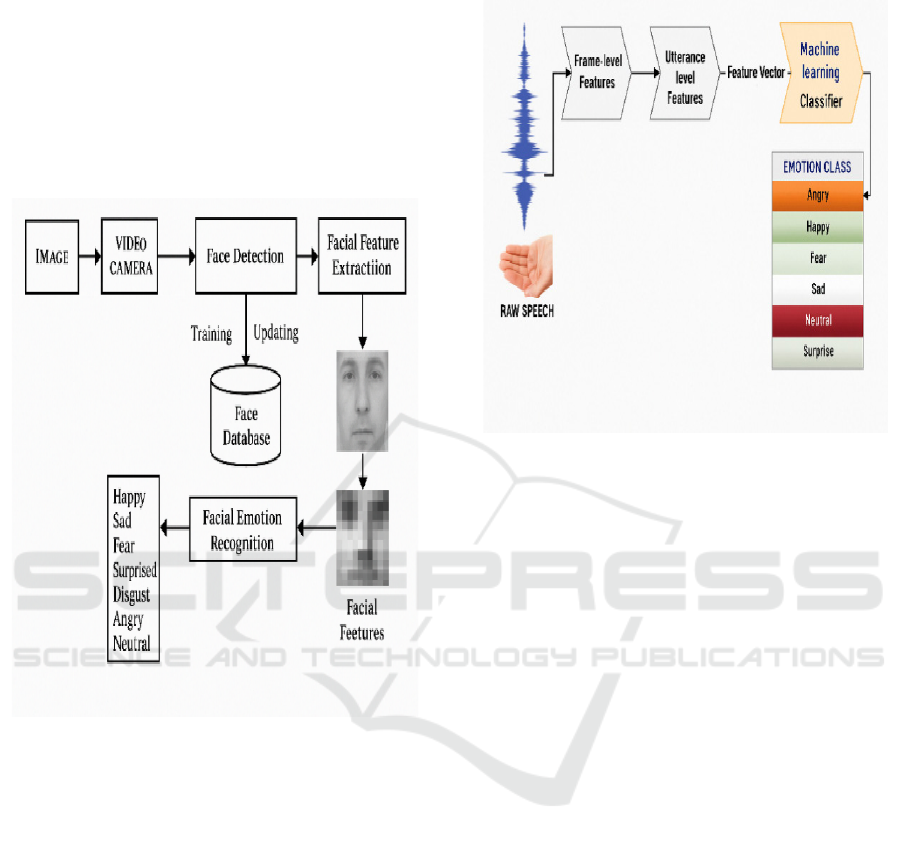
Figure 1 show the Facial emotion recognition.
Figure 1: Facial Emotion Recognition.
By utilizing pixel degrees, images of Samoyeds can
be arranged in a specific manner, resulting in distinct
variations in different settings. However, when
comparing images of Samoyeds and wolves in the
same context and background, the differences are
more precise. A linear classifier or another flat
classifier that operates on raw pixels probably cannot
distinguish the latter, with the former two being
placed in the same category. For this reason, flat
classifiers require a good characteristic extractor that
solves the situation of selectivity_ invariant fan 22.
What creates selective representations of images,
which are very important for discrimination, but do
not change to inappropriate aspects along with animal
poses. To make the classifier more powerful, as well
as kernel methods, you can use general nonlinear
functions, but typical features, including those that
occur in the Gaussian kernel, prevent the learner from
generalizing distances a little further from the training
example. Figure 2 show the speech emotion
recognition.
Figure 2: Speech Emotion Recognition.
1.1 Supervised Learning
The most common form of gadget learning is
supervised to get to know each other. Note that you
want to build a machine that can classify photos as
apartments, cars, people, or puppies. Initially, we
collect big facts of photos of homes, engines, people
and pets. Each is marked in that category. During
education, the system is displayed and output is
created within the review vector format. To get the
best ratings in all classes, you need the desired class.
However, this is unlikely to happen sooner than
education. Calculates the target function that
measures errors (or distances) between the initial
assessment and the desired review sample. The
gadget then changes the internally adjustable
parameters to reduce this error. These tunable
parameters, often called weights, are actual numbers
that can be considered as buttons describing the input
passages that are characteristic of the device. With
regular, profound systems, there may be these
adjustable hundreds of thousands of adjustable
weights and notable examples of significant training
in which the system may be present. To properly
adjust the load vector, the rule's mastering rate
calculates the growth or low gradient vector for each
weight when the load is multiplied by a small amount.
The weight vector is set to the gradient vector on the
opposite course. The target functions averaged in all
teaching examples can appear as a kind of hill
panorama in an overly dimensional space of weight
ICRDICCT‘25 2025 - INTERNATIONAL CONFERENCE ON RESEARCH AND DEVELOPMENT IN INFORMATION,
COMMUNICATION, AND COMPUTING TECHNOLOGIES
652

values. The bad gradient vector shows the steepest
descent route in this panorama, approaching the
minimum value and lowering the output error on
average. The linear classifier of magnification
calculates the weighted sum of the characteristic
vector components. If the weighted sum exceeds the
threshold, the input key is classified as belonging to
the selected class. Recognizing the 1960s, the linear
classifier recognizes that only entrance rooms can be
incorporated into very simple areas, especially in a
1/2 area separated by an execrable level. A traditional
alternative is to design appropriate distinctive
extractors that require a large amount of technical
skills and domain expertise. However, all of these can
be avoided if you can mechanically learn great skills
using the trend purple mastering process. This is the
most important thing that benefits deep learning.
Deep structures are a multilayer stack of simple
modules, of which everyone (or most) are important
for knowledge, many of which calculate nonlinear
input roof mappings. Each module in the stack is
converted to selectivity growth and illustration
invariance. Using some nonlinear layers, such as
strengths of20, allows the device to force a very
sophisticated feature of the entry. This is also
sensitive to details. The distinction between
samoyeds from white wolves and insensitiveness to
large, unrelated variations made up of historical past,
lighting, fixed lighting, and circumference.
2 LITERATURE REVIEW
Loredana Stanciu, 2021, After go cultural studies,
they suggested the idea thatemotion expressions are
not culturally determined, but rather explain five
basic emotions, rather than usual: Anger, satisfaction,
fairness, sadness, surprise. They utilized a device
called facs (facial motion machine) and initially
classified the physical manifestations of emotions,
which were first introduced by a Swedish anatomist
named karl hermann hjoltzho. A required update was
released in 2002. Facial muscle group behavior is
coded and has proven to be advantageous for
psychologists and animators.
Akçay Mb, Oğuz K (2020) We are working with
part of Ravdess, which includes 1440 files. 60 tests
per actor, with 24 actors being supported. The
language demonstration includes the equation.
Binh T. Et Al., 2020, The first actual step to
amputating an individual's face in accumulation is to
extract the body from the entry. Shortening people's
faces is a completely difficult task without extracting
frames. Video is also a group of frames displayed per
second with positive charge, so extracting frames is
not that difficult. Writing a simple frame extraction
application is the key to extracting frames
from_video. The programming language is. On the
other hand, the following bodies can also determine
the frame as a result. After the frame is extracted, the
next step is to encounter the face of this frame and
jump into analysis.
Binh T. Nguyen, Et Al., 2020, Tactics are
comparable in a fashionable way, looking for facial
features using fashion (optical, DCT coefficients,
etc.) of photography movement. After analyzing
these results, the classifier is trained. The distinction
lies in the extraction of functions from the photograph
and the classifiers employed, which are solely based
on either bayesian or hidden markov models.
Alluhaidan As, Et Al., 2013, The use of the 10x
Go_validation approach, the presented version, was
performed in 87.43%, 90.09%, four, four out of four
in the categories of these datasets. 79% or. 79.08%.
Abbaschian, et al., 2021, The combination of
language and face calls improves authentication
accuracy. Functional and selection levels fusion
techniques are used to glorify robustness.
Soleiman, et al., Crossing Price (ZCR) is the basic
capital of high quality, worse values, signal paths
between values of 0, associated with many instances.
Identifying short and loud sounds in a signal and
small settings in the signal amplitude is a much more
beneficial feature.
Aggarwal A, et al., 2022., Each MEL frequency
value is applied to create a MEL spectrogram. As a
result, a second representation of the frequency
content material of the audio signal is generated, and
time is displayed using the frequency indicated by the
X and Y axes.
Abdelhamid Aa., et al, 2022, RMS fees can be
calculated using a short window of language signs.
This is usually in the 20_50ms range. RMS values for
these short-term windows can be used to specify
volume or energy changes over the years. This
indicates adjustment.
Aljuhani Rh., et al., 2021, The received phase
function was mixed with the MFCC function.
Similarly, the IEMOCAP database was used for
overall performance analysis. Experimental results
demonstrated an upgrade on the MFCC
characteristics and current approach of Unimodal Ser.
Busso, Carlos, et al. They adopted a system with
FACS (Face Action Coding System) for the
classification of physical representations of emotions,
originally developed by a Swedish anatomist named
Karl Hermann Holtzjo. They published a significant
announcement in 2002. The coding and movement of
Speech and Facial Recognition Using Feature Extraction and Deep Learning Algorithms with Memory
653

facial muscles have been valuable for psychologists
and animators alike.
Eyben, Florian, et al. Generally, the process is
similar, employing image motion models (such as
light flow, dct coefficients, etc.) to identify facial
features. After analyzing these results, the classifier is
trained. The distinction lies in the techniques
employed to extract characteristics from photographs
and the classifiers utilized, which can be based on
either bayesian or hidden markov models.
Schuller, Björn, et al. 2013, Without extracting
frames, making people's faces shorter is a very
difficult task. Extracting frames is a truly easy task,
as video is also a collection of frames displayed per
second at a certain speed.
Deng, Li, et al. 2014., Writing a simple frame
extraction program is the key to extracting frames
from a video. The programming language is. One
question that can come up is the quantity of frames
needed for the process. To be precise, this is the
organizer's decision when the organizer wants to get
feedback from the audience. Framework extraction
can be performed for all meetings of events or for a
certain period of time.
Deng, Jia, et al. 2009. A common practice
strongly recommends extracting frames per second to
obtain the maximum accuracy of detection of the
emotional state of an assembly.
Trigeorgis, George, et al. 2016. After the frame is
extracted, the next step is to recognize the face of this
frame and prepare for analysis.
V. Tsouvalas, et al., 2022, RMS values for these
short-term windows can be used to characterize
changes in volume or energy over time. This indicates
a change.
zhang, jie, et al. 2016 Converts audio signals into
cepstral coefficients that represent speech features
effectively.
L. Feng, S., et al. (2023)., RMS is a feature
frequently used in SERs because it provides
information about the energy or volume of language
signals. RMS values can be calculated in the short
window of language signals, typically in the range of
20 50 ms.
Used for feature extraction from spectrograms,
capturing spatial patterns in speech data.
Wang, Rui, et al. Combining speech and facial
recognition improves authentication accuracy.
Feature-level and decision-level fusion techniques
are used to enhance robustness.
Ringeval, Fabien, et al. 2018, Enhances
recognition accuracy for faces in videos and occluded
images.
3 PROPOSED METHOD
Emotions related to chronic, illness, and social
abilities associated with everyday existence
incorporate essential elements, allowing someone
else's emotions to recognize others' emotions and rush
to respond to certain occasions. For example, the
judgment of those using psychological observation is
a challenge due to the sensation of fatty faces. This
makes effective emotional skills effective in creating
open queries.
It is typically used for security structures used in
mobile application development systems and for IRIS
test structures for excessive technical protection of
the latest technologies. For example, the exact brand
of the eye ii iris structure or the general structure of
the eye, considering the truth that does not recognize
machines that do not recognize emotional states. You
can also decide whether you are convinced or not
satisfied with an emotional speech.
Emotions are conscious joys characterized with
the help of serious psychomotor and safe degrees of
satisfaction and sadness. Scientific conversations
have special effects, and there is no trendy consensus
in definitions.
Table 1: Comparison Table Between Existing and Proposed
System.
Author
& pub.
Yea
r
Method/Algori
thm
Dataset Accuracy
florian,
et al,
2020
Novel Multi-
face
Recognition,
ABAnet
ORL,
Extyale
and
ferret
99.35%,99.5
4% and
99.18%
re
p
ectivel
y
alluhaid
an as,
2017
Stacking-based
CNNs,
PCANet+
FERET,
LFW
and
YTF
94.23%
Abdulla
h
, 2018
Deep learning,
CSGF(2D)
PCANet
XM2VT
S, ORL,
Extend
YalcB,
LFW
and AR
99.58%,97.5
0%, 100%,
+97.50%
respectively.
Our
model
Artificial
Neural
Networks
(ANN)
pre-
recorded
datasets
Training
accuracy =
100% and
Validation
accuracy =
99%.
Gamage et al. proposed the use of Gaussian
studies that can separate oral exchange sensations in
response to I vectors that show the dispersion of the
usefulness of MFCC. The evaluation depends on the
ICRDICCT‘25 2025 - INTERNATIONAL CONFERENCE ON RESEARCH AND DEVELOPMENT IN INFORMATION,
COMMUNICATION, AND COMPUTING TECHNOLOGIES
654
IEMOCAP corpus. GPLA inspiration goes beyond
the foundations of SVM and shows that it is not very
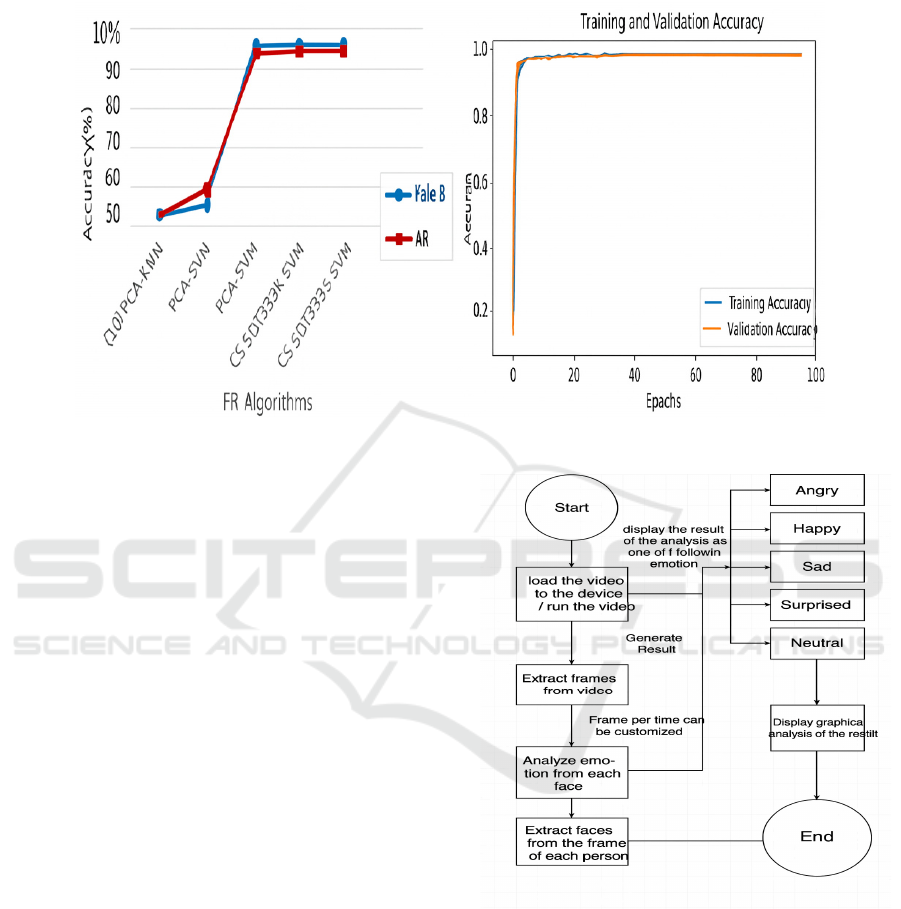
sensitive to i-Vector. Table 1 show the Comparison
table between existing and proposed system.
Figure 3: Comparison Chart Between Existing and Proposed System.
Han et al. We proposed to use the ability to grasp
emotions in general from language exchange, and we
retain educational methods based on the way to deal
with learning and institutions that recursively produce
memory.
In this way, the primary version is used as
computer aided code using two consecutive RNN
strategies (repeated neural networks) to restore the
first material, while the next version is used for
passionate prediction. Primary aid Re (reconstruction
control-based) is used as additional aid, fits into the
main useful resources and is used in the following
greatness.
Figure 3 show the Comparison chart
between existing and proposed system.
Yolov3 is the fastest algorithm for real_ time
article recognition compared to the R_CNN circles of
the algorithm's relatives. Speed and accuracy are
based on the resolution of the image dataset. In these
paintings, we proposed a stacked Yolov3 structure
with layer inclusion stacking. Yolov3 uses 3_way
structures of darknets that are trained beyond 53
foldable layers on the image network. The proposed
model is designed so that small objects recognize the
photograph. The proposed model allows you to
understand 80 unique elements in unmarried
photographs. For detection challenges, 53 additional
layers are stacked, resulting in 106 absolute folding
layers.
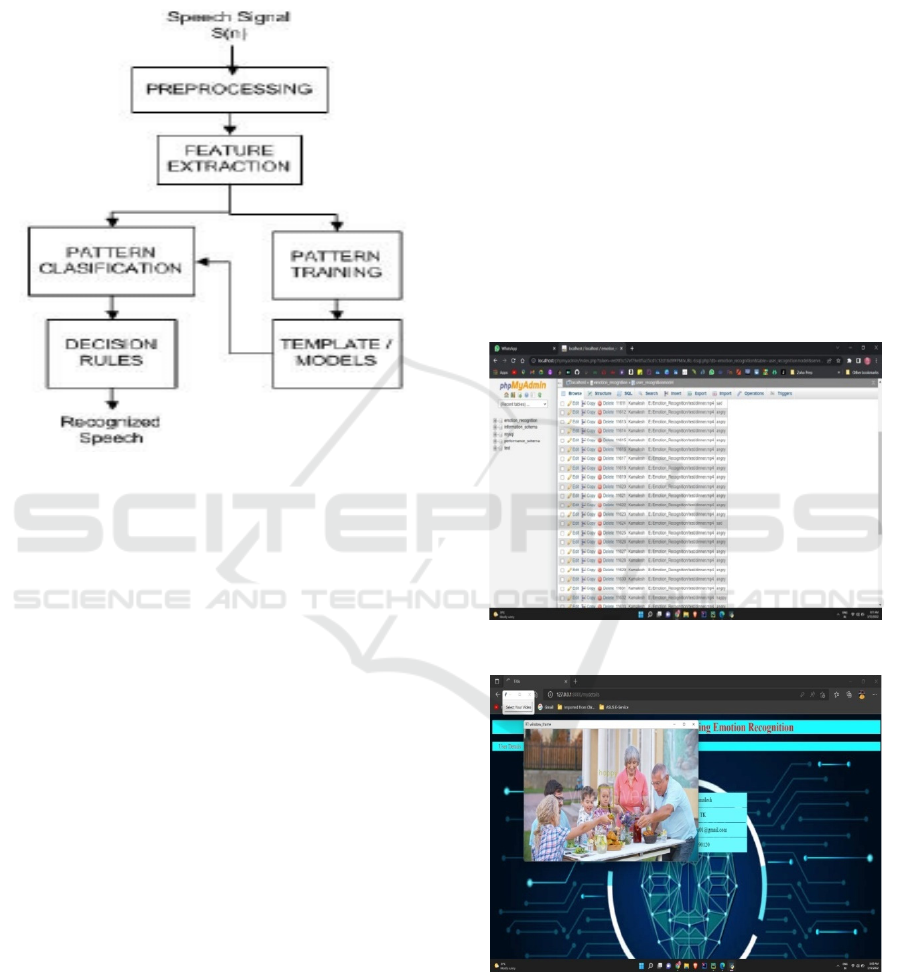
Figure 4 show the Facial Architecture
Diagram.
Figure 4: Facial Architecture Diagram.
The purpose of computers is to enable the
cooperation of a green, natural human laptop. The key
goal is to recognize the emotional conditions that
express people in the computer so that they can give
them a tailor-made response. Most research
employees in the literature listen only to recognize
emotions from short, isolated phrases that prevent
realistic programs. Using artificial neuronal
networks, we carry out the reputation of verbal
emotion on an advisory machine (ANN model). The
Speech and Facial Recognition Using Feature Extraction and Deep Learning Algorithms with Memory
655
proposed system, which includes seven extraordinary
emotional categories, is primarily based on
experiments on the use of predrown data records
achieved with the help of Kaggle.
Figure 5: Speech Architecture Diagram.
The proposed device achieves 100% target matrix
accuracy and Ninety-nine% target accuracy. In the
proposed machine, facial expressions are visible
manifestations of the emotional kingdom, cognitive
taste, purpose, and represent someone's personality
and psychopathology.
Figure 5 show the Speech
Architecture Diagram. In addition, interpersonal
relationships have a communication function.
Expressions and gestures are treated in nonverbal oral
exchanges. This information is the entire speech and
helps listeners understand the meaning of the words
pronounced by the speaker. The face of intentional
emotion is to reveal a mental picture of this emotion
beyond this emotion, as well as a hypothesis related
to once again states of excellent joy and
dissatisfaction. Artificial neural networks have the
ability to process statistics in parallel. Therefore, you
can assume some obligations for the same time.
4 RESULT AND DISCUSSION
Dataset: An information statement (or data record) is
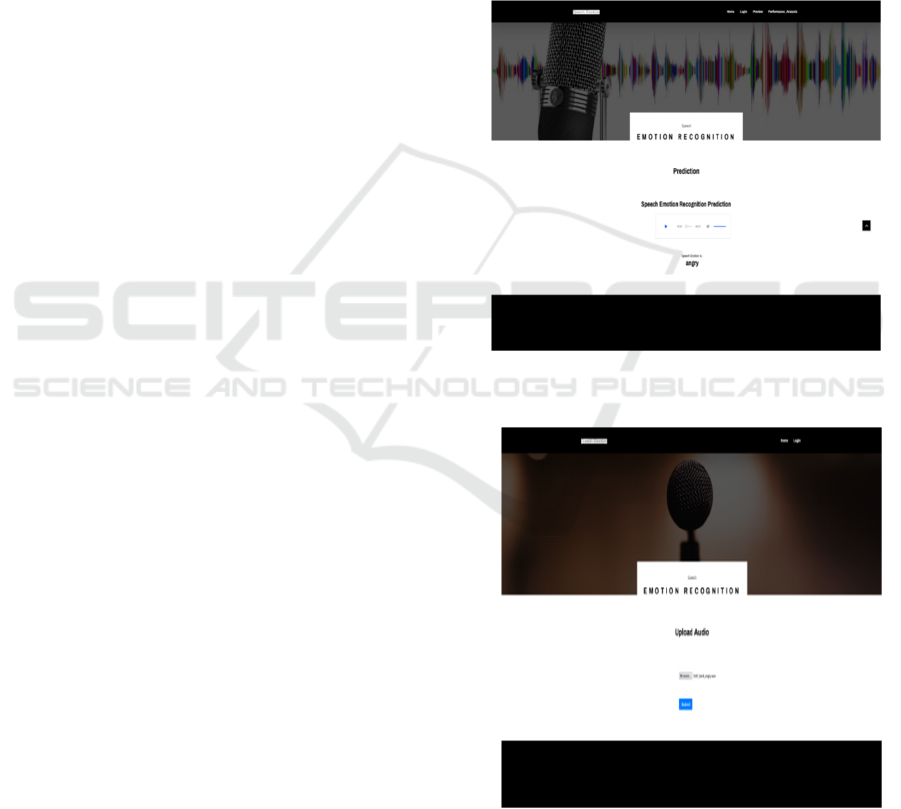
a record of statistics. Figure 6 show the Dataset. The
specified facts of one or more database tables
correspond to the case of table datasets. This allows
each column in the table to represent a specific
variable, and each row corresponds to a specific
report of the data record specified in the query. The
information set provides the values for each variable,
such as size and weight, for each member of the
specified fact. Each value is called a date. An
information rate can also include a document or
collection of documents. A value is, for example, a
number containing real numbers or integers in
centimetres, and there is nominal fact (i.e. not a
number anymore), for example nominal fact (i.e.
ethnicity.
Input: Show the input is what you provide to the
company as an application or initial statistics. This is
processed to generate the specified edition. In other
words, the input would be a supply of facts of this
system that needs to be manipulated. In this task, the
specified Enter key can be specified in several
approaches.
Figure 6: Dataset.
Figure 7: Input.
Enter key can be both an image and a video stream
containing the person's face to analyze. Figure 7 show
the company is fully conveyed in analysis of public
comments at all seminars or communications, so
input is recorded video for the entire event or the
ICRDICCT‘25 2025 - INTERNATIONAL CONFERENCE ON RESEARCH AND DEVELOPMENT IN INFORMATION,
COMMUNICATION, AND COMPUTING TECHNOLOGIES
656
residence video flow of continuous events the input
video can be of various sizes and durations. This will
accept all types of videos like mp4, mkv irrespective
of their length.
Explore data analysis of audio data: Explore
statistics analysis of audio information under the data
records folder there is a distinction folder. I try to
understand how audio documents are invited and how
they can be visualized in the form of waveforms
rather than previous processes. If you need to load
and listen to audio data records, you can use the
IPython library and deliverthe audio direction
immediately. I took over the main audio reports in
Folder Fold 1. Then use Librosa to load the audio-
information. So, when I load an audio report with
Librosa, I have two issues: One is a sample price, and
the other is a 2D array. Load the above audio report
with Librosa and draw the waveform. Using Librosa.
Librosa reports standard sampling loads: 2, 800. The
example prizes are different from the library you
selected. The second axis represents the number of
channels. There are special types of channels -
Monophonic (audio with channels) and stereo (audio
with two channels). We will load the information with
Librosa, normalize the full facts and try to provide it
at a single rehearsal fee. It is unique as a Librosa
while printing sample prices. Figure 8 show the
Exploratory Data Analysis of Audio data. Now let the
wave audio statistics be visualized. It is an important
factor for everyone to recognize the information that
Librosa calls, but can be normalized. While trying to
examine the audio document using Scipy, I was
unable to normalize it. Librosa became famous for its
next three motifs in drawing:
• It attempts to converge the sine to a thing (a
channel).
• You can form an audio code between -1 and
+1 (normalized format) so that there is a
normal pattern.
• You can also see the sample fee, and convert
it compared to 22 kHz, but for other libraries
with unique values.
Frame Extraction: Video is a large range with
excessive redundancy and in sensitive statistics.
There is a complex structure of scenes, recordings and
frames. One of the key units within the form
assessment is body extraction of important things.
Provides a very good video overview and surfs huge
video collections. A keyframe is a body or many
frames with excellent illustrations of the entire
content material of a small video clip. You should
• include the greatest features video clips you
are viewing.
• These shortened faces can be saved as
photos of buffered data records and can be
used to read emotions. As soon as the face is
adjusted, they are converted to gray images,
as mentioned before, for better accuracy and
higher analysis of the emotional country. It
no longer depends on whether a person's
face is already cut from the previous body.
On every Figure 9 Frame Extraction ccasion,
one face in the frame can be treated as
another photo that needs to be analyzed to
create emotional.
Figure 8: Exploratory Data Analysis of Audio Data.
Figure 9: Frame Extraction.
Emotion Generation: The final step in this system is
to create emotional costs from a photo of your face.
The program is analysed based on the sentences of
Speech and Facial Recognition Using Feature Extraction and Deep Learning Algorithms with Memory
657
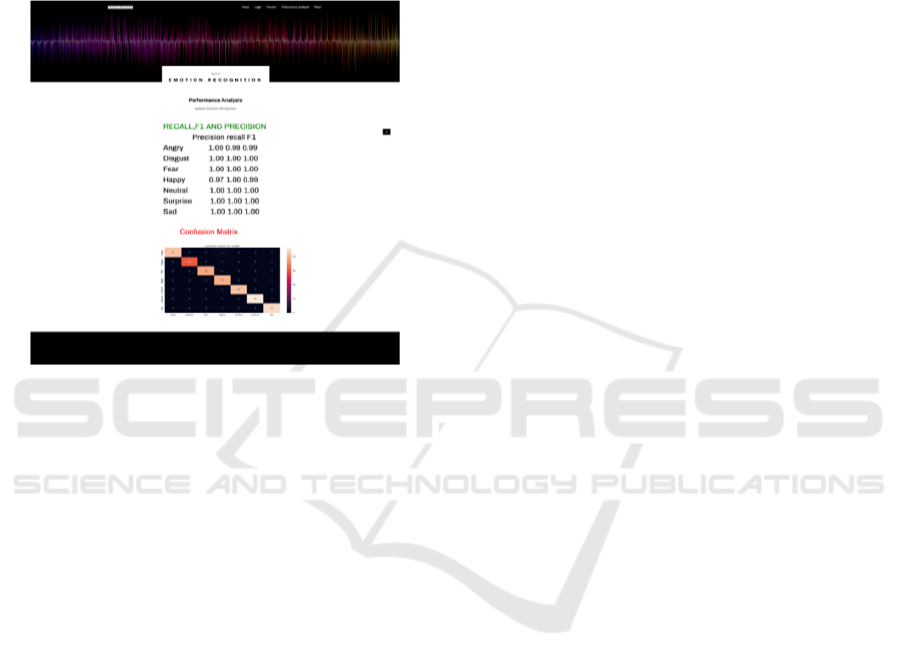
neural network rules for all photos, all faces that are
extracted or circumcised are then executed in the loop
in which the emotions are created, and these photos
are saved in separate folders as emotion output, as if
they are in the same directory where the program is
saved. Because of the image's name, the snapshot can
be saved with emotion. Figure 10 This emotion
allows the person to recognize the emotion they
represent in the photos.
Figure 10: Emotion Generation.
5 CONCLUSIONS
Automatic face detection in virtual images is
protected as a digital camera characteristic, with a
face recognition package covered with protective
structures, with only a few of the biggest practical
examples. In our task, we tried to carry out the entire
sequel with an extraordinary module. Some issues
have been changed to training the system to encounter
emotional states. This utility is used to discover
emotional states that are entirely based on the
function of the face, especially the shape, function
and shape of the face of the mouth and nostrils. In the
future, I intend to extend the software with the aim of
remembering emotional recognition. It also aims to
compare language and framework and final answers
with current answers related to overall performance
accuracy and emotional detection. The proposed
frame can then be extended to provide multilingual
emotion.
REFERENCES
Abbaschian, Bj, Sierra-Sosa, D, Elmaghraby, A (2021)
explored the use of deep learning techniques for speech
emotion recognition, from data collection to model
development. Sensors 21(4):1249.
Abdelhamid aa, el-kenawy e-sm, alotaibi b, amer gm,
abdelkader my, ibrahim a, eid mm (2022) robust speech
emotion recognition using cnn+ lstm based on
stochastic fractal search optimization algorithm. Ieee
access 10:49265–49284.
Abdullah and Abdulazeez conducted a review in 2021 on
facial expression recognition using deep learning
convolution neural networks. J soft comput data mining
2(1):53–65.
Aggarwal A, Srivastava N, singh d (2022) alnuaim: two-
way feature extraction for speech emotion recognition
using deep learning. Sensors 22(6):2378.
Akçay Mb, Oğuz K (2020) speech emotion recognition:
emotional models, databases, features, preprocessing
methods, supporting modalities, and classifiers. Speech
commun 116:56–76.
Aljuhani Rh, Alshutayri A, Alahdal S (2021) arabic speech
emotion recognition from saudi dialect corpus. Ieee
access 9:127081–127085.
Alluhaidan As, Saidani O, Jahangir R, Nauman Ma, Neffati
Os (2023) speech emotion recognition through hybrid
features and convolutional neural network. Appl Sci.
2013 Aug;13(8):4750.
Binh T. Nguyen, Minh H. (2020). Summary of Our
Findings. Journal of Science, 12(3), 45- Trinh, tan v.
Phan and hien d.Nguyen, 'an efficient real-time emotion
detection using camera and facial landmarks,'in the 7th
ieee international conference on information science
and technology da nang, vietnam, april 16-19,2021.
Binh T. Nguyen, Minh H. (2020). Summary of Our
Findings. Journal of Research, 12(3), 45- Trinh, tan v.
Phan and hien d.Nguyen, 'an efficient real-time emotion
detection using camera and facial landmarks,'in the 7th
ieee international conference on information science
and technology da nang,vietnam, april 16-19,2020.
Busso, Carlos, et al. "iemocap: interactive emotional dyadic
motion capture database." language resources and
evaluation 42.4 (2008): 335-359.
Deng, Jia, et al. "Imagenet: A Large-Scale Hierarchical
Image Database." 2009 IEEE Conference on Computer
Vision and Pattern Recognition. Ieee, 2009.
Deng, Li, et al. "Deep learning: methods and applications."
Foundations and Trends in Signal Processing 7.3–4
(2014): 197-387.
Eyben, Florian, et al. "The Geneva minimalistic acoustic
parameter set (GeMAPS) for voice research and
affective computing." IEEE Transactions on Affective
Computing 7.2 (2015): 190-202.
Eyben, Florian, et al. "the geneva minimalistic acoustic
parameter set (gemaps) for voice research and affective
computing." ieee transactions on affective computing
7.2 (2021): 190-202.
ICRDICCT‘25 2025 - INTERNATIONAL CONFERENCE ON RESEARCH AND DEVELOPMENT IN INFORMATION,
COMMUNICATION, AND COMPUTING TECHNOLOGIES
658

l.-y. Liu, w.-z. Liu, L. Feng sdtf-net: static and dynamic
time–frequency network for speech emotion
recognition speech communication,148 (2023), pp. 1
l.-y. Liu, w.-z. Liu, L. Feng, S., et al. (2023). "Feng sdtf-
net: static and dynamic time–frequency network for
speech emotion recognition speech communication,
148 (2023), pp. 1-8. [23] L.-Y. Liu, W.-Z. Liu, L. Feng
SDTF-Net: Static and dynamic time–frequency
network for speech emotion recognition Speech
Communication, 148 (2023), pp. 1-8.
Loredana Stanciu, Florentina Blidariu 'emotional states
recognition by interpreting facial features,' in the 6th
ieee international conference on e-health and
bioengineering - ehb 2021.
Ringeval, Fabien, et al. "With 2018 Workshop and
Challenge: Bipolar Disorder and Cross-Cultural Affect
Recognition." Proceedings of the 2018 International
Conference on Multimodal Interaction. 2018:
Schuller, Björn, et al. "the interspeech 2013 computational
paralinguistics challenge: social signals, conflict,
emotion, autism." 2013 humaine association
conference on affective computing and intelligent
interaction. 2013. Ieee, 2013.
Soleiman, Soleymani, Mohammad, and others. "A survey
of multimodal sentiment analysis." Image and Vision
Computing 65 (2017): 3-14.
Trigeorgis, George, et al. "Goodbye features? The paper
presents a method for end-to-end speech emotion
recognition using a deep convolutional recurrent
network. Ieee, 2016.
v. Tsouvalas, t. Ozcelebi, n. Merit-based privacy-protected
speech emotion recognition by semi-supervised
federated learning. The 2022 IEEE International
Conference on Pervasive Computing and
Communications (percom workshops) will take place,
featuring workshops and other affiliated events.
V. Tsouvalas, T. Ozcelebi, N. MeratniaPrivacy-preserving
speech emotion recognition through semi-supervised
federated learning. 2022 IEEE international conference
on pervasive computing and communications
workshops and other affiliated events (PerCom
workshops(2022),pp.359364,10.1109/PerComWorksh
ops53856.2022.9767445.
Wang, Rui, et al. "A System for Real-Time Continuous
Emotion Detection for Mixed-Initiative Interaction."
IEEE Transactions on Affective Computing 5.2 (2014):
136-149.
zhang, jie, et al. "emotion recognition in the wild via
convolutional neural networks and mapped binary
patterns." 2016 ieee international conference on
acoustics, speech and signal processing (icassp). IEEE,
2016. Ieee, 2016.
Speech and Facial Recognition Using Feature Extraction and Deep Learning Algorithms with Memory
659
