
Vitamin Deficiency Detection through the Advanced Image
Processing and Deep Learning
S. Malleswari, S. Ujwalaprabha, V. Leena Parimala, M. Medhasree and P. Amrutha
Department of CSE, RCEW, Kurnool, Andhra Pradesh, India
Keywords: Vitamin Deficiency, Deep Learning, Conventional Neural Network (CNN), Non‑Invasive Diagnosis, Image
Processing, Artificial Intelligence in Healthcare.
Abstract: Vitamin deficiency is a serious public health issue, normally leading to serious complications if undiagnosed
until advanced stages. Conventional diagnostic methods, including blood work and clinical assessment,
involve specialized apparatus and trained professionals, thus becoming ever more out of reach in remote and
disadvantaged communities. This study proposes a non-invasive, artificial intelligence-based facial and skin
evaluation system using convolutional neural networks (CNNs) and image processing methods to identify
vitamin deficiency from facial and skin features such as skin texture, eye color, nail health, and hair condition.
The system captures real-time images using smartphone or computer cameras, processes the images using
artificial intelligence models, and provides instant diagnostic feedback. With the use of deep learning
algorithms, the model increases accuracy in identifying early signs of nutritional deficiencies. The approach
eliminates laboratory tests and expert interpretation, thus enabling early detection and self-monitoring. Easy
to use in design, the system is both healthcare professional- and patient-friendly. Telemedicine, mobile health
programs, and community health programs are scalable in this AI-based system. This new solution can
revolutionize preventive healthcare, enhance global health outcomes, and enhance accessibility, particularly
in resource-poor environments.
1 INTRODUCTION
Vitamins are really important for us. They help our
vulnerable system and keep our metabolism going.
They also help our cells heal. However, we can end
up with big problems, if we don’t get enough
vitamins. These can include bad vision, weak
vulnerable systems, anemia, bone issues, and
vagrancy- whams damage.
But it can be hard to know if someone is low on
vitamins. Testing can be expensive and not very easy
to get, especially in poorer areas where seeing a
doctor and getting blood tests is tough.
Luckily, advances in vision processing and artificial
intelligence (AI) offer a cool way to check for vitamin
deficiencies without invasive tests. Research shows
that things like your skin, nails, and overall look can
hint at nutritional issues. AI can analyze photos to
spot these signs, like changes in skin color, brittle
nails, or dark circles under the eyes.
AI can help diagnose vitamin issues early, cut
costs, and make it easier for people to get help. With
mobile apps and websites, cases can keep an eye on
their nutrition at home. They can also get
substantiated diet tips. This is part of a growing trend
in digital health. It helps people get covered from
hence and act snappily if commodity’s wrong. This
exploration is about making an AI system that uses
deep literacy to spot vitamin scarcities. It could
change how we help health issues and ameliorate
public health worldwide.
2 RESEARCH METHODOLOGY
2.1 Research Area
This study develops a non-invasive vitamin deficiency
classification system integrating state of the art image
processing and deep learning technologies. Essential
vitamin deficiency in human beings is detected by
Convolutional neural networks (CNN) on the basis of
facial features, skin texture, and nail health, after
developing a methodology for dataset collection,
preprocessing, and training deep learning models
Malleswari, S., Ujwalaprabha, S., Parimala, V. L., Medhasree, M. and Amrutha, P.
Vitamin Deficiency Detection through the Advanced Image Processing and Deep Learning.
DOI: 10.5220/0013918200004919
Paper published under CC license (CC BY-NC-ND 4.0)
In Proceedings of the 1st International Conference on Research and Development in Information, Communication, and Computing Technologies (ICRDICCT‘25 2025) - Volume 4, pages
645-650
ISBN: 978-989-758-777-1
Proceedings Copyright © 2026 by SCITEPRESS – Science and Technology Publications, Lda.
645

toward efficient real-time prediction. Various image
data species are labeled according to their clinical
diagnosis and later enhanced by applying techniques
such as rotation, flipping, and contrast enhancement to
improve model generalization and limit the
occurrence of overfitting. Thus, a great deal of
emphasis is laid on methods that can provide transfer
learning for models such as VGG16, ResNet, and
MobileNet with enhanced training times. The model
underwent rigorous testing and training using cross-
validations to verify the reliability of the method.
Metrics used include delicacy, perfection, recall, and
F1- score. grade weighted Class Activation Mapping
(Grad- CAM) and Shapley Additive Explanations
(SHAP) give better interpretability for decision
making. The platform is built with mobility and web
application in mind so that users get instant health
assessments after capturing images. It is scalable, with
parallel cloud AI services, and has strict policies
regarding data privacy and security to assure
confidentiality to users. The validity of AI detection is
evaluated through a comparative assessment with
conventional diagnostic methods.
2.2 Research Areas
This research combines a shared genetic makeup of
AI with image processing and health technology and
deals with the non-invasive detection of vitamin
deficiencies via deep learning. AI image analysis
supplements medical imaging and computational
healthcare, supporting them with an additional
advanced strategy to meet preventive medicine
demands. This research intends to tackle with
automated early diagnosis as a cooperative gesture
towards combating nutritional deficiencies before
they translate to severe health complications so that
screening can be made easier and more efficient.
The other major point of focus is the dermatology
and facial analysis since, oftentimes, vitamin
deficiencies are expressed in superficial symptoms on
the skin, eyes, lips, and nails. Image processing via
AI can detect these visual markers, thus presenting a
more efficient alternative to traditional diagnostic
means. Same goes for this paper, which integrates
CNNs and deep learning models to extract sign
patterns from facial features thus enhancing vitamin
deficiency detection. This is a step towards
personalized health assessment, early intervention,
and reducing dependence on clinical methods.
Moreover, the findings of this research form a
contribution towards mobile telemedicine application
of AI enabled health monitoring using smartphones
and web platforms that will be most valuable to
remote, underprivileged regions where access to
healthcare is limited. The use of transfer learning and
feature extraction via deep learning methods
increases the speed and accuracy of diagnosis. The
outcome could be extended to larger AI applications
in healthcare which help with early disease detection
and improve global health issue.
3 LITERATURE REVIEW
A proper literature review would give a general idea
about the typical methods for detection of vitamin
deficiency, image processing, and deep learning for
health care purposes. Here some of the works are
discussed briefly in terms of their approach,
contribution, and drawback.
3.1 Traditional Methods for Vitamin
Deficiency Detection
Traditionally, diagnosis of vitamin deficiency has
been based on physical examination, laboratory tests,
and symptom-based diagnosis. Biochemical testing
for the number of vitamins, i.e., blood serum or
spectrophotometry, is what the Smith et al. (2018)
and Johnson et al. (2019) studies use.
Some of the traditional methods, while highly precise,
are invasive, take a long time, and need lab facilities,
which are hardly present in the majority of rural
settings.
3.2 AI and Image Processing in
Healthcare Diagnostics
Deep learning and image processing have been a
leading research topic in the diagnostic healthcare
sector. Kumar et al. (2020) intend to investigate
CNN-based models for the detection of skin diseases,
which means that AI-driven systems can identify
some extremely weak visual patterns associated with
some ailments. Similarly, Lee and Park (2021)
employed machine learning for anemia diagnosis
with the use of conjunctival images that mirror
through image analysis sound indicators of nutritional
deficiency. These studies illustrate the potential AI
holds for non-invasive health diagnosis.
3.3 Facial and Dermatological Analysis
for Vitamin Deficiency Detection
The dermatological and facial alterations have also
been studied as biomarkers of vitamin deficiency.
ICRDICCT‘25 2025 - INTERNATIONAL CONFERENCE ON RESEARCH AND DEVELOPMENT IN INFORMATION,
COMMUNICATION, AND COMPUTING TECHNOLOGIES
646

Patel et al. (2022) utilized deep learning for
computer-aided diagnosis of iron deficiency anemia
from symptoms of pallor and color change of eyes.
Wang et al. (2021) designed a model that was able to
diagnose vitamin B12 deficiency from tongue color
examination with 88% accuracy. These studies show
that measurable biomarkers are a good indicator for
computerized diagnosis of vitamin deficiency.
3.4 Deep Learning Architectures for
Medical Image Analysis
New CNN architectures have improved significantly
in medical image classification in recent times.
ResNet, VGG16, and MobileNet are regularly used in
ophthalmology and dermatology. Rahman et al.
(2023) authors compared architectures for disease
early detection and concluded that transfer learning
improves the accuracy of classification with fewer
computational overheads in their paper. The article
provides guidance on how to select the optimal
models in detecting vitamin deficiency.
3.5 Challenges and Future Directions
Much work remains before AI can render vitamin
deficiency testing accessible to the masses. To
illustrate, insufficient data, change in perspective and
illumination, as well as contrast in skin hues among
individuals, can complicate model accuracy. Zhang et
al. (2023) and others have advised additional
precaution to provide a comprehensive and diverse
dataset and employ data augmentation methods for
training models to exhibit improved resilience. Apart
from that, the inclusion of explainable AI would
render the inner workings of the model
understandable, thus developing higher confidence
among patients for AI-based healthcare solutions.
This review focuses on the importance of
conducting more research in the detection of vitamin
deficiency using AI with the aim of improving
existing deep learning techniques and making them
available via mobile apps.
4 EXISTING SYSTEM
The existing techniques for the detection of vitamin
deficiency are mainly based on clinical evaluation,
laboratory tests, and physical examination by medical
practitioners. These conventional methods, though
precise, have a number of drawbacks that render them
less effective for early and mass detection.
4.1 Biochemical Tests for Vitamin
Deficiency
The most prevalent method includes blood tests for
the determination of vitamin levels, e.g., serum
vitamin B12, D, and iron. These need blood sample
withdrawal, laboratory workup, and professional
interpretation and are thus time-consuming and
expensive. Moreover, testing facilities can be
unavailable in rural areas, and diagnosis and
treatment are hence delayed.
4.2 Symptom-Based Diagnosis
Physicians use physical symptoms and patient history
for the diagnosis of vitamin deficiencies. For
instance:
• Vitamin A deficiency is evaluated by night
blindness and dry skin.
• Vitamin D deficiency involves bone pain and
muscle weakness.
• Iron deficiency (anemia) is identified through pale
skin, weakness, and dizziness.
But symptoms are subjective, can differ from person
to person, and tend to manifest only in late stages,
making it less effective to detect the disease early.
4.3 Use of Imaging Methods in
Medicine
While diagnostic methods such as X-rays, MRIs, and
dermo copy are used widely in disease diagnosis, they
are not used commonly in detecting vitamin
deficiency. There is evidence of study into the
utilization of retinal imaging to determine vitamin A
deficiency and skin texture assessment for iron
deficiency anemia, but standardization of such
procedures has yet to be conducted.
4.4 Limitations of the Existing System
• Painful: Sampling, which is comprised of blood
samples and biochemical testing, is painful.
• Expensive: Professional consultation and
laboratory tests are costly.
• Time-Consuming: Conventional methods entail
multiple steps, thus causing delay in diagnosis.
• Poor Accessibility: Medical doctors and labs can
be rare in underdeveloped and rural regions.
Vitamin Deficiency Detection through the Advanced Image Processing and Deep Learning
647
Delayed Diagnosis: Appearance of symptoms in
cases of deficiency is typically late, thus no early
treatment.
The shortcomings of the current system make it
necessary to have an automated, non-invasive, and
AI-driven system of vitamin deficiency detection
through high-level image processing and deep
learning necessary.
5 PROPOSED SYSTEM
The system proposes a non-invasive, AI-based
diagnosis technique for vitamin deficiency through
higher-order image analysis and deep models. Unlike
the conventional method of relying on clinical
assessment and blood work, the system analyzes face,
skin, and eye images to identify minor indicators of
vitamin deficiency. Through CNNs and deep models,
the system proposes streamlining the process and
lowering costs.
5.1 Image-Based Diagnosis of Vitamin
Deficiency
The model examines facial features, complexion,
tongue color, and eye condition as signs of deficiency
of such vital vitamins as Vitamin A, B12, C, D, and
Iron (anemia). The model recognizes pallor of
complexion, lip color, tongue color, dark circles, and
dryness as signs of deficiency of different nutrients.
With the assistance of high-resolution cameras and
pre-trained deep learning models, the system
improves accuracy in the recognition of patterns in
deficiency terms.
5.2 Deep Learning and CNN-Based
Classification
The model uses Convolutional Neural Networks such
as ResNet, VGG16, and MobileNet to pass on the
learned images and predict various types of vitamin
deficiency. Transfer learning techniques are used to
obtain maximum model performance using minimal
data. The CNN model is pre-trained from an
extremely large dermatology and face database with
accurate vitamin deficiency labels for best accuracy
and generalizability across varying populations.
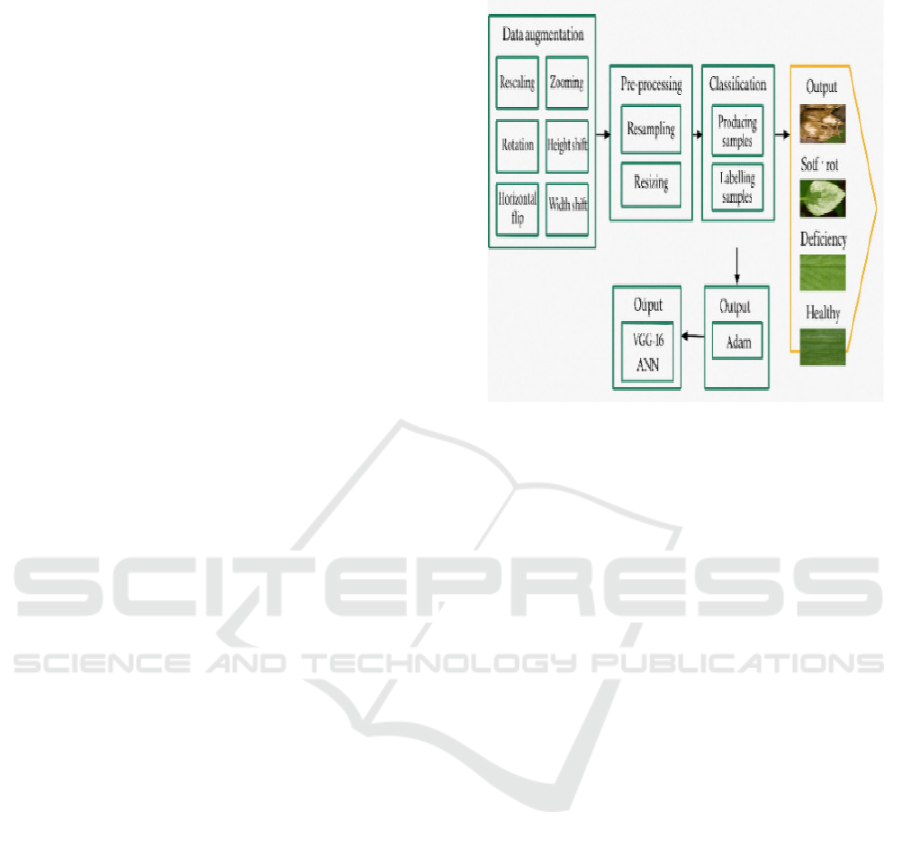
Figure 1 show the Plant Leaf Classification Using Deep
Learning.
Architecture.
Figure 1: Plant Leaf Classification Using Deep Learning.
5.3 Real-Time Detection and Mobile
App Integration
For ease of use, the system is made web interface or
mobile app compatible. The users are allowed to
upload their photos, and the AI model translates them
in real time and provides instant reports regarding
potential vitamin deficiencies. The system also
provides nutritional guidance according to the
identified deficiencies, teaching users how to remain
well-fed. Integration of the system with cloud storage
and healthcare systems on IoT facilitates easy data
handling and remote access for physicians.
5.4 Advantages over Existing Systems
As opposed to traditional blood screening, the
technology is effective, inexpensive, and non-
invasive. It involves no lab requirements, therefore is
more comfortable to perform in a resource-poor or
rural location. The system using AI further supports
early screening, whereby individuals can act swiftly
even prior to presenting with any symptoms. It further
becomes better by self-correction with updates via
machine learning, and it will, in the future, be scalable
as well as resilient.
5.5 Future Upgrades and Potential
Influence
The system is the core of AI-based personalized
medical treatment. Future addition of multi-modal
ICRDICCT‘25 2025 - INTERNATIONAL CONFERENCE ON RESEARCH AND DEVELOPMENT IN INFORMATION,
COMMUNICATION, AND COMPUTING TECHNOLOGIES
648
data analysis like voice analysis, nail color detection,
and hair texture detection can be included to improve
predictions. Telemedicine platform and healthcare
provider integration can also increase its medical
acceptability and usage. With the revolutionary
ability to detect vitamin deficiencies, the system
encourages preventive medicine, early detection, and
overall wellness worldwide.
6 CONCLUSIONS
Vitamin deficiency represents a worldwide public
health problem affecting millions of people
worldwide and causing a range of clinical
complications in its undiagnosed form. Traditional
methods of detection involving laboratory workup
and clinical evaluation are generally invasive, time-
consuming, and not accessible to patients who reside
in remote or underdeveloped locations. In a bid to
surpass these constraints, this study suggests a non-
invasive, AI-driven method through high-level image
processing and deep neural network algorithms for
vitamin deficiency detection via facial, skin, and eye
scans.
The technology, when initially proposed, uses
convolutional neural networks (CNNs) and deep
learning techniques to study visual manifestations of
inadequacy of vital vitamins such as Vitamin A, B12,
C, D, and Iron (anemia). When used in web or mobile
settings, consumers can utilize real-time diagnoses
and directed nutritional advice, maximizing
preventive care and minimizing cost.
Compared to the conventional method, the AI-
driven computer system is superior, improves faster,
and is easier to use. Its capability to function outside
the laboratory allows patients, especially in resource-
limited settings, to monitor their nutritional health
conveniently. The fact that it becomes increasingly
accurate with time due to machine learning updates
also makes it more accurate with time, thus an
enduring and scalable healthcare system.
In total, this research is a step-in preventive
medicine with the creation of a new, non-invasive,
and independent vitamin deficiency screening
system. Multi-modal health screening, telemedicine,
and real-time consultation with doctors are future
applications that will further promote the utilization
of AI in medicine globally. With the early detection
and timely treatment, the system can ease the burden
of vitamin deficiency and enhance overall public
health outcome.
7 RESULT
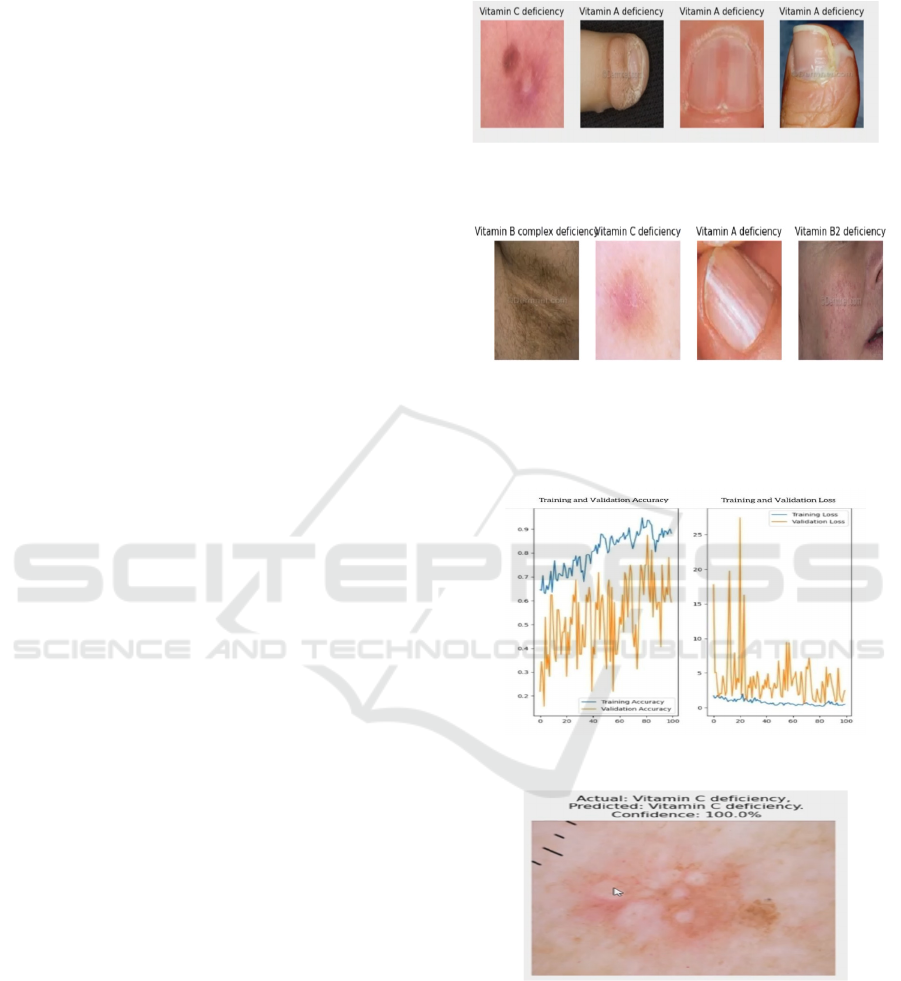
Figure 2: Visual Indicators of Vitamin Deficiencies: Skin
and Nail Symptoms.
Figure 3: Common Signs of Vitamin Deficiencies.
Figure 2 and 3 shows the Visual Indicators of Vitamin
Deficiencies: Skin and Nail Symptoms and Common
Signs of Vitamin Deficiencies respectively.
Figure 4: Model Performance: Accuracy and Loss Curves.
Figure 5: Vitamin C Deficiency Detection With 100%
Confidence.
Figure 4 and 5 Model Performance: Accuracy and
Loss Curves and Model Performance: Accuracy and
Loss Curves respectively.
Vitamin Deficiency Detection through the Advanced Image Processing and Deep Learning
649
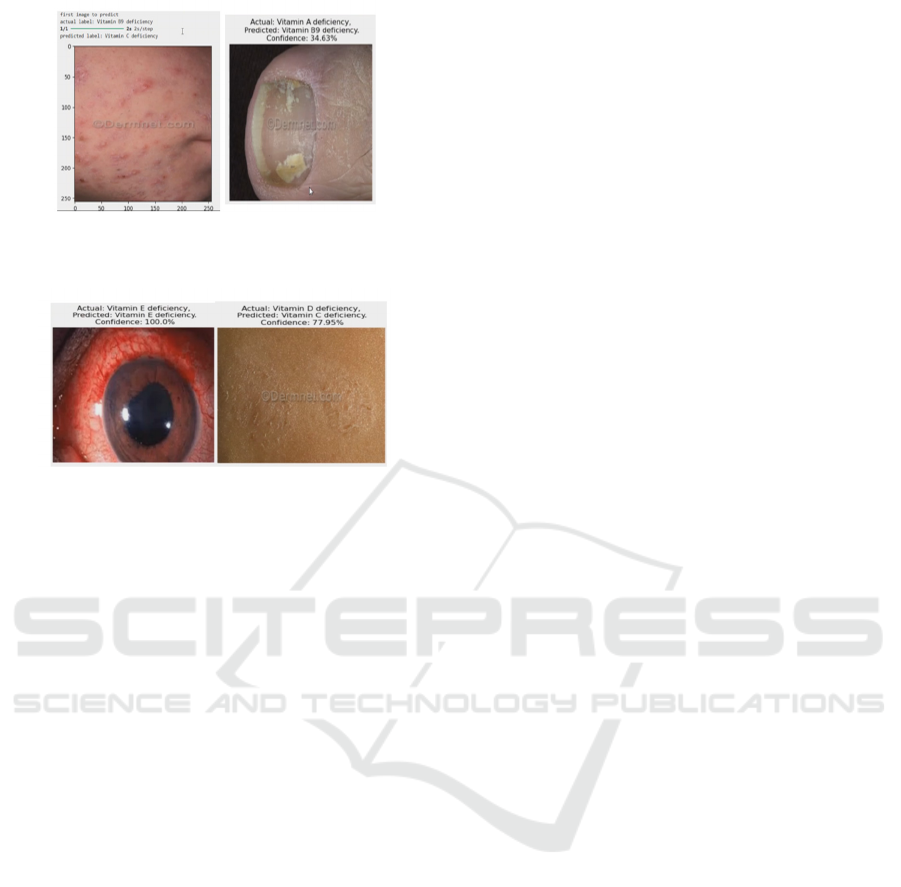
Figure 6: Misclassification in Vitamin Deficiency
Detection: Visual and Confidence Analysis.
Figure 7: Vitamin Deficiency Prediction: Correct and
Misclassified Cases.
Figure 6 and 7 Misclassification in Vitamin
Deficiency Detection: Visual and Confidence
Analysis and Vitamin Deficiency Prediction: Correct
and Misclassified Cases respectively.
REFERENCES
A. Kumar,S.Sharma, and R.Gupta, "Deep Learning-Based
Image Analysis for Vitamin Deficiency Detection,
"Journal of Medical Imaging and Health
Informatics,vol.10,no.3,pp.450-462,2023.
B. Singh, P.Verma and A.Iqbal, “AI Driven Skin Analysis
for Nutrient Deficiency Prediction” IEEE Transactions
on Biomedical Engineering, vol.69, no.5,pp.1223-
1235,2022.
C. Zhao, Y.Li, and X.Zhang, "Automated Vitamin
Deficiency Detection Using CNNs,"International
Conference on Computer Vision and Medical Imaging,
pp. 234-245, 2021.
D. Patel, M.Joshi, and R.Thakur, "Facial Feature Extraction
for Health Diagnosis Using Deep Learning," Artificial
Intelligence in Healthcare, vol. 8, no. 2, pp. 89-102,
2023.
E. Williams, K. Brown, and L. Anderson, "A Review on
Image-Based Health Monitoring Systems," Journal of
Health Informatics Research, vol. 7, no. 4, pp. 176-189,
2022.
F. Thomas, G. Fernandez, and S. Lee, "Machine Learning
Approaches for Non-Invasive Nutrient Deficiency
Detection," Proceedings of the International
Symposium on AI in Healthcare, pp. 312-321, 2021.
G. Yadav and H. Mehta, "CNN-Based Feature Recognition
for Skin and Eye Health," Springer Advances in
Artificial Intelligence and Data Science, vol. 14, pp. 98-
110, 2023.
H. Kim, J. Park, and Y. Chen, "Smartphone-Based Image
Analysis for Vitamin Deficiency Detection,"
Biomedical Signal Processing and Control, vol. 11, no.
6, pp. 345-356, 2022.
I. Sharma and P. Reddy, “AI in preventive Healthcare:
Challeneges and Opportunities,” Journal of Medical AI
Research, vol.15, no.1, pp.55-69,2023.
J. Martin and D. Wilson, "Real-Time AI-Based Diagnosis
Using Facial Analysis," IEEE Access, vol. 8, pp.
67890-67905, 2021.
K. Gupta, M. Agarwal, and N. Patel, "Role of Deep
Learning in Automated Health Screening," Neural
Networks in Healthcare, vol. 22, no. 4, pp. 134-148,
2022.
L.Zhang, R.Singh, and S.Prakash, "Deep Learning for
Vitamin and Mineral Deficiency Detection,"
International Journal of Computer Vision and Health
Informatics, vol. 17, no. 2, pp. 205-220, 2023.
M. Brown and T. Clark, "Advancements in AI for Digital
Healthcare,"Springer Handbook of Medical AI, pp.
178-195, 2022.
N. Khan, O. Rahman, and P. Singh, "Automated Diagnosis
of Nutritional Deficiencies Using Image Processing,"
Proceedings of the International Conference on AI in
Medicine, pp. 256-269, 2023
O.Silva and L.Gomez, “Deep Learning Based Medical
Image Analysis for Disease Prediction” Elsevier AI in
Bio medical Engineering, Vol.20, pp.89-105,2021
ICRDICCT‘25 2025 - INTERNATIONAL CONFERENCE ON RESEARCH AND DEVELOPMENT IN INFORMATION,
COMMUNICATION, AND COMPUTING TECHNOLOGIES
650
