
State of Charge Estimation for Electric Vehicles Using LSTM and
FNN: A Deep Learning Approach
L. Anand, Riya Ranjan, Aditi Arun Patil, Anish Patil and Sayyad Abid
Department of Networking and Communications, SRM Institute of Science and Technology, Kattankulathur, Chennai,
Tamil Nadu, India
Keywords: State of Charge Estimation, Feedforward Neural Network, Long‑Short Term Memory, Deep Learning Model.
Battery Management System.
Abstract: Dependence on fossil fuel is one of the major contributing factors to climate change. While it does provide
energy, it also presents significant problems. To mitigate this, the transportation industry is transitioning to
battery-powered systems for a more sustainable future. This calls for a system that could manage the batteries
for safe and efficient operation. This requires to accurately predict features such as State of Charge of a battery
(SOC). Traditional estimation methods, such as Kalman filters and equivalent circuit models, often struggle
with nonlinearities and uncertainties in battery behaviour. The aim of this study is to propose a hybrid model
which utilises Feedforward Neural Network (FNN) and Long short-term memory (LSTM) FNN is employed
as it possesses the ability to deal with complex nonlinear features that a battery management system would
have to deal with while LSTM is used for modelling temporal dependencies., improving prediction accuracy
over time. Experimental battery datasets are used to train and validate the model, and its results are compared
to those of traditional techniques. The results show that even with different load and temperature
circumstances, the suggested method delivers improved accuracy and robustness. This contributes to
advancement in systems such as BMS by demonstrating the potential of deep learning models.
1 INTRODUCTION
The transport industry is a significant contributor to
greenhouse gas emission and pollution. Electric
vehicles (EVs) have emerged as a key solution for
reducing carbon emission and dependence on fossil
fuels. Lithium-ion batteries have been typically used
as a single energy storage system in EVs due to their
high energy density, low self-discharge and long life
cycle M. Armand and J.-M. Tarascon, 2008.This has
engendered the need for a Battery Management
System(BMS) to enhance efficiency in key areas such
as driving range optimization, fault diagnosis and
mitigation, ensuring the reliable and safe operation of
EVs (M.-K. Tran and M. Fowler, 2020). One of the
key parameters of BMS is accurate estimation of
State of Charge (SOC) of battery. The SOC of a LIB
is defined as the residual charge of the battery and is
given by the ratio of the residual capacity to the
nominal, fully charged capacity of the battery (S.
Bockrath 2019).
The importance of SOC estimation extends
beyond just energy management. Inaccurate SOC
prediction can lead to unexpected power losses and
reduced battery lifespan affecting both vehicle
performance and user experience. SOC also plays a
crucial role in charging strategies, the absence of
which can lead to safety hazards such as thermal
runaways. SOC estimation is complex due to the
nonlinear relationship between battery current,
voltage and temperature (V. Chandran et al. 2021).
Traditionally SOC estimation is done using
electrochemical models such as Coulomb counting,
Open circuit voltage and Kalman Filtering. However,
these methods further contribute to estimation
inaccuracy due to reasons such as error accumulation,
need for a stationary state and reliance on accurate
system modelling.
This research proposes a hybrid LSTM-FNN
model for SOC estimation. The study aims to develop
an efficient and accurate model by training it on real-
world battery dataset. The proposed model is
evaluated against standard metrics such as Root Mean
Square (RMSE) and Mean Absolute Error (MAE) to
demonstrate its effectiveness. The results of this
548
Anand, L., Ranjan, R., Patil, A. A., Patil, A. and Abid, S.
State of Charge Estimation for Electric Vehicles Using LSTM and FNN: A Deep Learning Approach.
DOI: 10.5220/0013916500004919
Paper published under CC license (CC BY-NC-ND 4.0)
In Proceedings of the 1st International Conference on Research and Development in Information, Communication, and Computing Technologies (ICRDICCT‘25 2025) - Volume 4, pages
548-553
ISBN: 978-989-758-777-1
Proceedings Copyright © 2025 by SCITEPRESS – Science and Technology Publications, Lda.

research could contribute to advancing battery
management systems in turn improving reliability.
The remainder of this paper is structured as
follows: Section 2 presents a review of existing SOC
estimation techniques and related research. Section 3
details the proposed methodology, including dataset
selection, model architecture, and training process.
Section 4 discusses the experimental results and
performance evaluation. Finally, Section 5 concludes
the study and outlines potential future improvements.
2 RELATED WORK
State of Charge (SOC) quantifies the remaining
capacity available in a battery at a given time and in
relation to a given state of agein (M. Hassini et al.
2023). Existing methods rely on complex
electrochemical models which often suffer from
inaccuracies due to the nonlinearity and
environmental dependence. These limitations have
driven towards the adoption of data-driven
approaches, particularly machine-learning models.
This literature review aims to examine the
conventional SOC estimation methods and the
development towards AI-powered approaches,
highlighting advantages and challenges.
Ampere-hour counting is a fundamental method
for State of Charge estimation, relying on the
integration of current over time. It is one of the
simplest SOC estimation techniques, offering a
straightforward approach with low computational
overhead. However, while computationally
inexpensive, ampere-hour counting suffers from
several limitations that hinder its accuracy and
reliability, especially in real-world applications.The
primary disadvantage being the accumulation of error
over time since the method relies on continuous
integration (K. C. Ndeche and S. O. Ezeonu, 2021).
Furthermore, ampere-counting is highly sensitive to
initial SOC as the accuracy of the entire process
hinges on knowing the starting SOC with precision.
Other methods include Open Circuit Voltage (OCV)
based SOC estimation, which relies on the nonlinear
relationship between OCV and SOC but is affected by
temperature sensitivity which alters the OCV values
for the same SOC leading to estimation errors.
Additionally, OCV value differs for the same SOC
depending upon whether the battery was previously
charging or discharging making it less accurate in
dynamic conditions (F. Elmahdi, et al. 2021). An
alternate approach to SOC estimation is the Internal
resistance method which leverages the correlation
between a battery’s SOC and its internal resistance.
Despite being a fast and non-intrusive method, it is
highly temperature sensitive. Furthermore, variation
in battery chemistry requires careful calibration
without which inaccuracies could be introduced.
Hence, conventional SOC estimation methods
suffer from several limitations which makes it
incompetent for real-world practice. These
approaches are highly sensitive to external factors
such as temperature variation and battery ageing.
These shortcomings highlight the need for more
adaptive techniques.AI-driven approaches, which
rely on data-driven models, offer a promising way to
improve the accuracy and reliability of SOC
estimation.
AI-driven models like Long Short-Term Memory
(LSTM) networks have been employed for accurate
State of Charge (SOC) estimation in lithium-ion
batteries (LIBs), effectively addressing the challenges
posed by their highly non-linear behavior under
varying environmental and operational conditions (S.
Bockrath et al. 2019. This study demonstrates that
LSTM outperforms traditional physics-based models
like the Kalman Filter (KF), achieving a significantly
lower root mean square error (RMSE). While this
method provides a strong foundation, there is still
room for further optimization in terms of
computational efficiency and real-time applicability.
In this study, we aim to build upon these
advancements by refining the LSTM model,
improving its adaptability to diverse operating
conditions, and enhancing its real-world deployment
capabilities.
3 METHODOLOGY
Conventional methods for SOC estimation struggle
with various limitations as discussed above. This has
paved the path for adoption of AI-techniques,
specifically deep learning for SOC estimation (
S.
Guo and L. Ma, 2023). Deep learning models excel at
capturing non-linear relationships and temporal
dependencies in data, making them well suited for
modelling battery behaviour (S. Nachimuthu et al.
2025). This section outlines the methodology
employed for State of Charge estimation using a Long
Short-Term Memory - Feedforward Neural Network
system. The process includes data acquisition and
pre-processing, model development, integration of
the two networks, training, and performance
evaluation. The overall goal is to develop a robust and
accurate SOC estimation model capable of capturing
the complex dynamics of battery behaviour.
State of Charge Estimation for Electric Vehicles Using LSTM and FNN: A Deep Learning Approach
549
3.1 Data Pre-Processing
3.1.1 Dataset Preparation
The dataset was sourced from the battery tests on an
LG HG2 (3Ah) cell and a Panasonic cellusing a 75A,
5V Digatron Firing Circuits Universal Battery Tester
with a voltage and current accuracy of 0.1% of full
scale (P. Kollmeyer et al.). The dataset contained such
parameters as Voltage, Current, Battery Temperature
and Amp-Hours consumed or supplied by the
battery.Columns like 'id' are superfluous, so these
columns were dropped for redundancy.
3.1.2 Data Cleaning
No missing values were detected, eliminating the
need to develop mitigation strategies. Data
consistency was ensured when the dataset was
analysed for anomalies revealing no notable outliers.
3.1.3 Data Transformation
To smooth out fluctuations a moving average filter
was used which was applied to Voltage and Current
values over a rolling window of previous timesteps in
order to improve the accuracy.
3.1.4 Data Splitting
The dataset was divided into training and testing sets
for model evaluation. Based on the dataset shapes:
Training set: 18 cycles
Testing set: 11 cycles
The split ratio is approximately 65% training and
35% testing.
3.2 Exploratory Data Analysis
This section presents the Exploratory Data Analysis
(EDA) conducted on the battery performance dataset,
which contains multiple sensor readings across
different operating conditions.The dataset consists of
multiple input features and a target variable:
● Features: Five input variables (Voltage
(V(k)), Current (I(k)), Battery temperature
(T(k)), average terminal voltage (V_avg(k)),
and average current (I_avg(k))), representing
various battery parameters.
● Target Variable: Represents an outcome
metric related to battery performance.
● Training Data: 669,956 samples.
● Test Data: Comprises different test sets
collected under varying conditions (0°C and
25°C).
3.2.1 Key Takeaways from EDA
• Voltage range concentration: Most data
points are in the high voltage range, possibly
affecting the model’s ability to predict
behaviors in lower voltage conditions.
• Temperature variation: The dataset covers a
wide thermal range, which is crucial for
battery performance modeling but may
introduce high variability in results.
• Current (C-rate) imbalance: Most data is
low-C-rate, meaning high discharge scenarios
are underrepresented, which could impact
model robustness in real-world conditions.
Figure 1: SOC vs time graph.
Figure 2: SOC vs voltage graph.
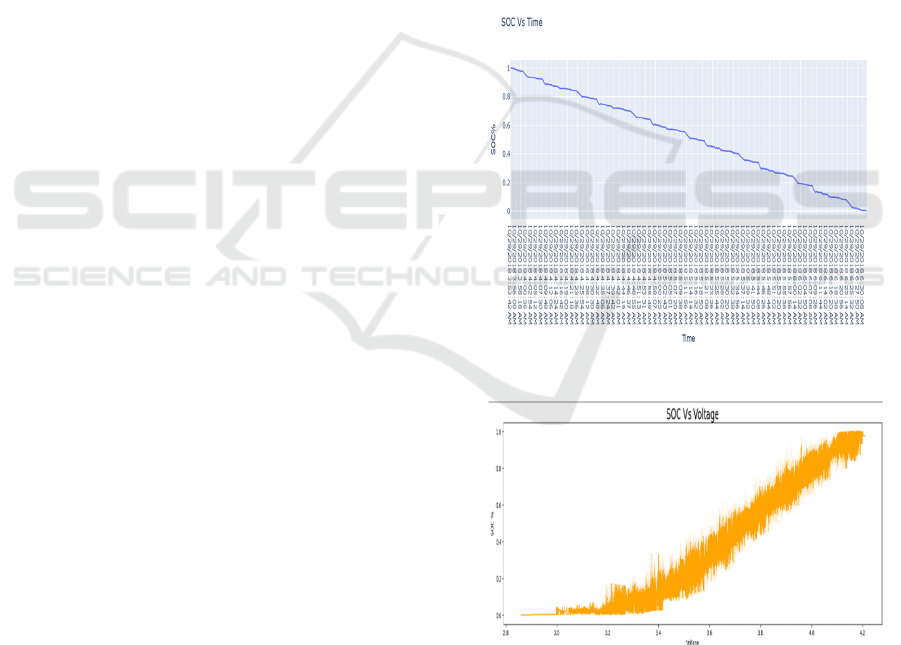
Figure 1 and illustrates the variation of SOC over
time, capturing the charge/discharge behavior of the
battery. Figure 2 depicts the relationship between
SOC and voltage. This nonlinear dependency
highlights the challenges of direct SOC estimation
ICRDICCT‘25 2025 - INTERNATIONAL CONFERENCE ON RESEARCH AND DEVELOPMENT IN INFORMATION,
COMMUNICATION, AND COMPUTING TECHNOLOGIES
550
3.3 Model Development
The integration of Long Short-Term Memory
(LSTM) networks and Feedforward Neural Networks
(FNN) was chosen for State of Charge (SOC)
estimation due to the following reasons:
LSTM network has displayed the ability to capture
long-term dependencies in sequential data, which is
crucial for modelling battery behaviour over time (Y.
Hua et al. 2018).
On the other hand, FNN is renowned for handling
intricate interactions between non-linear features,
improving feature extraction and ultimately raising
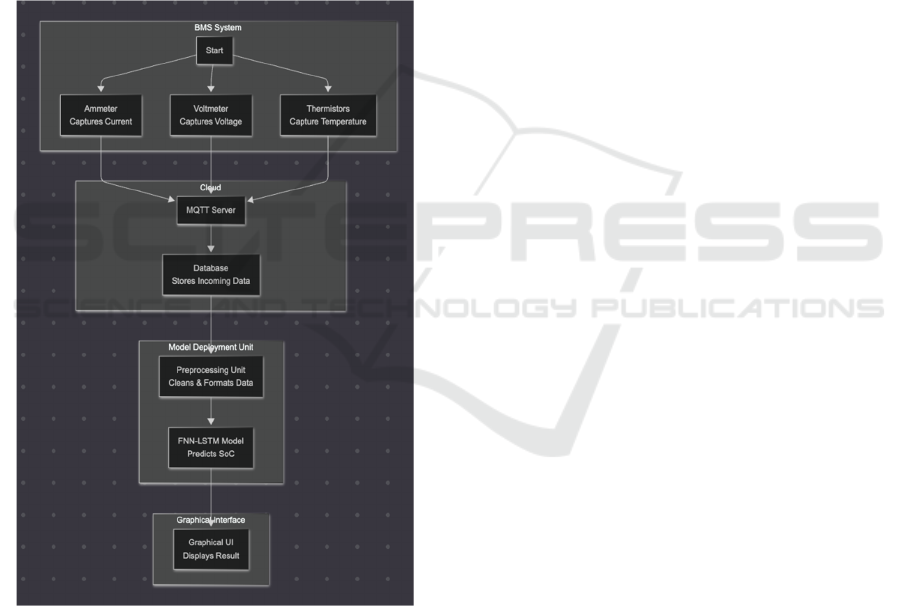
system accuracy (P. Lara-Benítez 2021). Figure 3
illustrates a basic flow of the system.
Figure 3: Schematic flow of theoretical structure.
3.3.1 Model Architecture
An LSTM network forms the initial stage of the SOC
estimation system. The five input features Voltage
(V(k)), Current (I(k)), Battery temperature (T(k)),
average terminal voltage (V_ avg(k)), and average
current (I_ avg(k)) are fed in the input layer. The
LSTM network consists of three stacked LSTM
layers, each containing 512 units with the “tanh”
activation function. Dropout regularization with a rate
of 0.2 is applied after each LSTM layer to mitigate
overfitting. The Output Layer produces the LSTM
network's output, which is then fed to the subsequent
FNN which consists of the following:
● Input Layer: Receives the output from the
LSTM network.
● Hidden Layers: The FNN consists of two
fully connected layers, each with 55 neurons,
using the SELU activation function to
introduce non-linearity.
● Output Layer: The final output layer consists
of one neuron, applying a linear activation
function to generate a single SOC estimation
value.
3.3.2 Model Training and Evaluation
The Adam optimizer with a learning rate of 0.00001
is used to train the FNN model.The Huber loss
function is employed to balance robustness against
outliers while maintaining sensitivity to small
errors.The model is trained for 150 epochs with a
batch size of 18, where early stopping is applied to
avoid overfitting when validation loss does not
improve any longer.This approach ensures the model
generalizes well to unseen battery data while
optimizing training efficiency.The model was
evaluated using multiple error metrics such as Mean
Absolute Error, Root Mean Squared Error, and Mean
Absolute percentage error to assess the model's
performance on the validation and testing sets.
4 RESULT AND DISCUSSION
This section presents the results obtained from the
LSTM-FNN model for SOC estimation. The model's
performance was evaluated using metrics such as
Root Mean Squared Error and Mean Absolute Error.
The model achieved a Root Mean Square Error
(RMSE) of 0.0239 and Mean Absolute Error (MAE)
of 0.0186 on the test dataset. Additionally, the Mean
Absolute Percentage Error (MAPE) of 9.48%
validates the model’s ability to generalize well across
different SOC values. The hybrid model was proved
effective in dealing with non-linear relationship
within the data outperforming the traditional methods
highlighting the suitability of deep-learning model for
real time SOC estimation. As shown in Figure 4, 5 the
predicted SoC closely follows the actual SoC over
time during training and testing.
State of Charge Estimation for Electric Vehicles Using LSTM and FNN: A Deep Learning Approach
551

Figure 4: Result on training.
Figure 5: Result on testing.
5 CONCLUSIONS
This study was conducted to investigate the efficacy
of a hybrid Long Short-Term Memory - Feedforward
Neural Network model for State of Charge estimation
in batteries. The research aimed to address the
limitations of traditional SOC estimation methods by
leveraging the strengths of deep learning techniques.
The proposed LSTM-FNN model combines the
ability of LSTMs to capture long-term temporal
dependencies with the non-linear mapping
capabilities of FNNs. Results demonstrate the
superior performance of the LSTM-FNN model
compared to standalone LSTM networks and other
established methods, achieving a low RMSE and
maximum error, as evidenced by the results presented
in Section 4. The hybrid approach effectively
captured the complex dynamics of battery behaviour,
leading to improved accuracy and robustness in SOC
estimation.
The success of the LSTM-FNN model highlights
the potential of hybrid deep learning architectures for
enhancing SOC estimation. The synergistic
combination of LSTM and FNN enabled a more
comprehensive representation of battery behaviour,
resulting in improved estimations. While this research
focused on a specific battery chemistry and operating
conditions, the methodology can be adapted to other
battery types and scenarios. Further investigation into
incorporating additional factors like other various
temperature conditions, and potentially exploring
parallel architectures with convolutional layers (
Manoharan et al. 2023), could yield even more robust
and accurate estimations. This study contributes
valuable insights into the field of battery management
systems and paves the way for developing advanced
SOC estimation techniques. The accurate and reliable
SOC estimation provided by the LSTM-FNN model
can lead to improved battery performance, extended
lifespan, and enhanced safety in various applications.
REFERENCES
Intergovernmental Panel On Climate Change (Ipcc), Ed.,
“Transport,” in Climate Change 2022 - Mitigation of
Climate Change, 1st ed., Cambridge University Press,
2023, pp. 1049– 1160. doi: 10.1017/9781009157926.
012.
M. Armand and J.-M. Tarascon, “Building Better
Batteries,” Nature, vol. 451, pp. 652–7, Mar. 2008, doi:
10.1038/451652a.
M.-K. Tran and M. Fowler, “A Review of Lithium-Ion
Battery Fault Diagnostic Algorithms: Current Progress
and Future Challenges,” Algorithms, vol. 13, no. 3, 20
20, doi: 10.3390/a13030062.
S. Bockrath, A. Rosskopf, S. Koffel, S. Waldhor, K.
Srivastava, and V. R. H. Lorentz, “State of Charge
Estimation using Recurrent Neural Networks with
Long Short-Term Memory for Lithium-Ion Batteries,”
in IECON 2019 - 45th Annual Conference of the IEEE
Industrial Electronics Society, Lisbon, Portugal: IEEE,
Oct. 2019, pp. 2507– 2511. doi: 10.1109/IECON.201
9.8926815.
V. Chandran, C. K. Patil, A. Karthick, D. Ganeshaperumal,
R. Rahim, and A. Ghosh, “State of Charge Estimation
of Lithium-Ion Battery for Electric Vehicles Using
Machine Learning Algorithms,” World Electr. Veh. J.,
vol. 12, no. 1,
p. 38, Mar. 2021, doi: 10.3390/wevj120
10038.
M. Hassini, E. Redondo-Iglesias, and P. Venet, “Lithium–
Ion Battery Data: From Production to Prediction,”
Batteries, vol. 9, no 7, p. 385, Jul. 2023, doi: 10.3390/
batteries9070385.
K. C. Ndeche and S. O. Ezeonu, “Implementation of
ICRDICCT‘25 2025 - INTERNATIONAL CONFERENCE ON RESEARCH AND DEVELOPMENT IN INFORMATION,
COMMUNICATION, AND COMPUTING TECHNOLOGIES
552

Coulomb Counting Method for Estimating the State of
Charge of Lithium-Ion Battery,” Phys. Sci. Int. J., pp.
1–8, Jun. 2021, doi: 10.9734/psij/2021/v25i330244.
F. Elmahdi, L. Ismail, and M. Noureddine, “Fitting the
OCV-SOC relationship of a battery lithium-ion using
genetic algorithm method,” E3S Web Conf., vol. 234, p.
00097, 2021, doi: 10.1051/e3sconf/202123400097.
S. Guo and L. Ma, “A comparative study of different deep
learning algorithms for lithium-ion batteries on state-
of-charge estimation,” Energy, vol. 263, p. 125872,
2023, doi: https://doi.org/10.1016/j.energy.2022.1258
72.
S. Nachimuthu, F. Alsaif, G. Devarajan, and I. Vairavasun
daram, “Real time SOC estimation for Li-ion batteries
in Electric vehicles using UKBF with online parameter
identification,” Sci. Rep., vol. 15, no. 1, p. 1714, Jan.
2025, doi: 10.1038/s41598-025-85700-0.
“P. Kollmeyer, ‘Battery Dataset for SOC Estimation,’
McMaster University, Hamilton, Ontario, Canada.,”
Y. Hua, Z. Zhao, R. Li, X. Chen, Z. Liu, and H. Zhang,
“Deep Learning with Long Short-Term Memory for
Time Series Prediction,” Oct. 24, 2018, arXiv:
arXiv:1810.10161. doi: 10.48550/arXiv.1810.10161.
P. Lara-Benítez, M. Carranza-García, and J. C. Riquelme,
“An Experimental Review on Deep Learning Architect
ures for Time Series Forecasting,” Int. J. Neural Syst.,
vol. 31, no. 03, p. 2130001, Mar. 2021, doi: 10.1142/S
0129065721300011.
A. Manoharan, D. Sooriamoorthy, K. M. Begam, and V. R.
Aparow, “Electric vehicle battery pack state of charge
estimation using parallel artificial neural networks,” J.
Energy Storage, vol. 72, p. 108333, Nov. 2023, doi:
10.1016/j.est.2023.108333.
State of Charge Estimation for Electric Vehicles Using LSTM and FNN: A Deep Learning Approach
553
