
FIR Filter Using Cadence for 16 Bit
Raja S.
1
, Kiruthika R.
2
, Mohammed Faizal N.
1
, Mohandas C. S.
1
,
Mugundha Kumar S.
1
and Muthu Kumar P.
1
1
Department of Electronics and Communication Engineering, SNS College of Technology, Coimbatore, Tamil Nadu, India
2
Department of Electronics and Communication Engineering, V.S.B College of Engineering Technical Campus,
Coimbatore, Tamil Nadu, India
Keywords: Finite Impulse Response (FIR), Very Large‑Scale Integration (VLSI).
Abstract: This project focuses on the design and implementation of a 16-bit Finite Impulse Response (FIR) filter using
the Cadence design environment. FIR filters are essential in digital signal processing due to their inherent
stability and precise linear phase characteristics, making them ideal for applications requiring high accuracy
and predictable performance. The design process begins with defining the filter specifications, including
cutoff frequency, order, and type. The coefficients are calculated using standard algorithms such as the
window method or Parks-McClellan optimization. These coefficients are then integrated into the hardware
design, ensuring optimal performance. Cadence tools are employed for schematic entry, simulation, and
layout generation. Detailed simulations are conducted to verify the functionality, frequency response, and
phase characteristics of the filter. Special attention is given to optimizing the filter design for power efficiency,
area minimization, and high-speed operation. The project also explores techniques to reduce hardware
complexity without compromising performance. The final implementation demonstrates effective signal
filtering, confirming the filter’s accuracy and robustness in handling 16-bit digital data. This work highlights
the versatility and efficiency of Cadence tools in developing high-performance digital signal processing
hardware.
1 INTRODUCTION
A FIR (Finite Impulse Response) filter is a type of
digital filter that processes signals by applying a finite
number of coefficients to the input signal. The output
of a FIR filter is determined by a weighted sum of the
current and past input values. FIR filters are widely
used in digital signal processing (DSP) applications
due to their inherent stability, linear phase response,
and simplicity in implementation. In this design, we
focus on implementing a FIR filter using Cadence, a
powerful suite of tools for the design, simulation, and
verification of integrated circuits (ICs) and systems.
Cadence provides a comprehensive environment for
simulating digital signal processing systems at
various abstraction levels.16-bit precision refers to
the bit-width of the filter’s coefficients and the data
precision used in the system. A 16-bit FIR filter can
process signals with a precision of 16 bits, allowing
for higher resolution and more accurate signal
processing. However, the design of such filters
involves considerations regarding quantization
errors, computational complexity, and memory
requirements.
2 EXISTING METHOD
The existing methods for designing a 16-bit FIR filter
using Cadence focus on efficiently generating filter
coefficients, quantizing them to fixed-point precision,
and ensuring the design meets performance
requirements. Figure 1 show the Existing Method.
The Windowing Method is often used for its
simplicity, applying a window function (like
Hamming or Blackman-Harris) to calculate the FIR
filter coefficients, though it may not yield optimal
performance in all cases. For more precise designs,
the Parks-McClellan Algorithm is employed, as it
minimizes the maximum error between the ideal and
actual frequency response, making it ideal for
applications demanding better stopband attenuation.
S., R., R., K., N., M. F., S., M. C., S., M. K. and P., M. K.
FIR Filter Using Cadence for 16 Bit.
DOI: 10.5220/0013914600004919
Paper published under CC license (CC BY-NC-ND 4.0)
In Proceedings of the 1st International Conference on Research and Development in Information, Communication, and Computing Technologies (ICRDICCT‘25 2025) - Volume 4, pages
461-464
ISBN: 978-989-758-777-1
Proceedings Copyright © 2026 by SCITEPRESS – Science and Technology Publications, Lda.
461
Additionally, the Least Squares Method can be
applied to minimize squared errors in the frequency
response. Once the coefficients are determined, 16-bit
quantization is performed, converting the filter's
coefficients and signals to fixed-point precision,
which involves careful handling of overflow,
rounding, and scaling to ensure accuracy. Cadence
simulation tools like Xcelium for digital simulation
and Spectre for mixed-signal simulation are used to
verify the filter’s performance before hardware
implementation. Finally, tools such as Stratus and
Virtuoso help in synthesizing the filter for FPGA or
ASIC deployment, ensuring that the design is
optimized for the 16-bit precision and system
requirements.
Figure 1: Existing method.
3 PROPOSED SYSTEM
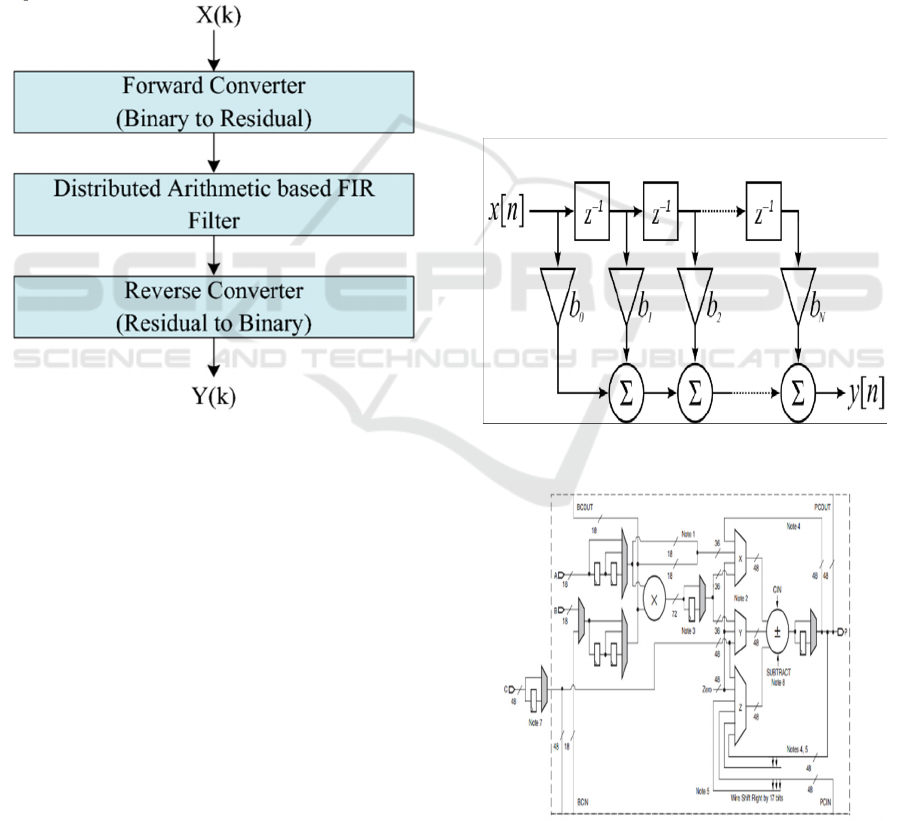
Figure 2 show the proposed system aims to design
and implement a high-performance 16-bit FIR filter
using Cadence tools for efficient digital signal
processing. The system focuses on optimizing filter
architecture for low power consumption, high-speed
operation, and minimal hardware resource utilization.
The design incorporates an optimized Multiply-
Accumulate (MAC) unit, pipeline processing, and
parallel computation techniques to enhance
throughput. The FIR filter coefficients are stored
efficiently using registers or memory blocks, ensuring
precise filtering operations. The implementation is
carried out using Cadence Virtuoso for schematic
design, Spectre for circuit simulation, and RTL
Compiler for synthesis and optimization. The system
is tailored for FPGA or ASIC applications, making it
suitable for real-time DSP applications such as image
processing, biomedical signal filtering, and
communication systems. The proposed system
focuses on the design and implementation of a 16-bit
FIR filter using Cadence tools to achieve high
performance, low power consumption, and optimized
hardware utilization. The system employs an efficient
Multiply-Accumulate (MAC) unit with pipelining to
enhance speed and reduce latency. The filter
coefficients are stored in dedicated memory blocks to
ensure precision and stability in filtering operations.
The design is implemented using Cadence Virtuoso
for schematic capture, Spectre for circuit simulation,
and RTL Compiler for synthesis and optimization.
Additionally, advanced parallel processing
techniques and clock gating mechanisms are
integrated to improve computational efficiency. This
system is intended for real-time applications in
biomedical signal processing, communication
systems, and image processing, where accurate and
efficient digital essentials.
Figure 2: Proposed method.
Figure 3: Flowchart of proposed method.
ICRDICCT‘25 2025 - INTERNATIONAL CONFERENCE ON RESEARCH AND DEVELOPMENT IN INFORMATION,
COMMUNICATION, AND COMPUTING TECHNOLOGIES
462
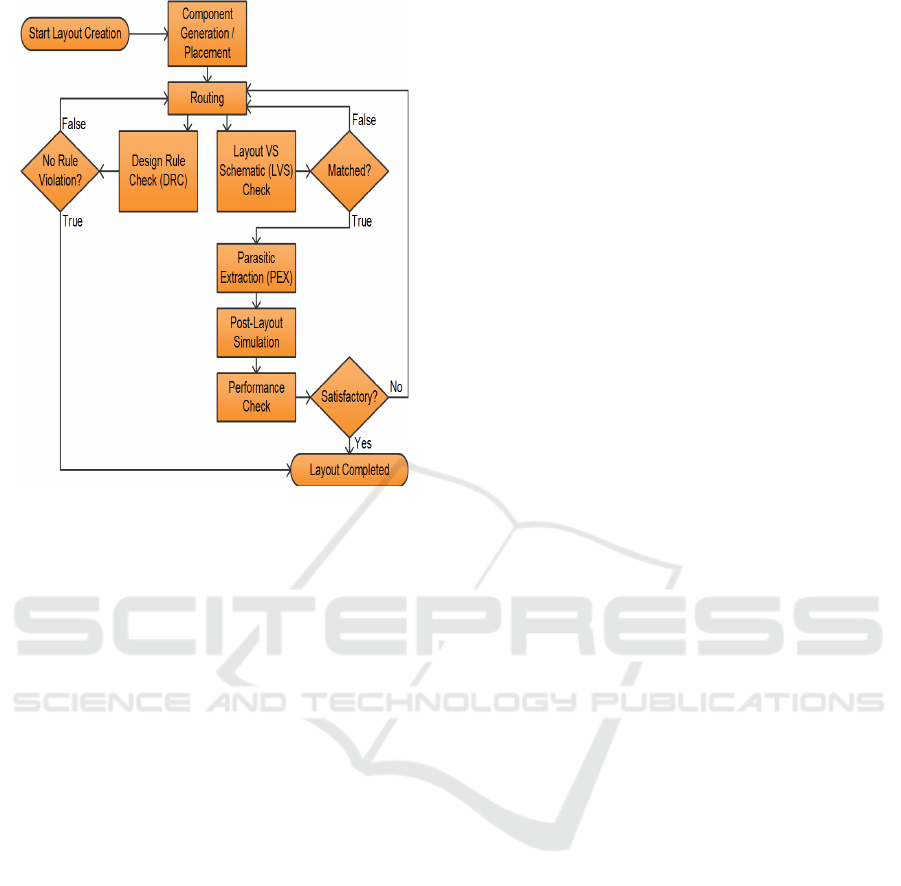
Figure 4: Circuit diagram of proposed method.
Figure 3 and 4 shows the Flowchart of Proposed
method and Circuit diagram of Proposed method
respectively.
4 RESULT
The result for a FIR filter using Cadence for 16-bit
precision typically includes several key outputs. One
of the primary results is the frequency response,
which can be visualized in terms of both magnitude
and phase. The magnitude response shows how the
filter passes or attenuates different frequency
components of the signal, while the phase response
indicates the amount of phase shift the filter applies
across frequencies. In the case of a 16-bit filter,
precision in frequency response is impacted by the bit
depth, which could influence the filter’s ability to
handle signals with high dynamic range.
5 CONCLUSIONS
In conclusion, designing a 16-bit FIR filter using
Cadence provides a robust framework for efficient
signal processing with an emphasis on precision,
performance, and resource management. The process
begins with defining the filter specifications,
followed by the calculation and quantization of
coefficients to 16-bit precision. Through simulation
using Cadence's tools, such as Spectre, the filter's
frequency response, impulse response, and
performance metrics like Signal-to-Noise Ratio
(SNR) and Total Harmonic Distortion (THD) are
analyzed.
6 FUTURE WORK
Future work involves integrating the FIR filter with
advanced signal processing systems. This could
include using the filter in combination with other
algorithms such as machine learning models for
automatic classification or multi-modal sensor data
fusion for applications like medical diagnostics,
communications, or audio processing. By integrating
these filters into more complex systems, their
capabilities can be expanded for a wider range of
practical applications.
REFERENCES
A. Sawant, A. Parashar, S. Saxena and S. Shukla, "RFID-
Based Smart Shopping Cart System", International
Journal of Engineering and Advanced Technology, vol.
9, no. 1, October 2019.
K. V. S. H. Gayatri Sarman and Srilakshmi Gubbala,
"Voice Based Objects Detection for Visually
Challenged Using Active RFID Technology",
International Conference on Cognitive Computing and
Cyber Physical Systems, pp. 170-179, 2022.
M. Sanap, P. Chimurkar and N. Bhagat, "SMART-smart
mobile autonomous robotic trolley", In 2020 4th
International Conference on Intelligent Computing and
Control Systems (ICICCS), pp. 430-437, 2020, May.
N.P. Challa, J.S.S. Mohan, V.S. Deepthi and S.
Rajeyyagari, "Smart Irrigation System using Internet of
Things", Proceedings of the 17th INDIACom; 2023
10th International Conference on Computing for
Sustainable Global Development INDIACom 2023.
P. Satheesan, S. Nilaxshan, J. Alosius, R. Thisanthan, P.
Raveendran and J. Tharmaseelan, "Enhancement of
supermarket using smart trolley", International Journal
of Computer Applications, vol. 975, pp. 8887, 2021
R. Raffik, D. Rakesh, M. Venkatesh and P. Samvasan,
"Supply Chain Control and Inventory Tracking System
using Industrial Automation Tools and IIoT", In 2021
International Conference on Advancements in
Electrical Electronics Communication Computing and
Automation (ICAECA), pp. 1-5, 2021, October.
Rudra Narayan Dash, Akshay Kumar Rathore, Vinod
Khadkikar, Ranjeeta Patel and Manoj Debnath, "Smart
Technologies for Power and Green Energy",
Proceedings of STPGE 2022, vol. 443, 2022.
S. Naveen, "Smart Shopping Trolley using QR Code and
ESP32Cam", Grenze International Journal of
FIR Filter Using Cadence for 16 Bit
463

Engineering & Technology (GIJET), vol. 8, no. 2,
2022.
T. Naveenprabu, B. Mahalakshmi, T. Nagaraj, N. K SP and
M. Jagadesh, "Iot based smart billing and direction-
controlled trolley", In 2020 6th International
conference on advanced computing and communication
systems (ICACCS), pp. 426-429, 2020, March.
V.P. Matta, R.S. Miriyala, K.V.S.H. Gayatri Sarman, M
K.V.S. Reddy, A M.V Pathi and C. Venkateswara Rao,
"Energy Efficient Smart Street Light System based on
Pulse Width Modulation and Arduino", 2023
International Conference on Computer Communication
and Informatics ICCCI 2023.
ICRDICCT‘25 2025 - INTERNATIONAL CONFERENCE ON RESEARCH AND DEVELOPMENT IN INFORMATION,
COMMUNICATION, AND COMPUTING TECHNOLOGIES
464
