
Veilcomm: Next-Generation Secure Messaging with Custom
Encryption and Key Exchange
T Manikumar, V Kesavan, M Francies Antony, A Venkat Raman and Ramsubramanyam V G
Department of Computer Science and Engineering, Kalasalingam Academy of Research and Education, Krishnankoil,
Srivilliputhur, Tamil Nadu 626126, India
Keywords: Secure Messaging, End-to-End Encryption, Cryptographic Key Exchange, Data Security, Privacy,
Confidential Communication, Encryption Algorithms.
Abstract: This paper describes a secure messaging web application intended for confidential conversation between two
users. The program prevents unwanted users from joining the communication session and emphasizes data
security and privacy by not retaining session data. User credentials, including login and password information,
are safely kept in a server-connected database. A fundamental aspect of the program is the use of algorithms
such as X25519, X3DH, KYBER, and NTRU to securely exchange cryptographic keys between users. These
keys are then used to encrypt and decode messages during the communication session. The program
encourages the creation of dependable, secure, and creative digital infrastructure by including a bespoke
encryption module that supports numerous encryption algorithms, including RSA-OAEP, AES-GCM,
DOUBLE RATCHET, CHACHA20-POLY1305, KYBER, and NTRU. This strategy improves
communication system resilience, hence strengthening the digital security environment. When you start a
session, a random encryption method is chosen, offering an extra degree of protection. Messages are encrypted
in the backend before transmission to ensure that every communication is private and safe. The application
promotes confidence in digital platforms by exploiting modern cryptographic methods and technical
breakthroughs, hence contributing to the construction of a more secure and sustainable digital environment.
The application's design stresses simplicity of use with a user-friendly interface, while still adhering to secure
computing best practices to protect user data and privacy. This paper exemplifies a holistic approach to secure
communication, helping to build dependable and secure communication technology for an increasingly
connected world.
1 INTRODUCTION
In an era where digital communication is ubiquitous,
ensuring the security and privacy of online
conversations has become a critical challenge. Cyber
threats, data breaches, and unauthorized access to
sensitive information pose significant risks to
individuals and organizations alike. To address these
concerns, this paper introduces a secure messaging
web application that enables private communication
between two users while maintaining the highest
standards of security. This application is designed
with a privacy-first approach, ensuring that all
communications remain confidential and are
accessible only to the intended recipients. Unlike
conventional messaging platforms that may store
session data or expose user information to third
parties, this application prioritizes end-to-end
encryption and does not store session data on the
server. This prevents potential security
vulnerabilities, such as data leaks or unauthorized
access (Gour, A., Malhi, S. S., Singh, G., & Kaur, G.
(2024)) (Cui, Li, Qianqian, Xing, Yi, Wang,
Baosheng, Wang, Jing, Tao, Liu, Liu (2022)) (Len, J.,
Ghosh, E., Grubbs, P., & Rösler (2023)) (N. Unger
(2015)).
1.1 Key Features and Security
Mechanisms
To establish a secure communication channel, the
application employs advanced cryptographic
techniques, including key exchange algorithms like:
Manikumar, T., Kesavan, V., Antony, M. F., Raman, A. V. and G., R. V.
Veilcomm: Next-Generation Secure Messaging with Custom Encryption and Key Exchange.
DOI: 10.5220/0013914500004919
Paper published under CC license (CC BY-NC-ND 4.0)
In Proceedings of the 1st International Conference on Research and Development in Information, Communication, and Computing Technologies (ICRDICCT‘25 2025) - Volume 4, pages
447-460
ISBN: 978-989-758-777-1
Proceedings Copyright © 2025 by SCITEPRESS – Science and Technology Publications, Lda.
447

X25519, X3DH (Extended Triple Diffie-
Hellman), KYBER (post-quantum key exchange),
NTRU (post-quantum lattice-based encryption)
These algorithms facilitate the secure exchange of
cryptographic keys between users, ensuring that only
the communicating parties can decrypt the exchanged
messages. Once a secure session is established,
messages are encrypted and decrypted using a custom
encryption module that supports multiple encryption
algorithms, including:
RSA-OAEP (Asymmetric encryption for secure
key exchange), AES-GCM (Authenticated symmetric
encryption), Double Ratchet Algorithm (Used in
secure messaging protocols like Signal), ChaCha20-
Poly1305 (High-speed and secure encryption),
KYBER and NTRU (Post-quantum encryption
techniques)
To further enhance security, the application
implements a randomized encryption algorithm
selection mechanism. Whenever a communication
session is initiated, the system randomly selects one
of the available encryption algorithms, making it
significantly more difficult for attackers to predict or
compromise the encryption process. (Phan, Duong &
Pointcheval, David. (2004)) (Alwen, J., Coretti, S.,
Dodis, Y. (2019).) (Leon Botros, Matthias J.
Kannwischer, and Peter Schwabe. (2019).) (Kim,
Kyungho, Seungju Choi, Hyeokdong Kwon, Hyunjun
Kim, Zhe Liu, and Hwajeong Seo. (2020)) (Hoffstein,
J., Pipher, J., Silverman, J.H. (2001)) (Serrano, R.,
Duran, C., Sarmiento, M., Pham, C.-K., & Hoang, T.-
T. (2022)) (A. Ruggeri, A. Galletta, A. Celesti, M.
Fazio and M. Villari, (2021)) (J. Dong, F. Zheng, J.
Cheng, J. Lin, W. Pan and Z. Wang, (2018)).
1.2 Backend Security and Data Privacy
All encryption and decryption processes take place in
the backend before messages are transmitted,
ensuring that no plaintext messages are exposed
during transmission. Additionally, user credentials
(login and password) are securely stored in a server-
connected database, following industry best practices
such as salting and hashing passwords to protect
against unauthorized access. By eliminating session
data storage and focusing on strong encryption
methods, the application minimizes the risk of data
interception, replay attacks, or unauthorized access.
This approach aligns with modern security standards
and ensures that messages remain confidential at all
times. (
Dabola, S., Tomer, V., Singh, N., Madan, P., &
Jhinkwan, A. (2024)
)( Gour, A., Malhi, S. S., Singh, G.,
& Kaur, G. (2024))( Shamsi, S. E., & Nasrat, B. W.
(2024))( Shuhan, M. K. B., Islam, T., Shuvo, E. A.,
Bappy, F. H., Hasan, K., & Caicedo, C. (2023)).
1.3 User Experience and Accessibility
Despite its robust security framework, the application
is designed to be user-friendly and accessible. The
interface provides an intuitive messaging experience
without compromising on security. Users can
communicate seamlessly without needing technical
expertise, making the platform suitable for a wide
range of users, from individuals seeking private
conversations to organizations requiring secure
internal communication. (Pandey, D., Gupta, R. R., &
Choudhary, A. (2023)) (Mashari Alatawi and Nitesh
Saxena. (2023)) (N. Unger (2015)) (Puyosa, I.
(2023)).
2 LITERATURE REVIEW
This is a hybrid approach by combining symmetric
and asymmetric cryptographic techniques along with
digital signatures, resulting in an enhanced hybrid
cryptography method combining symmetric and
asymmetric techniques may increase the
computational overhead. By using a methodical
approach to literature review, we analyse studies
carried out on a range of scientific platforms that
connect the fields of cryptography and chat, as well
as the intersection of databases and cryptographs.
There is a huge chance that sophisticated encryption
methods may improve user data security. There are
benefits to using cryptography in a chat interface
since several academics have developed and verified
models that maximize the usage of encryption for
data exchange between users. (
Dabola, S., Tomer, V.,
Singh, N., Madan, P., & Jhinkwan, A. (2024)).
The methodology integrates a public blockchain,
end-to-end encryption, and decentralized storage to
ensure secure, immutable messaging without
centralized control, this model is the reliance on a
public blockchain, which can lead to scalability issues
and increased transaction costs as network usage
grows. This study suggests a brand-new messaging
software that makes use of blockchain technology to
provide improved decentralization, security, and
privacy. The limits of conventional messaging apps
and the advantages of blockchain-based solutions are
covered in the first section of the article. The
suggested application offers end-to-end encryption
for enhanced privacy and makes use of a public
blockchain network to guarantee the integrity and
ICRDICCT‘25 2025 - INTERNATIONAL CONFERENCE ON RESEARCH AND DEVELOPMENT IN INFORMATION,
COMMUNICATION, AND COMPUTING TECHNOLOGIES
448

immutability of communications. (Pandey, D., Gupta,
R. R., & Choudhary, A. (2023)).
Data is the lifeblood of both people and
organizations in our ever-changing digital world,
therefore protecting sensitive data and making sure
that communication routes are secure have become
critical. This study presents a brand-new hybrid
cryptographic algorithm created to tackle the
complex problems of secure communication and data
protection. By using the advantages of both
symmetric and asymmetric encryption techniques,
the suggested method paves the way for reliable and
flexible security solutions. This hybrid technique
starts by effectively encrypting data while
maintaining its anonymity using the Advanced
Encryption Standard (AES), a cutting-edge
symmetric encryption cipher. (Gour, A., Malhi, S. S.,
Singh, G., & Kaur, G. (2024)).
Cryptography and steganography are two well-
liked methods for transmitting sensitive data covertly.
One conceals the message's existence, while the other
misrepresents it. As is well known, the most crucial
aspects of information technology and
communication, after the development of the internet,
are data security and privacy. Large amounts of data
are sent every day over the internet, file sharing
websites, social networking sites, and other channels.
At the same time, there is a rise in the number of
people using the internet. The goal of this article is to
create an easy-to-use application that would, at the
very least, partially alleviate security issues with
message delivery to authorized parties. In order to
make the application run quickly, we used the C#
programming language. After the user chooses the
file and picture, the encryption process will be
finished in a matter of seconds after they push the
button. According to this assessment, users find this
program to be user-friendly and likely to be helpful
when delivering messages using cryptography and
steganography techniques. (Shamsi, S. E., & Nasrat,
B. W. (2024))
Data security is still one of the most important
issues in today's digital world. The complexity of
many encryption methods and their vulnerability to
cyberattacks have caused problems. This paper
presents Cypher-X, a sophisticated encryption and
decryption system that skilfully combines traditional
methods, namely Vigenère and RSA, to strengthen
data secrecy. This study aims to solve current issues
by concentrating on three main goals: enhancing data
security protocols, assessing system effectiveness,
and detecting weaknesses that cybercriminals take
advantage of. Our study's findings confirm Cypher-
X's strong encryption capabilities and highlight how
it might be improved even further by adding multi-
factor authentication and access control strategies.
Cypher-X is a promising method to protect sensitive
data in the digital arena, making it a beacon of hope
in the data security space. As we traverse the intricate
terrain of data security, it is imperative to recognize
the continuous need to clarify our study question,
methods, significant discoveries, and practical
ramifications. (AlSideiri, A., AlShamsi, S., AlBreiki,
H., AlMoqbali, M., AlMaamari, M., & AlSaadi, S.
(2024)).
Over the last 20 years, individuals and
organisations have increasingly used messaging
services. Many of these systems employed end-to-end
encryption to provide "future secrecy" for one-to-one
communication. Most of them utilise client data on
centralised servers owned by huge IT businesses. It
also allows the government to track and control its
citizens, endangering "digital freedom." These
systems lack confidentiality, integrity, privacy, and
future secrecy for group communications. We present
Quarks, a blockchain-based secure messaging system
that eliminates centralised control and fixes existing
security issues. Our system's reliability and utility
were tested using security models and definitions
from the literature. DLT was used to develop a Quarks
system Proof of Concept (PoC) and test its load. Even
if the development and testing environment is limited,
our proof-of-concept system has all the required
characteristics for a centralised messaging method.
This assures that such systems will be applicable soon
if scaled up. (
Shuhan, M. K. B., Islam, T., Shuvo, E.
A., Bappy, F. H., Hasan, K., & Caicedo, C. (2023)).
In the rapidly changing field of Internet
technologies, where blockchain-based computing and
storage like Ethereum Virtual Machine (EVM),
Arweave, and IPFS are becoming more popular, a
comprehensive decentralised communication
framework is still lacking. This mismatch emphasises
the necessity for a system that allows direct
messaging to wallet addresses and seamless cross-
platform messaging to encourage interoperability and
privacy across platforms. To answer this requirement,
SendingNetwork delivers a reliable and secure
decentralised communication network by addressing
privacy, scalability, efficiency, and composability. We
use edge computing and the modular libp2p
framework to develop an adaptive relay network. Our
dynamic group chat encryption solution uses the
Double Ratchet algorithm for secure communication
to increase resilience and scalability. For optimal
message processing in big group conversations, we
recommend delegation. The Delegation method
performs better, according to our theoretical studies.
Veilcomm: Next-Generation Secure Messaging with Custom Encryption and Key Exchange
449

To encourage node involvement and system stability,
we use "Proof of Availability" to control incentives
using Verkle trees and assure network consistency,
and "Proof of Relay" to confirm message relay burden
using the innovative KZG commitment. Our
whitepaper describes the network's design, core
components, roadmap, and forthcoming
SendingNetwork developments. (Yeung, M. (2024)).
Implementing cryptographic systems on devices
with poor protection raises worries about long-term
secret leaking, especially for IoT devices with
minimal resources. Forward concealment may reduce
the damage from such an occurrence. Some pub-/sub-
based IoT systems utilise end-to-end (from publisher
to subscriber) encrypted message transmission
methods to overcome secrecy concerns created by
malicious message brokers. No one guarantees
upfront secrecy. This article introduces FSEE, a pub-
/sub-based IoT forward-safe end-to-end encrypted
message transmission system. For FSEE, we develop
BA-GKE (group key exchange protocol). It employs
a semi-trusted key exchange server for forward
secrecy and asynchronous group communication. We
prove forward secrecy using ProVerif. FSEE uses
BA-GKE asynchronously to establish forward safe
symmetric keys for each device. For safe
communication encryption, the device and permitted
subscribers get this device-specific key. FSEE may be
added progressively without changing the message
broker by adding a semi-trusted key exchange server
to BA-GKE in the existing IoT architecture. FSEE is
safer and performs comparable to other well-known
research, according to experiments. (Cui, Li,
Qianqian, Xing, Yi, Wang, Baosheng, Wang, Jing,
Tao, Liu, (2022)).
Digital Markets Act (DMA) is a new EU policy
passed in May 2022. The demand that “gatekeepers”
like WhatsApp integrate “interoperability” with other
messaging appsen crypted communications between
service providersis one of its most contentious
features. This need fundamentally changes the design
assumptions of most encrypted communications
systems, which are centralised. Technologists have
not begun to consider the many security, privacy, and
functionality issues raised by the interoperability
requirement. Since the DMA's mandate may take
effect in mid-2024, researchers must develop
solutions. We start this path in this paper. The DMA
affects encrypted messaging system design in three
main areas: identity, or how to resolve identities
across service providers; protocols, or how to secure
connections between clients on different platforms;
and abuse prevention, or how service providers can
detect and act against abusive or spamming users. We
define major security and privacy criteria, summarise
current approaches, and evaluate whether they fit our
standards for each area. Finally, we present our
interoperable encrypted messaging system
architecture and identify issues. (Len, J., Ghosh, E.,
Grubbs, P., & Rösler, P. (2023))
Recent revelations of government surveillance
on personal communication have led several
alternatives to guarantee secure and private
messaging. This includes numerous new papers and a
wide variety of commonly used utilities with security
features. The drive to deliver solutions quickly has led
to inconsistent threat models, unfulfilled objectives,
dubious security claims, and a lack of knowledge of
secure communication cryptographic literature
during the last two years. Existing secure messaging
solutions' security, usability, and ease-of-adoption are
assessed in this research. We consider academic
answers and innovative "in-the-wild" ways that aren't
in the scholarly literature. The design environment for
transit privacy, conversation security, and trust
creation is mapped. Trust formation solutions with
strong security and privacy features perform poorly in
usability and adoption, whereas hybrid strategies that
have gotten less academic attention may provide
better trade-offs in real-world circumstances.
Conversation security can be done without user
involvement in most two-party discussions if trust is
established, but there is no viable solution for larger
groups. Finally, transport privacy seems to be the
hardest to fix without a performance hit. (N. Unger
(2015)).
Today's primary information source, the internet,
is becoming harder to monitor and control. These
days, network security is becoming a highly
important consideration when sharing vast amounts
of complicated data. Today, maintaining secure data
transmission across a network and protecting data to
prevent unauthorised users from accessing it while
allowing authorised users to share it are the two key
concerns. Network security is largely dependent on
the use of different encryption techniques. By
rendering information unintelligible, cryptography
contributes to improved data confidentiality and
privacy. In order to list the security level, calculation
time, and data transmission time of key exchange
protocols, a comparative analysis is conducted in this
study. This study compares the performance of many
symmetric and asymmetric key encryption
algorithms, including Diffie-Hellman Key Exchange,
RSA, and ECC. (Chopra, Aakanksha. (2015))
Skype, Zoom, and WhatsApp make text, video,
and voice chats ubiquitous. Concerns about how the
government and law enforcement monitor these
ICRDICCT‘25 2025 - INTERNATIONAL CONFERENCE ON RESEARCH AND DEVELOPMENT IN INFORMATION,
COMMUNICATION, AND COMPUTING TECHNOLOGIES
450

platforms linger as more individuals use them to
disclose private information. Due to these issues,
private chats and electronic correspondence must be
safe. End-to-end encryption (E2EE) might address
this issue without depending on first or third parties
like an internet service or a public key infrastructure
(PKI), which government surveillance programs and
law enforcement could target or compel. Start
systematising knowledge research using the most
popular E2EE applications and communications
protocols. We categorise their E2EE capabilities and
authentication methods based on current research.
Even though previous research has evaluated
messaging services, we analyse a larger selection of
popular E2EE applications and their authentication
methods. We observed that all E2EE applications,
especially opportunistic ones, cannot protect against
MitM attacks. No E2EE program offers more
effective and user-friendly authentication
mechanisms, making E2EE connections vulnerable to
active MitM assaults. Systematisation may impact
E2EE system deployment and MitM and
eavesdropping authentication ritual study. (Mashari
Alatawi and Nitesh Saxena. (2023))
Signal, a novel security protocol and software,
encrypts instant messages end-to-end. The core
protocol has been adopted by WhatsApp, Facebook
Messenger, and Google Allo, which have at least one
billion users. Ratcheting, which changes session keys
with each communication, gives Signal uncommon
security characteristics like "future secrecy" and
"post-compromise security". The Signal protocol is
important and unusual, yet it has gotten little
academic attention. We provide Signal's double
ratchet and key agreement's first security research as
a multi-stage key exchange system. We build a
security model to capture the "ratcheting" key update
structure and extract a formal abstract protocol
description from the implementation. Next, we use
our model to demonstrate Signal's core's security by
demonstrating many security traits. Our presentation
and conclusions may be used to evaluate this widely
used approach, and we found no serious design flaws.
(K. Cohn-Gordon, C. Cremers, B. Dowling, L.
Garratt and D. Stebila, (2017)).
Protecting point-to-point messaging apps:
Understanding Telegram, WeChat, and WhatsApp in
the United States is a year-long study of messaging
app technology, policy, and usage. Atlantic Council's
Digital Forensic Research Lab launched it. Over 3
billion people worldwide use messaging apps to
communicate with friends and family, shop, read, and
discuss current events. Senior Research Fellow Iria
Puyosa will examine platform policies, security, and
messaging app usage patterns and implications. After
the introduction, experts will address the trade-offs of
messaging firms' attempts to identify, reduce, or stop
dangerous content in encrypted messaging
applications. The panellists will cover client-side
scanning, in-app reporting, metadata analysis, and
behavioural signals as solutions. The discussion will
illuminate how methods may affect global data
privacy, user security, and human rights. (K. Cohn-
Gordon, C. Cremers, B. Dowling, L. Garratt and D.
Stebila, (2017))
network application that uses an unsecured
communication channel has always had to secure
network traffic. The goal is to prevent unauthorised
disclosure and message tampering between
communication parties while protecting the data
being transferred over the network. The
cryptographic primitive that can create a secure
communication channel is a key exchange protocol.
Diffie-Hellman established the first key exchange
protocol. Enabling two parties to safely exchange a
session key that may be used for further symmetric
encryption of communications is the goal of the
Diffie-Hellman protocol. Nevertheless, the
communicating entities are not authenticated by
Diffie-Hellman itself. We examine the Diffie-
Hellman Key exchange protocol in this work. Then
go on to explain the Diffie-Hellman protocol's
variations, authenticated key exchange protocol and
one-pass key exchange protocol. (Mishra, M. R., &
Kar, J. (2017)).
Ten years old, the OAEP structure is employed in
many real-world applications. Four years ago, the
first effective and provably IND-CCA1 safe
encryption padding was shown to meet the claimed
IND-CCA2 security level with any trapdoor
permutation, ending considerable debate. This
intractability assumption is equal to full-domain one-
wayness for the primary application (using the RSA
permutation family), but it needs a quadratic-time
reduction. Thus, it is worse than RSA's flimsy
security proof. OAEP offers two practical advantages:
efficiency from the two additional hashings and
length from the minimal bit-length of the ciphertext.
Randomisation (for semantic security) and
redundancy (for plaintext-awareness, the only
method to design strong CCA2 schemes) reduce
bandwidth (ciphertext-to-plaintext ratio). The OAEP
3-round design in the randomoracle model was used
to demonstrate the first IND-CCA2 safe encryption
algorithms without redundancy or plaintext-
awareness at Asiacrypt '03. Its practical properties
were only similar to the original OAEP construction:
security requires partial-domain one-wayness and a
Veilcomm: Next-Generation Secure Messaging with Custom Encryption and Key Exchange
451

trapdoor permutation, limiting its use to RSA and
yielding a poor reduction. To enhance the reduction,
we demonstrate that the OAEP 3-round uses the
permutation's full-domain one-wayness. The
software is extended using ElGamal, Paillier, and
other encryption primitives. Both relaxed CCA2 and
random-oracle models maintain higher security.
(Phan, Duong & Pointcheval, David. (2004)).
The new public key cryptosystem known as
NTRU is discussed in this piece of literature, which
also includes a description of the system. NTRU is
distinguished by a number of characteristics, such as
its minimal memory needs, its rapid speed, its keys
that are relatively short, and its keys that are easy to
construct. Additionally, the encryption and
decryption techniques that are used by NTR are
shown here. A mixing method that is derived from
polynomial algebra is used by U in addition to a
clustering technique that is founded on the basic
theory of probability. Furthermore, the clustering
method is used in conjunction with this process. It is
the polynomial mixing system and the independence
of reduction modulo two relatively prime numbers, p
and q, that ensure the safety of the NTRU
cryptosystem. Both of these factors contribute to the
system's security. Furthermore, the total security of
the system is enhanced by both of these other
considerations. This degree of security is achieved by
the interplay of these two components, which allow
for communication between them. (Hoffstein, J.,
Pipher, J., Silverman, J.H. (2001))
Google Allo, Facebook Messenger, WhatsApp,
Skype, and Signal have billions of users. Each
connection is encrypted and authenticated with a new
symmetric key in "double ratcheting," its essential
principle. Forward, post-compromise, and
"immediate (no-delay) decryption," unparalleled....
Despite formal review, we feel the Signal
methodology and ramping evaluations are
inappropriate. To solve this challenge, we define
secure communications and show forward, post-
compromise, and quick decryption. In contrast to
other "provable alternatives to Signal," we are the
first to formalise and explain instantaneous
decryption, which lets parties recover from lost talks.
We build a modular "generalised Signal protocol"
using these parts: Continuous key agreement (CKA)
is a clean basic that simulates "public-key ratchets"
from public-key encryption (not only Diffie-Hellman,
like Signal). Two-input PRF-PRNG hash function,
FS-AEAD pseudorandom generators, "symmetric-
key ratchets;" This helps us quickly create post-
quantum security, remove random oracles in analysis,
and instantiate our system as the popular Diffie-
Hellman-based Signal protocol. We demonstrate that
our architecture can include CRYPTO'18's "fine-
grained state compromise" types without delaying
decryption. The security cost of symmetric-key
encryption to public-key cryptography may outweigh
the efficiency. (Alwen, J., Coretti, S., Dodis, Y.
(2019)).
In computer networks, Transport Layer Security
(TLS) offers a secure route for end-to-end
communications. In order to mitigate side channel
attacks in cypher suites based on the Advanced
Encryption Standard (AES), TLS 1.3 introduces the
ChaCha20–Poly1305 cypher suite. In contrast to
other encryption standards that use Authenticated
Encryption with Associated Data (AEAD), the few
implementations are unable to provide fast enough
encryption. ChaCha20 and Poly1305 primitives are
shown in this study. To lessen issues with fragmented
blocks, a fault detector is also included with a
compatible ChaCha20–Poly1305 AEAD with TLS
1.3. In a standalone core, the AEAD implementation
achieves 1.4 cycles per byte. Furthermore, the system
implementation uses a TileLink bus and operates at
11.56 cycles per byte in a RISC-V environment.
10,808 Look-Up Tables (LUT) and 3731 Flip-Flops
(FFs) are shown by the implementation in the Xilinx
Virtex-7 XC7VX485T Field-Programmable Gate-
Array (FPGA), which is represented in 23% and 48%
of ChaCha20 and Poly1305, respectively. Lastly, the
ChaCha20–Poly1305 AEAD hardware
implementation shows that it is feasible to use an
alternative to the traditional AES-based cypher suite
for TLS 1.3. (Serrano, R., Duran, C., Sarmiento, M.,
Pham, C.-K., & Hoang, T.-T. (2022)).
This study presents an optimised Galois Counter
Mode of operation (GCM) implementation for low-
end microcontrollers using the Advanced Encryption
Standard (AES). The suggested implementations are
subjected to two optimisation techniques. First, the
AES counter (CTR) mode of operation guarantees
consistent timing and is speed-optimized. The
primary concept is substituting basic look-up table
access with costly AES operations such as AddRound
Key, SubBytes, ShiftRows, and MixColumns. The
look-up table does not need to be updated during the
encryption life-cycle, in contrast to earlier studies.
Second, the Karatsuba algorithm, compact register
utilisation, and pre-computed operands are used to
further optimise the Galois Counter Mode (GCM)
core operation. The suggested AES-GCM on 8-bit
AVR (Alf and Vegard's RISC processor) architecture
achieved 415, 466, and 477 clock cycles per byte for
short-, middle-, and long-term security levels,
respectively, using the aforementioned optimisation
ICRDICCT‘25 2025 - INTERNATIONAL CONFERENCE ON RESEARCH AND DEVELOPMENT IN INFORMATION,
COMMUNICATION, AND COMPUTING TECHNOLOGIES
452

strategies. (Kim, Kyungho, Seungju Choi,
Hyeokdong Kwon, Hyunjun Kim, Zhe Liu, and
Hwajeong Seo. (2020)).
This research presents an improved software
implementation of module-lattice-based key-
encapsulation technology Kyber for the ARM Cortex-
M4 microprocessor. Kyber competes in the NIST
post-quantum paper's second round. We examine
novel Kyber's number-theoretic transform (NTT)
optimisation approaches that use the target
architecture's "vector" DSP instructions'
computational power. We also present findings for
Kyber's improved parameter sets, which benefit from
our optimisations. Our program is 18% faster than a
Kyber implementation designed for the Cortex-M4
by Kyber submitters. Our NTT is twice as fast as their
software's. Our software runs as fast as the latest
speed-optimized Sabre, another module-lattice-based
round-2 NIST PQC competitor. Our Kyber
application utilises far less RAM to operate this well.
Kyber uses half as much RAM as Sabre, which is
slower. Our time-attack defence is cutting-edge since
it doesn't use secret-dependent branching or memory
access. (Leon Botros, Matthias J. Kannwischer, and
Peter Schwabe. (2019)).
Exploring new horizons to guarantee safe
communication between people and devices is being
prompted by the widespread usage of the Internet and
the rise in IoT devices over the last ten years. A
Blockchain-based solution has not yet been
investigated, and current options have significant
security and distributed attack resistance issues.
Despite being in use for many years, the Extended
Triple Diffie-Hellman (X3DH) protocol is usually
predicated on a single trust third-party server that
serves as a single point of failure (SPoF), making it
vulnerable to well-known Distributed Denial of
Service (DDOS) assaults. To mitigate this danger, the
BlockChain-Based X3DH (BCB-X3DH) protocol
has already been suggested. It combines the well-
known X3DH security methods with the inherent
characteristics of Smart Contracts, such as data
immutability and non-repudiation. In order to ensure
full on-chain secure communication management and
even optimise battery life-cycle, we have advanced
our research in this paper to implement this protocol
in Edge and IoT scenarios, including low-power
embedded devices with limited hardware capabilities.
(A. Ruggeri, A. Galletta, A. Celesti, M. Fazio and M.
Villari, (2021)).
The key exchange, which is widely used in many
Internet security protocols like TLS/SSL, offers a way
for two parties to create a shared secret across an
unprotected channel. Elliptic Curve Diffie-Hellman is
now the industry's favourite and most widely used
key exchange method. Although the current ECDH
uses NIST P Curves as its underlying elliptic curve,
the IRTF formally implemented Curve25519/448 to
key exchange in RFC 7748, also known as the
X25519/448 key exchange protocol, in January 2016
because to concerns about its security and the need
for high speed. X25519/448 is now the default key
exchange protocol suggested by several popular
open-source paper. Scalar multiplication is
X25519/448's bottleneck since its performance on a
typical CPU cannot meet the constantly growing
demand in scenarios with many concurrent requests,
such cloud computing, e-commerce, etc. In this work,
we use a variety of optimisations to speed up
X25519/448 with GPUs. The GeForce GTX 1080's
X25519/448 achieves 2.86 and 0.358 million
operations per second, respectively, far surpassing the
previous fastest work. (J. Dong, F. Zheng, J. Cheng,
J. Lin, W. Pan and Z. Wang, (2018)).
3 PROPOSED METHODOLOGY
This application is a cutting-edge solution for
securely transferring sensitive messages between
users, revolutionizing the way private communication
is handled. Built with the highest standards of security
in mind, it utilizes a Dynamic Encryption method that
combines the strengths of both symmetric and
asymmetric encryption techniques to provide an
unparalleled level of data protection. Unlike
traditional messaging systems that rely on fixed
encryption methods, this application dynamically
selects a random encryption algorithm for each
session. By doing so, it ensures that every
communication is uniquely secured, making it
significantly harder for attackers to intercept or
decipher sensitive information. (AlSideiri, A.,
AlShamsi, S., AlBreiki, H., AlMoqbali, M.,
AlMaamari, M., & AlSaadi, S. (2024))(
Yeung, M.
(2024))(
Gour, A., Malhi, S. S., Singh, G., & Kaur, G.
(2024))
3.1 Dynamic Algorithm Selection
To achieve the highest level of security, the
application incorporates some of the latest and most
advanced encryption algorithms. The system
intelligently selects from cutting-edge encryption
methods such as:
X25519 – A Diffie-Hellman key exchange algorithm
using elliptic curves, providing high security with
efficient performance. It is widely used in TLS and
Veilcomm: Next-Generation Secure Messaging with Custom Encryption and Key Exchange
453

secure messaging protocols. (Dabola, S., Tomer, V.,
Singh, N., Madan, P., & Jhinkwan, A. (2024))(
Shamsi, S. E., & Nasrat, B. W. (2024)) (Chopra,
Aakanksha. (2015)) (J. Dong, F. Zheng, J. Cheng, J.
Lin, W. Pan and Z. Wang, (2018))
X3DH (Extended Triple Diffie-Hellman) – A key
agreement protocol used in Signal for secure initial
key exchange, enabling forward secrecy and post-
compromise security. (Dabola, S., Tomer, V., Singh,
N., Madan, P., & Jhinkwan, A. (2024))(
Shamsi, S.
E., & Nasrat, B. W. (2024)) (Chopra, Aakanksha.
(2015)) (A. Ruggeri, A. Galletta, A. Celesti, M. Fazio
and M. Villari, (2021)).
KYBER – A post-quantum key encapsulation
mechanism (KEM) designed to resist attacks from
quantum computers, part of NIST's PQC
standardization. (Mashari Alatawi and Nitesh
Saxena. (2023)) (K. Cohn-Gordon, C. Cremers, B.
Dowling, L. Garratt and D. Stebila, (2017))(
Shamsi,
S. E., & Nasrat, B. W. (2024)) (Leon Botros, Matthias
J. Kannwischer, and Peter Schwabe. (2019)).
NTRU – A lattice-based cryptosystem for public-key
encryption, providing quantum resistance while being
computationally efficient. (Shamsi, S. E., & Nasrat,
B. W. (2024))(
Yeung, M. (2024)) (Hoffstein, J.,
Pipher, J., Silverman, J.H. (2001)).
RSA-OAEP (Optimal Asymmetric Encryption
Padding) – A secure padding scheme for RSA
encryption that prevents deterministic attacks and
enhances security. (Phan, Duong & Pointcheval,
David. (2004)) (N. Unger (2015))(Dabola, S., Tomer,
V., Singh, N., Madan, P., & Jhinkwan, A. (2024)).
AES-GCM (Galois/Counter Mode) – A block
cipher mode that provides both encryption and
authentication, widely used in secure
communications. (Kim, Kyungho, Seungju Choi,
Hyeokdong Kwon, Hyunjun Kim, Zhe Liu, and
Hwajeong Seo. (2020)) (Mishra, M. R., & Kar, J.
(2017)) (
Yeung, M. (2024)) (Pandey, D., Gupta, R.
R., & Choudhary, A. (2023)).
Double Ratchet Algorithm – A key update
mechanism used in Signal Protocol to provide
forward secrecy and post-compromise security for
encrypted messaging. (K. Cohn-Gordon, C. Cremers,
B. Dowling, L. Garratt and D. Stebila, (2017)) (K.
Cohn-Gordon, C. Cremers, B. Dowling, L. Garratt
and D. Stebila, (2017)) (Mashari Alatawi and Nitesh
Saxena. (2023)) (Alwen, J., Coretti, S., Dodis, Y.
(2019)).
ChaCha20-Poly1305 – A high-speed authenticated
encryption algorithm combining the ChaCha20
stream cipher with the Poly1305 authenticator,
optimized for performance and security. (Serrano, R.,
Duran, C., Sarmiento, M., Pham, C.-K., & Hoang, T.-
T. (2022))(
Dabola, S., Tomer, V., Singh, N., Madan,
P., & Jhinkwan, A. (2024))( Pandey, D., Gupta, R. R.,
& Choudhary, A. (2023))(
AlSideiri, A., AlShamsi,
S., AlBreiki, H., AlMoqbali, M., AlMaamari, M., &
AlSaadi, S. (2024))(
Shuhan, M. K. B., Islam, T.,
Shuvo, E. A., Bappy, F. H., Hasan, K., & Caicedo, C.
(2023)).
Each session leverages a combination of these
algorithms to secure the data transmission. For
example, RSA or ECC may be used to securely
exchange keys, while AES-256 or ChaCha20 handles
the actual message encryption. This hybrid approach
balances performance, scalability, and security,
ensuring that no single vulnerability can compromise
the system.
3.2 No-Session-Data Policy
In addition to robust encryption, the application is
designed with privacy as a core principle. It follows a
strict no-session-data policy, meaning no sensitive
information, session keys, or communication
metadata are stored on servers. This ensures that even
if the server is compromised, no trace of user
conversations or encryption keys can be accessed.
This approach eliminates the risks associated with
data breaches or unauthorized access to archived
information, making the system inherently secure and
privacy-centric. (K. Cohn-Gordon, C. Cremers, B.
Dowling, L. Garratt and D. Stebila, (2017)) (Mashari
Alatawi and Nitesh Saxena. (2023)).
3.3 Ideal Use Cases
This application is ideal for securely transferring
highly sensitive information in scenarios where
privacy is of utmost importance. When sending
sensitive information over different networks, it is
crucial to use secure messaging with end-to-end
encryption. Credit card information, banking
credentials, and secret financial agreements may all
be safely sent using this method. It allows customers
and legal representatives to have private talks without
worrying about interception in the legal sector.
Protecting intellectual property, trade secrets,
confidential data, and company information during
transmission is a top priority for businesses. Secure
messaging allows for the transfer of private patient
information while guaranteeing adherence to strict
privacy standards such as HIPAA. Secure messaging
is also used by government communications to
prevent unauthorised access to sensitive papers and
information, which helps to maintain national
security. (Cui, Li, Qianqian, Xing, Yi, Wang,
ICRDICCT‘25 2025 - INTERNATIONAL CONFERENCE ON RESEARCH AND DEVELOPMENT IN INFORMATION,
COMMUNICATION, AND COMPUTING TECHNOLOGIES
454
Baosheng, Wang, Jing, Tao, Liu, (2022))( Len, J.,
Ghosh, E., Grubbs, P., & Rösler, P. (2023)).
3.4 Workflow Diagram
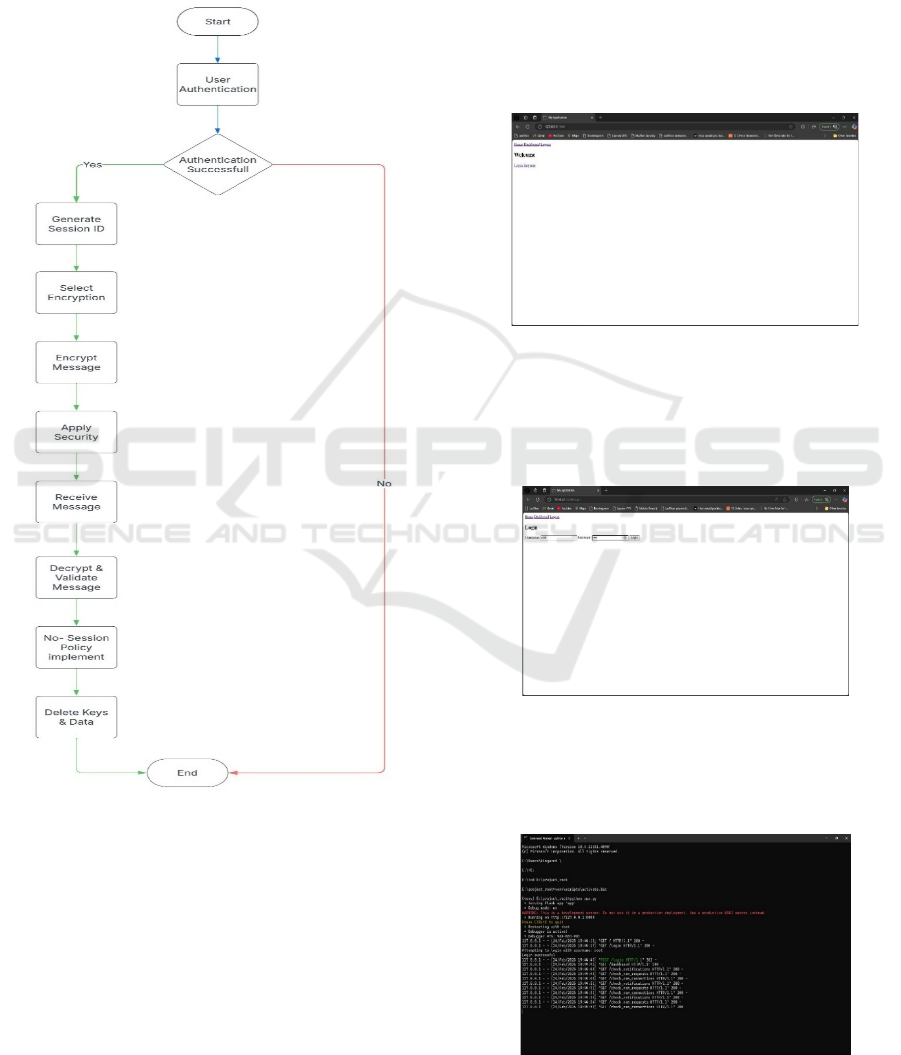
Figure 1 show the Secure Session-Based Communication
Flow.
Figure 1: Secure Session-Based Communication Flow.
3.5 Enhanced Security Features
The application goes beyond encryption by
incorporating additional security measures to protect
against modern cyber threats. Secure messaging
solutions are more protected and private thanks to
modern security technologies. Even if a session key
is compromised, all conversations, both past and
future, will be safeguarded because to forward
secrecy. By automatically erasing after a certain
amount of time, self-destructing communications
further protect privacy by erasing any evidence of the
conversation. Because no third party can decipher an
end-to-end encrypted communication, only the
receiver is able to read it. Further enhancing security
and reducing vulnerability exposure is real-time key
rotation, which dynamically refreshes session
encryption keys.
4 RESULT & DISCUSSIONS
Figure 2: Home Page.
Figure 2 shows the Home Page's structure and
essential components and user interface. It
summarizes the key parts, navigation, and interactive
features.
Figure 3: Login Page.
Figure 3 shows the Login Page's structure and user
authentication interface. Credential input forms,
validation messages, and secure login are included.
Figure 4: Login Backend.
Veilcomm: Next-Generation Secure Messaging with Custom Encryption and Key Exchange
455
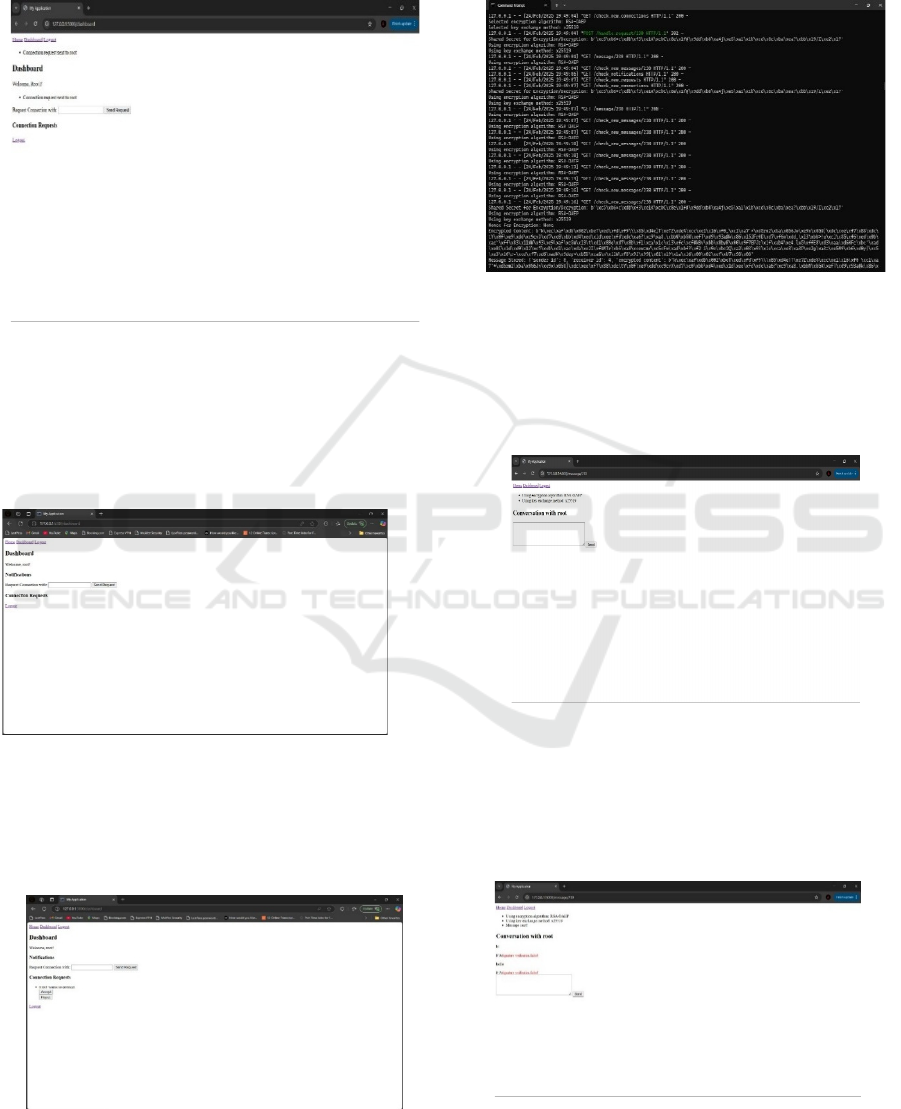
Figure 4. the Login system's backend implementation
shows authentication logic, database interaction, and
security. It generates tokens, validates credentials,
and controls access.
Figure 5: User Dashboard.
Figure 5 illustrates the User Dashboard, displaying an
overview of user activities, personalized data, and
interactive features. It includes navigation options,
account details, and essential functionalities for user
engagement.
Figure 6: Second User Dashboard.
Figure 6 shows the Second User Dashboard, which
has a different layout or functionality for certain roles.
Personalized information, better navigation, and role-
based functions increase user experience.
Figure 7: Incoming Request.
In Figure 7 the Incoming Request area shows
organized user requests. Details include request
sender, date, status, and request management or
response actions.
Figure 8: Algorithm Selection.
Figure 8 shows the Algorithm Selection procedure,
where users pick safe communication cryptographic
methods. A collection of algorithms, selection
criteria, and an encryption preferences interface are
included.
Figure 9: Messaging Portal.
Figure 9 shows the Messaging Portal, which lets users
send and receive encrypted communications securely.
A chat window, message input field, encryption status
indicators, and conversation management options are
included.
Figure 10: Transferring Messages.
ICRDICCT‘25 2025 - INTERNATIONAL CONFERENCE ON RESEARCH AND DEVELOPMENT IN INFORMATION,
COMMUNICATION, AND COMPUTING TECHNOLOGIES
456

Figure 10 shows how users safely transfer encrypted
communications. Secure communication is ensured
via encryption methods, message routing, delivery
status, and decryption.
Figure 11: Transferred Messages.
In Figure 11, encrypted communications are
successfully sent. It provides message information,
timestamps, decryption status, and secure access to
historical conversations.
Below is a comparative table that shows how the
dynamic encryption model differs from conventional
encryption approaches. Considerations including
quantum resistance, data storage practices, key
exchange systems, and overall security strength are
assessed. Dynamic encryption is a privacy-focused
and very robust alternative to traditional approaches.
It rotates keys in real-time, has communications that
self-destruct, and employs forward secrecy. This
comparison highlights the need of constantly
improving encryption methods in order to
successfully combat contemporary cyber threats.
Table 1 show the Comparison between Veilcomm and
Traditional method.
Table 1: Comparison between Veilcomm and Traditional method.
FEATURE VEILCOMM TRADITIONAL METHOD
Encryption Type
Encryption techniques are
dynamically chosen for each
session (a mix of symmetric
and asymmetric encryption).
Fixed encryption mechanism,
usually AES or RSA.
Key Exchange
For safe key exchange, use
X25519, X3DH, KYBER, or
NTRU.
A Diffie-Hellman key exchange
or an RSA type
Quantum Resistance
Accommodates post-quantum
encryption algorithms
(KYBER, NTRU)
Quantum assaults provide the
greatest threat.
Forward Secrecy
Activated by the Double
Ratchet Algorithm
Frequently inadequately executed
or poorly endorsed
Algorithm Randomization
Each session employs a
randomly chosen encryption
technique.
Employs a uniform encryption
technique over all sessions
Self-Destruction Messages
Messages may be programmed
for automated deletion.
Most systems lack inherent
message expiry features.
No Session Data Policy
Absence of storage for session
keys or information on servers
Session data and metadata may be
retained on servers.
Key Rotation
Immediate critical updates
throughout the session
Generally, use a single key for
each session
Veilcomm: Next-Generation Secure Messaging with Custom Encryption and Key Exchange
457
End to End Encryption(E2EE)
Utilised contemporary
cryptographic standards
(ChaCha20-Poly1305, AES-
GCM)
Certain conventional systems use
end-to-end encryption, but with
predetermined algorithms.
Performance Efficiency
Enhanced with efficient
encryption (ChaCha20, AES-
GCM
)
fo
r
ex
p
edite
d
p
rocessin
g
May need significant processing
resources (e.g., RSA-2048)
Resistance to Data Breaches
Absence of saved information
or encryption keys mitigates
b
reach conse
q
uences.
Metadata and keys may be
retained, hence increasing the
dan
g
e
r
of
b
reaches.
Use Cases
Monetary exchanges,
jurisprudence, commerce,
medical services, public
administration
Corporate communications and
general messages
When compared to more conventional encryption
systems, Dynamic Encryption Messaging System
provides far higher levels of protection, adaptability,
and anonymity. It makes assaults much more difficult
by removing predictability via the random selection
of encryption methods for each session. Additional
safeguards against ever-changing cyber threats
include features like self-destructing
communications, real-time key rotation, and
quantum-resistant encryption. Although they are still
effective, traditional encryption techniques aren't
flexible enough to withstand assaults from quantum
computers.
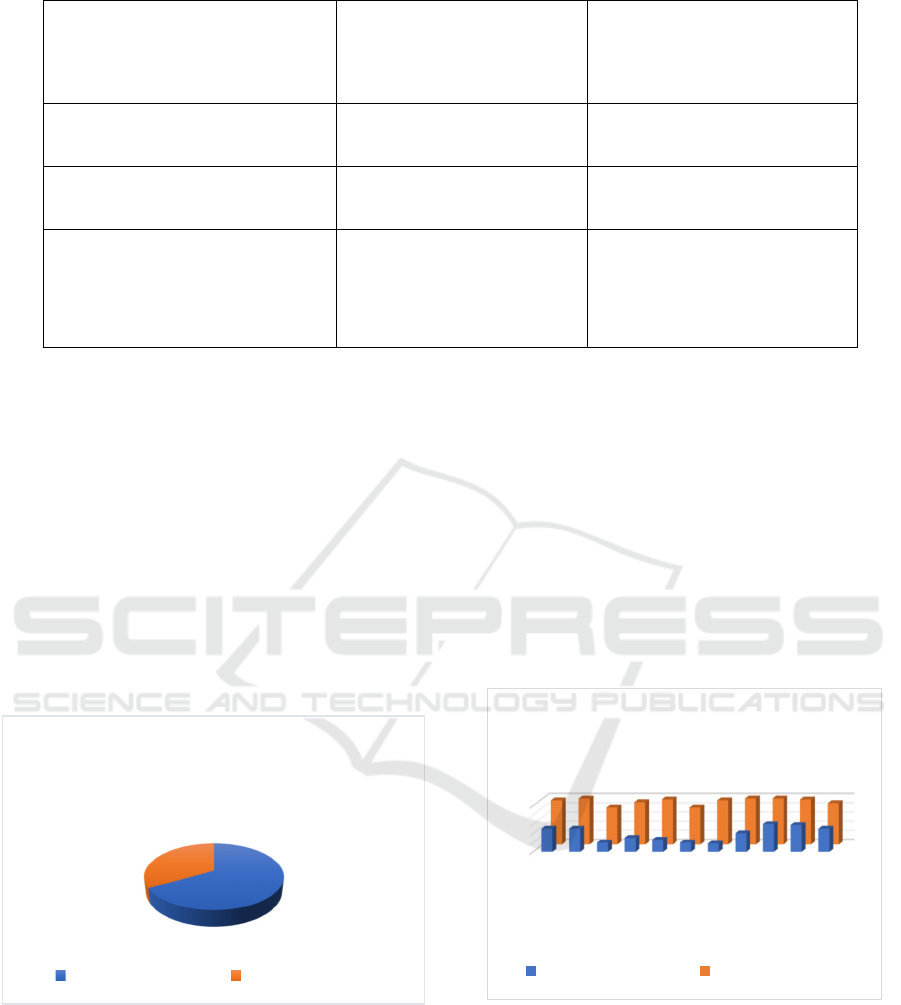
Figure 12: Comparison between Traditional and Veilcomm
method.
The danger of breaches is further increased when
metadata and session keys are stored. On the other
hand, dynamic encryption's no-session-data policy
guarantees complete anonymity, regardless of server
penetration. Static encryption is insufficient due to
the increasing sophistication of cyber-attacks.
Dynamic Encryption is the best option for
organisations and consumers concerned about
privacy since it uses adaptive, multi-layered
encryption techniques, which are the future of secure
communication.
Figure 12 show the Comparison
between Traditional and Veilcomm method.
You can see how the two encryption techniques stack
up against one another in terms of general security in
the pie chart. A far bigger part is held by Dynamic
Encryption, demonstrating its superiority in security
characteristics. Although traditional encryption is still
valuable, it is less prevalent, which shows that it isn't
as well-suited to new threats and isn't as adaptable.
Figure 13: Comparison between Traditional and Veilcomm
method.
Dynamic Encryption Messaging System and
Traditional Encryption Methods are compared
graphically in the bar graph across several parameters
to show how strong their security is. For every metric,
including forward secrecy, algorithm randomisation,
key rotation, and quantum resistance, Dynamic
Encryption always comes out on top, but Traditional
0
5
Encrypti…
Key…
Quantu…
Forward…
Algorith…
Self…
No-…
Key…
E2EE
Perform…
Resistan…
2.5 2.5
1
1.5
1.3
1
0.9
2
3
2.9
2.5
4.8
5
4
4.6
4.9
4
4.8
55
4.9
4.5
Comparison Graph
Traditional Method Veilcomm Method
Veilcom
m
method,
66.70%
Traditionl
Method,
33.30%
Overall Security
Comparison
Veilcomm method Traditionl Method
ICRDICCT‘25 2025 - INTERNATIONAL CONFERENCE ON RESEARCH AND DEVELOPMENT IN INFORMATION,
COMMUNICATION, AND COMPUTING TECHNOLOGIES
458

Encryption falls short, especially in those two
categories. Because of this, dynamic encryption
stands out as the best security strategy.
Figure 13 show
the Comparison between Traditional and Veilcomm
method.
5 CONCLUSIONS
The challenge of enhancing messaging security by
dynamically adapting encryption methods to counter
evolving cybersecurity threats, performance issues,
and regulatory pressures has been the central focus of
this paper. Existing systems often rely on static
encryption techniques, making them vulnerable to
brute force attacks, quantum computing
advancements, and legal mandates for backdoor
access. The proposed system addresses these
challenges through its innovative design, featuring
dynamic encryption that randomly selects an
encryption algorithm for each session, making
communications significantly harder to compromise.
Ephemeral key exchange mechanisms generate
secure, temporary keys that cannot be reused or
exploited to decrypt past communications, while the
absence of session data storage minimizes the risk of
breaches and unauthorized access. The platform
integrates cutting-edge cryptographic techniques,
including Elliptic Curve Cryptography (ECC), AES,
Blowfish, Twofish, and Quantum Key Distribution
(QKD), positioning it to withstand emerging quantum
threats. Its modular architecture enables seamless
integration of new encryption algorithms and security
features, while horizontal scalability ensures
consistent performance under increasing user bases
and data volumes. The system prioritizes user privacy
by avoiding centralized metadata storage and aligning
with regulatory frameworks like GDPR and CCPA.
This has far-reaching benefits across various sectors,
enabling private communication for individuals in
sensitive contexts such as legal consultations, medical
advice, or personal conversations, while also
facilitating secure exchanges of confidential
information in business and enterprise environments,
as well as government institutions handling national
security data.
REFERENCES
Dabola, S., Tomer, V., Singh, N., Madan, P., & Jhinkwan,
A. (2024). Chat Secure-Messaging Application Based
on Secure Encryption Algorithm. International Journal
for Research in Applied Science & Engineering
Technology (IJRASET), 12(1). DOI:
10.22214/ijraset.2024.58817.
Pandey, D., Gupta, R. R., & Choudhary, A. (2023). A Novel
Development of Blockchain-based Messaging
Application. 2023 International Conference on
Advances in Electronics, Communication, Computing
and Intelligent Information Systems (ICAECIS). DOI:
10.1109/ICAECIS58353.2023.10170701.
Gour, A., Malhi, S. S., Singh, G., & Kaur, G. (2024). Hybrid
Cryptographic Approach: For Secure Data
Communication using Block Cipher Techniques. E3S
Web of Conferences, 556, 01048. DOI:
10.1051/e3sconf/202455601048
Shamsi, S. E., & Nasrat, B. W. (2024). Securing Messages
and Files Using Integrated Steganography and
Asymmetric Encryption Techniques. Cognizance
Journal of Multidisciplinary Studies, 4(4), 272-282.
DOI: 10.47760/cognizance. 2024.v04i04.019
AlSideiri, A., AlShamsi, S., AlBreiki, H., AlMoqbali, M.,
AlMaamari, M., & AlSaadi, S. (2024). Cybersecurity
Enhancement through Hybrid Encryption: Combining
RSA and Vigenère Algorithms in the Cypher-X System.
Baghdad Science Journal, 21(5 Special Issue), 1765-
1774. DOI: 10.21123/bsj.2024.10539.
Shuhan, M. K. B., Islam, T., Shuvo, E. A., Bappy, F. H.,
Hasan, K., & Caicedo, C. (2023). Quarks: A Secure and
Decentralized Blockchain-Based Messaging Network.
IEEE International Conference on Cyber Security and
Cloud Computing (CSCloud 2023). DOI:
10.48550/arXiv.2308.04452.
Yeung, M. (2024). SendingNetwork: Advancing the Future
of Decentralized Messaging Networks. arXiv preprint
arXiv:2401.09102v2. DOI:
10.48550/arXiv.2401.09102v2
Cui, Li, Qianqian, Xing, Yi, Wang, Baosheng, Wang, Jing,
Tao, Liu, Liu, FSEE: A Forward Secure End-to-End
Encrypted Message Transmission System for IoT,
Security and Communication Networks, 2022,
2644716, 18 pages, 2022.
Len, J., Ghosh, E., Grubbs, P., & Rösler, P. Interoperability
in End-to-End Encrypted Messaging. 2023.
N. Unger et al., "SoK: Secure Messaging," 2015 IEEE
Symposium on Security and Privacy, San Jose, CA,
USA, 2015, pp. 232-249, doi: 10.1109/SP.2015.22.
Chopra, Aakanksha. (2015). Comparative Analysis of Key
Exchange Algorithms in Cryptography and its
Implementation. IMS Manthan (The Journal of
Innovations). 8. 10.18701/imsmanthan. v8i2.5126.
Mashari Alatawi and Nitesh Saxena. 2023. SoK: An
Analysis of End-to-End Encryption and Authentication
Ceremonies in Secure Messaging Systems. In
Proceedings of the 16th ACM Conference on Security
and Privacy in Wireless and Mobile Networks (WiSec
'23). Association for Computing Machinery, New York,
NY, USA, 187–201.
K. Cohn-Gordon, C. Cremers, B. Dowling, L. Garratt and
D. Stebila, "A Formal Security Analysis of the Signal
Messaging Protocol," 2017 IEEE European Symposium
on Security and Privacy (EuroS&P), Paris, France,
2017, pp. 451-466, doi: 10.1109/EuroSP.2017.27.
Veilcomm: Next-Generation Secure Messaging with Custom Encryption and Key Exchange
459

Puyosa, I. (2023). Protecting Point-to-Point Messaging
Apps: Understanding Telegram, WeChat, and
WhatsApp in the United States and in Turkey. Digital
Forensic Research Lab (DFRLab), Atlantic Council
Mishra, M. R., & Kar, J. (2017). A study on diffie-hellman
key exchange protocols. International Journal of Pure
and Applied Mathematics, 114(2), 179-189. DOI:
10.12732/ijpam. v114i2.2.
Phan, Duong & Pointcheval, David. (2004). OAEP 3-
Round: A Generic and Secure Asymmetric Encryption
Padding. 3329. 63-77. 10.1007/978-3-540-30539-2_5.
Hoffstein, J., Pipher, J., Silverman, J.H. (2001). NSS: An
NTRU Lattice-Based Signature Scheme. In: Pfitzmann,
B. (eds) Advances in Cryptology EUROCRYPT 2001.
EUROCRYPT 2001. Lecture Notes in Computer
Science, vol 2045. Springer, Berlin, Heidelberg.
Alwen, J., Coretti, S., Dodis, Y. (2019). The Double
Ratchet: Security Notions, Proofs, and Modularization
for the Signal Protocol. In: Ishai, Y., Rijmen, V. (eds)
Advances in Cryptology EUROCRYPT 2019.
EUROCRYPT 2019. Lecture Notes in Computer
Science (), vol 11476. Springer, Cham.
Serrano, R., Duran, C., Sarmiento, M., Pham, C.-K., &
Hoang, T.-T. (2022). ChaCha20–Poly1305
Authenticated Encryption with Additional Data for
Transport Layer Security 1.3. Cryptography, 6(2), 30.
Kim, Kyungho, Seungju Choi, Hyeokdong Kwon, Hyunjun
Kim, Zhe Liu, and Hwajeong Seo. 2020.
"PAGEPractical AES-GCM Encryption for Low-End
Microcontrollers" Applied Sciences 10, no. 9: 3131.
Leon Botros, Matthias J. Kannwischer, and Peter Schwabe.
2019. Memory-Efficient High-Speed Implementation
of Kyber on Cortex-M4. In Progress in Cryptology –
AFRICACRYPT 2019: 11th International Conference
on Cryptology in Africa, Rabat, Morocco, July 9–11,
2019, Proceedings. Springer-Verlag, Berlin,
Heidelberg, 209–228.
A. Ruggeri, A. Galletta, A. Celesti, M. Fazio and M. Villari,
"An Innovative Blockchain Based Application of the
Extended Triple Diffie-Hellman Protocol for IoT," 2021
8th International Conference on Future Internet of
Things and Cloud (FiCloud), Rome, Italy, 2021, pp.
278-284, doi: 10.1109/FiCloud49777.2021.00047.
J. Dong, F. Zheng, J. Cheng, J. Lin, W. Pan and Z. Wang,
"Towards High-performance X25519/448 Key
Agreement in General Purpose GPUs," 2018 IEEE
Conference on Communications and Network Security
(CNS), Beijing, China, 2018, pp. 1-9, doi:
10.1109/CNS.2018.8433161.
ICRDICCT‘25 2025 - INTERNATIONAL CONFERENCE ON RESEARCH AND DEVELOPMENT IN INFORMATION,
COMMUNICATION, AND COMPUTING TECHNOLOGIES
460
