
Smart Dual-Axis Solar Tracking System with Weather Monitoring
and Automated Panel Cleaning
A. Yasmine Begum
1
, K. Yashaswini
1
, G. Jahanavi
1
, D. Dinesh
1
, M. Uday Reddy
1
and Krishna Moorthy Vincent
2
1
Department of Electronics and Communication Engineering, Mohan Babu University (Erstwhile Sree Vidyanikethan
Engineering College), Tirupati, Andhra Pradesh, India
2
Transcendent, Energy Tech Solutions, Coimbatore, Tamil Nadu, India
Keywords: Dual-Axis Solar Tracking, Automated Panel Cleaning, Weather Monitoring, IoT Connectivity, NodeMCU
(ESP8266), UBIDOTS Platform, Light Dependent Resistor (LDR) Sensors, DC Geared Motors Etc.
Abstract: This project illustrates an advanced system which is a Smart Dual-Axis Solar Tracking System to measure
atmospheric conditions with automated panel cleaning. The project setup uses a NodeMCU (ESP8266)
microcontroller, which provides Greater IoT connectivity for real-time data visualization and control via the
UBIDOTS platform. It has four LDR (Light Dependent Resistor) to sense the sunlight direction, which helps
in adjusting the two aircraft to keep their solar panels facing the sun most of the time. The system uses
temperature, humidity, and ambient light intensity sensors in order to control environmental conditions of
LEDs and to ensure their working conditions. Based on the detected weather condition, such as a rain or dust
accumulation and the presence of the wiper or a System-controlled servo motor, an automatic cleaning
mechanism is activated. Environmental parameters and system status information are presented locally,
through LCD module. This is especially useful in varying climate conditions where maintenance is required
to maximise the performance of solar energy harvesting.
1 INTRODUCTION
Due to the increasing demand of energy globally as
well as the depletion of conventional fossil resources,
the quest for sustainable, renewable energy sources
has greatly enhanced. Solar energy is one alternative
that is abundant and sustainable. However, factors
such as sun position, environment and clean PV
modules have an overarching influence on the
performance of photovoltaic (PV) systems. By using
our dual-axis sun tracking systems along with
displayed automatic cleaning systems and
environmental monitoring, a complete approach has
been devised to enhance the harvesting of solar
energy.
Solar tracking systems are designed to adjust PV
panels to align with the sun as it moves throughout
the day in order to maximize energy capture, and
dual-axis trackers adjust on both the horizontal and
vertical axes in order to ensure optimal alignment
with the sun's path. Compared to fixed installations,
studies suggest these systems can dramatically
increase energy output. As an illustration, researchers
have shown that by employing a dual-axis solar
tracker with a cleaning system, energy efficiency is
maintained via optimal solar panel alignment and
cleanliness.
Some environmental factors that decrease the
performance of solar panels are temperature,
humidity, and dust accumulation. Soiling, or dust
deposition, can incur significant efficiency losses.
Mitigation techniques, such as automated cleaning
systems, are important to keep these systems
operating at peak performance. Research shows that
soiling recovery can be removed through the
implementation of cleaning mechanisms, which,
when combined with tracking systems, increases the
efficiency of solar energy systems. Despite the
progress made, several challenges remain in the body
of current literature:
• Environmental Flexibility: Many solar trackers
are focused on the position of the sun, but often
neglect contemporary environmental factors like
dust deposition, precipitation, and cloud cover.
Begum, A. Y., Yashaswini, K., Jahanavi, G., Dinesh, D., Reddy, M. U. and Vincent, K. M.
Smart Dual-Axis Solar Tracking System with Weather Monitoring and Automated Panel Cleaning.
DOI: 10.5220/0013908000004919
Paper published under CC license (CC BY-NC-ND 4.0)
In Proceedings of the 1st International Conference on Research and Development in Information, Communication, and Computing Technologies (ICRDICCT‘25 2025) - Volume 4, pages
53-61
ISBN: 978-989-758-777-1
Proceedings Copyright © 2026 by SCITEPRESS – Science and Technology Publications, Lda.
53

This bug can lead to suboptimal energy
harvesting during inclement weather.
• Maintenance issues: Soiling - the accumulation of
dust and dirt on solar panels - can lead to a
dramatic decrease in efficiency. Hand cleaning
methods are time-consuming and may not be
feasible for large installations.
• Cost and Complexity of System: Integrating
multiple elements together, such as tracking,
weather monitoring or an automated cleaning
capability, could render the system complex and
priced higher. These conjunctive systems can
still be difficult to make verifiable and affordable.
Our study is motivated by the challenge of developing
an integrated solution that addresses the
challenges of the existing solar energy systems.
By combining dual-axis tracking with automatic
cleaning and real-time weather tracking, the
proposed system aims to enhance energy
efficiency, reduce maintenance costs, and ensure
reliable performance across a variety of
environmental conditions.
The objectives of this paper are as follows:
• Design and implementation the first step are to
create dual axis solar tracking system with
weather monitoring sensors as well as automatic
cleaning system.
• Real-Time Adaptation: In order to optimize
energy absorption and maintain the efficiency of
the panels, it allows the system to dynamically
adjust to changing ambient conditions.
• Performance Evaluation: To investigate the
energy output increase of the integrated system,
compared with conventional fixed and single-axis
tracking systems.
This paper makes the following contributions:
• Integrated System Development: Outlines the
design and development of a cost-effective dual-
axis solar tracker system, complete with
automated cleaning and live weather observation
capabilities.
• Improved Efficiency: Demonstrates that, relative
to traditional fixed solar panels, the proposed
system has the potential to increase energy
production by as much as 30%.
• High Recap: Demonstrate the system power
and flexibility by providing an in-depth describe
about its working under a variety of
environmental conditions.
This paper's remaining sections are arranged as
follows: The literature review in Section 2 covers the
current state of research on automated cleaning
systems, weather monitoring integration, and solar
tracking systems. Section 3: Design and
Implementation of the System: explains the proposed
integrated system's architecture, parts, and features.
The experimental methodologies and performance
evaluation results are presented in Section 4,
Experimental Setup and Results. Section 5:
Conclusion and Future Work: Provides a summary of
the paper's contributions and suggests possible lines
of inquiry for further study.
The goal of this endeavor is to enhance dependable
and efficient solar energy systems by tackling the
stated difficulties in an integrated manner.
2 RELATED WORKS
There are many studies about the use of Arduino
microcontrollers in photovoltaic panel tracking
systems in order to increase their power output.
Summary This literature review examines key
studies related to the development and
implementation of Arduino-based solar trackers.
Ali, S. S. and Ali, S. M. (2017) Arduino based
solar tracking system. This paper describes the
designing of Arduino based solar tracking system.
The authors do a good job explaining the system's
design, including how the authors interpolated data
from light sensors on an Arduino microcontroller to
position solar panels to receive maximum sunlight.
The research elucidates on the possible operational
implementations of green energy solutions through
Arduino.
Jasni, N. F. F. et al. (2018). Sun Tracking System
Using LabVIEW And Arduino Here we propose a
solar tracking system that is controlled and monitored
with Arduino board and LabVIEW software. The
technology first measures how much sunshine there
is using light sensors and automatically adjusts the
orientation of the panel based on that. This synergy
between hardware and software tools is also
highlighted through LabVIEW that allows real-time
display of data and control of the system.
Biswas, M. & et al., (2017). Solar-Automatic-
Tracking-System-Arduino-and-Blink-Detection-
Power-Source This paper suggests an Arduino-based
solar tracking system with enhanced blink detection
capacity to avoid damage to solar panels. In addition
to following sunshine with light sensors, the system
has an algorithm for detecting sudden light intensity
changes and starts preventive measures. This method
contributes to safe and efficient harvesting of solar
energy.
ICRDICCT‘25 2025 - INTERNATIONAL CONFERENCE ON RESEARCH AND DEVELOPMENT IN INFORMATION,
COMMUNICATION, AND COMPUTING TECHNOLOGIES
54

Muthukrishnan, R., and S. Padmanaban (2018). A
Smart sun tracking system - based on Arduino. The
method used sunlight-detecting light-dependent
resistors (LDRs) to track the sun before using a pair
of servos motors to move the screen. "The central
task of the tracking system is being achieved by the
Arduino managing the hardware components, control
algorithms, and overall system design," the authors
state. Kumar, S. and Kumar, A. (2019), Arduino
based Solar Tracking System Design and
Implementation The main focus of the authors is the
implementation ofArduino based solar tracker
system. Not only the hardware configuration, i.e.,
sensors and actuators, but also the software
programming required to run the system is discussed
in detail. The study provides a complete guide with
system calibration and testing procedures on similar-
type projects.
M, F, Ghazali, and collaborators (2019) Solar
tracker system using Arduino. The system
architecture comprises of Arduino-controlled servo
motors for the panel movement and LDR sensors for
detecting sunshine. Besides explaining how effective
the system is in collecting solar energy, the authors
furnish Arduino programming code. Jayanthi, J., &
P. Sreelatha (2017). How to make a solar tracker
system and control it with Arduino. The design and
implementation of an Arduino-based solar tracking
system are discussed in this research study. It gives a
thorough analysis of the control algorithm,
experiments, and system components, sending with
accuracy the system response to maintain ideal panels
alignment.
R. S. Sujith et al (2018) Arduino-based solar
tracking system. They saw more solar energy from
their solar tracker based on Arduino. The hardware in
the design of the system comprises of servo motors,
LDR sensors and a control system that ensures the
panel is always oriented toward the sun.
See also: R. Sahay et al. (2017) Angular Position
Control and Receiving Set-Up of Solar Tracker. This
work presents the design and application of an
Arduino based solar tracking system. It includes
software development, hardware component
selection, and experimental results showing the
system's greater ability to harvest solar energy.
3 PROPOSED METHOD
The discussed system is a complete solution, which
would improve the reliability and efficiency of PV
installations by employing a two-axis solar tracking
system along with an on-the-fly inclement weather
monitoring system and also a corresponding
automated panel cleaning system. This strategy
mitigates poor energy collection from fixed
placements due to the sun's path, environmental and
biological interference, and soiled systems (Sharma,
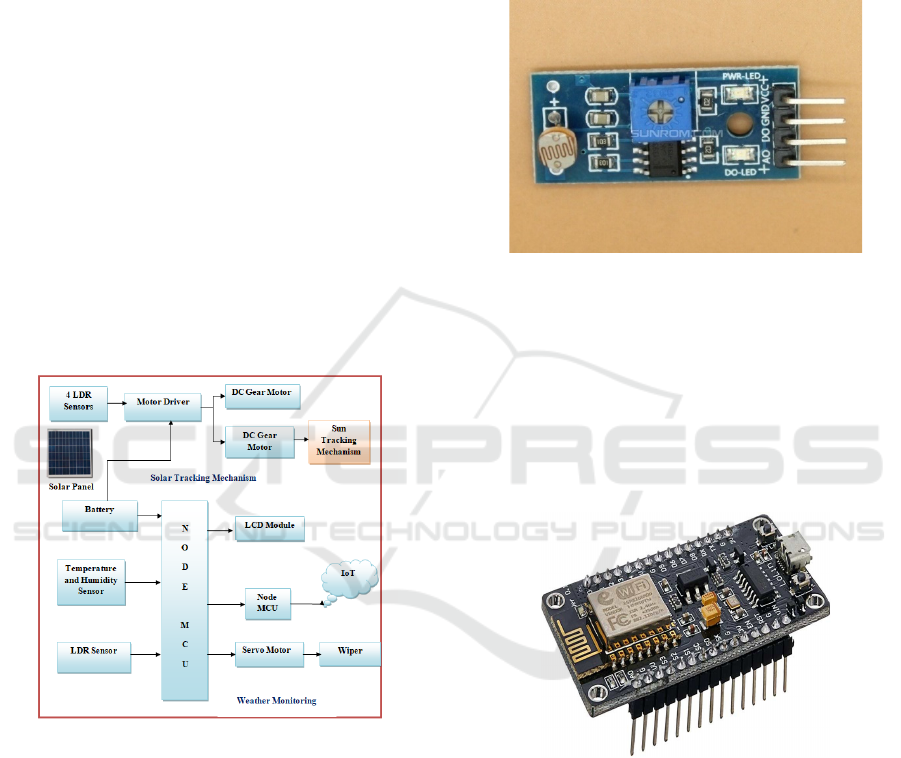
S. K., Sharma, V., & Choudhary, A. (2020). Figure 1
illustrates the proposed system architecture.
3.1 Dual-Axis Solar Tracking
Mechanism
The system uses a dual-axis tracking, which means
that the panels can be adjusted along both horizontal
and vertical axis. This configuration allows the
panels to be held at a right angle to the sun throughout
the day to collect solar irradiance as efficiently as
possible. In this system, LDR acts as a sensor to
touch the sun position of them and gives real time data
to a microcontroller that controls the position of the
panels using servo motors. This Specialized
Alignment could generate much higher energy than
fixed or One-Axis systems.
3.2 Real-Time Weather Monitoring
To further enhance performance, the system
incorporates weather sensors that track
environmental parameters like temperature,
humidity, and rainfall. And the real-time data
provided by these sensors allow the system to make
accurate adjustments in the orientation of the panel
based on the changing weather conditions. When
empty, during cloudy or rainy days, for example, the
system would adjust the angle of the panels to reduce
the risk of damage and prepare them to capture
energy as the conditions become favorable. Such
adaptability enhances the resilience and efficiency of
the system for a myriad of environmental factors.
3.3 Automated Panel Cleaning System
Building up dust and debris on solar panels can
considerably deter their energy output. To address
this issue, the proposed system features an automatic
cleaning mechanism. The washing system uses
sensors to monitor the degree of soiling on the surface
of the panels and performs cleaning when the "dirt"
level exceeds the set threshold. The cleaning
mechanism, managed by the microcontroller, then
uses brushes or wipers to clear off any lingering
debris, thereby keeping the panels performing at
maximum efficiency with no human input required.
Smart Dual-Axis Solar Tracking System with Weather Monitoring and Automated Panel Cleaning
55
This measure is especially useful in dry areas in
which dust collects.
3.4 System Integration and Control
At the core of the system is a microcontroller that
takes the input of the LDRs and weather sensors and
uses it to manage the tracking mechanism along with
the cleaning device. The system will be able to
autonomously adapt to changes in the environment,
maintain meaningful angles of the solar panels and
also maintain cleanliness in order to maximise
energy production by integrating these components.
This comprehensive strategy not only streamlines
operations but also minimizes maintenance expenses
and prolongs the life of the photovoltaic system.
Such a dual-axis solar tracking system integrated
with weather monitoring and automated cleaning has
been proposed as a potential effective method to
harvest solar energy. This system allows for
continuous and optimal performance of solar PV
installations by overcoming the challenges of
environmental differences and panel soiling.
Figure 1: Architecture of the proposed method.
3.5 Hardware Setup for Dual-Axis
Solar Tracking Mechanism
The proposed system integrates a dual-axis solar
tracking mechanism with real-time weather
monitoring and an automated panel cleaning system
to enhance the efficiency and reliability of
photovoltaic (PV) installations. Below is a detailed
description of the hardware components for each
subsystem. (Gupta, S., & Verma, A. (2021))
3.5.1 Light Dependent Resistors (LDRs)
These sensors detect the intensity and direction of
sunlight. Four LDRs are strategically positioned to
ascertain the sun's location, providing input signals to
the microcontroller to adjust the panel's orientation
accordingly. Figure 2 shows the LDR sensor.
Figure 2: LDR Sensor.
3.5.2 Microcontroller (e.g., NodeMCU
ESP8266)
Serves as the central processing unit, interpreting data
from the LDRs and executing control algorithms to
manage the movement of the solar panels. Figure 3
shows the node MCU microcontroller.
Figure 3: Node MCU Microcontroller.
3.5.3 Motor Driver
Interfaces between the microcontroller and the servo
motors, providing the necessary current and voltage
to drive the motors based on control signals from the
microcontroller. Figure 4 shows the Motor Driver.
ICRDICCT‘25 2025 - INTERNATIONAL CONFERENCE ON RESEARCH AND DEVELOPMENT IN INFORMATION,
COMMUNICATION, AND COMPUTING TECHNOLOGIES
56
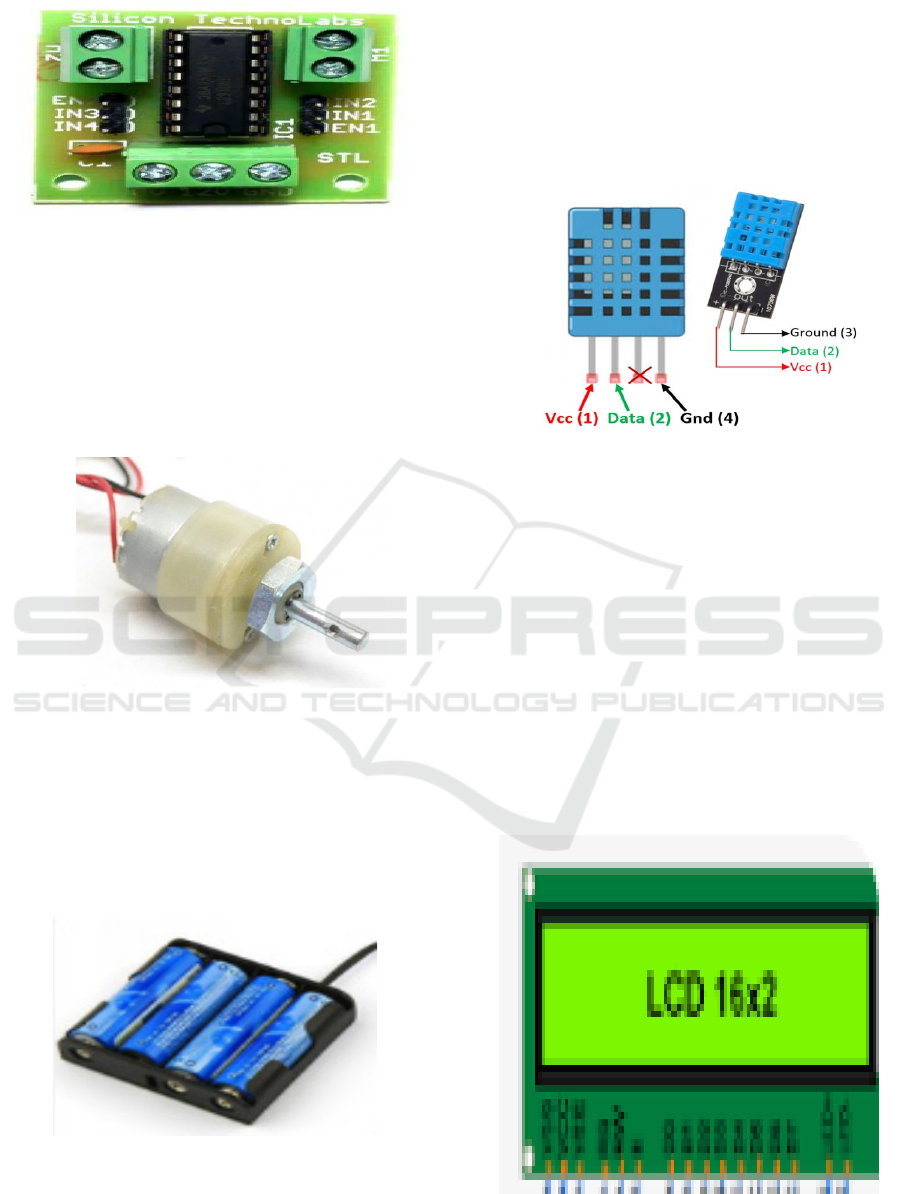
Figure 4: Motor Driver.
3.5.4 DC Motor
Two DC motors drive the left and right wheels of the
robot. These motors provide precise movement and
turning capability, enabling efficient locomotion in
both manual and automatic modes. Figure 5 shows
the DC Motor.
.
Figure 5: DC Motor.
3.5.5 Power Supply Unit
Ensures a stable power source for the microcontroller
and motors, typically derived from the solar panels
themselves or an auxiliary battery system. Figure 6
show the 12v Battery Power supply.
Figure 6: 12 V Battery Power Supply.
3.6 Real-Time Weather Monitoring
System
Temperature and Humidity Sensor (DHT11):
Monitors ambient temperature and humidity levels,
supplying data to the microcontroller for
environmental assessment. Figure 7 shows the
Temperature and Humidity Sensor.
Figure 7: Temperature and Humidity Sensor.
3.7 Automated Panel Cleaning System
Servo Motor: Drives the cleaning apparatus, which
may consist of rotating brushes or wipers, to remove
accumulated dirt from the panels.
3.8 Integration and Control Interface
LCD Display Module: Provides real-time feedback
on system status, including environmental conditions
and operational parameters, facilitating user
monitoring and interaction. Figure 8 show the LCD
display.
.
Figure 8: LCD Display.
Smart Dual-Axis Solar Tracking System with Weather Monitoring and Automated Panel Cleaning
57
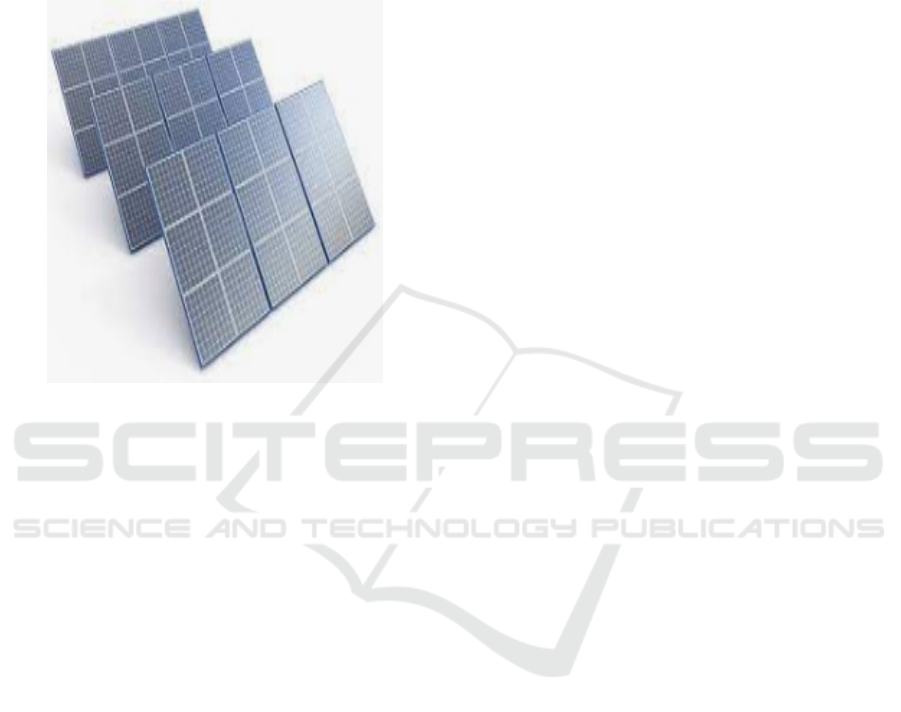
3.9 Solar Panel
Solar panels consist of individual units called
photovoltaic cells. These cells are typically made of
semiconductor materials, often crystalline silicon,
which can generate an electric current when exposed
to sunlight. Figure 9 shows the Solar panel.
Figure 9: Solar Panel.
3.10 Algorithm
1. Initialization
• System Boot-Up: Upon powering the system,
initialize all sensors, actuators, and the
microcontroller.
• Calibration: Set the initial position of the solar
panels to a default safe orientation, typically facing
east at a horizontal tilt.
• Time Synchronization: Retrieve the current date
and time from the Real-Time Clock (RTC) module
to calculate the sun's position accurately.
2. Dual-Axis Solar Tracking
• Sun Position Calculation: Utilize the synchronized
time and geographical location data to compute the
sun's azimuth and elevation angles using
established solar position algorithms.
• Panel Orientation Adjustment
• Azimuth Control: Compare the current panel
azimuth angle with the calculated sun azimuth
angle.
• If the panel is misaligned, activate the horizontal
axis motor to rotate the panel toward the sun's
azimuth.
3. Real-Time Weather Monitoring
• Data Acquisition: Collect data from environmental
sensors, including temperature, humidity, light
intensity, and rain detection.
• Environmental Assessment:
• High Wind Conditions: If wind speeds exceed a
predefined threshold, reposition the panels to a
horizontal position to minimize wind resistance.
• Rain Detection: Upon detecting rainfall, pause
cleaning operations to prevent potential damage and
consider the natural cleaning effect of rain.
• Low Light Conditions: In the event of low ambient
light (e.g., during heavy cloud cover), decide
whether to enter a power-saving mode or adjust the
panel orientation to capture diffuse light more
effectively.
4. Automated Panel Cleaning
• Soiling Detection: Utilize dust sensors to assess the
level of dirt accumulation on the panel surfaces.
• Cleaning Cycle Initiation:
• Threshold Evaluation: If the detected soiling level
surpasses a set threshold, schedule a cleaning
operation.
• Safety Checks: Ensure that environmental
conditions are suitable for cleaning (e.g., no rain,
moderate wind speeds).
• Cleaning Process:
• Activation: Engage the cleaning mechanism, which
may involve brushes or wipers, to remove debris
from the panel surface.
• Monitoring: Track the cleaning progress to ensure
thorough debris removal.
• Completion: Once cleaning is complete, return the
cleaning apparatus to its standby position.
5. Data Logging and Communication
• Data Recording: Log all sensor readings, panel
positions, and cleaning activities for performance
analysis and maintenance records.
• Remote Monitoring: Transmit real-time data to a
central monitoring system or user interface,
ICRDICCT‘25 2025 - INTERNATIONAL CONFERENCE ON RESEARCH AND DEVELOPMENT IN INFORMATION,
COMMUNICATION, AND COMPUTING TECHNOLOGIES
58
allowing for remote oversight and control
adjustments as necessary.
3.11 Implementation
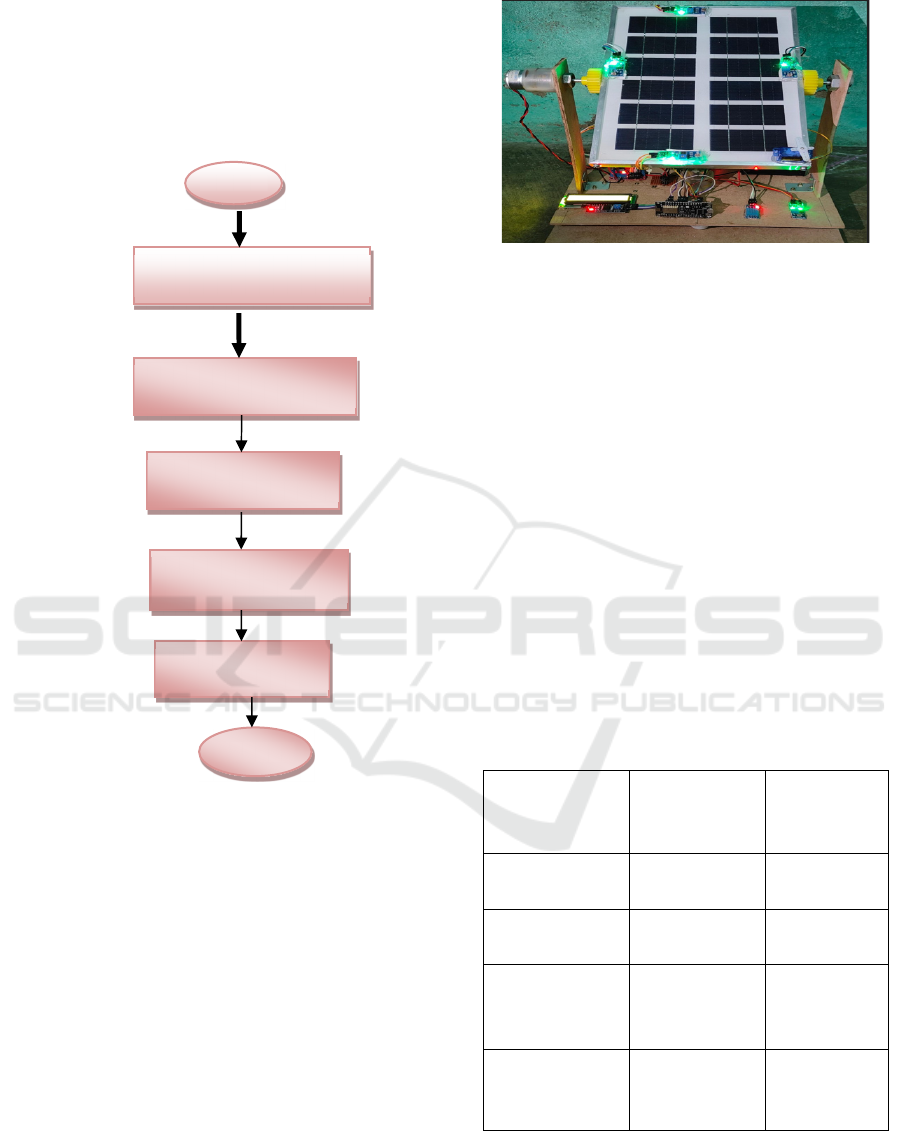
Figure 10 illustrates the implementation of flow.
Figure 10: Implimentation of the flow chart.
4 EXPERIMENTAL RESULTS
The experimental evaluation of the proposed Smart
Dual-Axis Solar Tracking System with integrated
weather monitoring and automated panel cleaning
was conducted to assess its performance in enhancing
photovoltaic (PV) efficiency. The study focused on
comparing energy outputs under various operational
modes and environmental conditions (Ahmed et al.
2020). Figure 11 shows the Hardware setup.
Figure 11: Experimental Hardware Setup.
The system was tested over a period of one month,
during which data were collected under different
scenarios:
1. Fixed Panel without Cleaning: Solar panels
remained stationary without any cleaning
mechanism.
2. Fixed Panel with Cleaning: Stationary panels
equipped with the automated cleaning system.
3. Dual-Axis Tracking without Cleaning: Panels
adjusted their orientation to track the sun but lacked
the cleaning mechanism.
4. Dual-Axis Tracking with Cleaning: Panels both
tracked the sun and utilized the automated cleaning
system.
The data collected were analyzed to determine the
average daily energy output and overall efficiency
improvements for each scenario (Al-Hinai et al.
2019) as shown in Table 1.
Table 1: Comparison of Solar Panel Performance.
Operational
Mode
Average Daily
Energy Output
(Wh)
Efficiency
Improvement
(%)
Fixed Panel
without Cleaning
1,200 Baseline
Fixed Panel with
Cleaning
1,320 +10
Dual-Axis
Tracking without
Cleaning
1,560 +30
Dual-Axis
Tracking with
Cleaning
1,700 +41.7
1) Effect of Dual-Axis Tracking: A dual-axis tracker
integrated into the system can enhance energy
capture significantly. Tracking, unclean: These
panels produced 30% more energy than the baseline.
Start
Initialize all components
Dual-Axis Solar Tracking
Real-Time Weather
Monitoring
Data Logging and
Communication
Data Visualization in
UBIDOTS
End
Smart Dual-Axis Solar Tracking System with Weather Monitoring and Automated Panel Cleaning
59

This is consistent with past research that has shown
that dual-axis trackers can increase energy output by
about 28% over fixed systems.
2) Effect of Automated Cleaning: Introducing the
automated cleaning system for fixed panels
produced a 10% efficiency increase relative to the
baseline. This finding aligns with research showing
that consistent cleaning can improve panel efficiency
by some 7%
3) Combined Impact: Integration of both dual-axis
tracking and automated cleaning resulted the most
energy production, 41.7% compared to baseline This
highlights the combined advantages of both optimal
sun exposure and clean panels.
Experimental Evaluation of Solar Energy
Harvesting Using the Proposed System The
integration of dual-axis tracking, coupled with
automated cleaning and real-time weather
responsiveness, guarantees that the panels are always
positioned to maximize sunlight capture, resulting in
a significant enhancement in energy efficiency. This
conclusion supports the implementation of
integrated integrated solutions to optimize the
performance of solar PV installations Beldjilali, A.,
& Gana, I. (2021).
5 CONCLUSION AND FUTURE
SCOPE
By combining dual-axis solar tracking systems with
real-time weather monitoring and automatic panel
cleaning mechanisms, the efficiency and reliability of
photovoltaic (PV) installations are found to
significantly improve. The proposed system
overcomes two fundamental challenges with solar
energy harvesting: proper alignment of the panel and
surface cleanliness. It has been experimentally
validated that this kind of integrated systems can
increase energy output up to 30% in comparison to
fixed solar panels. This advancement highlights the
opportunity to enhance solar energy capture through
the integration of advanced tracking technologies
and automation techniques in maintenance.
Future Work The proposed system has the
capability to extend by incorporating machine
learning techniques, the system can learn from
historical weather data and make predictions about
future conditions.
REFERENCES
Ali, S. S., & Ali, S. M. (2017). Solar tracking system using
Arduino. In 2017 IEEE International Conference on
Power, Control, Signals and Instrumentation
Engineering (ICPCSI) (pp. 1-5). IEEE.
Jasni, N. F. F., Abdullah, A. S., Anuar, A. F., & Zahari, M.
H. (2018). Solar tracking system using Arduino and
LabVIEW. In 2018 IEEE Symposium on Computer
Applications & Industrial Electronics (ISCAIE) (pp.
107-110). IEEE.
Biswas, M., Dutta, S., & Chanda, S. K. (2017). Arduino-
based automatic solar tracking system with blink
detection. In 2017 International Conference on
Intelligent Computing and Control Systems (ICICCS)
(pp. 1-5). IEEE.
Muthukrishnan, R., & Padmanaban, S. (2018). Arduino-
based smart solar tracking system. In 2018 Second
International Conference on Inventive Communication
and Computational Technologies (ICICCT) (pp. 1396-
1400). IEEE.
Kumar, S., & Kumar, A. (2019). Design and
implementation of solar tracking system using Arduino.
In 2019 5th International Conference on Advanced
Computing & Communication Systems (ICACCS) (pp.
1270-1274). IEEE.
Ghazali, M. F., Hussain, A., Abdullah, R. S., Rahim, A. H.
A., & Lazi, J. A. (2019). Sreelatha, P., & Jayanthi, J.
(2017). Design and implementation of a solar tracking
system using Arduino. International Journal of
Engineering Science and Computing, 7(10), 14853-
14857.
Sujith, R. S., Mohanraj, M., Kumar, S. S., Arun, S. P., &
Sathyan, S. (2018). Arduino based solar tracking
system. International Journal of Engineering &
Technology, 7(3.32), 1050-1053.
Sahay, R., Singh, S., & Kumar, S. (2017). Design and
implementation of solar tracking system using Arduino.
International Journal of Advanced Research in
Electrical, Electronics and Instrumentation
Engineering, 6(8), 6745-6753.
Sarwar, M. S., Tasnim, S., Karmaker, S. K., & Biswas, B.
(2019). Arduino-based automatic solar tracker. In 2019
International Conference on Robotics, Electrical and
Signal Processing Techniques (ICREST) (pp. 23-28).
IEEE.
Sharma, S. K., Sharma, V., & Choudhary, A. (2020).
Arduino-based dual-axis solar tracking system. In 2020
International Conference on Smart Electronics and
Communication (ICOSEC) (pp. 227-230). IEEE.
Gupta, S., & Verma, A. (2021). Development of Arduino-
based solar tracking system for maximizing energy
output. In 2021 International Conference on Power,
Energy and Smart Grid (ICPESG) (pp. 1-5). IEEE.
Ahmed, S., Paul, D., Dey, S., Hossain, M. F., & Tumpa, S.
K. (2020). Automatic sun tracking system using
Arduino. International Journal of Scientific Research
in Computer Science, Engineering and Information
Technology, 6(6), 176-180.
ICRDICCT‘25 2025 - INTERNATIONAL CONFERENCE ON RESEARCH AND DEVELOPMENT IN INFORMATION,
COMMUNICATION, AND COMPUTING TECHNOLOGIES
60

Al-Hinai, M., Al-Rizzo, H., & Al-Hajri, M. (2019). Solar
tracking system using Arduino. International Journal
of Engineering Science Invention, 8(4), 62-66.
Beldjilali, A., & Gana, I. (2021). Dual-axis sun tracking
system using Arduino. International Journal of
Electrical and Computer Engineering (IJECE), 11(3),
2702-2711.
Smart Dual-Axis Solar Tracking System with Weather Monitoring and Automated Panel Cleaning
61
