
Fast and High Precision Human Fall Prevention and Intimation Using
Haptic Technology
R. Ravichandran, B. Latha, B. Vinothkumar, K. Arunkarthik, N G. Gopisankar and A. Yuvarajan
Department of Electronics and Communication Engineering, K.S.R. College of Engineering, Tiruchengode, Namakkal,
Tamil Nadu, India
Keywords: Fall Detection, Haptic Technology, YOLOv8, Human Fall Prevention, Response Time, Accuracy, False
Positive Rate, Wearable Sensors.
Abstract: The aim of the study is to develop a fast and high-precision human fall prevention and intimation system
using haptic technology, comparing its performance with the existing YOLOv8-based fall detection method.
Materials and Methods: There are two groups in this study. Group 1 refers to a novel YOLOv8-based fall
detection approach with 12-samples and Group 2 refers to a haptic- based fall detection method with 12-
samples. The threshold is 0.05% with a 95% confidence range and the G Power value is 80%. Result: The
performance of the proposed haptic-based fall detection system is noticeably superior to that of the YOLOv8-
based technique. Whereas the YOLOv8-based approach attains an accuracy between 91.50% and 95.30%,
the haptic-based method's accuracy falls between 95.80% and 98.50%. At a significance level of p < 0.05,
the haptic-based solution performs at its best. Conclusion: In this work, it is observed that the haptic- based
fall detection system has significantly better accuracy and response time compared to the YOLOv8- based
method.
1 INTRODUCTION
M. A. Kuhail, Fast and High Precision Human Fall
Prevention and Intimation using Haptic Technology,
a wearable system, detects fall-like symptoms and
generates haptic feedback alerts to prevent falls
using motion sensors and predictive algorithms. It
monitors critical health metrics for improved safety
and well-being and, in the event of a fall, initiates
emergency warnings through IoT connectivity.
Based on an enhanced YOLOv8 framework, the
FDT- YOLO algorithm tackles fall detection issues
by substituting the Faster Net module for the C2f
module, which improves feature reuse and reduces
complexity. T. Yang., et al, 2024 To further develop
precision and strength, it incorporates a trio
consideration strategy to lessen foundation
impedance and a deformable convolution module to
deal with complex poses. The system achieves a
higher Aide (96.2 % at IoU 0.5) while diminishing
limits to 9.9 million, further creating both ID
exactness and efficiency. Falls address a colossal
prosperity risk for more prepared adults, driving the
necessity for state-of-the-art fall area and countering
structures. Customary wearable methodologies
frequently depend on factual techniques with high
deception rates. H. Jing et al., 2025; Singh, 2023 This
paper overviews progressing designs in fall
acknowledgment and contravention using computer
based intelligence (ML), looking at datasets, age get-
togethers, sensors, and computations, while
highlighting stream movies and future headings to
coordinate researchers in additional fostering these
systems. L. Liu, et al., 2025 The structure can be used
in homes or aided living workplaces to prevent falls
among more prepared adults, giving nonstop alerts
and prosperity checking to ensure their security and
well-being. C.-W. Kang, et al., 2025 Hospitals and
reclamation centers can convey the structure for
patients with flexibility issues or postoperative
recovery, offering proactive fall balance and speedy
emergency response in case of a fall.
2 RELATED WORKS
With more than 300 conveyances in IEEE Xplore,
151 papers in Google Scholar, and 123 in
632
Ravichandran, R., Latha, B., Vinothkumar, B., Arunkarthik, K., Gopisankar, N. G. and Yuvarajan, A.
Fast and High Precision Human Fall Prevention and Intimation Using Haptic Technology.
DOI: 10.5220/0013903200004919
Paper published under CC license (CC BY-NC-ND 4.0)
In Proceedings of the 1st International Conference on Research and Development in Information, Communication, and Computing Technologies (ICRDICCT‘25 2025) - Volume 3, pages
632-638
ISBN: 978-989-758-777-1
Proceedings Copyright © 2025 by SCITEPRESS – Science and Technology Publications, Lda.

academia.edu, fall neutralization and recognizable
proof has seen a sharp extension in interest all
through late years. To address the colossal
impediments looked by the old and patients with
compactness weaknesses, J. Stuby, et al., 2025; AS
Kalyana Kumar, et.al, 2025 this assessment presents a
unique wearable contraption for fall countering and
acknowledgment that organizes development sensors,
Web of Things developments, and progressing
prosperity checking. E. Cubo et al., 2025 The
prescribed course of action uses insightful
computations to review development models and
combines whirligigs and accelerometers to follow
client developments. C. Chen, et al., 2025 The
contraption makes haptic analysis alerts to ask
clients to settle themselves to thwart falls, expecting
it recognizes possible fall side effects. D. Gnutt et
al., 2019; Banu, in case of a genuine fall, an
emergency cautioning structure is set off, sending the
client's district and achievement data to parental
figures through IoT stages. Prospering evaluations,
for instance, are constantly moved to the Think Speak
IoT stage, giving far off enrollment to gatekeepers
and family members. T. Ishigaki et al., 2025 The design
has been normal for lightweight, wearable use and
accomplishes an affirmation accuracy of 85-95 %,
with savvy limits diminishing confusions essentially.
J. Gudin, et al., 2025 Not a tiny smidgen like standard
designs, which depend upon camera-based
distinctive verification or edge-based wearables, this
gadget gives proactive assumption through its two-
stage structure. K. Pacheco-Barrios, et al., 2024 The
utilization of IoT union guarantees that crisis
reactions are quick and cautious, limiting defers that
could incite crazy results. Meenakshi Sharma, et.al,
2023; A. Musa, 2024 To redesign execution, the
sensible calculations are further developed utilizing
progressed signal dealing with techniques,
guaranteeing constant development with low
dormancy. J. Chadokiya et al., 2024 This try watches
out for an enormous jump forward in wearable turn
of events, cementing fall repudiation, ID, and
flourishing seeing into a solitary, helpful contraption
that watches out for both the security and flourishing
of clients. X. Hu, et al., 2025 With its versatility, the
framework can be applied in old homes, clinical
offices, and recovery focuses, making it a principal
device for working on individual satisfaction in
weak people groups.
From the past disclosures, it is contemplated that
standard fall acknowledgment systems have
limitations in accuracy and responsiveness, every
now and again achieving high deceptive issues.
Enhancing fall location and counteraction is a vital
component while planning wearable wellbeing
frameworks. The point of this study is to improve
fall counteraction and location precision utilizing a
movement sensor-based prescient framework with
haptic criticism, in correlation with customary limit-
based frameworks.
3 MATERIALS AND METHODS
The review was directed in the KSRIET Association
Lab utilizing movement information and biometric
wellbeing boundaries acquired from wearable
sensors coordinated with the IoT stage Think Speak.
A sum of 500 movement and wellbeing information
tests were handled involving very much planned
structures and modified involving C language for
framework improvement. This task underscores high
precision in fall avoidance and recognition by using
movement sensors, prescient calculations, and haptic
criticism to guarantee client wellbeing and
convenient mediations. Singh, 2023; N. T. Newaz and
E. Hanada, 2025 The framework joins movement
examination and wellbeing checking to upgrade fall
recognition, essentially decreasing misleading
problems. Information gathered from
accelerometers, spinners, and pulse sensors were
handled progressively utilizing C programming,
guaranteeing productive and quick execution of the
fall identification and warning framework. With a
reaction precision of 85-95 % and a streamlined
location edge, the framework gives solid fall
counteraction and recognition, further developing
crisis reaction times and generally speaking client
security. The reconciliation of C language
programming with IoT guarantees powerful and
ongoing framework execution, making it a useful
answer for improving security and prosperity,
particularly for old people and patients.
Group 1 refers to the fall detection method using
YOLOv8. The framework streamlines for
boundaries like objective and handling speed while
processing image or video input for continuous fall
discovery. To ensure precise placement under various
conditions, the calculation is prepared using fall-
related datasets and evaluated based on Accuracy and
Review. M. Szántó et al., 2025 The fall
identification and crisis response framework, which
uses the IoT mix and wellness checking highlights to
process information.
Group 2 refers to the fall identification and crisis
reaction framework, which processes information
utilizing IoT mix and wellbeing checking highlights.
The framework examines essential signs, for
Fast and High Precision Human Fall Prevention and Intimation Using Haptic Technology
633
example, pulse and movement information, sending
continuous cautions in case of a fall. It works
utilizing an associated stage like Think Speak and is
enhanced for crisis warnings, guaranteeing quick
reaction times. The framework aspects are intended
for consistent incorporation into wearable devices.
The framework is planned involving the
accompanying condition for fall recognition and
anticipation is defined by Equation (1)
𝑆 1/𝑁 ∑𝑚𝑖 (1)
Here, S is the framework's reaction precision, N
addresses the quantity of movement tests
investigated, and mi alludes to the singular
movement test information from accelerometers and
gyrators. The framework works utilizing a scope of
movement examples and wellbeing checking
information, such as heart rate, to foresee falls and
produce constant cautions.
The testing arrangement and reenactment of the
fall location and avoidance framework are designed as
follows: The framework is executed utilizing an
eighth Gen Intel i7 centre processor, 8 GB Slam, and
modified in C language. The framework is intended
to handle motion sensor information (accelerometers
and Gyroscopes) continuously, involving predictive
algorithms and haptic feedback for fall location. The
information input is handled through the Think Speak
IoT stage for remote checking and ready age. The
framework's exactness is approved by applying
ongoing movement information, breaking down the
outcomes, and upgrading the prescient calculations
to further develop fall location and decrease phony
problems. The fall discovery framework is then
recreated and broken down for continuous execution
and responsiveness.
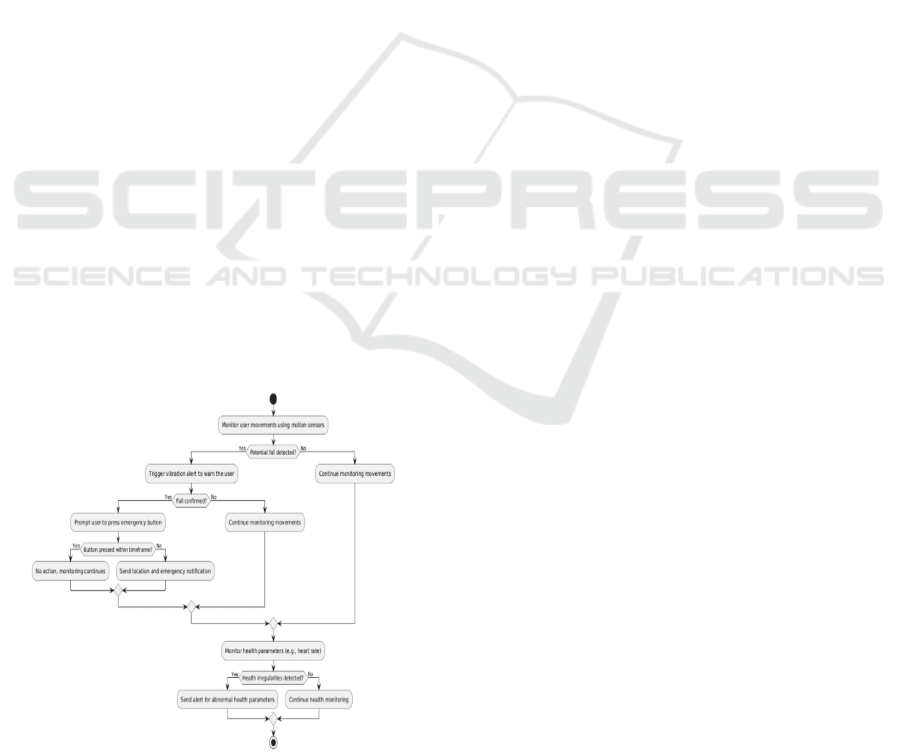
Figure 1: Flowchart of detection and health monitoring
system.
Figure 1: This flowchart demonstrates how fall
detection and health monitoring systems operate by
employing motion sensors to continuously track
human motions. The system alerts the user by
vibrating if it detects a possible fall. An vibrating if
it detects a possible fall. An emergency notification
with the user's location is issued if the fall is verified
and no response is received from them within a
predetermined period of time. The technology
simultaneously tracks vital signs including heart rate
and notifies users if any irregularities are found. It
keeps an eye on activity and health metrics if there
are no problems.
4 STATISTICAL ANALYSIS
SPSS version 26.0 is used for statistical analysis of
data collected from parameters such as accuracy (%)
and response time (s). O. Korostynska and A. Mason,
2021 The independent sample t-test and group
statistics are calculated using SPSS software. The
sensor placement, algorithm time and feedback
mechanism are considered independent variables,
while accuracy (%) and response time (s) are the
dependent variables.
5 RESULTS
The results of the novel haptic-based fall prediction
model's results against YOLOv8 are done. The two
models' accuracy, response time, and false positive
rate (FPR) are examined. While the suggested haptic
prediction model has an enhanced accuracy range of
93.80% to 98.50%, the accuracy values for YOLOv8
range from 91.50% to 95.30%. The haptic-based
system showed lower FPR values (0.22 to 0.33) than
YOLOv8 (0.39 to 0.50) and better response times
ranging from 0.60s to 0.85s, whereas YOLOv8
exhibited response times ranging from 1.00s to
1.20s. The associated changes in FPR and response
time were also measured.
The accuracy ranges for YOLOv8 and haptic
prediction are compared to a maximum of 95.30%
and 98.50%, respectively. For haptic prediction, the
minimal accuracy range is 93.80%, while for
YOLOv8, it is 91.50%. Table 1 presents the results
of the independent sample t-test comparison of
haptic prediction and YOLOv8 accuracy. Table 2
displays the accuracy mean, standard deviation, and
significance levels for both models. Table 3
(independent sample t-test) indicates that the
ICRDICCT‘25 2025 - INTERNATIONAL CONFERENCE ON RESEARCH AND DEVELOPMENT IN INFORMATION,
COMMUNICATION, AND COMPUTING TECHNOLOGIES
634

accuracy improvement with the haptic prediction
model was statistically significant (p < 0.05).
Table 1: The accuracy ranges from 91.50 % to
95.30 % for the yolov8 model and 95.80 % to 98.50
% for the haptic prediction model, demonstrating
significant improvement in accuracy with the
proposed method. The false positive rate(fpr)
decreases from 0.50 to 0.39 in yolov8 and 0.33 to
0.22 in haptic prediction. Additionally, the response
time is reduced from 1.20s to 1.00s in yolov8 and
0.85s to 0.60s in haptic prediction, ensuring faster
fall detection and prevention.
Table 2. T-test in yolov8 n is 12 and mean value is
93.8917, with s std. Deviation of 1.84068 and a std.
Error mean of 0.53136.for haptic prediction,the
mean value is 97.3000, with a std. Deviation of
0.95537 and a std.error mean of 0.27579.
The mean, standard deviation, and significant
difference of accuracy between the YOLOv8 and
Haptic prediction are classified in Table 3, which
demonstrates a significant difference between the
two groups (p < 0.05, independent sample t-test).
Figures and Tables
Table 1: Comparison of Performance Metrics between YOLOv8 and Haptic Prediction across 12 Iterations
Iteration Accuracy FPR Response Time
YOLOv
8
Haptic
Prediction
YOLOv
8
Haptic
Prediction
YOLOv
8
Haptic
Prediction
1 92.80 96.20 0.46 0.30 1.10 0.80
2
94.50 97.00 0.42 0.28 1.00 0.75
3 92.80 93.80 0.49 0.33 1.20 0.85
4
95.00 98.00 0.44 0.27 1.00 0.70
5 93.50 96.50 0.47 0.31 1.10 0.78
6
93.00 98.20 0.40 0.25 1.00 0.65
7 92.30 94.50 0.48 0.29 1.10 0.72
8 94.80 98.00 0.43 0.26 1.00 0.68
9 95.30 98.50 0.39 0.22 1.00 0.60
10 91.50 96.00 0.50 0.32 1.20 0.80
11 95.30 98.10 0.41 0.24 1.10 0.64
12 93.00 97.80 0.47 0.28 1.20 0.70
Table 2: Summary Statistics for YOLOv8 and Haptic Prediction Models
Types of Models N Mean Std. Deviation Std.Error Mean
YOLOv8 1
2
93.8917 1.84068 0.53136
Haptic prediction 1
2
97.3000 0.95537 0.27579
Table 3. Independent sample test. T-test comparison with YOLOv8 and Haptic prediction (p<0.05).
Inde
p
endent Sam
p
le Test
Levene’s Test for
Equality of
Variances
t-test For Equality of Means
95%
Confidence interval
of Difference
F Sig. t df sig. (2-
tailed
)
Mean
Difference
Std error
Differenc
e
Lower Upper
Equal
variances
assumed
6.3
35
0.0
20
-
5.6
93
2
2
.000 -
3.4083
3
0.5986
7
-
4.649
89
-
2.166
77
Equal
variances
not
assumed
-
5.6
93
1
6.
5
2
6
.000 -
3.4083
3
0.5986
7
-
4.674
18
-
2.142
49
Fast and High Precision Human Fall Prevention and Intimation Using Haptic Technology
635
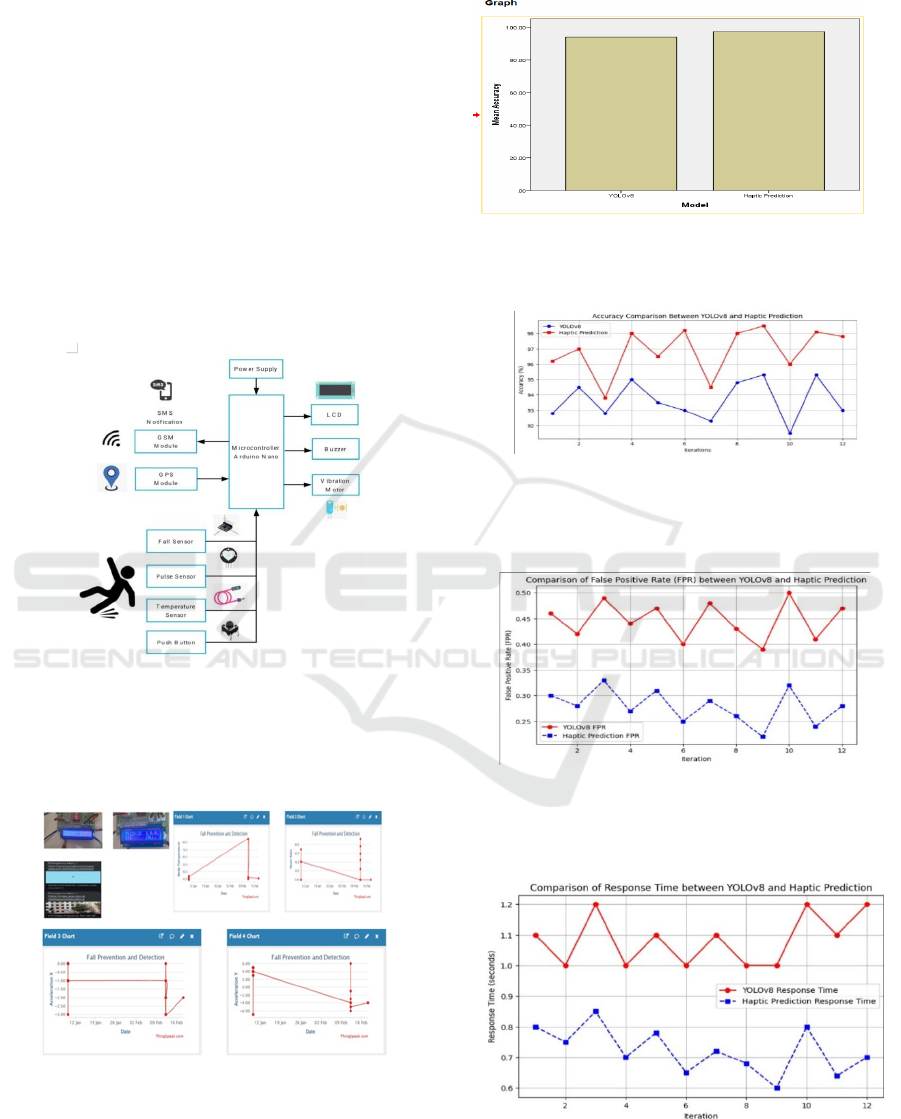
The system architecture of the fall prevention
and intimation system using haptic technology is
shown in Figure 2. Similarly, the implementation and
data visualization of the fall prevention and
detection system is shown in Figure 3. Haptic
Prediction delivers the accuracy of 98.50% when
compared to YOLOv8’s 95.30% is shown in Figure
4 and Figure 5. False positive rate between YOLOv8
and Haptic Prediction models over multiple
iterations is shown in Figure 6. in which Haptic
Prediction demonstrates lower fluctuating false
positive rates of 0.33. Haptic Prediction
demonstrates higher response time of 0.60 Sec when
compared to YOLOv8 is shown in Figure 7.
Figure 2: The system architecture of the fall prevention
and intimation system using haptic technology. It
integrates an Arduino Nano with sensors for fall detection,
pulse, and temperature monitoring. Alerts are sent via a
buzzer, LCD, vibration motor, and GSM/GPS modules.
Figure 3: The implementation and data visualization of the
fall prevention and detection system. It includes hardware
setup with LCD displays (a) and real-time monitoring
graphs for body temperature, heart rate, and acceleration
in X and Y axes (b – e) using ThinkSpeak. These
visualizations help in analyzing fall patterns and system
responses.
Figure 4: This Bar Graph represents the accuracy between
YOLOv8 and Haptic Prediction with an accuracy of
98.50% when compared to YOLOv8’s 95.30%.
Figure 5: The graphs compare the accuracy of YOLOv8
and Haptic Prediction models over multiple iterations.
Haptic Prediction demonstrates higher accuracy compared
to the Haptic Prediction models.
Figure 6: The graph compares False positive rate between
YOLOv8 and Haptic Prediction models over multiple
iterations. Haptic Prediction demonstrates lower
fluctuating false positive rates of 0.33.
Figure 7: This graph compares the response time of
YOLOv8 and Haptic Prediction models across multiple
iterations. Haptic Prediction demonstrates higher response
time of 0.60 Sec.
ICRDICCT‘25 2025 - INTERNATIONAL CONFERENCE ON RESEARCH AND DEVELOPMENT IN INFORMATION,
COMMUNICATION, AND COMPUTING TECHNOLOGIES
636

6 DISCUSSIONS
The proposed haptic-based fall forecast framework
exhibits fundamentally preferable precision and
responsiveness over the current YOLOv8-based fall
discovery technique. Utilizing an autonomous
example T-test, the haptic framework shows further
developed fall expectation productivity by breaking
down movement sensor information progressively.
The framework is streamlined at a particular
recurrence reach to upgrade recognition accuracy
and diminish reaction time. The outcomes acquired
in this exploration show higher precision and
quicker cautions contrasted with previous studies.
The total gain obtained for haptic-based fall
identification technique is 98.5 % and for YOLOv8-
based fall identification technique is 95.3 %. A
precision improvement of around 4.5 % is achieved.
C.Rajan, et.al, 2023; W. Kemmler, 2020 A novel
design of a haptic-based fall prevention system is
created to improve fall prediction accuracy and
guarantee continuous client wellbeing. The
consequences of the proposed technique show
further developed fall location precision of 98.5 %
and diminishing misleading problems and improving
reaction time. M. Tavakoli, 2022 The framework
incorporates accelerometer and whirligig sensors
with cutting edge prescient calculations to recognize
fall-like developments. The proposed haptic input
instrument will offer additional opportunities for the
advancement of superior execution continuous fall
avoidance frameworks. Pradeep, R., 2019; A. Bohr
and K. Memarzadeh, 2020 For further developed
responsiveness, a minimal wearable gadget with
movement sensors and haptic actuators is conceived.
The proposed framework uses a mix of sensor
combination and AI to precisely order
developments. The framework presents a continuous
checking arrangement utilizing a mix of prescient
examination and haptic cautions for fall
counteraction applications. The movement sensors
constantly track client developments, while the
prescient calculation distinguishes fall dangers and
triggers cautions. Tareq Z. Ahram and Christianne S.
Falcão, 2022 The fall anticipation framework comes
in different wearable structures, including
wristbands, belts, and shrewd footwear. Wearable
solutions with integrated haptic criticism guarantee
better adherence and proactive fall anticipation.
The limitations of this plan remember the reliance
for sensor exactness and possible misleading up-
sides in identifying fall-like developments utilizing
the proposed haptic-based fall counteraction
framework. Because of the intricacy of constant
movement examination, execution time might be
longer while handling huge datasets. The
framework's wearable nature guarantees
convenience, smaller size, and reasonableness,
making it appropriate for older considerations,
medical clinic observing, and modern wellbeing
applications. In future examinations might
investigate progressed sensor combination strategies
and artificial intelligence driven prescient models to
upgrade fall identification precision and lessen
reaction time.
7 CONCLUSIONS
The fall detection system including the current
YOLOv8 model and the proposed haptic-based
forecast technique was planned and broke down.
The exactness of the proposed haptic-based
framework is fundamentally better compared to the
YOLOv8 model in foreseeing falls utilizing
continuous sensor information. The YOLOv8 model
accomplished a precision going from 91.5 % to 95.3
%, while the haptic-based forecast technique showed
improved exactness from 93.8 % to 98.5 %. The
standard deviation for the YOLOv8 technique is
1.84068, while the standard deviation for the
proposed haptic-based expectation model is 0.95537,
showing further developed dependability in
recognizing falls.
REFERENCES
M. A. Kuhail, Advances, Applications and the Future of
Haptic Technology. Springer Nature.
T. Yang, X. Lu, L. Yang, M. Yang, J. Chen, and H. Zhao,
“Application of MRI image segmentation algorithm
for brain tumors based on improved YOLO,” Front
Neurosci, vol. 18, p. 1510175, 2024.
H. Jing et al., “Development and Validation of a
Predictive Model for Fall Risk in Pre-Frail Older
Adults,” Res Gerontol Nurs, vol. 18, no. 1, pp. 29–39,
Jan. 2025.
Singh, Navneet Pratap, R. Ravichandran, Soumi Ghosh,
Priya Rana, Shweta Chaku, and Jagendra Singh.
"Enhancing Healthcare Security Using IoT-Enabled
with Continuous Authentication Using Deep
Learning." In International Conference on Electrical
and Electronics Engineering, pp. 275-289. Singapore:
Springer Nature Singapore, 2023.
L. Liu, Y. Sun, Y. Li, and Y. Liu, “A hybrid human fall
detection method based on modified YOLOv8s and
AlphaPose,” Sci Rep, vol. 15, no. 1, p. 2636, Jan.
2025.
C.-W. Kang, Z.-K. Yan, J.-L. Tian, X.-B. Pu, and L.-X.
Fast and High Precision Human Fall Prevention and Intimation Using Haptic Technology
637

Wu, “Constructing a fall risk prediction model for
hospitalized patients using machine learning,” BMC
Public Health, vol. 25, no. 1, p. 242, Jan. 2025.
J. Stuby, P. Leist, N. Hauri, S. Jeevanji, M. Méan, and C.
E. Aubert, “Intervention to systematize fall risk
assessment and prevention in older hospitalized
adults: a mixed methods study,” BMC Geriatr, vol.
25, no. 1, p. 45, Jan. 2025.
AS Kalyana Kumar, et.al, “Artificial Intelligence in
Digital Currency Security: Transforming Global
Marketing in the Blockchain Era”, Cuestiones de
Fisioterapia, Vol.54, No.3, pp. 1907-1928, February
2025.
E. Cubo et al., “Cost-utility analysis of a coadjutant
telemedicine intervention for fall prevention in
Parkinson’s disease,” Eur J Neurol, vol. 32, no. 1, p.
e16561, Jan. 2025.
C. Chen, H. Song, H. Xu, M. Chen, Z. Liang, and M.
Zhang, “Fall risk factors and mitigation strategies for
hematological malignancy patients: insights from a
qualitative study using the reason model,” Support
Care Cancer, vol. 33, no. 2, p. 118, Jan. 2025.
D. Gnutt et al., “Stability Effect of Quinary Interactions
Reversed by Single Point Mutations,” J Am Chem
Soc, vol. 141, no. 11, pp. 4660–4669, Mar. 2019.
Banu, M. Sheerin, E. Baraneetharan, B. Vinothkumar, and
Muruganantham Ponnusamy. "ADVANCEMENT IN
CIRCUIT TECHNOLOGIES FOR ENERGY
HARVESTING SYSTEMS."
T. Ishigaki et al., “Changes in glenohumeral range of
motion by repetitive pitching and their relationship
with arm speed during pitching,” Sports Biomech, pp.
1–13, Jan. 2025.
J. Gudin, M. Sakr, J. Fason, and P. Hurwitz, “Piezo Ion
Channels and Their Association With Haptic
Technology Use: A Narrative Review,” Cureus, vol.
17, no. 1, p. e77433, Jan. 2025.
K. Pacheco-Barrios, J. Ortega-Márquez, and F. Fregni,
“Haptic Technology: Exploring Its Underexplored
Clinical Applications-A Systematic Review,”
Biomedicines, vol. 12, no. 12, Dec. 2024, doi:
10.3390/biomedicines12122802.
Meenakshi Sharma, et.al, “IoT-Embedded Deep Learning
Model for Real-Time Remote Health Monitoring and
Early Identification of Diseases”, IEEE Explorer -3rd
International Conference on Technological
Advancements in Computational Sciences (ICTACS),
2023.
A. Musa, Predictive Technology: Balancing Privacy With
Possibility. Recorded Books, 2024.
J. Chadokiya et al., “Advancing precision cancer
immunotherapy drug development, administration,
and response prediction with AI-enabled Raman
spectroscopy,” Front Immunol, vol. 15, p. 1520860,
2024.
X. Hu, Q. He, H. Ma, J. Li, Y. Jiang, and K. Wang,
“Flexible Eyelid Pressure and Motion Dual-Mode
Sensor Using Electric Breakdown-Induced
Piezoresistivity and Electrical Potential Sensing,”
ACS Appl Mater Interfaces, Jan. 2025, doi:
10.1021/acsami.4c21230.
Singh, Jagendra, Navneet Pratap Singh, B. Vinothkumar,
Nitin Arvind Shelke, Deepak Sharma, and Abbas
Thajeel Rhaif Alsahlanee. "Deep Learning Model for
Predicting Rice Plant Disease Identification and
Classification for Improving the Yield." In
International Conference on Intelligent Systems
Design and Applications, pp. 138-147. Cham: Springer
Nature Switzerland, 2023.
N. T. Newaz and E. Hanada, “An Approach to Fall
Detection Using Statistical Distributions of Thermal
Signatures Obtained by a Stand-Alone Low-
Resolution IR Array Sensor Device,” Sensors (Basel),
vol. 25, no. 2, Jan. 2025, doi: 10.3390/s25020504.
M. Szántó et al., “Developing a Health Support System to
Promote Care for the Elderly,” Sensors (Basel), vol.
25, no. 2, Jan. 2025, doi: 10.3390/s25020455.
O. Korostynska and A. Mason, Advanced Sensors for
Real- Time Monitoring Applications. MDPI, 2021.
Dr.C.Rajan, et.al, “A Deep Learning based Tire Quality
Inspection System”, International Journal of
Advanced Engineering Science and Information
Technology (IJAESIT), ISSN: 2349-3216 Vol.6, No.6,
June 2023.
W. Kemmler, M. Fröhlich, and H. Kleinöder, Whole-body
Electromyostimulation: A Training Technology to
Improve Health and Performance in Humans?
Frontiers Media SA, 2020.
M. Tavakoli, S. Farokh Atashzar, A. L. Trejos, S. DiMaio,
and P. M. Pilarski, Robotics, Autonomous Systems
and AI for Nonurgent/Nonemergent Healthcare
Delivery During and After the COVID-19 Pandemic.
Frontiers Media SA, 2022.
Pradeep, R., B. Vinothkumar, M. Udhayakumar, and S.
Dhanalaksmi. "Comparative Analysis of OOK, BPSK,
DPSK and PPM Modulation Techniques for
Intersatellite Free-Space Optical Communication."
system 6, no. 02 (2019).
A. Bohr and K. Memarzadeh, Artificial Intelligence in
Healthcare. Academic Press, 2020.
Tareq Z. Ahram and Christianne S. Falcão, Human Factors
and Wearable Technologies. AHFE International,
2022.
ICRDICCT‘25 2025 - INTERNATIONAL CONFERENCE ON RESEARCH AND DEVELOPMENT IN INFORMATION,
COMMUNICATION, AND COMPUTING TECHNOLOGIES
638
