
Toxic Comment Classification and Mitigation in Social Media
Platforms
Sunitha Sabbu, Rajani D., Shaik Jaheed D., Sreeja Y. and Venkata Naga Hemanth Reddy B.
Department of CSE (AI & ML), Srinivasa Ramanujan Institute of Technology, Rotarypuram Village, B K Samudram
Mandal, Anantapuramu - 515701, Andhra Pradesh, India
Keywords: Toxic Comments, NLP, Deep Learning, LSTM, Embeddings.
Abstract: Toxic online discussions have become a growing concern on digital platforms, necessitating automated
solutions for detecting harmful content. This paper presents a Deep learning-based system that uses NLP
methods to classify comments. Comments is categorized into toxic or non-toxic-are recognized by the system.
A LSTM neural network-based classifier, integrated with Word2Vec skip-gram embedding and a fully
connected network, is employed to process and classify user-generated comments. To facilitate real-time
toxicity detection, we integrated the trained model with Twitter clone that allows users to input comments
and receive toxicity predictions instantly. The dataset, sourced from a publicly available toxic comment
corpus, consists of over 110,480 comments, providing a robust foundation for training. Model evaluation
demonstrates high accuracy and Precision, with misclassification challenges observed in sarcasm and implicit
toxicity detection. This research contributes to the field of online content moderation, offering an efficient
and scalable approach for classifying comments. Future enhancements include advanced deep learning
models and embedded context to improve nuanced toxicity identification in internet-based discussions.
1 INTRODUCTION
The exponential rise in digital communication
platforms has significantly transformed how people
interact, fostering dynamic social exchanges.
However, this growth has also led to the proliferation
of toxic comments, which can create hostile online
environments and discourage meaningful dialogue.
The sheer volume of user-generated content makes
manual moderation impractical, necessitating
automated systems capable of effectively detecting
and mitigating toxic language.
Traditional rule-based systems, which rely on
keyword matching, struggle to capture the complexity
of language, including sarcasm and contextual
nuances. Deep learning models, particularly those
employing statistical and deep learning approaches,
provide a more dynamic and scalable solution. By
analyzing patterns in large datasets, these models can
effectively classify comments into toxic and non-
toxic.
This study presents an automated toxic comment
detection system using a LSTM-based Classifier
Combined with Word2vec skip-gram embedding to
effectively classify toxic comments. The model is
trained on a large dataset of over 110,480 comments
labeled for toxicity. To enhance usability, we
integrated the trained model with twitter clone,
allowing users to input comments and receive real-
time toxicity predictions.
By integrating real-time toxicity detection with
twitter clone, this approach provides a practical
solution for moderating online discussions The
LSTM approach offers computational efficiency
while maintaining high accuracy in toxicity
classification.
This paper is organized as follows: Section II
discusses related work on toxic comment detection,
comparing traditional and modern approaches.
Section III outlines the methodology, including data
preprocessing, model architecture, and the model
deployment. Section IV presents experimental
results, discussing accuracy, precision. Section V
concludes the study and suggests future
enhancements, such as incorporating advance deep
learning techniques and expanding the dataset for
improved detection of nuanced toxicity.
Sabbu, S., D., R., D., S. J., Y., S. and B., V. N. H. R.
Toxic Comment Classification and Mitigation in Social Media Platforms.
DOI: 10.5220/0013903100004919
Paper published under CC license (CC BY-NC-ND 4.0)
In Proceedings of the 1st International Conference on Research and Development in Information, Communication, and Computing Technologies (ICRDICCT‘25 2025) - Volume 3, pages
627-631
ISBN: 978-989-758-777-1
Proceedings Copyright © 2025 by SCITEPRESS – Science and Technology Publications, Lda.
627

2 RELATED WORKS
Toxic comment detection has been a prominent
research area within Natural Language Processing
(NLP) and Machine Learning (ML), with various
approaches explored to enhance classification
accuracy and fairness in automated moderation
systems. Early methods relied on rule- based systems
and keyword filtering, which struggled to handle
contextual variations, sarcasm, and evolving
language patterns. Recent advancements have shifted
towards ML and deep learning models, which provide
more adaptable and robust solutions by learning
complex patterns from large datasets.
Several studies have examined the impact of
social networks on user behavior and the need for
automated moderation systems to address toxic
interactions. For instance, Arab and Díaz investigated
the influence of social platforms on adolescent
behavior, emphasizing the importance of automated
systems in minimizing harmful content. Risch and
Krestel demonstrated the effectiveness of deep
learning models for sentiment analysis and toxic
comment detection by leveraging neural networks to
capture contextual nuances. Meanwhile, Modha et al.
highlighted the challenges of hate speech detection in
Indo-European languages, underscoring the
limitations of traditional classifiers in multilingual
settings.
Other research efforts have explored sentiment-
aware models and algorithmic efficiency. Brassard-
Gourdeau and Khoury integrated sentiment analysis
into toxicity classification, improving detection
accuracy by considering emotional context. In
contrast, Kiilu et al. utilized Naïve Bayes algorithms
for hate speech detection on Twitter, demonstrating
computational efficiency in low-resource
environments. Miró-Llinares et al. developed a
specialized algorithm for detecting hate speech in
digital microenvironments, highlighting the
importance of domain-specific adaptation in toxicity
classification.
Multilingual toxicity detection has also been a
critical focus, as cultural and linguistic variations
influence how toxic comments are expressed.
Almatarneh et al. compared multiple supervised
classifiers for identifying hate speech in English and
Spanish tweets, showcasing the challenges of
multilingual model development. Davidson et
al.examined bias issues in automated hate speech
detection models, advocating for fairness-aware NLP
techniques to minimize algorithmic discrimination.
Venkit and Wilson further analyzed biases against
people with disabilities, emphasizing the need for
inclusive and equitable toxicity detection systems.
Recent innovations in feature engineering and
model architecture have also contributed to improved
toxicity classification. Shtovba et al. introduced
syntactic dependency-based approaches that leverage
grammatical structures for more accurate
classification. Qader et al. analyzed Bag of Words
(BoW) methods, discussing their applications and
limitations in text classification. Li et al. reviewed
advancements in feature selection, with a focus on
TF-IDF-based models for efficient text
representation. Robertson provided foundational
insights into Inverse Document Frequency (IDF),
explaining its role in enhancing text vectorization and
information retrieval.
Building on these prior studies, this research
integrates logistic regression with TF-IDF
vectorization for efficient real-time toxicity detection.
Unlike deep learning models that require extensive
computational resources, the proposed system
balances accuracy and scalability while leveraging
user feedback for continuous model adaptation. This
hybrid approach provides a practical solution for
moderating online discussions while maintaining
high classification accuracy Future studies will
examine hybrid models that mix deep learning
architectures with conventional machine learning
techniques to improve contextual understanding in
toxicity detection across diverse online environments.
3 METHODOLOGY
3.1 Dataset
This study utilizes a publicly accessible dataset
specifically designed for toxic comment
classification. It consists of approximately 110,480
user-generated comments that are labeled as 0(non-
toxic), 1(toxic). Since each comment can be
associated with either 0 or 1 labels, the classification
problem is treated as a binary-label classification
task. To ensure the model's effectiveness across
various scenarios, the dataset encompasses a diverse
range of comments sourced from different online
platforms, thus maintaining a balanced distribution of
toxic and non-toxic instances.
To enhance the classification model's accuracy,
the dataset undergoes comprehensive pre-processing.
This involves several crucial steps, including the
removal of duplicate entries and the handling of
missing values to ensure data integrity. Furthermore,
text normalization is performed to create uniformity,
ICRDICCT‘25 2025 - INTERNATIONAL CONFERENCE ON RESEARCH AND DEVELOPMENT IN INFORMATION,
COMMUNICATION, AND COMPUTING TECHNOLOGIES
628
involving the elimination of special characters,
punctuation marks, and extraneous symbols that do
not contribute to the classification task. These pre-
processing measures help in standardizing the text
and reducing noise, ultimately leading to improved
model performance.
3.2 Data Preprocessing
To improve model performance, the following
preprocessing steps are applied:
Lowercasing: Converts all text to lowercase to ensure
uniformity.
Removing special characters and punctuation:
Eliminates non-alphanumeric symbols that do not
contribute to classification.
Expanding contractions: Converts common
contractions (e.g., "can't" → "cannot") into their full
forms.
Stopword removal: Filters out frequently used
words that do not add significant meaning.
Tokenization: Splits text into individual words to
enhance feature extraction.
Word2Vec Skip-gram Embedding: Converts the
processed text into numerical feature vectors for
classification.
After completing these pre-processing steps, this
stratified split ensures that both subsets maintain the
same proportion of toxicity categories, enabling
accurate model evaluation and performance
assessment.
3.3 Model Architecture
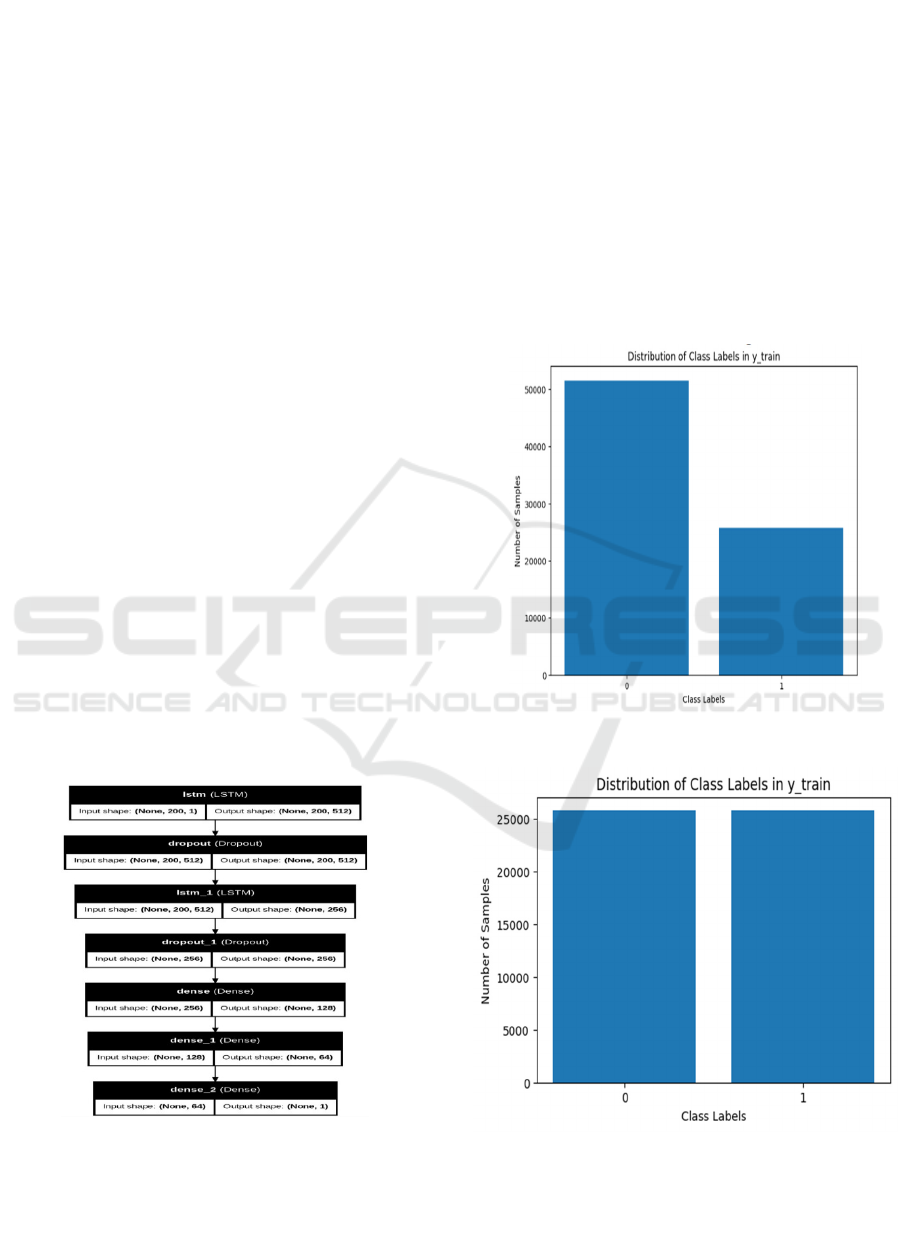
Figure 1: Architecture of deep learning model.
This Figure 1 employs a LSTM classifier with
word2vec skip-gram embedding, where each toxicity
category is treated as an independent binary
classification task. The model architecture is designed
to ensure computational efficiency, scalability, and
high classification accuracy while maintaining
interpretability.
Class Imbalance: There is an imbalance in target
class where the non-toxic instances are high
compared to toxic instances. To balance this Random
under-sampling technique is used. This technique
randomly removes the non-toxic instances and makes
the target class balance.
As shown in Figure 2, the original dataset exhibits
a significant class imbalance, which can negatively
impact model performance. However, after applying
resampling techniques, the class distribution becomes
more balanced, as illustrated in Figure 3.
Figure 2: Class imbalance visualization.
Figure 3: Balanced class distribution after resampling.
Toxic Comment Classification and Mitigation in Social Media Platforms
629

• Feature Extraction: Converting text data into
numerical feature vectors that reflect the
importance of words relative to the dataset.
• Hyperparameter Tuning: Hyperparameter
Tuning is performed by adjusting the
parameters of a model and observing the
metrics.
This systematic tuning process enhances the
model's performance by identifying the optimal
configuration for each classification task. Overall,
this architecture balances accuracy and
interpretability, making it a suitable choice for real-
time toxic comment detection.
3.4 Model Deployments
The trained model is integrated with twitter clone, to
facilitate real-time comment classification. The
system consists of the following features:
• User Input Interface: Allows users to post
and submit comments for toxicity analysis.
• Prediction Engine: Processes input text and
toxicity predictions based on the trained
model. Figure 4 Shows the User Interface.s
Figure 4: User interface.
3.5 Toxic Comment Mitigation
Toxic comments are mitigated by showing alert
message and preventing the display to the users for
healthier interactions. Real Time Comment
Mitigation Shown in Figure 5.
Figure 5: Real time comment mitigation.
4 RESULTS AND ANALYSIS
The performance of the LSTM-based toxicity
detection model was evaluated using a stratified test
set, ensuring a balanced representation of all toxicity
categories. To assess the model's effectiveness, key
classification metrics were employed, including
accuracy, precision, recall, and F1-score. The model
demonstrated high accuracy in distinguishing
between toxic and non-toxic comments, correctly
classifying the majority of test samples. In terms of
precision, the model excelled at identifying explicit
toxic content but occasionally misclassified non-toxic
comments as toxic, indicating room for improvement
in reducing false positives. The recall metric revealed
the model's capability to correctly identify a
significant proportion of toxic comments, although it
faced challenges in recognizing nuanced or context-
dependent toxicity. The model continuously
performed well in classification, according to the F1-
score, which weighs precision and recall. Overall, the
evaluation indicates that while the model effectively
detects explicit toxicity, it requires further refinement
to accurately classify subtle and implicit toxic
expressions.
5 DISCUSSION AND FUTURE
WORK
5.1 Discussion
The results demonstrate that combining LSTM with
Word2Vec skip-gram embedding is an effective
approach for comment classification. The system
efficiently classifies comments into toxic or non-
toxic, enabling automated moderation on online
platforms. This approach provides a balance of
interpretability and computational efficiency, making
it suitable for real-time applications. Additionally, the
integration of a twitter clone web interface allows
seamless user interaction and real-time toxicity
classification.
However, several challenges were identified. The
model struggles with implicit toxicity and sarcasm,
which require contextual understanding beyond the
capabilities of traditional machine learning models,
leading to false negatives. These limitations suggest
the need for advanced techniques, such as contextual
embeddings and deep learning models, to improve
nuanced toxicity detection and reduce
misclassification rates.
ICRDICCT‘25 2025 - INTERNATIONAL CONFERENCE ON RESEARCH AND DEVELOPMENT IN INFORMATION,
COMMUNICATION, AND COMPUTING TECHNOLOGIES
630

5.2 Future Work
To enhance the performance of the toxicity detection
model, several improvements are proposed.
Advanced deep learning model such as BERT can be
implemented to capture contextual nuances and
implicit toxicity more effectively. Hybrid models
combining rule-based linguistic features with
machine learning algorithms can improve sarcasm
detection and contextual understanding. For
scalability, the model can be optimized for real-time
deployment with cloud-based APIs to support high-
throughput applications. Additionally, integrating
user feedback through active learning frameworks
will enable continuous model adaptation to evolving
language patterns. These enhancements will
significantly improve the model's accuracy,
contextual understanding, and scalability in real-
world toxicity detection scenarios.
6 CONCLUSIONS
The increasing prevalence of toxic comments on
online platforms necessitates robust automated
moderation systems. In order to efficiently identify
comments as either harmful or non-toxic, this paper
proposes a deep learning-based method for detecting
toxic remarks utilizing LSTM and Word2Vec skip-
gram feature extraction. The model is integrated with
a twitter clone web application, allowing real-time
prediction.
According to study findings, the model is highly
accurate in identifying toxic language and performs
well in detecting toxicity. Despite the promising
results, limitations remain, particularly in handling
rare toxicity categories and complex language
structures. Future improvements include advanced
deep learning models for better contextual
understanding, data augmentation techniques and
hybrid approaches integrating linguistic rules with
machine learning models.
Overall, this research advances by presenting an
automated content moderation by providing an
efficient, scalable, and adaptive framework for real-
time toxic comment detection, enhancing the safety
and quality of online interactions.
REFERENCES
D. M. Blei, A. Y. Ng, and M. I. Jordan, "Latent Dirichlet
Allocation," J. Mach. Learn. Res., vol. 3, pp. 993–1022,
2003.
D. Q. Nguyen, T. Vu, and A. T. Nguyen, "BERTweet for
English Tweets," EMNLP, Assoc. Comput. Linguistics,
Cedarville, OH, USA, Nov. 2020.
E. Brassard-Gourdeau and R. Khoury, "Sentiment
Information for Toxicity Detection," Proc. Abusive
Lang. Online Workshop, Florence, Italy, Aug. 2019.
F. Miró-Llinares, A. Moneva, and M. Esteve, "Algorithm
for Hate Speech Detection in Microenvironments,"
Crime Sci., vol. 7, p. 15, 2018.
J. Risch and R. Krestel, "Toxic Comment Detection in
Online Discussions," Deep Learning-Based Sentiment
Analysis, Springer, 2020.
K. K. Kiilu, G. Okeyo, R. Rimiru, and K. Ogada, "Naïve
Bayes Algorithm for Hate Speech Detection," Int. J.
Sci. Res. Publ., vol. 8, pp. 99–107, 2018.
L. E. Arab and G. A. Díaz, "Social Network Impact on
Adolescence," Rev. Medica Clin. Condes, vol. 26, pp.
7–13, 2015.
P. Wiemer-Hastings, "Latent Semantic Analysis," Encycl.
Lang. Linguist., vol. 2, pp. 1–14, 2004.
S. Robertson, "On Theoretical Arguments for Inverse
Document Frequency," J. Doc., vol. 60, pp. 503–520,
2004.
S. Modha, T. Mandl, P. Majumder, and D. Patel, "Hate
Speech Identification in Indo-European Languages,"
FIRE ’19, Kolkata, India, Dec. 2019.
S. Almatarneh, P. Gamallo, F. J. R. Pena, and A. Alexeev,
"Classifiers for Hate Speech in English and Spanish
Tweets," Digit. Libr. Crossroads, vol. 11853, pp. 25–
30, 2019.
S. Shtovba, O. Shtovba, and M. Petrychko, "Toxic
Comment Detection Using Syntactic Dependencies,"
CEUR Workshop 2353, Zaporizhzhia, Ukraine, Apr.
2019.
T. Davidson, D. Warmsley, M. Macy, and I. Weber,
"Automated Hate Speech Detection and Offensive
Language Classification," arXiv, 2017.
T. Mikolov, K. Chen, G. Corrado, and J. Dean, "Word
Representations in Vector Space," arXiv, 2018.
W. A. Qader, M. M. Ameen, and B. I. Ahmed, "Bag of
Words Overview: Applications and Challenges," Int.
Eng. Conf., Erbil, Iraq, Jun. 2019.
Y. Li, T. Li, and H. Liu, "Advances in Feature Selection and
Applications," Knowl. Inf. Syst., vol. 53, pp. 551–577,
2017.
Toxic Comment Classification and Mitigation in Social Media Platforms
631
