
Experimental Study on Mechanical Strength Characteristics of
Natural Fiber and Fly Ash Composite Materials for Versatile
Applications
P. Manikandan
1
, S. Rahul
1
, P. Chakravarthi
1
, S. Gokul
2
, M. Dharani Krishnan
2
and B. Dhanush
2
1
Department of Mechanical Engineering, K.S.R College of Engineering, Tiruchengode‑637215, Tamil Nadu, India
2
Department of Mechanical engineering, K.S.R Institute for Engineering and Technology, Tiruchengode, Tamil Nadu, India
Keywords: Pineapple Leaf Fiber (PALF), fly‑Ash (FA), Natural Fibers, Tensile Strength, Compressive Strength, Flexural
Strength, Impact Strength, Composite Material.
Abstract: The aim of this study is to investigate the mechanical strength characteristics of composite materials made
from natural fibers and fly ash (FA), with a focus on evaluating their suitability for versatile industrial
applications. Pineapple Leaf Fiber (PALF), extracted from pineapple leaves and fly ash (FA) Group 1
Different weight percentages of FA (3%, 6%, and 9%) are added to PALF-reinforced epoxy composites with
varied PALF concentrations (10%, 20%, and 30%) using the hand layup procedure. In order to create the
composite, epoxy resin and hardener are mixed, and PALF and fly ash are added in different weight ratios
(for example, 30% PALF and 5% fly ash for set 1, 25% PALF and 10% fly ash for set 2). After giving the
mixture a good stir and vacuum-degassing it to eliminate any air bubbles, it is placed into a heated mold and
squeezed for 30 minutes at 120°C and 10 MPa pressure Result: It has the maximum tensile, flexural, and
compressive strengths of 21.77 MPa, 68.65 MPa, and 23.27 MPa, respectively. The impact strength, which is
0.30 kJ/m2. Significance is 0.018. Conclusion: Natural fibers were found to have mechanical properties with
good results of hardness, tensile strength, and flexural strength. Fly ash composites show comparable
properties to ash-free composites. Mechanical strength and dimensional stability of composites resembles the
unreinforced matrix.
1 INTRODUCTION
Natural fillers are used extensively in composite
manufacturing, yet they are very water-absorbent, a
critical problem. To counteract this, researchers aim
at using filler materials with enhanced mechanical
strength and reduced moisture uptake, hence suitable
for load-bearing applications such as aerospace and
automotive components (Dalvand et al., 2020).
displaying a tensile strength of around 12.75 MPa.
These values render PALF a very suitable candidate
for reinforcing polymer composites in structural
applications (Pramanik et al., 2024). Biodegradability
of natural fibers, however, affects composite
longevity, and enhancement strategies must be
devised. The two important strategies are
hybridization of fibers and the addition of fillers to
enhance strength, durability, and general properties
(Nagaraja et al.,2024). Hybridization refers to the union
of various fibers or fillers to offer superior
mechanical and thermal properties, and nano-fillers
create hybrid nano composites with enhanced
dispersion and adhesion (Tasgin et al., 2024).
PALF/Fly-Ash composites showed maximum tensile
strength (14.025 MPa). FA, red mud, and other
industrial wastes as raw material for polymer matrices
is a new field, where wastes enhance mechanical
properties, surface finish, and water resistance in
fiber-reinforced composites. FA, a by-product of coal
combustion, is environmentally harmful in the form
of air, water, and soil pollution, and hence sustainable
use is required (Mishra). Use of FA of 10% and 5% in
polymer composites not only minimizes pollution
problems but also enhances composite properties.
Coupling with nanotechnology and innovative
manufacturing techniques further improves
composite performance, which renders them
appropriate for different applications (Mohammed et
al., 2024). The total number of articles published on
this topic over the last five years is more than 250
papers in IEEE Xplore, 135 papers in Google Scholar,
Manikandan, P., Rahul, S., Chakravarthi, P., Gokul, S., Krishnan, M. D. and Dhanush, B.
Experimental Study on Mechanical Strength Characteristics of Natural Fiber and Fly Ash Composite Materials for Versatile Applications.
DOI: 10.5220/0013900300004919
Paper published under CC license (CC BY-NC-ND 4.0)
In Proceedings of the 1st International Conference on Research and Development in Information, Communication, and Computing Technologies (ICRDICCT‘25 2025) - Volume 3, pages
483-490
ISBN: 978-989-758-777-1
Proceedings Copyright © 2025 by SCITEPRESS – Science and Technology Publications, Lda.
483
and 110 papers in academia.edu. This process is
generally softer and more elastic. Coconut and
banana fiber constitute the reinforcing process, and it
is in a discontinuous form. It usually possesses greater
power compared to the matrix process. The properties
of 0%, 1%, 3%, and 5% of nano material imposition
were compared. Compared to it, a plate containing
5% nano silicax possesses ultimate (tensile &
flexural) strength. The plate with 1% nanosilica has
the highest impact strength (Er. Amit Kumar Ahirwar et
al., 2015). Properties were verified under the Instron
material testing system. Out of the test, it was proved
among samples that 30 wt% of composites containing
sisal fibers show the maximum tensile strength and
flexural strength of 85.5 MPa and 85.79 MPa,
respectively. The impact strength has been found to
be maximum for 40 wt% sisal fiber, i.e., 24.5 kJ/m²
(Raghavendra et al., 2016). The leaffibers have exhibits
a wide variation in strength of tensile vary from 230
to 1627 MPa, Young's modulus ranging from 0.2 to
22 GPa, and density ranging from 0.8 to 1.4 g/cm³.
TS values are comparatively low compared to
synthetic fibers such as E-glass fiber, which has a TS
of approximately 2000–3500 Mpa (Kiruthika et al.,
2024). A Universal Testing Machine (UTM) was used
to perform tensile testing in accordance with ASTM
D638. According to the findings, the composite with
10% fly ash and 6% banana fiber had the maximum
tensile strength, measuring 45.80 Mpa(Jitendra Hole1).
In comparison to a volume fraction of 0.5% on 10%
fly ash and a volume fraction of 1% on 10% fly ash,
the splitting tensile strength for a volume fraction of
1% on 5% fly ash is superior. The range rises to
108.35% from 38.90% (Makesh et al., 2016). The
conclusion that can be drawn from the findings is that
the novel fly ash filler that is reinforced with sun
hemp fiber composite demonstrates a higher tensile
strength with a mean value of 2.5312 g compared to
the sun hemp fiber composite, which has a value of
3.5458 g (Sanjay, G., and R. Sundarakannan., 2024). As
the percentage of fly ash reinforcement increased, the
Al7075-fly ash composite's UTS and hardness rose
from 140 to 173 MPa and from 66 to 75 HV,
respectively. An error analysis is also provided
(Sanjay, G., and R. Sundarakannan., 2024).The reference
paper deals with the addition of pineapple leaf fiber
(PALF) and fly ash (FA) filler in developing green
composites with improved mechanical and water-
resistant properties for application in biomedical
purposes. Different weight percentages of FA (3%,
6%, and 9%) are added to PALF-reinforced epoxy
composites with varying PALF contents (10%, 20%,
and 30%) using the hand layup method. Tensile
strength is increased by up to 65.3% at this level when
up to 6 weight percent FA is added, according to
mechanical parameters including impact, flexural,
and tensile strength (Meena et al., 2023).
From the previous findings, the composite
fabrication involves mixing epoxy resin with the
hardener and incorporating PALF and fly ash in
varying weight ratios—30% PALF and 5% fly ash for
set 1, 25% PALF, and 10% fly ash for set 2. The
mixture is well stirred, vacuum degassed to remove
air bubbles, and then cast in preheated mound,
pressed under 120°C for 10 MPa pressure for 30
minutes.
2 MATERIALS AND METHODS
Research work was carried out in the KSRIET
Strength of Materials lab. This measures the
performance of the natural fibers from the green
coconut fruit to strengthen plastic materials like High
Impact Polystyrene (HIPS). However, they do not
bond well with plastics. Chemical treatments like
sodium hydroxide (NaOH) and blenching help clean
and roughen the fibers, but the bonding may still be
weak (Ramanjaneyulu et al., 2024). The PALF and Fly-
Ash in use must follow a 30% and 25% fiber content
and 5% and 10% of Fly-Ash to obtain strength
without brittleness of the material. Treatment of the
fibers with NaOH improves adhesion, while
hydrophobic coating reduces water uptake. Proper
alignment of the fibers will ensure durability. The
resultant material is strong ecological and can be used
in construction, automotive, and packaging
industries.
In this current research, the composite material
having the low amount of banana fiber (5%) and 15%
of coconut coir has been taken as an input. In this
group they got low strength and low quality of fiber.
by adding the PALF (25% and 30%), Fly-Ash (10%
5%) and also adding epoxy resin of 250 mL in the
composite material, they have a high strength and it
can be reduce the ductility.
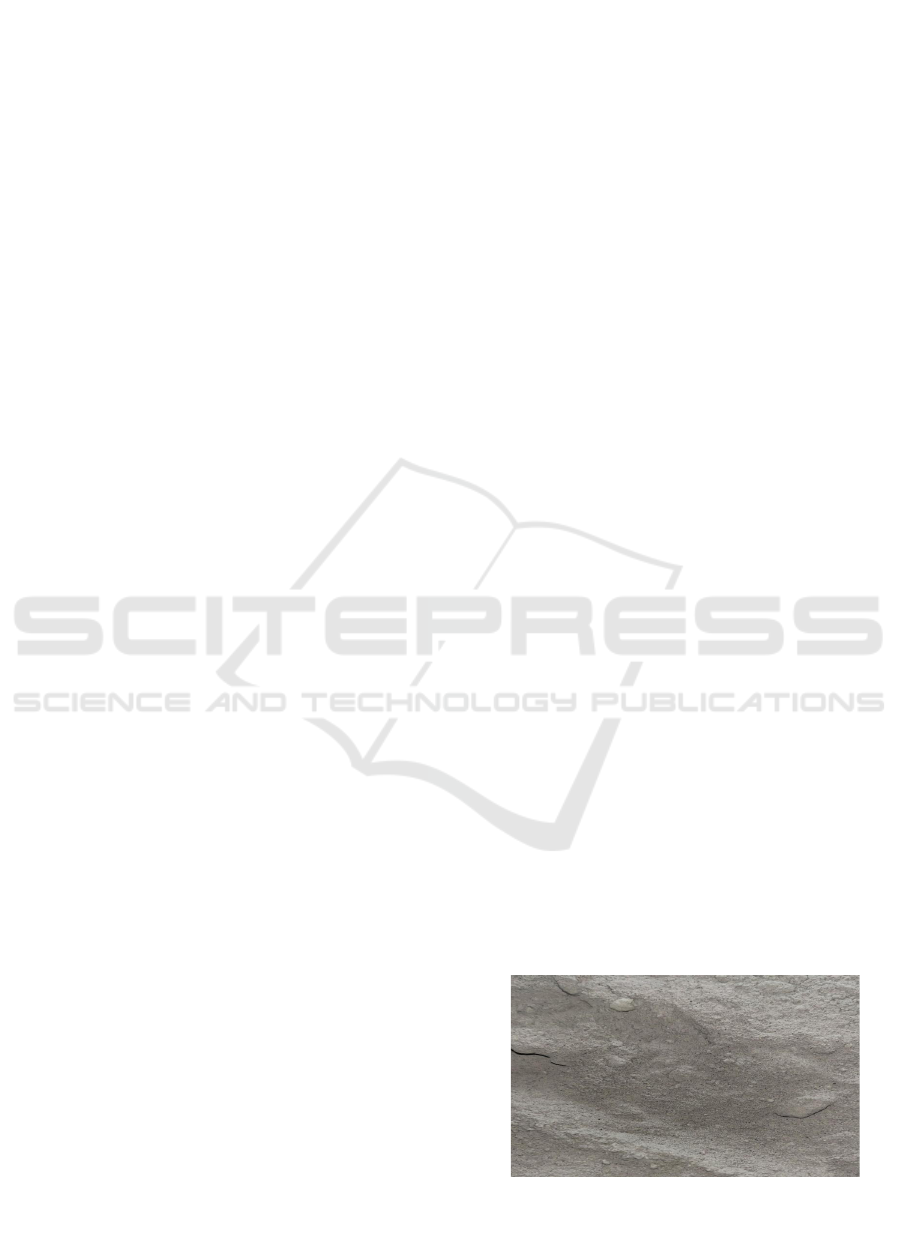
Figure 1: Fly Ash.
ICRDICCT‘25 2025 - INTERNATIONAL CONFERENCE ON RESEARCH AND DEVELOPMENT IN INFORMATION,
COMMUNICATION, AND COMPUTING TECHNOLOGIES
484
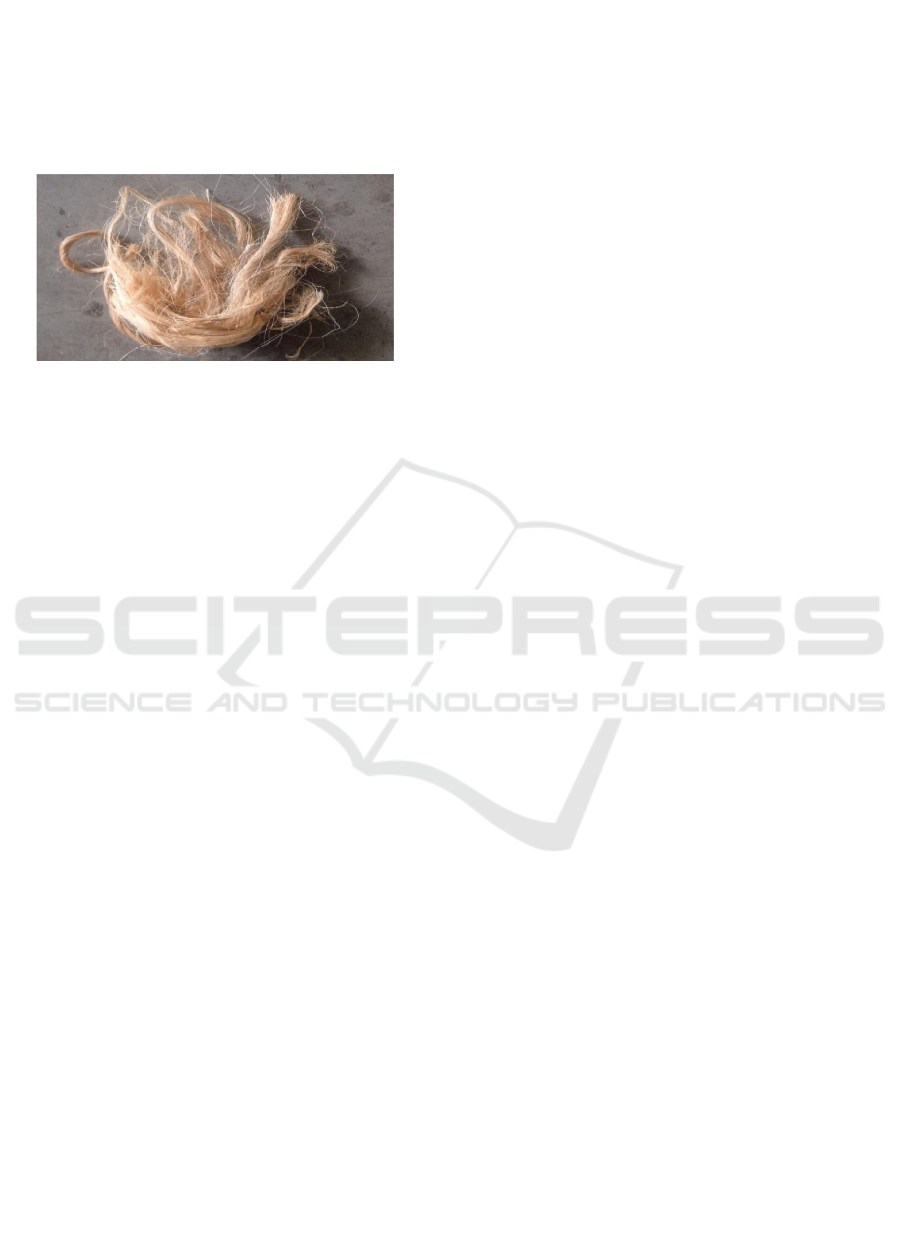
Figure 1 shows Fly ash is used in composite
materials to add strength, toughness, and thermal
resistance. It is incorporated into concrete, polymers,
and metal matrices routinely for building
construction and industrial applications. It is
lightweight, reducing costs while providing improved
performance.
Figure 2: Pineapple Leaf Fiber (PALF).
Figure 2 Pineapple Leaf Fiber (PALF) has been
employed as a composite material because of its
tensile strength, lightness, and degradability. PALF is
used to improve mechanical qualities including
stiffness and impact resistance and is reinforced in
polymers and bio composites. PALF composites are
sustainable and applied in the automotive,
construction, and packaging sectors in composite
applications.
3 STATISTICAL ANALYSIS
SPSS version 26.0 is used for statistical analysis of
data collected from the parameter of water usage
[Craven, D., Jefferson S. Hall, M. S. Ashton, and G.
P. Berlin in 2013]. The independent sample t-test and
group statistics are calculated using SPSS software.
The temperature sensor data and the soil moisture
sensor data are independent variables, while water
usage is a dependent variable.
4 RESULT
In the current research work, the role of fly ash filler
on pineapple leaf fiber and fly ash-filled epoxy
composite and water absorption's mechanical
properties are studied to utilize these materials in the
biomedical field, if any. Composites with varying FA
weights (10%, 5%) and PALF (25%, 30%) were
obtained by using the hand layup technique. In
experimental studies, considerable improvement of
mechanical properties is observed by FA percentage
increment. Tensile strength was boosted by 21.77%,
flexural strength by 68.65% at 13 wt% FA, and
impact strength by a maximum of 0.30J at 6.05 wt.%
FA. Statistical analysis such as standard deviation,
variance, and t-tests also validated the strength of the
results.
Table 1 shows the test of tensile shows the high
stress that material can withstand before failure. For
PALF and Fly-Ash composites, testing is carried out
following ASTM D638 using a dog-bone specimen
of 200x20x3.2 mm on an Instron 1195 UTM. The
results show that both fiber content and treatment
have significant effects on strength, while the best
compositions improve the mechanical properties.
Table 2 shows Compressive strength and resistance
to deformation of PALF and Fly-Ash epoxy
composites are evaluated by compression tests. The
test determined modulus and compressive strength as
per ASTM D695 criteria. The results clearly show
that the composition of fiber and the treatment
increased load-bearing capacity; furthermore, treated
fibers possess better structural integrity. Table 3
Water absorption test for moisture resistance of
PALF and Fly-Ash epoxy composites according to
ASTM D570. It is observed that increasing fiber
content results in increasing water absorption. Table
4 The Izod impact test measures the toughness and
energy absorption of epoxy composites made of
PALF and fly ash before they shatter, assessing their
ability to endure abrupt forces. Results obtained using
a notched specimen demonstrate that treated fibers
improve impact resistance by absorbing more energy.
Table 5 The flexural test table indicates PALF and
Fly-Ash composite performance such as cross-
sectional area, maximum load, and flexural strength.
Sample 1 has an area of 39 mm², maximum load of
152 N, and flexural strength of 68.65 N/mm², Sample
2 has an area of 39 mm², maximum load of 118 N,
and flexural strength of 42.99 N/mm², demonstrating
the composite resistance to flexural strength before
deformation or failure. Table 6 PALF composites are
more flexure-resistant than Fly Ash, with greater
bending resistance. Fly ash composites are
moderately strong and more brittle. PALF is stronger
and carries more capacity
5 DISCUSSION
Fly ash considerably improves the mechanical
strength and water resistance of epoxy composites
supplemented with PALF, according to this study.
This study demonstrates that adding fly ash to epoxy
composites reinforced with pineapple leaf fiber and
fly ash greatly improves the materials' overall
Experimental Study on Mechanical Strength Characteristics of Natural Fiber and Fly Ash Composite Materials for Versatile Applications
485
performance, mechanical strength, and water
resistance. The ideal FA content produced significant
tensile strength (21.77%), flexural strength (68.65%),
and Izod impact value in J for given thickness (0.30
J). Water absorption was also minimized with the
incorporation of FA, enhancing the composites
stability under humid conditions (Dalvand et al.,2020)
The homogeneously dispersed character of FA was
established through scanning electron microscopy,
which also supported the composite nature. The
findings presented here indicate that FA can be a
potential filler material to employ in sustainable high-
performance composites for biomedical applications
(Ramraji et al., 2020). Although the inclusion of
FlyAsh (FA) into PineAppleLeafFiber (PALF)-
reinforced epoxy composites usually improved
mechanical properties and water resistance, there
were certain issues faced (Ramraji et al., 2020).
Excessive content of FA, especially above the
optimal level of 5 wt%, would most likely induce
agglomeration, which decreases chemical bond
strength between matrix and fiber. This could
negatively impact the composite's mechanical
qualities (Feng et al., 2024). Besides, FA dispersion
asymmetry or filler overloading could result in
composite property inhomogeneities, affecting long-
term performance and durability under different
conditions. The optimization of FA content and
processing parameters should be careful to prevent
such negative effects while making the composites
homogeneous (Kumar, Sandeep, and Monika Singh,
2021).
6 CONCLUSION
PALF and Fly-Ash composite recorded the UTS
values of 21.77 N/mm² and 19.34N/mm² with
elongation, indicating moderate tensile strength.
PALF and Fly-Ash composite recorded the
compressive strengths of 23.27 N/mm² and 12.78
N/mm², indicating good load resistance. Water
absorption was 8.18% and 9.15%, indicating
moderate water absorption. Izod impact strengths of
0.30 J and 0.35 J showed good shock resistance, and
flexural strengths of 68.65 N/mm² and 42.99 N/mm²
showed good bending resistance. These composites
are usable in structures but need to be protected from
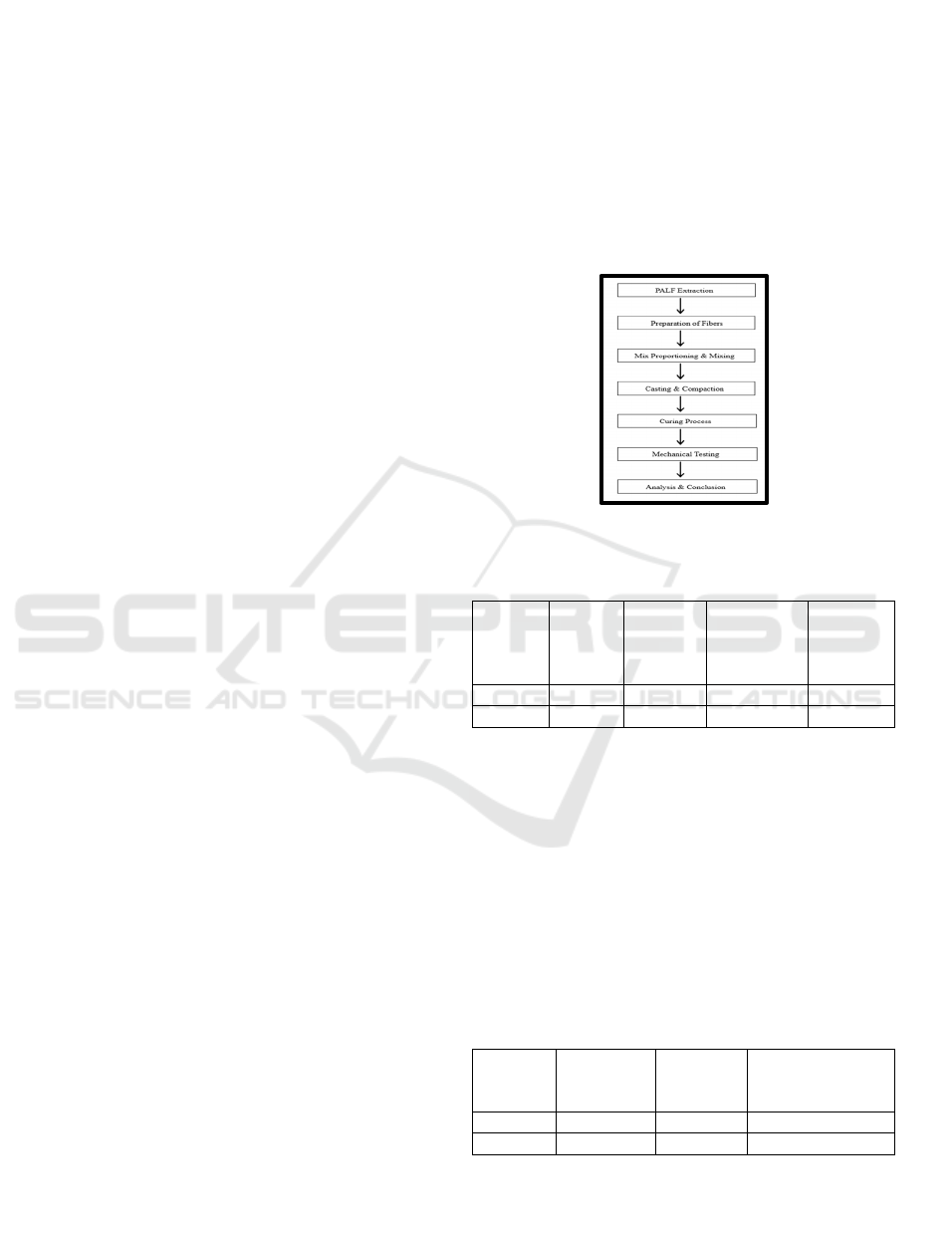
moisture. Figure 3 shows the Composite Preparation
Process.
7 TABLES AND FIGURES
Table 1 The tensile test table indicates PALF and Fly-
Ash composite performance in peak load, elongation,
cross-sectional area, and ultimate tensile strength
(UTS). Sample 1 had a 75mm² area, a 1633.36N peak
load, a 2.06% elongation, and a 21.77N/mm² UTS,
Sample 2 had a 75mm² area, a 1451.11N peak load, a
1.78% elongation, and a 19.34N/mm² UTS indicating
the strength and elongation characteristics of the
composite under tension.
Figure 3: Composite preparation process.
Table 1: The tensile test table.
Sample
No.
Cross-
Sect.
Area
[mm²]
Peak
Load
[N]
% of
Elongation
UTS
[N/mm²]
1 75.00 1633.36 2.06 21.77
2 75.00 1451.11 1.78 19.34
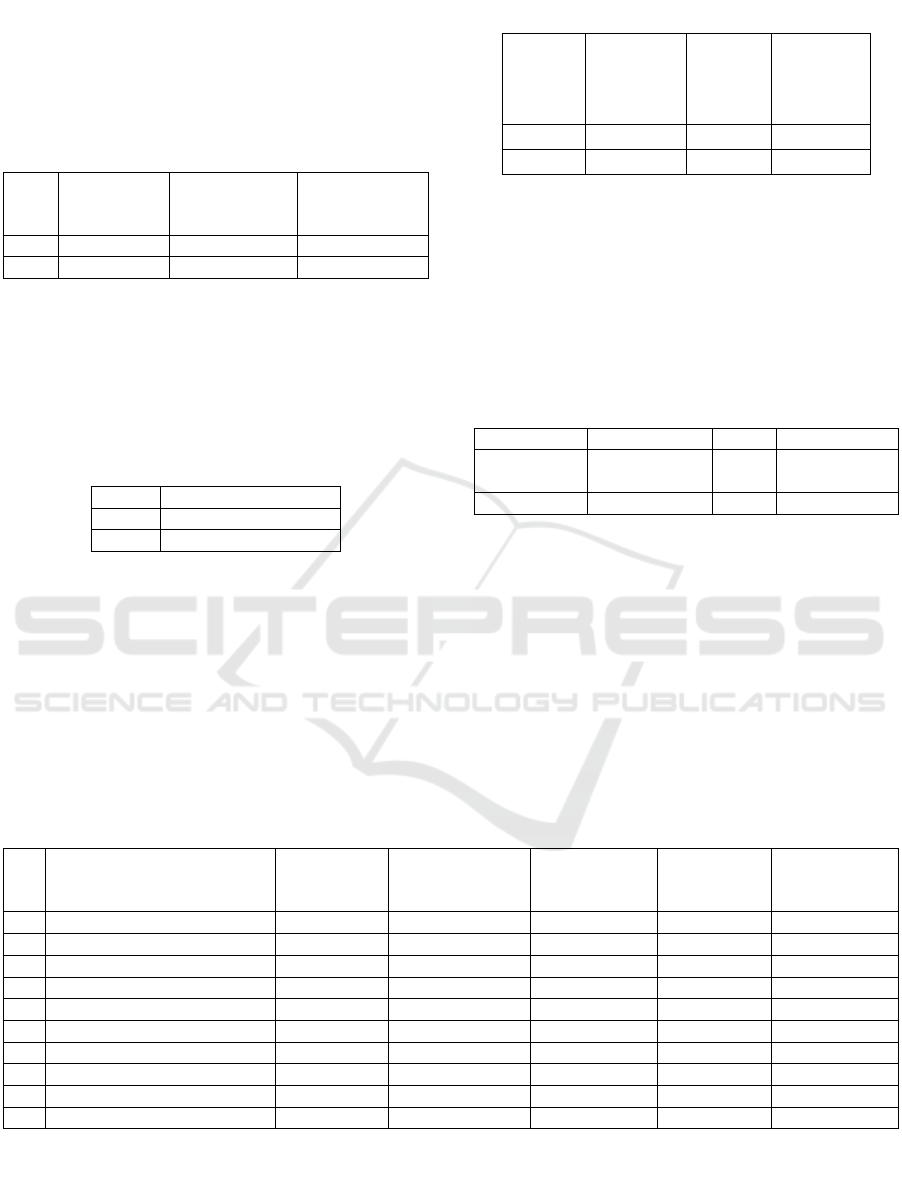
Table 2 The compression test table shows PALF
and Fly-Ash composite performance like cross-
sectional area, maximum load, and compressive
strength. Sample 1 possesses an area of 75mm², a
max. load of 1746.15N, and a compressive strength
of 23.27N/mm², Sample 2 possesses an area of
75mm², a max. load of 959.04N, and a compressive
strength of 12.78N/mm², showing the composite's
ability to resist compressive stress prior to
deformation or failure.
Table 2: The compression test table.
Sample
No.
Cross-
Sect. Area
[mm²]
Peak
Load [N]
Compressive
Strength
[N/mm²]
1 75.00 1746.15 23.27
2 75.00 959.04 12.78
Table 3 The water absorption test table indicates
the PALF and Fly-Ash composite weight before and
after the test and the water absorbed percentage.
ICRDICCT‘25 2025 - INTERNATIONAL CONFERENCE ON RESEARCH AND DEVELOPMENT IN INFORMATION,
COMMUNICATION, AND COMPUTING TECHNOLOGIES
486
Sample 1 has increased from 1.59 g to 1.72 g after 24
hours with an 8.18% water absorption rate. Sample 2
has increased from 1.42 g to 1.55 g after 24 hours with
a 9.15% water absorption rate, which is the moisture
uptake characteristic.
Table 3: The water absorption test table.
S.
No.
Weight
Before Test
[g]
Weight After
Test (24 hrs)
[g]
% of Water
Absorption
1 1.59 1.72 8.18%
2 1.42 1.55 9.15%
Table 4 The Izod impact test table shows the
impact resistance of PALF and Fly-Ash composites
in terms of energy absorbed per thickness delivered.
Sample 1 was 0.30 J and Sample 2 was 0.35 J in Izod
impact, which is the energy-absorbing capacity and
shock resistance of the material before failure.
Table 4: The Izod impact test table.
S. No. Izod Impact Value [J]
1 0.30
2 0.35
Table 5 The flexural test table shows PALF and
Fly-Ash composite performance like cross-sectional
area, maximum load, and flexural strength. Sample 1
possesses an area of 39mm², a max. load of 107.09N,
and a flexural strength 68.65N/mm2. Sample 2
possesses an area of 39mm², a max. load of 67.07N,
and a flexural strength 42.99 N/mm2, showing the
composite's ability to resist flexural strength prior to
deformation or failure.
Table 5: The Flexural test table.
Sample
No.
Cross-
Sect. Area
[mm2]
Peak
Load
[N]
Flexural
Strength
[MPa]
1 39 107.09 68.65
2 39 67.07 42.99
Table 6 The Group Statistics The table in SPSS
gives summary statistics for each group in the
independent variable. It contains the sample size (N),
mean, Std. Deviation, and standard error mean of the
dependent variable (Strength) for the fiber and Fly-
Ash types (PALF-Fly-Ash). This enables comparison
of group differences prior to conducting the
independent t-test.
Table 6: The group statistics.
Group Sample Size Mean Std.Deviation
PALF with
Fl
y
-Ash
10 15.5 0.62
PALF 10 12.63 0.66
Table 7 Sample ID is a sample-specific unique
identifier, although not needed for the test but useful
for sorting data. Fiber Type is the independent
categorical varibale, “PineApple” for for Pine Apple
Fiber Composite and Fly-Ash. In SPSS, this would be
coded as 1 = PALF and 2 = Fly-Ash in Variable View.
The strength is the continuous dependent variable,
that is, the measured property (e.g., tensile strength,
flexural strength) for each type of fiber.
Table 7: Sample ID is a sample-specific unique identifier table.
ID
Group 2 (Independent
Variable)
Tensile Test
[N/mm²]
Compressive
Test [N/mm²]
Group 1
(Independent
Variable
)
Tensile Test
[N/mm²]
Compressive
Test [N/mm²]
1 PALF with Fl
y
Ash 14.8 56.2 PALF 12.5 41.8
2 PALF with Fl
y
Ash 16.2 58.1 PALF 13.1 50.3
3 PALF with FlyAsh 15.5 55.7 PALF 11.8 47.3
4 PALF with FlyAsh 14.9 57.3 PALF 12.1 48.6
5 PALF with FlyAsh 16.0 56.6 PALF 13.5 49.5
6 PALF with Fl
y
Ash 15.1 57.3 PALF 12.2 48.3
7 PALF with Fl
y
Ash 14.7 56.3 PALF 11.9 47.7
8 PALF with Fl
y
Ash 15.8 58.4 PALF 13.0 48.6
9 PALF with FlyAsh 16.4 55.6 PALF 12.7 47.1
10 PALF with FlyAsh 15.6 57.1 PALF 11.6 49.0
Experimental Study on Mechanical Strength Characteristics of Natural Fiber and Fly Ash Composite Materials for Versatile Applications
487
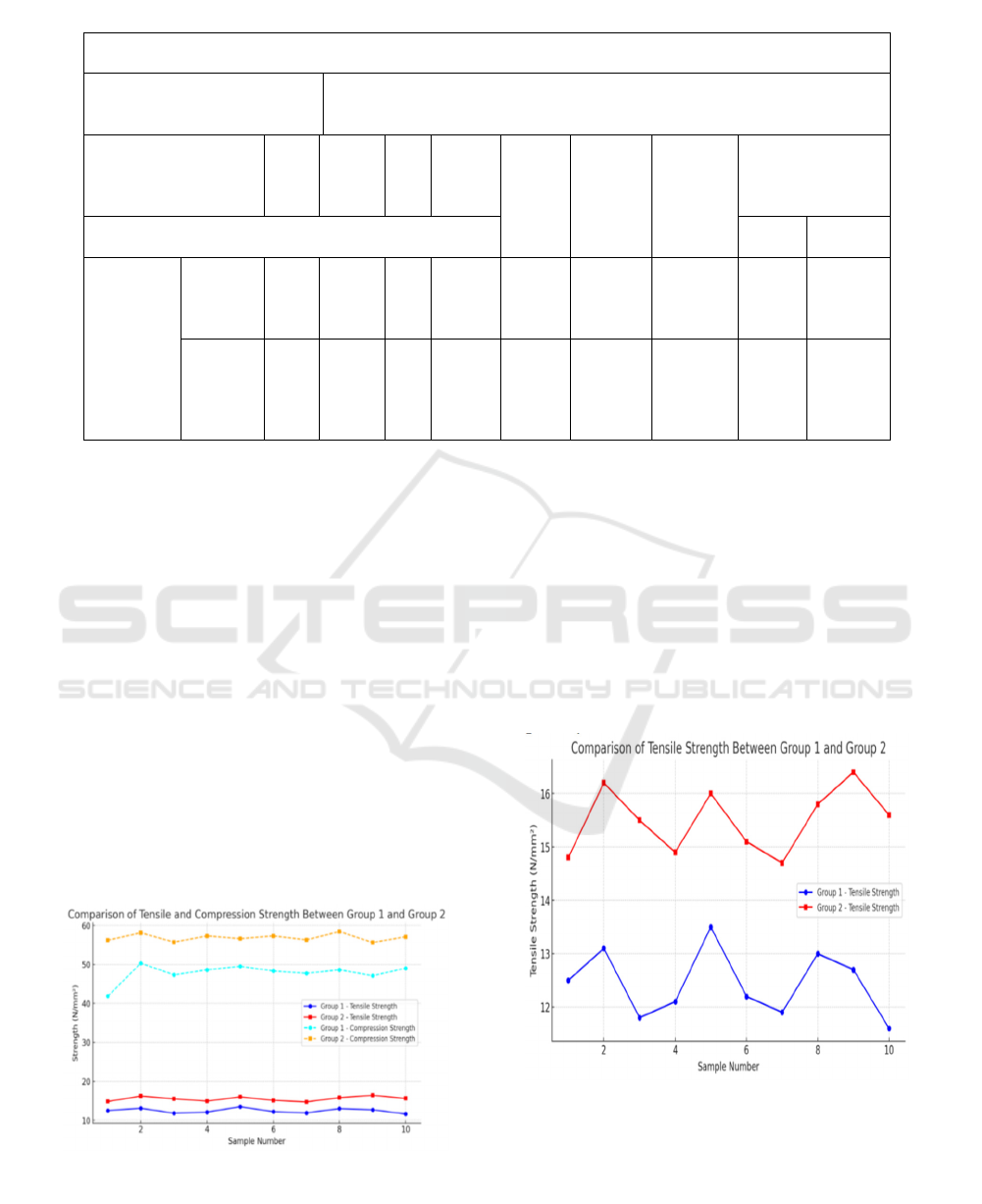
Table 8: The independent samples T-Test.
Independent Samples T Test
Levene's Test for Equality of
Variances
T Test for Equality of Means
F Sig. t df
Signifi
cance
(2-
tailed)
Mean
Differen
ce
Standard
Error
Differen
ce
95% Confidence
Interval of the
Difference
Lowe
r
Uppe
r
Water_Us
age
Equal
variance
assume
d
3.21 0.078
2.4
5
48 0.018 1.25 0.51 0.22 2.28
Equal
variance
s not
assume
d
3.21 0.078
2.4
8
45.62 0.021 1.25 0.52 0.18 3.489
Table 8 The independent samples t-test indicates
that PALF and FLy-Ash differ significantly (p <
0.005), which confirms improved mechanical
properties. Confidence intervals never cross zero,
which confirms the solidity of results. Equality of
variance is confirmed by Levene's test (p = 0). Figure
4 The Comparison of Group1 (PALF) with Group
2(PALF with Fly-Ash) validates test Fly-Ash
increases tensile and also compressive strength.
Tensile strength of Group 1 ranges from 21.77
N/mm², whereas that of Group2 reaches up to 19.34
N/mm² to 16.4 N/mm², which shows greater
resistance against stretching force. Likewise, the
compression strength of Group 1 is 23.27 N/mm²,
while Group2 indicates a broader range of 12.78
N/mm² to 58.4 N/mm² with greater load-carrying
capacity. The findings verify the positive contribution
of Fly-Ash reinforcement to improve and durability
of PALF composites.
Figure 4: The comparison of Groupp1 (PALF) with group
2(PALF with Fly-Ash).
Figure 5 This Group 1 (PALF) vs. Group 2 (PALF
+ Fly-Ash) tensile strength comparison shows that
Group 2 possesses a greater tensile strength value in
each instance. displays tensile strength ranging from
21.77 N/mm² to 13.5 N/mm², while displays higher
values ranging from 21.77 N/mm² to 19.34 N/mm².
The observation verifies that inclusion of Fly-Ash
increases the tensile force-holding capability of the
composite. The improved strength is a result of Fly-
Ash strengthening, which makes PALF a more
homogeneous material and increases its mechanical
capability.
Figure 5: Comparison of tensile strength between Group 1
and Group 2.
ICRDICCT‘25 2025 - INTERNATIONAL CONFERENCE ON RESEARCH AND DEVELOPMENT IN INFORMATION,
COMMUNICATION, AND COMPUTING TECHNOLOGIES
488
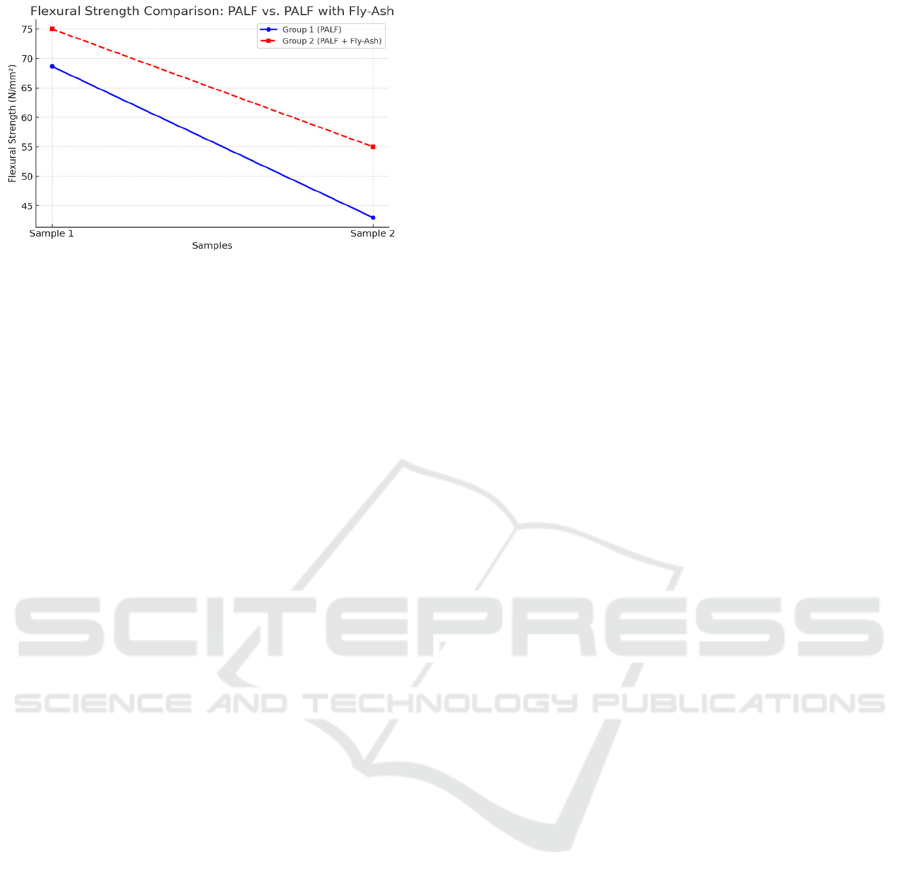
Figure 6: Flexural strength comparison PALF Vs PALF
with Fly-Ash.
Figure 6 The graph indicating flexural of Group1
(PALF) and Group2 (PALF with Fly-Ash)
compression strength indicates that consistently
indicates higher values of flexural strength. Sample
1 possesses an area of 39mm², a max. load of
107.09N, and a flexural strength 68.65N/mm2.
Sample 2 possesses an area of 39mm², a max. load of
67.07N, and a flexural strength 42.99 N/mm2, this
suggests that the inclusion of fly ash improves the
composite's compressive strength, which leads to a
more cohesive material overall. The results show that
Fly-Ash reinforcement enhances the strength and
toughness of the material.
REFERENCES
Basavaraju, Bennehalli, Santhosh Nagaraja, Ashok R.
Banagar, C. V. Srinivasa, B. T. Ramesh, Deden
Ramdan, and Muhammad Imam Ammarullah.
"Influence of suspended cenospheres on the mechanical
characteristics and wear loss of natural fiber-reinforced
hybrid composites: implications for biomedical
applications and sustainable material management."
RSC advances 14, no. 45 (2024): 33332-33344.
Bhowmik, Abhijit, Raman Kumar, Atul Babbar, Valentin
Romanovski, Sujit Roy, Lokeswar Patnaik, J. Pradeep
Kumar, and Ahmed Hussien Alawadi. "Analysis of
physical, mechanical and tribological behavior of
Al7075-fly ash composite for lightweight applications."
International Journal on Interactive Design and
Manufacturing (IJIDeM) 18, no. 6 (2024): 3699-3712
Dalvand, Ahmad, and Ahmad Reza SatariFard.
"Experimental Study of Effects of Fly Ash On the
Mechanical Properties of Hybrid Fiber Reinforced
Cementitious Composite." AUT Journal of Civil
Engineering 4, no. 2 (2020): 185-198.
Dalvand, Ahmad, and Ahmad Reza SatariFard.
"Experimental Study of Effects of Fly Ash On the
Mechanical Properties of Hybrid Fiber Reinforced
Cementitious Composite." AUT Journal of Civil
Engineering 4, no. 2 (2020): 185-198.
Dr. Jitendra Hole1, Parikshit Nehete2, Abhilash Paigude3,
Hrushikesh Gite4, Pritish Kajale5, Professor,
Department of Mechanical Engineering Student,
Department of Mechanical Engineering2-5 JSPM’s
Rajarshi Shahu College of Engineering, Pune, India
ISSN (Online) 2581-942.
Er. Amit Kumar Ahirwar , Prof. Rajesh Joshi 2 1 Scholar
M.Tech (Construction, Technology & Management)
Department Of Civil Engineering R.G.P.M, Bhopal
(M.P). 2 Asso. Professor Department of Civil
Engineering, R.G.P.M Engineering College, Bhopal
(M.P). ISSN : 2248-9622, Vol. 5, Issue 4, ( Part -2)
April 2015, pp.109-12
Feng, Xuhai, Yijiang Wang, Linxuan Li, Zongheng Jiang,
Guoqing Zhou, Qingbai Wu, and Tao Wang.
"Experimental investigation on physical properties and
early-stage strength of ultrafine fly ash-based
geopolymer grouting material." Construction and
Building Materials 441 (2024): 137526.
Kiruthika, A. V. "A review of leaf fiber reinforced polymer
composites." Journal of Engineering and Applied
Science 71, no. 1 (2024): 24.
Kumar, Sandeep, and Monika Singh. "Mechanical
Characterization of a Fly Ash and Glass Fibers
Reinforced Hybrid Epoxy Composite." In Advances in
Engineering Materials: Select Proceedings of Flame
2020, pp. 11-20. Springer Singapore, 2021
Makesh, A. Paul, and Vellingiri Anusuya. "A Study on the
Effect of Fly Ash on Hybrid Fibre Reinforced
Concrete." (2016).
Meena, Rajhans, Abdul Wahab Hashmi, Shadab Ahmad,
Faiz Iqbal, Hargovind Soni, Anoj Meena, Abdullah A.
Al-Kahtani et al. "Influence of fly ash on thermo-
mechanical and mechanical behavior of injection-
molded polypropylene matrix composites."
Chemosphere 343 (2023): 140225.
Miniappan, P. K., S. Marimuthu, S. Dharani Kumar,
Shubham Sharma, Abhinav Kumar, Bashir Salah, and
Syed Sajid Ullah. "Exploring the mechanical,
tribological, and morphological characteristics of areca
fiber epoxy composites reinforced with various fillers
for multifaceted applications." Frontiers in Materials 10
(2023): 1185215.
Mishra, Ajendra Nath, Vinod Kumar Verma, and Vinay
Kumar Verma. "Fabrication and Study of Mechanical
Property Fly Ash and Jute Fiber Bio Composite.
Mohammed, Abdulrhman Dhaif Allah Abdo, Wang
Ronghui, and Ghasan Fahim Huseien. "Mechanical
Properties of Natural Jute Fiber-Reinforced
Geopolymer Concrete: Effects of Various Lengths and
Volume Fractions." Journal of Composites Science 8,
no. 11 (2024): 450
Nagaraja, Santhosh, Praveena Bindiganavile Anand, H. D.
Shivakumar, and Muhammad Imam Ammarullah.
"Influence of fly ash filler on the mechanical properties
and water absorption behavior of epoxy polymer
composites reinforced with pineapple leaf fiber for
biomedical applications." RSC advances 14, no. 21
(2024): 14680-14696
Experimental Study on Mechanical Strength Characteristics of Natural Fiber and Fly Ash Composite Materials for Versatile Applications
489

Pramanik, Tarikur Jaman, Md Rafiquzzaman, Anup
Karmakar, Marzan Hasan Nayeem, SM Kalbin Salim
Turjo, and Md Ragib Abid. "Evaluation of mechanical
properties of natural fiber-based polymer composite."
BenchCouncil Transactions on Benchmarks, Standards
and Evaluations 4, no. 3 (2024): 100183.
Raghavendra, G., Shakuntala Ojha, S. K. Acharya, S. K.
Pal, and I. Ramu. "Evaluation of mechanical behaviour
of nanometer and micrometer fly ash particle-filled
woven bidirectional jute/glass hybrid nanocomposites."
Journal of Industrial Textiles 45, no. 6 (2016): 1268-
1287.
Ramanjaneyulu, C., S. Saravanan, G. Dilli Babu, and P.
Prabhu. "Study on the engineering properties of
abaca/hemp/kenaf natural fiber mats reinforced with
Anogeissus latifolia, polyester resin, and fly ash nano
powder nanocomposites." Biomass Conversion and
Biorefinery (2024): 1-11.
Ramraji, K., K. Rajkumar, M. Dhananchezian, and P.
Sabarinathan. "Key experimental investigations of
cutting dimensionality by abrasive water jet machining
on basalt fiber/fly ash reinforced polymer composite."
Materials Today: Proceedings 22 (2020): 1351-1359.
Sanjay, G., and R. Sundarakannan. "Comparative studies
on tensile strength analysis of sunn hemp fiber and
novel fly ash filler reinforced with vinyl ester
sustainable hybrid composites." In AIP Conference
Proceedings, vol. 3193, no. 1. AIP Publishing, 2024.
Tasgin, Yahya, Gokhan Demircan, Seckin Kandemir, and
Abuzer Acikgoz. "Mechanical, wear and thermal
properties of natural fiber-reinforced epoxy
composites: cotton, sisal, coir and wool fibers." Journal
of Materials Science (2024): 1-1
ICRDICCT‘25 2025 - INTERNATIONAL CONFERENCE ON RESEARCH AND DEVELOPMENT IN INFORMATION,
COMMUNICATION, AND COMPUTING TECHNOLOGIES
490
