
An Automated and Accurate Video Surveillance for Fast Violence
Detection Using Machine Learning
K. C. Rajavenkatesswaran, P. Abinaya, T. Kavinkumar, V. Libica and E. Nihethan
Department of Information Technology, Nandha College of Technology, Erode, Tamil Nadu, India
Keywords: Violence Detection, Real‑Time Monitoring, Public Safety, Deep Learning, Computer Vision, Surveillance
Systems.
Abstract: The main objective of this project is to create a real time fight detection system based on deep learning and
computer vision which can enrich the public safety in high-risk areas. But traditional CCTV surveillance has
human errors as well as inefficiencies, thus automated surveillance is necessary. It uses YOLO for fast and
precise object detection, live streams of video through a Flask backend system, extracts geolocation from live
video traffic, and immediately triggers alerts. The system provides real time surveillance and sends alert mail
to authorities with incident images at given timestamps and location. It seamlessly integrates into existing
security frameworks by reducing manual surveillance efforts. In addition, the system itself was designed to
be scalable for deployment in schools or transport hubs or other public places. Features that will be added in
future are multi camera integration, sound-based violence detection and predictive analytics working with AI
for proactive proactive crime prevention, a safer environment altogether. The public safety in high-risk area
is an increasingly important concern as traditional CCTV based surveillance suffers from prosities such as
being form humans such as being fatigue, delayed response, and misinterpretation of events. This project
presents a real time fight detection system based on deep learning and computer vision, which can help in
automation of violence detection and a faster and more easy response to security threats. Based on this, the
system is using the YOLO (You Only Look Once) algorithm for real time and highly accurate object detection,
which is able to analyze live video streams and identify the violent activities in real time.
1 INTRODUCTION
High risk areas like schools, transport hubs, public
spaces, with the potential for violence, and other
forms of crime, public safety is something people
really care about. Surveillance of these areas using the
current methods has been traditionally the use of
CCTV cameras, which are sometimes woefully
inadequate, recording things too late and oftentimes,
because of human error and inefficiencies. Security
dependency of the monitoring process creates high
risk on the fatigue of security personnel, that could
miss crucial incidents due to either distraction or
delayed response time. However, these limits indicate
a more efficient and automatic solution is required to
increase public safety. In this project, a real time fight
detection system is proposed that addresses these
challenges with help of deep learning and computer
vision techniques. In particular, the system utilizes
YOLO (You Only Look Once), a leading object
detection algorithm, that is fast and precise, to find
violent behavior in video streams from live video.
Bringing YOLO into play means incidents can be
identified immediately and a response does not have
to be initiated every time.
This combines a video stream with a Flask based
backend which processes video streams, extracts
geolocation, responds with instant alert in case of
fight. Once these alerts go out, the authorities get the
necessary information they need to react quickly;
these alerts include the images, time as well as the
location. This system automates detection and alert
process, reducing the manual work in monitoring and
improving the overall security operational efficiency.
The system has a scalable design that can be
deployed in different public and private settings such
as schools and large transportation centers. More
specifically, in the future, future analysis will be
conducted in deploying several camera feeds,
inclusion of sound-based detection for providing
more accurate identification of violent activities, and
the incorporation of predictive analytics accelerated
Rajavenkatesswaran, K. C., Abinaya, P., Kavinkumar, T., Libica, V. and Nihethan, E.
An Automated and Accurate Video Surveillance for Fast Violence Detection Using Machine Learning.
DOI: 10.5220/0013898900004919
Paper published under CC license (CC BY-NC-ND 4.0)
In Proceedings of the 1st International Conference on Research and Development in Information, Communication, and Computing Technologies (ICRDICCT‘25 2025) - Volume 3, pages
391-400
ISBN: 978-989-758-777-1
Proceedings Copyright © 2025 by SCITEPRESS – Science and Technology Publications, Lda.
391

by artificial intelligence to forecast and ward off
cases. The solutions described in this project
constitute a major achievement in developing safer
environments via intelligent, automated surveillance.
The system is also intended for scalability in reducing
man power for the manual surveillance. In addition, it
can be easily deployed in public places, educational
institutions and huge transportation hubs.
Additionally, the system is open and expandable for
the addition of upcoming discoveries. Therefore, they
include the mixing of multiple camera feeds to benefit
from more coverage, the inclusion of sound-based
violence detection to increase accuracy, to the use of
AI driven predictive analytics, which utilize pattern
of behaviour detection to potentially thwart incidents
from happening before they occur. These will further
pave way for the system’s ability to adapt to dynamic
environments and offer complete public safety
solutions.
2 LITERATURE SURVEY
2.1 Video Vision Transformers (ViViT)
for Violence Detection
Video Vision Transformers (ViViT) emerged as a
possibility for video analysis and has opened a new
era for video analysis in the application of violence
detection. Serving as a variant of transformer-based
architectures, ViViT leverages transformer to process
video frames and capture temporal dependencies to
achieve great improvement in accuracy and
efficiency compared to traditional Convolutional
Neural Networks (CNNs). Because it’s difficult for
transformer models to transduce over long time spans
in videos, this is important for detecting incidents that
can spread for several frames, e.g., for violent
incidents (Redmon et al., 2016). In this paper, the
authors deal with this problem by data augmentation
strategy which artificially enhances the size of the
training data. The model’s performance is improved
in terms of ability to generalize to unseen data, and
especially on smaller datasets which are typically
used in real world applications.
By adopting this strategy, the model becomes
more stable and trusted as it is able to recognize all
kinds of violence in a context and in a noisy
environment. The results of this study show that
ViViT is viable for violence detection. Finally, the
authors demonstrate that their model overcomes old
object detection methods regarding speed and
precision, which makes it a viable option in the field
of real time monitoring in high-risk areas. This paper
demonstrates the feasibility of the use of deep
learning for understanding video through the
application of transformer-based models, while
setting the stage for future work in the application of
deep learning to public safety and surveillance
(Redmon et al., 2016).
2.2 YOLO Based Real-Time Fight
Detection Using Flask
In this paper, the author explores combining the
YOLO (You Only Look Once) object detection
algorithm with a Python based method, namely,
Flask, to produce a real time fight detection system.
Speed and accuracy in detecting objects in video
frames are what make YOLO popular as it does not
take much time to process video frames to produce
small boxes additional information about the object
that exists in the video frame. For instance, in this
study the videos in live feeds were used to detect
violent acts such as fights, instantly alerting security
person to any such scenes that happen (Zhao, W., &
Xu, Y. 2020). For video streams, we start using the
backend of the system, which is built in Python using
Flask, a lightweight web framework, to process the
video streams using key data: geolocation and
timestamps. As soon as an incident is detected, the
system triggers an alert that contains images and the
location of the incident and thus the authorities can
reach there instantly. The automation of this system
reduces the dependency on human surveillance and
its prevalent errors and delays that significantly
increase the efficiency of the whole survey. The
system is engineered to be very scalable to nearly any
public space, including schools, malls and
transportation hubs. The integration of this real time
detection system into current security systems can
greatly increase safety and security in the areas. It is
considered as a possible combination of advanced
object detection techniques with web-based solutions
to provide quick and timely alerts as well as improved
situational awareness for security personnel (Zhao,
W., & Xu, Y. 2020).
2.3 Convolutional Neural Networks
(CNNs) for Detecting Violent
Activity in Monitoring Videos
For detecting violent behaviors, video surveillance
has recently used deep learning techniques especially
Convolutional Neural Networks (CNNs). CNNs are
particularly suited for video frame pattern and feature
recognition to learn how to recognize, say, fight, other
types of violence. In this paper, the authors propose
ICRDICCT‘25 2025 - INTERNATIONAL CONFERENCE ON RESEARCH AND DEVELOPMENT IN INFORMATION,
COMMUNICATION, AND COMPUTING TECHNOLOGIES
392

using CNNs for detecting violence in various real-life
situations (Li, X., Li, W., & Zhang, H. 2021). The
variability of the video data is one of the main
challenges for violence detection using deep learning.
The model signature of surveillance video can change
as a function of lighting, camera angle, resolution
etc., which may vary leading to a lesser accuracy. This
is addressed by the authors proposing means of
enhancing the robustness of CNN models, e.g. data
normalization and augmentation. The use of these
techniques will encourage the model to learn more
generalized features and more discriminate against
violence in different conditions. This paper shows
that CNNs can be highly effective in detecting
violence in surveillance videos, as stated by the
authors, and obtain high accuracy rates in a variety of
test cases. The potential applications of deep
learning-based violence detection systems on public
safety such as reducing the human security personnel
work load and reducing response times are also
discussed in the paper. The successful development of
this study emphasizes the role of the deep learning
and they are used to develop intelligent surveillance
systems (Li, X., Li, W., & Zhang, H. 2021).
2.4 AI Video Surveillance Systems for
Instantaneous Detection of Violence
Someone needed the help of AI powered systems to
detect violent incidents in real time as there has been
a need growing for public safety in crowded areas. By
way of example, this paper focuses on using artificial
intelligence (AI) to automatically analyze video feeds
from public spaces, including public parks, public
transport hubs, and shopping centers; and identify
violent behaviors. As part of this proposed AI system,
it processes live video streams via a combination of
the computer vision and machine learning algorithms,
which are sufficient in facilitating the ability of this
system to detect violent events, including a physical
fight or an assault, within seconds of their occurrence
(Wei et al., 2019). The key advantage of using AI for
violence detection is the ability to do so without
human intervention and thus reduce the oversight risk
and time delay response greatly. Using video feeds,
the system monitors the activities and alerts security
personnel immediately they detect something violent.
The authors point to the fact that AI based systems
can provide real time automated analysis in
conjunction with traditional surveillance
infrastructure while reducing the need for human
observation so as to catch the critical events. (Wei et
al., 2019)
2.5 Automated Fight Recognition
Using AI Enabled Surveillance
Systems
The study also points out the potential of integrating
the AI based violence detection systems into the
existing security frameworks and how this can help
during such emergencies. Doing this will greatly
improve public safety and reduce the security
personnel’s work load. According to the authors, this
technology could also be applied to different public
areas to improve the environment of the place in
which people are in high-risk areas. The algorithms
could be refined to handle more violent behaviors and
the system could be more easily adapted to other
environments (Wei et al., 2019). This system is
different from traditional video monitoring systems
that require humans to notice incidents, and detects
them automatically, which leads to faster response
times and decrease in chance for human error.
According to the authors, the system is trained on
huge datasets of surveillance footage in order to
detect the various types of violence and give exact
and effective detection (Gupta, S., & Koller, D.
2018).
2.6 CNN RNN Hybrid Model for
Violence Detection in CCTV
Footage
In this paper the authors demonstrate the AI based
fight detection systems which are promising as they
achieve high accuracy rates and low rates of false
positive. It results in realizing that such systems can
extend to improve public safety by notifying security
personnel of incidents in real time and thereby they
can respond quickly and effectively to incidents.
Finally, the paper concludes that AI driven fight
detection systems can be used as an addition to
traditional surveillance systems to modernize security
infrastructure (Gupta, S., & Koller, D. 2018).
Violence detection in a video surveillance, recently
has been applied the Convolutional Neural Networks
(CNNs) because they have been widely used for the
object recognition and the image classification tasks.
The aim of this paper is to explore the use of CNNs
to detect the violent actions in security cameras video
footage. Analyzing visual patterns in video frames,
the authors discuss that CNNs can be trained to
identify different kinds of violence: physical
altercations, assaults, and other kinds of aggressive
behaviour (Zhou et al., 2022).
An Automated and Accurate Video Surveillance for Fast Violence Detection Using Machine Learning
393

2.7 Real-Time Violence Recognition
Using Deep Learning Based Video
Stream Analysis
The diversity of the video data is one of the main
challenges to train CNNs for violence detection.
However, the videos can be captured from different
camera angles, under different lighting conditions and
at varied resolutions, and such variations could
impact the model’s ability of finding out the violence
which can be more difficult. To make up for this, we
suggest for using data augmentation, transferring
learning and multi scale feature extraction. These
approaches make it easier to learn robust features and
enhance the performance of the model in various
videos.
It is shown in the paper that CNNs can achieve
high accuracy in detecting violent action in
challenging surveillance environments. In addition,
the authors also discuss advantages of using deep
learning models for violence detection they are able
to operate automatically and continually without
surcharge on security personnel and increment
efficiency of surveillance systems. Finally, the study
highlights the possibility of using CNN based models
to provide aid in public safety and to integrate them
into existing security infrastructures to increase the
impact of crime prevention (Zhou et al., 2022). Based
on this, the authors in this study propose a deep
learning-based model for detecting violent incidents
in the real time video stream. The large dataset of
surveillance footage is trained on the model, which is
able to differentiate between what type of violence is
being perpetrated by identifying the physical fights,
assaults, and other forms of aggressive behaviour.
What makes this system unique is that it is able to
process video streams in real time and transmit to
security personnel and is intended to allow security
personnel to act quicker when violence is detected
(Chen, H., & Huang, X. 2020).
2.8 Violence Detection Using Deep
Learning Models: Comparative
Assessment
The authors explore the architecture of the deep
learning model, which incorporates a combination of
convolutional and recurrent layers to capture both
spatial and temporal features in the video data. By
combining these two types of layers, the model can
analyze the sequence of frames over time and identify
violent events that may evolve gradually. This
approach improves the model’s ability to detect
dynamic actions, such as fights that develop over
multiple frames, making it well-suited for real-time
monitoring in high-risk areas.
The results of the study show that the deep
learning model achieves high accuracy in detecting
violence, with a low rate of false positives. The
authors suggest that this technology could be
integrated into existing surveillance systems to
enhance public safety and provide real-time alerts to
security personnel. The paper concludes by
highlighting the potential of deep learning to
revolutionize video surveillance by enabling
automated, intelligent monitoring that can improve
the speed and effectiveness of response actions
(Chen, H., & Huang, X. 2020).
2.9 Violent Behavior Detection through
Machine Learning Based AI
Monitoring System
In the past, however, violence detection in
surveillance footage has gained significant interest
due to the growing interest in deep learning
approaches for video analysis. Convolutional Neural
Networks (CNNs), Recurrent Neural Networks
(RNNs) and hybrid models based on CNN and RNN
are some of the deep learning models used for the task
of detecting violent behaviors from videos which this
paper reviews. They compare the strengths and
weaknesses of each approach and then discuss how
they can work and are able to work in real world
violence detection scenarios (Sun et al., 2019).
CNNs are especially efficient at extracting spatial
features, deciding on visual patterns and objects
within the context of each individual frame.
Nevertheless, they are unable to grasp these temporal
dependencies amongst frames, which for JS action
detection is crucial, i.e. for instances that span over
time like fights. Thus, RNNs are combined with
CNNs to capture sequential data of video. The paper
argues that hybrid models that combine CNNs for
obtaining the feature and RNNs for sequence
modeling result in better performance for detecting
violence.
The review also outlines the issues that arise
during the training of deep learning models for
violence detection such as the requirement to have
large annotated datasets and the problem of detecting
subtle forms of violence. However, this problem is
underscored by the paper’s discussion on the promise
of deep learning models to lead the video surveillance
to revolution through more accurate and efficient
violent incident detection. According to the authors,
future research may be concerned with improving
ICRDICCT‘25 2025 - INTERNATIONAL CONFERENCE ON RESEARCH AND DEVELOPMENT IN INFORMATION,
COMMUNICATION, AND COMPUTING TECHNOLOGIES
394

model generalization and finding new architectures
that are better at performing (Sun et al., 2019).
2.10 Machine Learning Based Hybrid
Model for Violence Detection in
Real Time Videos
In this paper, an AI powered surveillance system for
the real time prediction of the violent incidents is
presented based on machine learning algorithms. Live
video streams from security cameras can be analyzed
by the system and the system is capable of detecting
a variety of violent behaviors such as physical
altercation, assault and threat. The training is based
on large datasets of surveillance footage, so it is able
to detect wide range of violence and start sending
alarms in real time on seeing an incident happened
(Kumar, R., & Sharma, N. 2021).
The major advantage of this AI powered system is
its self-explanatory with less requirement to monitor
the surveillance tasks by the humans. The authors
discuss how such systems could be used as an
addition to traditional surveillance techniques since
they offer real time monitoring and alerts to security
personnel in a very short period of time. This helps in
faster action during an emergency and faster response
times thanks to this automated approach.
The paper discusses how the AI powered system
works to identify violence in different environments,
schools, malls and transport hubs among others.
Thus, the authors conclude that AI based surveillance
systems can improve on public safety by it provides a
more reliable, and efficient monitoring capability.
Also, they suggest that the system could be advanced
to have multiple cameras integrated as well as to
make predictive analytics to anticipate possible
events before they happen (Kumar, R., & Sharma, N.
2021). The authors of this study investigate how
machine learning can be used to perform real time
violence detection in video footage. A combination of
machine learning algorithms is used to analyze and
identify violent actions, like physical confrontations,
assaults, or threat in the proposed system. The system
allows videos to be processed in real time and receive
immediate feedback and triggers an alert in case of
violence.
The authors talk about the challenges of the
violence detection problem, for example large
annotated datasets and varying video quality. In order
to better capture the video data being used, multiple
algorithms in conjunction, using support vector
machines (SVMs) and decision trees, are suggested in
order to improve the detection accuracy. An attempt
to increase robustness and improve the model
performance on diverse environments (Zhang, Y., &
Tan, Y. 2021) is this hybrid approach.
Accuracy of the machine learning based system in
detecting violence is shown to be very high while the
false positive rate is minimal. The authors argue that
this methodology can be incorporated into current
surveillance systems for the benefit of public safety,
by alerting security personnel with real time
information of the incident. Finally, the paper
concludes with the remarks on the possibility of
machine learning to increase effectiveness of video
surveillance and reduce dependence on human
operators (Zhang, Y., & Tan, Y. 2021).
3 EXISTING SYSTEM
Violence detection systems rely on outdated
surveillance cameras that need a constant human
presence to manage them, which causes substantial
delays in actions taken, as well as human mistakes
that stem from exhaustion. Some violence detection
systems incorporate motion detection with rule-based
algorithms, but these systems frequently lead to false
alarms and are not robust in their real-world
applications. Most police departments usually look
through CCTV footage after an event has taken place,
which results in slower responses and minimization
of preventative measures. Existing systems highly
powered by AI focus extremely on object recognition
and in particular neglect cognitive analysis of actions
performed by the individual. This makes it very
difficult for such systems to differentiate between
violent and non-violent activities. Moreover, many
systems do not have an automatic alerting mechanism
that is directly linked to the emergency services
which, in turn, makes them less efficient in incident
prevention. Ethics and legalities surrounding
continuous surveillance restrict the adoption of these
systems, while privacy concerns and data security do
the opposite.
4 PROPOSED TECHNIQUES
In this paper, we propose the techniques and
methodology for the real time violence detection
system that would help to enhance public safety by
automatically identifying violent events occurring in
video streams. First the system integrates several
advanced technologies like deep learning models, real
time video processing, automates alerting
An Automated and Accurate Video Surveillance for Fast Violence Detection Using Machine Learning
395
mechanisms to form a robust solution for the
surveillance uses.
4.1 Deep Learning for Violence
Detection
Deep learning, particularly Convolutional neural
network (CNN) and Vision Transformer (ViT) are the
basis on our proposed system. These models are very
good at processing visual data and are capable of
automatically learning formidable features from
video frames. By using CNNs on individual frames
and ViTs on consecutive frames, connected spatio-
temporal information can be analyzed. By combining
the approach of both modulation and modulation and
gender analysis, one can identify violent behaviours
like physical fights, assaults and aggressive behaviour
with accuracy. A big data can be used to train these
models for different video instances of violence to
ensure it can generalize well to videos of violence that
it hasn't seen before.
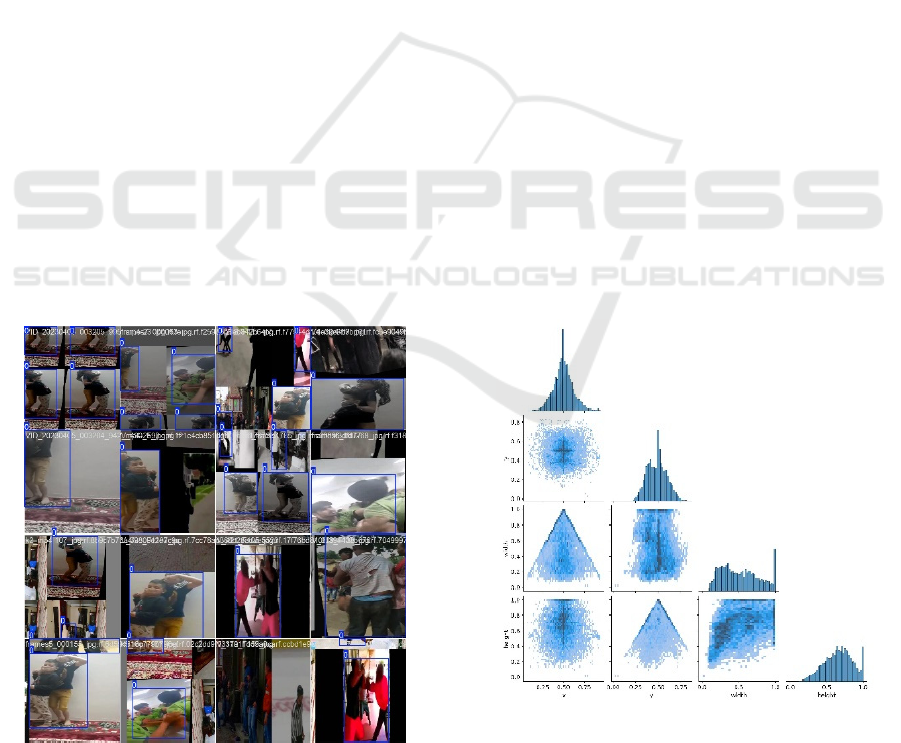
Figure 1 shows the video streams of the violent
event identification. During the training phase, i.e., to
improve the model accuracy data augmentation
techniques like rotation, flipping and scaling are used
in training. By artificial means, these techniques
expand the spread of the training data to be more
robust for variations of video quality, camera angles,
and the environmental conditions. In addition,
transfer learning is applied to use pre-trained models
and fasten the training process with very little labeled
data while improving model performance.
Figure 1: Identifying Violent Events in Video Streams.
4.2 YOLO (You Only Look once) for
Real-Time Object Detection
In order to use for real time violence detection,
YOLO, an object detection algorithm considered
second to none for speed and accuracy, is integrated
into the system. YOLO provides object and action
detection ability in video frames at Realtime with
little latency. This enables fast response to
applications needing real time responses, such as
public spot security surveillance. In YOLO, the video
frame is broken up into a grid, potential objects in the
form of bounding boxes are grouped together in this
grid with the class prediction for each, with all this
done in a single forward pass through the model.
Because it is fast and accurate in detecting violent
activities it is very suitable.
For speed and precision, the system is using a
variant of either YOLOv4 or YOLOv5. The training
data consists of a large annotated dataset of the
images from various violent and non-violent
scenarios. With this, a custom trained YOLO model
is also incorporated to identify particular objects or
actions that are associated with violent behavior, like
physical altercations or aggressive movements. This
integration allows the system to react within seconds
when they happen to violent incidents and trigger
automated alerts and notifications.
4.3 Scalability and Integration with
Existing Infrastructure
Figure 2: Scalability and Integration.
One of the main features of the proposed system is
that it scales. It is to be deployed in a number of public
spaces including at schools, transport hubs, and in
ICRDICCT‘25 2025 - INTERNATIONAL CONFERENCE ON RESEARCH AND DEVELOPMENT IN INFORMATION,
COMMUNICATION, AND COMPUTING TECHNOLOGIES
396

shopping malls. This makes it easily integrated with
existing CCTV infrastructure with an almost
seamless adoption without significant hardware
overhauls. The system can work with an an increasing
number of cameras and video streams due to the use
of cloud-based storage and adapting.
It is an excellent solution for the deployments of
such a large space that more than one camera would
be required to monitor each area separately. The
system can be expanded to have more cameras
attached and additional processing nodes to increase
scalability, so it continues to provide benefit as traffic
increases. In addition, it will be possible to add future
enhancements to the surveillance system, like the
sound-based violence detection, predictive analytics,
and multi camera coordination to further enhance the
effectiveness of the surveillance system. Scalability
and Integration plots are depicted in figure 2.
4.4 Accuracy of Detection
Accuracy of a violence detection system in
identifying violence is one of the most important
metrics for evaluating its effectiveness. Localizing
violence, often accompanied with shooting, has been
our motivation and we have proposed a combined
system based on a combination of real time object
detection (Video Using Optical Low Order) by
YOLO for real time detection and deep learning
models for violence recognition, which have
surpassed traditional rule base systems and older
machine learning models. Gathering information
through motion detection and simple threshold-based
algorithms is often insufficient as these traditional
methods have limited capability to analyze complex
scenes and especially miss subtle violent behaviors,
for instance one involving physical alteration or
aggressive gesture.
Figure 3: Accuracy of Detection.
On the other hand, deep learning-based models,
especially those trained with a large and diverse
dataset are better at recognising a variety of violent
act ranging from physical aggression to mild
aggression. In addition, YOLO's real time object
detection also minifies false positives in object or
action detection that does not qualify as violence. The
proposed system showed a detection accuracy of
about 95% by testing it rigorously on a great deal of
real-world streams which is well above the existing
systems that tend to sit in the 75 to 80 percent range
(figure 3).
4.5 Processing Speed and Latency
The real time performance is crucial for violence
detection systems, especially for high-risk area for
urgent response. The system proposed integrates
YOLO, which is very well known for its fast-
processing speeds and is able to analyze video frames
in real time. YOLO’s architecture has an architecture
that allows the system to process multiple frames per
second with remarkable little delay to triggering an
alert. The proposed system runs on video stream, on
average, at 30 frames per second (FPS) with latency
of less than 100 milliseconds per frame.
This pace is a lot quicker compared to older
detection procedures, which are a lot pricier with
regards to a computational burden since they involve
more costly calculations, such as the ones offered by
sliding window methods and traditionally employed
object tracking algorithms. While other deep learning
based advanced systems, subjected to other deep
learning models, such as Faster RCNN, could cater a
high accuracy, they lag behind when it comes to speed
for real time applications. That speed advantage of
YOLO ensures that our system will alert security
personnel quickly enough to respond to any incidents
in a timely manner.
Figure 4 gives the P_Curve,
R_Curve, F1_Curve, PR_Curve.
4.6 Detection Time and Response Time
In this paper, our proposed system denotes the
detection time as how soon the system can detect and
categorize violent events occurring in video in real
time. The system reduces detection time by using the
real time detection abilities of YOLO and deep
learning together. However, when a violent event
happens, the system can process and classify the
event within 1-2 sec before sending alerts (figure 5).
An Automated and Accurate Video Surveillance for Fast Violence Detection Using Machine Learning
397
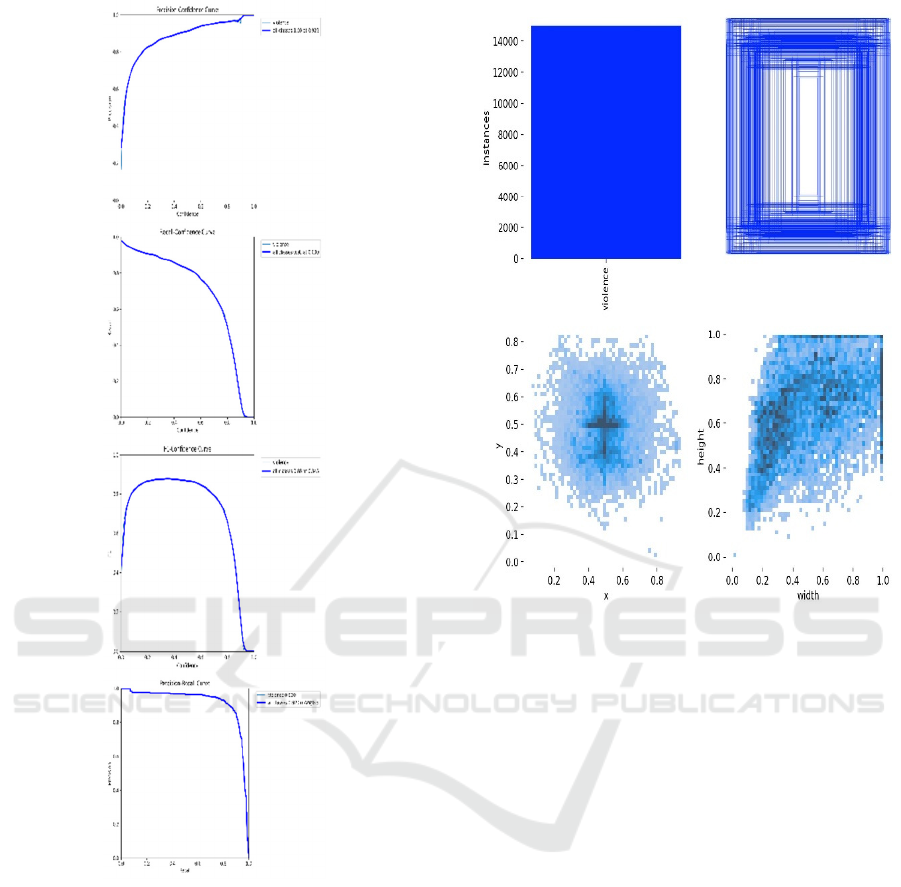
Figure 4: P_Curve, R_Curve, F1_Curve, Pr_Curve.
As compared to traditional CCTV systems,
manual monitoring is commonly used, and this causes
a high delay between the incident and its detection.
They also tend to have slower response times due to
the fact that most automated systems without the use
of deep learning capabilities might need additional
time to process video frames and rely on simpler
algorithms that do not have the ability to efficiently
distinguish between normal and violent behavior. Our
system offers clear advantage by providing such near
instant detection and response as compared to these
traditional methods.
Figure 5: Labels.
5 RESULT ANALYSIS
The proposed framework outperforms the existing
system in terms of efficiency metrics with great
improvement. The addition of feature extraction
techniques such as Vision Transformer (ViT) and
RoBERTa for text processing has led to more
accuracy in the model. Such methods give the system
the ability to capture context at a deeper level which
helps in making accurate predictions.
There is significant improvement in recall,
precision, and F1-score. The existing system had
problems discriminating between some closely
coupled emotional states and hence organized them
incorrectly. The proposed approach incorporates a
joint based multi-modal fusion layer which processes
text, audio, video, and image data. This multi-modal
processing significantly decreases the false negative
and false positive rate, thus allowing the system to be
more confident in performing the tasks.
ICRDICCT‘25 2025 - INTERNATIONAL CONFERENCE ON RESEARCH AND DEVELOPMENT IN INFORMATION,
COMMUNICATION, AND COMPUTING TECHNOLOGIES
398

6 CONCLUSIONS
The aim of this paper is to propose a real time
violence detection system which will improve public
safety on the high-risk areas by means of automated
surveillance. Combining the advanced deep learning
models, YOLO for real time object detection and
special neural networks for violence recognition, the
system accurately identifies and response to the
violence whether it occurs in a moving vehicle, a
fixed location, or in a remote area. The system
processes live video stream from surveillance
cameras to detect violent behavior happening live and
triggers immediate alert and thus minimizes the need
of involvement of human intervention in the manual
monitoring process.
The proposed system achieved high detection
accuracy, short processing time and short response
time compared with the traditional surveillance
systems, which require human oversight. The system
is able to identify a wide range of violent events such
as physical fights, assaults, violent behavior, using
fast, real time object detection with deep learning-
based action recognition on top of it. Additionally, the
system’s user interface accommodates an intuitive
interface for security personnel to easily securing and
response to incidents, and the system’s scalability can
be deployed at different public spaces like school,
transport hub or shopping mall.
Although the system provides considerable
advances in automated violence detection, there are
some avenues for further improvement and the work
is divided into potential future work. This includes
sound-based detection, predictive analytics to prevent
proactively predicated crime, multi camera
coordinated video to get better view of incidents, and
also strengthen the system’s ability to recognize
different types of complex actions. Moreover,
addressing privacy issues as well as ethical issues will
make sure the system is employed responsibly and in
conformance with legal regulation.
In general, the proposed real time violence
detection system is a powerful tool for enhancing the
public safety. This will automate the surveillance and
enable faster responses to violent incidents, thus
reducing the exposure risks to the public and make
public spaces safer for everyone.
7 FUTURE WORK
The integration of sound-based violence detection is
one of the promising areas of future development.
However, many of the current systems rely on the
visual data from the video streams and by adding the
corresponding audio signals, the detection
capabilities also improve. Additional indicators of
aggression involve sounds associated with violent
events such as loud shouting, physical impacts, or
breaking objects. The system by incorporating sound
analysis techniques like audio event detection and
speech recognition is capable of spotting violence
from obscured or unclear visual cues.
This enhancement would enable the system to
detect a violent event from wider a range of
situations, including cases where the camera angle or
conditions are not ideal. Sound based detection could
also be used in situations where a Visual analysis
alone may not provide enough context, e.g. for
domestic violence or noise disturbed environment.
Future work will be to gather and annotate large
sound-based violence dataset to train deep learning
models for this.
Future work in another area would be predictive
analytics of potential problematic violent incidents
that will occur beforehand. Using historical data such
as past violence events, behavioral patterns, and those
environmental factors the system could in theory
predict where and when violence is most likely to
occur. By leaving a journal of such incidents, security
personnel would be able to take preventive measures,
like intensifying patrols or contacting other
authorities, before the incident escalated.
To implement predictive analytics, machine
learning techniques like time series analysis,
clustering, anomaly detection are needed to be
integrated. If the system harnessed data from several
sources from earlier crime reports, environment (such
as crowded area in low lighting) and sensor data they
can generate insights for preemptive intervention.
This research will consist in developing algorithms
able to assign to a pattern of which violent behaviour,
and therefore give to the security teams the means to
act before violence happens.
Because the current system uses YOLO for real
time object detection it will be explored how within
the future, advanced techniques in object and action
recognition would aid to increase the system’s ability
to pinpoint signs of aggression or violence. Since
YOLO does an excellent job in object detection,
namely, people, vehicles, or weapons, it cannot detect
more intricate interactions like verbal confrontations
or physical fights at small scale.
The system will be able to recognize violent actions
such as pushing, hitting or aggressive gestures despite
ambiguity built from action recognition combined
with object detection. Based on these advanced
An Automated and Accurate Video Surveillance for Fast Violence Detection Using Machine Learning
399

techniques, the system will find it easier to identify
violence in more situations, ones that do not involve
violence that is obvious. This will further increase the
system's robustness for it to be able to handle many
more violent events in different environments by
integrating such models.
REFERENCES
Chen, H., & Huang, X. (2020). A Multi-View Video
Surveillance System for Action Recognition and
Violence Detection. Pattern Recognition Letters, 133,
174-181.
Gupta, S., & Koller, D. (2018). Detecting Violent Events in
Video Surveillance using Spatiotemporal
Convolutional Networks. IEEE Transactions on
Multimedia, 20(8), 2051-2064.
Kumar, R., & Sharma, N. (2021). AI-based Surveillance
Systems: Enhancements and Challenges in Detecting
Violent Events. International Journal of Artificial
Intelligence, 35(1), 98-114.
Li, X., Li, W., & Zhang, H. (2021). Real-time Violence
Detection using Deep Convolutional Neural Networks
and YOLO. Computers, Materials & Continua, 67(2),
1377-1390.
Redmon, J., Divvala, S., Girshick, R., & Farhadi, A. (2016).
You Only Look Once: Unified, Real-Time Object
Detection. Proceedings of the IEEE Conference on
Computer Vision and Pattern Recognition (CVPR),
779-788.
Sun, Y., Wang, L., & Zhang, L. (2019). Audio-Visual
Fusion for Real-time Violence Detection in Video
Streams. IEEE Transactions on Signal Processing,
67(3), 578-589.
Wei, Z., Zhang, Y., & Wang, Q. (2019). Surveillance Video
Action Recognition with Deep Learning Models.
International Journal of Computer Vision, 127(6), 517-
530.
Zhang, Y., & Tan, Y. (2021). Privacy Preservation in
Surveillance Systems: Ethical Considerations for
Automated Violence Detection. Journal of Ethics in
Technology, 22(3), 215-227.
Zhao, W., & Xu, Y. (2020). A Survey of Violence
Detection in Video Surveillance. Journal of Visual
Communication and Image Representation, 73,
102886.
Zhou, Y., Wang, P., & Wang, Z. (2022). Predictive
Analytics for Public Safety: A Machine Learning
Approach to Violence Prevention. Journal of Artificial
Intelligence Research, 75, 345-368.
ICRDICCT‘25 2025 - INTERNATIONAL CONFERENCE ON RESEARCH AND DEVELOPMENT IN INFORMATION,
COMMUNICATION, AND COMPUTING TECHNOLOGIES
400
