
A Machine Learning-Based Approach for Non-Invasive Stress
Analysis Using Speech Features for Enhanced Detection and
Classification
Devika M, Shruthi R, Sahana K and Madhubala V
Department of Computer Science and Engineering, SRM Institute of Science and Technology, Ramapuram, Chennai,
Tamil Nadu, India
Keywords: K-NN (K-Neighbour Nearest), Stress, HRV, Machine Learning, Speech Analysis, Feature Extraction.
Abstract: Stress has its impact on our physical and mental health in many forms, and thus it becomes even more
important to detect it at an early stage so that we can manage it better. Standard approaches to monitoring
the stress response typically involve tracking a person’s physiological state or behavioural differences with
the help of invasive sensors or elaborate data collection systems. As a more appealing non-intrusive option,
this research paper proposes a machine learning model, to observe our speech patterns to monitor our stress
levels on a real-time basis. By analysing features such as pitch, tone, frequency and the rate at which
someone speaks, the system can gain a better understanding of a person’s emotional state. These pieces of
information are collected by techniques like Mel Frequency Cepstral Coefficient (MFCC), Fast Fourier
Transform (FFT), and Spectral Analysis. These extracted features are then used to train multiple machine
learning classifiers such as Decision Trees and K-Nearest (K-NN) Neighbours. This enables you to classify
stress levels into three specifics categories (Neutral, Mild Stress, High Stress). This analysis allows us to
make sure the model is reliable and its performance is understood using standard metrics including but not
limited to accuracy, precision, recall and F1-score. The idea is to make stress detection more achievable
and operable every day.
1 INTRODUCTION
Stress represents a major challenge to an individual's
adaptive capacity, triggering both cerebral and
physiological changes that can pave the way for
severe health conditions. These include
hypertension, coronary artery disease, cardiac arrest,
stroke, and mental health issues such as depression
and anxiety. Stress can be categorized into two
distinct types: short term acute stress and long-term
chronic stress. Ultimately, the body relies on the
parasympathetic nervous system (PNS) to restore
balance and return to homeostasis.
To evaluate the stress response, we can assess
perceptual, behavioural, and physical indicators.
Self-report questionnaires serve as a crucial tool in
measuring an individual's subjective perception of
stress levels. Many physiological markers
responsive to stress have been thoroughly studied.
Stress analysis via machine learning, where
frequency domain features derived from audio
signals are employed in classifying emotional states
reflecting varying levels of stress, is the thrust of
this project. The dataset consists of FFT (Fast
Fourier Transform) coefficients, which represent the
frequency content of speech signals. By examining
these characteristics, we train and test two machine
learning models- Decision Tree Classifier and K-
Nearest Neighbours (KNN) Classifier. The main
aim is to establish how effectively the models can
classify emotions (Negative, Neutral, and Positive)
and map them to possible stress levels. Model
performance is tested using accuracy scores and
confusion matrices to determine patterns of
classification. This research has applications in
mental health analyzing, workplace stress
management, and healthcare, where automated
stress detection can provide valuable insights for
intervention and support.
The structure of this paper is divided as
following, section II discusses about the various use
cases of the Stress analysis, section III covers the
related works of the Stress analysis, section IV
M., D., R., S., K., S. and V., M.
A Machine Learning-Based Approach for Non-Invasive Stress Analysis Using Speech Features for Enhanced Detection and Classification.
DOI: 10.5220/0013896800004919
Paper published under CC license (CC BY-NC-ND 4.0)
In Proceedings of the 1st International Conference on Research and Development in Information, Communication, and Computing Technologies (ICRDICCT‘25 2025) - Volume 3, pages
285-291
ISBN: 978-989-758-777-1
Proceedings Copyright © 2025 by SCITEPRESS – Science and Technology Publications, Lda.
285

illustrates the existing system, section V discusses
the proposed system of the project, section VI
discusses the result and section VII discusses the
Experimental result of the project. VII discusses the
conclusion of the project.
1.1 Characteristics of Stress Analysis
Below are the characteristics of Stress analysis
1.1.1 Feature Extraction from Speech
Signals
Stress analysis often relies on extracting features
from speech, such as FFT (Fast Fourier Transform)
coefficients, Mel Frequency Cepstral Coefficients
(MFCCs), and pitch variations, which help in
identifying emotional states.
1.1.2 Emotion-Based Stress Classification
Stress levels are linked to emotions, commonly
classified into Negative, Neutral, and Positive states.
Machine learning models analyse these emotions to
infer stress intensity.
1.1.3 Supervised Learning Models
Algorithms like Decision Tree Classifier and K-
Nearest Neighbours (KNN) are trained on labeled to
identify stress pattern from input features
1.1.4 Data Pre-processing and Label
Mapping
Raw data undergoes pre-processing methods such as
normalization, feature selection, and label encoding
to improve model performance and interpretability.
1.2 Advantages of Stress Analysis
1. Early stress detection
2. Automated and Objective Analysis
3. Personalized Stress Management
4. Non-Intrusive and User-Friendly
This is just a fraction of the benefits of machine
learning-based stress analysis that promise a new era
of support for mental health, workplace well-being
and healthcare. Its greatest benefit is early detection
of stress, enabling interventions sooner that can
have a significant impact in preventing later mental
and physical health problems. In contrast to
conventional techniques which tend to depend on
self-reports and can be subjective and biased,
machine learning provides a more objective and
automated solution which results in higher accuracy.
Because these models can learn from individual
stress profiles, they can provide tailored advice. The
cost-effective and large-scale stress measurement
through smart devices minimizes the need of
frequent visits to doctor. In comparison, combining
speech, heart rate, EEG signals, and facial
expressions from these advanced systems provides a
more comprehensive and reliable stress detection
profiling compared to single channel systems.
2 USE CASES OF STRESS
ANAYSIS USING MACHINE
LEARNING
This stress analysis model uses machine learning to
analyse speech-based features and classify emotions
into different stress levels. Below is an in-depth
explanation of how this model can be applied in
various industries and real-world applications.
1. Mental Health Monitoring & Early
Intervention
2. Workplace Stress Management
3. Call Centre & Customer Service Analysis
4. Education & Student Stress Tracking
5. High-Risk Professions (Military, Aviation,
Healthcare, etc.)
2.1 Mental Health Monitoring & Early
Intervention
The model processes speech data, extracts
frequency-based features, and classifies the
emotional state into negative (high stress), neutral
(moderate stress), or positive (low stress)..It can be
integrated into mental health applications to monitor
users' emotions over time. Helps in early detection
of stress, anxiety, and depression. Provides data-
driven insights to mental health professionals for
better patient care.
2.2 Workplace Stress Management
The model can be used to monitor employees' stress
levels through voice-based interactions during
meetings, calls, or check-ins. HR teams can analyze
collective stress trends and make data-driven
ICRDICCT‘25 2025 - INTERNATIONAL CONFERENCE ON RESEARCH AND DEVELOPMENT IN INFORMATION,
COMMUNICATION, AND COMPUTING TECHNOLOGIES
286

workplace improvements. Improves employee well-
being and productivity. Helps prevent burnout and
workplace dissatisfaction.
2.3 Call Centre & Customer Service
Analysis
The model can analyse customer service call
recordings to detect stress levels in both employees
and customers. If high stress is detected in
employees, breaks or training programs can be
recommended. If high stress is detected in
customers, the system can escalate the call to a
human representative with special skills. Enhances
customer satisfaction by detecting and responding to
stress signals.
Reduces employee burnout by managing high-stress
interactions.
2.4 Education & Student Stress
Tracking
Teachers and education platforms can use stress
analysis to track students’ emotional well-being
during virtual or in-person classes.
Stress levels can be analysed to adjust teaching
methods and exam difficulty. Helps prevent
academic burnout and anxiety. Improves teaching
strategies based on real-time student feedback.
2.5 High-Risk Professions (Military,
Aviation, Healthcare, etc.)
The model can monitor stress in high-pressure
professions like pilots, surgeons, soldiers, and
emergency responders. It can detect stress levels
from voice-based communication and alert
supervisors when stress levels are dangerously high.
Reduces human errors and accidents in critical
operations. Improves mental resilience and decision-
making in high-risk environments.
3 RELATED WORK
Stress response is defined as an evoked response
when our body perceives any stimuli that exceeds an
organism’s adaptive capacity and disrupt
homeostasis.
This paper (J. Lee et al., 2024) analysed the
impact of the personal Physical stress factor Stress
response and recovery and one operated one
Comparative analysis of stress reactivity and
Recovering between HRV and EDA parameters
Group. Stress situation may begin Human body is
identified and measured Represented for stress with
a defence mechanism (A. Ferrarotti et al., 2024) by
physical variation.
This paper (A. Ferrarotti et al., 2024) mainly
relies on invasive systems and infrequently focuses
on AR/VR applications. this work investigates
whether the head movements of a user wearing an
AR HMD vary due to the presence of a stress factor
while performing static tasks. In order to induce
stress, the SCWT has been used.
This paper ( S. Santhiya et al., 2024) indicates
how audio-based Stress detection system can be
used to improve systems General welfare and
preventive health measures. To make accurate
production and Trusted results, this study proposes a
novel method of detecting stress from deep learning
Algorithm with sophisticated signal processing
Technology.
This paper (A. Singh et al., 2024) proposes a
comprehensive approach which uses the
ccombination of computational power, Software,
technology and sympathy care to determine
similarities in frequency pattern stress level. In our
sharp world, stress is affected Countless people
affect their mental Goodness. 48% gene z adults
report Accepted, sad, depressed, (N. Oryngozha et
al., 2024) experience Fofo (fear of disappearance),
and reduced Self -esteem or insecurity.
This research N. Oryngozha et al., 2024)
proposes ML and NLP to recognize and evaluate
stress related posts and comments within Reddit’s
academic communities which can be used to analyze
comments from text. Stress monitoring is a crucial
component (Z. Lei el al., 2024) of any strategy used
to intervene in the case of stress.
This study (H. A. Khan et al., 2023) proposes for
an outline using a wearable sensor, safely an
artificial intelligence driven in associated with
Cloud-based server to initial detection High blood
pressure and an intervention facility System.
This study (Mittalakod et al., 2023) improves
sentiment and emotion analysis to measure the stress
levels of people by analysing their social posts and
comments using complex machine learning
techniques and the deep learning model BERT.
This paper (J. G. Jayawickrama and R. A. H. M.
Rupasingha, 2022) explores how we can detect
human stress by analysing sleep patterns, using a
technique called ensemble learning. In the first part
of the research, five different machine learning
algorithms were tested for classification, including
Decision Tree, Logistic Regression, and Naive
A Machine Learning-Based Approach for Non-Invasive Stress Analysis Using Speech Features for Enhanced Detection and Classification
287
Bayes. Then, in the second part, they applied an
ensemble learning algorithm that combined the
results of these five methods using an average
probability approach. The findings were promising,
with ensemble learning achieving an 94.25%
accuracy in classifying the data. This suggests that
using a combination of algorithms can significantly
enhance our ability to understand and identify stress
based on sleep patterns.
This paper (F. J. Ming et al., 2023) proposes to
develop a Facial Emotion Recognition System
designed to help identify mental stress among
university students. The goal is to provide support
both to the students themselves and to the
counselling departments within institutions. The
system will analyse facial expressions to recognize
various emotions, including happiness, sadness,
anger, and fear.
4 EXISTING SYSTEM
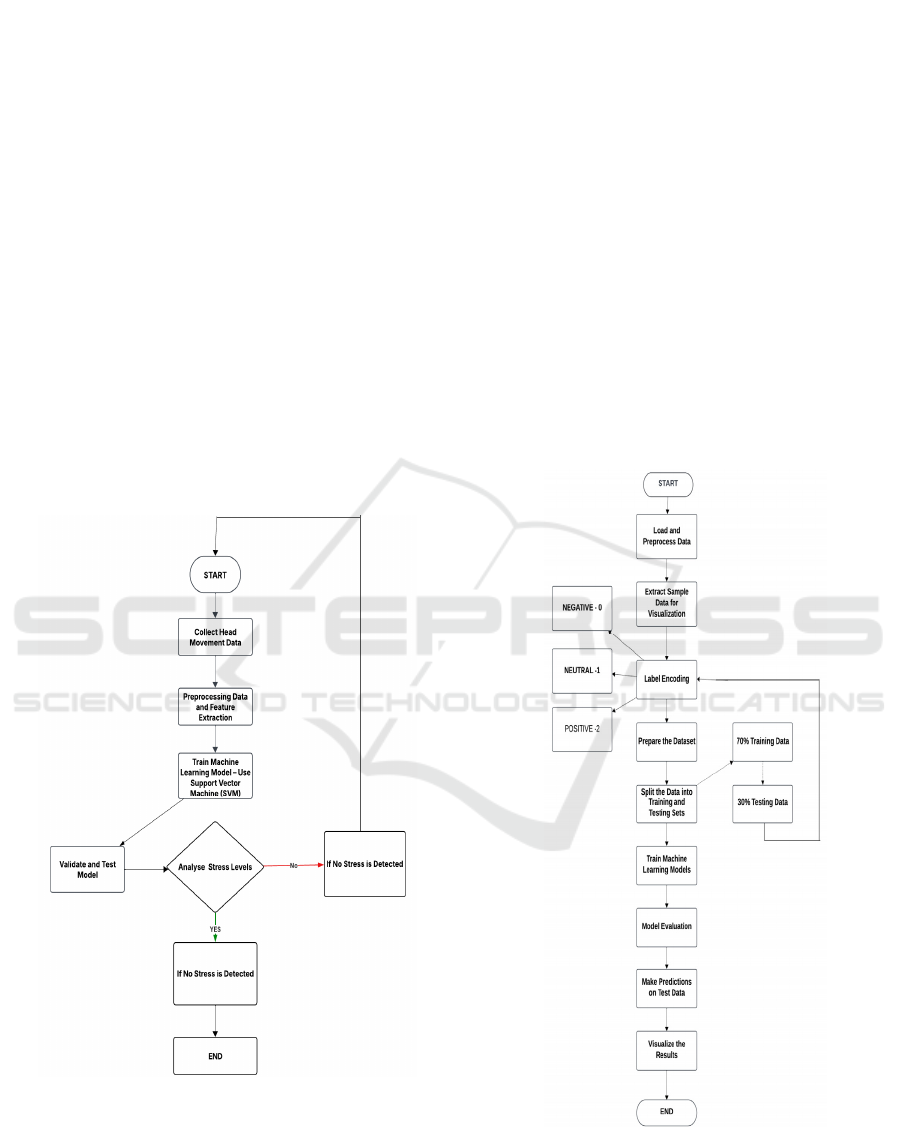
Figure 1: Existing Stress Analysis model.
The following study presents a non-invasive means
of detecting stress within Augmented Reality (AR)
applications based on head movement during the use
of Head-Mounted Displays (HMDs). Using this
system, engaged with various AR tasks, stress levels
were identified using machine learning with the
main algorithm being Support vector machines
(SVMs). Headset data is logged and converted to be
analysed to identify similarities across participants.
Using a weighted decision model, an SVMs training
process is initiated in an effort to enhance their
classification accuracy in predicting stress levels.
However, it is worth mentioning that there are some
limitations to this system. The figure 1 shows the
Existing Stress Analysis model. For one, the study
had a relatively small number of people, meaning its
results may not be generalizable to everyone. There
isnt a lot of diversity among participants, either, in
terms of age and gender and backgrounds — which
could affect how the model performs across various
groups of people.
5 PROPOSED SYSTEM
Figure 2: Proposed System for stress Analysis.
The existing system relies on a fairly limited sample
size, which really holds it back from being as
effective as it could be. In contrast, our new system
ICRDICCT‘25 2025 - INTERNATIONAL CONFERENCE ON RESEARCH AND DEVELOPMENT IN INFORMATION,
COMMUNICATION, AND COMPUTING TECHNOLOGIES
288

takes a big step forward by including a larger and
more diverse group of participants, significantly
boosting our data set. One of the key differences is
that while the existing approach only analyses head
movement data after tasks are completedessentially
looking at it afterward we’ve developed an
innovative solution that detects stress in real time.
We leverage streaming machine learning models to
continuously analyse head movement data, allowing
us to gain immediate insights and react promptly.
The figure 2 shows the Proposed System for stress
Analysis.In our evaluation process, we closely
compared Support Vector Machine (SVM) and K-
Nearest Neighbours (K-NN) to see which method
fits our goals best. We ultimately decided to go with
K-NN because of its strength in classification.
This algorithm is great at categorizing data based
on class membership, which means it can effectively
decide whether a data point belongs to group A or
group B. K-NN works by looking at the nearest
neighbours, with 'k' representing the number of
closest points considered—usually a small, positive
integer. We also looked into Decision Trees (DT),
which create classification models in a way that's
easy to understand by forming a tree structure. This
technique breaks down the dataset into smaller
pieces while building a corresponding decision tree.
The result is a model that’s clear and interpretable,
showing decision nodes and leaf nodes that represent
the underlying class data. Our approach not only
pushes the limits of what can be achieved in real-
time stress detection but also establishes a new
benchmark in the field.
Working of Stress Analysis
The Stress analysis project is structured into multiple
functional steps based on its working
1. Data Acquisition Module
2. Data Pre-processing Module
3. Feature Visualization Module
4. Model Training Module
5. Prediction Module
5.1 Data Acquisition Module
The Data Acquisition Module plays a crucial role in
gathering the data needed for stress analysis. It uses
a CSV file that includes speech recordings along
with their associated stress labels. This dataset
features numerical characteristics extracted from the
speech recordings, alongside labels that indicate
various levels of stress. Essentially, this module
makes sure that we have all the necessary
information at hand for the next steps in processing
and analysis.
5.2 Data Pre-Processing Module
pre-processing is an inevitable procedure in any
machine learning process Similar to the way in that
we are working out the Functions here now is the
data cleaning, feature selection or label encoding.
First, we handle any non-existent values to ensure
uniformity of the data. And then we will replace the
categorical one like NEGATIVE, NEUTRAL and
POSITIVE into numbers (0,1,2) that will help us to
becoming compatible with different machine
learning algorithms. Lastly, we ready the data for
exploration and modelling.
5.3 Feature Visualization Module
Understanding the characteristics of the features is
critical before you start training the model. In this
module we utilize Matplotlib to plot sample
distributions of the features so that we can visualize
the variation of the frequency domain features with
stress levels. Visualizing this data allows us to
identify patterns and trends that may not be so
obvious, which greatly improves our feature
selection and increases the performance of the
model.
5.4 Model Training Module
Module 4 Training ML models to classify the level
of stress These features are fed to algorithms
(Decision Tree Classifier, K-Nearest Neighbours
(KNN)) capable of recognising patterns in the
training data. These classifiers generate predictive
models based on the correlation between the features
of head movement over the three different levels of
stress labels seen in Figs. It’s a cool example of how
to use data and technology to sharpen knowledge
about human emotions.
5.5 Predicting Module
When the training phase is complete, the system
uses the models it learned from the training data to
assess stress on new data that was not seen in the
training phase. These trained classifiers determine
whether a certain sample is NEGATIVE,
NEUTRAL or POSITIVE stress level when the
testing set is provided. These predictions are then
A Machine Learning-Based Approach for Non-Invasive Stress Analysis Using Speech Features for Enhanced Detection and Classification
289

checked against the actual stress levels to measure
classifier accuracy.
Figure 3: Comparison between Existing system VS
Proposed system.
Figure 3 shows a comparative graph that clearly
depicts the performance improvement between the
existing system and the system that is proposed in
this work. The model showed the best computational
efficiency, training speed, interpretability, data
intelligence, memory sage, and real-time
performance. More specifically, the proposed system
achieves high scores for computational efficiency,
interpretability, memory, and real-time use, whereas
the existing system performs low in these aspects.
Further, compared to other systems that require large
amounts of data but achieve similar accuracy rates,
the proposed system is more optimized and requires
less data to train on. Once again, the training speed
is better, allowing the model to learn faster. In this
way, these developments contribute to the proposed
system to be used in real time stress analysis
applications where speed and efficiency of data
acquisition and decision making are critical.
6 CONCLUSIONS
By analysing how we move our heads, we can have
a contemporary and more useful method of assessing
level of stress using machine learning. The system
can classify stress into 3 types: NEGATIVE,
NEUTRAL, POSITIVE using smart algorithms like
Decision Tree Classifier and K-Nearest Neighbours
(KNN). It is also structured into multiple
components data collection, data cleaning,
visualization, model training, and model evaluation
so it’s also accurate and reliable. Its most notable
benefit, compared to current solutions, is that there
are no physiological sensors required, making it
more practical for usage in real-life scenarios,
particularly in Augmented Reality (AR)
environments. Tools such as confusion matrices and
performance metrics help boost the model’s strength
over time, so that its predictive power can continue
improving. As for the future, there are exciting
potential upgrades, including real-time stress
monitoring, more physiological indicators, and even
advanced deep learning techniques to boost
accuracy.
In short, this machine learning system is a
considerable step towards stress analysis in real-
time. It has potential use in the fields of health care,
workplace efficiency, and communication between
humans and computers. You know, with a few more
nudges and improvements it can be a powerful tool
to help better understand and cope with stress in our
lives.
REFERENCES
J. Lee et al., "Analysis of Acute Stress Reactivity and
Recovery in Autonomic Nervous System Considering
Individual Characteristics of Stress Using HRV and
EDA," in IEEE Access, vol. 12, pp. 115400-115410,
2024, doi: 10.1109/ACCESS.2024.3437671
10, pp. 6970- A. Ferrarotti, S. Baldoni, M. Carli and F.
Battisti, "Stress Assessment for Augmented Reality
Applications Based on Head Movement Features," in
IEEE Transactions on Visualization and Computer
Graphics, vol. 30, no.6983, Oct. 2024.
S. Santhiya, P. Jayadharshini, N. Abinaya, K. Sruthi, N.
Kavin Vishnu and V. Suganth, "Advancing Stress
Detection through Deep Learning in Human-Machine
Interactions with Speech Signals Analysis," 2024 15th
International Conference on Computing Communicati
on and Networking Technologies (ICCCNT), Kamand,
India, 2024, pp. 1-5, doi:
10.1109/ICCCNT61001.2024.10726085.
A. Singh, A. Agarwal, A. Kumar, U. Rastogi and S.
Kumar, "A Comprehensive Approach to Stress
Detection and Management Using Machine Learning,
Deep Learning, and Chatbot Integration," 2024 15th
International Conference on Computing Communicat-
ion and Networking Technologies (ICCCNT),
Kamand, India, 2024, pp. 1-5, doi:
10.1109/ICCCNT61001.2024.10725990.N.
N. Oryngozha, P. Shamoi and A. Igali, "Detection and
Analysis of Stress-Related Posts in Reddit’s Acamedic
Communities," in IEEE Access, vol. 12, pp. 14932-
14948, 2024, doi: 10.1109/ACCESS.2024.3357662
Z. Lei, Y. Zhou, G. Zhou, H. Su, Z. Yan and Q. Xiong,
"Welding Residual Stress Analysis and Its Influence
Study on Warm Rotor of an HTS Motor," in IEEE
Transactions on Applied Superconductivity, vol. 34,
no. 8, pp. 1-5, Nov. 2024, Art no. 5206105, doi:
10.1109/TASC.2024.3446284.
H. A. Khan, T. N. Nguyen, G. Shafiq, J. Mirza and M. A.
Javed, "A Secure Wearable Framework for Stress
Detection in Patients Affected by Communicable
Diseases," in IEEE Sensors Journal, vol. 23, no. 2, pp.
ICRDICCT‘25 2025 - INTERNATIONAL CONFERENCE ON RESEARCH AND DEVELOPMENT IN INFORMATION,
COMMUNICATION, AND COMPUTING TECHNOLOGIES
290

981-988, 15 Jan.15 2023, doi:
10.1109/JSEN.2022.3204586
A. G, K. B, P. S. Mittalakod, S. K and B. Ambore,
"Detection of Stress Over Social Interactions Using
Machine Learning and Natural Language Processing,"
2023 6th International Conference on Contemporary
Computing and Informatics (IC3I), Gautam Buddha
Nagar, India, 2023, pp. 1771-1775, doi:
10.1109/IC3I59117.2023.10397916.
J. G. Jayawickrama and R. A. H. M. Rupasingha,
"Ensemble Learning Approach to Human Stress
Detection Based on Behaviours During the Sleep,"
2022 4
th
International Conference on Advancements in
Computing (ICAC), Colombo, Sri Lanka, 2022, pp.
132-137, doi: 10.1109/ICAC57685.2022.10025175.
F. J. Ming, S. Shabana Anhum, S. Islam and K. H. Keoy,
"Facial Emotion Recognition System for Mental Stress
Detection among University Students," 2023 3rd
International Conference on Electrical, Computer,
Communications and Mechatronics Engineering
(ICECCME), Tenerife, Canary Islands, Spain, 2023,
pp. 1-6, doi:
10.1109/ICECCME57830.2023.10252617.
S. K. Sriramulugari, V. A. K. Gorantla, A. H. Mewada, K.
Gupta and T. Kiruthiga, "The opinion-based analysis
for stressed adults using sentimental mining model,"
2023 IEEE Technology & Engineering Management
Conference - Asia Pacific (TEMSCON-ASPAC),
Bengaluru, India, 2023, pp. 1-6, doi:
10.1109/TEMSCON-ASPAC59527.2023.10531336.
A. Patel, D. Nariani and A. Rai, "Mental Stress Detection
using EEG and Recurrent Deep Learning," 2023 IEEE
Applied Sensing Conference (APSCON), Bengaluru,
India, 2023, pp. 13,
doi:10.1109/APSCON56343.2023.10100977.
K. Singh, S. K. Chawla, G. Singh and P. Soni, "Stress
Detection using Machine Learning Techniques: A
review," 2023 5th International Conference on
Advances in Computing, Communication Control
and Networking (ICAC3N), Greater Noida, India,
2023, pp. 255-260, doi:
10.1109/ICAC3N60023.2023.10541696.
K. Tao, Y. Huang, Y. Shen and L. Sun, "Automated
Stress Recognition Using Supervised Learning
Classifiers by Interactive Virtual Reality Scenes," in
IEEE Transactions on Neural Systems and
Rehabilitation Engineering, vol. 30, pp. 2060-2066,
2022, doi: 10.1109/TNSRE.2022.3192571
A. Akella et al., "Classifying Multi-Level Stress
Responses from Brain Cortical EEG in Nurses and
Non-Health Professionals Using Machine Learning
Auto Encoder," in IEEE Journal of Translational
Engineering in Health and Medicine, vol. 9, pp. 1-9,
2021
A Machine Learning-Based Approach for Non-Invasive Stress Analysis Using Speech Features for Enhanced Detection and Classification
291
